
Key Takeaways
AI sales enablement helps revenue teams onboard faster, coach better, and improve execution across the sales cycle.
The biggest use cases today are roleplays, call coaching, content creation, knowledge management, and sales readiness.
AI is shifting enablement from static content libraries to personalized guidance.
Companies using AI onboarding report up to 29% faster time-to-productivity.
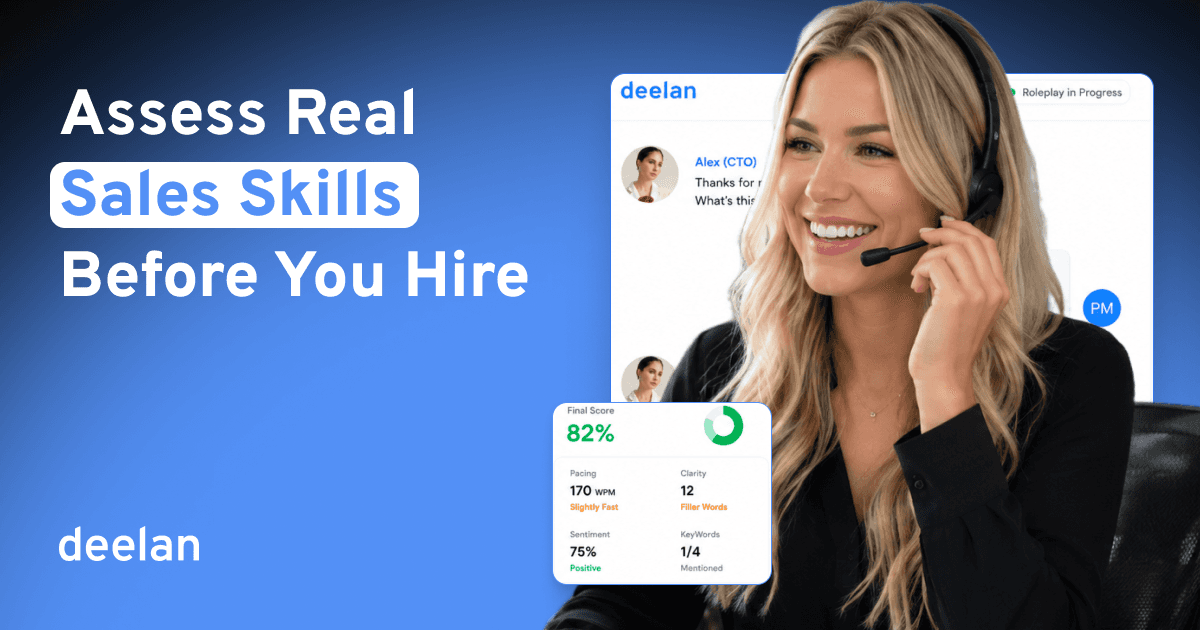
AI roleplay programs have been linked to ramp-time reductions of up to 40%.
The best AI sales enablement platforms improve measurable business outcomes such as win rates, quota attainment, and ramp time.
At its core, AI in sales enablement is a system that simulates human intelligence to identify and solve execution gaps across the entire sales cycle. It acts as a bridge between the strategy created by leadership and the execution delivered by the rep.
Capability | Business Impact |
|---|---|
Faster ramp time | |
Call Coaching | Better conversations |
Faster enablement creation | |
Knowledge Assistants | Faster answers |
Personalized training | |
Readiness Scoring | Better onboarding |
Analytics | Improved coaching decisions |
The Three Pillars of Intelligence
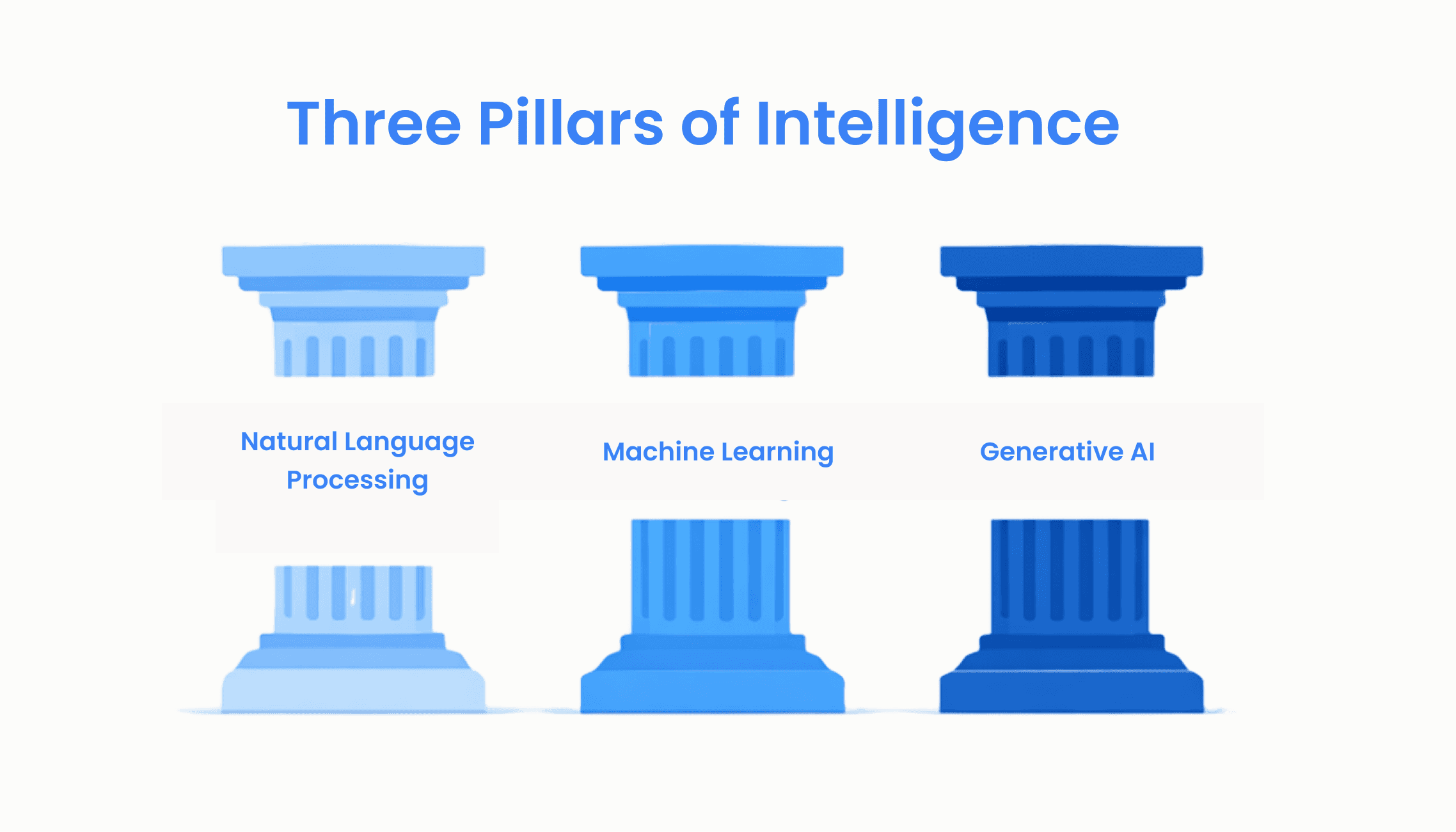
Natural Language Processing (NLP): This technology "listens" to buyer conversations. It detects objections, identifies competitor mentions, and flags coaching moments. It transforms raw call recordings into actionable intelligence.
Machine Learning (ML): This powers adaptive sales training. By analyzing which reps are winning and why, ML can detect skill gaps in lower-performing reps and automatically suggest the specific training modules needed to close that gap.
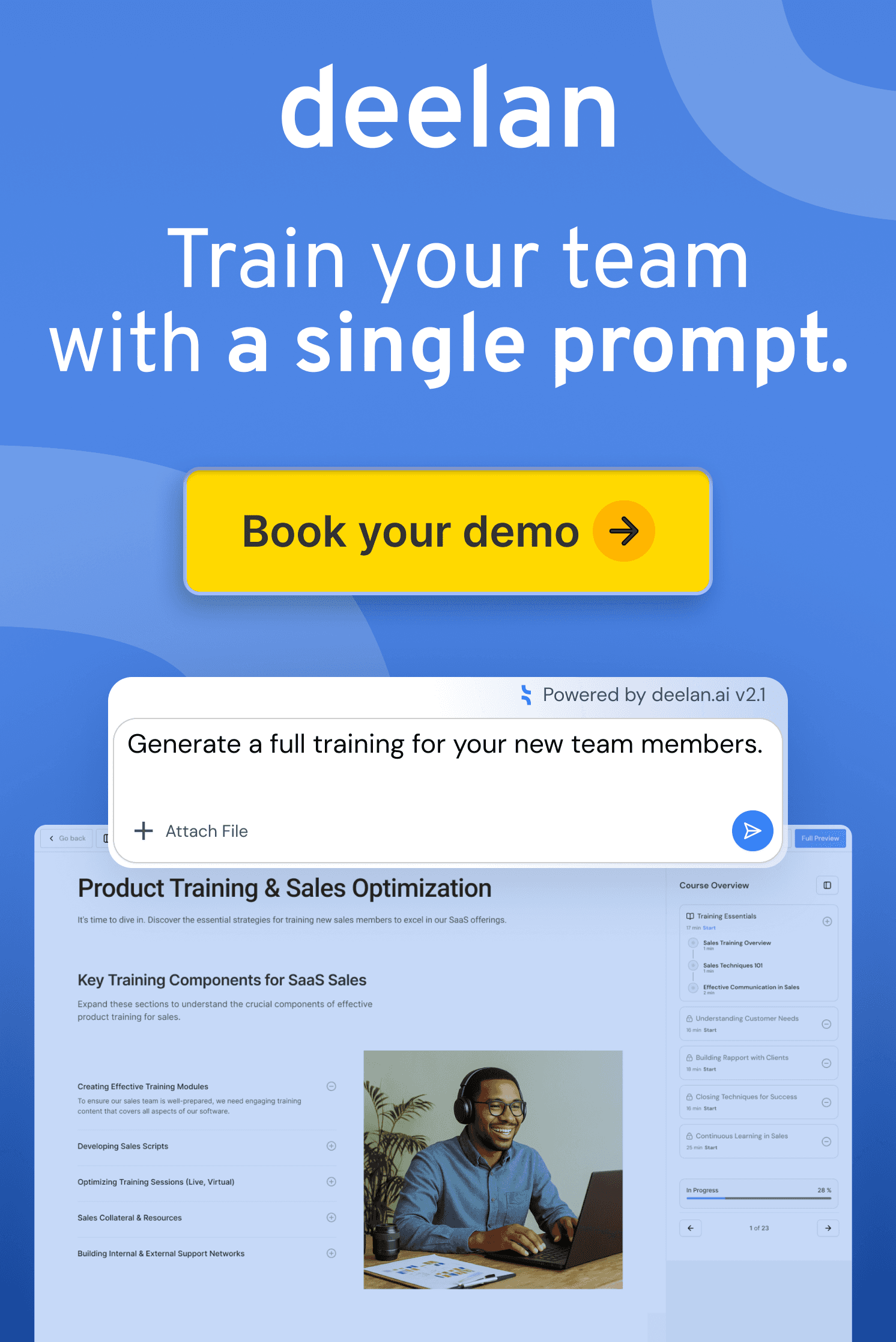
Generative AI: This is the engine for content and practice. It allows enablement teams to turn a 50-page product doc into a 2-minute interactive module instantly. It also powers AI-powered sales coaching, allowing reps to practice against a "virtual buyer" that responds realistically to their pitch.
Enablement + Intelligence + Adaptation. When these three intersect, you move away from a static library of content and toward a dynamic performance engine that evolves as your market changes.
12 Practical AI Sales Enablement Use Cases
1. AI-Powered Sales Onboarding
New reps no longer need to sit through weeks of generic training.
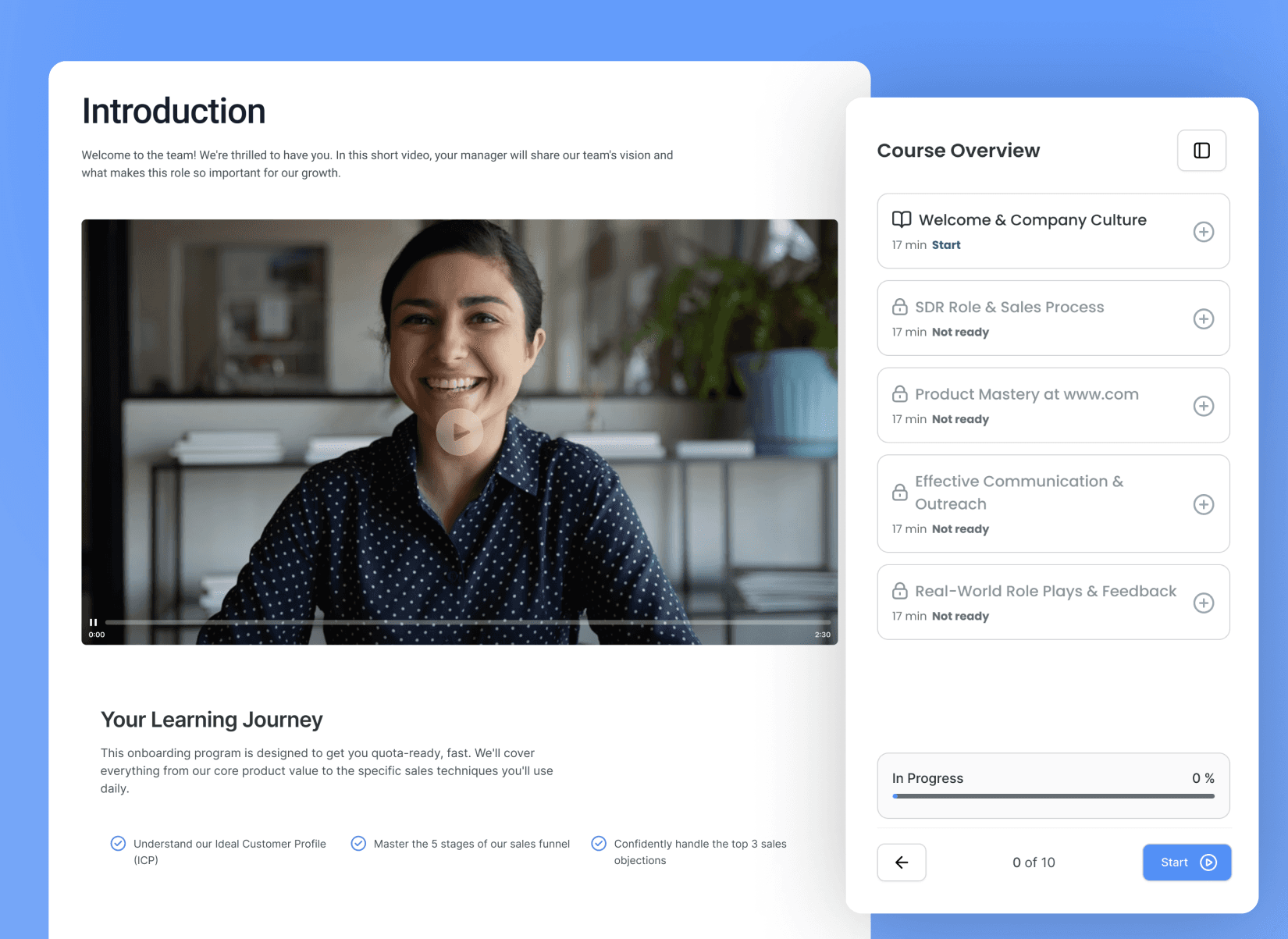
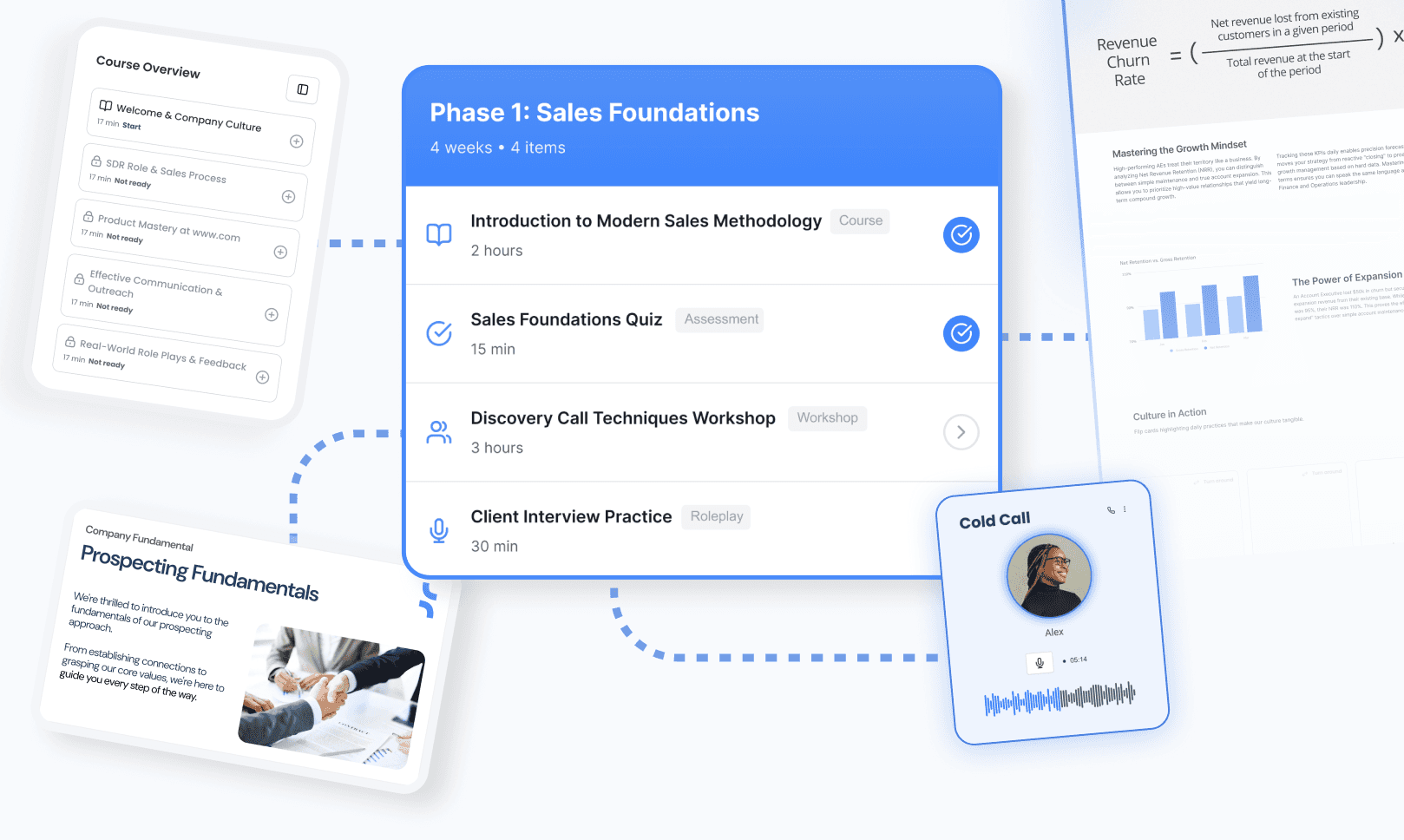
AI can generate personalized onboarding programs based on role, experience level, product focus, and territory.
Instead of consuming everything, reps learn only what matters.
2. AI Roleplays for Sales Readiness
One of the fastest-growing use cases.
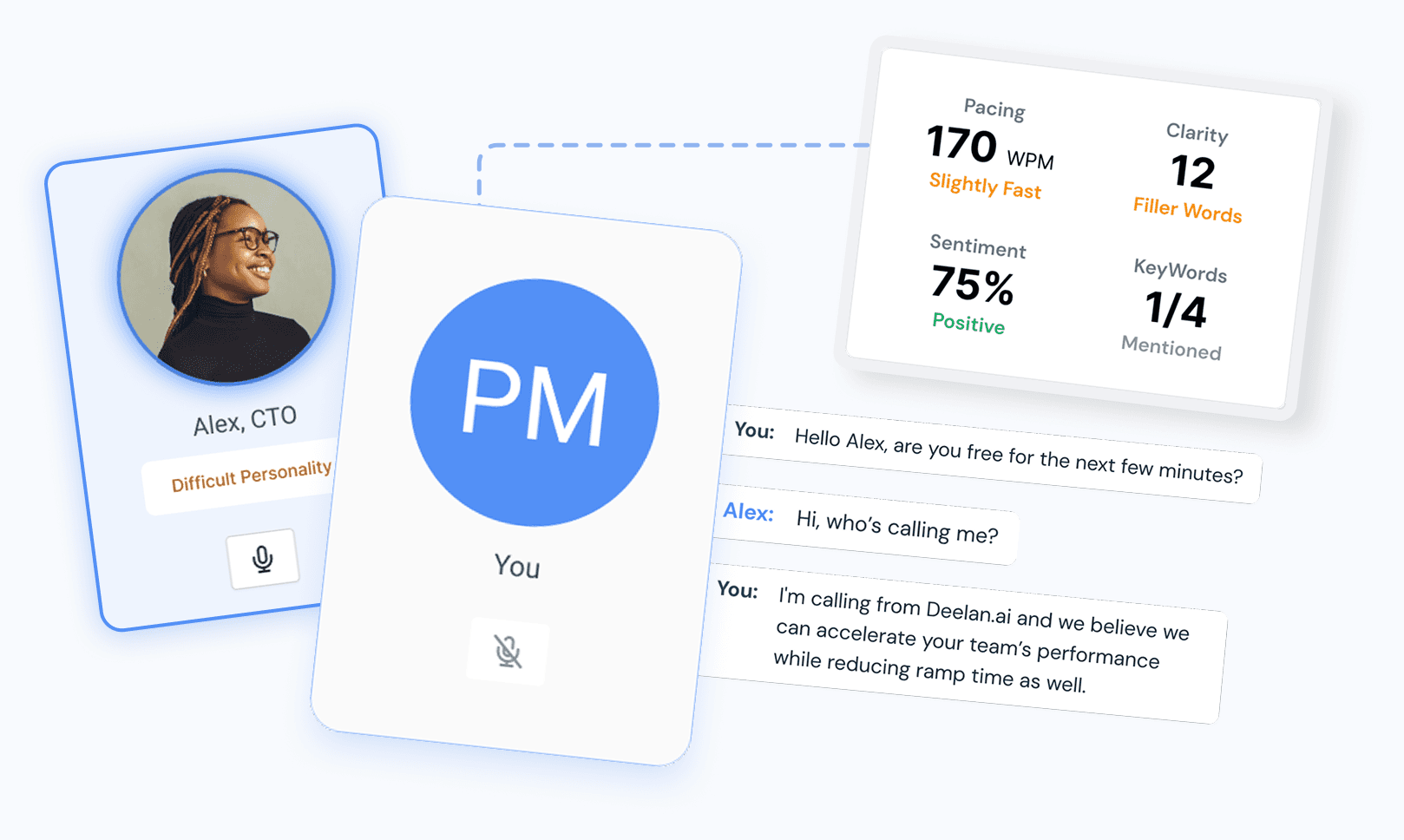
Reps practice discovery calls, demos, objection handling, pricing discussions, and negotiations with AI buyers.
They receive immediate feedback before speaking with real prospects.
Teams using AI roleplays report significantly faster ramp times and improved sales confidence.
3. Automated Call Coaching
Managers cannot review every call. AI can.
Modern sales enablement platforms analyze conversations and highlight coaching opportunities automatically.
Common examples include:
Interrupting prospects
Weak discovery
Missed buying signals
Poor objection handling
4. Personalized Learning Paths
Not every rep struggles with the same skills.
AI identifies individual skill gaps and assigns relevant training automatically.
A rep struggling with discovery receives discovery practice.
A rep struggling with pricing receives pricing coaching.
5. AI Knowledge Assistants
Sales reps waste time searching through Notion, Confluence, Slack, Google Drive, and PDFs.
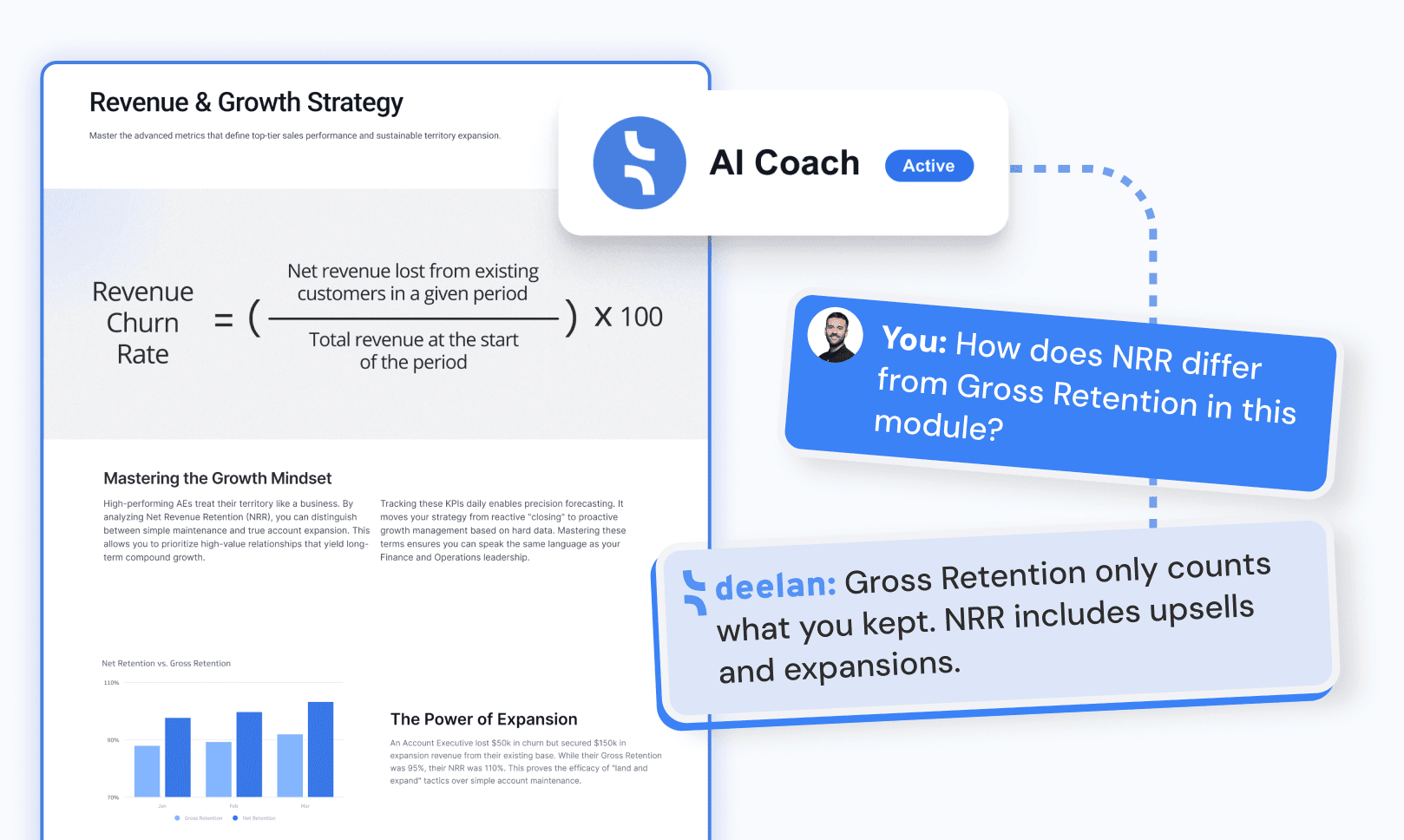
AI assistants provide answers instantly inside the workflow.
Instead of searching, reps ask questions and get immediate responses.
6. Sales Content Creation
Enablement teams spend countless hours building courses, workshops, certifications, and onboarding materials.
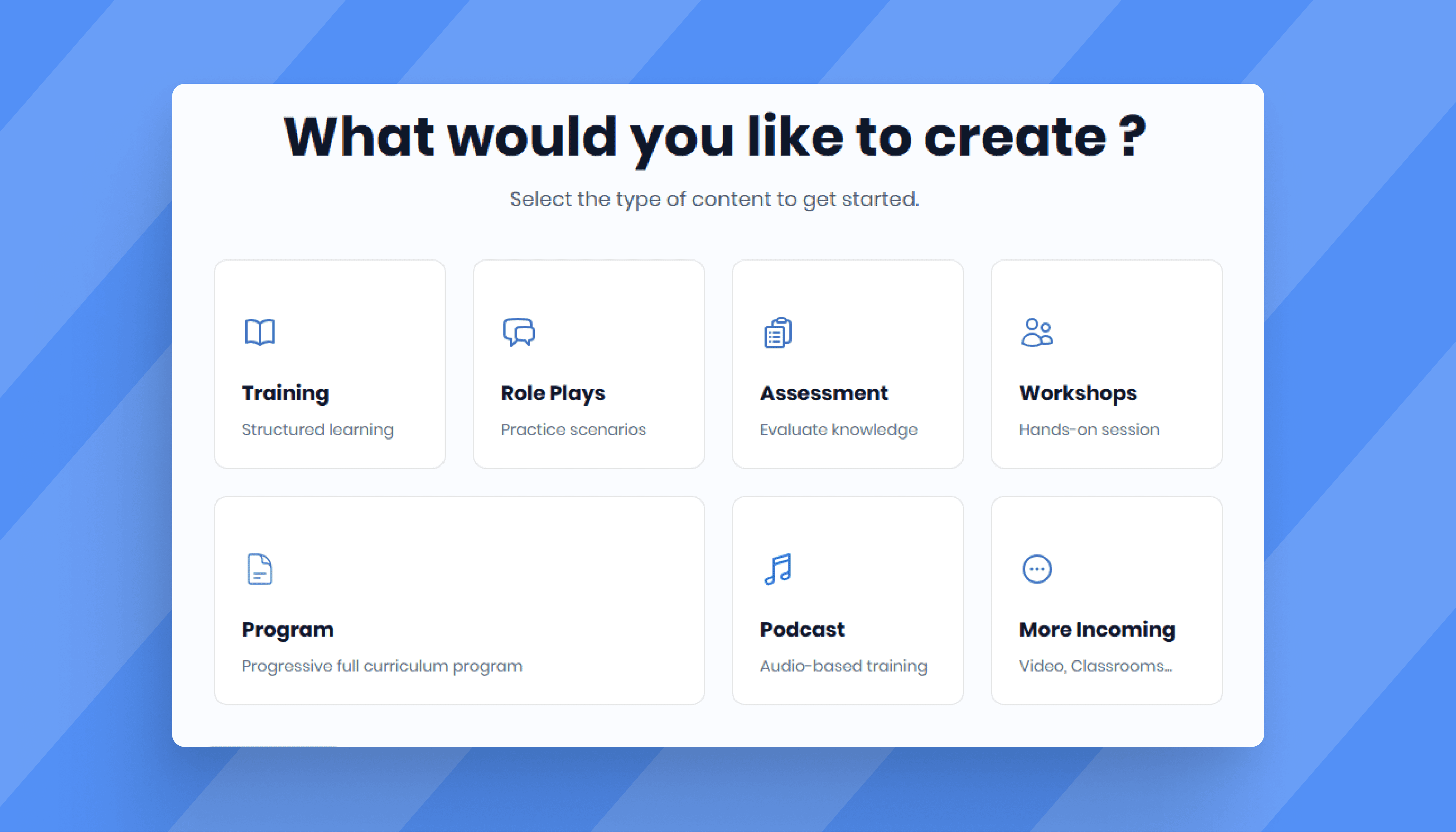
AI reduces content creation from weeks to minutes.
Existing playbooks, call recordings, and product documents become training assets automatically.
7. Content Recommendations
Finding the right content is often harder than creating it.
AI can recommend:
Case studies
Battle cards
Product sheets
Objection handling resources
based on deal stage, industry, and buyer persona.
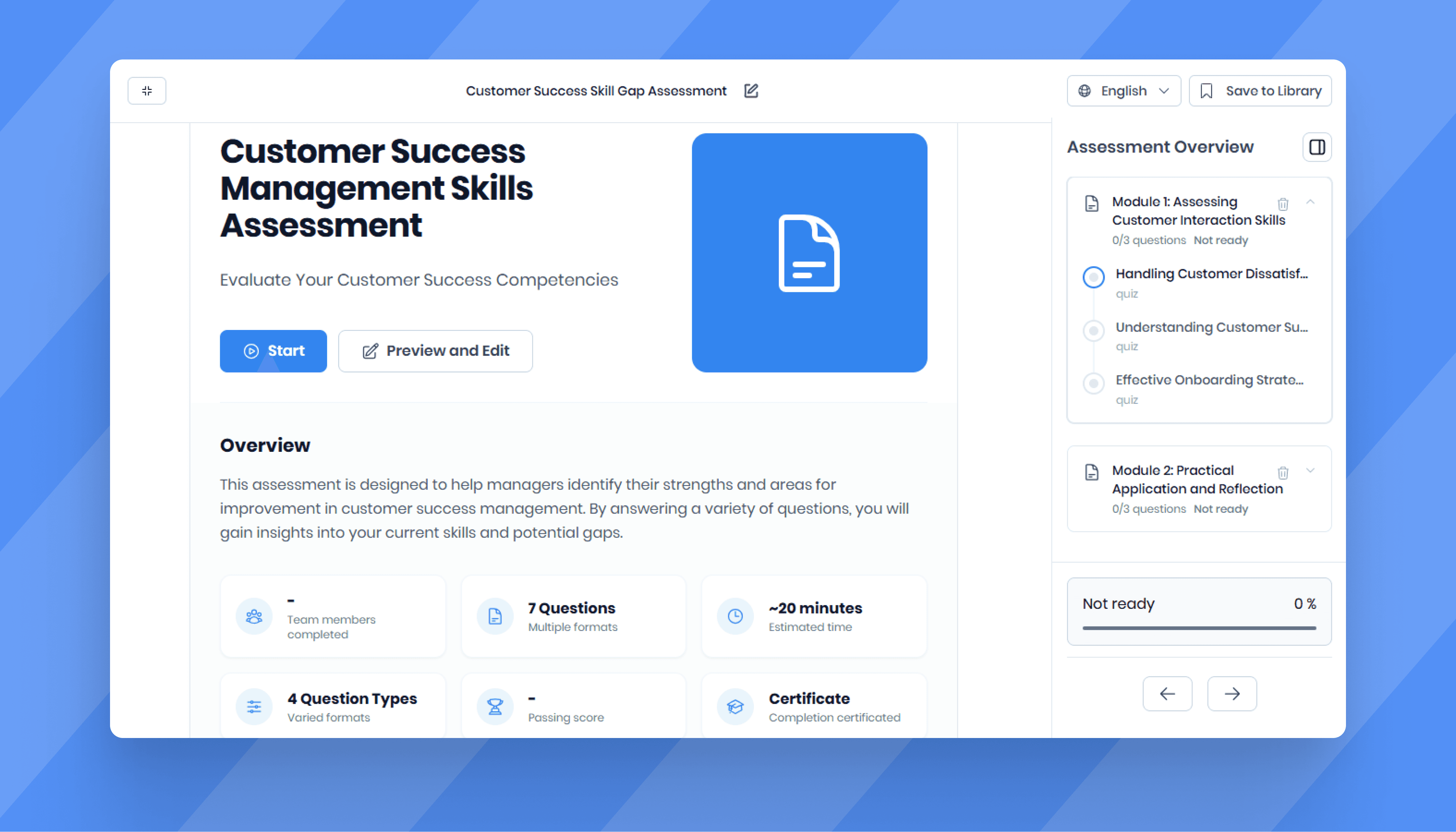
8. Sales Readiness Assessments
Before reps go live, AI can evaluate whether they are ready.
Readiness assessments identify gaps before they impact pipeline performance.
9. Competitive Intelligence
AI helps surface competitor mentions from conversations and recommends the right responses.
Reps no longer need to memorize every battle card.
10. Continuous Coaching
Traditional onboarding ends.
Learning doesn't.
AI enables continuous reinforcement through microlearning, assessments, practice sessions, and coaching recommendations.
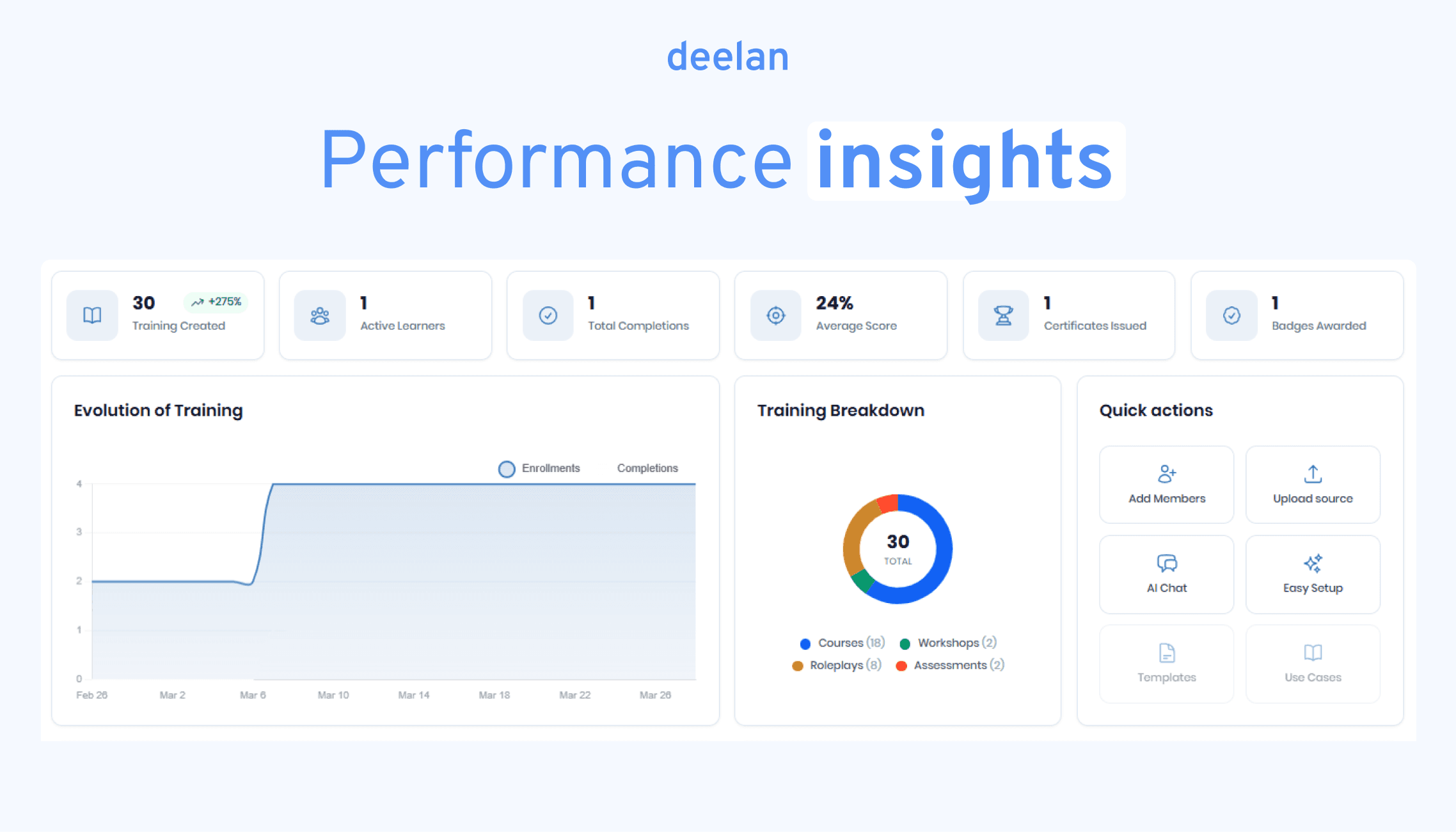
11. Win-Loss Analysis
AI can analyze CRM and conversation data to identify patterns behind wins and losses.
Revenue leaders gain visibility into what top performers are doing differently.
12. Scaling Top Performer Behavior
Perhaps the most valuable use case.
AI identifies what top performers consistently do:
Discovery questions
Messaging
Objection responses
Deal strategies
Those behaviors become repeatable playbooks for the rest of the team.
How to Choose an AI Sales Enablement Platform
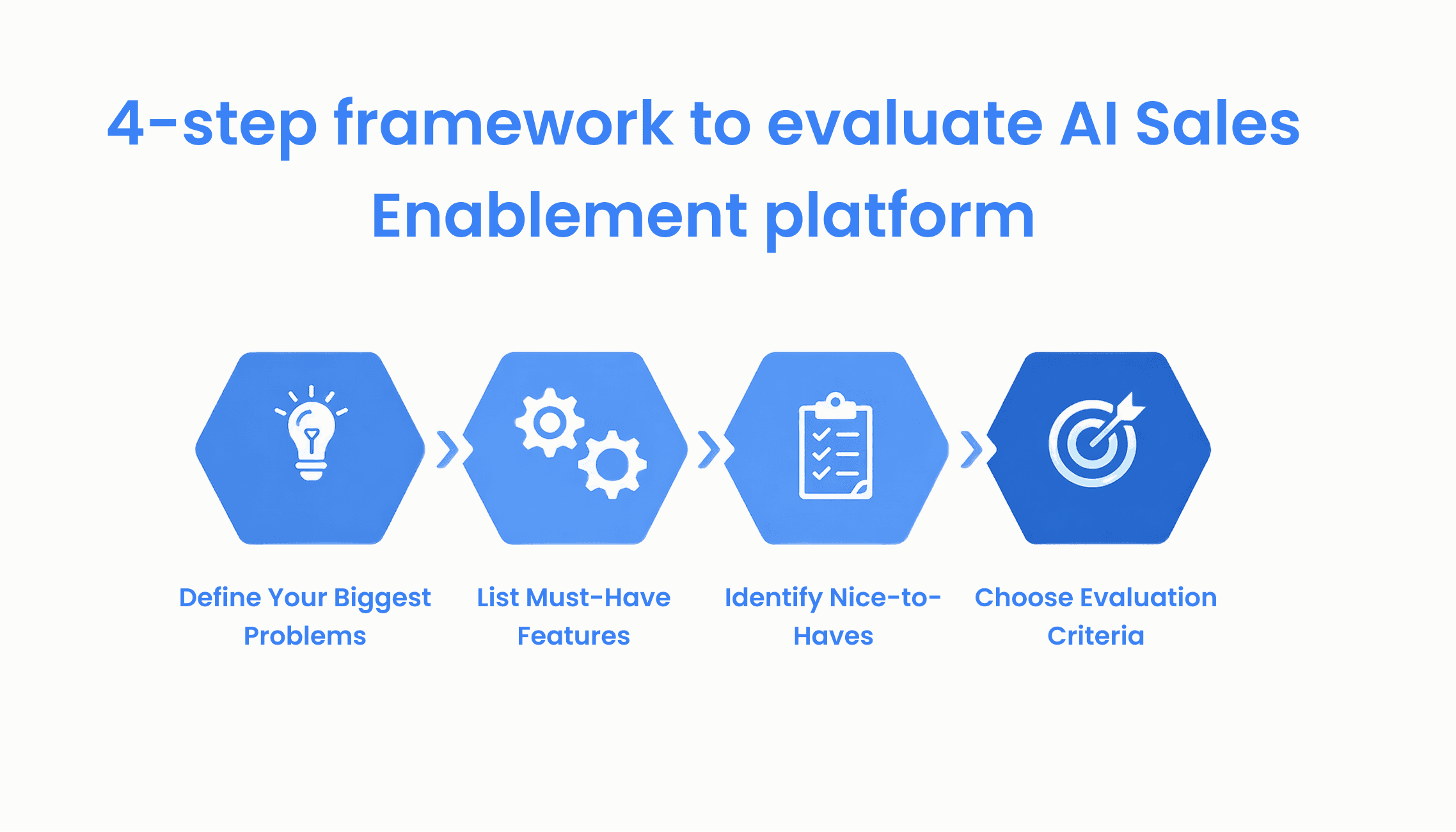
Use this 4-step framework to evaluate your options:
Define Your Biggest Problems: Are your reps failing at discovery? Is your ramp time too slow? Is messaging inconsistent?
List Must-Have Features: Do you need conversation intelligence, or are you looking for adaptive sales training?
Identify Nice-to-Haves: Does it need custom branding, or are you focused on the speed of content creation?
Choose Evaluation Criteria: Will your reps actually use it? Does it integrate with your CRM (Salesforce, HubSpot)?
How Deelan Uses AI Sales Enablement
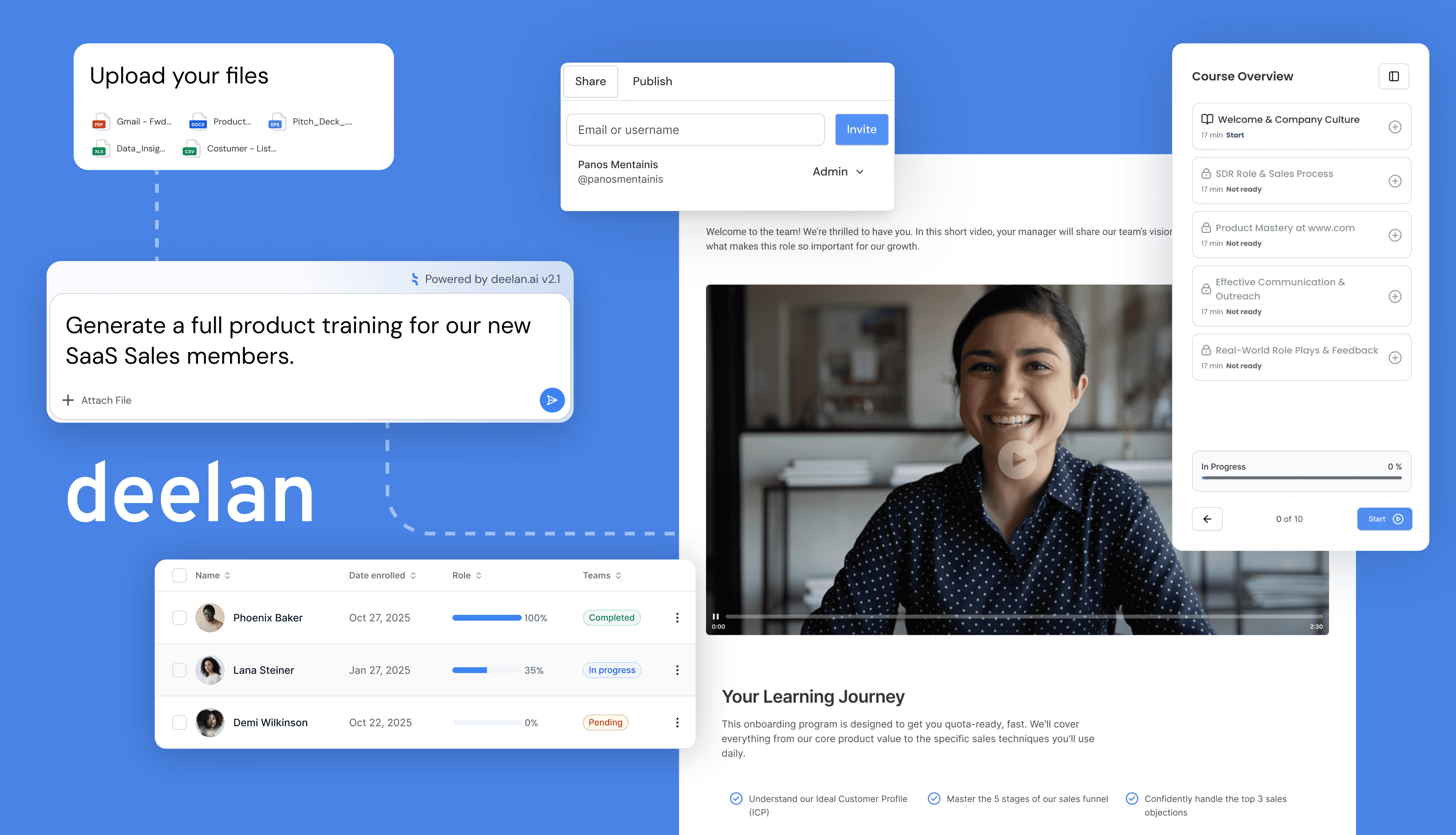
Most enablement platforms focus on content. Deelan focuses on performance.
Revenue teams can upload existing playbooks, call recordings, product documentation, and sales assets. Deelan transforms them into:
Courses
AI roleplays
Workshops
Assessments
Microlearning
Complete onboarding programs
Training adapts automatically to each learner's role, experience level, and skill gaps.
The result is faster onboarding, more consistent execution, and less manual coaching.
Teams Using Deelan Report
30-55% faster ramp time
10-25% higher win rates
Up to 80% faster training creation