Sales roleplay has a reputation problem. Too often, it turns into awkward improv, unrealistic objections, or box-checking exercises that reps forget the moment the session ends.
Below, you’ll find 12 realistic sales roleplay scenarios covering the moments that actually decide deals: discovery, objections, and closing. Each scenario includes copy-and-paste scripts, clear goals, common mistakes, and coaching cues - so managers can run effective sales roleplay training this week, not “someday.”
You’ll also learn:
How to run sales roleplay sessions that don’t waste time
How to score roleplays so improvement is measurable
Why structured roleplay coaching consistently improves win rates
Whether you’re enabling SDRs, AEs, or customer-facing teams, these sales roleplay scripts and exercises are designed to mirror real calls - pushback included.
12 Sales Roleplay Scenarios (With Scripts You Can Use Immediately)
Discovery Scenarios (4)
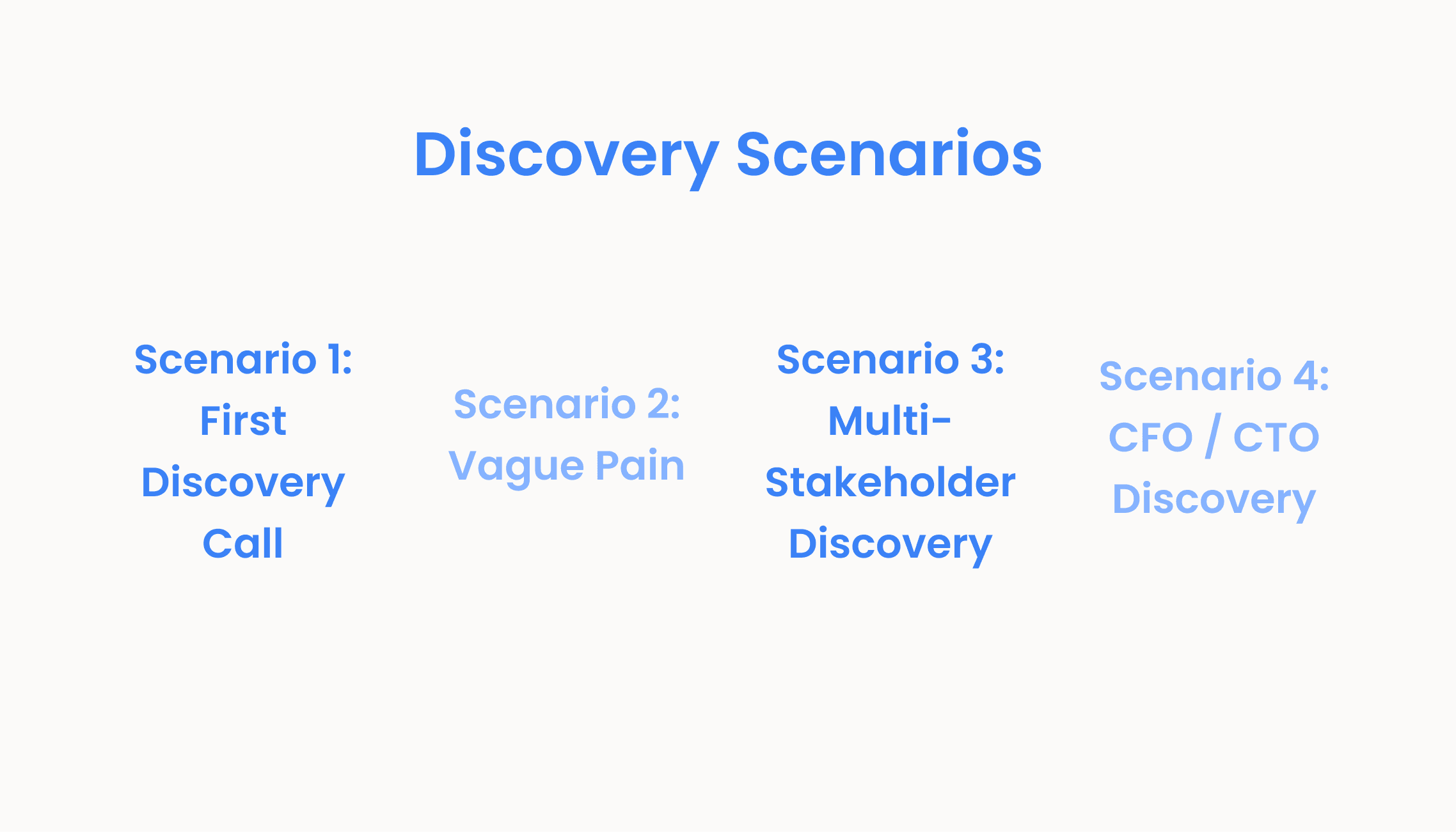
Scenario 1: First Discovery Call — Needs & Impact
Goal: Uncover the core problem and business impact
Context: B2B SaaS, Head of Ops, initial intro call
Buyer personality: Open but guarded
Trigger line: “We’re curious, but still figuring out if this is a priority.”
Script
Rep: “Before I explain anything, can I ask what prompted you to take this call?”
Buyer: “We’ve outgrown our current process.”
Rep: “Quick question—what breaks first when volume increases?”
Buyer: “Reporting. It slows everything down.”
Rep: “And when reporting slows, what does that affect?”
Buyer: “Decision-making, mostly.”
Rep: “Got it. How does that show up for leadership today?”
Win condition: Buyer clearly articulates pain and impact
Common mistakes:
Jumping into features
Asking checklist-style questions
Skipping impact
Coach cues: Depth of follow-ups, buyer talk time, clarity of summary
Scenario 2: Vague Pain — “We’re Just Exploring”
Goal: Turn ambiguity into a concrete problem
Context: Mid-market company, Marketing Director
Buyer personality: Non-committal
Trigger line: “We’re just exploring options.”
Script
Rep: “Totally fair. What made you explore now instead of later?”
Buyer: “Things are okay, just not scalable.”
Rep: “When you say not scalable—what’s starting to strain?”
Buyer: “Manual work.”
Rep: “If that stays manual for another year, what happens?”
Win condition: Buyer acknowledges a cost of inaction
Common mistakes:
Accepting vagueness
Moving to demo too early
Over-educating
Coach cues: Curiosity, comfort with silence, impact framing
Scenario 3: Multi-Stakeholder Discovery
Goal: Identify decision-makers and buying process
Context: Enterprise SaaS, Ops Manager
Buyer personality: Helpful but not in power
Trigger line: “I’ll need to loop in my team.”
Script
Rep: “That makes sense. Who usually weighs in on decisions like this?”
Buyer: “Finance and IT.”
Rep: “What questions do they usually ask?”
Buyer: “Cost and security.”
Rep: “Would it help if we addressed those together on the next call?”
Win condition: Clear path to stakeholders
Common mistakes:
Accepting vague handoffs
Avoiding escalation
No next step
Coach cues: Power mapping, confidence asking for access
Scenario 4: CFO / CTO Discovery
Goal: Align to risk, ROI, and efficiency
Context: SaaS platform, CFO
Buyer personality: Analytical, risk-averse
Trigger line: “What’s the ROI?”
Script
Rep: “Fair question. Can I ask what costs concern you most today?”
Buyer: “Unexpected overruns.”
Rep: “How often does that happen?”
Buyer: “Every quarter.”
Rep: “If you reduced that volatility, what changes?”
Win condition: Buyer links solution to financial outcome
Common mistakes:
Vague ROI claims
Feature dumping
Overconfidence
Coach cues: Precision, restraint, outcome language
Objection Handling Scenarios (5)
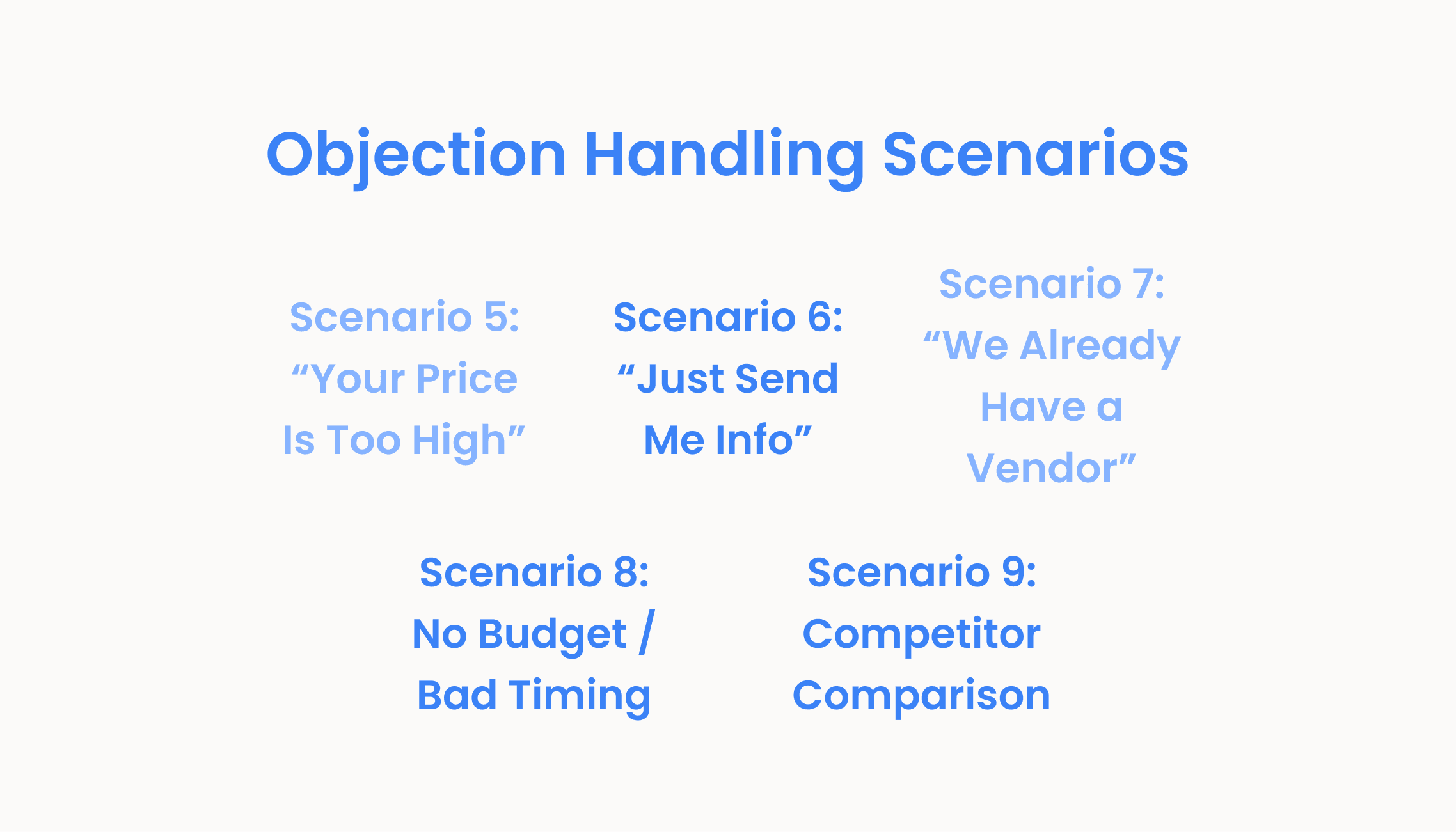
Scenario 5: “Your Price Is Too High”
Goal: Defend value without discounting
Trigger line: “This feels expensive.”
Script
Rep: “I hear that. What are you comparing us against?”
Buyer: “A cheaper option.”
Rep: “What would make the higher price worth it?”
Win condition: Conversation shifts from price to value
Common mistakes: Discounting too early
Coach cues: Composure, value framing
Scenario 6: “Just Send Me Info”
Goal: Avoid the brush-off
Trigger line: “Can you email me something?”
Script
Rep: “Happy to. What are you hoping to learn from it?”
Buyer: “Whether it’s relevant.”
Rep: “If it is, would a quick follow-up make sense?”
Win condition: Calendar next step
Common mistakes: Sending info blindly
Coach cues: Intent clarification
Scenario 7: “We Already Have a Vendor”
Goal: Respect status quo while uncovering gaps
Trigger line: “We’re happy with what we use.”
Script
Rep: “What’s working well today?”
Buyer: “Reliability.”
Rep: “If you could improve one thing, what would it be?”
Win condition: Identified dissatisfaction
Common mistakes: Attacking competitor
Coach cues: Neutral tone, probing
Scenario 8: No Budget / Bad Timing
Goal: Separate timing from priority
Trigger line: “No budget this year.”
Script
Rep: “Is that a budget issue or a priority issue?”
Buyer: “Priority.”
Rep: “What would need to change?”
Win condition: Clear future trigger
Common mistakes: Accepting stall
Coach cues: Reframing
Scenario 9: Competitor Comparison
Goal: Differentiate without defensiveness
Trigger line: “Competitor X is cheaper.”
Script
Rep: “They come up often. What criteria matter most to you?”
Buyer: “Ease of rollout.”
Rep: “Want a quick comparison there?”
Win condition: Buyer agrees to value-based comparison
Common mistakes: Feature wars
Coach cues: Outcome alignment
Closing & Late-Stage Scenarios (3)
Scenario 10: “Let Me Think About It”
Goal: Secure next step
Trigger line: “I need to think.”
Script
Rep: “Of course. What are you weighing?”
Buyer: “Risk.”
Rep: “Would reviewing that together help?”
Win condition: Scheduled follow-up
Common mistakes: Waiting passively
Coach cues: Calm closing
Scenario 11: Legal / Procurement Friction
Goal: Maintain momentum
Trigger line: “Legal needs to review.”
Script
Rep: “What do they usually flag?”
Buyer: “Data terms.”
Rep: “Want to walk through them now?”
Win condition: Reduced delay
Common mistakes: Losing urgency
Coach cues: Process awareness
Scenario 12: Ghosted Deal Follow-Up
Goal: Re-engage or close loop
Trigger line: No response
Script
Rep: “Last time we spoke, reducing X was a priority. Is that still the case?”
Buyer: “Yes, just busy.”
Rep: “Should we pause or set a time?”
Win condition: Clear yes/no
Common mistakes: Generic check-ins
Coach cues: Directness
How to Run Sales Roleplay
Timebox: 10 minutes roleplay + 5 minutes feedback
Roles: Rep, buyer, observer (rotate)
Rules: No pausing, keep it realistic, buyer must push back
Debrief questions
What did the rep do well?
Where did they lose control?
What was the next-step language?
Sales Roleplay Scorecard (What to Measure)
Use this checklist to keep feedback objective:
Active listening (rephrase + confirm)
Quality of questions
Value framing (ROI, outcomes)
Objection handling flow
Control of next step
Talk/listen ratio (<40–50% in discovery)
Confidence and clarity
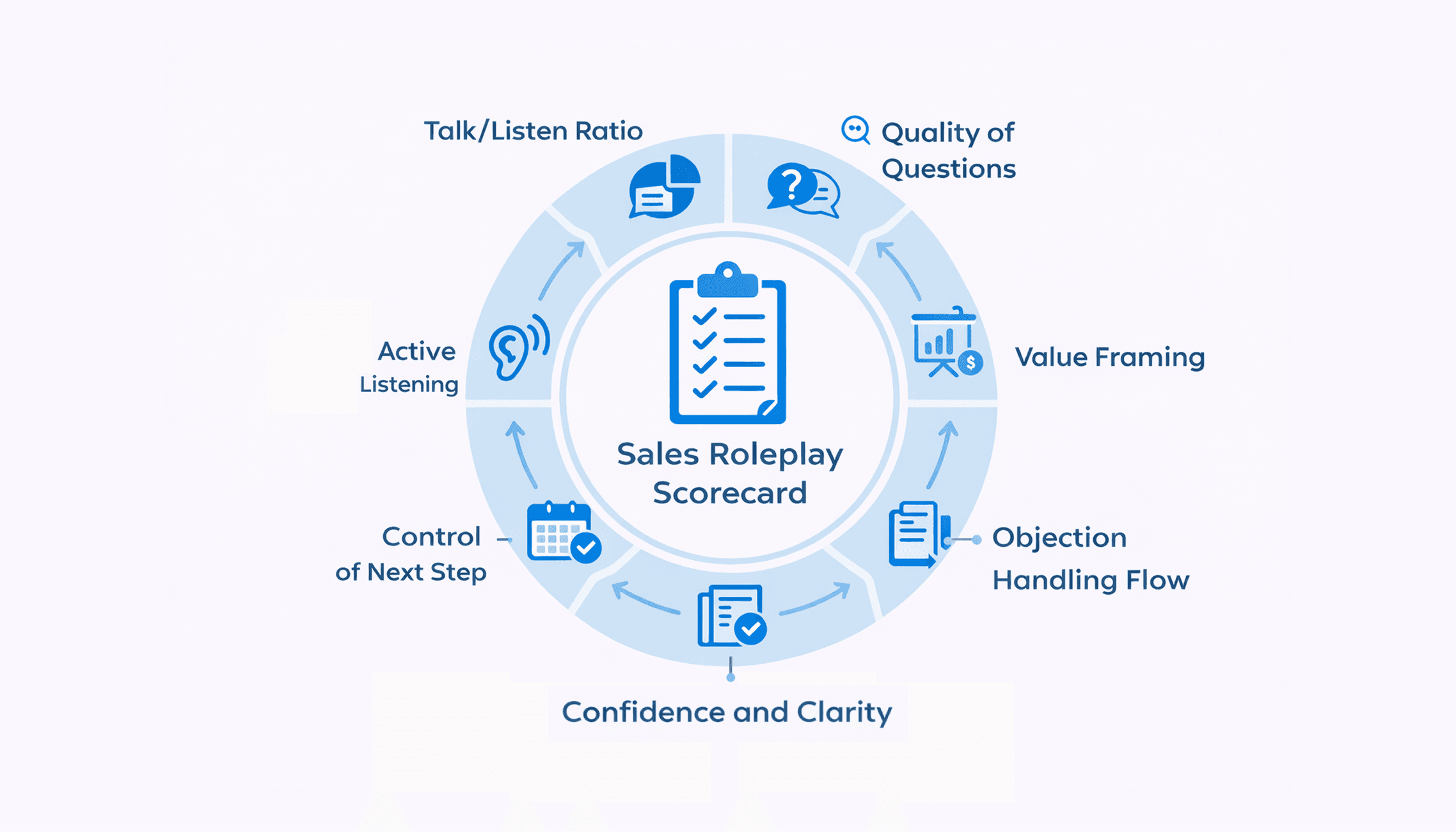
Structured scoring turns sales roleplay training into repeatable improvement—not opinion.
Why Sales Roleplay Works (The Data)
Sales roleplay isn’t just practice - it’s one of the highest-ROI enablement tools when done correctly.
For every dollar invested in sales training, companies see $4.53 in return (Myers Barnes). Research from Qwilr shows a 19% increase in win rates and a 57% boost in sales effectiveness when training is applied consistently.
Yet only 37% of organizations measure training beyond completion or satisfaction scores (Unboxed Technology). Structure matters. According to ATD, role- or industry-specific training drives 42% performance improvement and 35–45% higher retention.
Coaching frequency is another gap. Only 26% of reps receive weekly coaching, even though it leads to 25% higher quota attainment and 30% more deals won (Fit Small Business).
Finally, RAIN Group identifies the biggest skill gaps as objection handling (47%), discovery (42%), and time management (37) - exactly where scenario-based sales roleplay delivers the most impact.
How Different Roles Should Use These Scenarios
SDRs: Cold openers, discovery, stall handling
AEs: Deep discovery, demos, negotiation, closing
CS / AMs: Renewals, upsells, saving at-risk accounts
Making Roleplay Less Awkward (and More Effective)
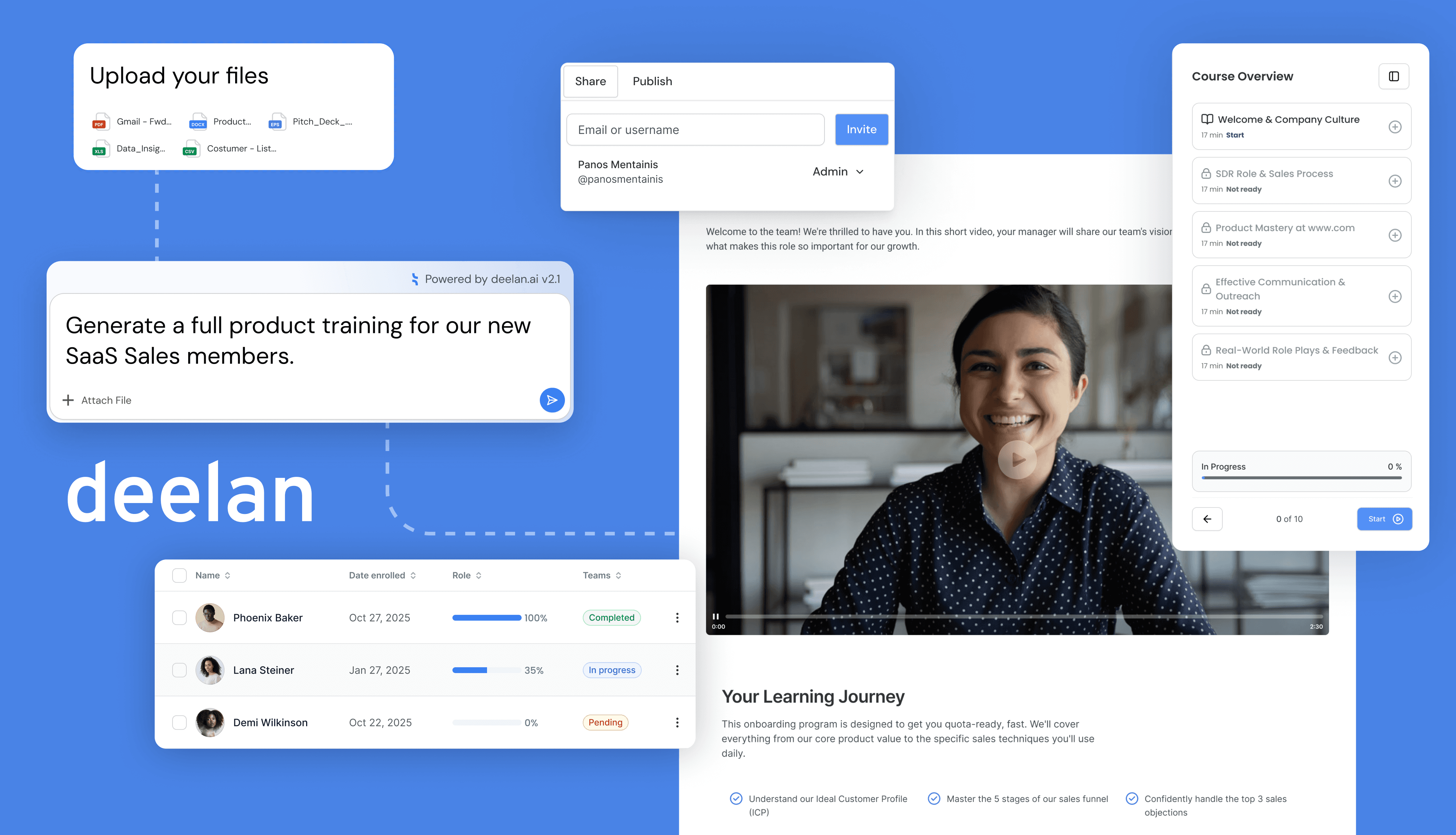
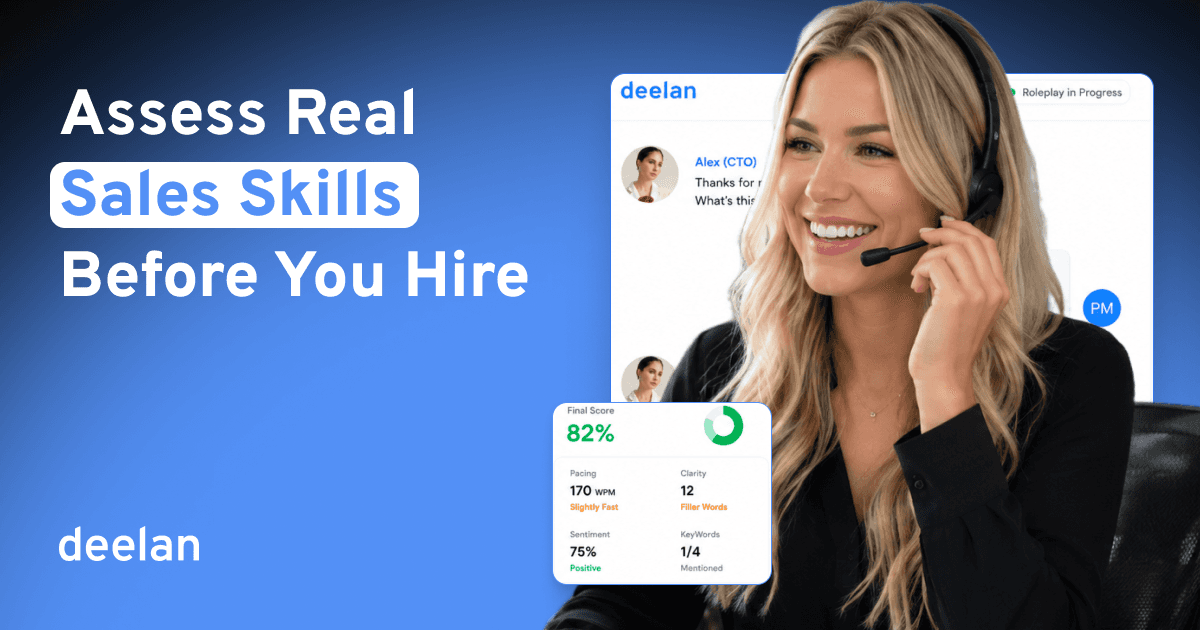
Traditional roleplay can feel forced. With Deelan, reps can practice these 12 sales roleplay scenarios asynchronously against an AI persona, in private. They get instant feedback on tone, discovery questions, and structure before - ever jumping on a real call.
FAQ
How often should sales teams do roleplay?
Weekly or biweekly sessions deliver the best results.
How long should each session be?
15 minutes per rep is enough when focused.
What should we score?
Listening, questioning, value framing, and next steps.
Can sales roleplays work remotely?
Yes - async roleplay works just as well when structured.
Take Your Sales Training to the Next Level
Traditional, in-person roleplay can often feel forced and unproductive. With Deelan, your reps can practice these 12 scenarios against an AI-powered buyer persona in private. They receive instant, objective feedback on their tone, discovery structure, and objection handling-allowing them to master their pitch before they ever get on a live call with a real prospect.
Ready to automate your sales coaching? [Book a Demo today.]