

Benefits of Employee Training for Businesses
In a high-growth environment, your team is your most expensive asset - and your greatest lever for revenue. However, current data suggests that most organizations are leaving money on the table. Brands with formalized training programs see 218% higher income per employee than those without.
Employee skill enhancement is a key advantage. For sales and revenue leaders, training is about reducing ramp-up time, increasing win rates, and protecting your talent pipeline.
Online training provides flexibility and accessibility. It is a cost-effective solution for businesses. Employees can learn at their own pace. This approach suits diverse learning needs.
Training also improves job satisfaction. Employees feel valued and engaged. This reduces turnover rates and saves costs. A strong training program fosters a positive company culture.
Investing in training leads to innovation. It encourages problem-solving and creativity. Companies that prioritize training see higher returns. They enjoy increased efficiency and productivity.
In summary, training employees is a smart investment. It benefits both the business and its workforce.
What Are the Advantages of Training Employees?
Training employees brings numerous advantages that cannot be overlooked. A primary benefit is improved performance. Well-trained employees can handle tasks more efficiently and effectively. Their productivity levels often soar, reflecting positively on the business.
Furthermore, training helps in skill enhancement. Employees acquire new competencies, boosting their confidence and capability. They become more adaptable to change.
Training also plays a significant role in career development. Employees see training as an investment in their future. This perspective increases job satisfaction. Consequently, businesses experience lower turnover rates and associated recruitment costs.
Investing in training fosters innovation within the team. Employees equipped with new skills are more creative in problem-solving. They contribute fresh perspectives that drive business growth.
Additionally, training enhances customer satisfaction. Employees can provide better service and respond effectively to customer needs. Satisfied customers are likely to return, fostering brand loyalty.
Key advantages of employee training include:
Improved productivity and performance
Enhanced skill sets and competencies
Lower turnover rates
Increased innovation and problem-solving
Better customer service and satisfaction
Lastly, a well-trained workforce strengthens organizational resilience. Employees are better prepared to tackle industry changes. They can navigate technological advancements with ease. Overall, training employees builds a robust foundation for long-term success.
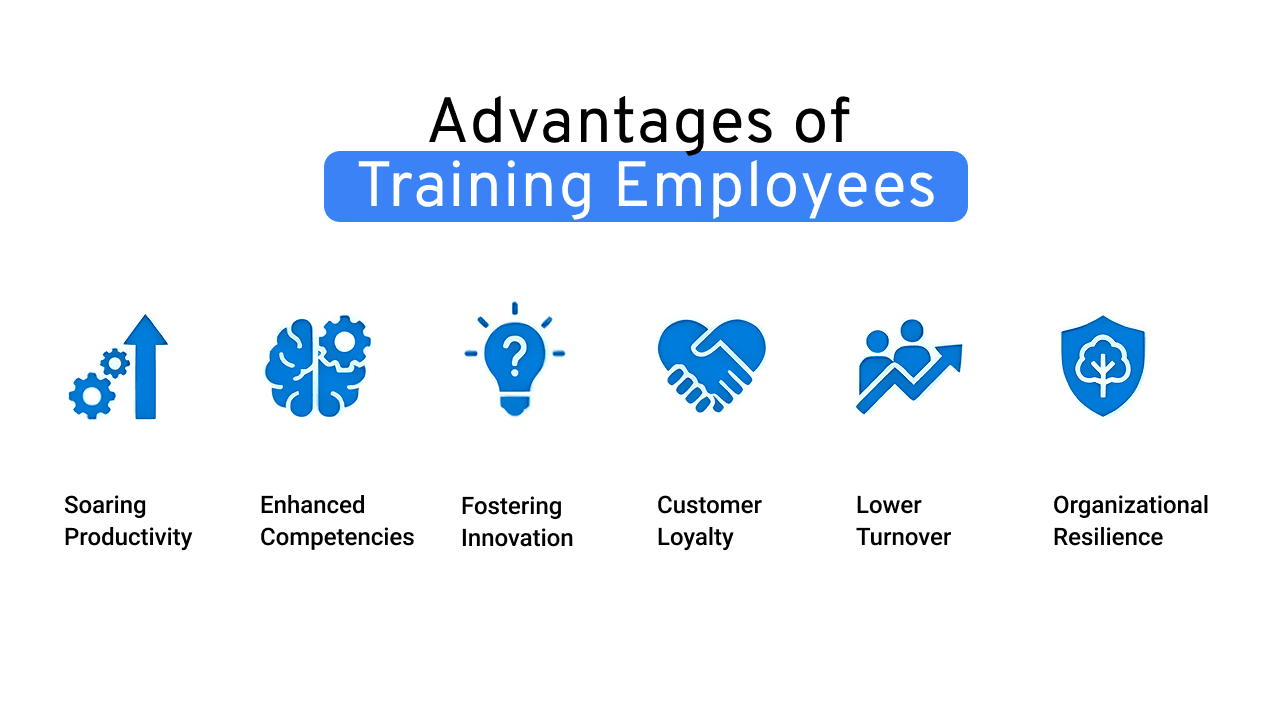
Employee Skill Enhancement for driving performance and productivity
The most immediate advantage of training employees is the surge in output quality. Well-trained teams don't just work harder; they work smarter. Companies that prioritize learning are 17% more productive and 21% more profitable.
Continual development keeps your workforce sharp. When employees master the latest software, sales methodologies, or operational tools, they move from "getting by" to "driving results."
Skill Proficiency: Mastery of new tools reduces time-to-completion for complex tasks.
Autonomy: High-competence employees require less direct supervision, freeing up leaders to focus on high-level strategy rather than micromanagement.
Soft Skills: Training in communication and teamwork is essential for cross-departmental collaboration, which is often where revenue friction occurs.
The Retention Engine and Talent Attraction
With 52% of employees globally seeking new job opportunities as of late 2024, retention is your biggest cost-saving lever. Replacing a high-performer is significantly more expensive than upskilling one.
Impact on Employee Engagement and Retention
Training is the most effective way to communicate that you value an employee’s future. 80% of employees would stay longer at a company if they received better training.
Attracting Top Talent: High-performers actively seek workplaces that offer "career advancement pathways" and "skill enrichment workshops."
The Manager’s Role: 42% of people who quit report that their manager could have proactively intervened. Training programs provide the framework for these critical growth conversations.
Reducing "Silent Churn": Proactive development prevents the disengagement that leads 36% of employees to quit without ever speaking to leadership about their dissatisfaction.
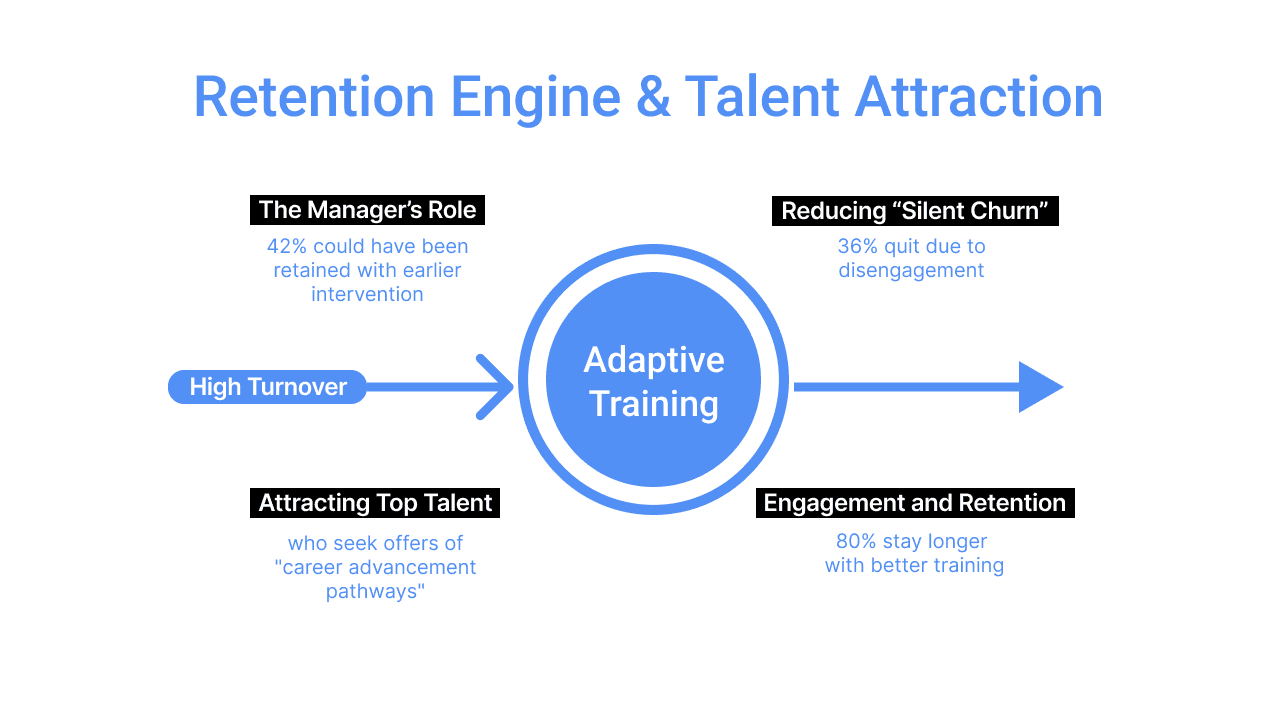
For businesses to thrive, attracting and keeping top talent is essential. Employee training programs play a crucial role in achieving this. High-performing individuals seek workplaces that invest in their growth and development.
Training serves as a compelling draw for prospective employees. When a company is known for offering robust development opportunities, it sets itself apart from the competition. Key training components include:
Continuous learning opportunities
Career advancement pathways
Skill enrichment workshops
Retention rates improve when employees feel their skills are valued and nurtured. Investing in training demonstrates a commitment to employee success, leading to higher job satisfaction and long-term loyalty. With improved skills, employees are more likely to excel in their roles, contributing positively to the business.
Innovation and Future-Proofing
The business landscape changes faster than traditional hiring can keep up with. Upskilling employees is the only way to close the skill gap without the massive overhead of constant recruitment.
Fostering Innovation and Problem-Solving
Training exposes your team to diverse perspectives and advanced analytical methodologies.
Out-of-the-box Thinking: Structured training encourages creative solutions to stagnant business problems.
Organizational Resilience: A workforce trained in compliance, safety, and risk management can navigate industry shifts and technological advancements with ease.
The Leadership Pipeline: Only 5% of brands have implemented leadership training across all levels. By developing management skills early, you ensure your organization has a "bench" of future leaders ready to step up.
Scalable Learning through Technology
To achieve these results without a massive L&D department, modern businesses are turning to Online Training for Employees.
The Advantages of Digital Learning
Online learning is not just a convenience; it is a performance booster.
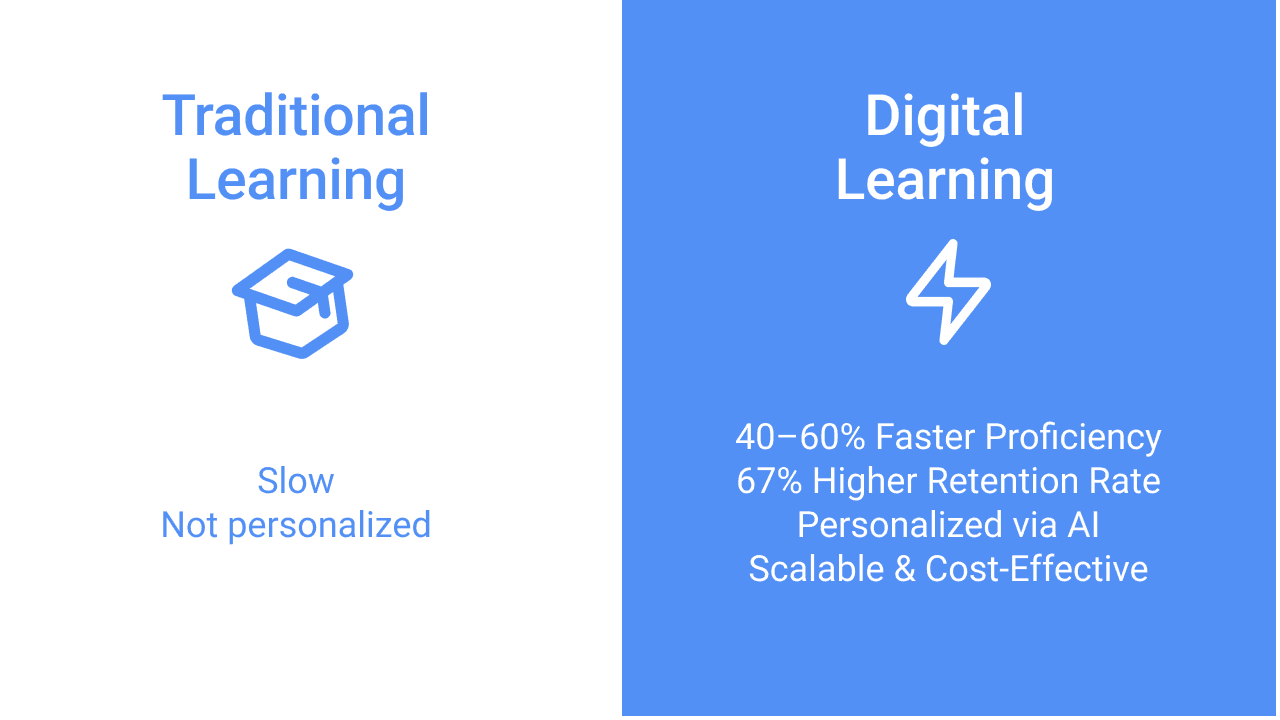
Efficiency: Employees reach proficiency 40% to 60% faster in online environments compared to traditional classrooms.
Customization: 49% of HR departments now use AI to craft personalized learning journeys, ensuring training is relevant to each specific role.
Cost-Effectiveness: Digital resources are reusable and scalable, significantly reducing travel and accommodation costs while allowing employees to learn at their own pace - an approach that increases retention by up to 67%.
Building a Positive Company Culture Through Training
A positive company culture is vital for a thriving business environment. Employee training is instrumental in fostering this culture, as it aligns individual goals with organizational values. Training instills shared principles and practices among employees.
Training programs help to create an environment of mutual respect and cooperation. Employees who undergo training have a better understanding of company policies and ethics. This understanding leads to increased cohesion and teamwork.
Furthermore, training initiatives can include focus areas such as:
Diversity and inclusion
Team-building exercises
Company values and ethics
When employees feel valued and aligned with the company's mission, morale improves significantly. A positive culture reduces turnover and attracts top talent, contributing to sustained business success. This harmonious environment not only boosts employee satisfaction but also enhances productivity and innovation.
Best Practices for Implementing Employee Training Programs
Implementing an effective employee training program requires strategic planning and execution. The first step is assessing the specific needs of both the business and its employees. Tailoring training to address skill gaps and align with company goals ensures maximum impact.
It's vital to choose the right training methods that suit your workforce. Blending traditional and digital approaches can cater to diverse learning preferences. Additionally, providing ongoing support and feedback is critical to maintaining engagement and ensuring continuous improvement.
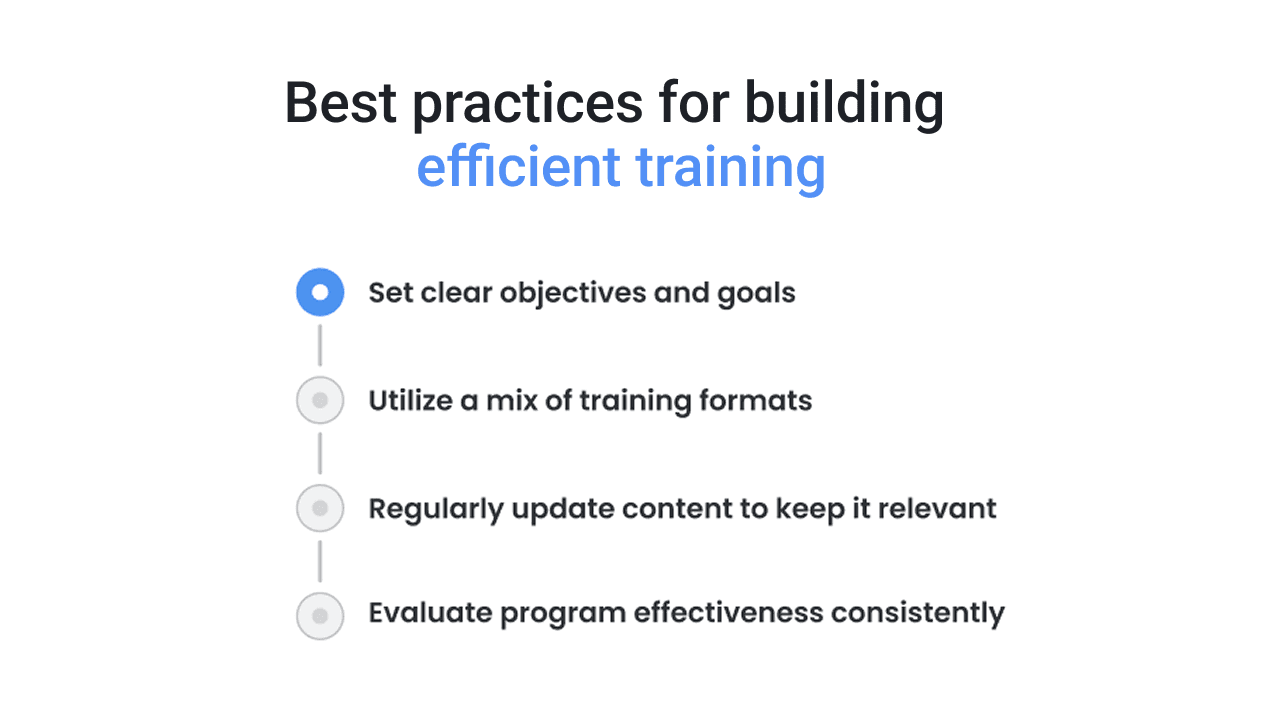
To build a successful training program, consider the following best practices:
Set clear objectives and goals
Utilize a mix of training formats
Regularly update content to keep it relevant
Evaluate program effectiveness consistently
Monitoring and measuring the outcomes of training programs is essential for sustained success. Through careful analysis of results, businesses can refine and adapt their strategies for future training initiatives, fostering a culture of continuous development.
Measuring the ROI of Employee Training
Evaluating the return on investment (ROI) of employee training is essential for determining its effectiveness and value. Quantifying ROI can help businesses justify the training expenses and optimize future programs. Start by identifying key performance indicators (KPIs) relevant to your business objectives.
Tracking the impact of training on these KPIs provides clear insights into program effectiveness. Monitor improvements in productivity, quality, and engagement levels to gauge training success. Consider the following steps:
Define specific KPIs for evaluation
Collect pre- and post-training data
Analyze trends and improvements
Factor in both tangible and intangible benefits
By systematically evaluating ROI, companies can make informed decisions about their training investments and continue to evolve and enhance their programs for maximum benefit.
Investing in Employee Training for Long-Term Success
For small and medium-sized businesses (SMBs) and fast-growing startups, building a dedicated L&D department is often impossible. Deelan AI, as the world’s first adaptive learning platform specifically built for revenue teams, enables managers to create high-quality training in the flow of work.
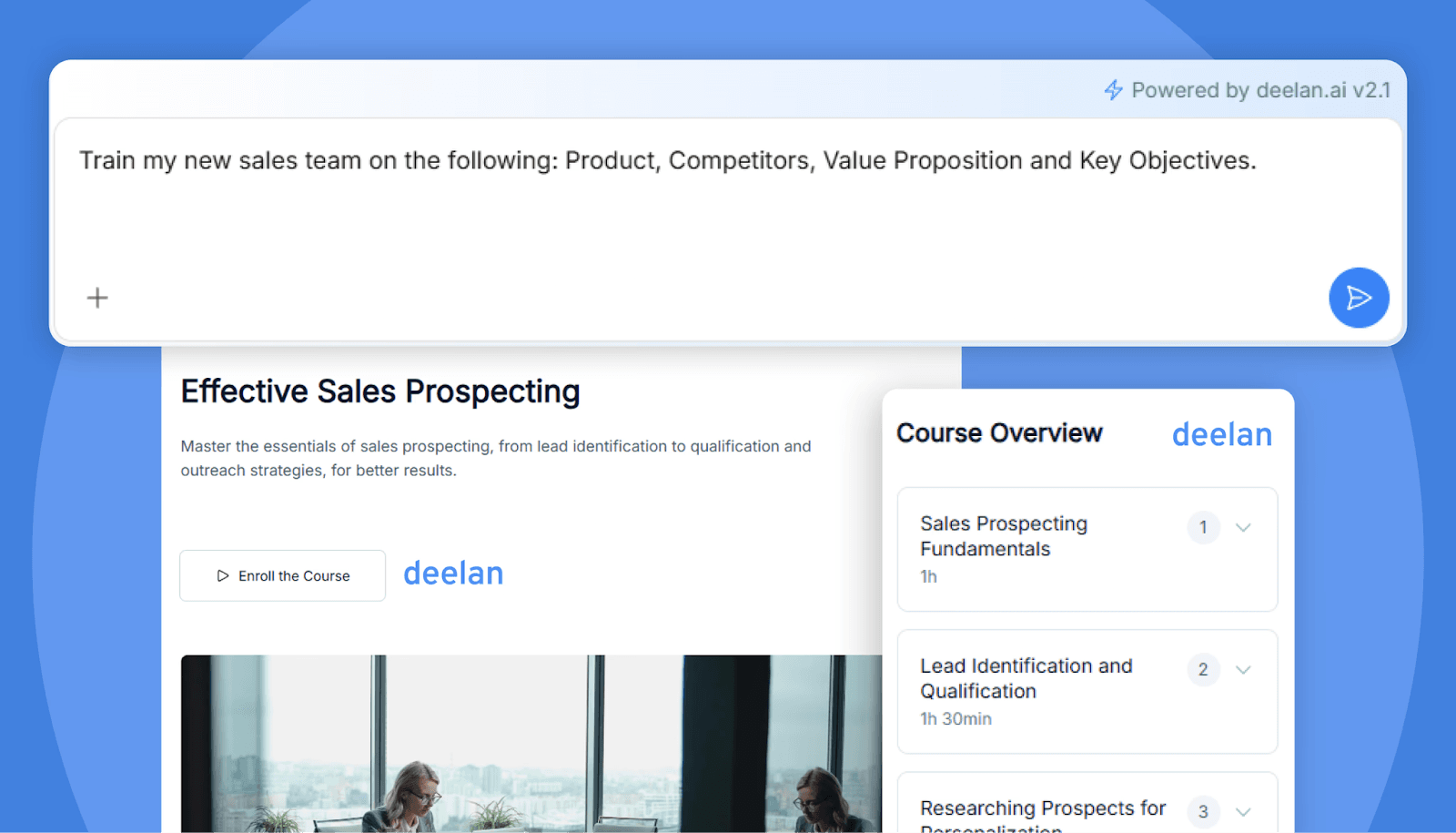
Generate a complete sales onboarding course, a technical product workshop, or a series of podcasts and roleplays - all with a single prompt. Deelan allows you to attach your existing sales decks or documents and instantly transform them into a structured, interactive learning journey. This provides not only knowledge, but also opportunity to practice, change behavior and eventually improve performance.
It is the tool for the busy leader who needs their team to perform better, starting today.