If your workforce speaks more than one language, your LMS has a job that most platforms weren't originally designed for.
"Multi-language support" on a vendor's website can mean anything from a language toggle on the login screen to a full localization engine with regional compliance controls, AI-generated translation workflows, and practice scenarios that actually sound like the markets your reps are selling into.
This guide breaks down what separates a genuinely multilingual LMS from one that just has a drop-down menu — and how to evaluate your options if you're supporting a global or distributed team.
What to Look For: Enterprise Multilingual LMS Checklist
If you’re buying for a large workforce, use this checklist to separate “supports multiple languages” from a truly enterprise-ready multilingual platform:
1. Language Switching and Preference Handling
Easy language switching at login and inside the platform
Support for regional language variants (Brazilian Portuguese vs. European Portuguese, for example)
Learner preferences saved and respected across sessions
2. Localization — Not Just Translation
Translation converts words. Localization converts meaning.
A localized platform handles:
Date formats, time zones, currencies, and number formats
Region-specific policy and compliance references
Consistent brand voice and terminology in every language
Examples and scenarios that are contextually relevant to each market — not just translated from English
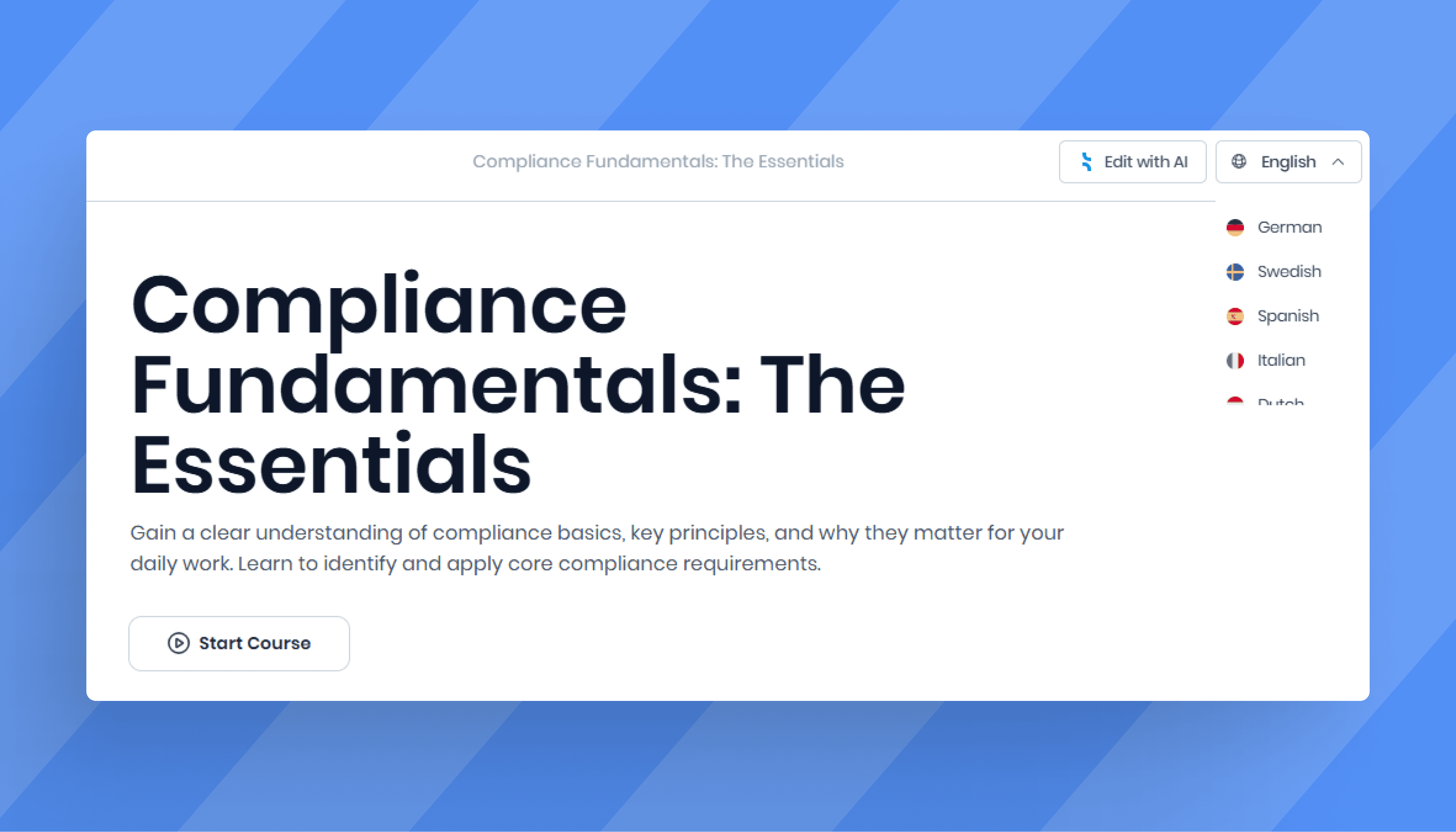
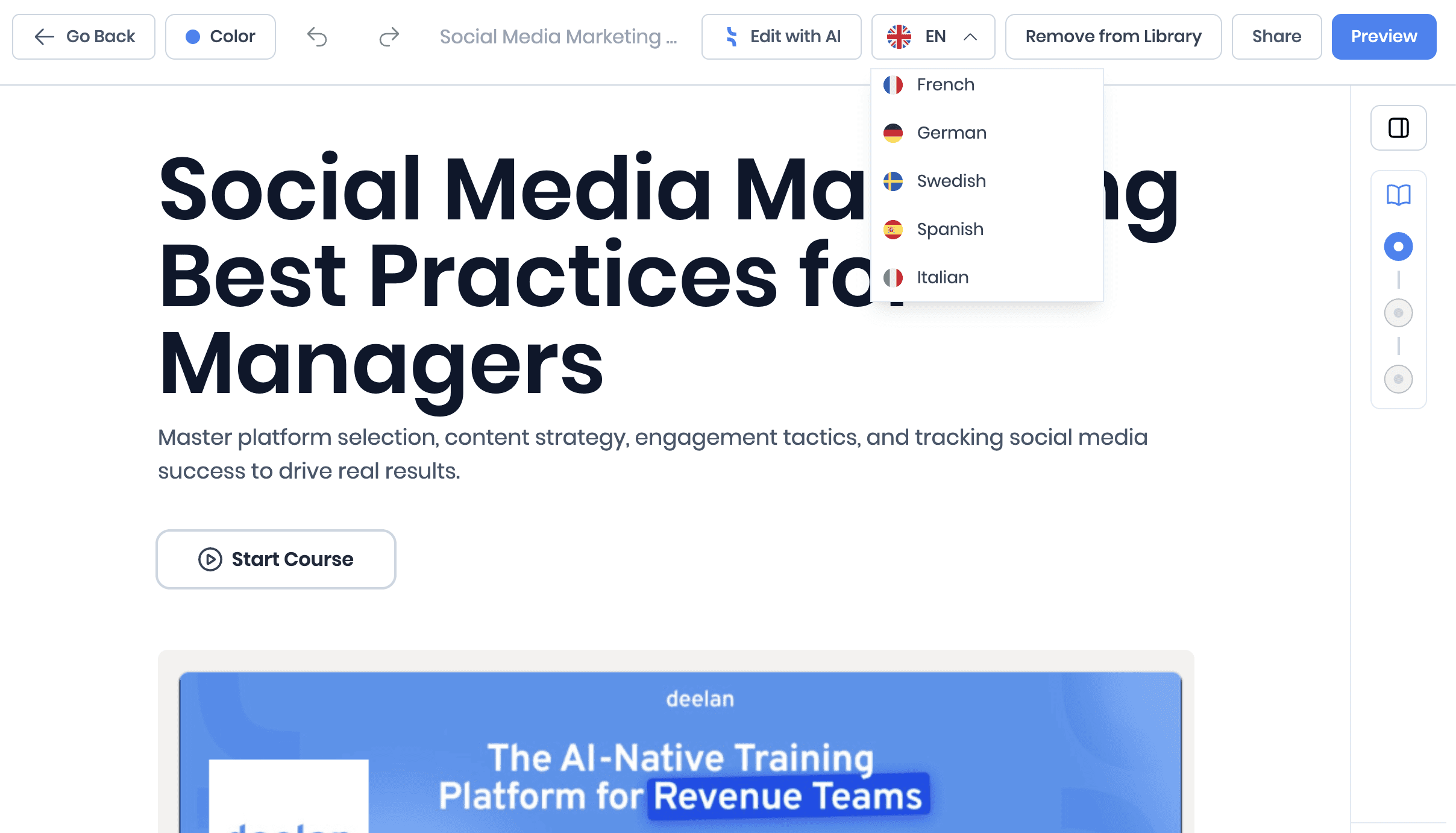
3. Translation Workflow You Can Scale
The question isn't just "can it translate?" It's "how does new content get translated when your product changes next quarter?"
Look for:
AI-assisted translation drafts for speed
Optional human review stages for accuracy on high-stakes content
Approval workflows (SME review, legal/compliance sign-off, publish)
Version control across language variants
4. Practice That Sounds Like the Real World
This is where most platforms stop short.
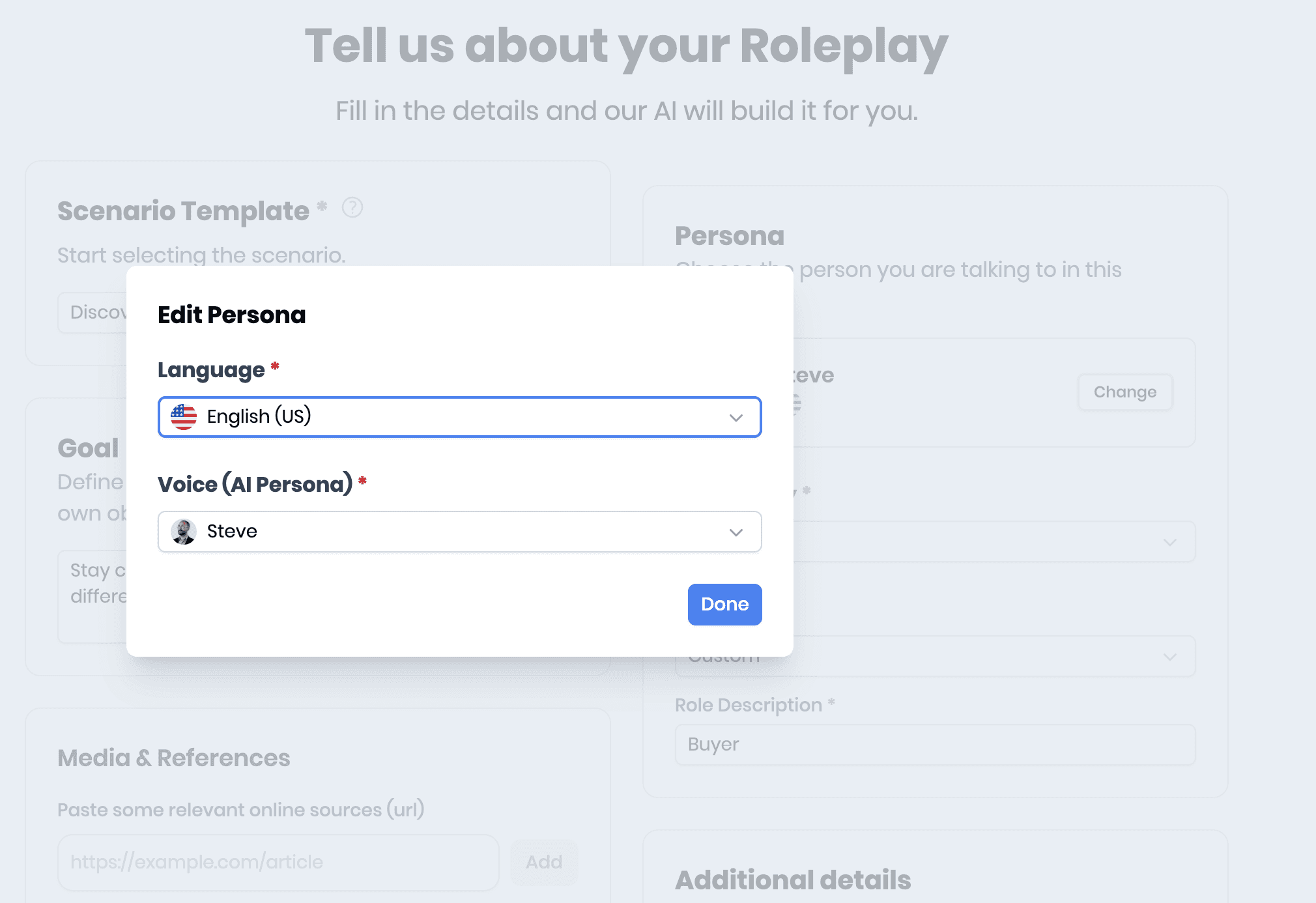
For teams that practice customer-facing conversations — sales, support, onboarding — the accent and dialect used in simulated calls matters. A French sales rep practicing an enterprise discovery call should hear responses that sound like a French enterprise buyer, not a generic AI voice.
Look for roleplay and simulation tools that offer:
Language-specific AI roleplay scenarios
Regional accents (British English vs. American English, for instance)
Feedback delivered in the learner's language, not just the training language
5. Language-Specific Reporting and Governance
Completion and assessment performance segmented by language and region
Admin permissions scoped by region or business unit
Audit trails showing who changed what, in which language, and when
Reporting that works for a compliance team in Germany and a revenue team in Singapore simultaneously
How Multilingual LMS Platforms Compare
Traditional Enterprise LMS
Best for: complex org structures, compliance-heavy requirements, large dedicated admin teams
Strengths: mature governance models, extensive integration ecosystems, robust reporting and audit capabilities
Watch-outs: Translation workflows often require add-ons or manual processes. Localization tends to be infrastructure you configure, not a workflow that's built in. Personalization is limited unless you've invested heavily in the implementation.
AI-Enabled Learning Platforms (Newer Generation)
Best for: teams that need faster content creation, more frequent updates, and personalized learning at scale
Strengths: AI-assisted authoring and translation, faster localization cycles, adaptive paths by role and skill, practice-based learning including simulations. Some platforms in this category can take existing materials and generate multilingual training in a fraction of the time a traditional LMS requires.
Watch-outs: Data governance and language quality assurance workflows for regulated content need careful evaluation. Not all "AI translation" produces output that's ready for compliance sign-off without review.
Open-Source / Highly Customizable LMS
Best for: organizations with strong internal technical resources and specific customization requirements
Strengths: flexibility, extensibility, no vendor lock-in on the platform itself
Watch-outs: Multilingual support quality depends almost entirely on how it's implemented and maintained. The "free" platform often means significant internal engineering cost to localize properly.
Where Deelan stands out for multilingual teams
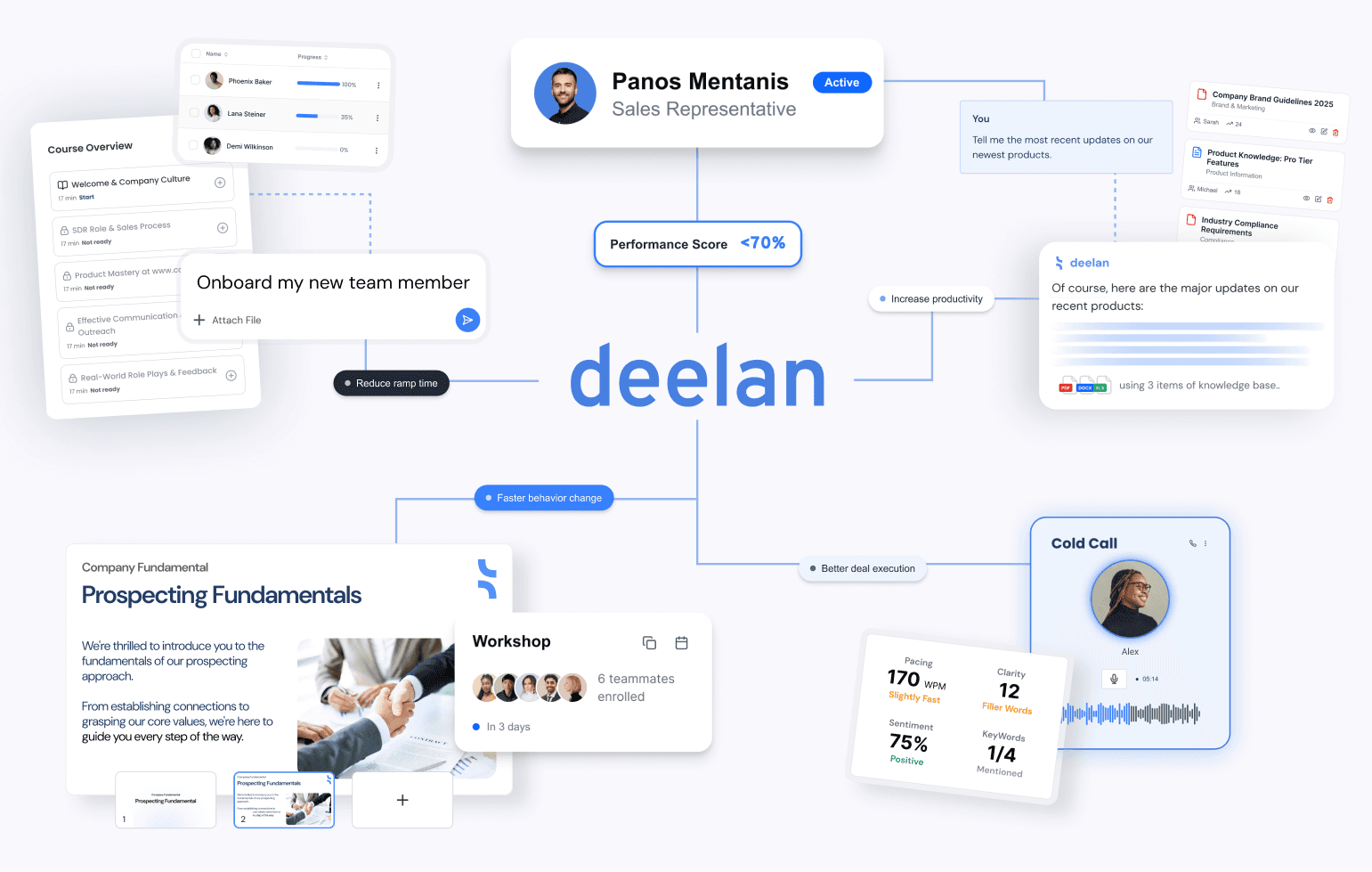
Deelan is an AI adaptive learning platform (not a generic LMS) built for modern teams - especially revenue teams that need onboarding, enablement, and continuous practice to scale across regions.
How Deelan helps
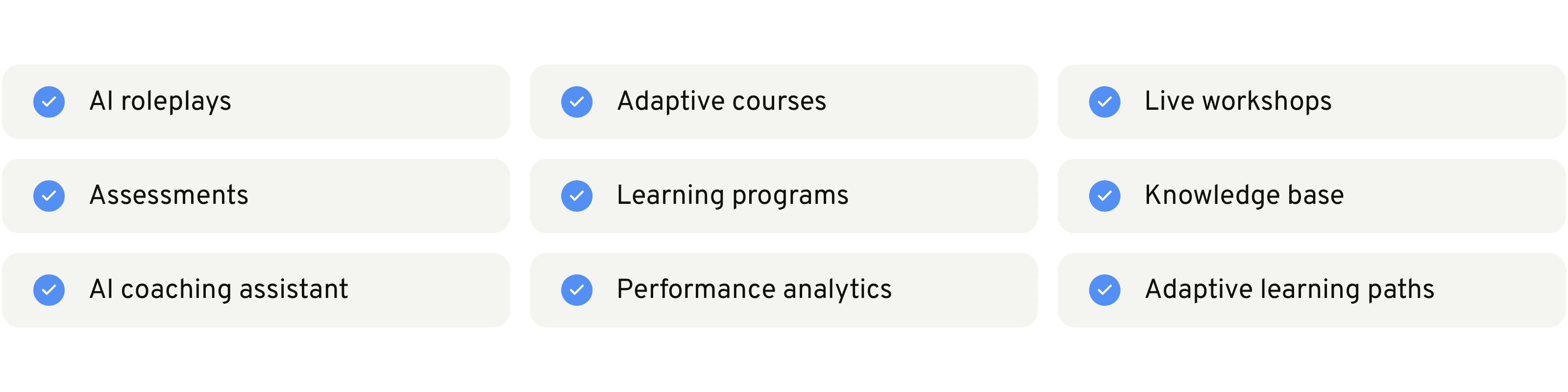
Create training once, then deliver it across languages (30+ languages)
Generate structured courses in minutes with AI-faster iteration when products, messaging, or policies change
Adaptive learning paths tailored by role, seniority, and skill gaps
Practice-based learning through AI roleplays with feedback - useful for sales calls, objections, discovery, and customer conversations
A knowledge base that turns company docs into a searchable source of truth - reducing “tribal knowledge” and repeated coaching
Assessments that measure real gaps, not just completion
White-labeling + analytics so training looks like your brand and performance is measurable
FAQs about multilingual LMS
Q: How many languages can Deelan support?
A: Currently, Deelan excels in English, French, German, and Luxembourgish, with a rapidly expanding library of international languages to support global enterprise needs.
Q: Can I white-label the platform for different regions?
A: Yes. Deelan offers full white-labeling and branding capabilities, ensuring that your training looks and feels native to your corporate identity in every market.
Q: Is AI translation enough for enterprise training?
A: AI is excellent for speed and scale. For high-stakes content, add human review for accuracy and nuance.
Build multilingual training that actually scales
If you’re supporting multilingual teams, Deelan helps you create training faster, translate and deliver it across languages, and adapt learning paths by role and skill gaps.