Effective training methods for employees are the backbone of high-performing organizations. By using a mix of on-the-job training methods, digital learning, and latest corporate training techniques, companies can bridge skill gaps and improve retention.
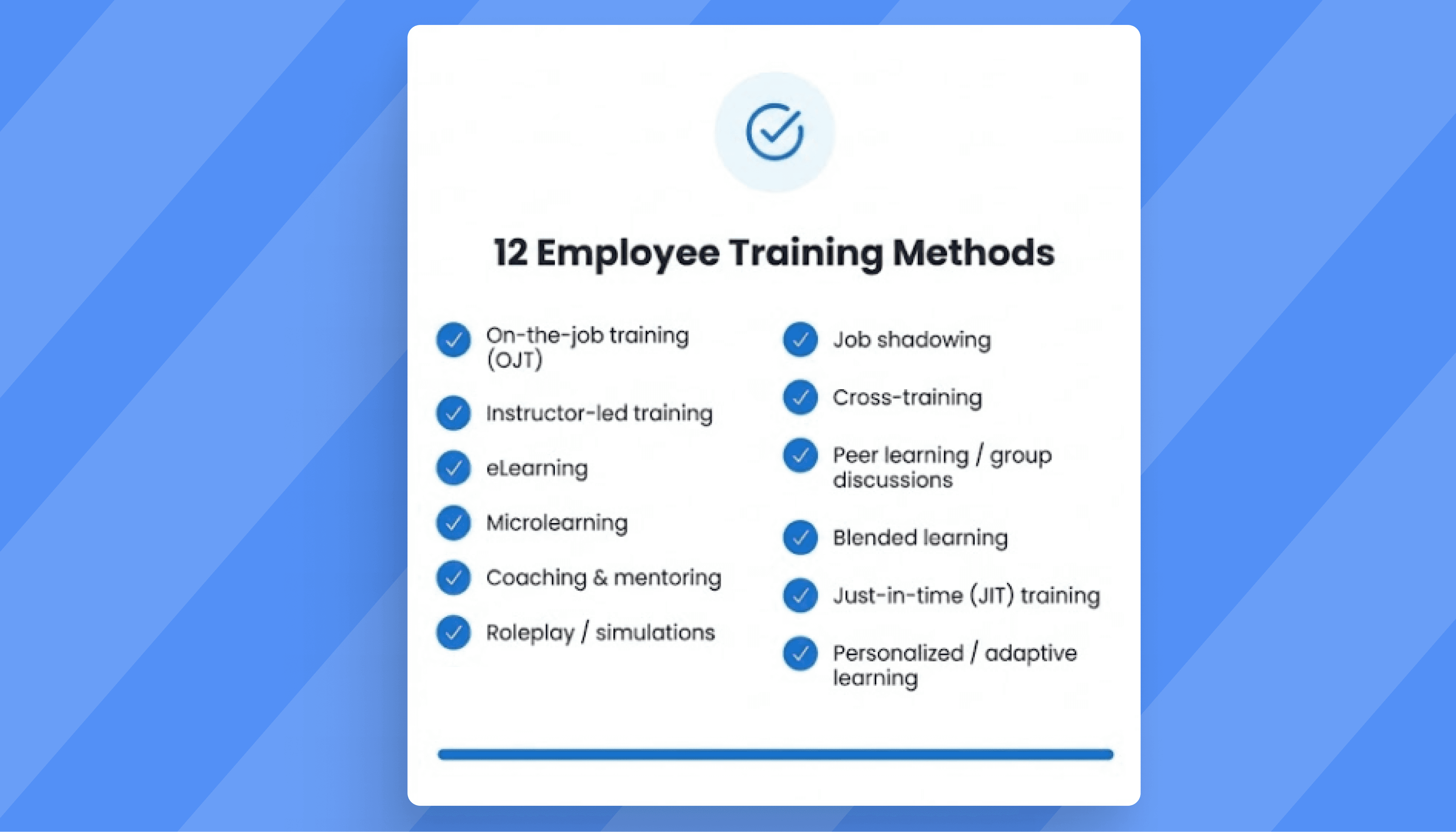
The most effective options include on-the-job training, instructor-led sessions, eLearning, microlearning, coaching and mentoring, roleplay/simulations, job shadowing, and blended learning. The best results typically come from combining methods based on role, skill complexity, and time-to-productivity goals.
Below are the top training techniques for employees, plus a compact comparison table and a simple framework to pick the best training options for your team.
Comparison table: employee training methods
Training method | Best for | Strengths | Trade-offs |
|---|---|---|---|
On-the-job training | Practical tasks, ramping | Immediate application | Can be inconsistent without structure |
Instructor-led training | Complex skills, alignment | Real-time feedback | Scheduling + time away from work |
eLearning | Scale + standardization | Flexible, trackable | Can feel passive if not interactive |
Microlearning | Reinforcement, updates | Fast, sticky, easy to repeat | Not ideal for deep skill shifts alone |
Coaching/mentoring | Performance improvement | Personalized, high impact | Requires manager time + skill |
Customer-facing skills | Safe practice, confidence | Needs scenarios + feedback loop | |
Job shadowing | New hires/transfers | Real-world context | Observation only unless paired with practice |
Cross-training | Flexibility, handoffs | Builds resilience + teamwork | Can overwhelm if poorly paced |
Peer learning | Best practices | Culture + knowledge transfer | Needs facilitation to stay focused |
Blended learning | Most orgs | Balanced + effective | Requires planning |
Just-in-time training | Process steps | Right info at right time | Limited for complex behavior change |
Large/fast orgs | Efficient + targeted | Needs data + platform support |
Top employee training methods and techniques
1) On-the-job training (OJT)
What it is: Learning by doing real tasks with guidance, checklists, and feedback in the flow of work.
Best for: Operational roles, service teams, sales reps ramping on talk tracks, new tools/processes.
Example: A new SDR practices live call blocks with a manager reviewing two recordings per day.
2) Instructor-led training (in-person + virtual)
What it is: A facilitator teaches in real time using demos, discussion, activities, and Q&A.
Best for: Complex concepts, behavior change, workshops, leadership, product launches.
Example: A virtual workshop teaches discovery frameworks, then teams roleplay in breakout rooms.
3) eLearning (self-paced modules)
What it is: Digital courses (videos, quizzes, scenarios) usually housed in an LMS.
Best for: Scalable onboarding, compliance, product knowledge, distributed teams.
Example: New hires complete a 60-minute onboarding path covering tools, policies, and basics.
4) Microlearning
What it is: Short lessons (typically 3–10 minutes) focused on one skill or concept.
Best for: Busy teams, reinforcement, product updates, “one new thing” training.
Example: A rep watches a 5-minute micro-lesson on handling a common pricing objection.
5) Coaching & mentoring
What it is: One-to-one guidance focused on performance, skill growth, and habits.
Best for: Sales, management, high-impact roles, leadership development, skill gaps.
Example: A manager runs weekly coaching using a simple scorecard (strengths + one focus area).
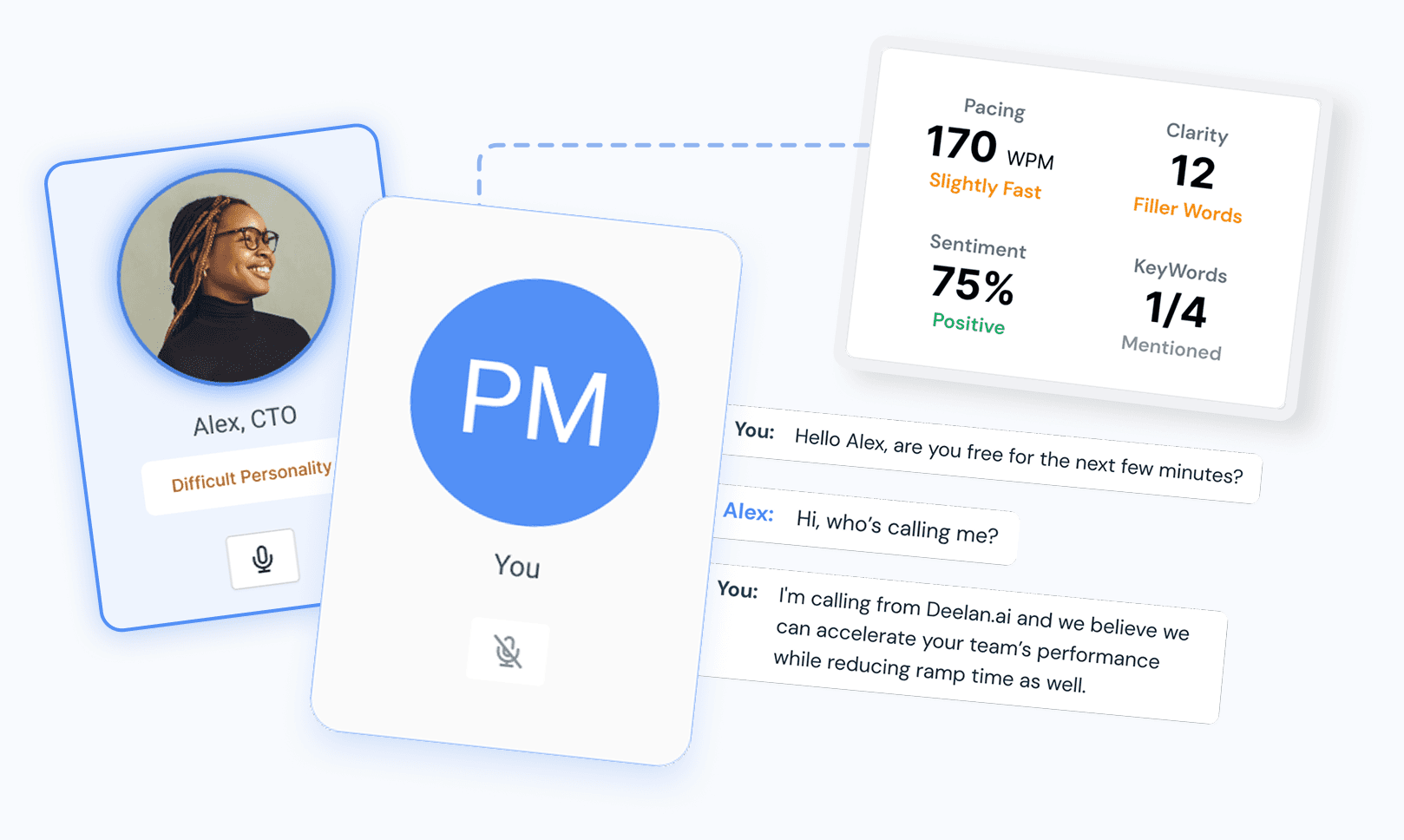
6) Roleplay / simulations (including AI roleplays)
What it is: Practice real situations in a safe environment (calls, objections, demos, conflict).
Best for: Customer-facing roles, sales, support, leadership conversations, high-stakes scenarios.
Example: A support agent practices de-escalation scripts in simulated angry-customer calls.
7) Job shadowing
What it is: Observation-based learning -watch a top performer do the role end-to-end.
Best for: New hires, internal transfers, learning workflows, building role clarity.
Example: A new CSM shadows a renewal call, then reviews what happened using a checklist.
8) Cross-training
What it is: Teaching skills across roles or functions to increase flexibility and collaboration.
Best for: Smaller teams, coverage planning, breaking silos, improving handoffs.
Example: Marketing learns basic CRM hygiene to improve lead quality and pipeline visibility.
9) Peer learning / group discussions
What it is: Team-based learning through sharing, debriefs, critique sessions, and peer feedback.
Best for: Knowledge sharing, culture building, continuous improvement, best practice transfer.
Example: After a product update, reps share “what worked” and “what confused customers” in a 20-minute huddle.
10) Blended learning
What it is: A mix of formats - typically eLearning for fundamentals + live practice + coaching.
Best for: Most teams (because people learn differently and need reinforcement).
Example: Learners complete a module, join a workshop, then do two coached roleplays.
11) Just-in-time (JIT) training
What it is: On-demand training delivered exactly when needed (checklists, quick videos, “how-to”).
Best for: Tool/process steps, infrequent tasks, new features, frontline execution.
Example: Before a complex demo, a rep opens a 2-minute “demo flow” checklist.
12) Personalized/adaptive learning (AI-supported)
What it is: Training paths adjust by role, skill gaps, and performance signals - so learners don’t waste time on what they already know.
Best for: Revenue teams, large organizations, fast-changing products, skills-based enablement.
Example: An adaptive path assigns extra objection handling practice to reps losing deals at pricing.
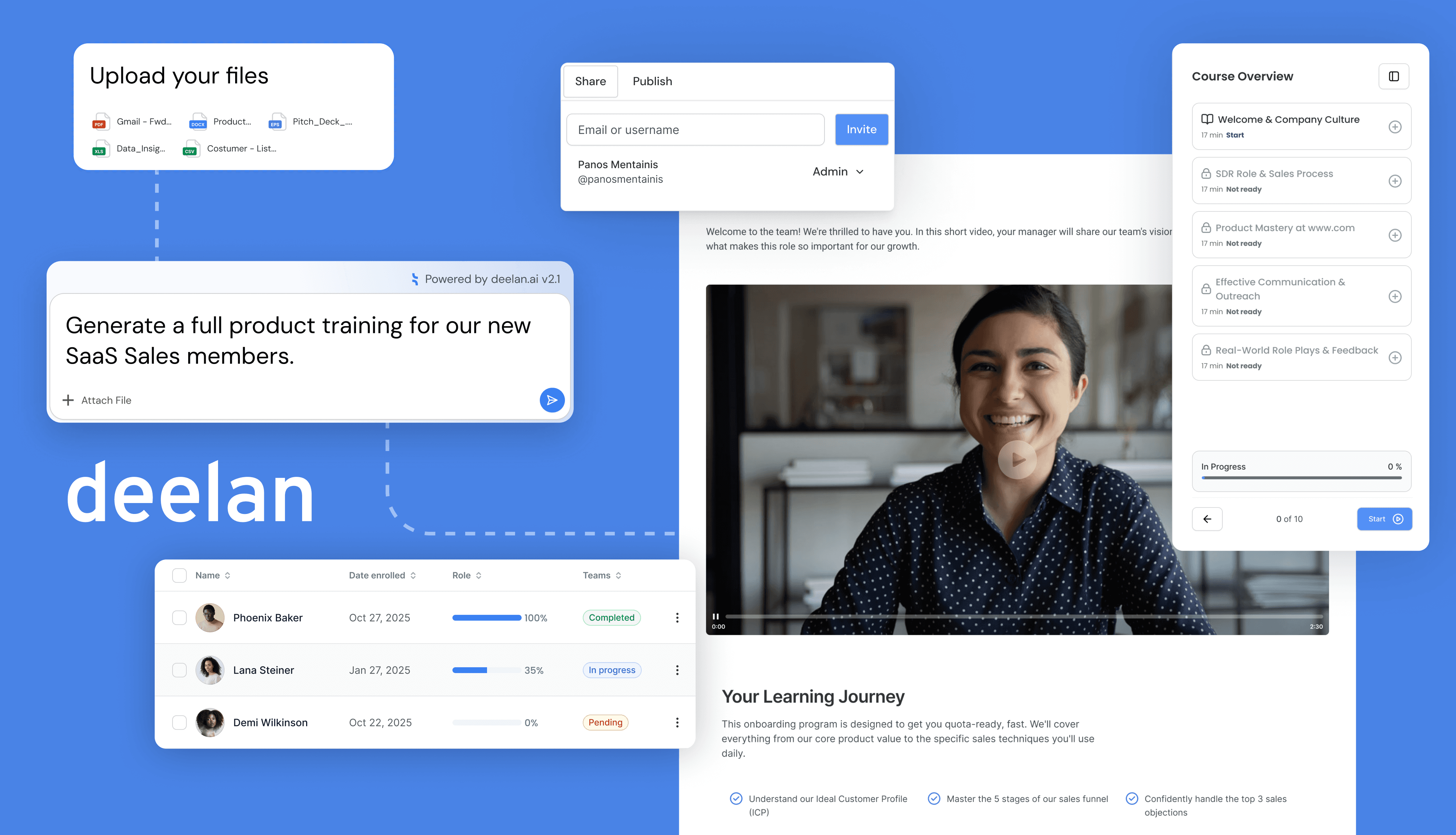
Latest corporate training techniques to note: AI roleplays for conversation practice, adaptive paths that reduce training time, and analytics-driven coaching that focuses managers on the highest-impact gaps. Platforms like Deelan (Deelan.ai) are an example of tools that combine roleplays, assessments, workshops, and skill analytics in one place—useful when you’re trying to scale training without scaling management time.
Common mistakes that make training fail (and fixes)
Mistake: Training is “one big event.”
Fix: Use spaced reinforcement (microlearning + short practice checkpoints).Mistake: Measuring completion instead of performance.
Fix: Track skill outcomes (quiz mastery, roleplay scores, on-the-job KPIs).Mistake: Too generic for real roles.
Fix: Build role-based paths (SDR vs AE vs CSM) and use real scenarios.Mistake: No practice, just content.
Fix: Add simulations/roleplays + feedback loops.Mistake: Managers repeat the same coaching endlessly.
Fix: Standardize coaching templates and reuse training modules.Mistake: Content gets outdated fast.
Fix: Maintain a single “source of truth” and update in small pieces (micro + JIT).
FAQ
What is the best method to train employees?
The best method is usually a blended approach: eLearning for foundations, roleplay/simulations for practice, and coaching for reinforcement - especially when training aims to improve employee performance.
What are workplace training methods?
Workplace training methods include on-the-job training, instructor-led sessions, eLearning, microlearning, coaching, job shadowing, peer learning, and just-in-time training delivered in the flow of work.
How do you improve employee performance through training?
Focus on role-relevant skills, add deliberate practice (roleplays/simulations), reinforce over time (microlearning), and tie training to measurable outcomes (quality, win rates, productivity, customer satisfaction).
What are the most effective corporate training methods today?
Many teams combine modern techniques like AI-assisted roleplays, adaptive learning paths, and analytics-driven coaching with proven methods like blended learning and OJT.
Want a simple starting point?
If you want one place to build courses, roleplays, workshops, and assessments quickly, Deelan is worth a look - especially for revenue teams that need faster ramp and consistent execution without turning managers into full-time trainers.
Would you like to see how Deelan can turn your sales playbooks into interactive roleplays? Book a quick demo here.