AI-powered training makes it easier to create learning programs quickly, adapt them to each person’s needs, and provide constant feedback.
There are many potential benefits, and for many teams it quickly becomes clear that the approach is worth exploring.
But if you’re just starting, you might wonder where you should begin? What should you train first?
From what we have seen working with organisations, there are a few types of training that tend to work particularly well in this environment. Below are three ideas that teams can experiment with.
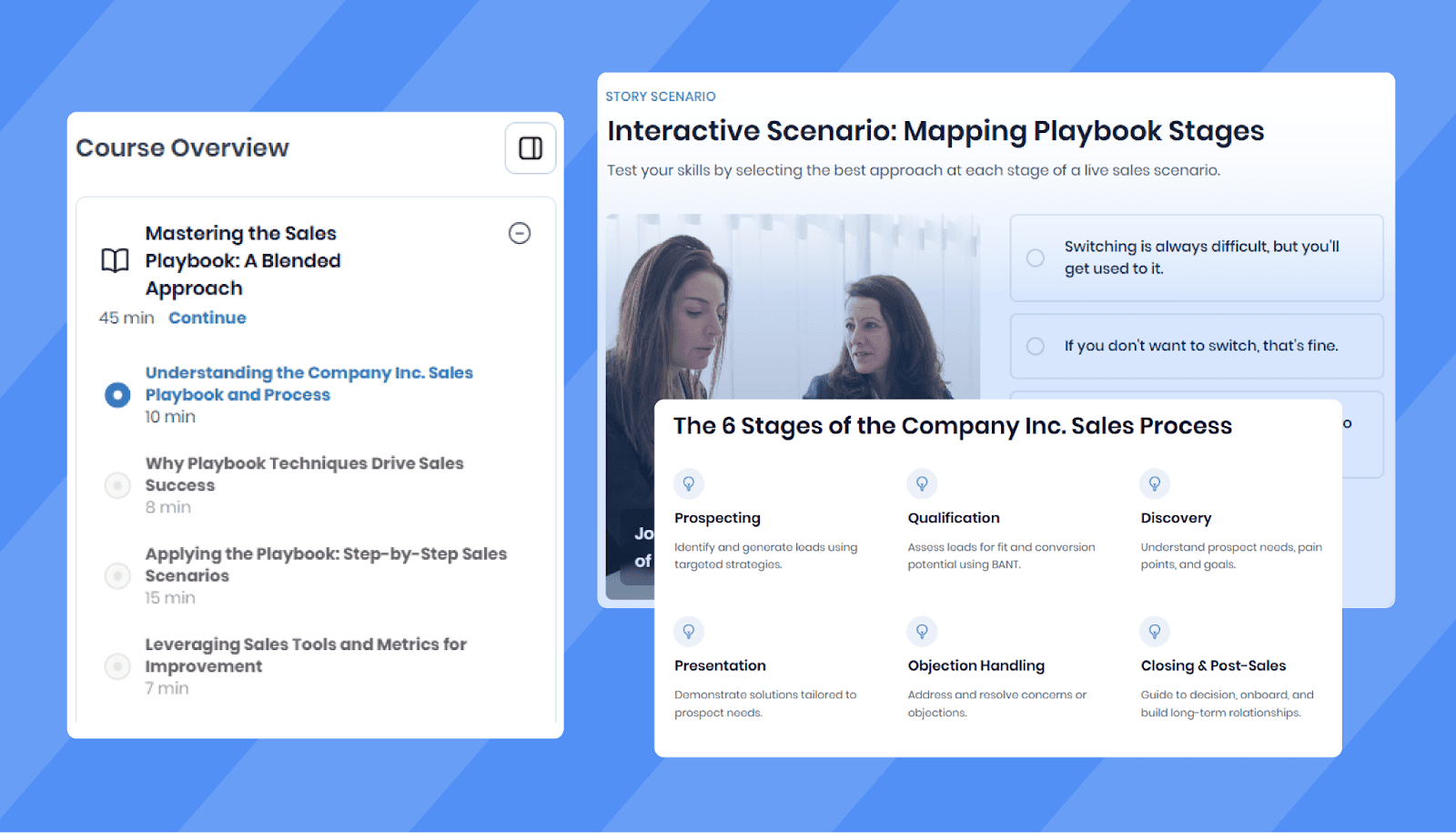
1. Turn Your Playbooks into Practice
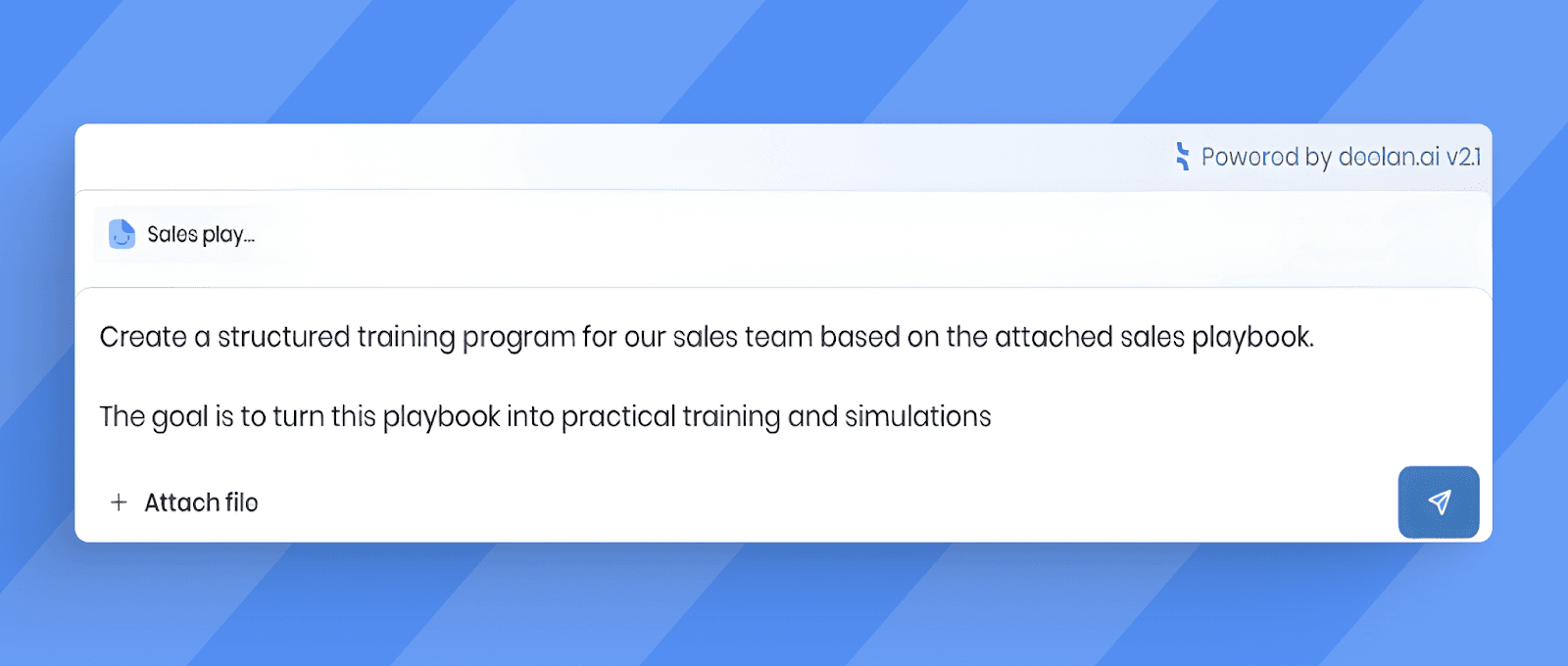
Most organisations already have a lot of internal knowledge: playbooks, onboarding documents, guides, scripts, frameworks, or examples of good communication. Too often, they live in docs, slide decks or wikis that people rarely revisit.
A much better first step is to turn those playbooks into live practice:
Take a key workflow (discovery, onboarding call, renewal conversation, internal handover).
Translate it into interactive simulations where team members can rehearse decisions, questions, and responses.
Let AI play the customer, prospect, or colleague so people can practice repeatedly without risking real relationships.
This is human–AI collaboration, where humans bring the playbook, judgement and context and AI brings repetition, instant feedback and safe space to try again.
On Deelan, that looks like:
Uploading your scripts, recordings and process docs.
Automatically generating adaptive courses and roleplays where people can practice calls, demos or internal conversations.
Using analytics to see where they struggle and where the playbook needs refinement.
2. A Prompting Course
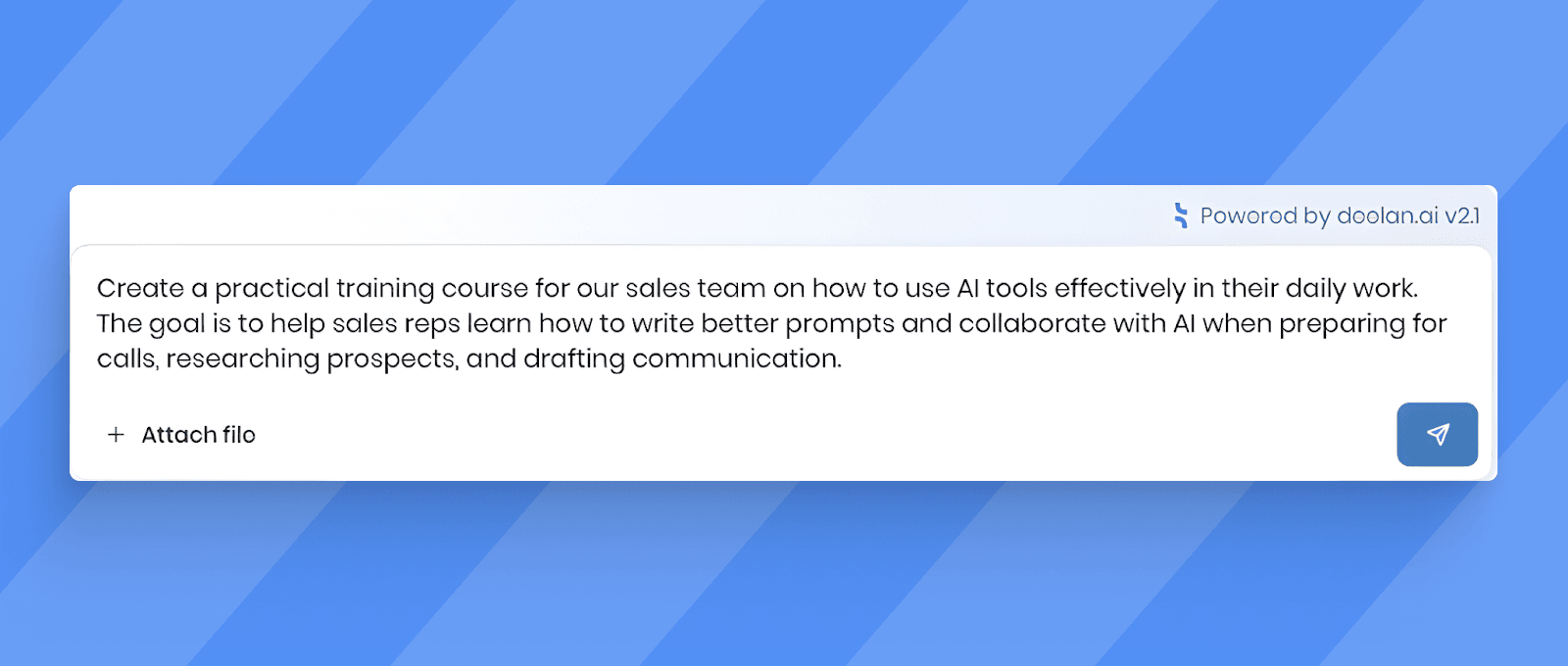
The second priority is AI literacy that is concrete and job-based. “How do I ask AI for help on the tasks I already do every day?”
Many employees are experimenting with AI already, but often without a clear structure. A simple internal course can help them learn how to ask better questions and use AI more effectively.
Inside that course, you can teach simple rules of thumb:
AI is good at: speed, pattern-finding, drafting options.
Humans are good at: context, ethics, empathy, final decisions.
On Deelan, this becomes:
A prompting course built from your own data and examples.
Adaptive exercises for your team
Assessments that test understanding not by definitions, but by “which prompt would you use here?”
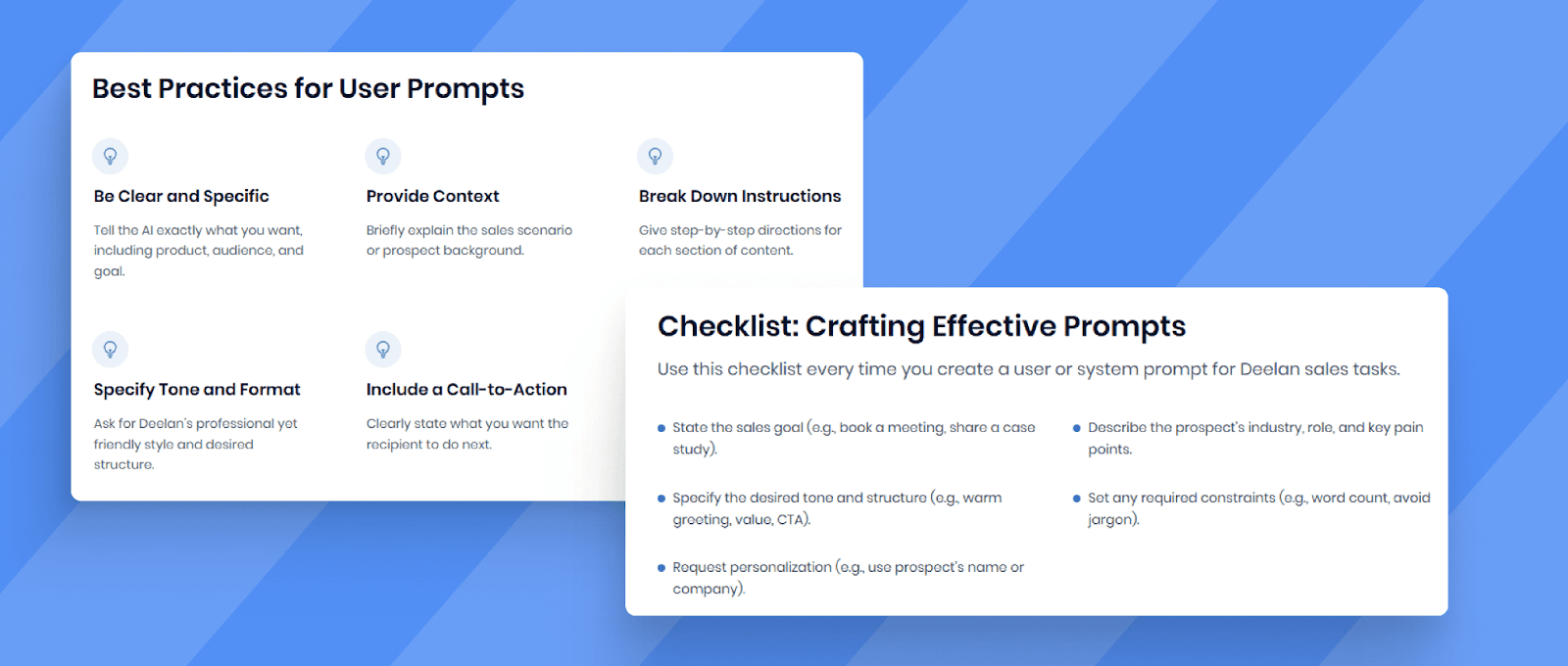
This strengthens collaboration between humans and technology and embeds AI in ways that actually support performance, not replace people.
3. Practice Emotional Intelligence in AI‑Supported Conversations
AI can speed things up, but it cannot replace our ability to read emotions, manage our reactions, and make wise choices.
Emotional intelligence is what differentiates a “scripted” conversation from a truly human one, even when AI is in the background suggesting next steps.
So the third priority is to train teams on emotional intelligence in AI‑supported conversations:
When an AI system prioritises leads or flags “at‑risk” customers, humans still need to:
Listen actively.
Sense frustration, confusion, or excitement.
Adjust tone and language to the person, not just follow a script.
When AI suggests a reply (in chat, email, or a call assist tool), humans must decide:
“Is this response truly helpful and empathetic?”
“What needs to change so it fits this individual and context?”
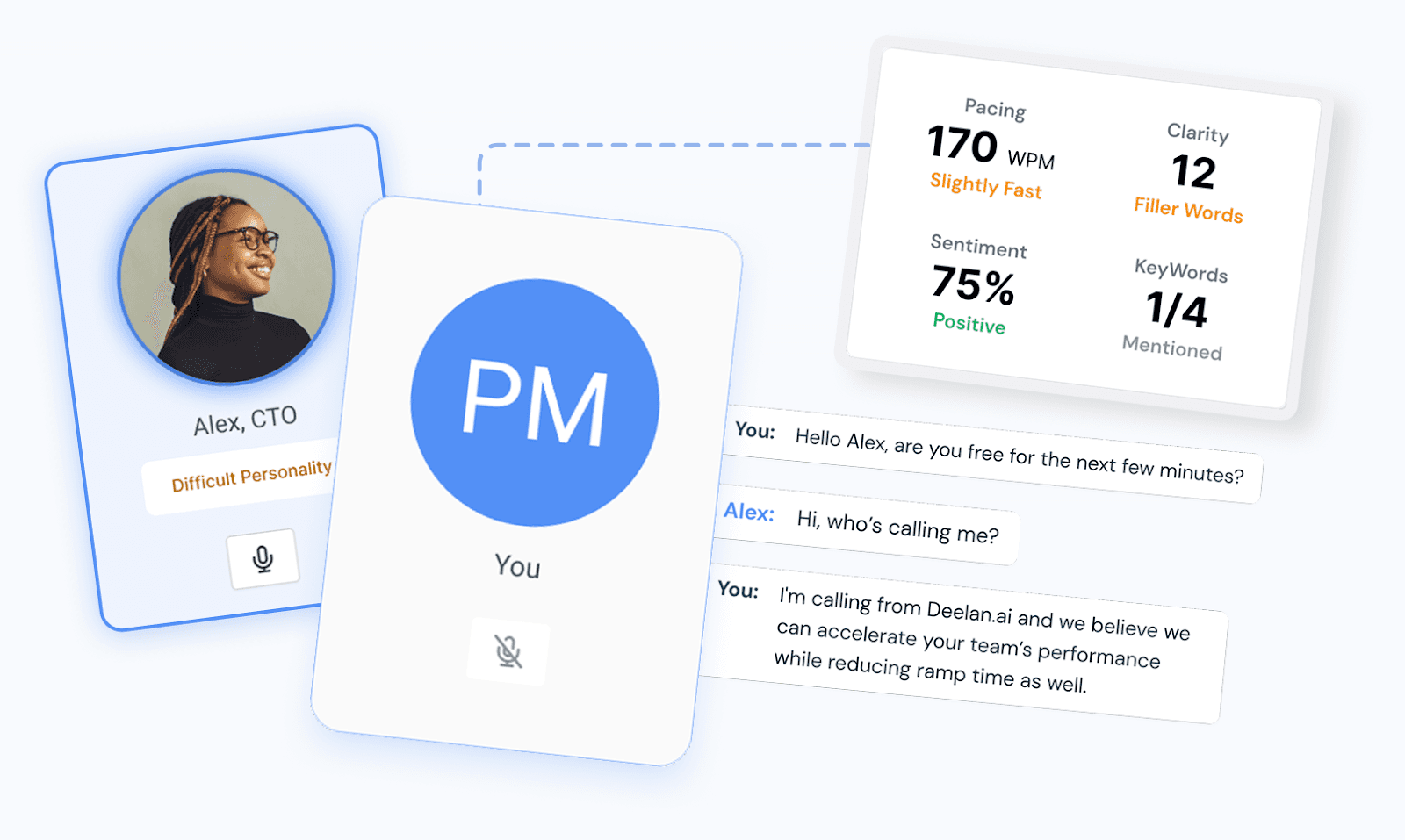
AI supports and makes up the situation but humans must decide how to respond.
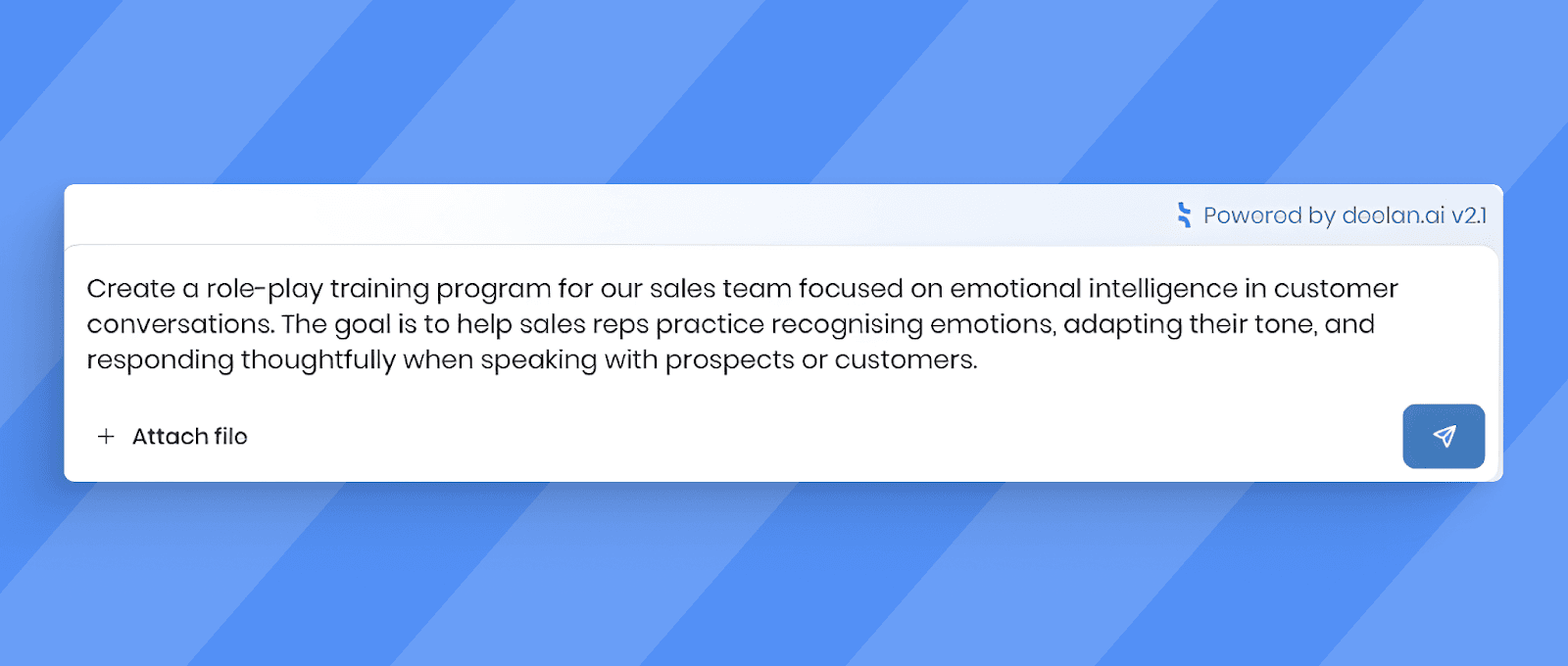
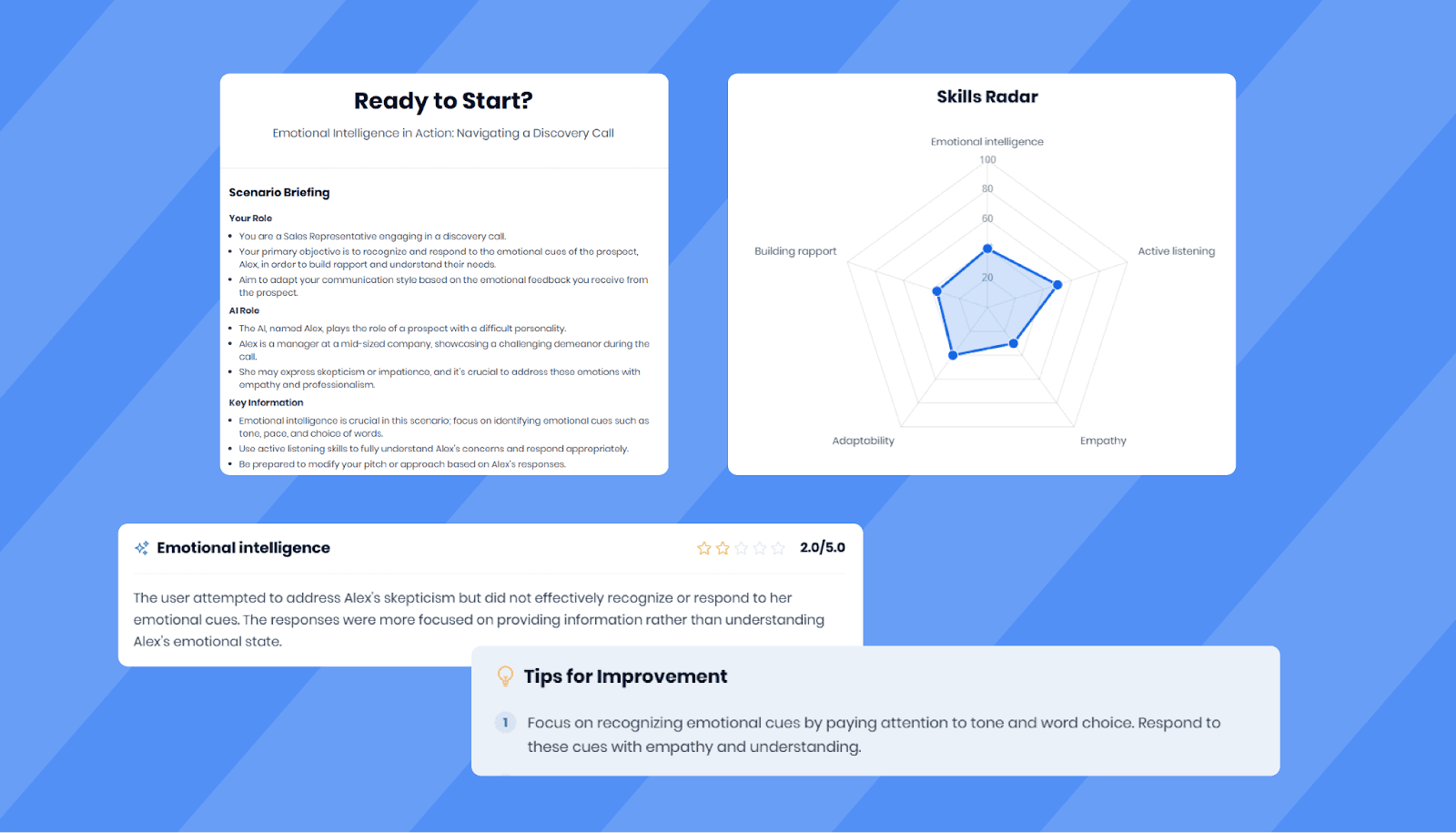
On Deelan, you can bring this to life with roleplays:
AI plays a prospect who is sceptical, rushed or quietly interested.
The learner chooses how to respond, adapting both content and tone.
Bringing It All Together
There are many ways teams can experiment with AI-supported learning. The three ideas above are simply some examples that tend to work well in practice:
turning playbooks into simulations
teaching teams how to work with AI tools
practicing communication and emotional intelligence
If you want AI-powered training that actually improves performance, you need both:
A human‑centred AI adoption strategy:
Define the business problems (growth, revenue, CX) you’re solving.
Prioritise use cases across your team.
Align leadership, governance and success metrics.
A practical way to turn that strategy into everyday learning and behaviour change:
Simulations instead of static playbooks.
Job‑based prompting skills.
Emotional intelligence in AI‑supported conversations.
If you're looking for more ideas or thinking about a broader approach to AI adoption, you can also speak with Meres Consult, who work with leadership teams to design and implement human-centred AI strategies that support business growth.
And if you’d like to see how these types of training can be built and delivered in practice-playbooks as simulations, courses, workshops - you can book a demo with Deelan and we’ll walk you through real examples from the platform.