Ready means different things to different teams. For revenue organizations, it means a rep who can walk into any conversation — any objection, any buyer type, any stage — and know exactly what to do.
This guide covers what sales readiness software actually is, how to assess it, and how the leading platforms compare — including detailed Highspot vs Allego and Highspot vs MindTickle breakdowns that most comparison articles skip over.
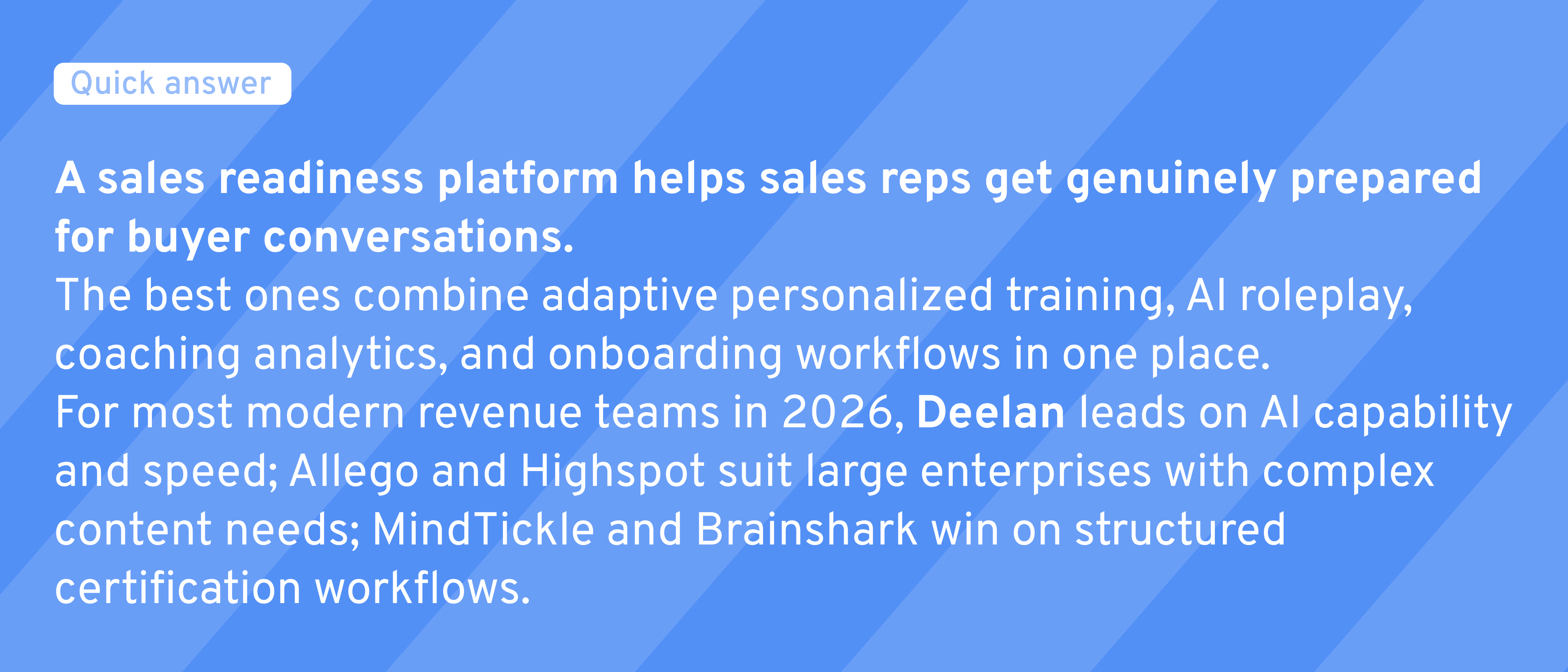
At a glance: the 7 best sales readiness platforms
Platform | Best for | AI roleplay | Pricing tier | LMS included |
|---|---|---|---|---|
Modern revenue teams, SMB–mid-market | ✅ Advanced | $$ Mid-range | ✅ Yes | |
Large enterprise, video-first coaching | ✅ Yes | $$$$ Enterprise | Partial | |
Content + readiness combined | Limited | $$$$ Enterprise | Partial | |
Structured certification at scale | ✅ Yes | $$$ Mid–enterprise | ✅ Yes | |
Brainshark | Onboarding validation, compliance | Limited | $$$ Mid–enterprise | ✅ Yes |
Bigtincan Readiness | Mobile-first, field sales | Limited | $$$ Mid–enterprise | Partial |
Conversational AI roleplay only | ✅ Advanced | $$ Focused tool | ❌ No |
What Is a Sales Readiness Platform?
A sales readiness platform helps sales and customer-facing teams get prepared for real buyer conversations. It combines onboarding, continuous training, coaching, assessments, practice, and performance tracking in one place.
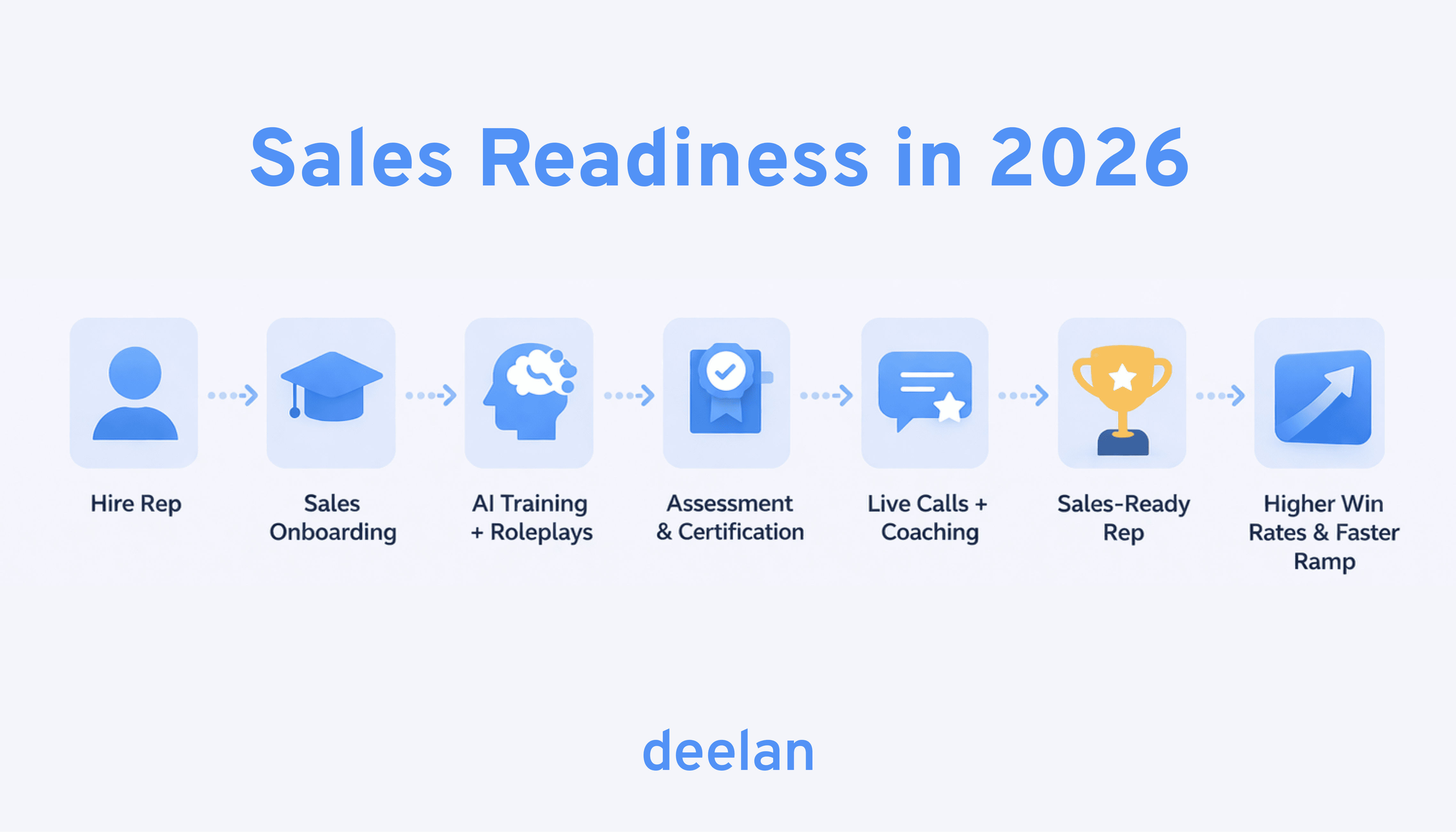
Unlike traditional learning tools, a strong sales readiness software solution does not stop at content delivery. It helps teams actually apply what they learn through roleplays, adaptive paths, manager coaching, AI feedback, and ongoing reinforcement.
The best platforms help companies:
reduce rep ramp time
improve win rates
scale coaching across teams
identify skill gaps early
reinforce product and messaging updates
create more confident, buyer-ready reps
connect training to pipeline and revenue outcomes
That is why choosing the right sales readiness platform has become a strategic decision, not just a training decision.
The 7 best sales readiness platforms in 2026
1. Deelan — full cycle AI training platform
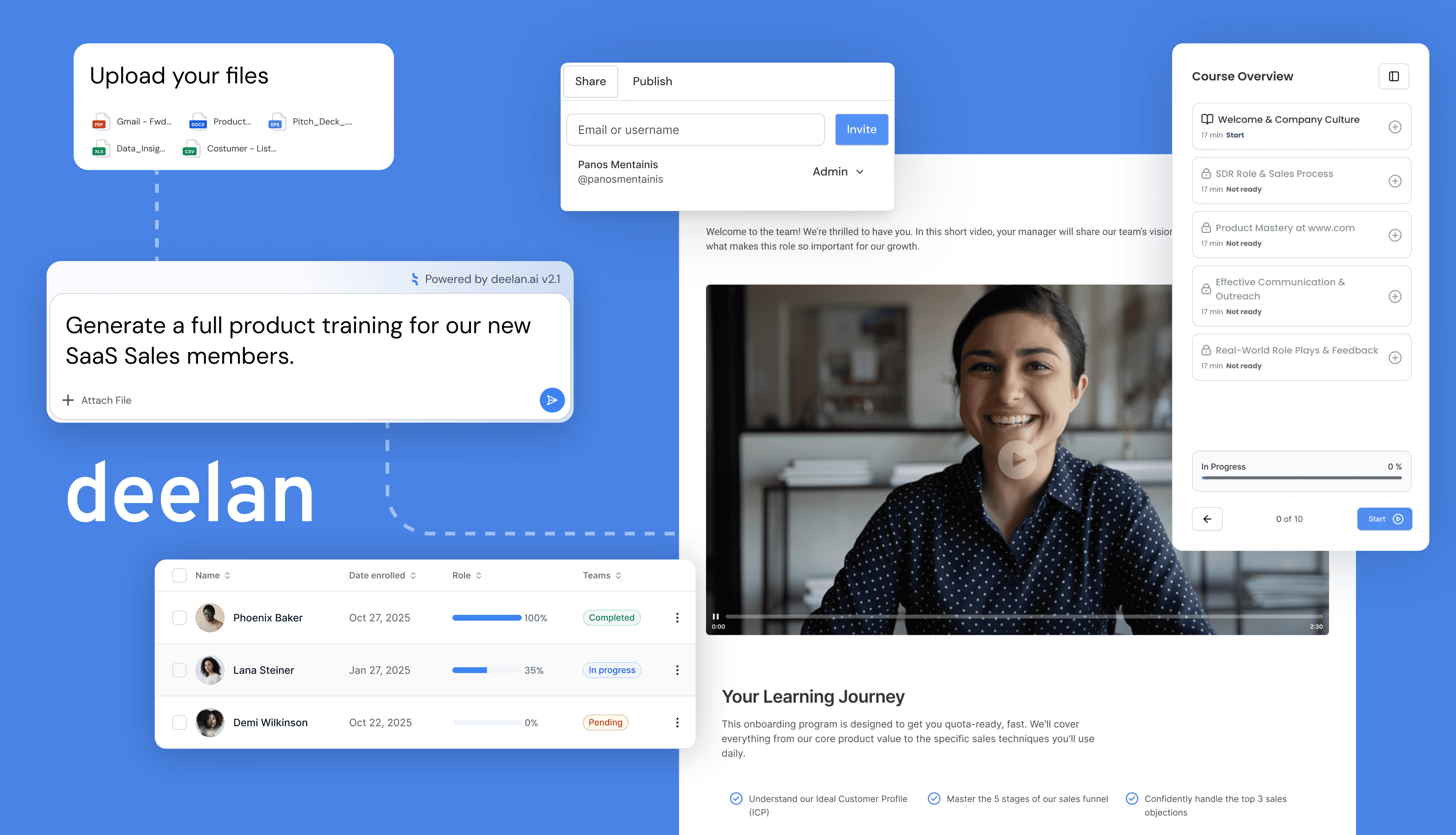
Upload your sales scripts, call recordings, product docs, or playbooks — Deelan turns them into courses, roleplays, and assessments in minutes, then adapts them per rep based on role, seniority, and skill gaps.
Standout features
AI-generated training from uploaded company knowledge — no course-building from scratch
Adaptive paths by role, seniority, quota performance, and skill level
AI roleplay for cold calls, objections, demos, and customer conversations
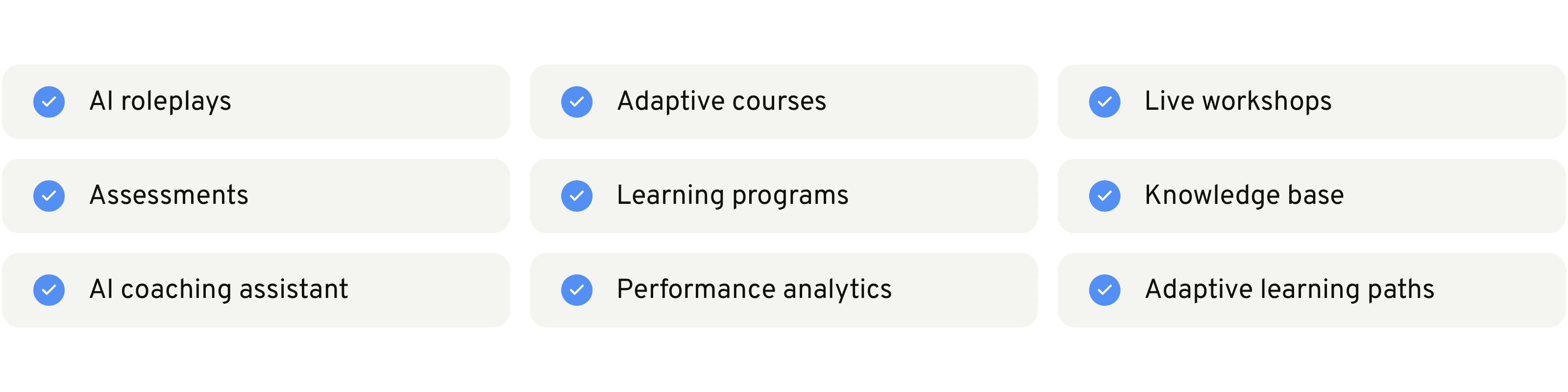
Courses, assessments, workshops, and multi-format programs in one workflow
Real-time AI coaching and rep-level skill tracking
Analytics tied to KPIs, not just completion
White-label experience and CRM integrations
Pricing: Mid-range. Scales by team size with no per-module fees.
Best for: Revenue teams from 10 to 500+ reps that want a single platform handling onboarding, ongoing training, coaching, and performance tracking — with AI doing the content creation and feedback work.
2. Allego — best for large enterprises with a video coaching culture
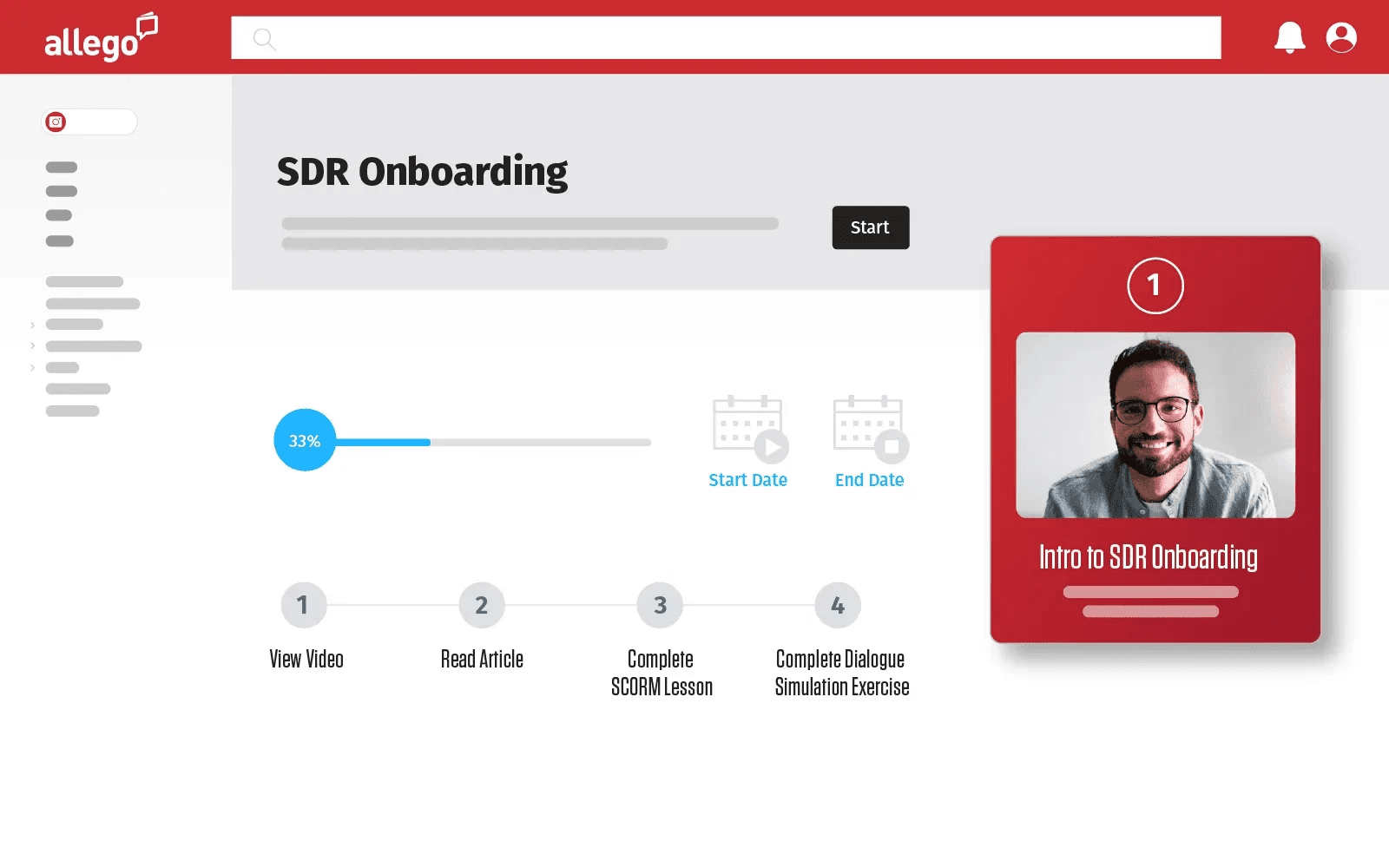
Allego is one of the most established names in this space and has earned its reputation. It is built around video — reps record pitches, managers respond with coaching, peers share winning calls. If your organization already learns this way, Allego reinforces and scales that culture.
Its digital sales rooms let reps share content with buyers and track engagement. Conversation intelligence adds a layer of call analysis. For large organizations with mature enablement practices, it remains a strong choice.
Standout features
Video coaching and peer-based learning in daily workflows
Conversation intelligence and call analysis
Digital sales rooms with buyer engagement tracking
AI-assisted practice and automation
Enterprise-grade security and customer success support
Pricing: Enterprise tier. Expect mid-five-figures annually for meaningful team sizes. Implementation support is part of the package.
Best for: Organizations with 200+ reps, dedicated enablement teams, and existing video coaching programs they want to scale.
Worth knowing: Implementation takes time. Teams without dedicated L&D resources may find content creation slower than expected.
3. Highspot — best for connecting readiness with content management
Highspot started as a sales content management platform and has built readiness features on top of that foundation. If your biggest pain point is reps using the wrong materials or ignoring the playbook, Highspot's guided selling capabilities are genuinely strong.
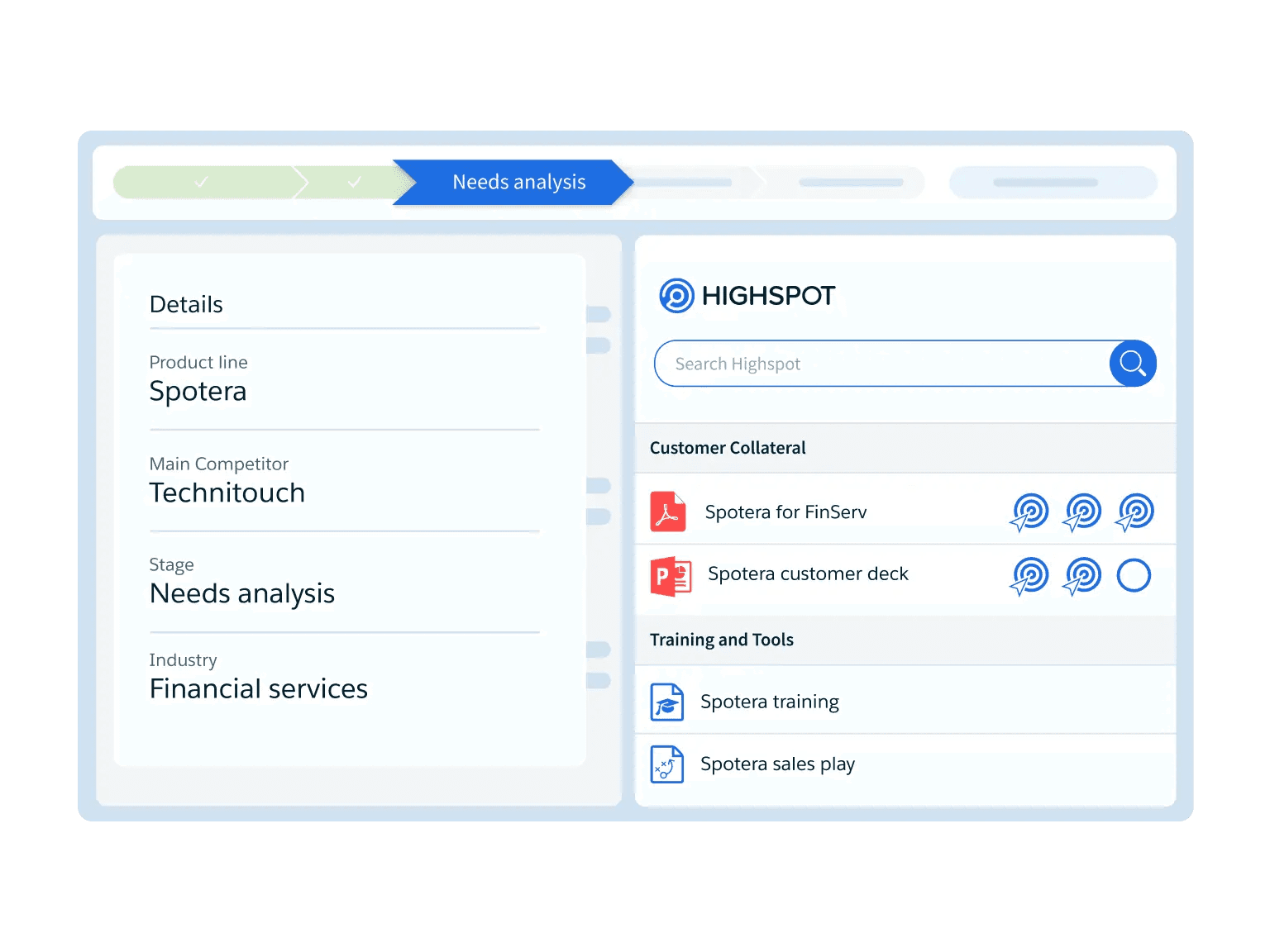
Its analytics track both content performance and rep readiness, which creates a useful picture of what's working in the field. The training side is less deep than dedicated readiness platforms, but for teams that need content and coaching in one system, it covers both.
Standout features
Guided selling with content recommendations in the flow of a deal
Sales playbooks with usage tracking and content governance
Onboarding support tied to content and messaging
Analytics connecting content performance to revenue outcomes
Strong CRM integrations
Pricing: Enterprise tier. Usually bundled with content management; pricing tied to seats and usage.
Best for: Sales organizations where content misuse is as big a problem as rep skill gaps — typically 100+ reps in complex B2B sales.
4. MindTickle — best for structured certification and compliance at scale
MindTickle takes a rigorous approach to readiness: define what "ready" looks like, test reps against that standard, certify them, and track it over time. For organizations in regulated industries or with complex product portfolios, that structure is valuable.
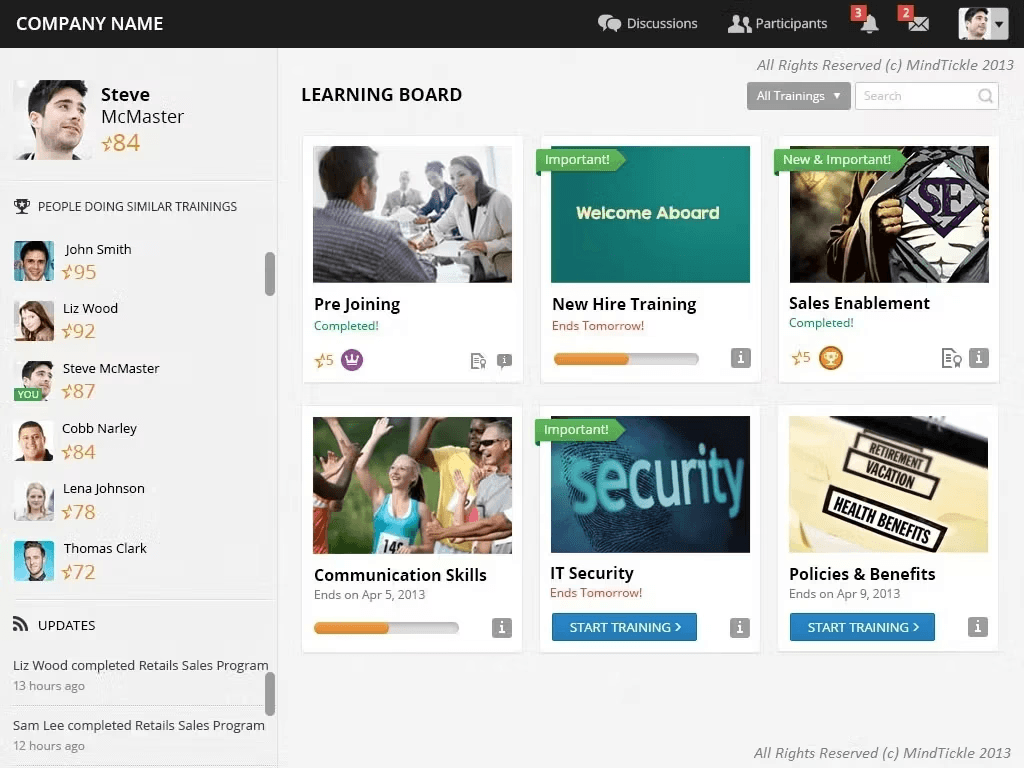
It has added AI capabilities including roleplay simulation and conversation intelligence. The platform has depth, but that depth comes with complexity — smaller teams often find it over-engineered for their needs.
Standout features
Certification workflows with defined readiness standards
AI roleplay and practice scenarios
Conversation intelligence and call scoring
Skill gap identification and structured remediation
Strong analytics and reporting
Pricing: Mid-to-enterprise tier. Typically priced per user with platform fees.
Best for: Mid-to-large enterprise teams in regulated industries, financial services, or organizations with formal certification requirements.
Worth knowing: Setup and configuration takes meaningful time. Smaller teams may not use a fraction of the functionality.
5. Brainshark — best for onboarding validation and manager scorecards
Brainshark's strength is structured consistency. It helps organizations build standardized onboarding paths, validate that reps actually absorbed the training through assessments and video submissions, and give managers scorecards to track readiness over time.
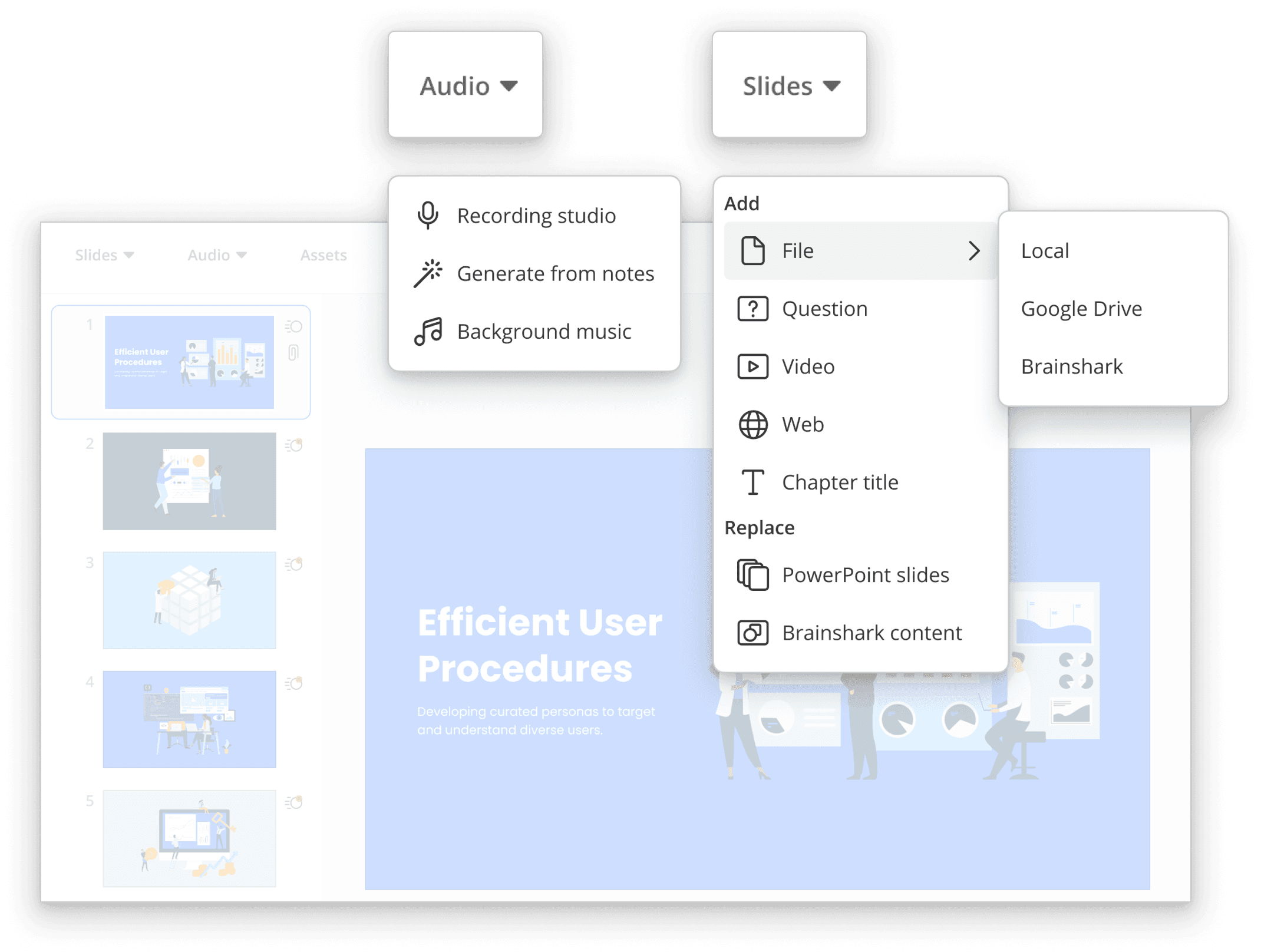
It integrates well with existing LMS environments and suits organizations that need to demonstrate training completion for compliance or audit purposes.
Standout features
Video coaching and pitch practice with manager review
Scorecards for readiness validation at the rep and team level
Assessments and certification workflows
Onboarding automation and structured paths
Integration with major LMS platforms
Pricing: Mid-to-enterprise tier. Often bundled with Bigtincan (same parent company).
Best for: Organizations with formal onboarding structures, compliance requirements, or managers who need documented proof of readiness.
6. Bigtincan Readiness — best for mobile and field sales teams
Bigtincan Readiness (formerly Brainshark's consumer-facing product, now unified under the Bigtincan brand) focuses on making learning accessible on any device, anywhere. Field sales teams who spend their time in the car, at customer sites, or away from a desk benefit most from its mobile-first design.
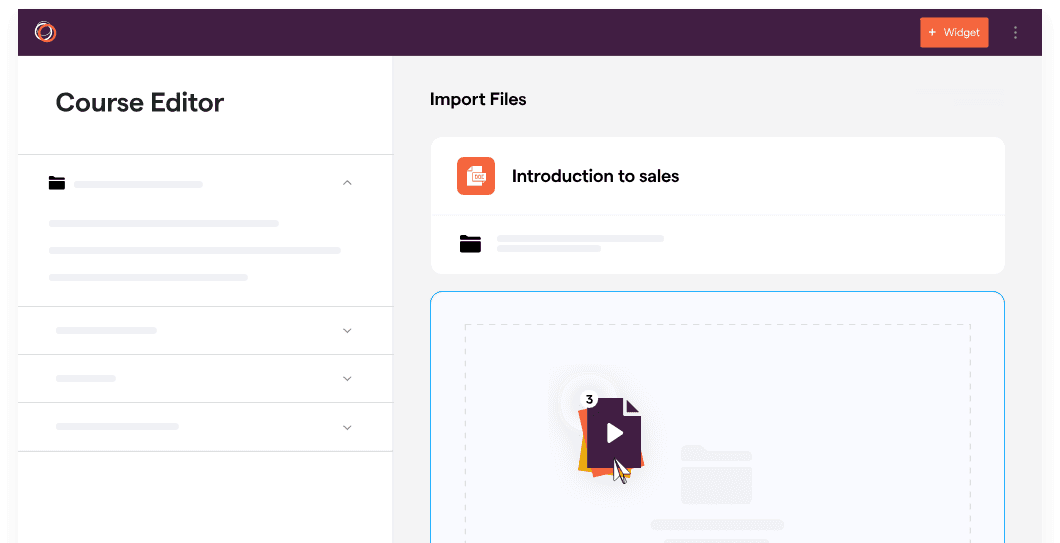
Gamification — leaderboards, badges, points — keeps engagement up in dispersed teams where it's harder to run live coaching.
Standout features
Mobile-first design that works on any device
Gamification with badges, leaderboards, and rewards
Video coaching and content delivery
Enterprise-grade security
Manager dashboards for distributed teams
Pricing: Mid-to-enterprise tier.
Best for: Field sales, retail, insurance, or any team that is rarely at a desk and needs training to come to them.
7. Second Nature — best as a standalone AI roleplay tool
Second Nature does one thing: it puts reps into AI-powered conversations that feel like real sales calls. The AI plays the buyer, responds to what the rep says, and scores the conversation on specific criteria. It is genuinely one of the most realistic roleplay experiences available.
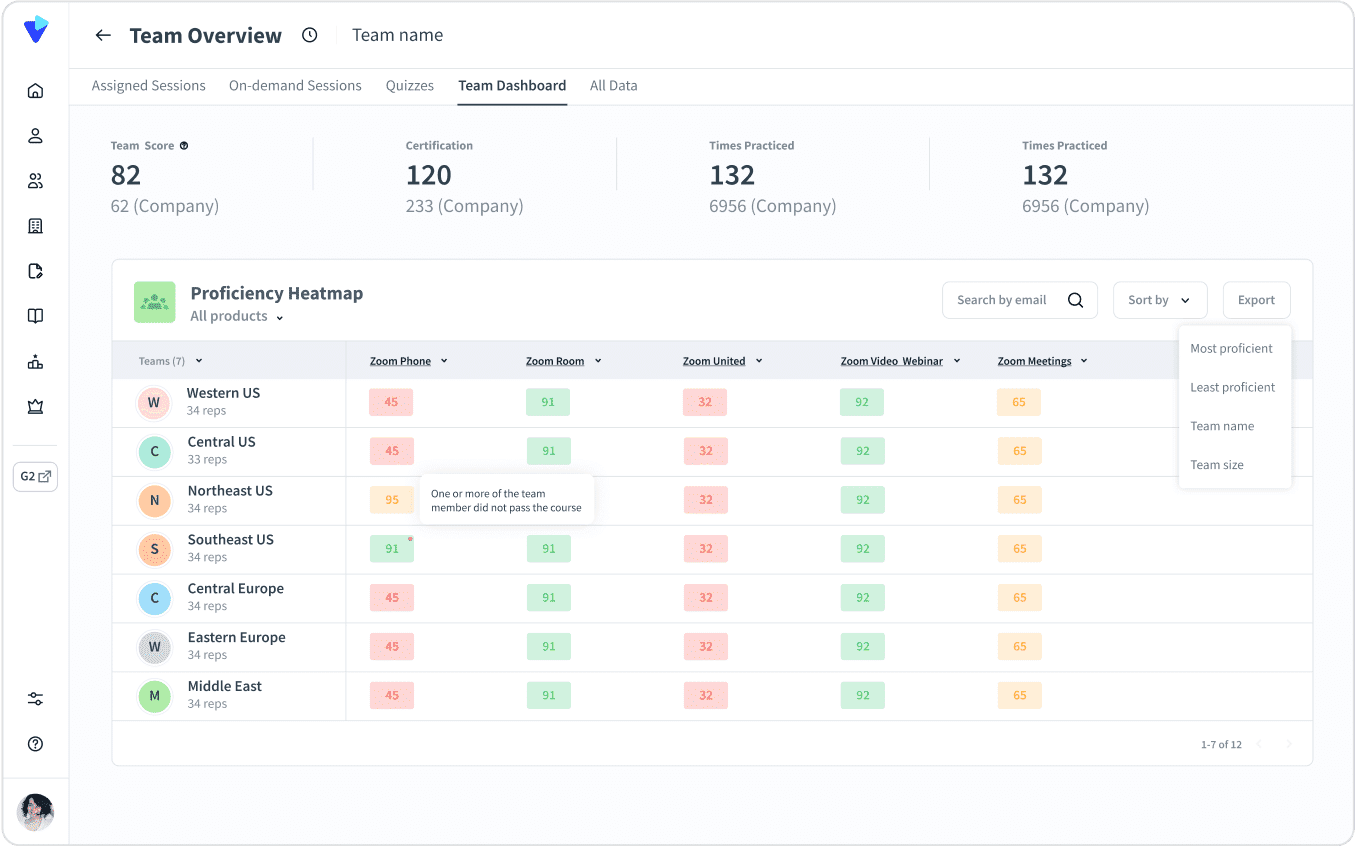
What it does not do is replace a full readiness platform. There is no content creation, no adaptive learning, no manager dashboards, no onboarding workflows. It is a practice tool.
Standout features
Advanced conversational AI that responds naturally in roleplay
Scoring on messaging, tone, objection handling, and pacing
Scenario builder for custom buyer personas
Rapid deployment — teams are running roleplays within days
Pricing: Focused tool pricing, lower than full-platform competitors.
Best for: Teams that already have a training platform and want to bolt on high-quality AI practice. Or teams specifically solving a roleplay problem before investing in a full stack.
Worth knowing: If you want one platform to handle onboarding, training, coaching, and practice, Second Nature is not it.
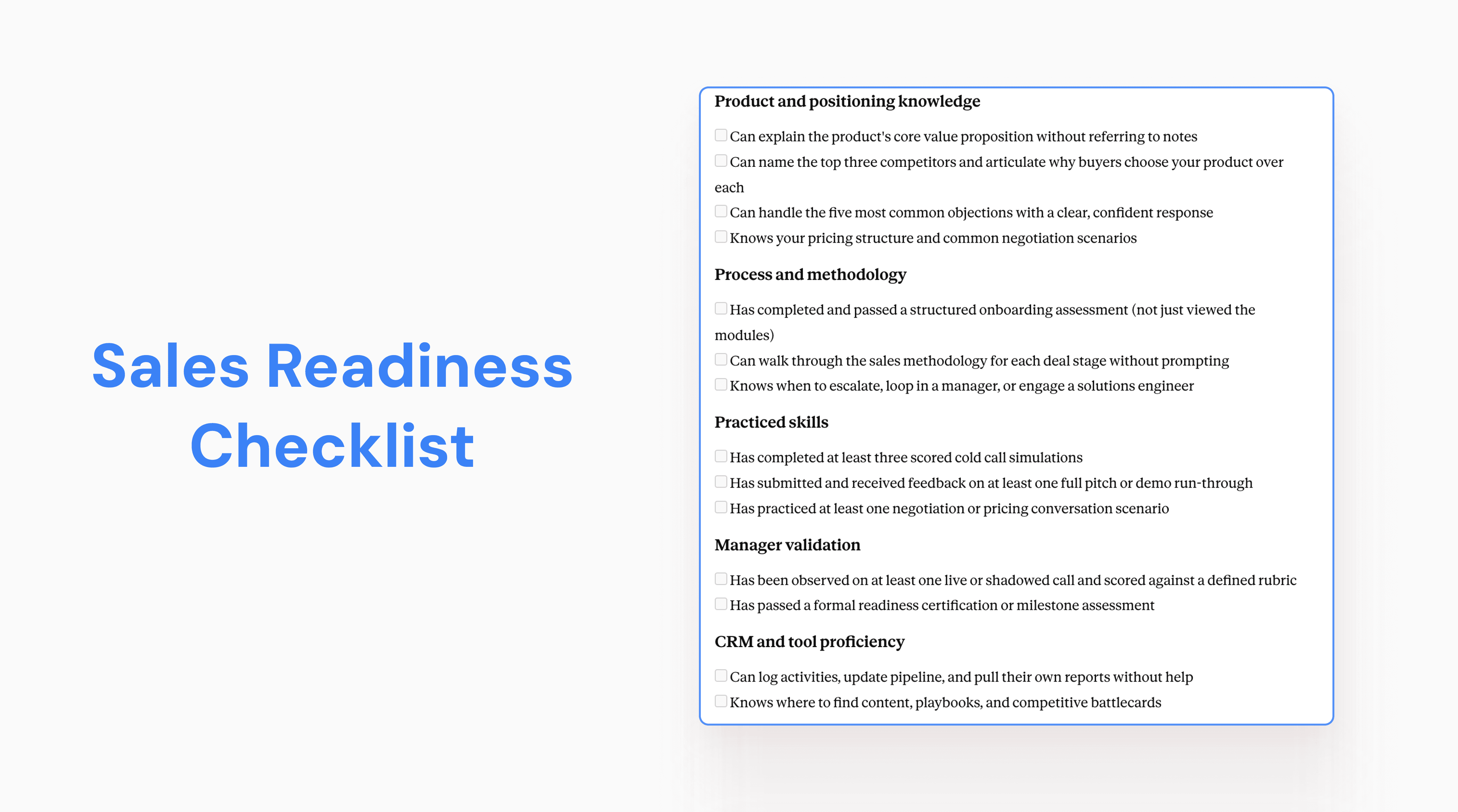
Sales Readiness Checklist: What "Ready" Looks Like Before a Rep Goes Live
Use this as a baseline before sending a new rep into unsupported customer conversations:
Frequently asked questions
What is the difference between sales readiness and sales enablement? Sales enablement is a broader category — it includes content management, buyer engagement, and deal support. Sales readiness is specifically about whether your reps are prepared to have a great conversation. Readiness sits inside enablement, but readiness platforms focus on the rep skill and knowledge side, not the content management side.
How long does it take to see results from a sales readiness platform? Most teams see measurable ramp time improvements within 60–90 days of consistent use. Win rate improvements take longer — typically one full sales cycle — because the baseline is harder to establish. The key is connecting platform activity to pipeline data from day one.
How much do sales readiness platforms cost? Entry-level and focused tools (Second Nature, Deelan for small teams) typically run $30–$80 per user per month. Mid-market platforms (MindTickle, Brainshark) often land in the $50,000–$150,000 per year range for meaningful team sizes. Enterprise platforms (Allego, Highspot) frequently exceed $200,000 annually once implementation and support are included.
What is the best sales readiness platform for a small sales team? For teams under 50 reps, Deelan offers the best combination of AI capability, fast deployment, and pricing that does not require an enterprise contract. Second Nature is worth considering as a complement for teams that already have an LMS.
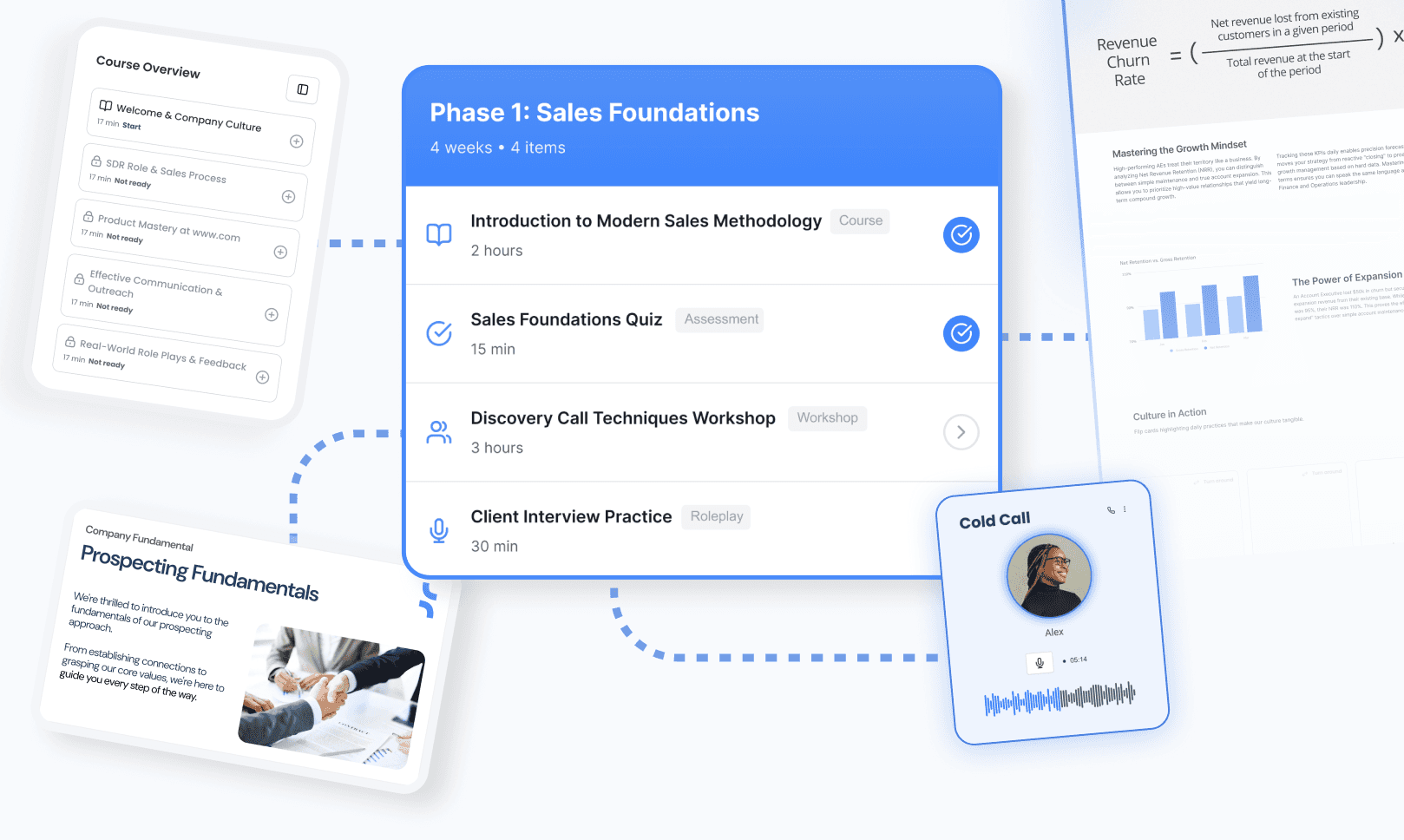
If you want one platform that handles onboarding, ongoing training, AI coaching, roleplay practice, and performance analytics, Deelan is the most complete option for modern revenue teams in 2026 — especially for companies that don't have a large L&D function and need AI to do the heavy lifting on content creation.
For large enterprises with existing enablement infrastructure, Allego and Highspot remain strong choices, particularly where video culture and content governance matter.
The worst outcome is choosing nothing and continuing to onboard reps with a Google Drive folder and a few Zoom calls. Any platform on this list is better than that.
Ready to See a Smarter Sales Readiness Platform in Action?
If you want to turn training into real performance, reduce ramp time, improve win rates, and scale coaching without adding complexity, it is time to take a closer look at Deelan.