Skills are changing faster than ever, yet many companies still rely on one-time onboarding and occasional workshops to prepare their teams. In modern businesses, comapnies swithc to continuous training in the workplace, It is how they stay competitive, compliant, and capable of adapting to constant change.
The problem is that most traditional training systems were not built for speed. Employees forget much of what they learn after onboarding. Teams need regular refreshers, new knowledge, and role-specific support. But creating, updating, and personalizing training manually takes too much time. That is why so many companies struggle to make continuous employee training work in practice.
That is where a new approach is emerging: AI-powered, adaptive training that helps teams learn continuously without creating more work for managers, HR, or L&D.
Continuous Employee Training in a Fast-Moving World
The pace of change inside companies is intense. New tools appear every quarter. AI changes how work gets done. Regulations evolve. Customer expectations shift. Internal processes get updated. Roles become broader. Teams are expected to learn while still delivering results.
This is exactly why continuous employee training matters. It helps companies move from reactive learning to a more proactive model, where employees are supported before gaps become costly.
The benefits are practical and immediate. Teams that receive ongoing employee training can adapt faster, perform better, and make fewer mistakes. New hires ramp more smoothly. Experienced employees stay sharp. Managers spend less time repeating the same corrections. Employees feel more confident because they are not left to figure everything out alone.
And this does not apply only to sales.
Customer support teams need updated workflows after product releases. HR teams need to stay current on compliance requirements and internal policies. Operations teams must adapt when processes or systems change. Finance teams need refreshers when reporting or regulatory requirements evolve. Engineering teams regularly need to learn new tools, frameworks, or documentation standards. Managers need continuous development in coaching, communication, and leadership.
The Speed Problem of Creating Continuous Training
Although most companies understand the importance of continuous employee training, very few manage to implement it effectively. The main reason is simple: traditional training methods are too slow and too manual to keep up with the pace of change.
Creating a new training course often takes weeks. Teams first need to gather information from managers or subject-matter experts. Then they have to turn that information into documents, presentations, videos, or LMS modules. After that, they still need to create quizzes, upload content, review everything, and publish it.
Because of this, training quickly becomes outdated. Many companies end up relying on content that no longer reflects reality simply because updating it takes too much effort.
Managers then need to repeat the same explanations manually every time an employee asks a question or struggles with the same issue. Instead of training becoming more efficient over time, it becomes another ongoing task that takes time away from more important work.
On top of that, training content is usually spread across multiple tools. Some information sits in presentations, some in documents, some in spreadsheets, some in Notion or Confluence, and some inside the LMS itself. Updating content across all these different systems becomes frustrating, repetitive, and difficult to manage.
Traditional Training | |
|---|---|
Weeks to create content | Minutes to generate training |
Same training for everyone | Adaptive learning paths |
Static content | Easy updates anytime |
Manual coaching | AI coaching at scale |
Completion metrics | Skill gap and performance tracking |
Best Practice: AI for Making Continuous Employee Training Faster and More Effective
Once companies understand the value of continuous employee training, they run into a practical issue: they cannot afford to spend weeks building and rebuilding programs every time something changes.
That is why more teams are turning to AI. They are looking for an employee training platform that makes ongoing learning faster to create, easier to personalize, and simpler to manage over time.
Deelan is one of the solutions designed specifically for that challenge. Instead of treating training like a static library of courses, it helps teams build living, adaptable training systems that evolve with the business.
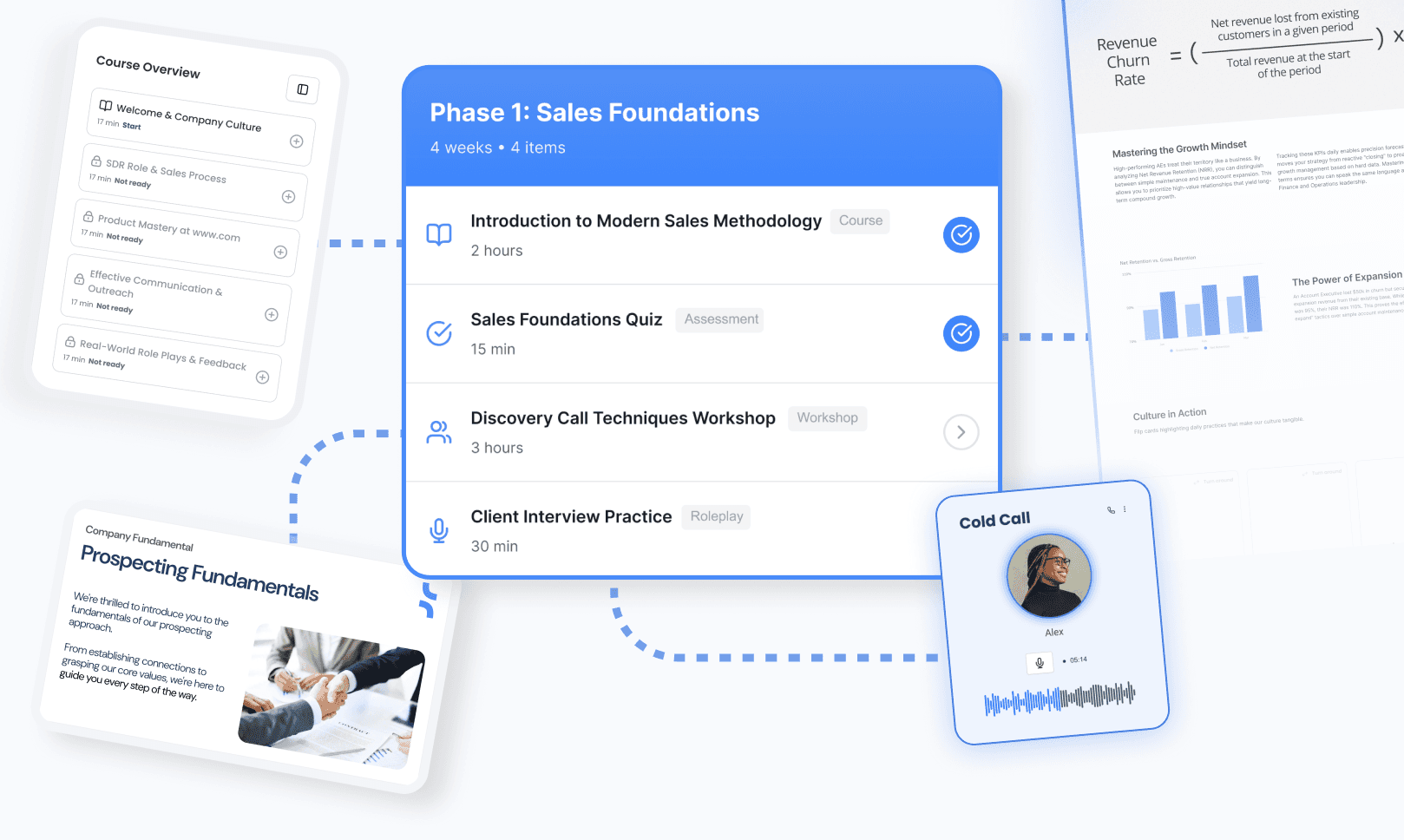
With Deelan, teams can create training in minutes, update it instantly, personalize learning by role and skill gaps, coach employees continuously, and track what is actually improving.
Create Training 10x Faster With AI
One of the biggest blockers in continuous employee training is content creation speed. If every new program takes too long to build, training cannot keep up with the business.
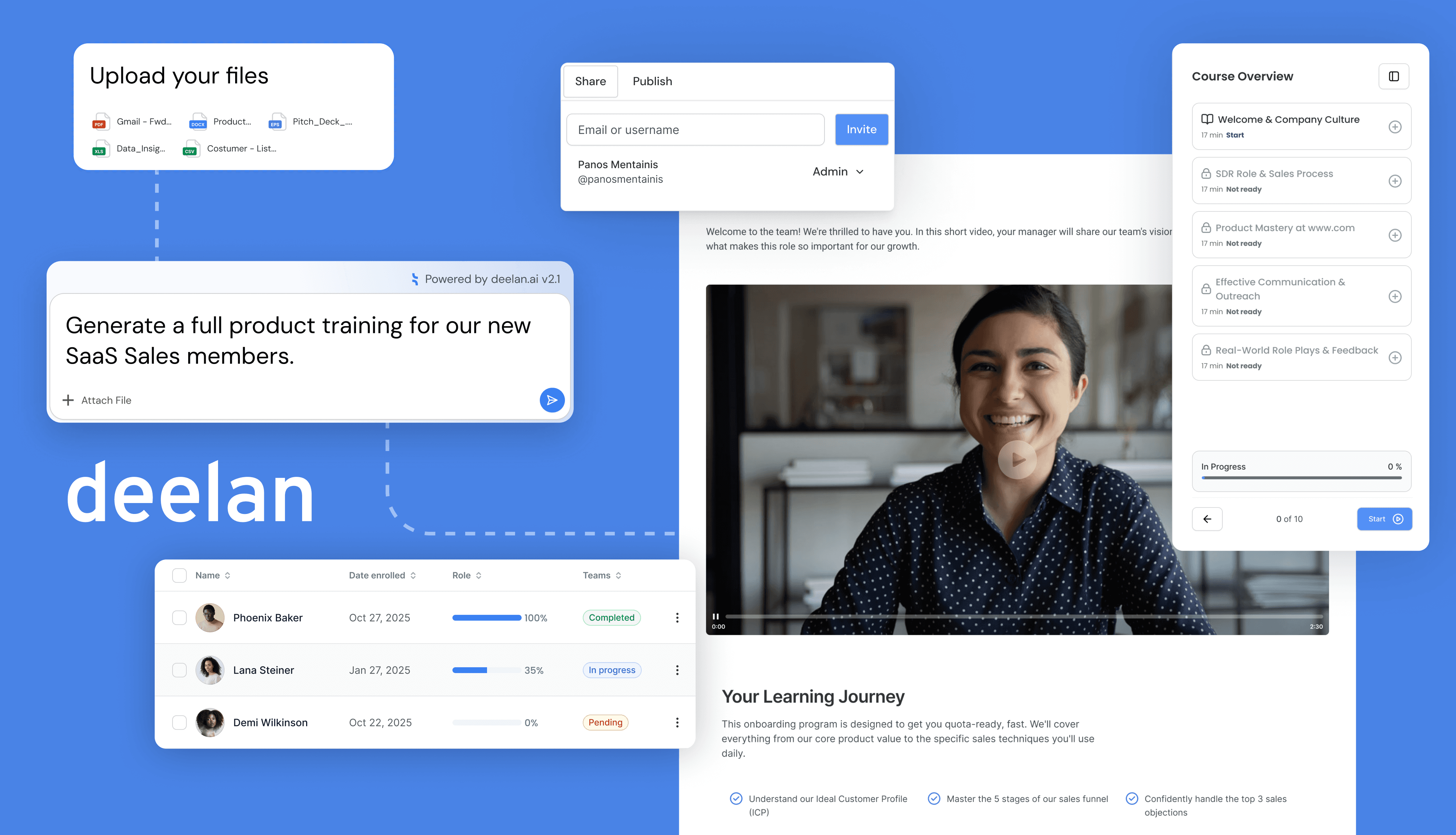
Deelan solves this by letting teams start from what they already have. Users can upload PDFs, SOPs, docs, call recordings, presentations, Notion pages, Confluence pages, spreadsheets, and scripts. They can also simply describe what they want in a prompt.
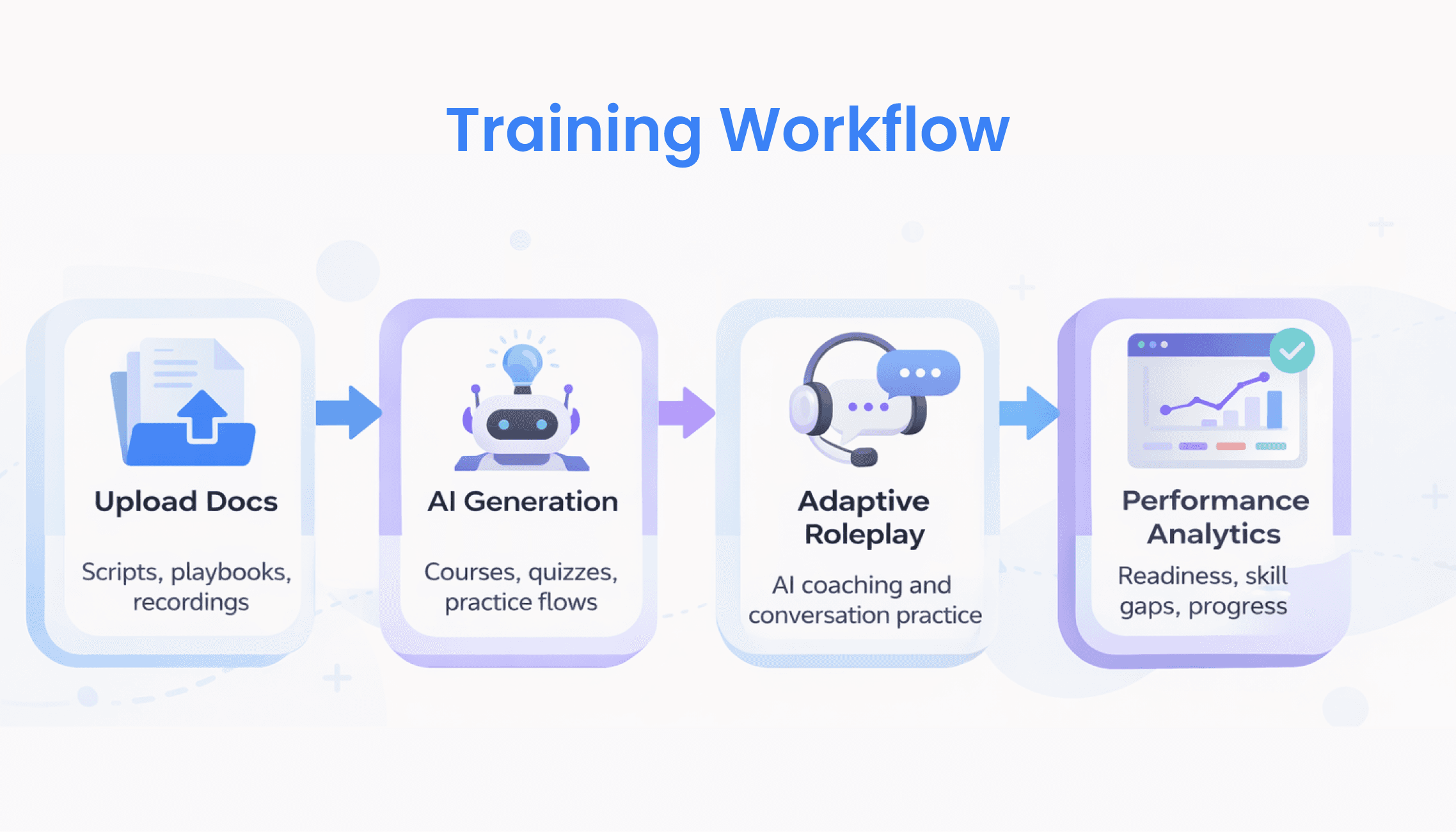
From there, Deelan helps generate structured training much faster across multiple formats. Instead of building everything manually from scratch, teams move from source material to usable training in a fraction of the time.
Keep Training Updated Without Rebuilding Everything
A training program is only useful if it stays relevant. That sounds obvious, but in practice it is where many systems fail.
When training is hard to update, companies delay changes. Then employees keep learning outdated material.
Deelan makes it easier to refresh content as soon as business conditions change. That could mean updating compliance training after a policy shift, adjusting onboarding after a process change, or refreshing support guidance after a product launch. Instead of rebuilding an entire course, teams can adapt training quickly and keep it aligned with reality.
Automatically Adapt Training to Every Employee
Not every employee needs the same training. A new hire, a team lead, and a specialist should not all be pushed through the exact same path.
Deelan supports a more adaptive approach by tailoring learning based on role, level, and identified gaps. That means a new support rep can focus on product workflows, while a manager gets leadership content and a finance employee receives updated compliance refreshers.
This makes training more relevant and more efficient. Employees spend less time on content they already know, and more time on what actually helps them improve.
Detect Skills Gaps Before They Hurt Performance
One of the hardest parts of employee continuous learning is knowing what people really need.
Without visibility, training becomes guesswork. Teams often create more content, but not necessarily the right content.
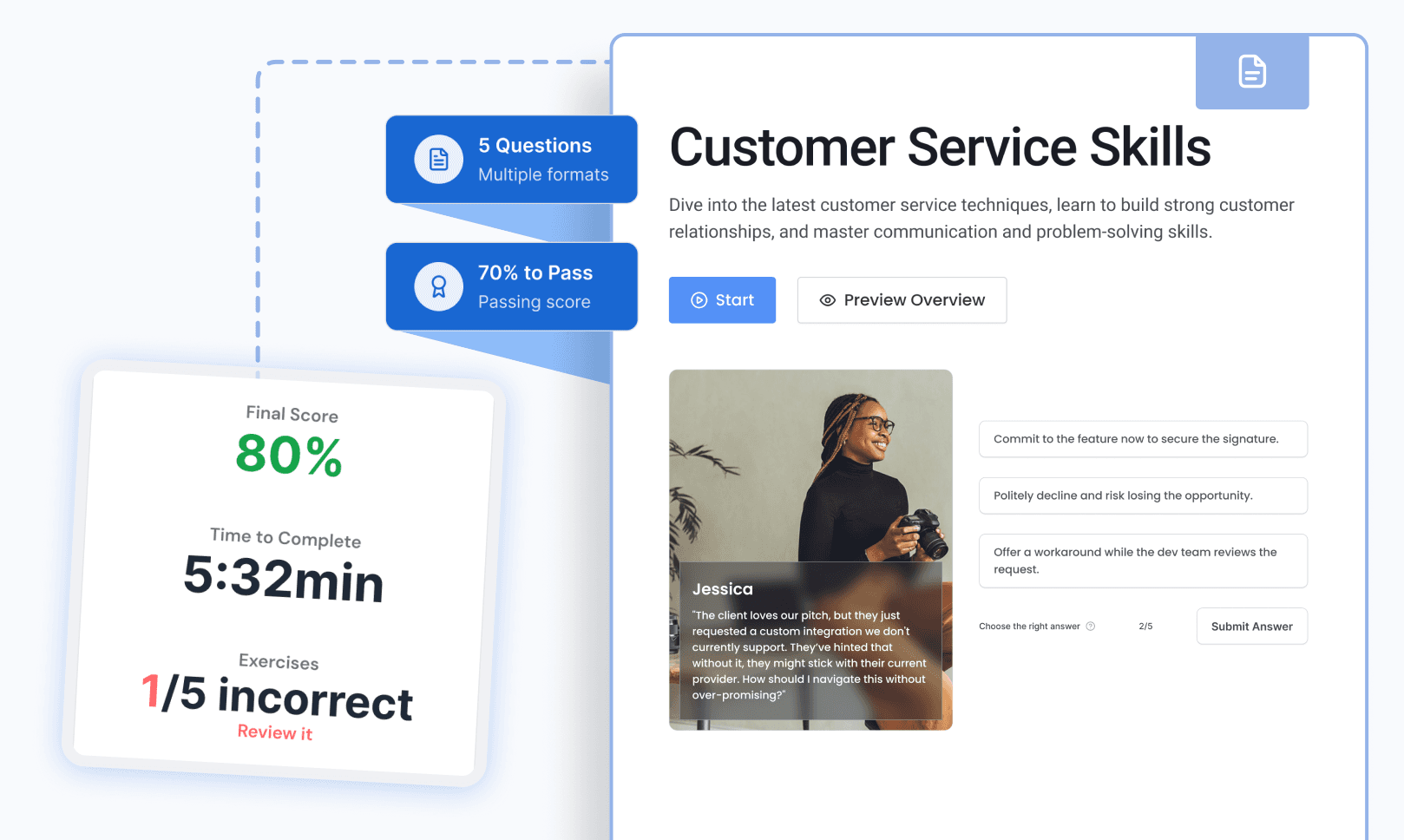
Deelan helps uncover skill gaps through assessments, analytics, and ongoing signals from learner performance. That gives managers and L&D teams a clearer picture of where people are falling behind, which topics need reinforcement, and what should be updated next.
Scale Coaching Without Managers Repeating Themselves
Coaching is essential to continuous learning and development, but it does not scale easily. Managers already have too much on their plate. Repeating the same explanations, feedback, and practice sessions again and again is not sustainable.
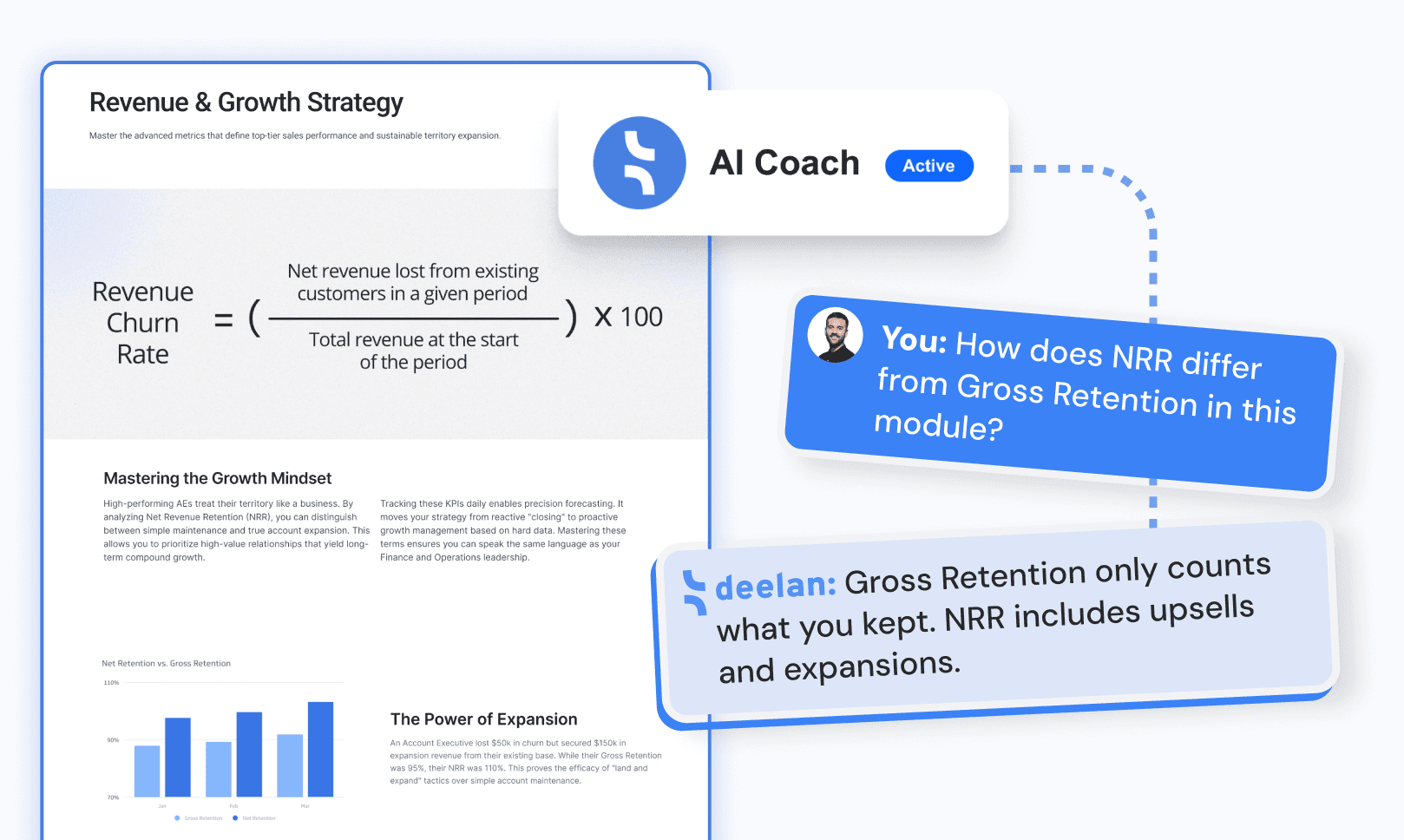
This is where AI can make a real difference. Deelan helps reinforce learning continuously by supporting employees with guidance, follow-up, practice, and feedback as they learn. That means training does not stop when a course ends.
Examples of Continuous Training in Different Departments
One reason many platforms feel limited is that they are designed around one function, usually sales. But continuous employee training works best when it supports the entire organization.
HR and Compliance Teams
An HR team needs to update employees quickly when labor law changes or internal policy gets revised. With Deelan, they can turn those updates into fresh microlearning and assessments instead of rewriting everything manually and emailing static documents around the company.
Customer Support Teams
A product update changes how a feature works. Support teams need to understand the new workflow immediately. Deelan can help turn release information into updated learning paths with scenario-based practice and knowledge checks, so the team is ready faster.
Operations Teams
Operations teams often work across multiple locations and processes. When a procedure changes, managers cannot always spend hours retraining each team manually. Deelan helps standardize that training and distribute it faster, which is especially useful for process-heavy environments.
Finance and Legal Teams
Finance and legal teams work in areas where outdated knowledge can create serious risk. Ongoing employee training helps them stay aligned with changing standards, regulations, and internal controls. Deelan makes these updates faster to create and easier to distribute across the right people.
Managers and Team Leaders
Leadership development should not happen once a year. Managers regularly face new conversations, performance challenges, and team dynamics. Deelan can support continuous growth in feedback, coaching, delegation, and communication, making management training more practical and ongoing.
Revenue Teams
Revenue teams still benefit strongly from adaptive training. SDRs need better onboarding. AEs need practice handling objections and improving discovery. CSMs need stronger renewal and upsell conversations. Deelan can help teams train faster, ramp more quickly, and reinforce skills continuously instead of relying on occasional sessions alone.
Ready to Make Continuous Employee Training Easier?
Continuous training in the workplace does not have to create more work for managers, HR teams, or L&D leaders.
The smarter approach is not to train less. It is to make training easier to build, easier to update, and easier to adapt to every employee. That is exactly where AI becomes valuable.
With Deelan, companies can create training in minutes, adapt it instantly, uncover skill gaps, and coach employees continuously without building everything manually. Instead of treating learning as a one-time event, they can turn continuous employee training into an efficient, repeatable system that actually improves performance.
If your current process is too slow to keep up, it may be time to rethink how continuous training in the workplace gets done.
Book a demo to see how Deelan helps modern teams build training that keeps pace with change.
Frequently Asked Questions
What is continuous training in the workplace?
Continuous training in the workplace is the ongoing, structured development of employee skills and knowledge over time. It goes beyond onboarding and helps employees stay effective as roles, tools, and business needs evolve.
What are the benefits of continuous training?
The main benefits include faster onboarding, stronger productivity, better compliance, improved adaptability, more relevant skills, and better long-term employee development.
How does AI improve continuous training?
AI improves continuous training by speeding up content creation, helping update material faster, personalizing learning paths, supporting coaching at scale, and identifying skill gaps more clearly.
How can companies identify employee skills gaps?
Companies can identify skill gaps through assessments, analytics, manager feedback, learner behavior, and performance signals. AI-powered platforms can help surface these gaps earlier and more accurately.