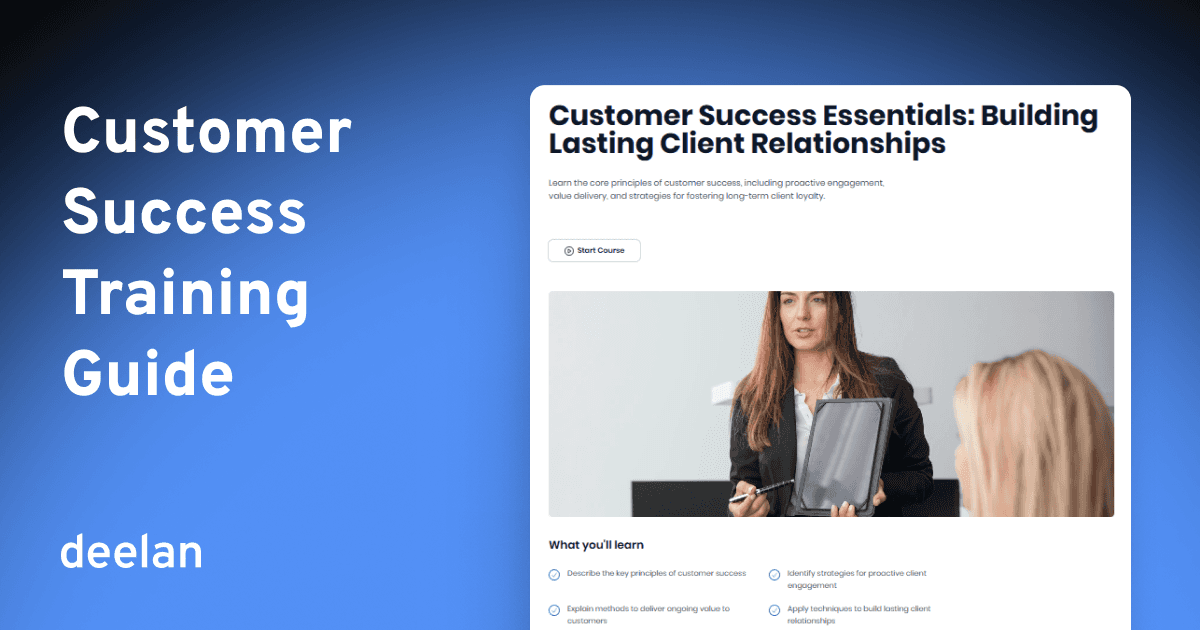
If your company depends on recurring revenue, customer success training is more than just Enablement - it’s a core growth engine. In this guide, we’ll break down what customer success training really involves, why traditional approaches fall short, and how modern, AI-driven models, like Deelan’s adaptive training platform - help you develop high-performing, revenue-driving CS teams.
What Is Customer Success Training?
Customer success training is the structured, ongoing development of the skills, behaviors, and decision-making abilities required for customer success teams to help customers achieve outcomes, and, in doing so, drive retention and growth. It goes far beyond product knowledge.
A strong customer success training program equips teams to:
Guide customers to value quickly
Drive product adoption and measurable outcomes
Manage renewals and expansions confidently
Navigate difficult conversations before churn happens
Collaborate effectively with Sales, Product, and Support
What High-Performing Customer Success Teams Are Trained On
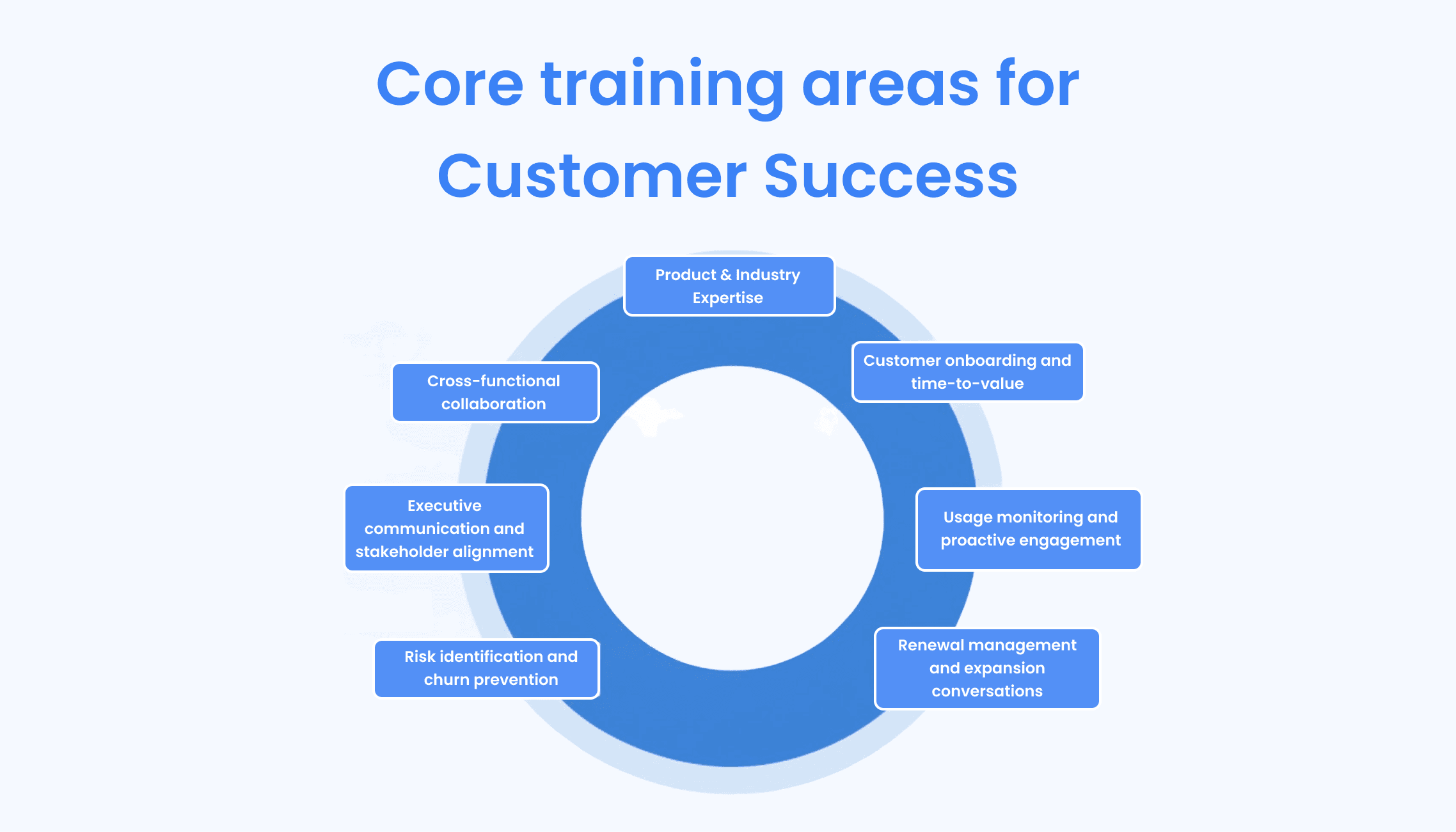
Effective training for customer success focuses on outcomes, not content completion. Core training areas include:
Customer onboarding and time-to-value
Usage monitoring and proactive engagement
Renewal management and expansion conversations
Risk identification and churn prevention
Executive communication and stakeholder alignment
Cross-functional collaboration
Product & Industry Expertise
Customer success training is not a one-time event, it’s a performance system that evolves as your customers, product, and go-to-market strategy evolve.
Why Traditional Customer Success Training Fails
One-size-fits-all courses: Static slide decks and generic videos don’t differentiate between a new hire CSM and a tenured team lead managing $5M in ARR.
Static LMS content: Legacy learning systems treat training as a box to check, not a performance multiplier.
No role adaptation: There’s a world of difference between how an SDR, AE, and CSM handle customers — yet many training programs ignore these nuances.
Completion over impact: Finishing a module doesn’t mean someone can conduct a renewal call or handle a churn objection.
Modern Customer Success Training: From Courses to Performance
Modern training focuses on:
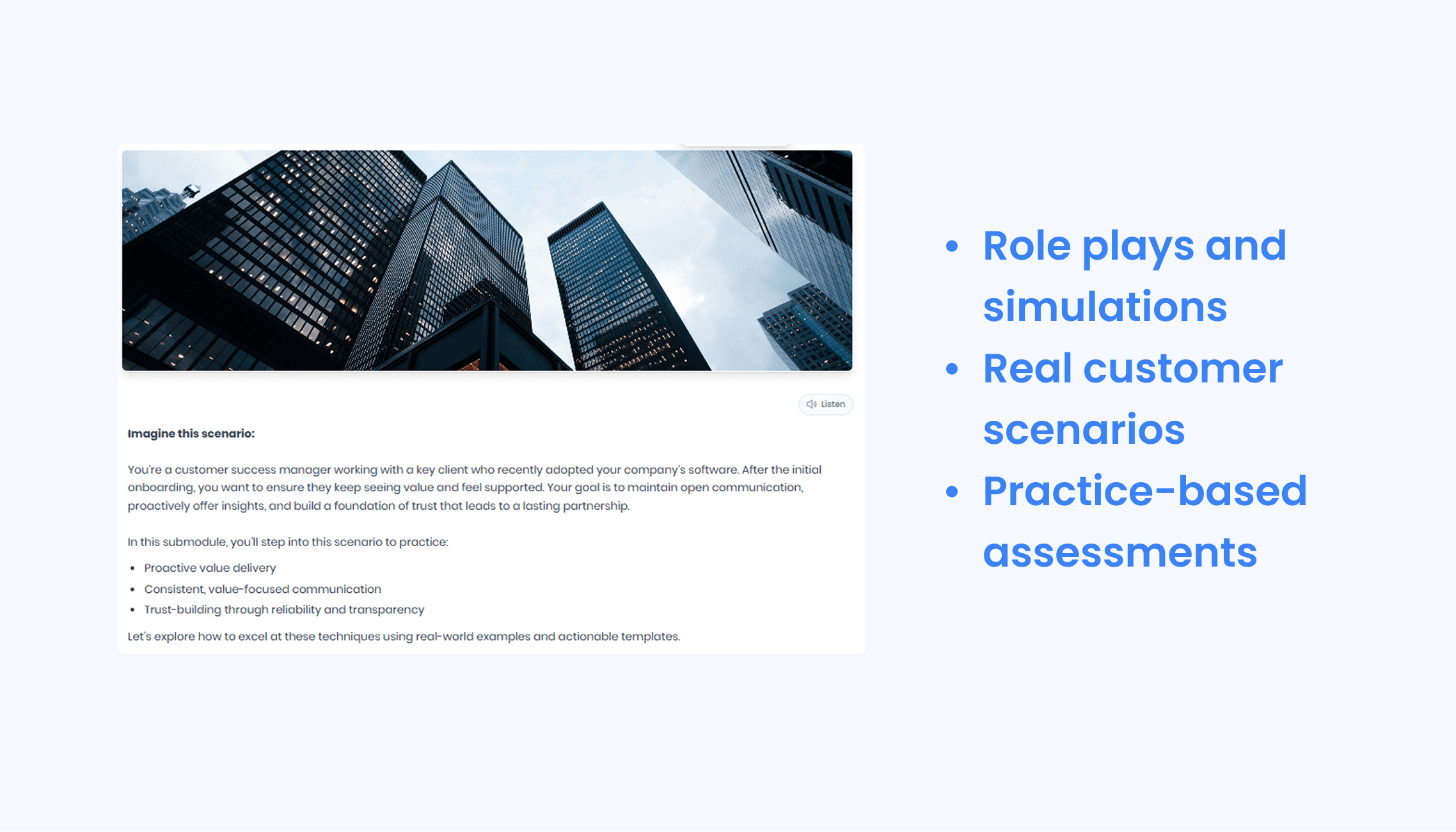
Role plays and simulations
Real customer scenarios
Practice-based assessments
Feedback on decision-making, not memorization
Customer success training should evolve with:
Product changes
Market shifts
New customer segments
Individual performance gaps
The best teams treat training as a continuous system, not a one-off event.
AI for Customer Success Training
AI is fundamentally changing how training for customer success works, making it adaptive, personalized, and measurable.
Adaptive learning paths: The system assesses skill level, role, and performance, then recommends targeted modules.
Personalized training: A new CSM gets different guidance than a senior manager preparing for enterprise QBRs.
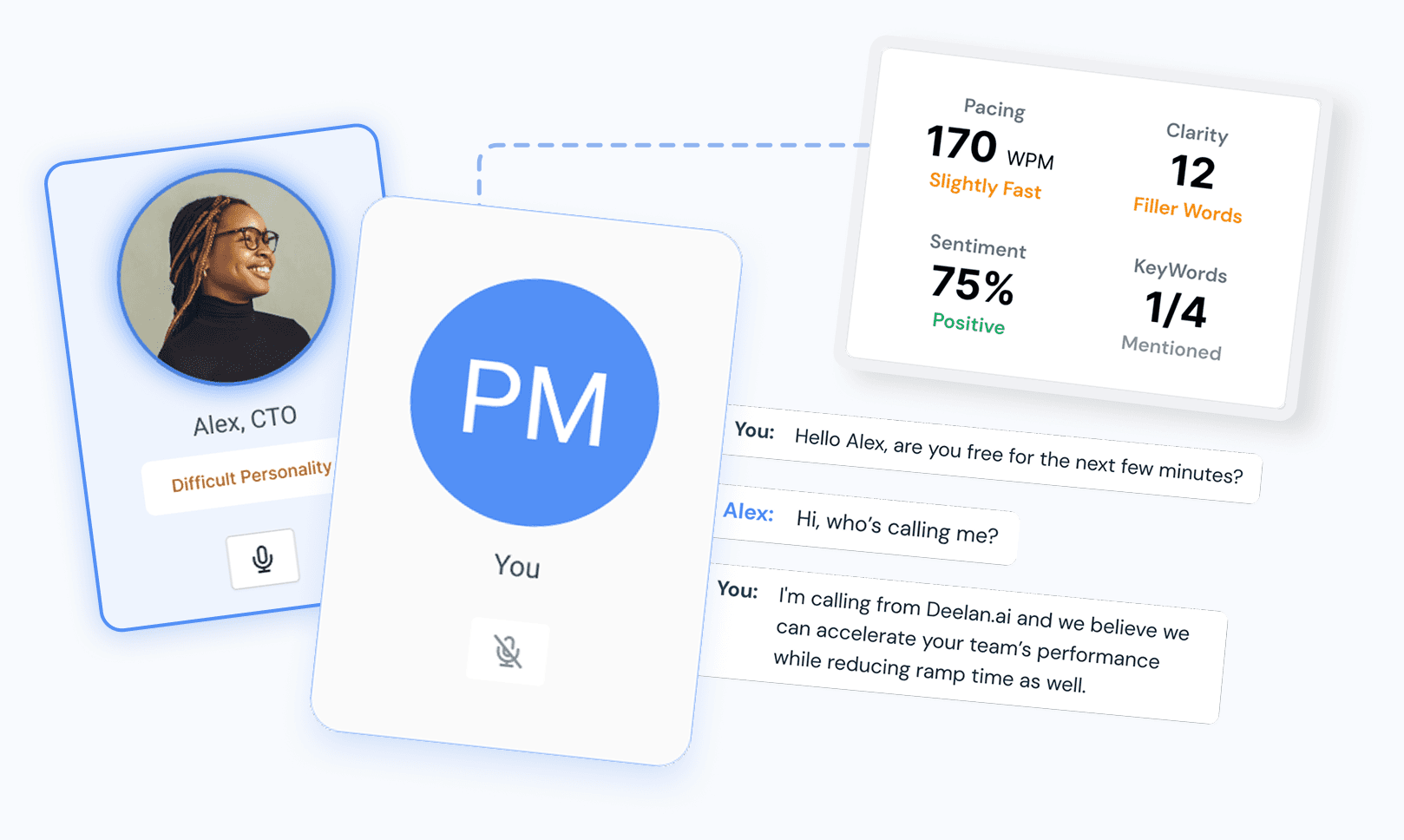
AI coaching simulations: Realistic, role-specific scenarios for renewal calls, churn prevention, or executive check-ins.
Real-time feedback loops: CSMs receive instant analysis on tone, structure, and message clarity — without a human coach.
Deelan: A New Standard for Customer Success Training
Deelan represents a new generation of customer success training platforms, designed for performance.
Deelan is an adaptive AI training platform built to help SaaS teams turn knowledge into execution.
How Deelan Works
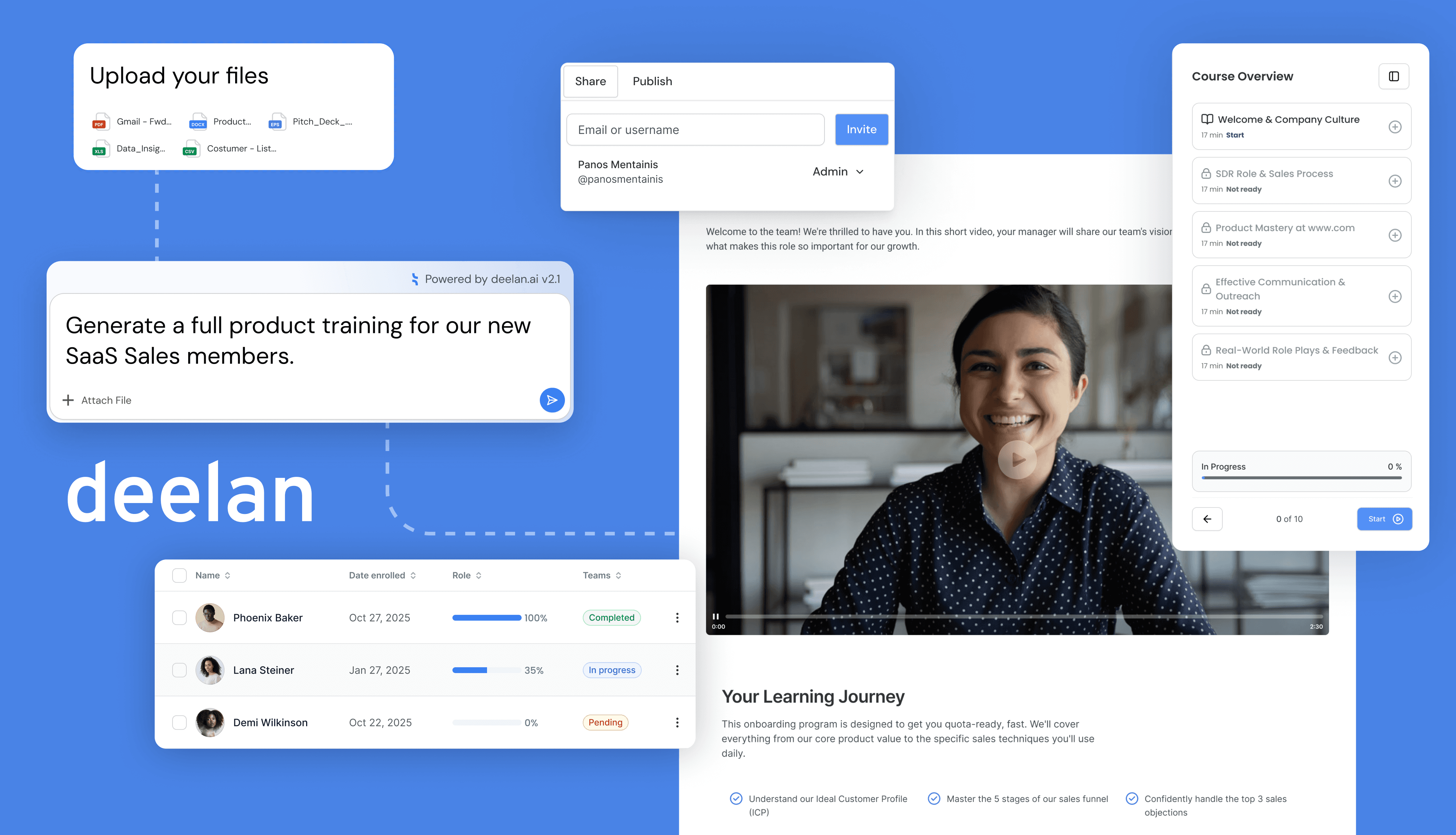
Deelan transforms your existing enablement assets into active training:
Playbooks
Scripts
Product knowledge
Objection frameworks
Instead of static documents, these become interactive training experiences.
Role-Based Training Paths
Deelan adapts training for:
Customer Success Managers
SDRs supporting expansion
Account Executives involved in renewals
Onboarding specialists
Each role gets training aligned to their real responsibilities.
AI Role Plays for Real CS Scenarios
Teams practice:
Renewal negotiations
Upsell conversations
Objection handling
Onboarding kickoffs
Executive reviews
All powered by AI simulations that feel like real customer interactions.
Skill Gap Tracking
Deelan tracks:
Where teams struggle
Which skills need reinforcement
How performance improves over time
Not just who finished a course, but who can actually perform.
Key Benefits
Faster ramp for new CS hires
Higher renewal and expansion win rates
Scalable coaching without manager overload
Consistent customer experience across segments
Use Cases for Customer Success Teams
CS Onboarding: Get new hires ready to handle accounts in days, not weeks, with guided simulations.
Renewal & Expansion Readiness: Train CSMs to identify growth signals and confidently manage renewal conversations.
SMB vs. Enterprise Segmentation: Customize training paths for different motion types — fast-paced SMB vs. consultative enterprise engagement.
Enablement & RevOps Alignment: Use shared data to identify skill gaps across GTM roles and streamline your revenue engine.
How to Choose the Right Customer Success Training Platform
What to Look For
Role-based training paths
Scenario-driven practice
Measurable skill development
Continuous learning support
Integration with existing workflows
Red Flags
Generic LMS focused on content hosting
Static videos with no practice
No personalization by role or segment
Completion metrics without business impact
Customer Success Training - your Competitive Advantage
Teams that invest in adaptive, performance-driven training:
Reduce churn
Increase renewals and expansions
Deliver consistent customer outcomes
Scale without sacrificing quality
If you’re ready to move beyond static courses and build a customer success training program that actually drives results:
Explore Deelan or book a demo to see how adaptive AI training can transform your CS organization.