
Microlearning is a training strategy that delivers focused, bite-sized lessons, typically 3–10 minutes long, designed to teach one specific skill or concept at a time. Built on cognitive science principles like spaced repetition and reduced cognitive load, microlearning improves retention, engagement, and real-world performance compared to traditional long-form training.
In the high-velocity business environment of 2026, the traditional "day-long seminar" is a relic. Information becomes obsolete faster than ever, and employee attention is the most taxed resource in the enterprise.
Enter microlearning: a strategic approach to training that delivers the right information, in the right amount, at exactly the right time.
The Cognitive Science: Why It Works
Microlearning is rooted in two primary psychological principles:
The Forgetting Curve (Ebbinghaus): Humans forget nearly 80% of new information within a month if it isn't reinforced. Microlearning provides the "spaced repetition" necessary to move knowledge from short-term to long-term memory.
Cognitive Load Theory: Our working memory can only hold a limited amount of information. By focusing on one skill per module, microlearning prevents "mental brownouts" caused by information overload.
The 3–10 Minute Model
While there is no "perfect" timestamp, the 2026 industry standard for a microlearning course is 3 to 10 minutes. This window is short enough to fit between meetings but long enough to facilitate a meaningful "learn-and-apply" cycle.
Microlearning
Format: Short videos, quizzes, infographics, or simulations.
Focus: One specific learning objective per module.
Access: Mobile-first and on-demand.
Goal: Immediate performance improvement and retention.
Feature
Traditional eLearning
Microlearning (Deelan Style)
Length
30–90 Minutes
3–10 Minutes
Retention
Low (Information Overload)
High (Spaced Repetition)
Engagement
Passive
Interactive / Gamified
Update Speed
Weeks/Months
Minutes (AI-assisted)
Device
Desktop-Heavy
Mobile-Native
Focus
Broad Subject Matter
Why Microlearning Matters in Modern Workplaces
The shift toward micro-content isn't just a trend; it's a response to the structural changes in how we work.
The Attention Economy: The average employee is interrupted every 11 minutes. Microlearning respects this reality by offering "painless" entry and exit points for learning.
Learning in the Flow of Work: Modern teams don't want to "go to training." They want to find an answer to a problem while they are solving it. Microlearning acts as a performance support tool.
The Rise of Frontline & Remote Teams: For retail workers or field technicians, sitting at a desk for an hour is impossible. Mobile-first microlearning allows them to train during natural lulls in their shift.
Knowledge Reinforcement: Static annual training fails because it lacks follow-up. Microlearning allows for "drip-feed" reinforcement that keeps compliance and product knowledge top-of-mind.
Key Features of a Microlearning Platform
If you are evaluating a microlearning platform, these features are the non-negotiables for 2026:
Bite-Sized Content Management: The ability to easily tag and categorize small assets so they are searchable.
Mobile-First Design: It must be as intuitive as a social media feed. If it requires a desktop to look good, it isn't true microlearning.
Gamification & Interactivity: High-engagement triggers like leaderboards, streaks, and "streak freezes" to encourage daily habits.
Personalization (AI-Driven): The platform should suggest the next 5-minute module based on the user’s recent mistakes or role changes.
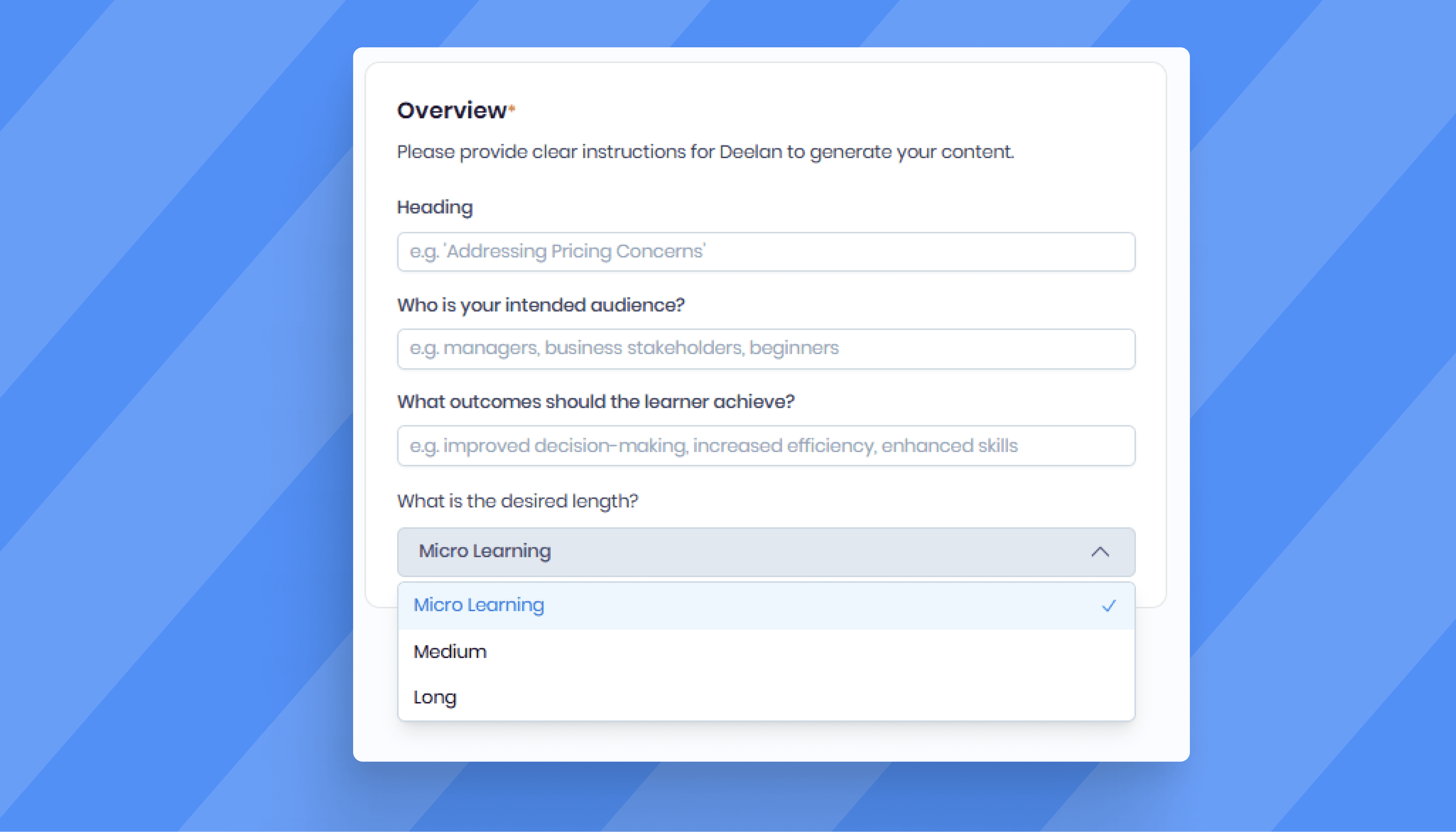
Rapid Authoring: In a world of weekly product updates, you cannot wait months for a vendor to build a course. You need to turn a PDF or a Loom video into a micro-module in minutes.
Microlearning Examples (Real-World Use Cases)
To visualize how this looks in practice, consider these examples of microlearning across different departments:
Sales Enablement
3-Minute Roleplay: An AE practices a specific objection ("Your price is too high") against an AI buyer and receives instant feedback on their tonality.
Scenario-Based Simulation: A "choose-your-own-adventure" style branching path on how to navigate a multi-stakeholder discovery call.
Onboarding
The "Day 1" Checklist: A 4-slide interactive module introducing the company mission and a link to set up their Slack profile.
Quick Assessment: A 5-question quiz on the internal "who's who" to help new hires navigate the org chart.
Compliance & Safety
The "Spot the Hazard" Quiz: An image-based micro-module where a frontline worker must click on safety violations in a 360-degree photo of a warehouse.
Product Update Flashcard: A quick notification about a new regulatory change that requires a 30-second "I acknowledge" click.
Best Microlearning Platforms (2026 Comparison)
Platform | Best For | AI Course Generation | Adaptive Learning | Roleplay / Simulations | Analytics Depth | Ideal Company Size |
|---|---|---|---|---|---|---|
Revenue teams & performance-driven orgs | ✅ Structured microlearning built in minutes | ✅ Role-based adaptive paths | ✅ AI roleplay + audio feedback | Advanced skill-gap analytics | SMB → Enterprise | |
Axonify | Frontline workforce | ⚠️ Limited AI creation | ✅ Personalized daily reinforcement | ❌ | Strong frontline analytics | Mid → Enterprise |
EdApp | Mobile micro-courses | ⚠️ Basic AI tools | ❌ | ❌ | Standard | SMB → Mid |
Qstream | Knowledge reinforcement | ❌ | ⚠️ Scenario repetition | ❌ | Strong | Mid → Enterprise |
eduMe | Deskless teams | ⚠️ Some AI tools | ⚠️ Basic personalization | ❌ | Standard | Mid → Enterprise |
Spekit | In-app sales training | ❌ | ❌ | ❌ | Usage-based analytics | SMB → Mid |
Coursebox AI | Fast AI course building | ✅ AI micro-course generation | ❌ | ❌ | Standard | SMB |
Deelan - Microlearning Platform for Modern Teams
While traditional platforms focus on "short content," Deelan focuses on adaptive performance. We believe microlearning is only effective if it changes based on what the learner actually knows.
AI Adaptive Paths: Deelan doesn't just give everyone the same 5-minute module. If an SDR struggles with "Discovery," their micro-path shifts to prioritize that skill automatically.
Roleplay Builder (Micro-Simulations): Instead of just watching a video, reps engage in 2-minute AI sales simulations with real-time audio feedback.
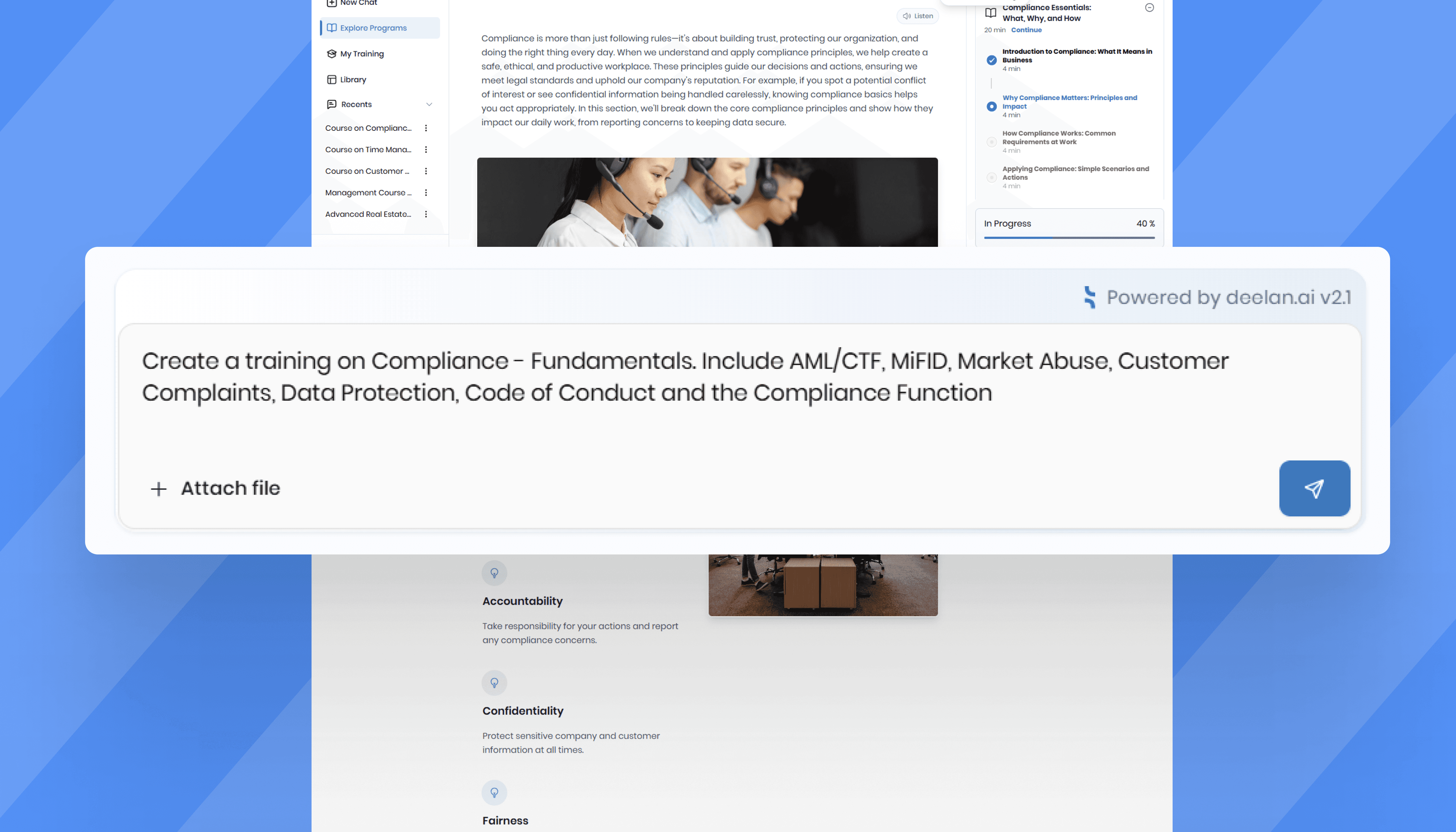
Turn Docs into Micro-Lessons: Use the Knowledge Base to ingest a 50-page product manual and instantly output ten 3-minute lessons.
Performance-First Analytics: We track more than "completion", we track performance improvement.
How to Implement Microlearning in Your Organization
Don't boil the ocean. Follow this 6-step rollout:
Identify High-Impact Skill Gaps: Where is your team failing? (e.g., closing the deal).
Break it Down: Don't teach "Sales." Teach "Handling the 'Not a Priority' Objection."
Choose the Format: Would a quiz, a short video, or an AI Roleplay be most effective?
Add Interactivity: Every module must require a user action every 60 seconds.
Drip-Feed Reinforcement: Schedule a 2-question follow-up quiz 3 days after the initial module.
Optimize: Use Assessments to see if the training actually closed the skill gap.
Common Microlearning Mistakes to Avoid
"Chunking" without Context: Taking a 60-minute video and cutting it into 10 pieces isn't microlearning. It's just a fragmented long-form course.
Neglecting Analytics: If you don't know why people are skipping the third minute of your video, you can't improve it.
Zero Personalization: Sending a veteran AE a "How to use the CRM" micro-lesson is the fastest way to kill engagement.
Ready to build adaptive microlearning that actually improves performance?
In 2026, microlearning is the only way to keep pace with the speed of business. It’s not just about making training shorter; it’s about making it smarter, more accessible, and directly tied to performance.
By choosing an AI-first, adaptive platform like Deelan, you ensure that your training isn't just a box to be checked - it’s a competitive advantage that scales with your team.
Book a demo and see Deelan in action.