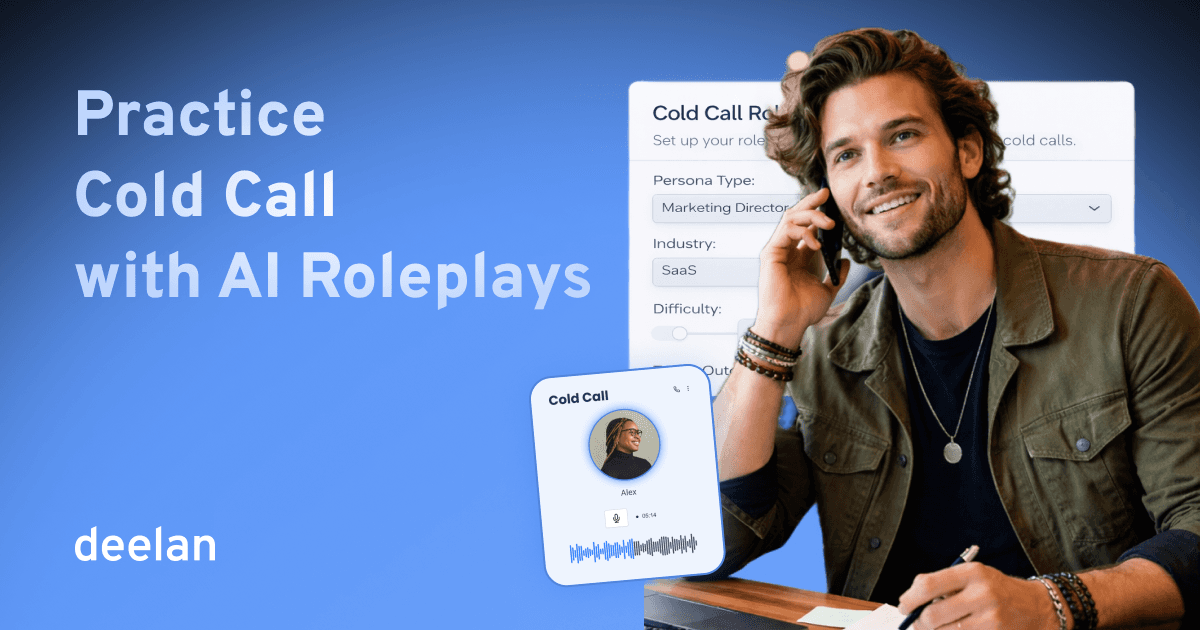
Cold calling is one of the most powerful - and intimidating - skills in sales. Many professionals know the theory but struggle when it comes to actually speaking with a potential customer.
Cold calling is a performance skill. And like any performance skill — public speaking, surgery, flying a plane — knowing the theory is not the same as being ready to execute. The only thing that builds real cold calling confidence is repetition in realistic conditions.
Want to practice cold calls instead of just reading about them?
Start a 14-day trial and run realistic cold call roleplays with AI buyers, instant feedback, and performance scoring.
How to Practice Cold Calls With AI Roleplay: Step by Step
AI roleplay closes the gap between theory and live performance. Here's how to run a session that actually moves the needle.
Step 1 — Define the Skill You're Training
Don't try to practice everything at once. Pick one focus area: opening lines, discovery questions, objection handling, or closing. Targeted practice compounds faster than scattered practice.
Step 2 — Build a Realistic Persona and Scenario
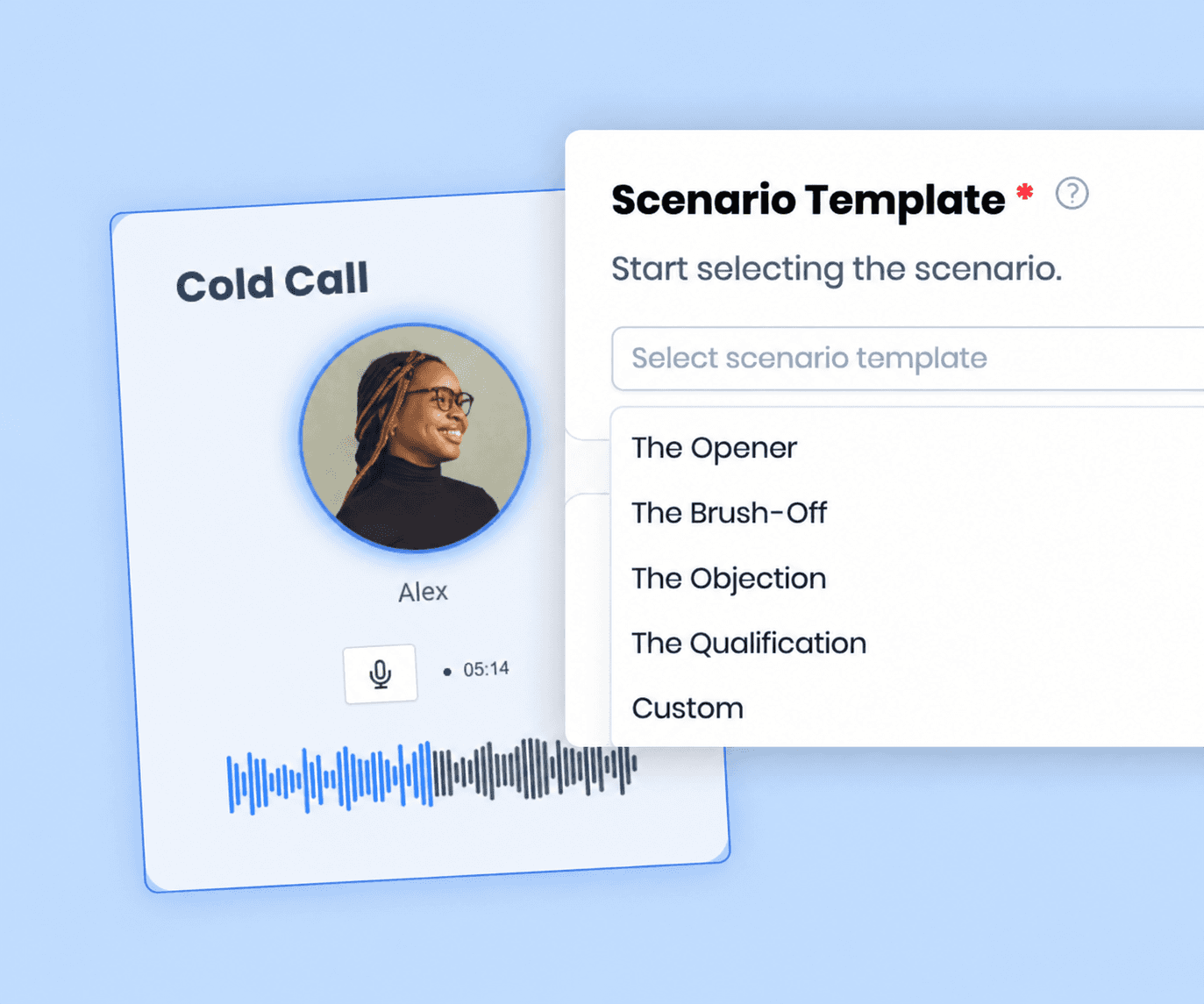
Choose from pre-built scenarios or write your own prompt. Define the buyer: their title, company size, industry, pain points, and likely objections. The more specific the persona, the more useful the practice. A "skeptical CFO at a 200-person SaaS company who just renewed with a competitor" is far more useful than "a difficult prospect."
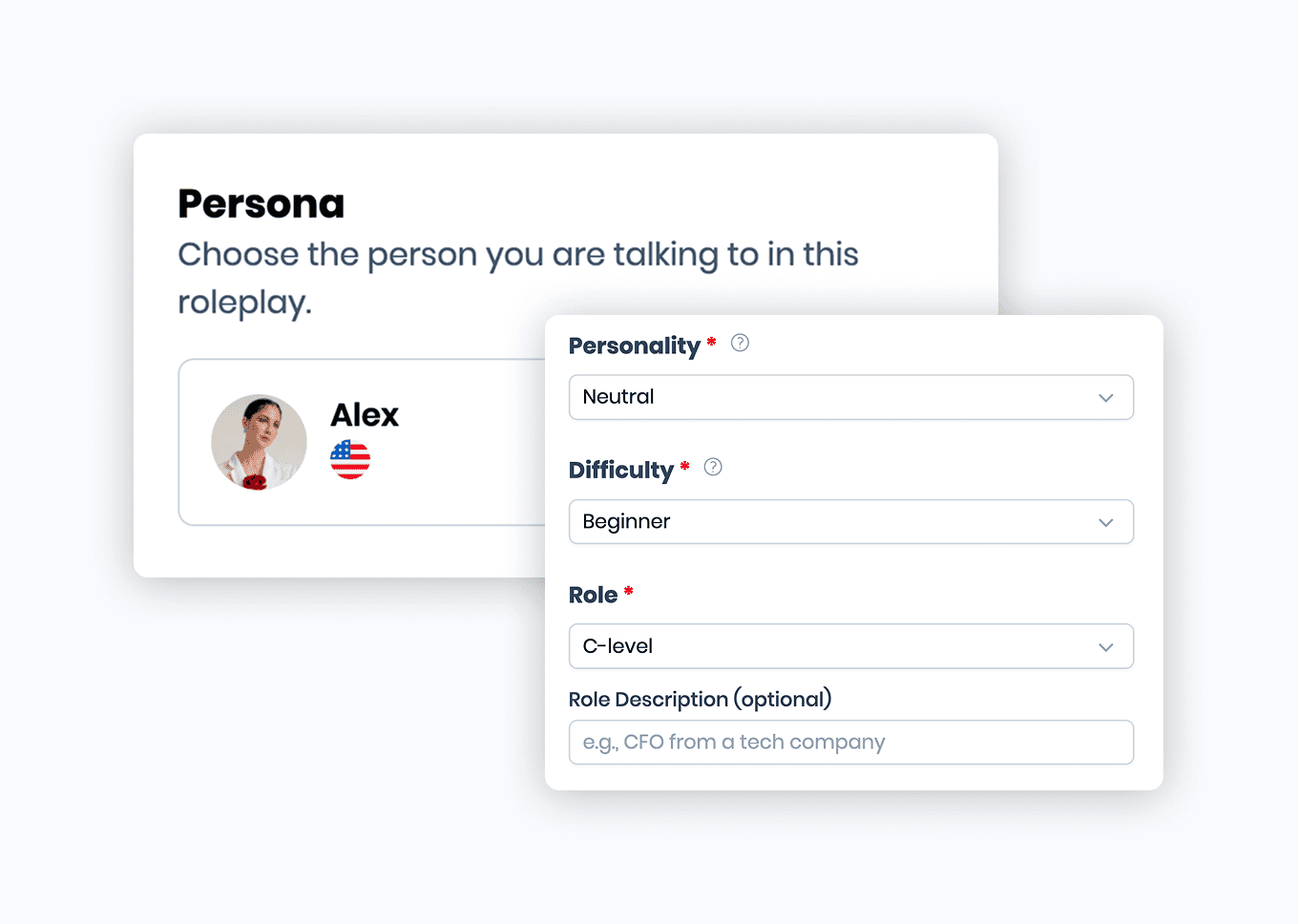
Set the difficulty level. Early reps should start with cooperative personas. As confidence builds, introduce more friction — interruptions, price pushback, gatekeepers, disinterest.
Step 3 — Run the Roleplay
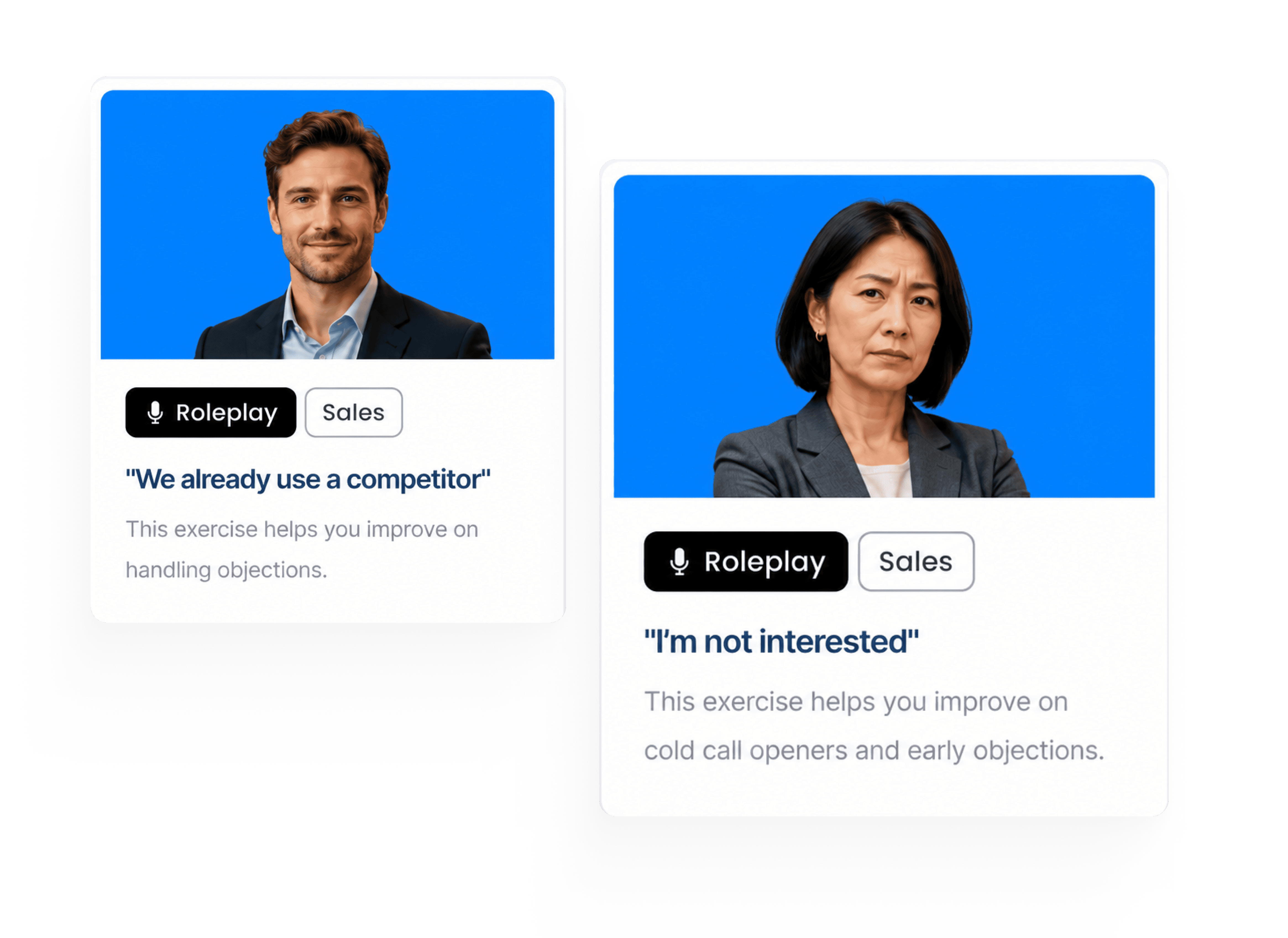
Treat it like a real call. No pausing to think. No reading from notes. The AI responds dynamically to what you say, just like a real prospect would — adapting, pushing back, going cold if your pitch isn't landing.
Step 4 — Review the Feedback
This is where the real learning happens. After the session, you get scored across key dimensions: clarity, tone, questioning technique, filler words, talk-to-listen ratio, missed opportunities to advance the conversation. You see exactly where you lost momentum and why.
Step 5 — Repeat With Intention
Take one piece of feedback. Try the same scenario again with that single adjustment. Small, targeted improvements practiced repeatedly is how average reps become top performers.
This is where modern roleplay training software creates real impact — by turning training into a continuous loop instead of a one-time event.
Cold Call Roleplay Scenarios Every Rep Should Practice
These are the situations that actually happen on cold calls. Practice them before they cost you a deal.
The Gatekeeper — You're two sentences in and someone who isn't your prospect is screening you. Practice earning the transfer rather than demanding it.
The "Not Interested" Prospect — The most common early objection. Practice staying calm, reframing the conversation, and finding a foothold before accepting the hang-up.
The Skeptical Buyer — They've heard it all before. Practice building credibility fast and leading with proof over promises.
The Busy Executive — You have 20 seconds before they're gone. Practice being concise, specific, and immediately relevant.
The Price Objection Call — Budget comes up before value is established. Practice shifting the conversation from cost to ROI before the number becomes the whole conversation.
The Follow-Up Call — They asked you to send info and now you're calling back. Practice using what they said last time to rebuild engagement without starting from scratch.
The Technical Buyer — They want to go deep on specs before they'll engage with business value. Practice qualifying their technical concerns while keeping the conversation moving forward.
Closing and Next Steps — The call went well but no meeting is booked. Practice the actual ask — specifically, confidently, and without over-explaining.
AI Feedback
A manager gives qualitative notes based on their own style and memory. AI tracks everything: every filler word, every moment of weak phrasing, where your tone dropped, how long you talked before asking a question, which objections you deflected versus addressed directly.
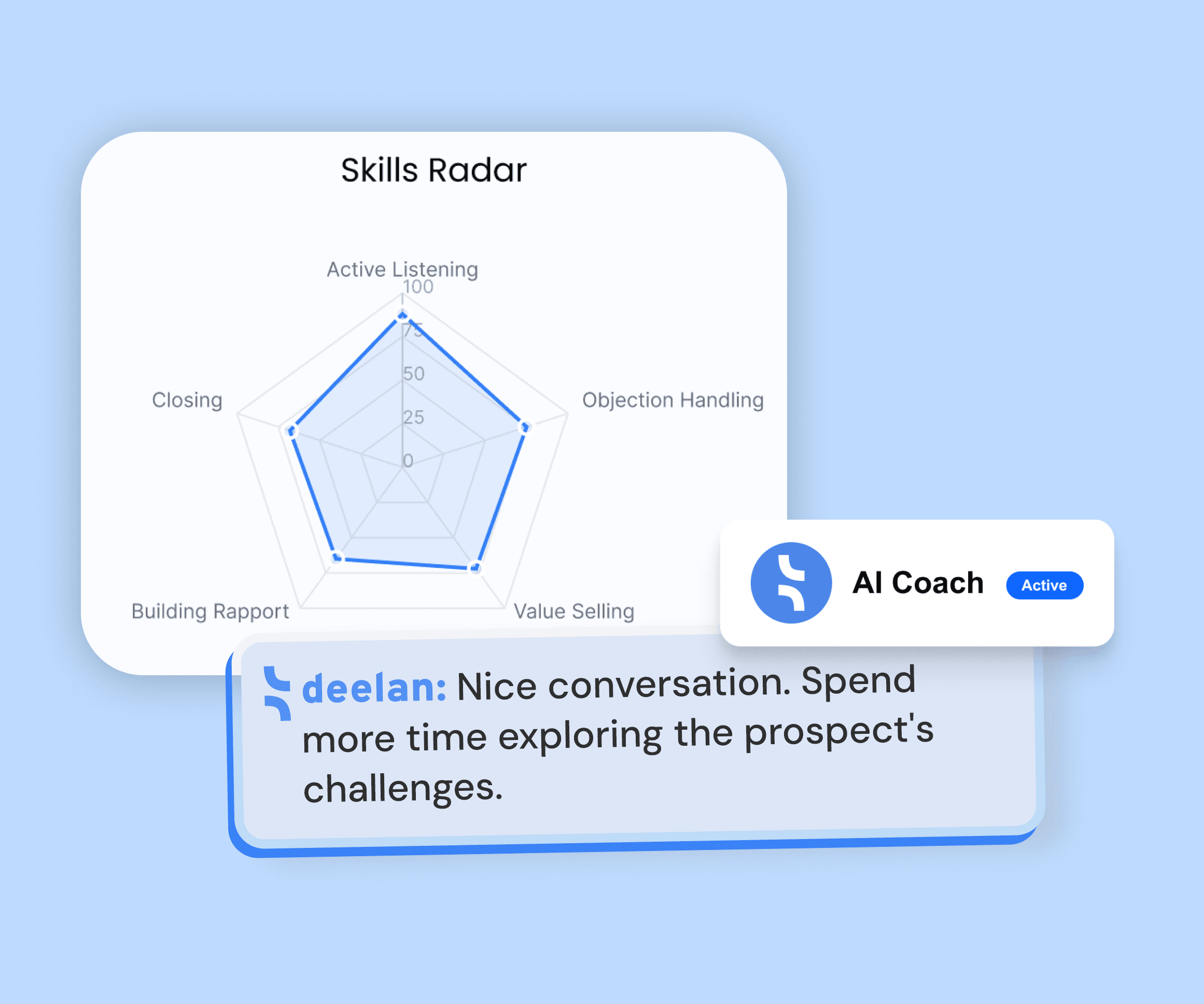
After each cold call practice session, strong AI platforms surface:
Total Score — an instant performance snapshot
Time to Complete — a proxy for fluency and confidence
Skills Radar — visual scoring across communication, persuasion, discovery, and objection handling
Detailed skill-level feedback — what specifically worked, what to fix, and what to try next time
This level of granularity means reps don't have to guess at what to improve. They have a clear, prioritized development path after every session.
How Deelan Helps Teams Practice Cold Calls With Roleplay
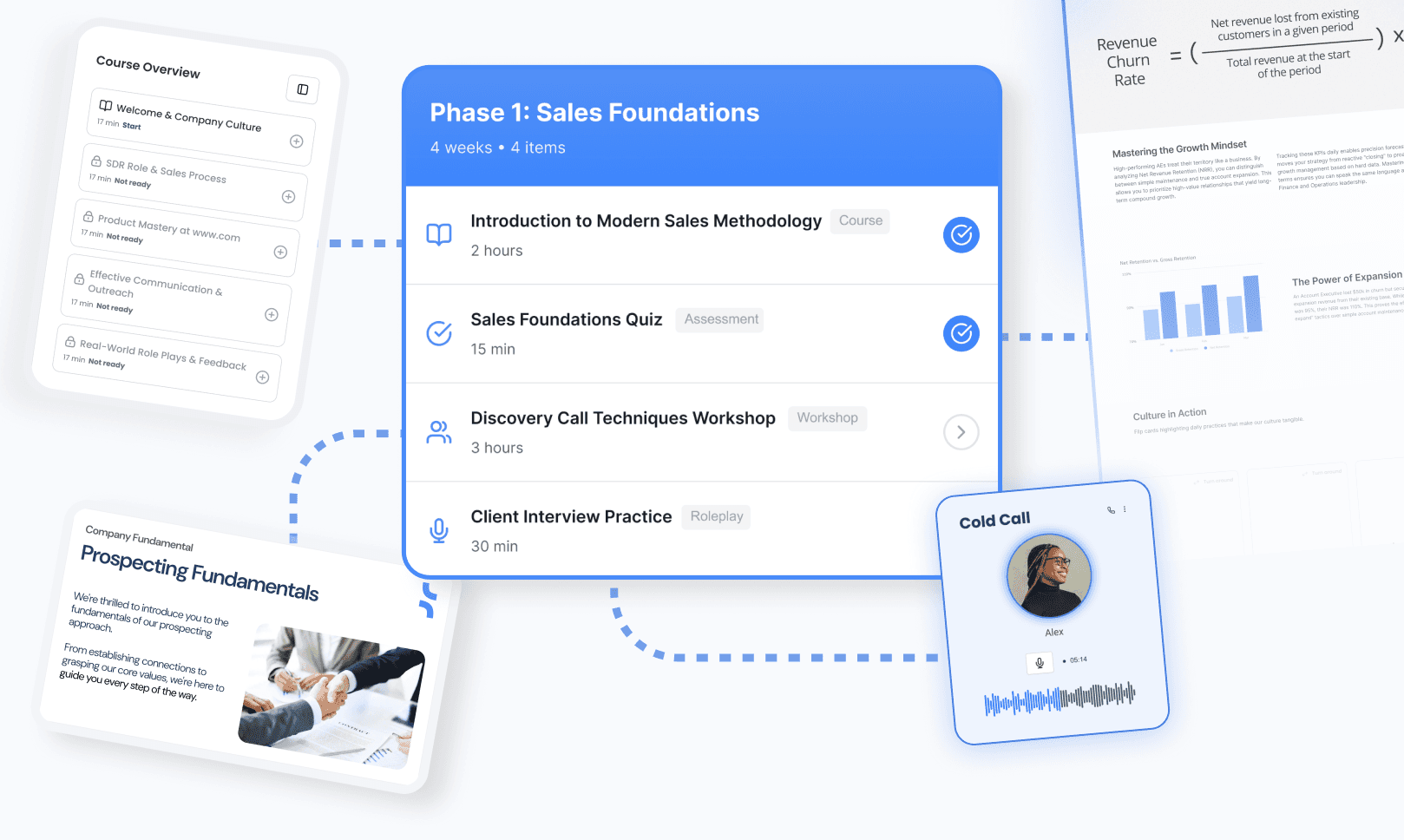
Deelan is a sales training platform built specifically for revenue teams — not a generic LMS repurposed for sales. It combines roleplay simulations, structured courses, live workshops, and performance analytics in one system designed to improve what actually matters: win rates, ramp time, and pipeline quality.
Roleplay Builder for Realistic Cold Call Practice
Deelan's Roleplay Builder lets managers and enablement teams create custom AI simulations using their own ICP profiles, objection sets, and talk tracks. Each simulation includes adjustable difficulty, custom AI personas, and evaluation metrics aligned to your sales process. Reps practice with voice-based AI conversations that respond dynamically — not scripted chatbots, but realistic conversations that adapt to what the rep says.
Courses and Workshops That Build the Foundation
Roleplay only works when reps have something to draw on. Deelan's course builder lets teams convert playbooks, call recordings, and product docs into structured learning modules in minutes. Workshops bring live, face-to-face training into the loop — and Deelan generates materials and follow-up practice sessions automatically.
Assessments That Surface Real Skill Gaps
Completion rates don't tell you if reps can actually sell. Deelan's assessment tools generate scenario-based exercises and quizzes that reveal where knowledge breaks down — before it breaks down on a real call.
Performance Tracking Tied to Real Outcomes
Sales leaders can track individual and team progress across time, see which skills are improving, and identify who needs coaching before a manager has to notice. Deelan clients report a 55% faster ramp time for SDRs and AEs, and 15–25% higher win rates after consistent platform use.
Practice Cold Calls With Deelan's Roleplay
Cold calling is a confidence game. Confidence comes from repetition. Repetition, done right, comes from structured roleplay — realistic scenarios, honest feedback, and enough volume to make the tough moments feel familiar.
The reps who struggle on cold calls aren't less talented. They're less practiced. And the teams that consistently outperform aren't working harder in the moment — they've already done the work before the dial.
AI roleplay makes it possible to practice cold calls at the volume and quality that actually changes behavior. Not once a week in a conference room. Every day, on demand, with feedback that's specific enough to act on.
If your team isn't practicing cold calls with roleplay consistently, that's the gap. And it's one of the fastest to close.
Ready to see what that looks like in practice? Book a free Deelan demo — and watch your team ramp faster, handle objections better, and book more meetings starting this week.