The insurance industry is sitting on a ticking clock. Within the next six years, 50% of the current insurance workforce will become eligible for retirement — and with it, decades of product knowledge, client relationships, and institutional expertise will walk out the door.
At the same time, agencies are struggling to bring new agents up to speed fast enough to fill that gap. More than 90% of new insurance agents quit within their first year. That number rises to over 95% within five years. The cost of recruiting, licensing, and onboarding an agent who won't make it past month six is a problem most agencies are paying for repeatedly — without realizing it.
The agencies that outperform in this environment aren't doing it by hiring more or working harder. They're doing it by training differently.
The Real Training Challenges Facing Insurance Agencies Today
Before looking at what winning agencies do, it's worth understanding what everyone else is dealing with.
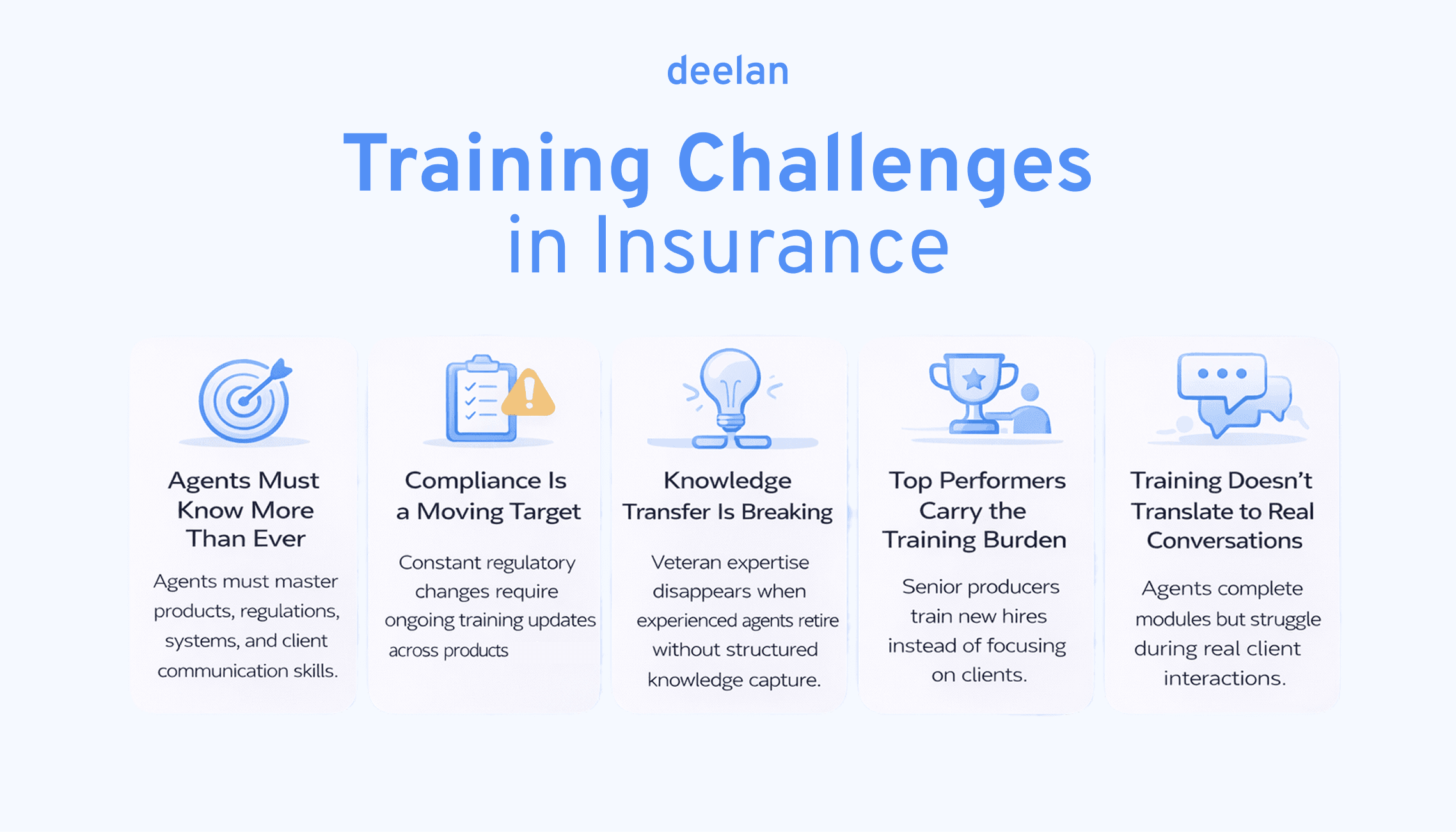
Agents are expected to know more than ever — with less support
Today's agents must master complex products, evolving regulations, advanced systems, and soft skills all at once. Without a modern, structured training program, new hires stall, compliance gaps widen, and customer trust erodes. The job has fundamentally changed, but most training programs haven't.
Compliance is a moving target
Regulatory requirements shift constantly across states and product lines. Cybersecurity laws, data privacy regulations, and best-interest standards are expanding — each requiring new mandatory training for licensed agents. Agencies using static LMS platforms scramble to update content every time the rules change, often falling behind.
The knowledge transfer problem
A 2024 McKinsey report found that 60% of insurance roles now require skills in data analytics, AI, or cybersecurity — skills that the generation retiring never needed. The veterans leaving took their intuition, their objection-handling instincts, and their client relationship playbooks with them. Most agencies have no system to capture and transfer that knowledge before it disappears.
Top performers are carrying the training burden
When a new agent joins, who trains them? In most agencies, it falls on the senior producers — the people who should be focused on clients and renewals, not running onboarding sessions. This creates a structural problem: your best people are stretched thin, and your new hires are getting inconsistent, informal guidance that varies depending on who has time that week.
Training doesn't translate into the field
Most insurance training is passive. Agents watch videos, read product guides, complete a compliance module, and check the box. Then they get on a call with a skeptical prospect and have no idea how to handle a price objection or explain a complex policy benefit clearly. To be effective, employees need to exhibit strong interpersonal skills, deep policy knowledge, and the ability to become and remain licensed — traits that may take years to develop without deliberate, structured practice.
What High-Performing Agencies Do Differently
The gap between average and top-performing insurance agencies isn't talent. It's systems. Here's what the best agencies do - and how Deelan enables it.
They Turn Institutional Knowledge Into Structured Training — Instantly
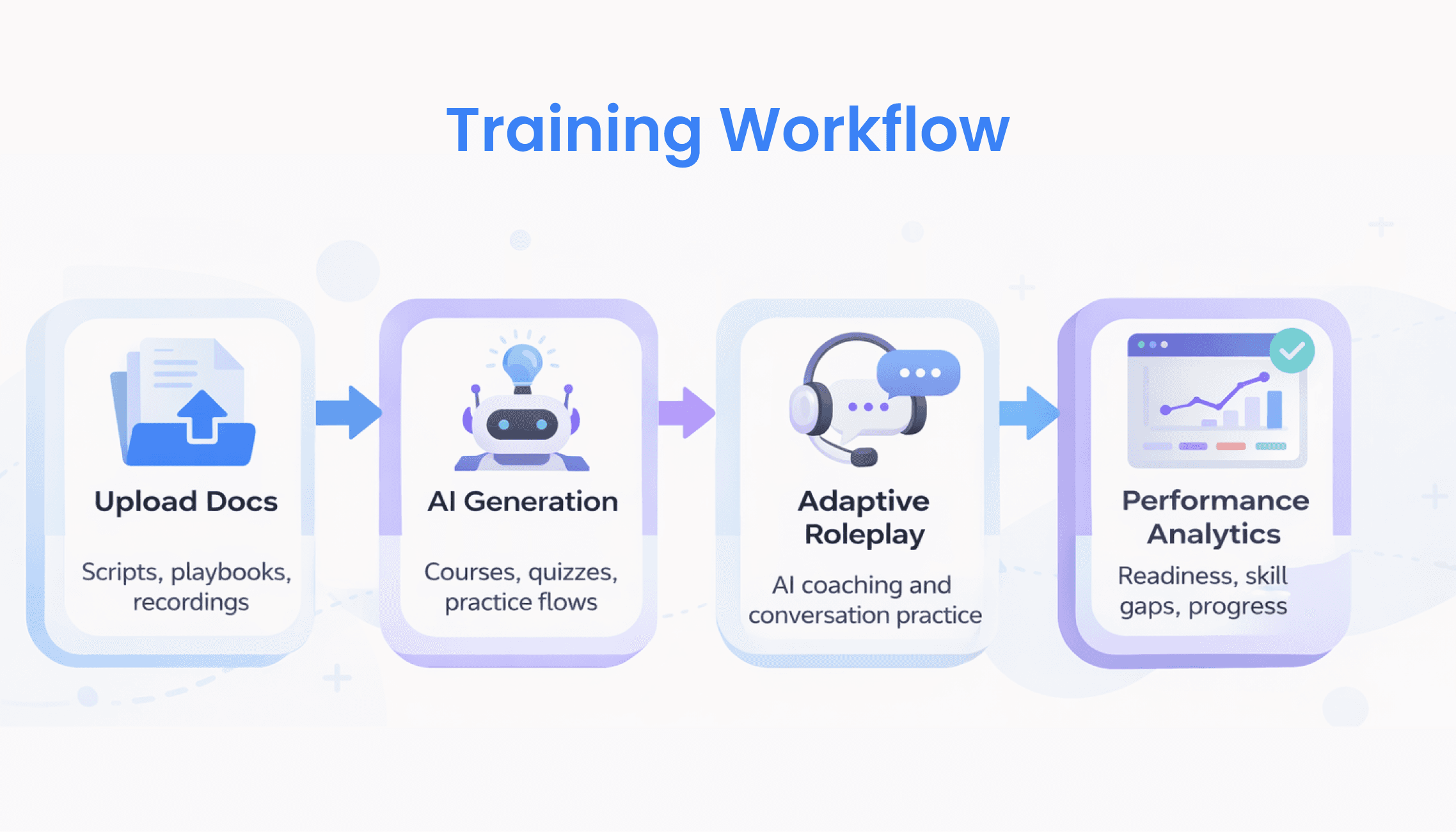
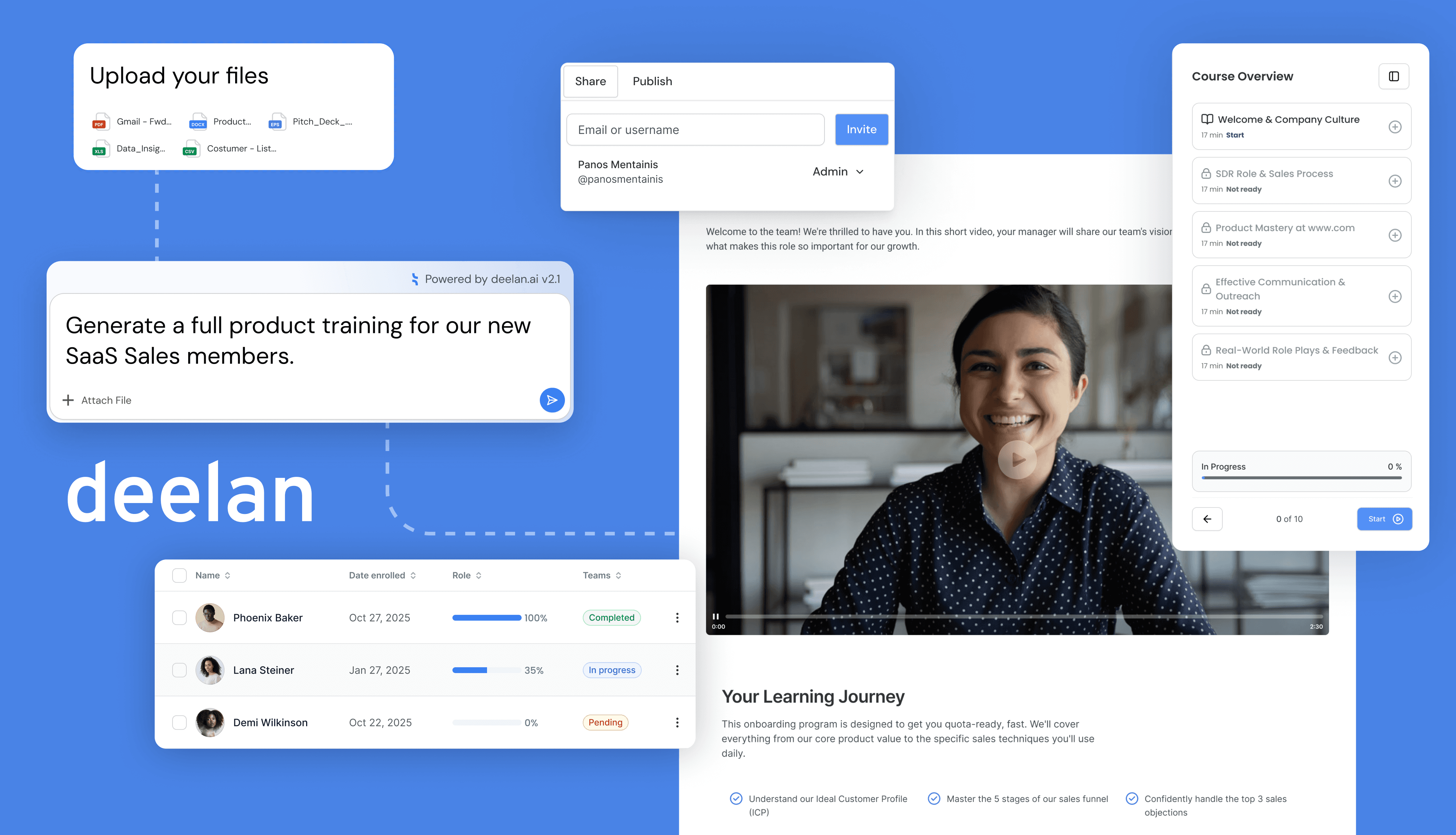
High-performing agencies don't let their best agents' knowledge stay locked in their heads. They systematize it. With Deelan, agencies upload existing materials — product guides, call recordings, compliance documents, objection-handling scripts — and the platform converts them into structured, role-specific training in minutes.
New agents learn from the best practices of your top producers, not from whoever has time to shadow them
Training reflects your actual products, your actual scripts, and your actual process
Content updates in minutes when products or regulations change — not weeks
78% of insurance companies now prioritize upskilling and reskilling programs to keep up with digital transformation. The ones doing it well aren't building more slide decks — they're using AI to do it for them.
2. They Practice Before Going Live — With AI Roleplays
Knowing a product and being able to sell it are two completely different things. Top agencies close that gap with deliberate practice before agents ever face a real client.
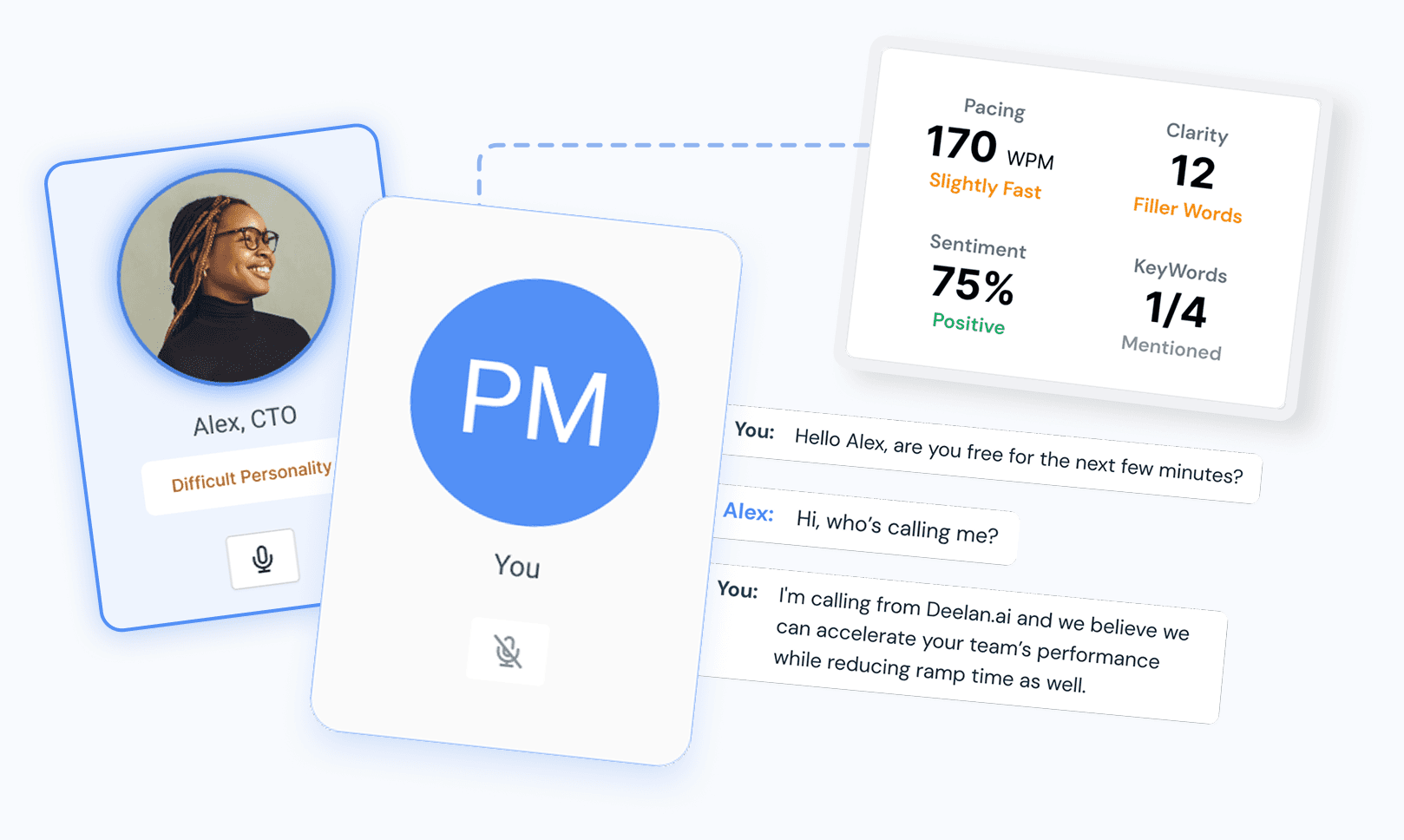
Deelan's AI roleplay simulations put agents in realistic, high-pressure scenarios — skeptical buyers, complex coverage questions, price objections, renewal calls — with AI analyzing tone, clarity, and messaging in real time.
Agents rehearse difficult conversations before they cost a deal
AI coach provides instant feedback on what worked and what didn't
Confidence builds before it matters — not during a live client call
They Scale Coaching Without Adding Headcount
A 2024 LinkedIn Learning report found that 94% of employees stay longer at companies that invest in their development. But most agencies can't afford to hire a dedicated trainer for every team or region. Deelan's AI coach fills that gap — delivering personalized, continuous feedback to every agent without adding a single headcount.
Managers stop repeating the same coaching conversations to every new hire
Agents receive reinforcement in the flow of their training, not just during quarterly reviews
Performance gaps surface in real-time dashboards before they become a turnover problem
They Make Compliance Training Automatic — Not a Fire Drill
For most agencies, updating training when regulations change means weeks of rework across multiple tools. High performers don't operate that way.
With Deelan, compliance training is updated from a single prompt. New regulations, product changes, or updated best-interest standards are reflected in training immediately — across every role, region, and team.
No more scrambling to update outdated LMS content before an audit
Agents are always trained on the most current requirements
Compliance becomes a continuous habit, not a once-a-year checkbox
They Track Performance — Not Just Completion
Most LMS platforms tell you who finished a course. They can't tell you whether an agent can actually handle a renewal objection or explain a policy exclusion clearly. High-performing agencies measure what actually matters.
Deelan's analytics track real skill mastery — not just clicks and completions. Managers see exactly where each agent is strong, where they're falling short, and what training to assign next.
Identify which agents are ready for complex accounts before you put them in front of clients
Surface skill gaps at the team level before they become revenue problems
Connect training directly to performance outcomes and KPIs
What Struggling Agencies Do | What High-Performing Agencies Do |
|---|---|
Informal, ad-hoc onboarding | Structured, role-specific learning paths |
Top agents train new hires | AI-driven self-guided onboarding |
Generic compliance LMS | Adaptive, always-updated training |
No practice before client calls | AI roleplays before going live |
Track completion only | Track real skill mastery |
Weeks to update content | Minutes, from a single prompt |
Ready to build a training system that actually develops your agents?
The agencies winning right now aren't spending more on recruiting. They're investing in making the agents they have better, faster — and they're using AI to do it at scale.
Book a Free Demo with Deelan →
See how insurance agencies are reducing ramp time, scaling coaching, and keeping agents compliant — without adding more managers or rebuilding training from scratch.