
You've got 10 sellers. One of them blows past quota every quarter, runs discovery like a pro, closes deals that others let slip. The other - somewhere between decent and average. Not bad enough to let go. Not good enough to stop worrying about.
The instinct is to hire. Add a rep, add a seat, add output.
But what if the gap isn't really about capacity?
What if the problem is that 80% of your team is performing at 60–70% of what your top seller does — and you're just accepting that as normal?
Let's discover how to close that gap, through smarter training rather than more headcount, is worth looking at seriously.
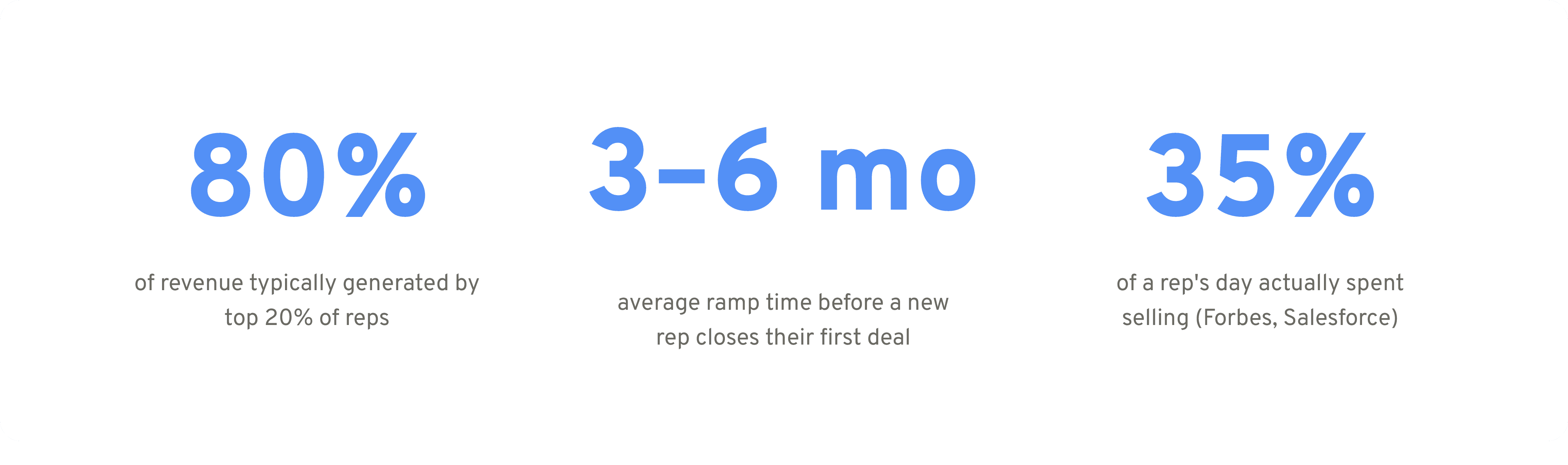
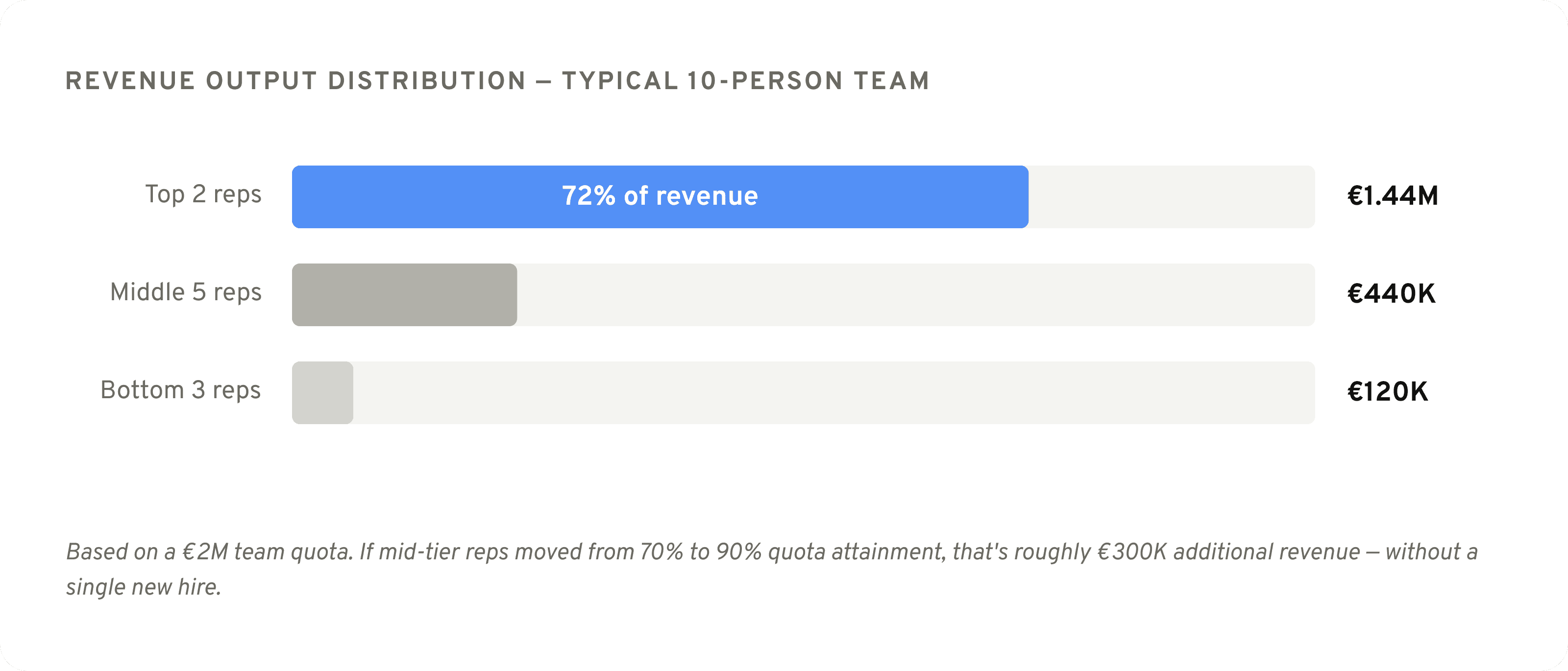
Look at the distribution in most B2B sales teams and you see the same shape: one or two stars, a few solid performers, and a long tail of people doing roughly okay.
The top performer has, consciously or not, figured out what to say, when to say it, and how to handle resistance. Everyone else is winging some version of that.
The gap between your top rep and your median rep is where the revenue actually lives.
Hiring a new rep doesn't fix this. It takes 3–6 months for them to ramp, costs €15K+ during that window, and they'll enter the same uneven training environment and likely land somewhere in the middle of the distribution. So you've basically added some new problems.
Why most training doesn't solve the problem
A single course takes weeks to produce. By the time it ships, two products have changed and a key objection has evolved.
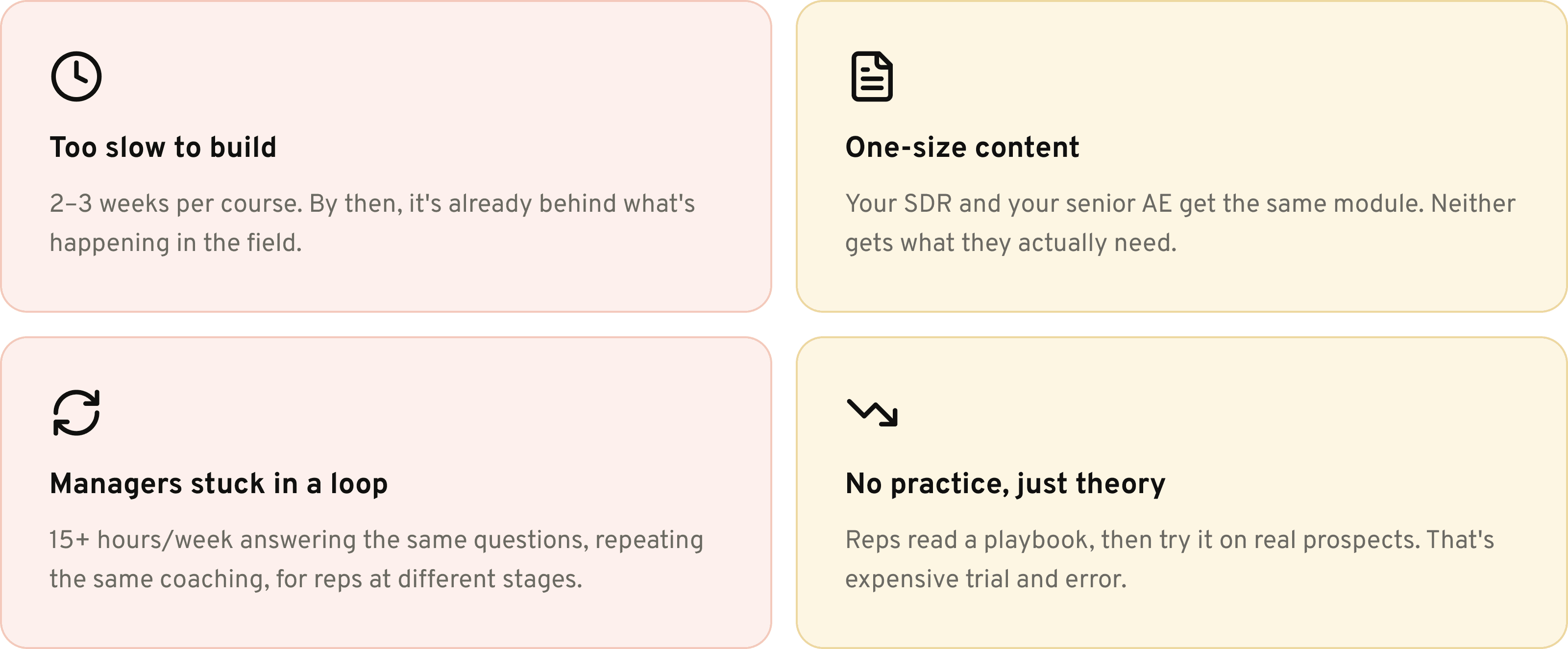
The result is that training becomes something people complete, not something that actually changes how they sell. Completion rates go up. Performance stays flat. The gap between your best and the rest doesn't close.
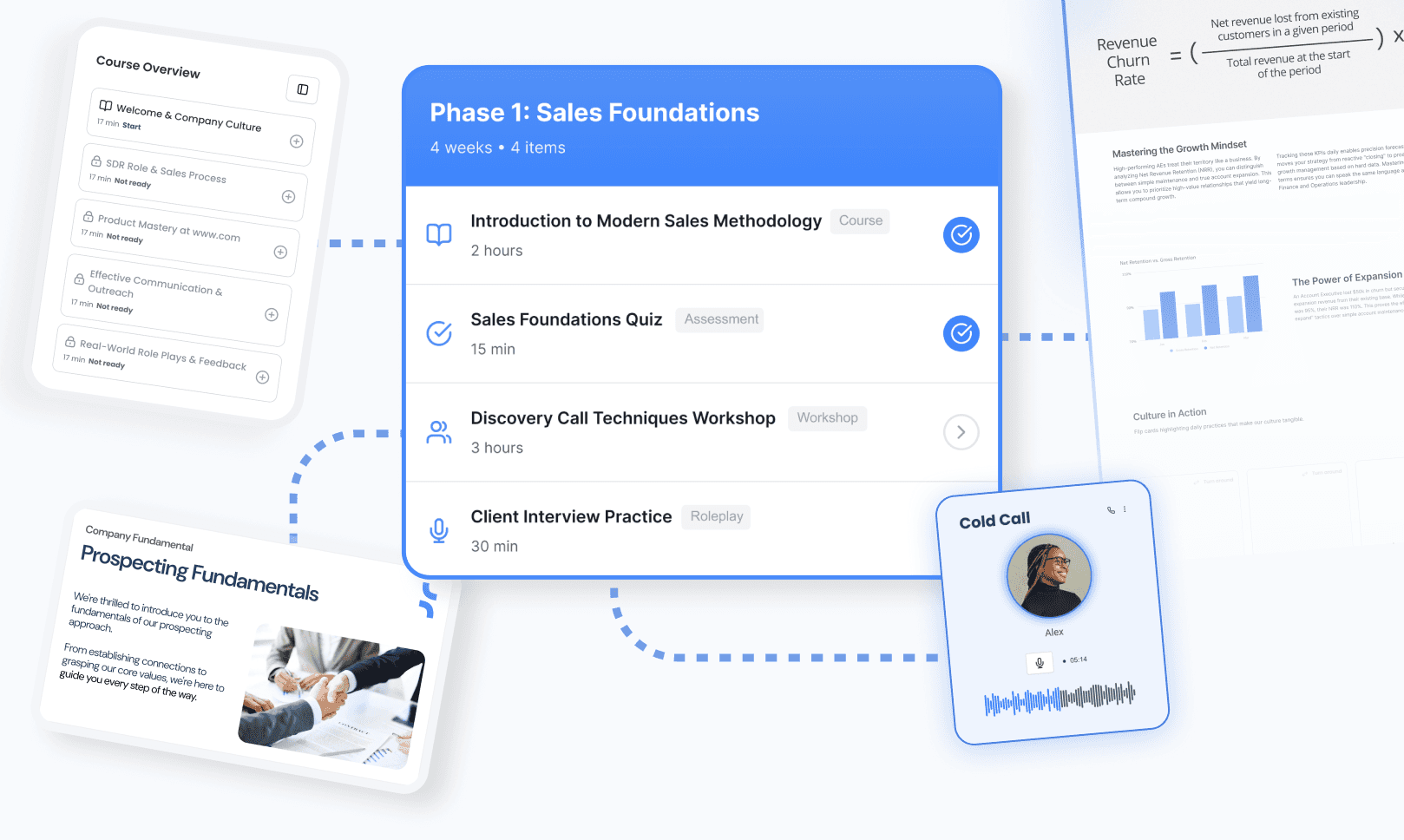
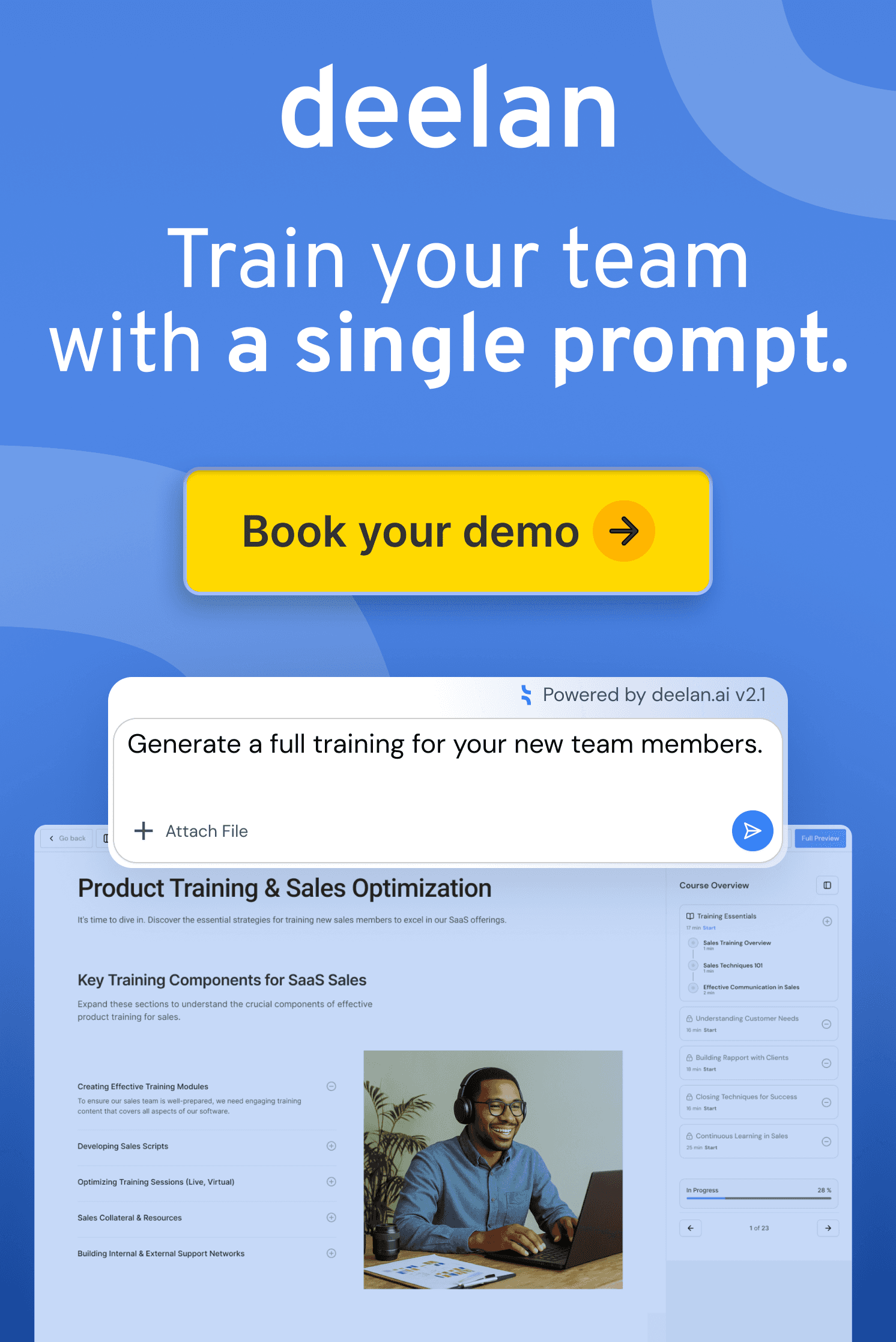
See how Deelan turns your playbooks into adaptive AI training — built in 15 minutes, personalized per rep from day one.
So how does smarter training looks like?
The solution about making the training hours do more. Same team, same time commitment — but training that knows who it's talking to, adapts as gaps emerge, and lets reps practice safely before they're in front of a real prospect.
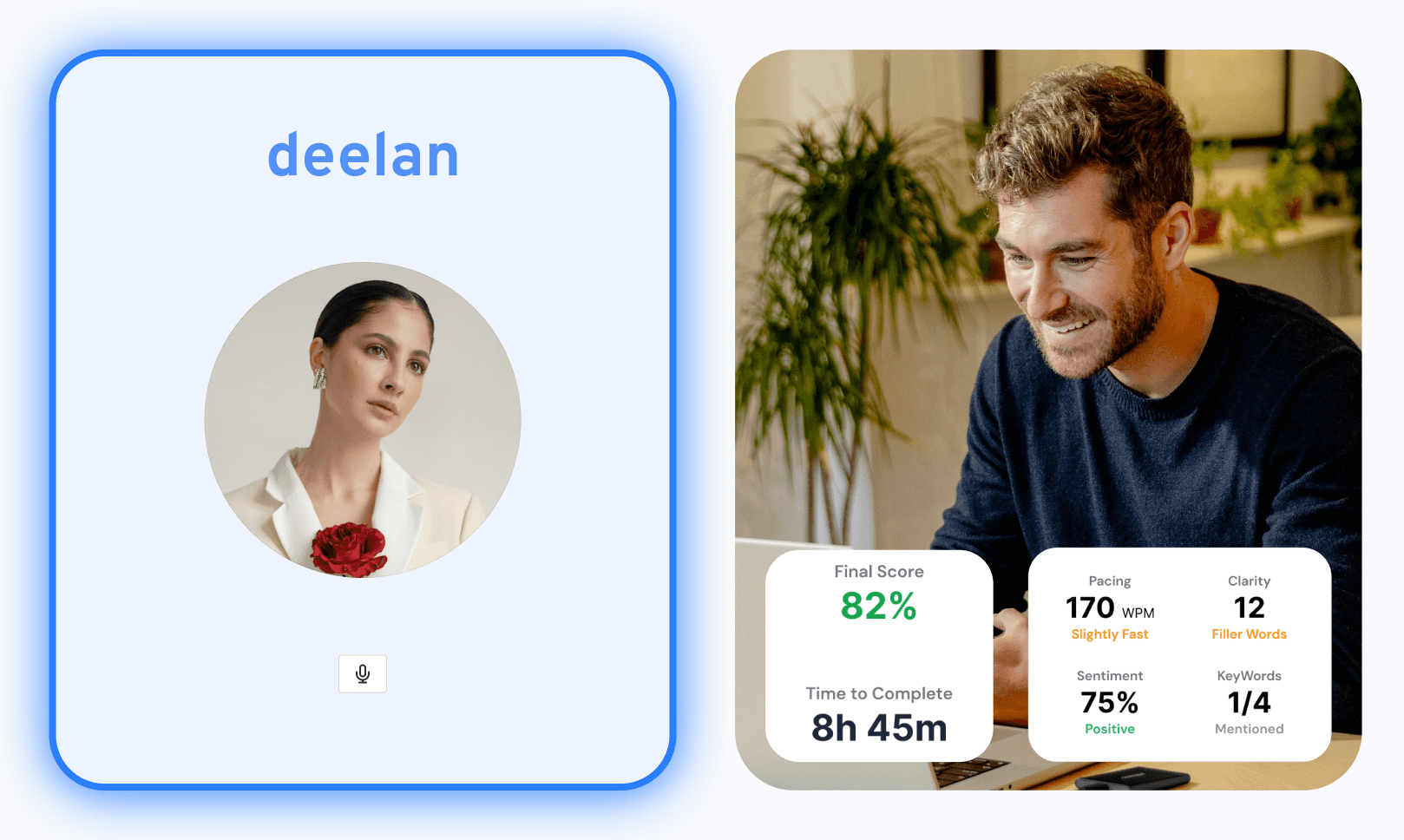
There are a few things that separate training that moves performance from training that just fills time:
1. It's built from what your team actually sells
Generic sales courses teach general principles. What closes deals for your product, against your competitors, with your buyer personas — that's specific. The best training is built from your call recordings, your playbooks, your objection patterns. Not a template from 2021.
2. It adapts to the individual
A new SDR struggling with cold calls needs something completely different from an AE who's closing deals but dropping the ball in discovery. If everyone gets the same path, you're wasting most of the training on people who don't need it, and under-serving the ones who do.
Role | Main gap | What they need |
|---|---|---|
SDRs / BDRs | Cold outreach, objection handling | Cold call roleplays, messaging practice |
Account Executives | Discovery depth, demo control | Discovery coaching, deal scenario practice |
CS Teams | Upsell confidence, renewals | Renewal conversations, difficult customer simulations |
New hires | Product knowledge, process | Structured onboarding path, early roleplay |
Mid performers | Specific skill gaps (varies) | Gap-targeted modules, not full onboarding |
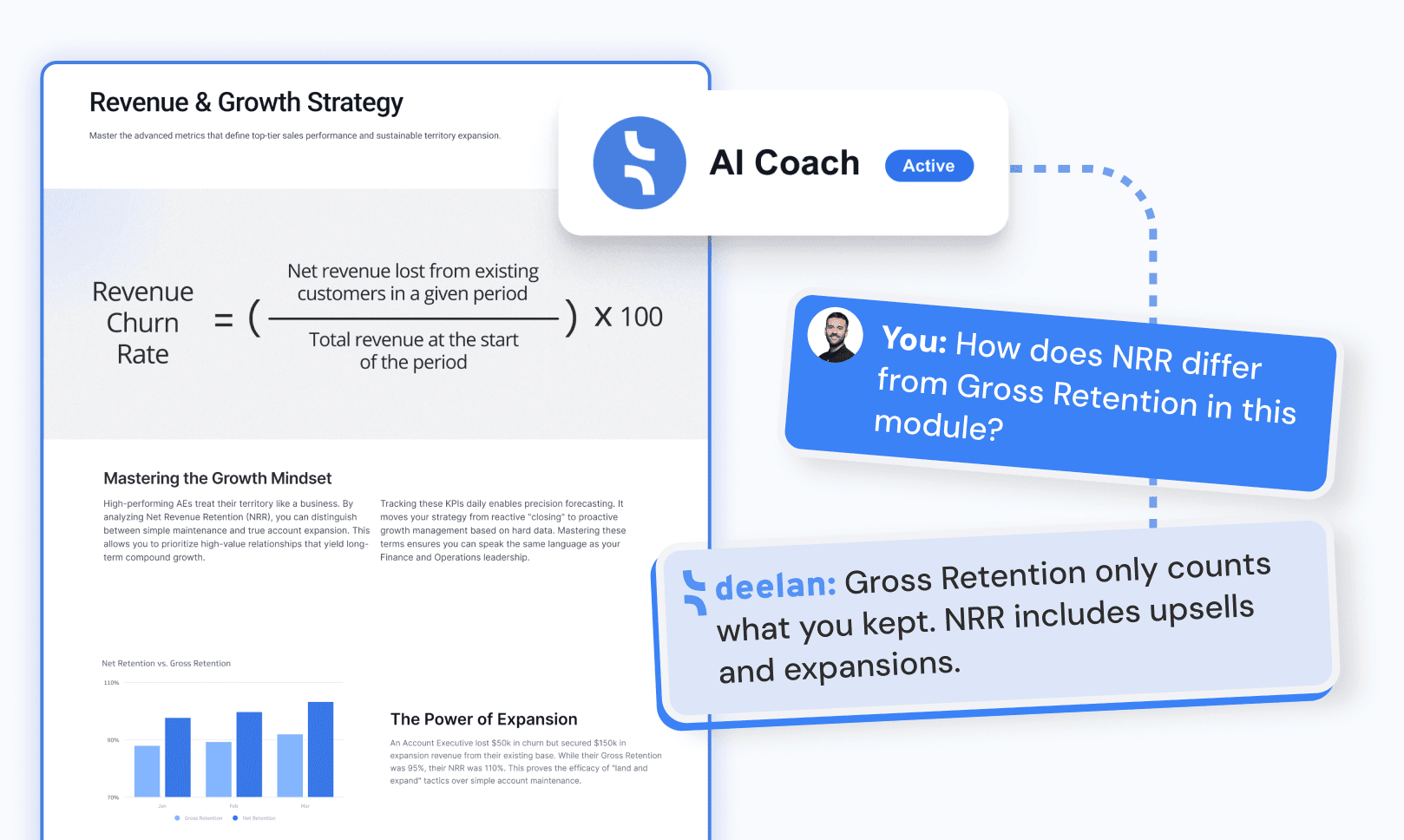
3. Reps practice before prospects
Your top seller didn't get good from reading a playbook. They got good from repetition. AI roleplays give the rest of your team somewhere to fail safely, get feedback, and build muscle memory before it counts. Cold calls, discovery, pricing conversations, objection handling — all of it can be practiced without burning a real deal.
4. Managers coach the exception, not the rule
When training handles the foundational skill-building, managers stop repeating themselves. They stop being the first line of Q&A for every new rep. They can actually focus on the high-value coaching moments — the complex deal, the senior rep who needs a different kind of challenge — instead of answering "what's our pricing model" for the fifth time this month.
How Deelan makes this happen
Deelan is a revenue training platform built for sales teams that don't have a dedicated L&D department and can't wait three weeks for a new course to ship. You upload what already exists — playbooks, call recordings, scripts, product docs — and it builds training from that. Adaptive, personalized, and ready in minutes.
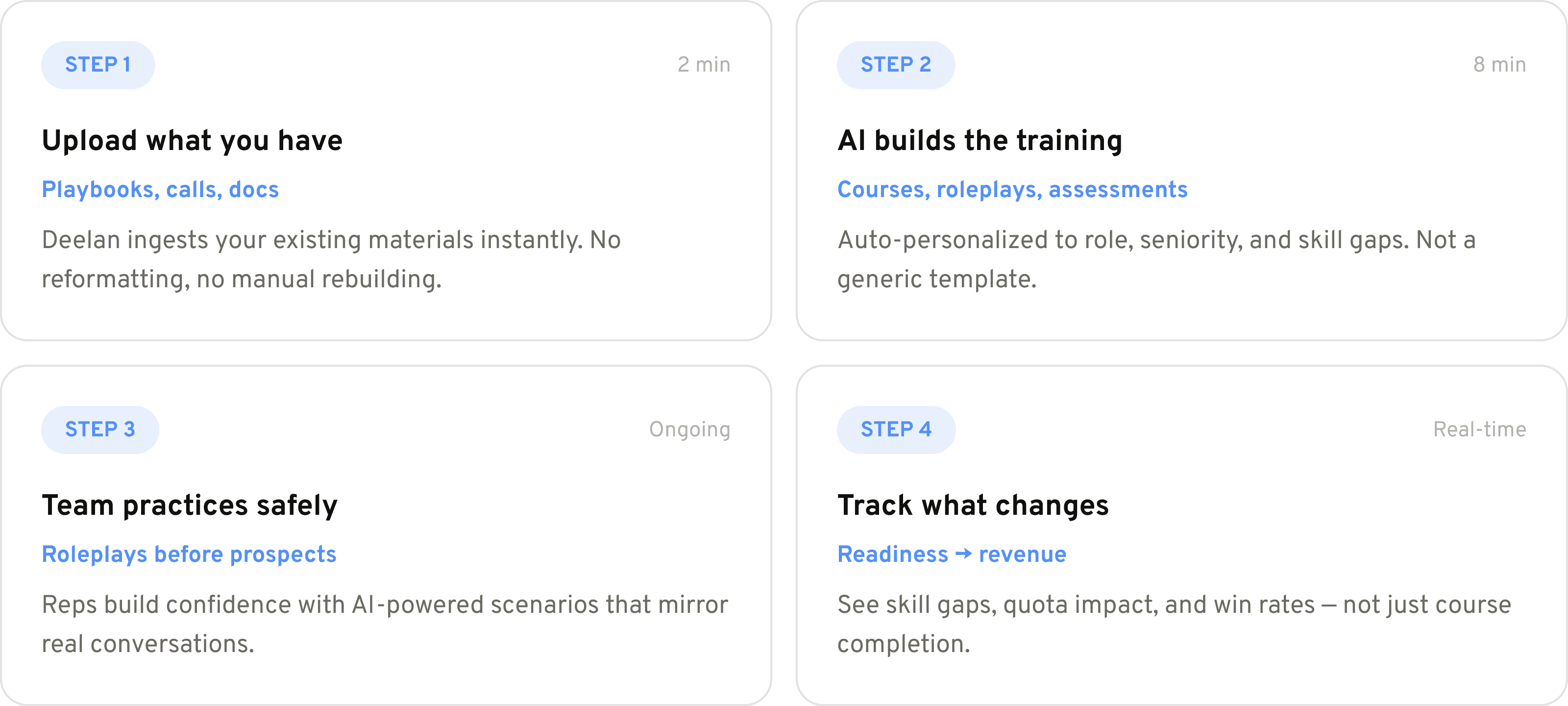
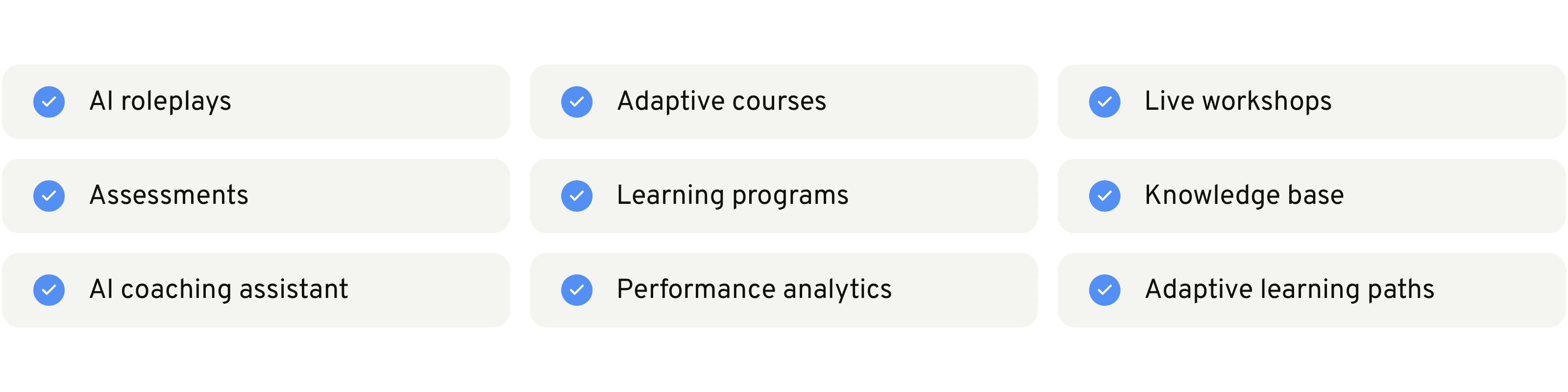
The full ecosystem covers everything: courses, workshops, AI roleplays, assessments, programs, a knowledge base, and an AI assistant that supports reps during training. One platform, one prompt to start, no L&D hire required.
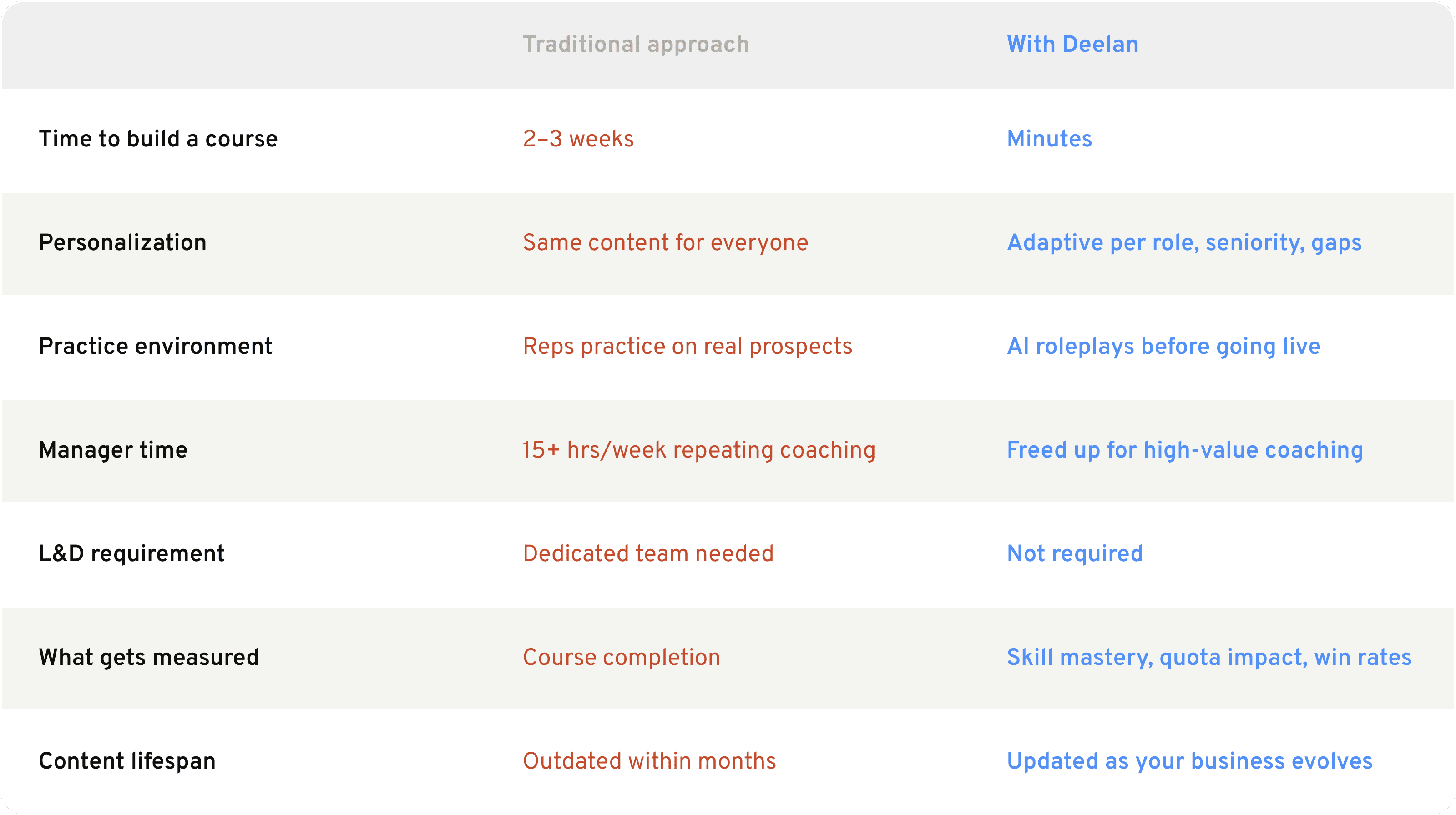
How this compares to traditional training
Deelan is especially strong for B2B sales teams, SaaS companies, startups, scaleups, customer success teams, and lean enablement teams.
Kidola reduced ramp time by over 30% with Deelan, while also saving hours of manual coaching and onboarding.
“Before Deelan, onboarding new sales reps was a huge time sink. With Deelan, training became structured, adaptive, and largely self-driven.”
— Jonathan Kindermans, Founder of Kidola
What the revenue gap actually costs you
Put some numbers on this. A 10-person team with a €2M quota. Reps are currently averaging 80% quota attainment. If smarter training moves them to 90–95%, that's not a marginal improvement — it's meaningful revenue that was already in reach.
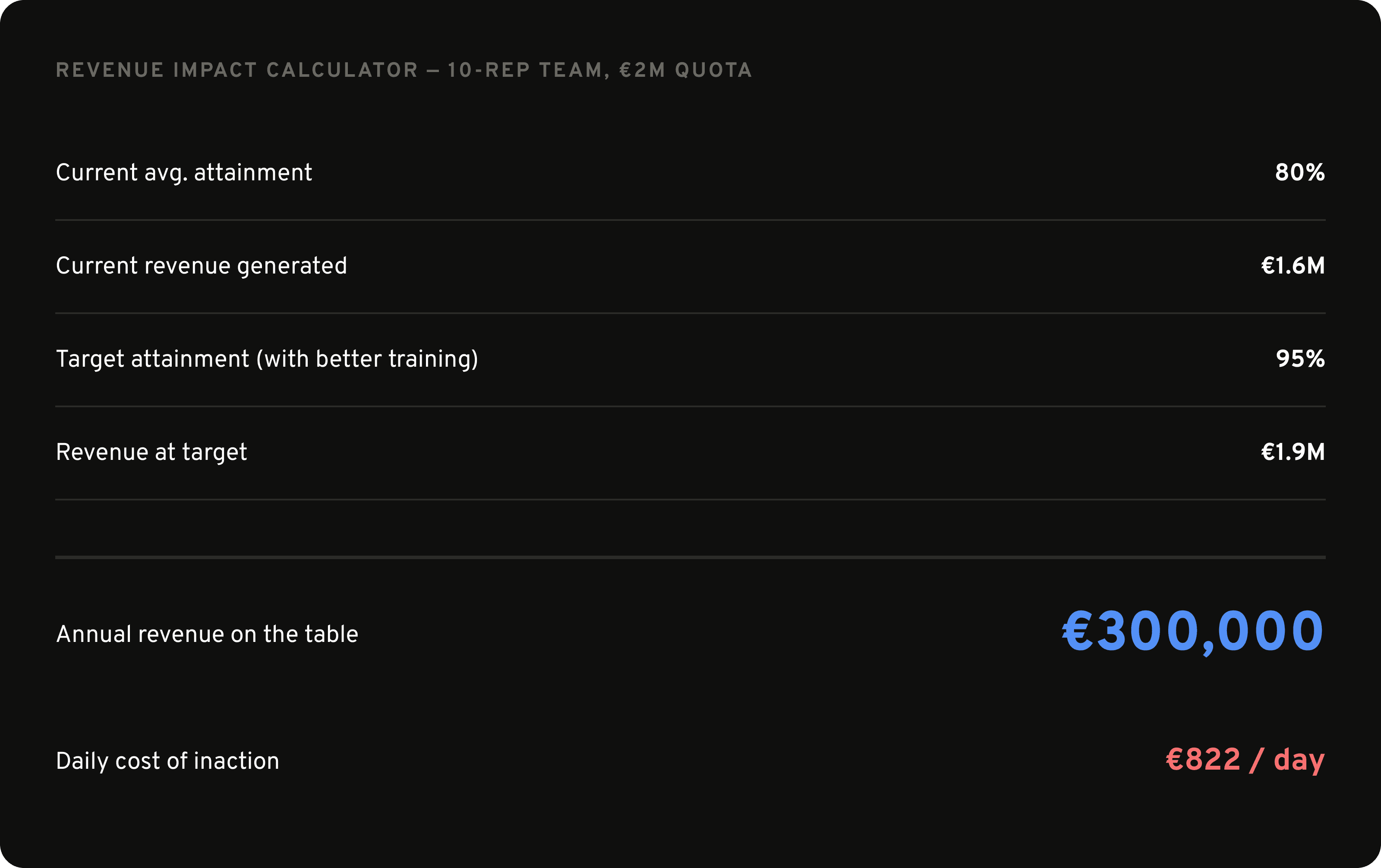
That €300K isn't being lost to a competitor with better reps. It's being lost because your current team doesn't have the tools to perform at its own ceiling. The reps exist. The quota exists. The training is the missing piece.
See how your reps could perform like your top seller
If your team has a performance distribution problem — and most do — adding more seats just spreads the problem wider.
The better path is giving your existing team training that adapts to them, lets them practice, and actually transfers what your top sellers do into something repeatable. That's what moves the median. That's where the revenue is.
Deelan was built specifically to make this possible for teams without a full L&D operation — which is most teams. You upload what you have, it handles the rest. Build in minutes, deploy to a team of any size, track what actually changes.