
Upselling should never feel like pressure.
The best upselling happens when a rep understands the customer well enough to recommend something useful at the right moment. A better plan. A premium feature. A stronger package. An add-on that makes the original purchase more valuable.
But most upselling training programs teach scripts. The rep memorizes a line, delivers it at checkout, and either it lands or it doesn't. When it doesn't, managers assume the rep needs more practice with the same script.
Upselling is a conversation skill, not a memorization skill.
What actually needs to be trained
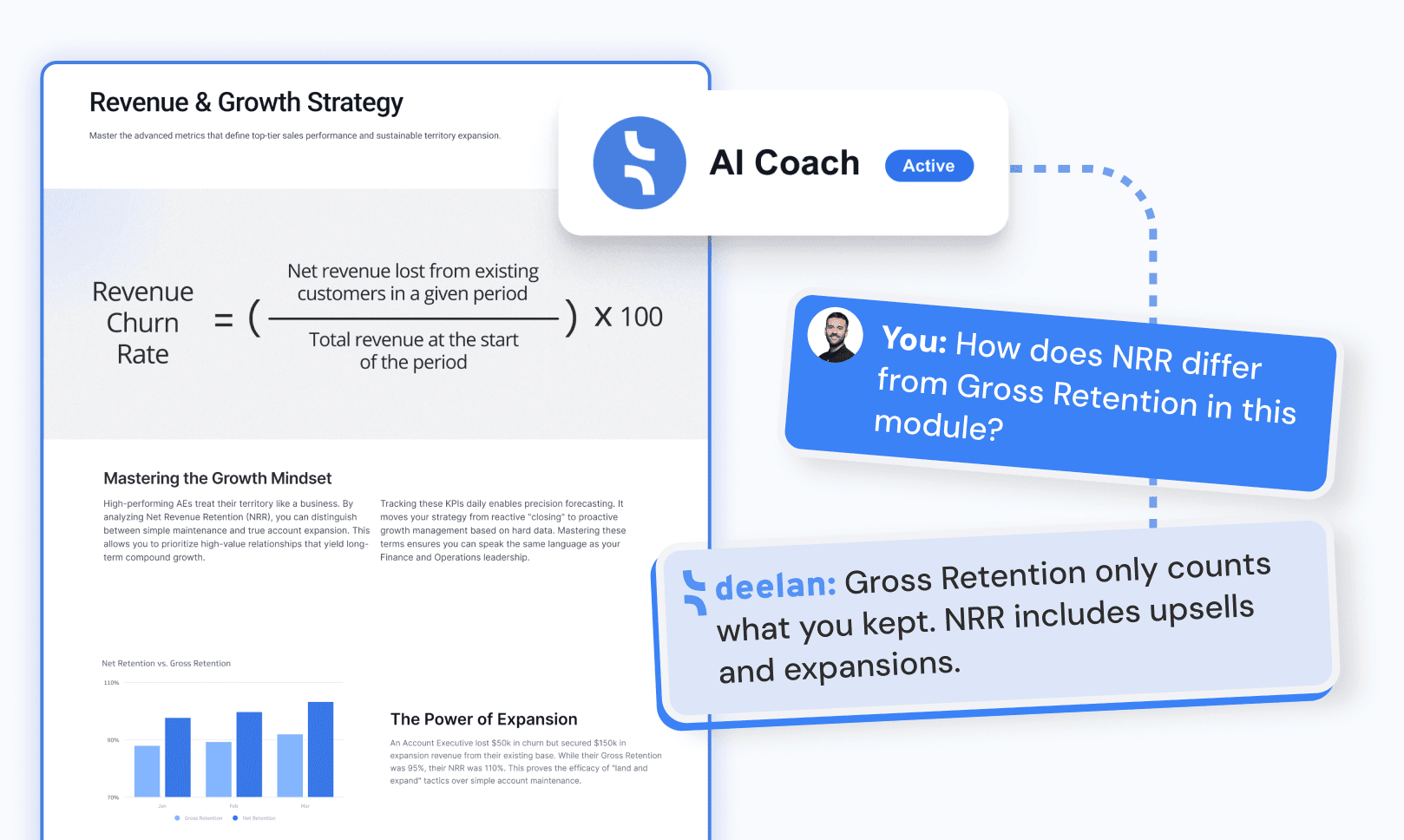
Product fluency comes first. Reps can't make relevant recommendations if they don't know what they're recommending or why someone would want it. But product fluency isn't a feature list — it's understanding the why behind each offering so a rep can connect it to what a customer actually said thirty seconds ago.
A quick way to train this:
run a timed product recall session. Give reps two minutes to write down every offering they can think of. The rep who writes fifteen isn't automatically better than the one who writes eight — the follow-up question matters more: why would a customer care about each one?
Reading the buyer is the second layer. Customers signal what they want through how they speak, how fast they move, and what questions they ask. A customer who says "we've been here before, what's new?" is a different conversation than someone who says "I'm not sure what to get." Both are upsell opportunities. Neither should get the same pitch.
Timing is the piece most training ignores entirely. Upselling too early feels pushy. Upselling too late feels like an afterthought. The window is usually right after the customer has committed to a base purchase but before the interaction closes — but recognizing that moment requires practice, not a script.
Asking better questions. Upselling starts with discovery.
Reps should ask simple, useful questions before suggesting anything:
“What are you trying to improve this quarter?”
“Where does the current plan feel limiting?”
“How is your team using this today?”
“What happens if this problem continues?”
The answer gives the rep a reason to recommend, pause, or follow up later.
Handling objections. Upselling training should prepare reps for pushback without making them defensive.
Common objections include:
“It is too expensive.”
“We do not need that yet.”
“I need to ask my manager.”
“We already have another tool for this.”
“Can you send me the details?”
Upselling techniques that work in real conversations
Offer two relevant options. A basic recommendation and a stronger one helps the customer compare without feeling trapped.
Use proof carefully. Mention what similar customers choose when it is true and relevant.
Explain value before price. Price only makes sense when the customer understands the outcome.
Keep urgency honest. Limited-time offers can work, but fake urgency damages trust fast.
Make the next step easy. The customer should understand what changes, what it costs, and how quickly they can start.
Why roleplay is one of the best ways to train upselling
Upselling is a live skill. Reps need to practice tone, timing, silence, questions, and objections.
That is difficult to learn from slides.
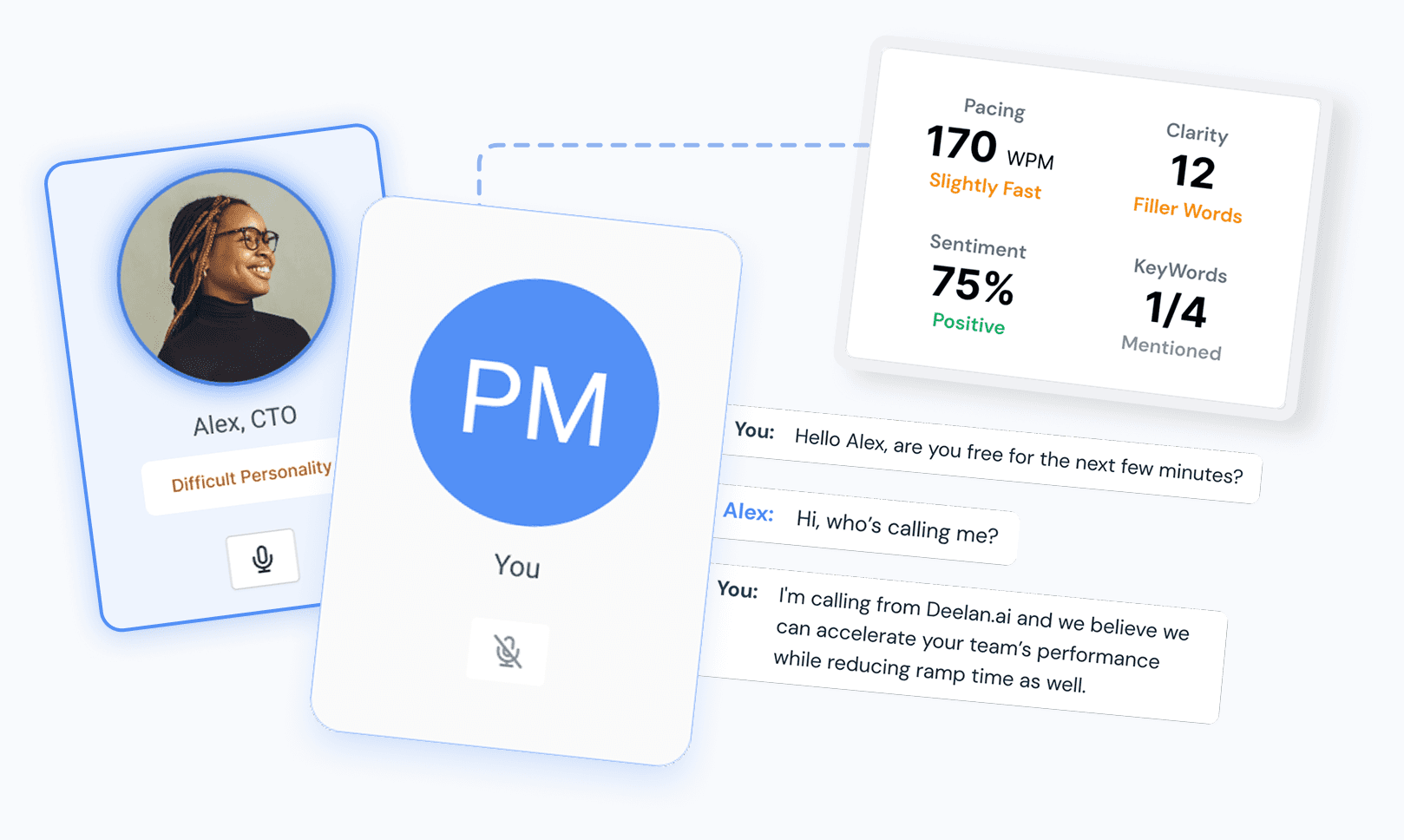
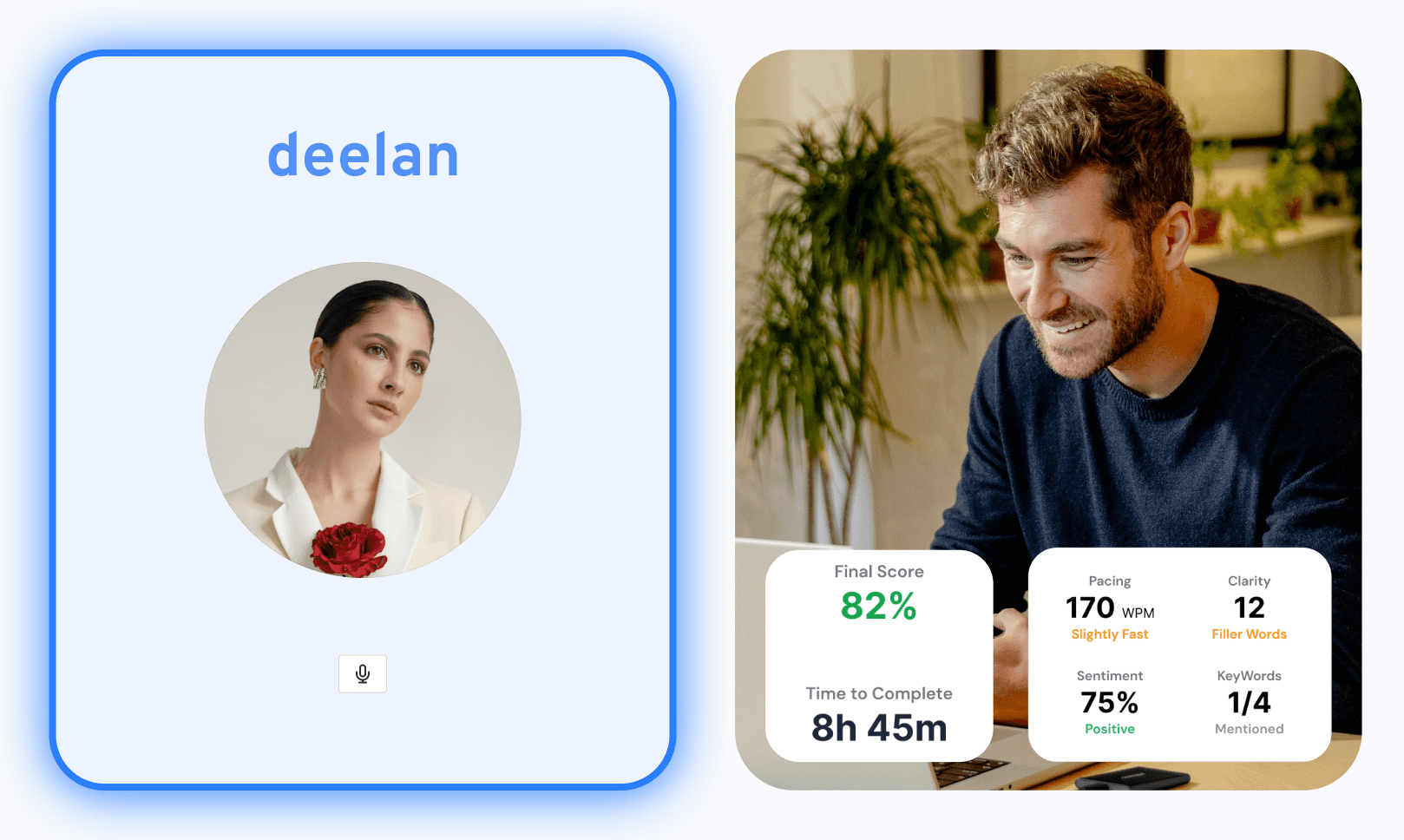
With Deelan AI Roleplays, teams can practice realistic upselling conversations before speaking with real customers. A customer success manager can practice expansion calls. An account executive can handle pricing objections. An SDR can learn when not to force an upgrade.
Deelan’s AI persona can push back, ask follow-up questions, show hesitation, or challenge the rep on value. After the session, the rep gets coaching on what worked and what needs improvement, including clarity, confidence, question quality, objection handling, and talk-to-listen ratio.
Training formats that actually work for upselling
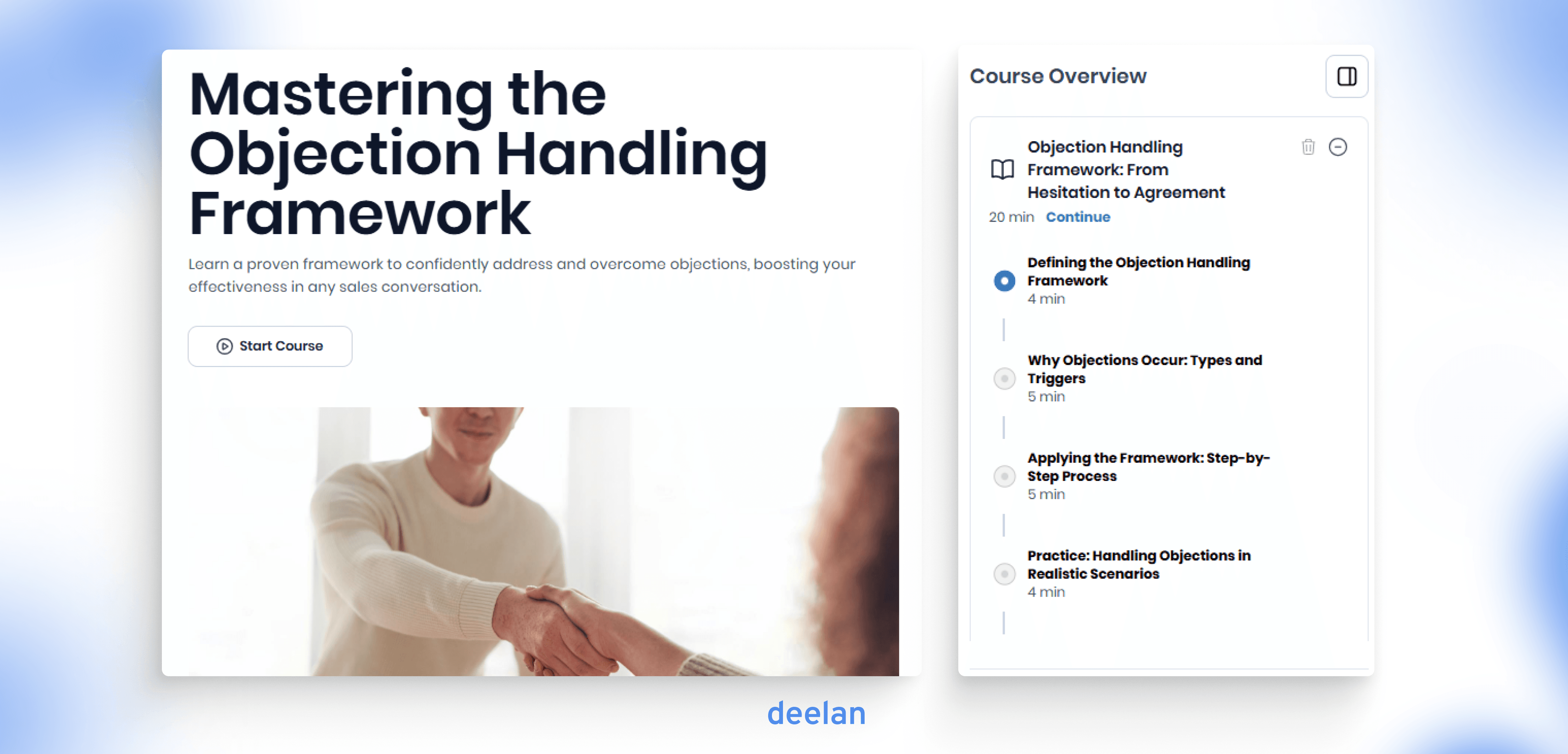
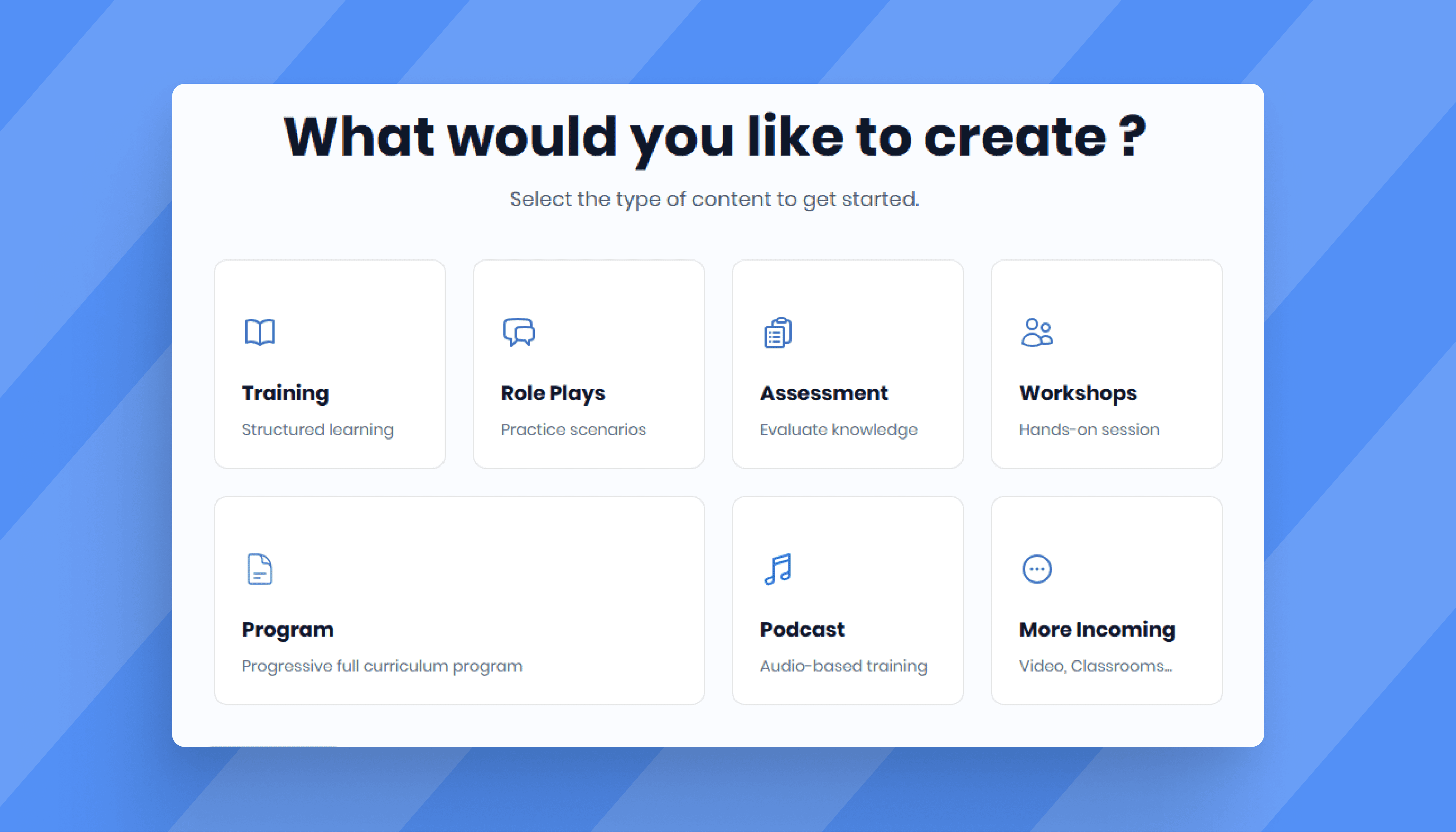
Courses for product knowledge and foundational technique — what upselling is, why it works, the difference between a relevant recommendation and a pushy one.
Deelan generates these in minutes from a prompt or an existing playbook. If you have a sales deck or a product guide, that's your starting point.
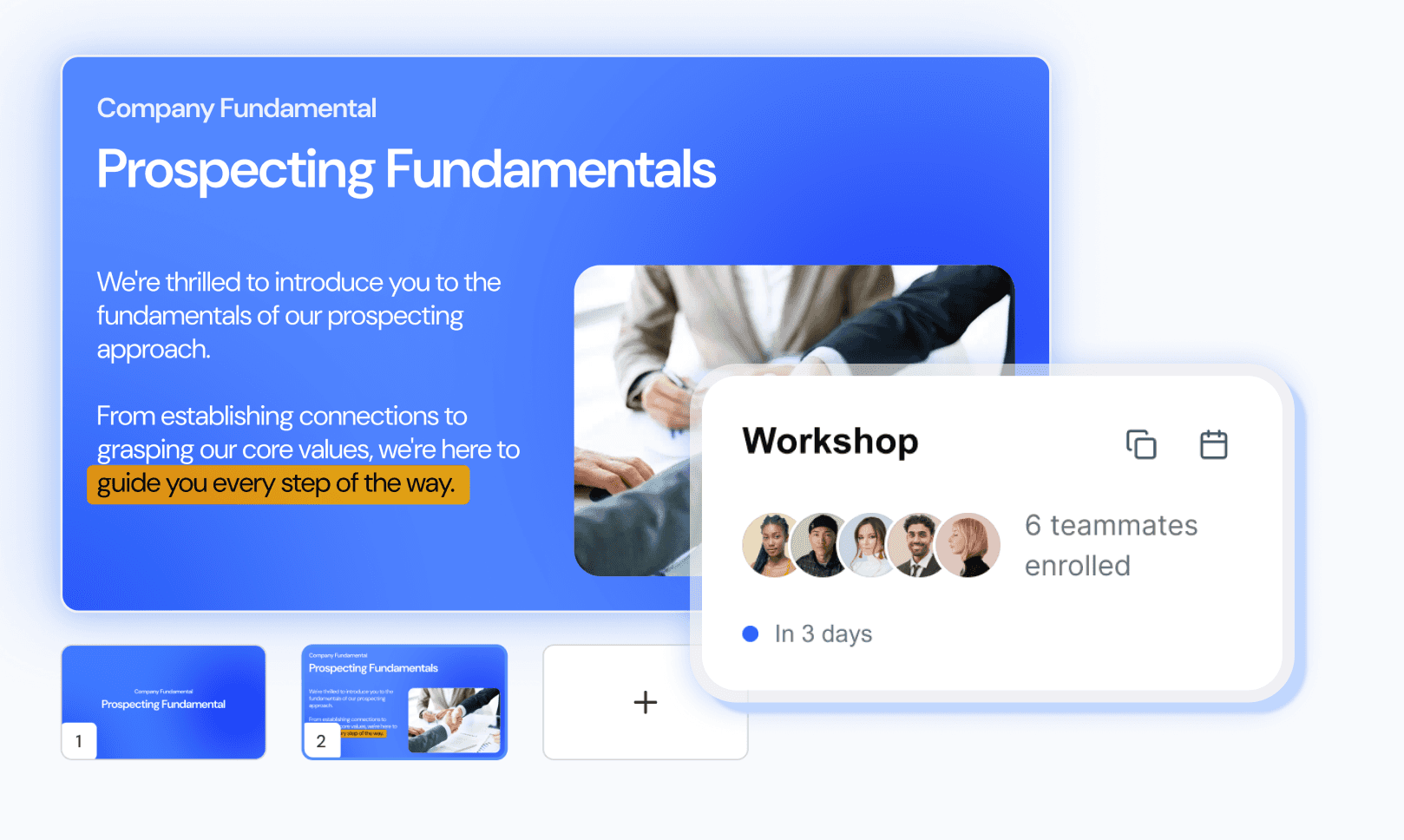
Workshops for team-based practice. The best upselling training sessions get people laughing and arguing and building on each other's ideas.
Deelan's workshop format structures these sessions with facilitator guides, timing, and activities already built in.
Assessments to close the loop. Not just "did they finish the module" but "can they identify the right moment to introduce an add-on in this scenario, and what would they say?" Real skill gaps show up in assessments designed around judgment, not recall.
Making it stick
One training session doesn't change behavior. The teams that see real movement in upsell rates are the ones running short, consistent practice — not a quarterly all-hands.
That means building product fluency exercises into team meetings. Running a five-minute Question Volley at the start of a shift. Rotating through roleplay scenarios monthly so reps aren't just getting good at one script.
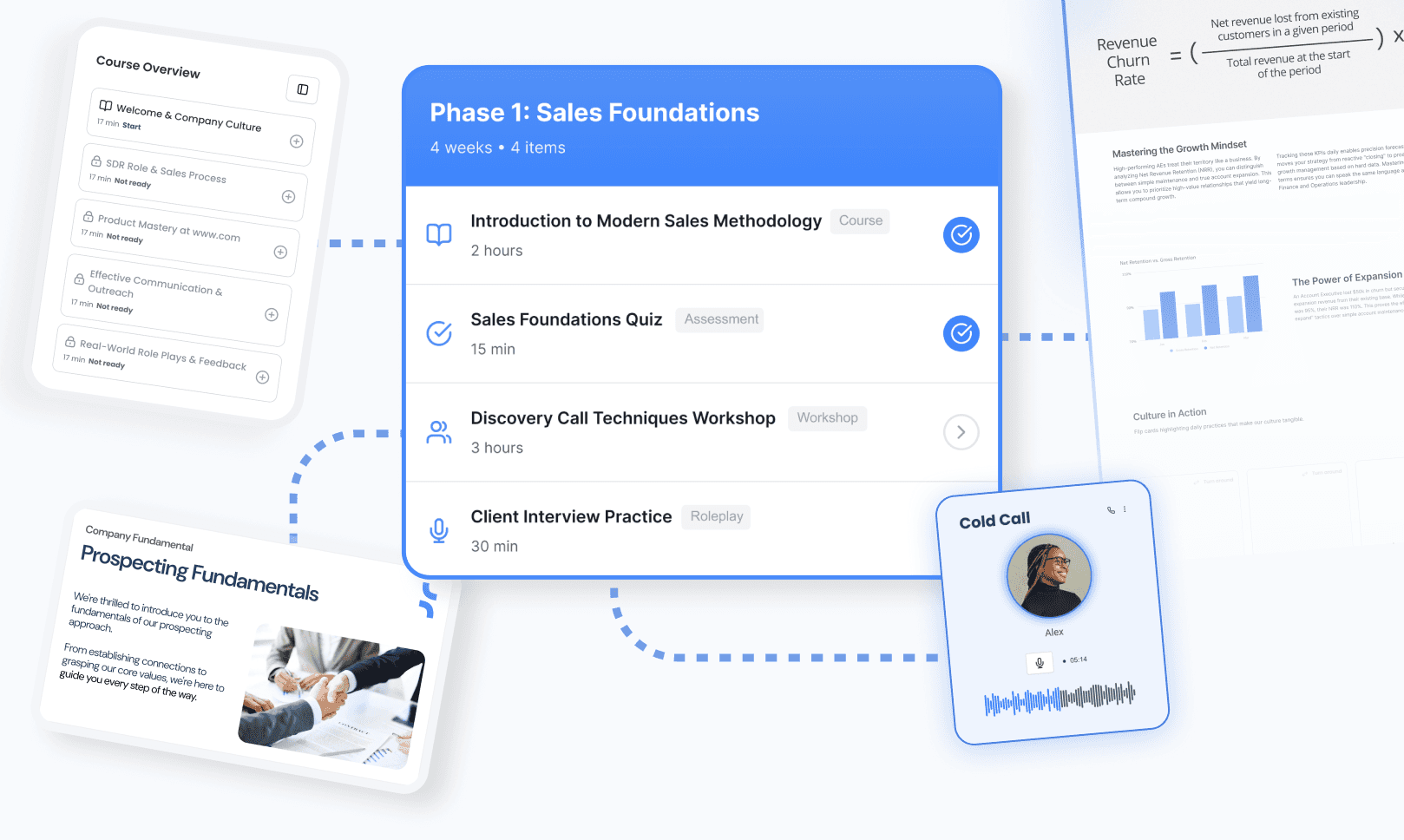
Deelan's Programs feature is built for this — multi-format learning pathways that combine a course, a roleplay, and an assessment into one continuous track. A new rep goes through onboarding. A month later they get the upselling course. Two weeks after that, the roleplay. The progression is automatic.
How Deelan helps teams build upselling training faster
Most companies already have the raw material for good upselling training. Sales calls. Product docs. Playbooks. Customer success notes. Objection sheets. Demo recordings.
The problem is turning all of that into structured training.
Deelan does that in minutes.
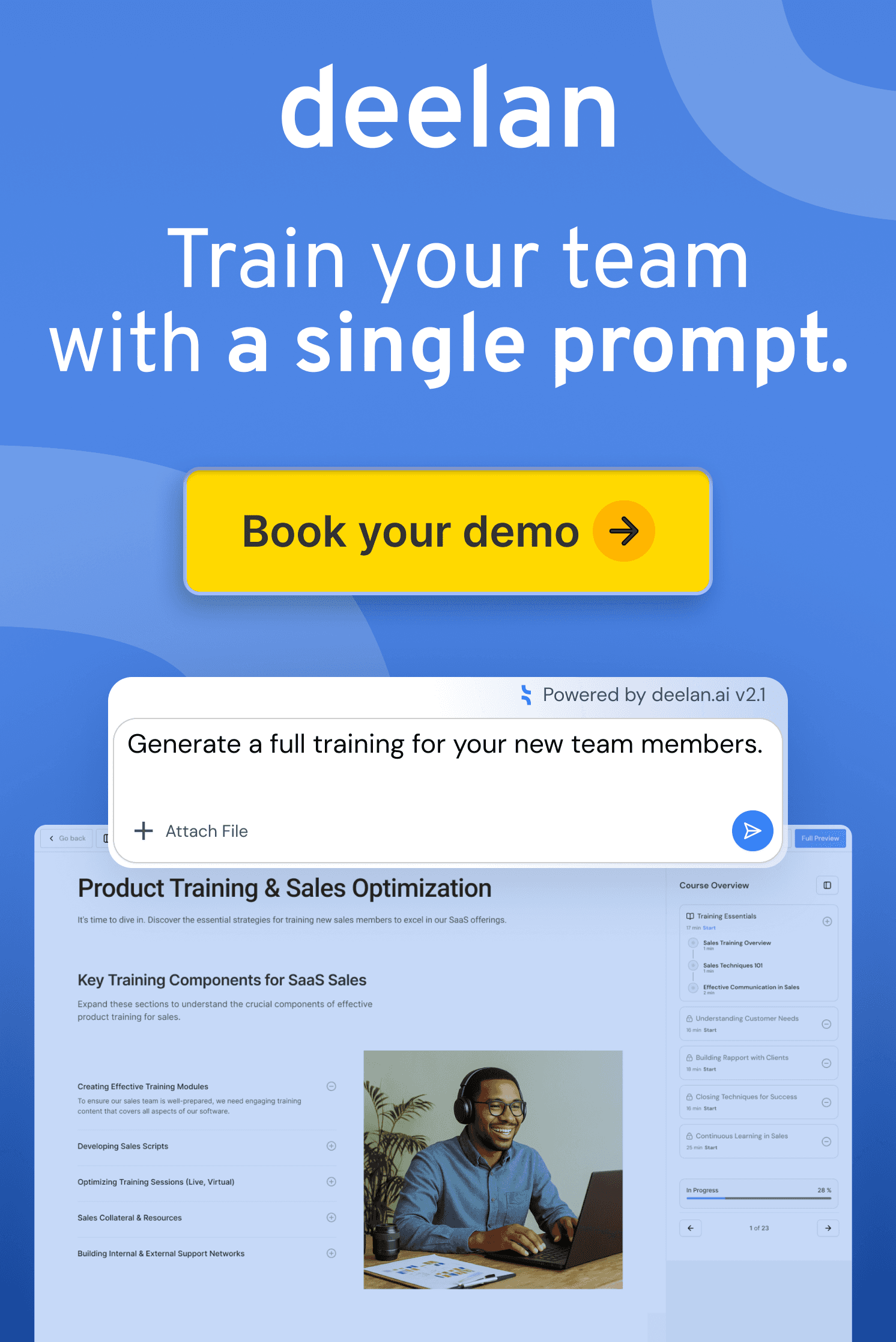
Teams can upload scripts, recordings, product documents, messages, and playbooks. Deelan turns them into adaptive courses, roleplays, assessments, workshops, and learning programs.
You can build:
Upselling product knowledge courses
Objection handling simulations
Good, better, best offer training
Customer success renewal and upsell programs
Quizzes to test product fluency
Micro-learning for new feature launches
Manager workshops for coaching upsell conversations
The training adapts by role, seniority, performance, and skill gaps. A new SDR does not need the same path as a senior account manager. A customer success rep struggling with confidence does not need the same practice as someone struggling with discovery.
Managers can also track progress and see who is ready before they speak with customers.
What outcomes should upselling training improve?
Do not measure only completion.
Higher average deal size
Improved renewal conversations
Shorter ramp time
Stronger product knowledge
More confident objection handling
Better customer retention
More consistent messaging across the team
New product launch? Train the upsell story.
Pricing change? Practice the objection.
New customer segment? Build new roleplays.
Weak expansion numbers? Review calls, find the gaps, update training.
With Deelan, training can evolve as your business changes, without waiting weeks for new content.
Want to build your personalized upselling training program in 15 minutes?
Upselling is not about teaching reps to sell more at any cost.
It is about helping them understand customers better, recommend with confidence, and protect the relationship while growing revenue.
When teams practice the right conversations, they stop sounding scripted. They become sharper, more useful, and more trusted.
Deelan helps revenue teams turn existing knowledge into adaptive upselling training, roleplays, assessments, and coaching paths in minutes.
Want to see how it works?
Book a 15-minute Deelan demo and see how your team can build upselling training faster.