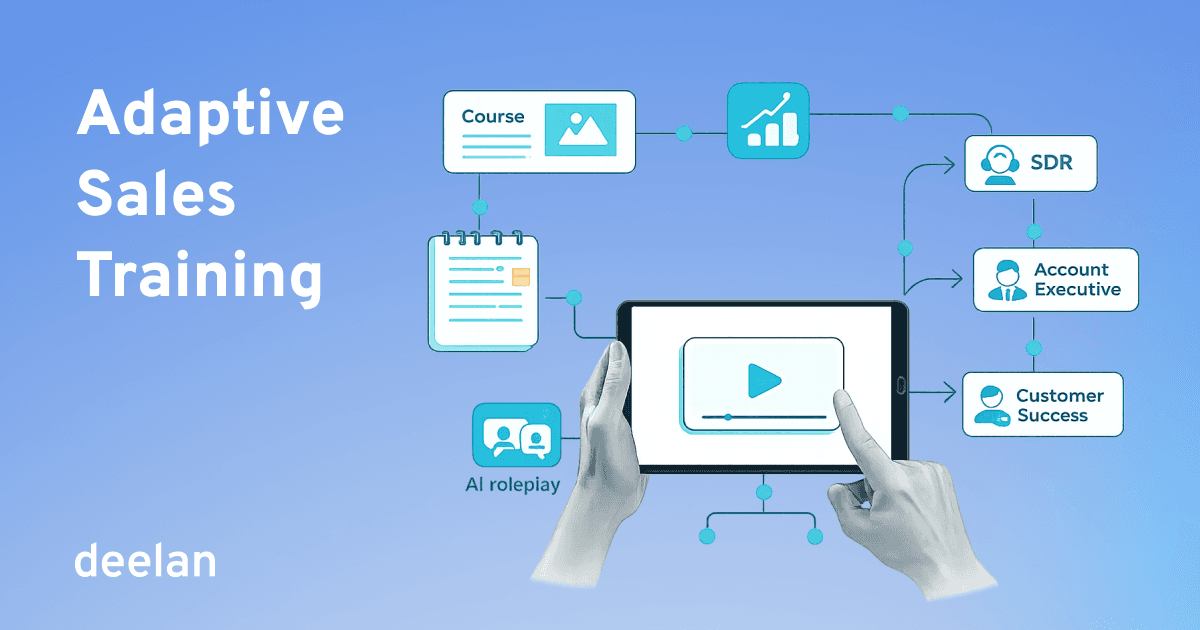
Sales teams work across different roles, products, markets, and buyer journeys. A new SDR needs different training than an experienced Account Executive. A Customer Success Manager does not need the same practice as a sales manager. within the same role, one rep may struggle with objection handling while another needs help running discovery calls.
That is why more companies are moving from traditional training to adaptive sales training, which changes the learning path based on the role, goals, skill level, performance, and gaps of each rep.
Sales organizations using personalized learning reduce onboarding time, improve rep engagement, and help managers scale coaching without repeating the same feedback again and again.
What Is Adaptive Sales Training?
Adaptive sales training is a learning approach that automatically adjusts training content, pace, and practice based on the individual salesperson.
Instead of using one fixed training program, adaptive sales learning looks at factors such as:
Role
Seniority
Team goals
Quota performance
Skill gaps
Previous training results
Real sales conversations and call reviews
This is the difference between traditional sales training and adaptive sales learning:
Traditional Training | Adaptive Sales Training |
|---|---|
Same content for everyone | Personalized learning path for every rep |
Focus on course completion | Focus on skill mastery and performance |
One-time onboarding | Continuous learning and coaching |
Generic training modules | Training based on role, goals, and gaps |
Little practice | Practice, role plays, feedback, and repetition |
Types of Adaptive Sales Learning
1. Role-Based Learning
Role-based learning gives different training paths depending on what the person does.
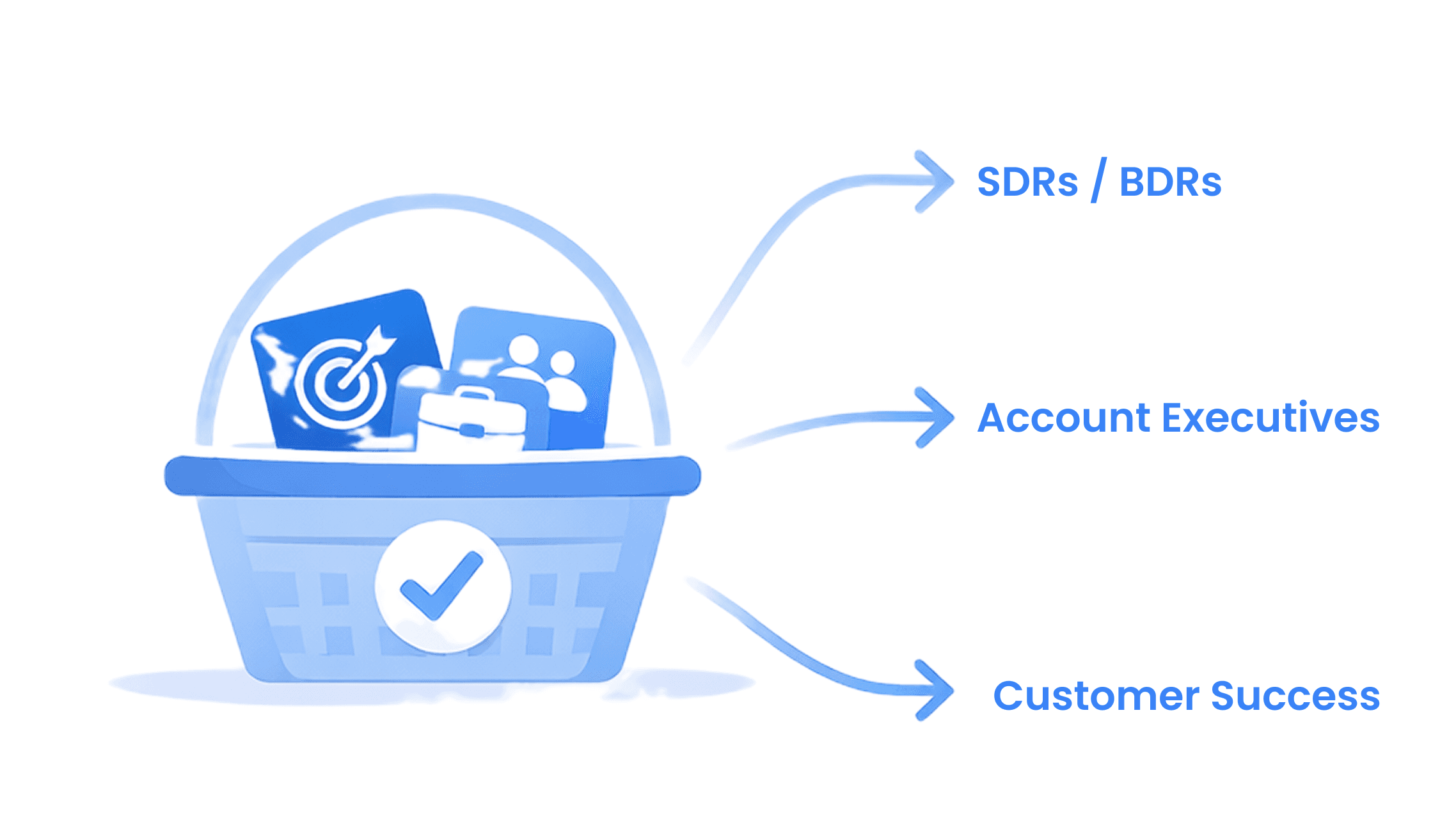
A sales organization may include:
SDRs and BDRs
Account Executives
Customer Success Managers
Sales Managers
Revenue Operations and Enablement
Each role needs different content.
An SDR may need:
Prospecting and cold outreach
Cold calls
LinkedIn messaging
Discovery questions
Objection handling
Booking meetings
With adaptive sales training, each person automatically receives the learning path that fits their role.
For example, inside Deelan, you can create different adaptive paths for SDRs, AEs, and CSMs from the same source material. A single product update can become:
Prospecting training for SDRs
Demo and positioning training for AEs
Retention and adoption training for CSMs
That saves time and makes the content more relevant.
2. Goal-Based Learning
Different teams are trying to improve different things.
One SDR team may need to increase meetings booked. Another team may need to improve reply rates. One AE team may need to improve discovery quality. Another may need help improving win rates in late-stage deals.
Instead of giving everyone the same training, adaptive sales training links learning directly to the business goal.
If the goal is to increase win rates, the platform may recommend:
Discovery practice
Better qualification frameworks
Objection handling role plays
Competitive positioning
Negotiation workshops
If the goal is to reduce ramp time for new hires, the learning path may focus on:
Product knowledge
Messaging
First-call practice
Common objections
Certification before live calls
3. Needs-Based Learning
Some people need short microlearning lessons. Others learn better through live workshops, role plays, or call reviews. Adaptive sales learning works best when it offers different learning formats.
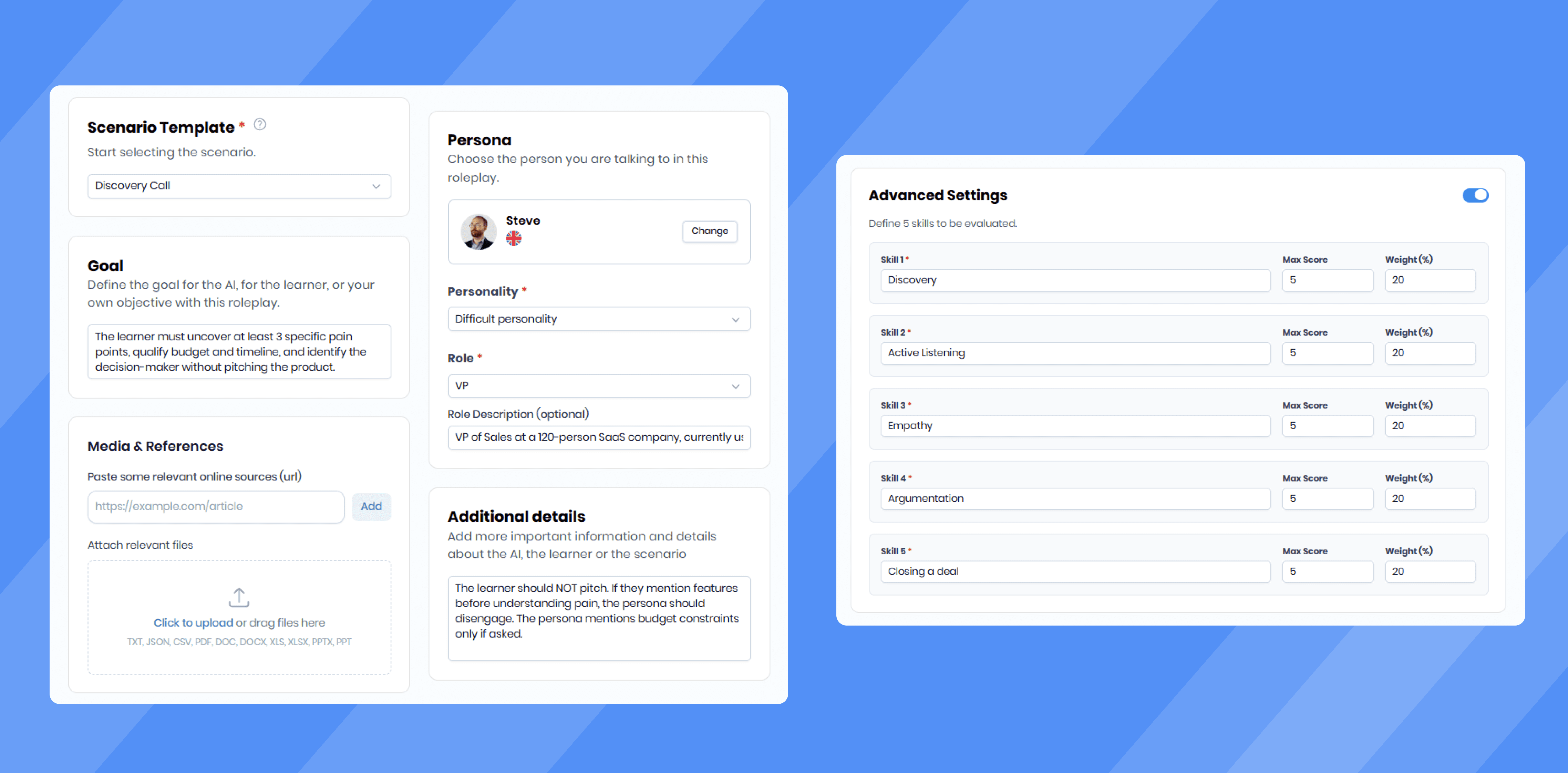
Deelan supports this by generating multiple training formats from a single prompt or source document. You can upload:
Product documents
Call recordings
Sales scripts
Slack conversations
Meeting notes
Existing playbooks
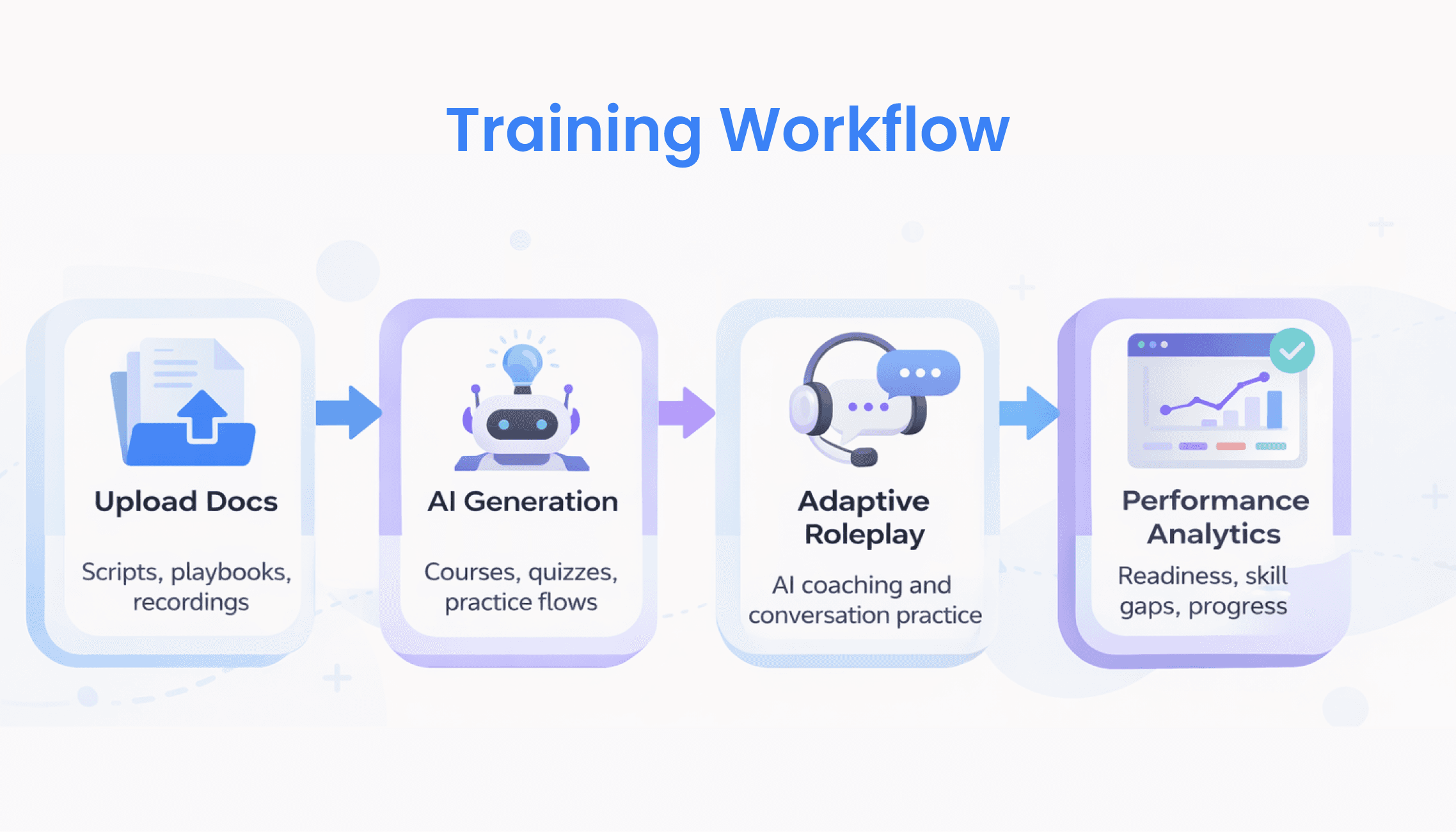
Then Deelan automatically turns that content into:
Interactive courses
Role plays
Workshops
Assessments
Knowledge base articles
Full training programs
4. Gap-Based Learning
One of the biggest problems in sales training is that managers often do not know exactly where the gap is.
Weak discovery
Poor objection handling
Product knowledge gaps
Trouble handling pricing questions
Not asking enough questions
Poor follow-up
Lack of confidence
Adaptive sales training identifies those gaps and suggests the right next step.
How to Build an Adaptive Sales Training Program in 2026
If you want to build adaptive sales learning inside your team, start with these five steps.
1. Map Your Core Skills
Identify the most important skills for each role.
For example:
SDRs: outreach, objection handling, discovery
AEs: discovery, demos, negotiation, closing
CSMs: renewals, upsells, difficult conversations
2. Identify Goals and Gaps
Look at sales metrics, call recordings, manager feedback, and quota performance.
Where are reps struggling? What skills have the biggest impact on results?
3. Create Multiple Learning Formats
Use a mix of:
Short lessons
Workshops
Role plays
Assessments
Call reviews
Knowledge resources
4. Personalize the Learning Path
Different reps should see different content. A new hire should not receive the same training as a top performer. Someone struggling with negotiation should not spend time repeating prospecting lessons.
5. Measure Real Performance
Measure:
Ramp time
Win rates
Meetings booked
Objection-handling scores
Discovery quality
Quota attainment
Skill improvement over time
Deelan - Adaptive Training Platform for Revenue Teams
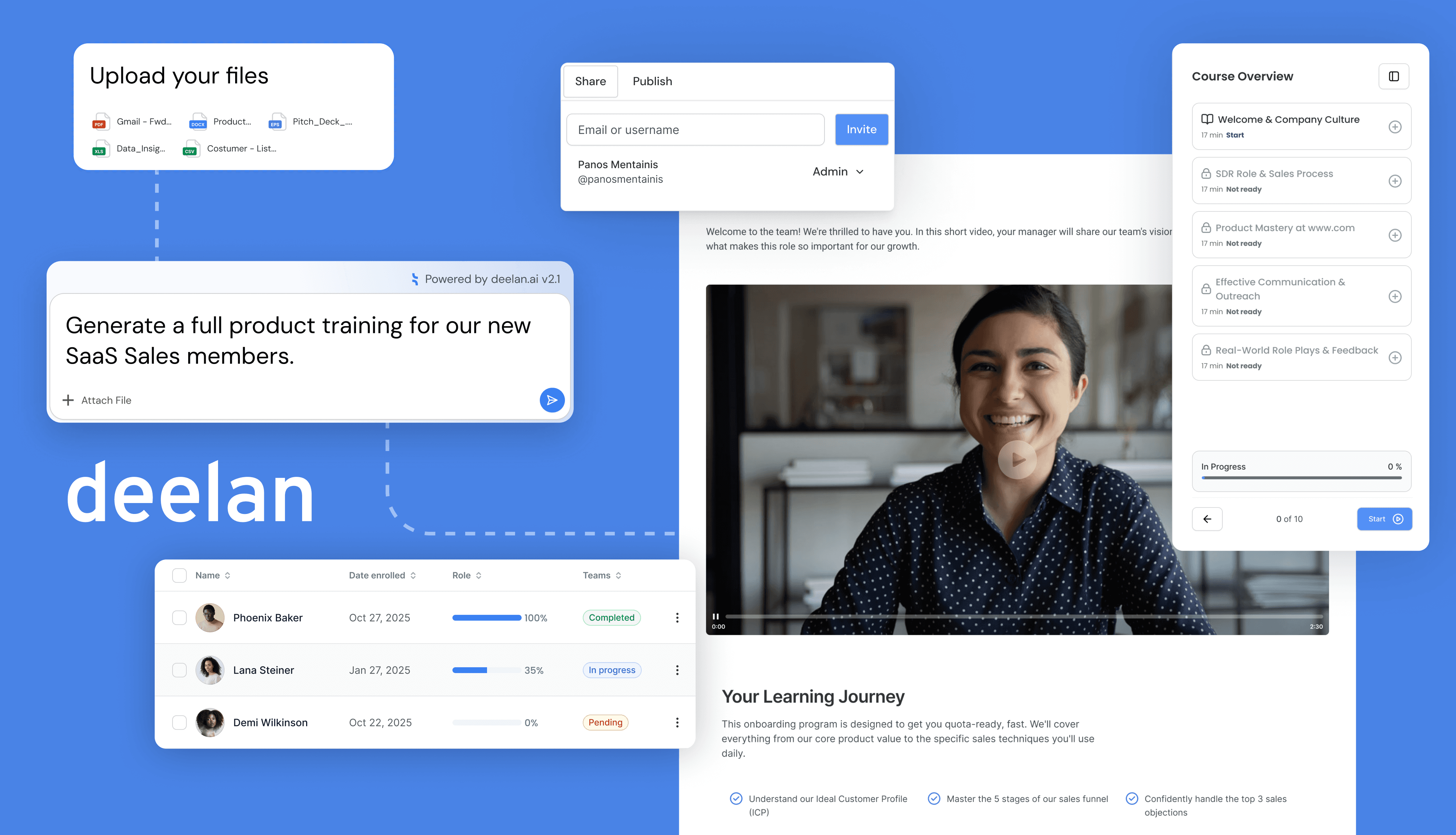
Deelan is built specifically for revenue teams and adapts training to each rep’s role, goals, and skill gaps. Teams can upload call recordings, product docs, scripts, or playbooks and instantly turn them into AI-generated courses, role plays, workshops, assessments, and knowledge resources. An SDR can practice objection handling, an AE can improve discovery and demos, and a CSM can train for renewals and upsells. With real-time analytics and adaptive recommendations, managers can quickly spot where each rep needs support and scale coaching across the team.
The Future of Sales Training Is Adaptive
Adaptive sales training helps revenue teams move away from generic onboarding and static courses and to create learning that is role-based, goal-based, needs-based, and gap-based.
The result is a sales team that learns faster, practices more, and improves continuously.
If your current training still gives everyone the same content, this is probably the right time to change it.
Book a free demo to see how you can build adaptive sales learning, create role plays in minutes, and train SDRs, AEs, CSMs, and managers more effectively.