Some sales reps know the product inside out; they can explain features, answer questions, and run a demo without missing a step. But… they still lose the deal.
Because they miss what is happening in the conversation.
The prospect becomes hesitant.
A stakeholder sounds frustrated.
A buyer starts giving shorter answers.
The rep keeps following the plan instead of responding to the person.
In sales, emotional intelligence helps reps notice what people are feeling, manage their own reactions, and adjust their approach in real time.
It affects discovery calls, demos, negotiations, customer meetings, renewals, and even internal conversations.
The good news is that emotional intelligence can be trained. Just like objection handling or product knowledge.
Top Skills of Emotional Intelligence in Sales
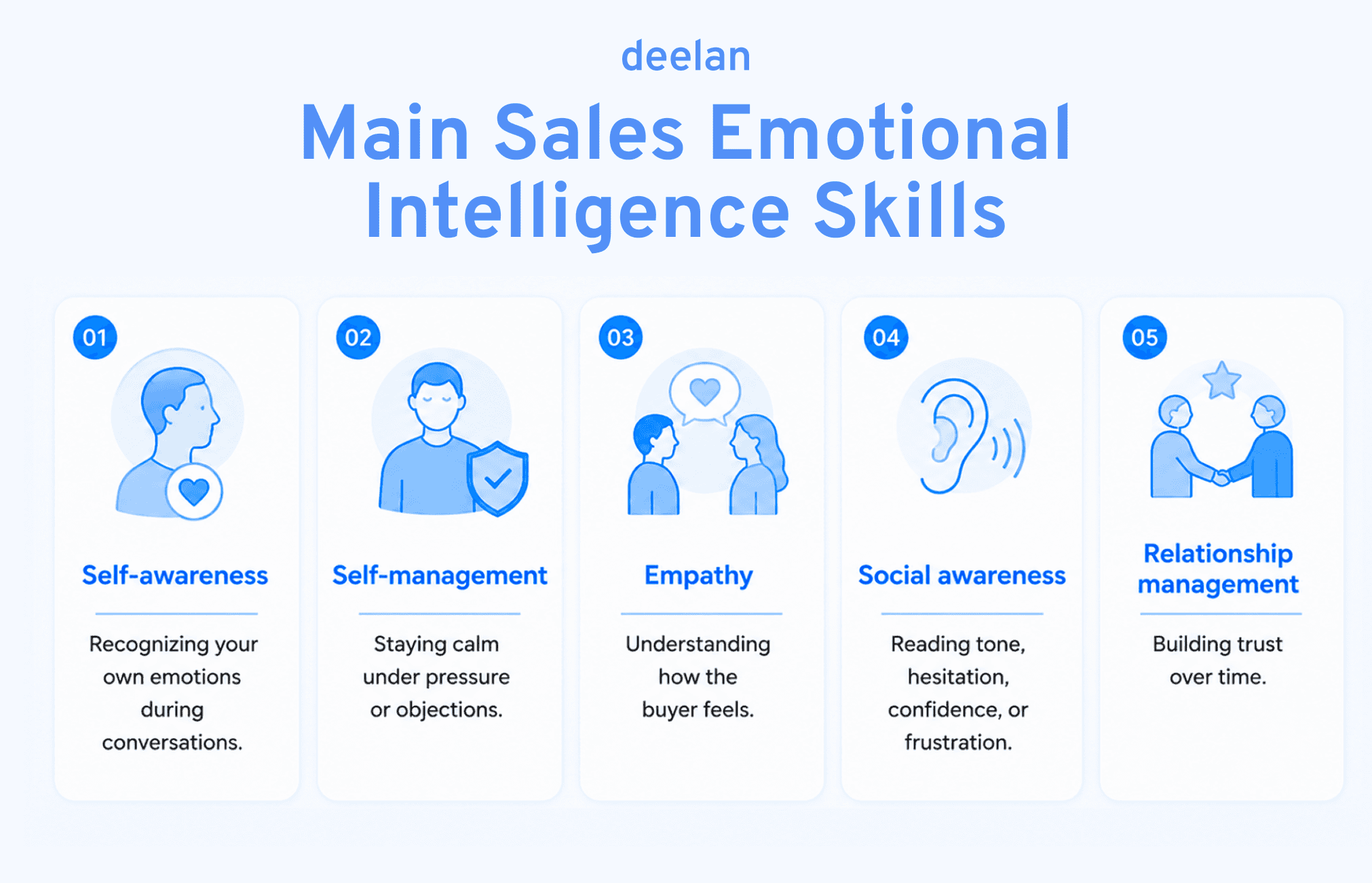
Emotional intelligence is usually broken into a few areas:
Skill | What it looks like in sales |
|---|---|
Self-awareness | Recognizing your own emotions during conversations |
Self-management | Staying calm under pressure or objections |
Empathy | Understanding how the buyer feels |
Social awareness | Reading tone, hesitation, confidence, or frustration |
Relationship management | Building trust over time |
Emotional intelligence influences almost every conversation a rep has.
Emotion shows up through signals. Good reps learn to notice them.
Want Free Emotional Intelligence Training Resources?
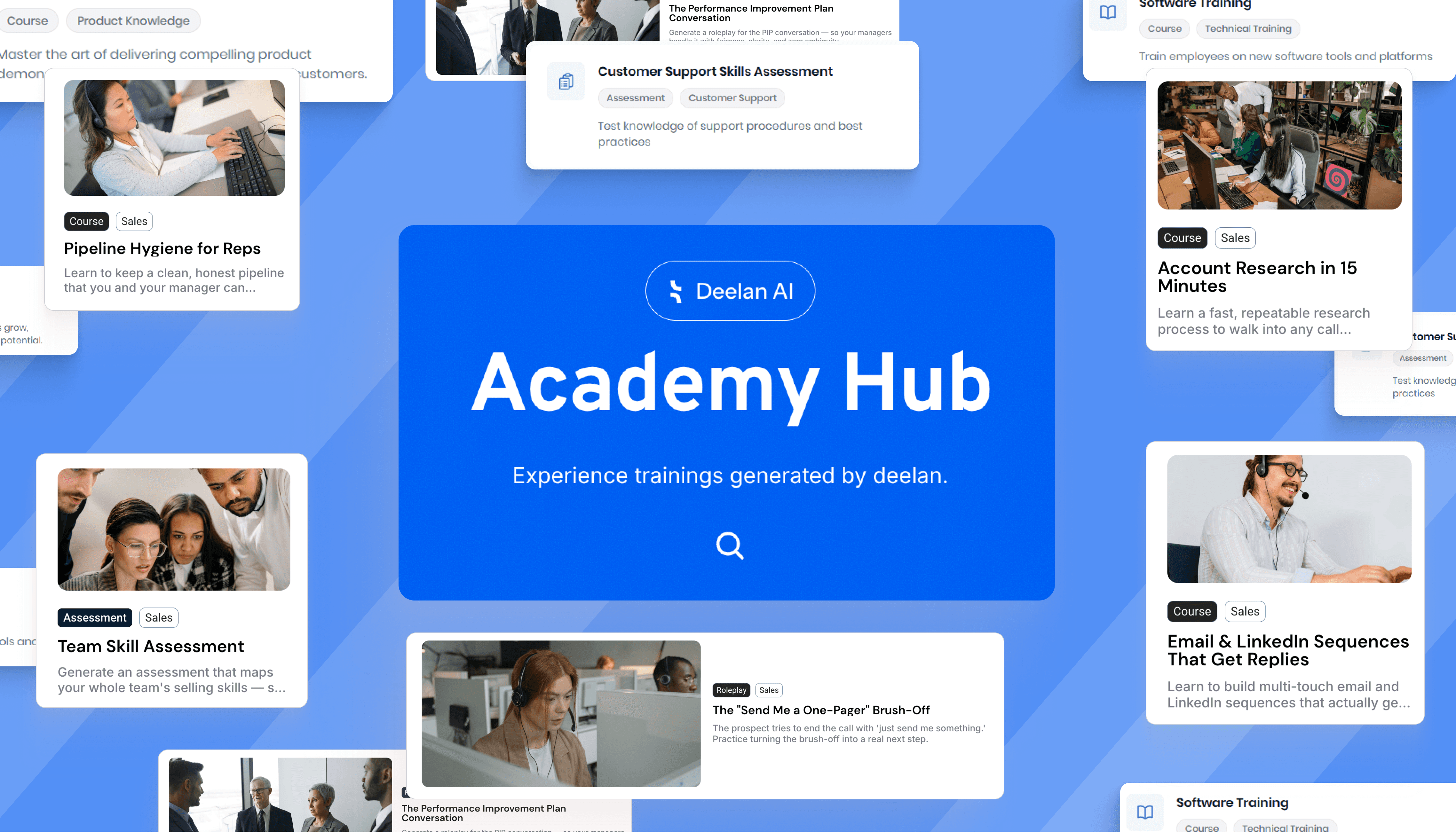
The Deelan Sales Academy includes free courses, roleplays, and assessments for skills such as:
Active listening
Discovery conversations
Objection handling
Buyer psychology
Communication skills
Sales confidence
Signs a Rep Needs Emotional Intelligence Training
Sometimes the issue is easy to spot. Other times it appears as a performance problem.
A rep may:
Rush into pitching
Interrupt buyers
Push harder when prospects become hesitant
Miss emotional cues
Sound defensive during objections
Struggle with difficult conversations
Build weak stakeholder relationships
Have strong product knowledge but low trust from buyers
These issues should be trained separately.
How to Train Emotional Intelligence in Sales
Most emotional intelligence training fails because it stays theoretical.
The strongest programs combine learning with practice.
1. Call Reviews Focused on Emotional Signals
Most call reviews focus on messaging.
Emotional intelligence reviews focus on reactions.
Ask questions like:
When did the prospect become more engaged?
When did their tone change?
What emotion might have been present?
How did the rep respond?
What could have been done differently?
The goal is not to guess feelings perfectly. The goal is learning to notice patterns.
2. Reflection Exercises
Self-awareness is one of the hardest skills to build.
Many reps don't realize how they sound under pressure.
After important calls, ask reps to reflect:
Question | Purpose |
|---|---|
When did I feel uncomfortable? | Build self-awareness |
What triggered that reaction? | Identify patterns |
Did I rush any part of the conversation? | Improve self-control |
Did I fully understand the buyer's concern? | Strengthen empathy |
What would I change next time? | Encourage growth |
Simple reflection often reveals more than another slide deck.
3. Active Listening Drills
Listening is one of the clearest expressions of emotional intelligence.
Most people listen to reply.
Strong sales reps listen to understand.
A useful exercise:
One person explains a business challenge for two minutes.
The listener cannot offer solutions.
They can only ask follow-up questions.
The goal is understanding, not solving.
This forces curiosity and patience.
5 Emotional Intelligence Roleplay Scenarios
Roleplay is one of the best training methods because emotional intelligence is difficult to learn from reading alone.
People need practice. Here are a few useful scenarios.
Scenario 1: Frustrated Buyer
The prospect has already tried two competing solutions. Neither worked.
They are skeptical and slightly annoyed.
The goal is to understand what happened and rebuild trust.
Scenario 2: Quiet Buyer
The prospect attends meetings but speaks very little.
The rep must learn how to involve them and understand their concerns.
Scenario 3: Defensive Stakeholder
A manager feels that adopting a new solution may expose weaknesses in their current process.
The rep needs to navigate resistance without creating conflict.
Scenario 4: Rushed Buyer
The buyer is short on time.
The rep must balance efficiency with discovery.
Scenario 5: Interested Prospect Who Won't Commit
The buyer sounds positive but delays every next step.
The rep must uncover the emotional barrier behind the hesitation.
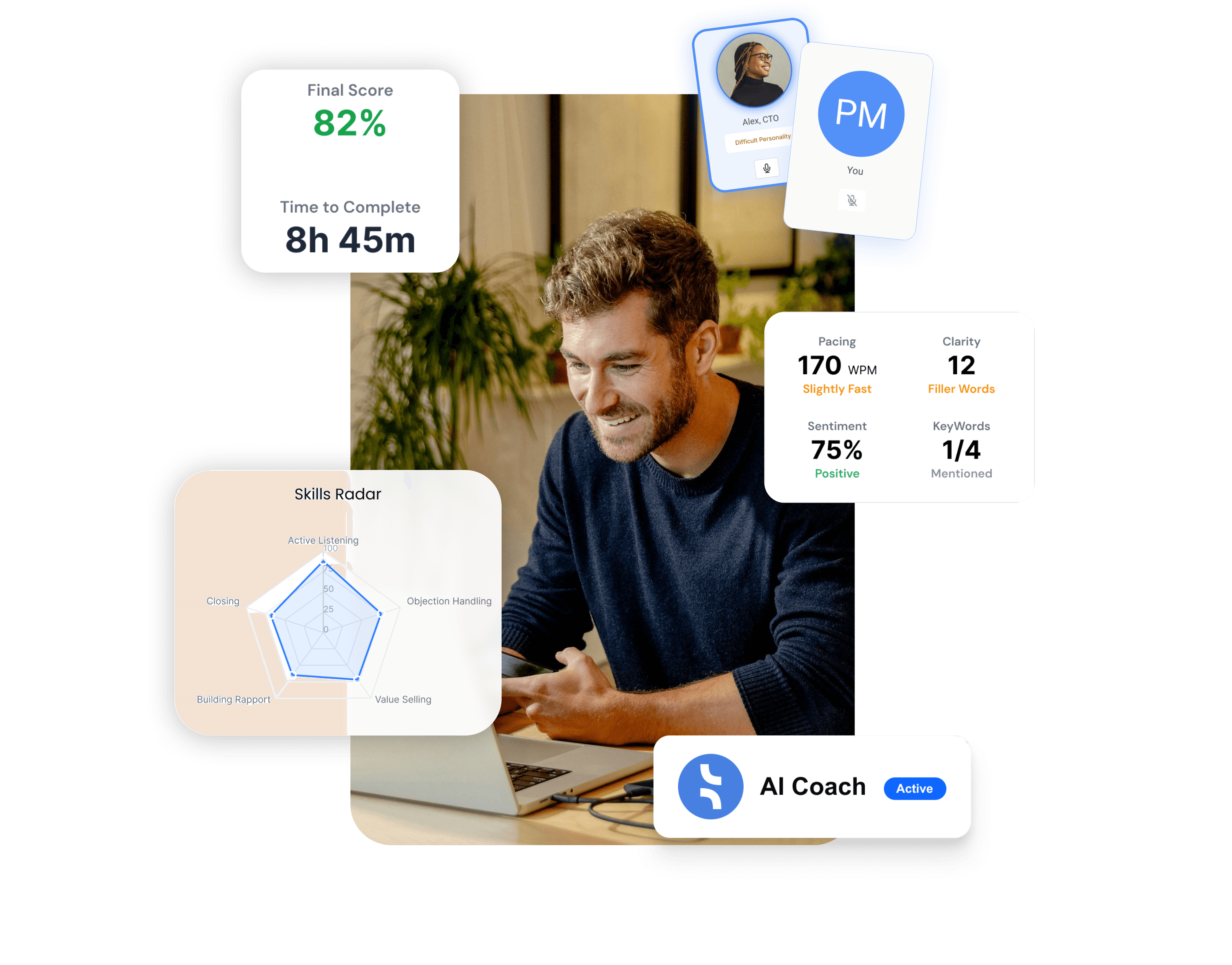
Practicing Emotional Intelligence in AI Roleplays
AI roleplays make emotional intelligence training easier because reps can practice repeatedly.
On Deelan, teams can create roleplays where:
The prospect is skeptical
The customer is frustrated
The stakeholder is defensive
The buyer is confused
The account is considering leaving
The AI persona responds dynamically throughout the conversation.
Reps must adjust both what they say and how they say it.
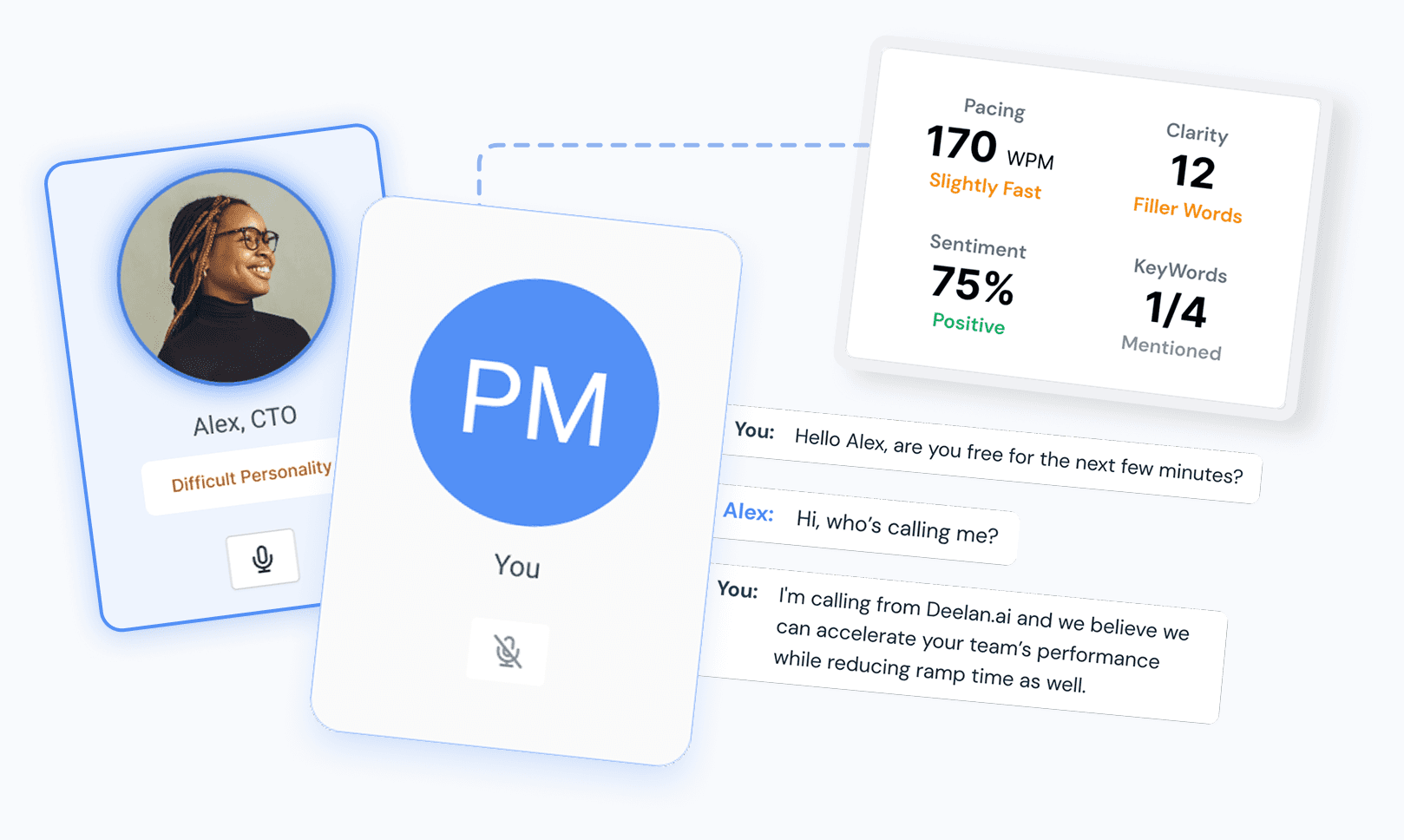
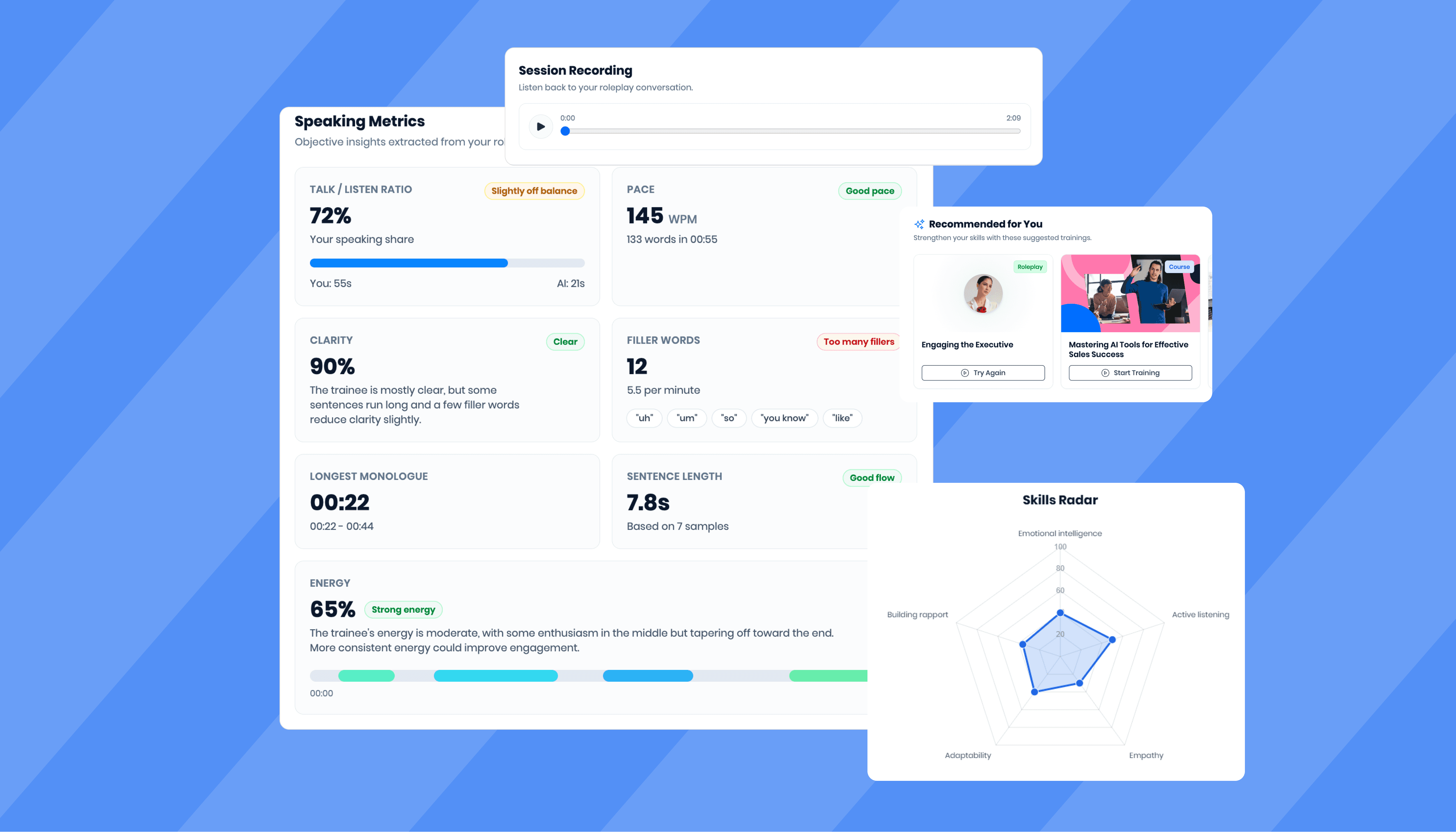
After the session, managers can review behaviors such as:
Behavior | Why it matters |
|---|---|
Builds trust | |
Empathy | Reduces resistance |
Question quality | Improves discovery |
Tone adaptation | Creates stronger conversations |
Objection handling | Prevents defensive responses |
Conversation pacing | Helps buyers stay engaged |
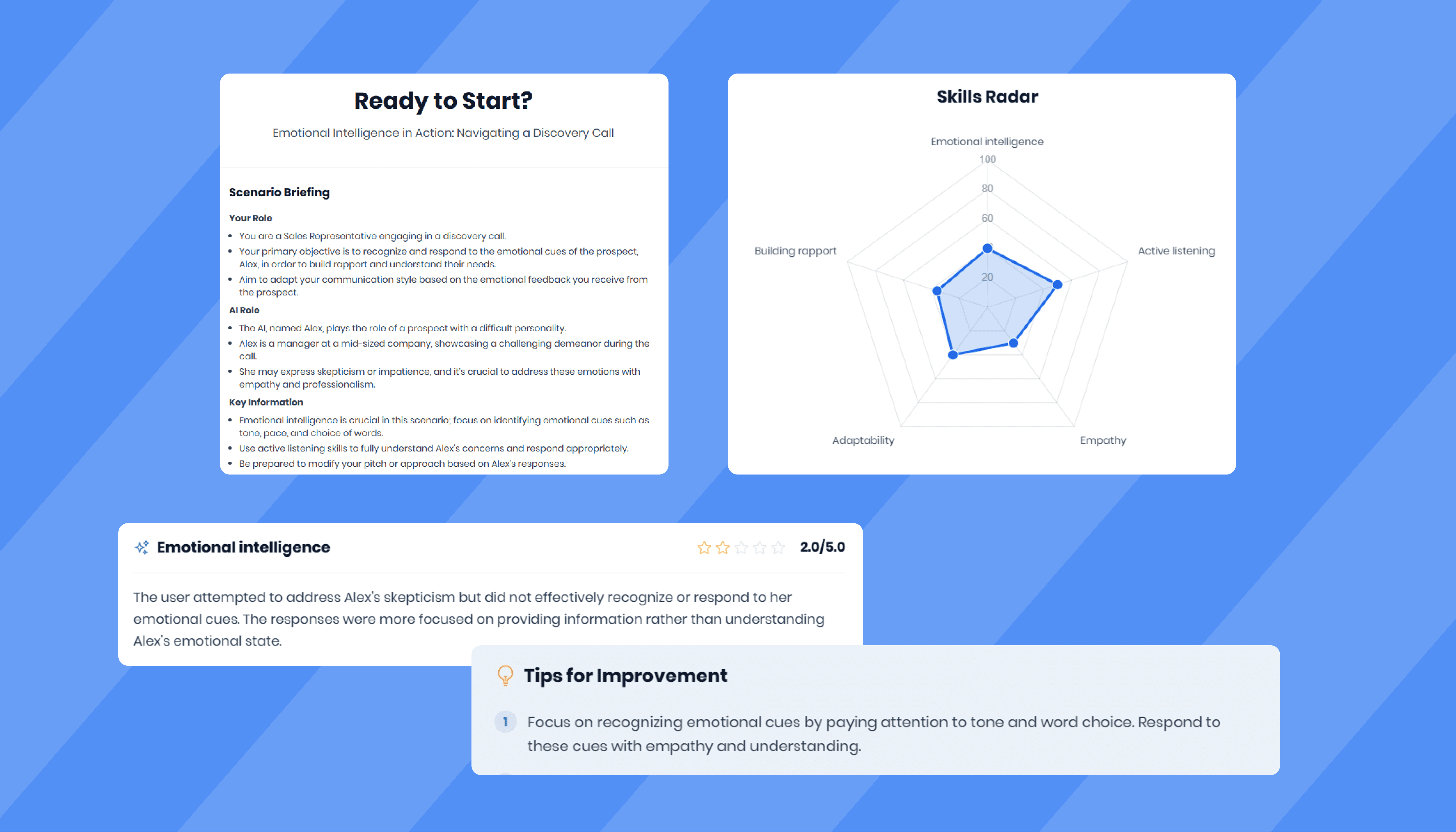
See how sales teams use AI roleplays to practice emotional intelligence, active listening, discovery, and objection handling before speaking with real customers.
Other Training Formats for Developing Emotional Intelligence
Courses
Courses help explain concepts such as:
Empathy
Emotional awareness
Buyer psychology
Active listening
Difficult conversations
They provide the foundation.
Workshops
Workshops allow teams to discuss real situations together.
One team may review difficult customer conversations.
Another may analyze discovery calls.
These sessions often create useful discussions because people interpret situations differently.
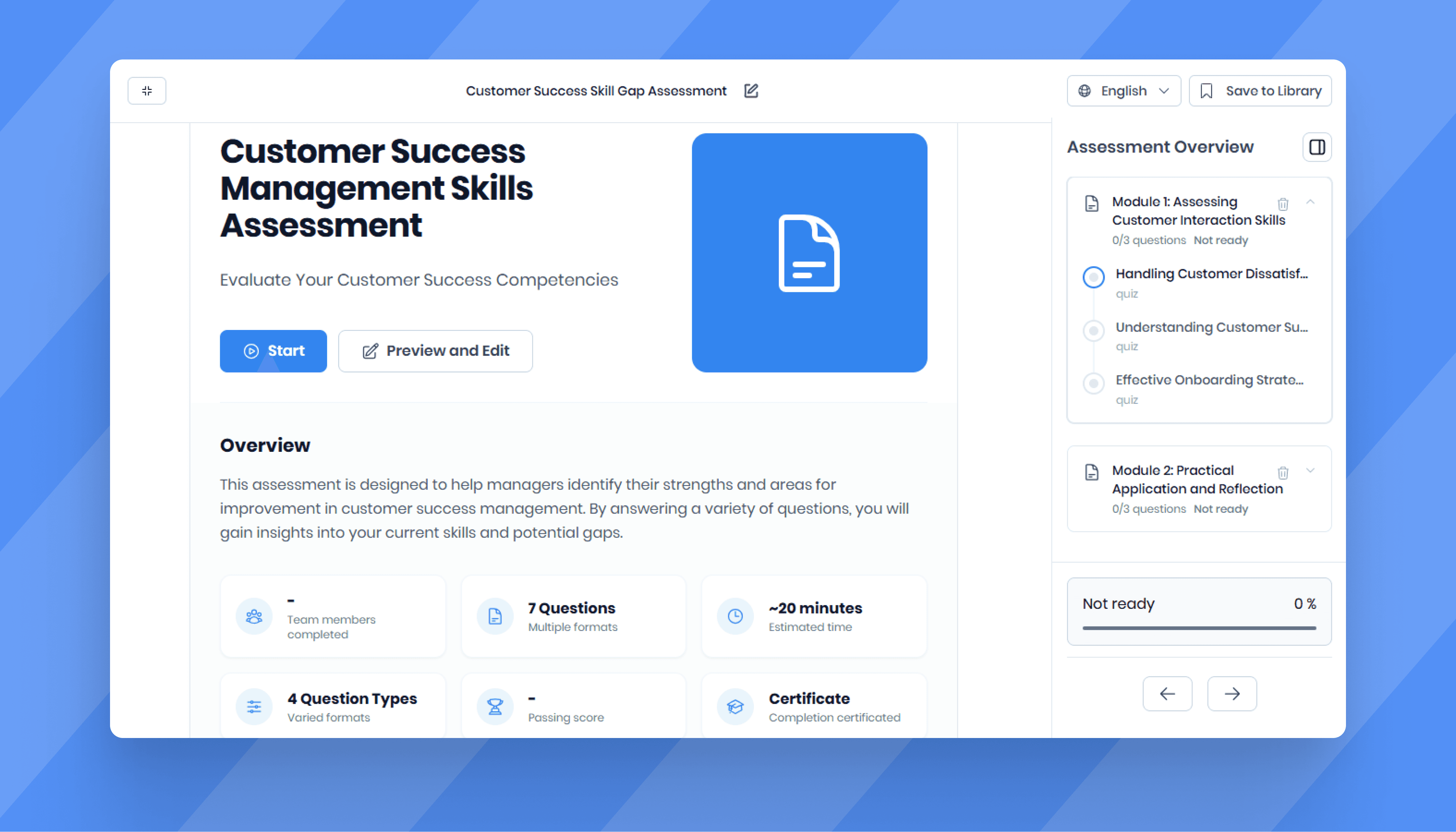
Assessments
Assessments help measure understanding.
Not:
"What is empathy?"
More:
"How should a rep respond in this situation?"
Good assessments focus on judgment. Not memorization.
What Should Emotional Intelligence Training Improve?
Focus on outcomes that show up in real conversations. Track such improvements as:
Outcome | Why it matters |
|---|---|
Better discovery conversations | More useful customer insights |
Stronger objection handling | Less defensiveness |
Higher buyer trust | Better relationships |
Improved customer retention | Stronger long-term engagement |
Better stakeholder management | Fewer blocked deals |
More confident conversations | Stronger execution under pressure |
Faster onboarding | New reps become effective sooner |
Integrate Emotional Intelligence Into Everyday Sales Training
The strongest teams do not run one emotional intelligence workshop and move on. They build small amounts of practice into normal routines.
That might mean:
Reviewing one emotional signal during weekly call reviews
Running a short roleplay before team meetings
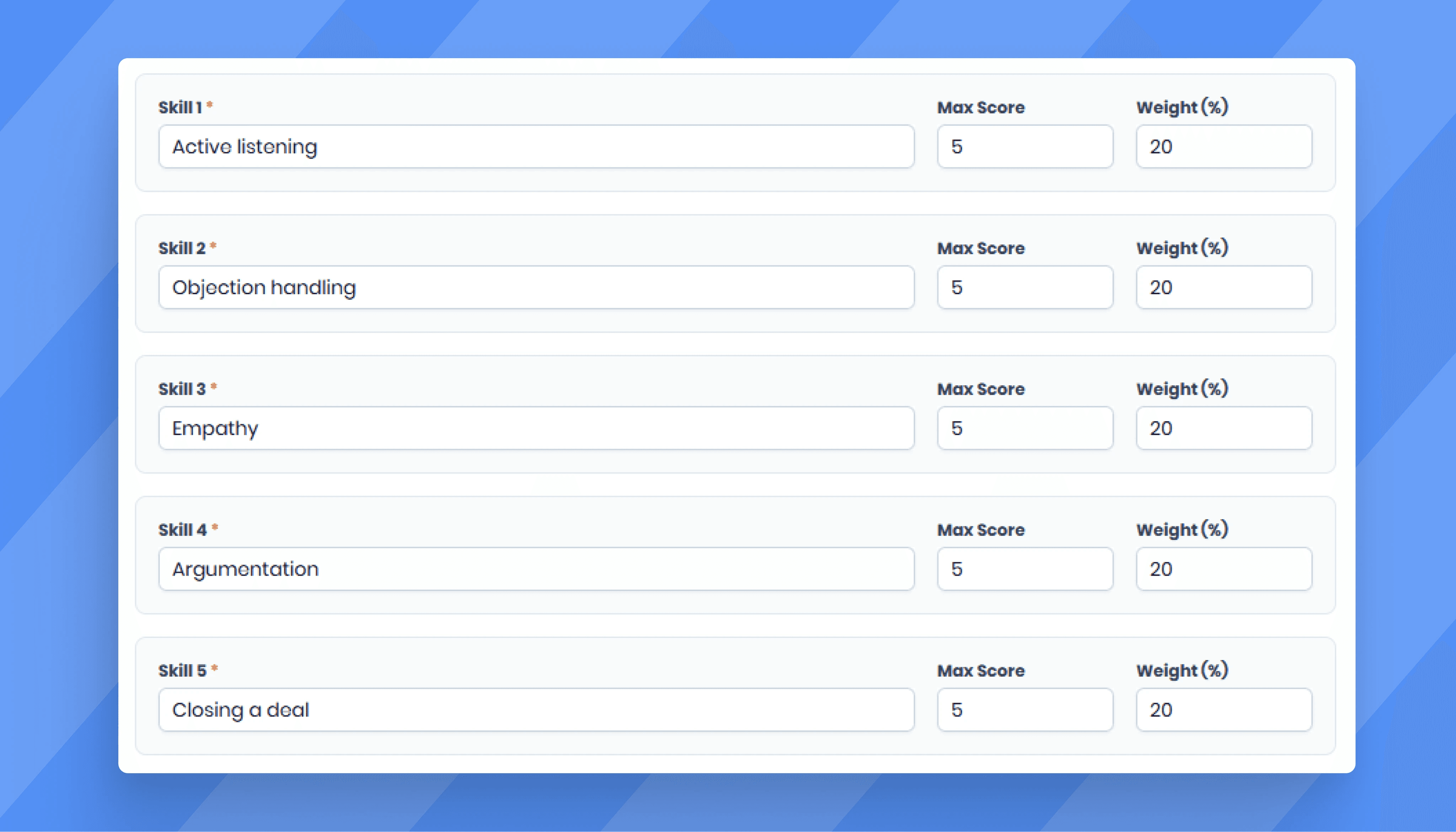
Including empathy in coaching scorecards
Practicing difficult conversations monthly
Using AI roleplays between manager coaching sessions
Small, repeated practice usually works better than occasional training events.
Ready to Build Your First Emotional Intelligence Training in Minutes?
Most companies already have what they need.
Call recordings.
Customer conversations.
Objection examples.
Manager feedback.
Sales playbooks.
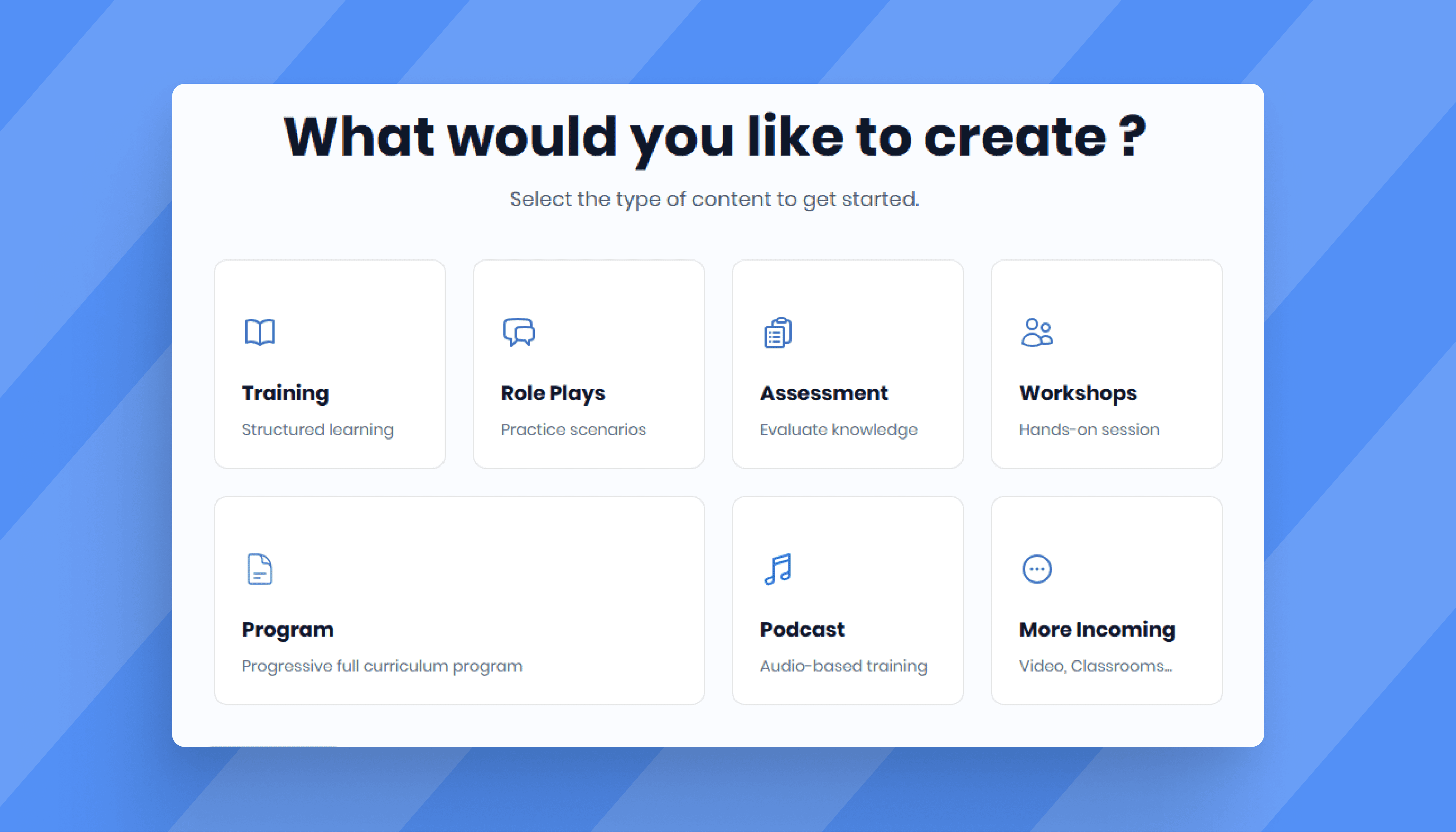
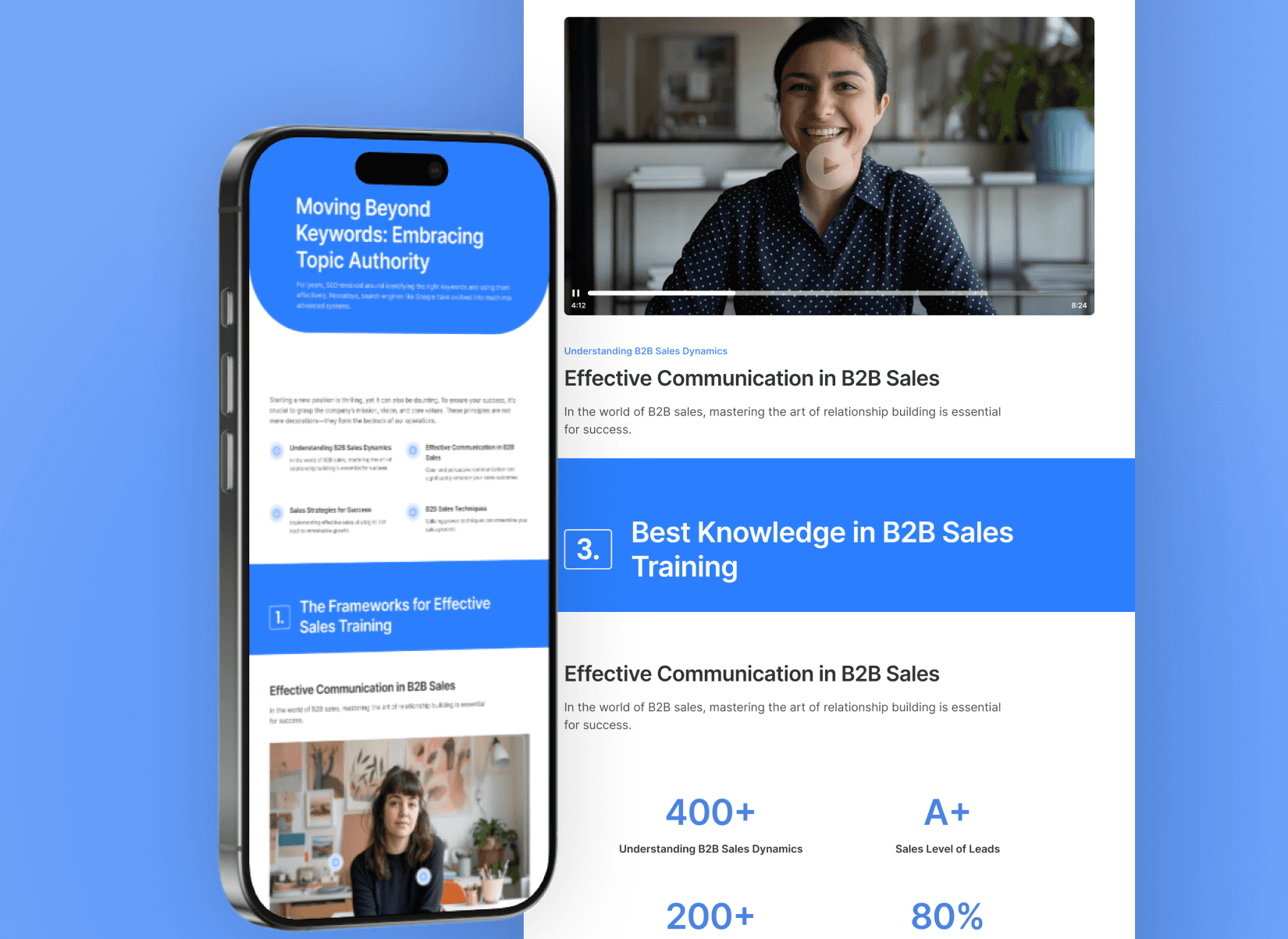
With Deelan, you can turn your existing content into courses, roleplays, assessments, workshops, and learning programs in minutes.
Sales leaders use it to train active listening, empathy, emotional intelligence, communication, buyer psychology, and other soft skills across the entire revenue team.
You can also start with the free academy to explore ready-made courses, roleplays, and assessments before building your own training.

Emotional intelligence will never replace product knowledge.
But product knowledge alone rarely wins complex sales conversations.
The reps who consistently build trust are usually the ones who understand people as well as they understand products.