Sales reps don't get better at handling objections by memorizing more scripts.
They get better by recognizing what an objection really means, practising their response under pressure, receiving feedback, and repeating the situations they struggle with.
Want to test your or your team's objection-handling skills?
Try the free deelan Academy assessment Objection Handling: Prove You Know It or practise live with the AI roleplay Objection Drills: Handle It Live to find your weakest objection types and improve them.

Why objection handling needs to be trained
During an actual sales call, a rep has seconds to:
Understand what the buyer is really saying.
Stay composed.
Ask the right follow-up question.
Reframe the concern.
Move the conversation forward.
That's a performance skill. And performance skills require practice, feedback, and repetition.
A one-time objection-handling course may teach the framework. Good sales training makes sure reps can actually use it.
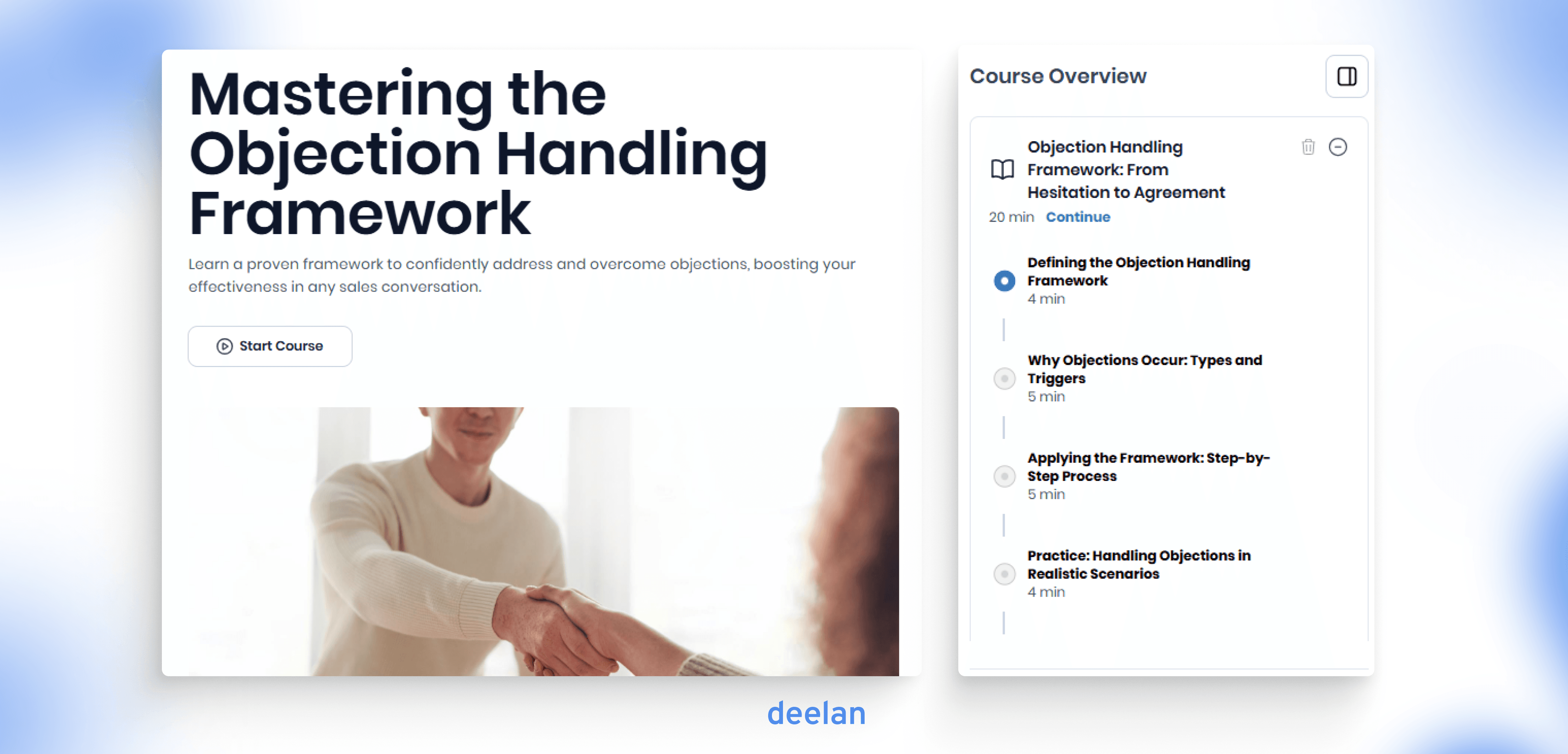
What should objection handling sales training teach?
A useful starting framework is:
Acknowledge → Clarify → Reframe → Advance
Skill | What reps need to learn |
|---|---|
Acknowledge | Show you've heard the concern without becoming defensive |
Clarify | Find out what's actually behind the objection |
Reframe | Connect the conversation back to value, priorities, risk, or outcomes |
Advance | Move toward a concrete next step |
For example, if a prospect says:
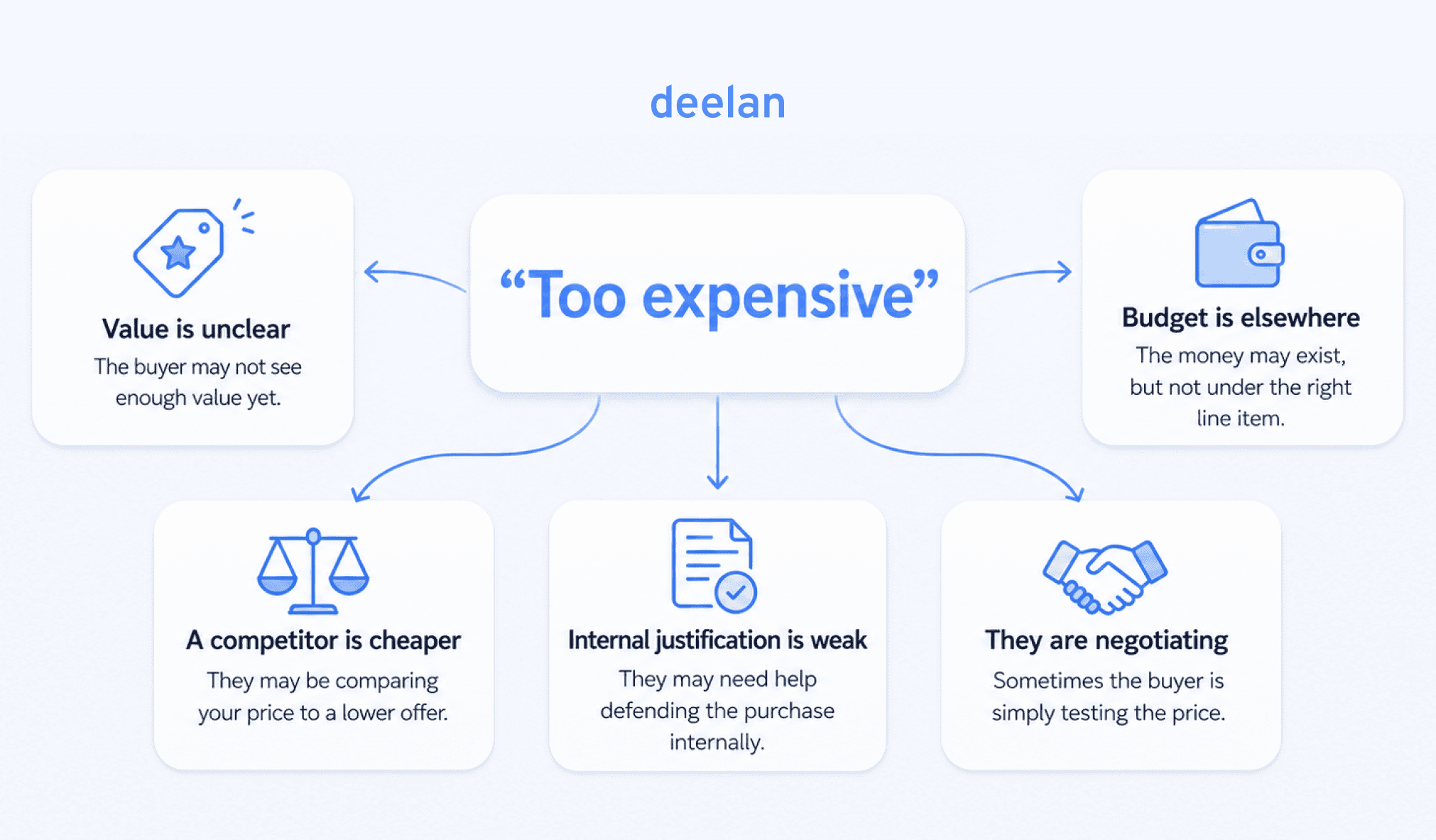
“This is too expensive.”
Training should teach them to first determine whether the real issue is budget, perceived value, comparison with a competitor, internal approval, or simply hesitation.
Common objections to include in sales training
Objection training should reflect the situations your reps actually face.
Objection | Skill to train |
“It's too expensive.” | Value reframing and clarification |
“Now isn't a priority.” | Urgency and business impact |
“We already use a competitor.” | Competitive positioning |
“Send me some information.” | Identifying genuine interest vs. a stall |
“I need to think about it.” | Uncovering unresolved concerns |
“I need to ask my manager.” | Multi-threading and stakeholder alignment |
“We don't have time to implement this.” | Risk reduction |
“We're happy with what we have.” | Challenging the status quo |
But don't stop with generic examples.
The best objection-handling training eventually uses the objections coming from your own calls.
3 objection-handling techniques worth training
Frameworks give reps a structure they can fall back on when a conversation becomes difficult.
Feel-Felt-Found
Feel-Felt-Found helps reps acknowledge a concern and reframe it using relevant customer experience.
The structure:
Feel: Acknowledge the concern.
Felt: Explain that others had a similar concern.
Found: Explain what they discovered.
For example:
“That's understandable. Some teams we've worked with felt the same way because introducing another platform sounded like additional work. What they found was that automating the training build actually reduced the amount of manual work their team had to do.”
In training, don't just give reps the template. Have them practise adapting it to different objections until it stops sounding scripted.
Isolate the objection
Teach reps to confirm whether they're addressing the actual blocker.
For example:
“Aside from implementation time, is there anything else that would stop you from moving forward?”
This is especially useful in roleplays because you can train reps to recognize when the first objection is hiding another concern.
Proactive deframing
Not every objection needs to be handled after it appears.
Train reps to identify objections that repeatedly show up in your pipeline and address them earlier.
If prospects frequently worry about implementation, a rep might say:
“Implementation workload is usually one of the first questions we get from lean sales teams, so let me show you what setup actually involves.”
The team learns not only how to respond to objections, but how to prevent predictable ones from derailing the call.
How to build overcoming objections sales training
1. Assess reps before training them
Give them objections and ask them to:
identify what the objection is signalling;
classify the objection;
choose an appropriate response;
explain their reasoning.
2. Teach the framework
Now introduce the core objection-handling process and examples.
Keep this part relatively short.
Your reps don't need 40 slides about objections. They need enough knowledge to understand why they're taking a particular approach before practising it.
3. Move quickly into roleplay
Give reps realistic buyer scenarios and make them respond live.
Train situations such as:
price pressure;
competitor preference;
bad timing;
implementation concerns;
lack of urgency;
internal approval;
“send me something”;
unexpected pushback.
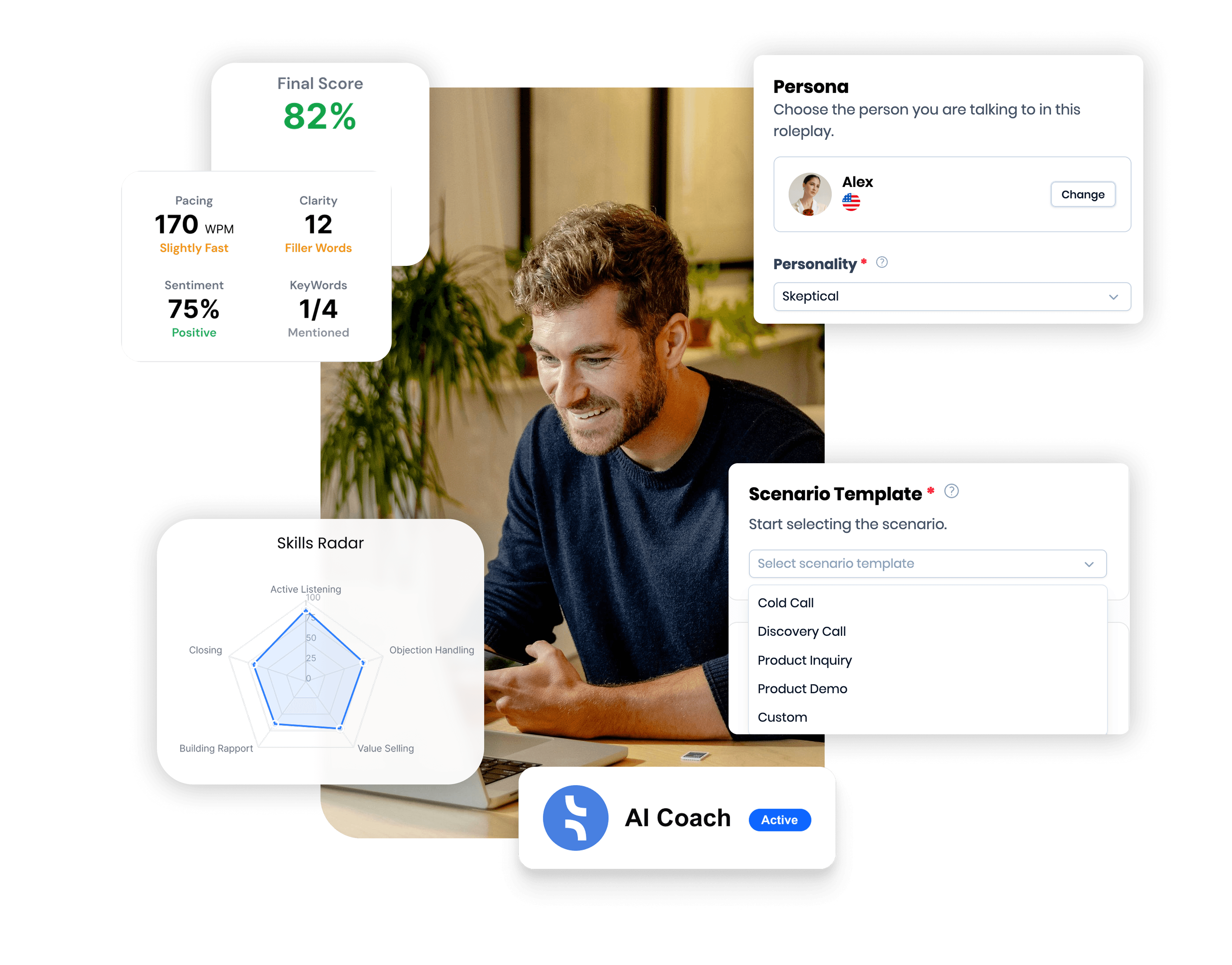
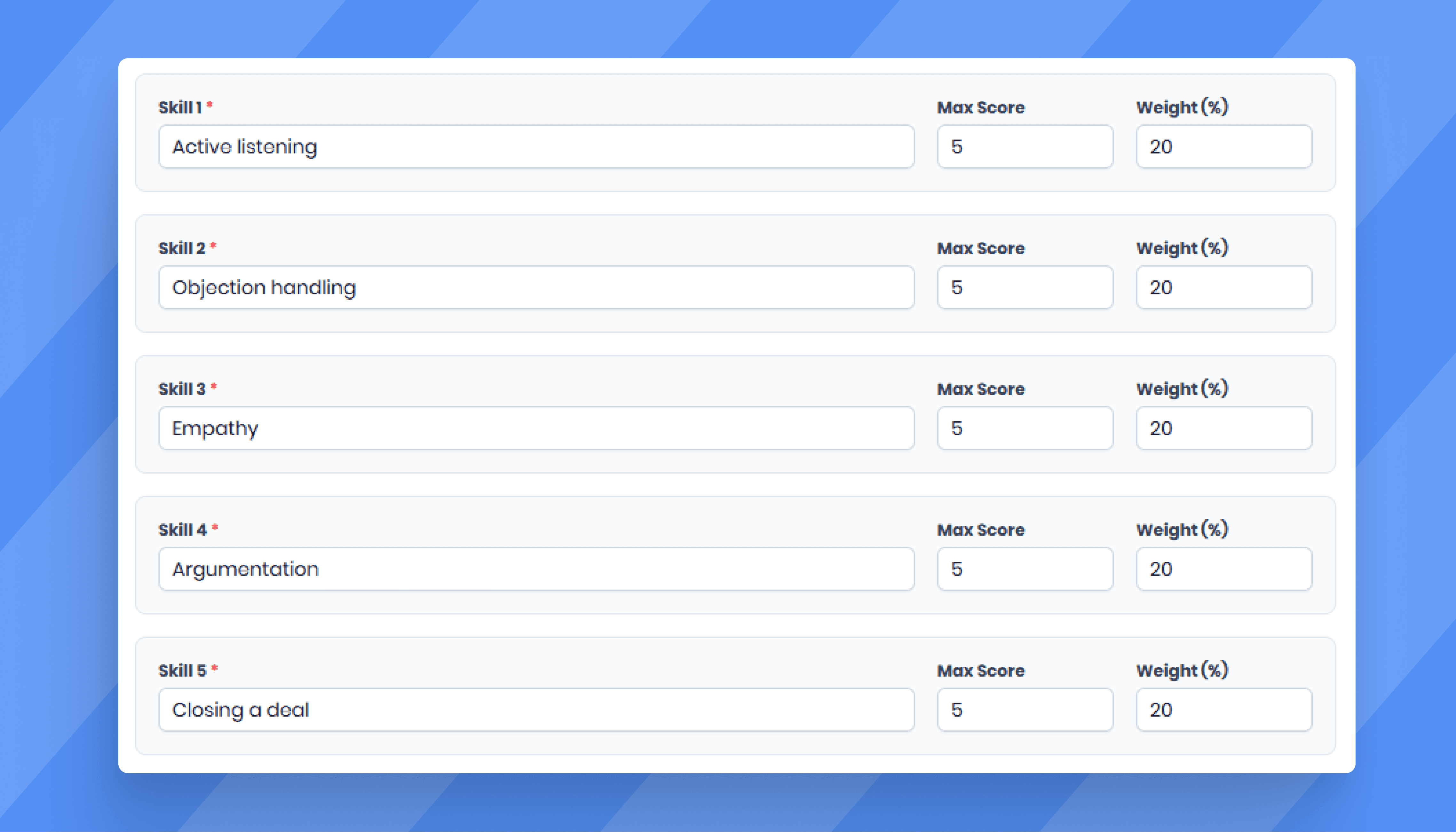
4. Score specific objection-handling skills
Skill | What to evaluate |
Did they let the buyer explain the concern? | |
Clarification | Did they uncover what was behind the objection? |
Composure | Did their tone change under pressure? |
Reframing | Did they respond to the actual concern? |
Relevance | Was the response connected to the buyer's situation? |
Advancement | Did they move the conversation forward? |
5. Reinforce the weakest skills
If the rep handles competitor objections well but repeatedly struggles with pricing, their next training should focus on pricing.
The next training should follow the skill gap.
Use real sales calls to create better objection training
Generic scenarios are useful when you're starting. Real sales calls tell you what your team actually needs.
Look across your conversations for patterns:
Which objections repeatedly stop deals?
Which reps struggle with the same objections?
Where do reps become defensive?
Which objections are handled well by your top performers?
Which responses move conversations forward?
With deelan, real calls can be reviewed to identify gaps such as poor objection handling and turned into targeted training for the rep who needs it.
One missed objection can become a roleplay; a recurring pattern across the team can become a complete training program.
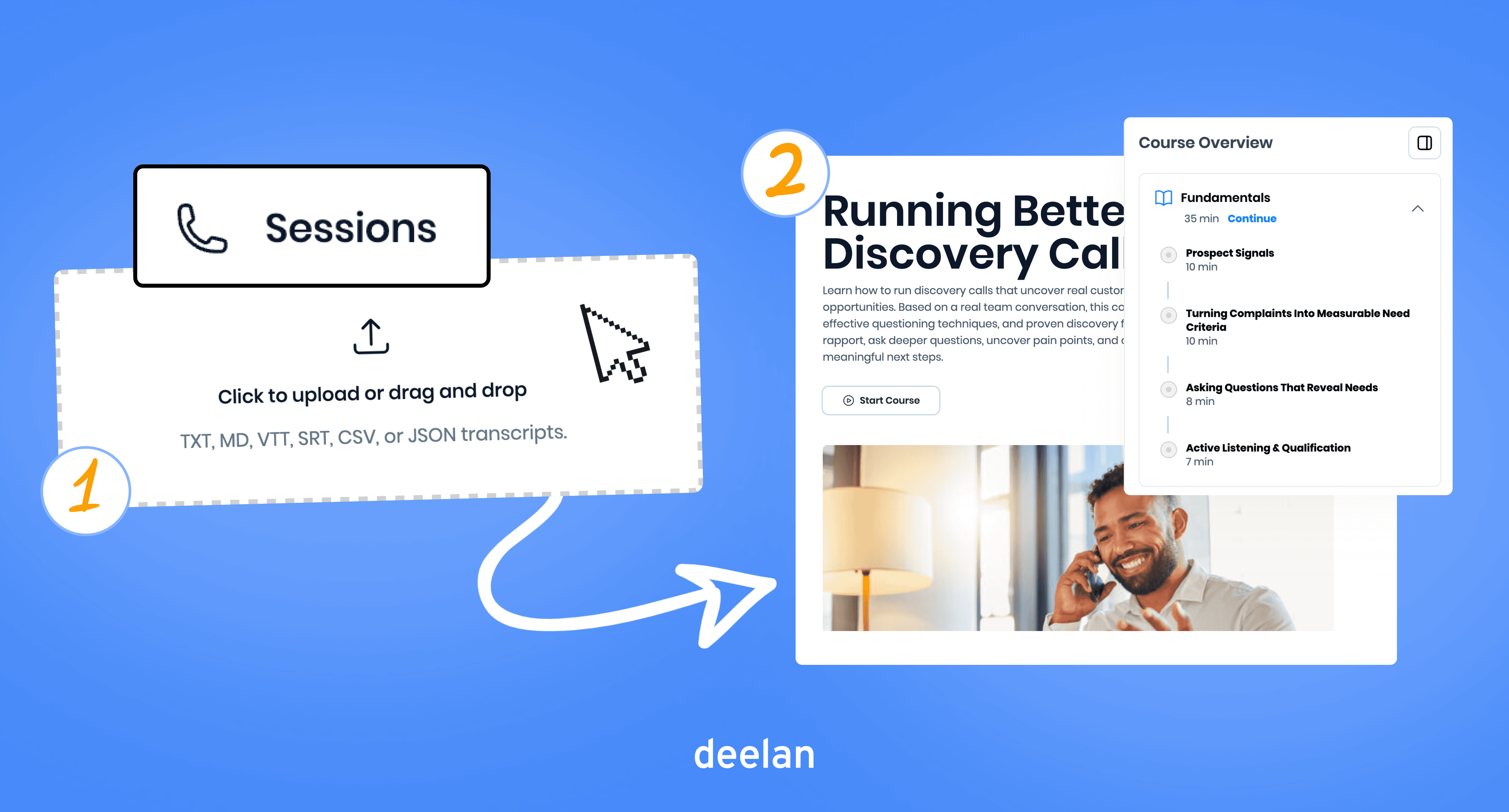
Objection handling training with deelan
deelan connects the training process instead of treating courses, assessments, roleplays, and coaching as separate activities.
Find the gap → Create the training → Adapt it to each rep → Measure readiness
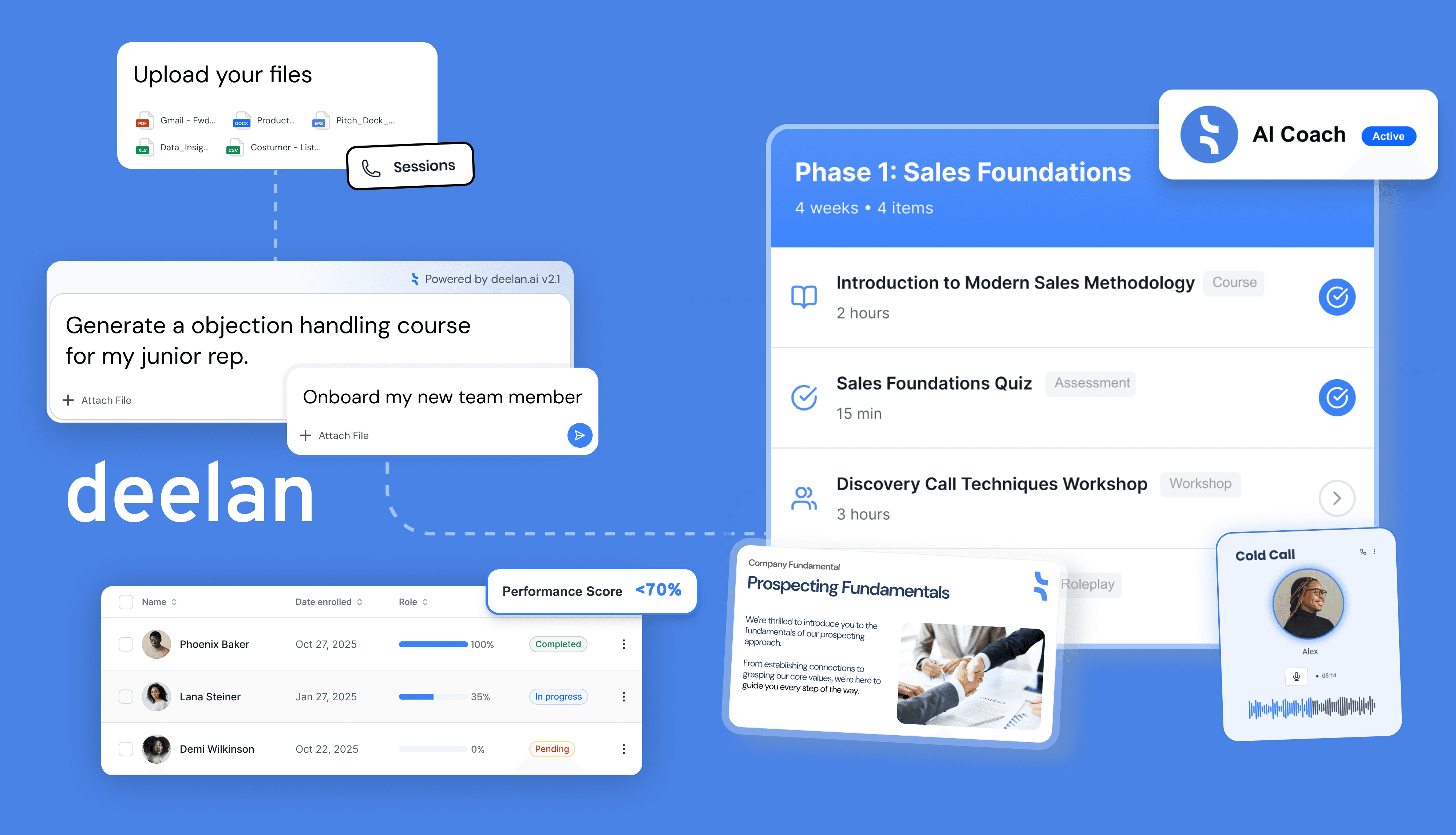
deelan can identify gaps from real calls, generate the appropriate training format, and personalize the learning path around the rep's current needs.
For objection handling, that could look like:
Skill gap detected | Next training |
Rep struggles when pricing comes up | Pricing objection roleplay |
Rep can't identify the real concern | Objection diagnosis assessment |
Rep responds defensively | Coaching + live practice |
Team repeatedly loses against one competitor | Competitor objection program |
Rep improves but struggles with timing objections | Next training adapts to timing objections |
Make objection training continuous
The objective isn't to create reps who remember the right objection-handling framework.
It's to create reps who can use it when a buyer pushes back unexpectedly in a real sales call.
That requires more than content.
The strongest overcoming objections sales training combines:
assessment + frameworks + realistic practice + feedback + reinforcement.
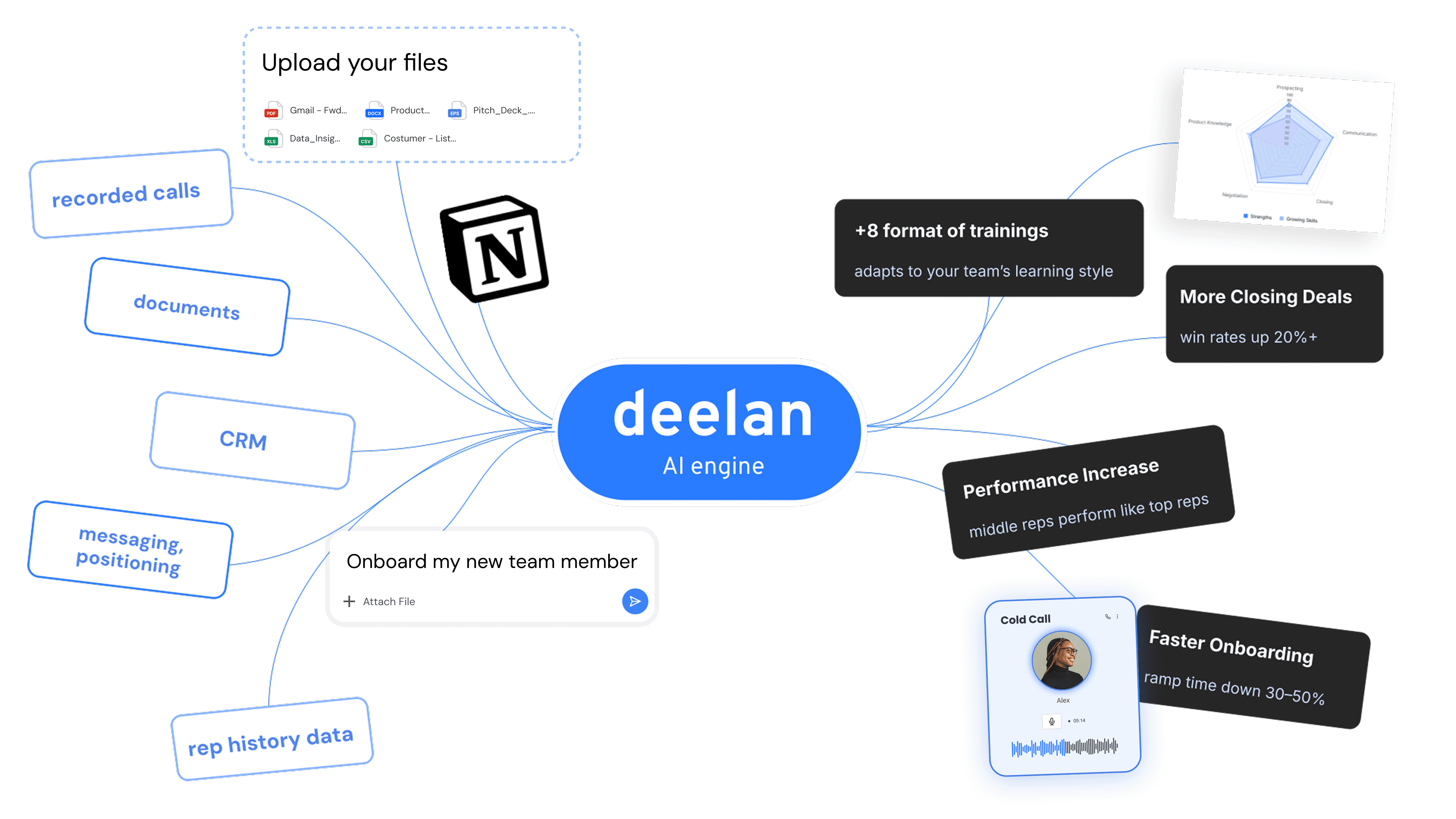
And as new objections and skill gaps appear in real calls, the training should change with them.