Good product launch training should go beyond sharing documents or running one kickoff call. Reps need to learn the new message, practice using it, prove they understand it, and keep improving once real customer conversations start.
1. Start with the product and messaging your team actually needs to know

target audience and buyer personas
the problem the product solves
positioning and value proposition
key use cases
new features and capabilities
pricing and packaging
proof points and customer examples
competitor positioning
common objections
approved messaging and talk tracks
They need to understand what changed, who should care, why it matters, and how to explain it to a buyer.
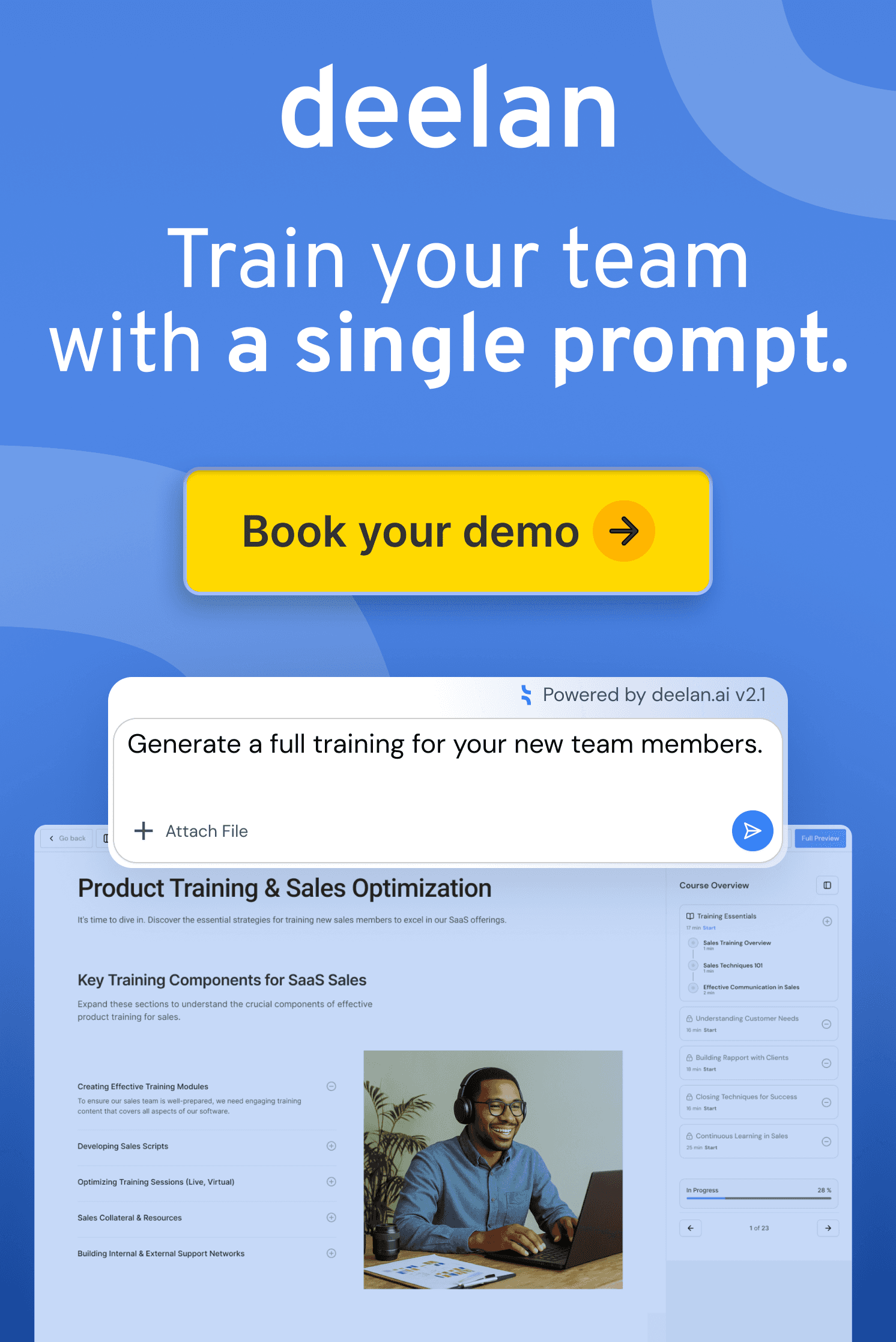
With deelan, for example, you can upload your existing product and messaging documents and use them to build training around the same approved context.
2. Turn your launch documents into training people will actually complete
Training format | Best used for |
|---|---|
Full introduction to the new product, positioning, ICP, and use cases | |
Micro-course | One specific topic such as pricing, a competitor, or a new feature |
Podcast / audio training | Quick refreshers reps can listen to away from their desk |
Quiz / assessment | Checking product knowledge and messaging understanding |
Practicing pitches, objections, discovery, and buyer conversations |

Current product-training guidance increasingly recommends smaller, reusable learning rather than relying only on large launch sessions or information-heavy decks.
3. Make sure reps can use the message, not just remember it
First, reps need to understand the information.
Then they need to explain it naturally.
Finally, they need to use it when the conversation becomes unpredictable.

Roleplay is particularly useful here. Scenario-based training prepares reps for the questions, objections, and situations they are more likely to encounter after launch.
For a new product launch, you might create roleplays around:
pitching the new product to the target persona
explaining the value proposition
handling pricing pushback
answering a difficult product question
positioning against a competitor
introducing the product to an existing customer
running a discovery call for the new use case
With deelan, these scenarios can be created using the same launch context you've already uploaded.
4. Test both knowledge and sales readiness
Training completion doesn't necessarily mean a rep is ready to sell.
A rep can watch the videos, complete the course, and still struggle during the first customer conversation.
That is why launch readiness should include two types of checks.
Knowledge
Can the rep answer:
Who is the product for?
What problem does it solve?
What are the main use cases?
How is it different?
What does it cost?
Which claims can they make?
Quizzes and assessments work well here.
Application
Can the rep:
explain the value without reading from a slide?
adapt the message to different personas?
respond to an objection?
handle competitor questions?
confidently move the conversation forward?
5. Keep updating training after the launch
The first version of your training won't contain every question buyers will ask.
Once the product is live, sales conversations will give you new information quickly.
You may start hearing:
an objection nobody predicted
a competitor comparison that wasn't in the battlecard
confusion around pricing
a new use case
a product question reps struggle to answer
messaging that sounds good on paper but doesn't work well in conversation
Use those signals to update the training.
Turn your product launch materials into training with deelan
You probably already have most of the information your team needs.
The challenge is turning it into training quickly enough for the launch.
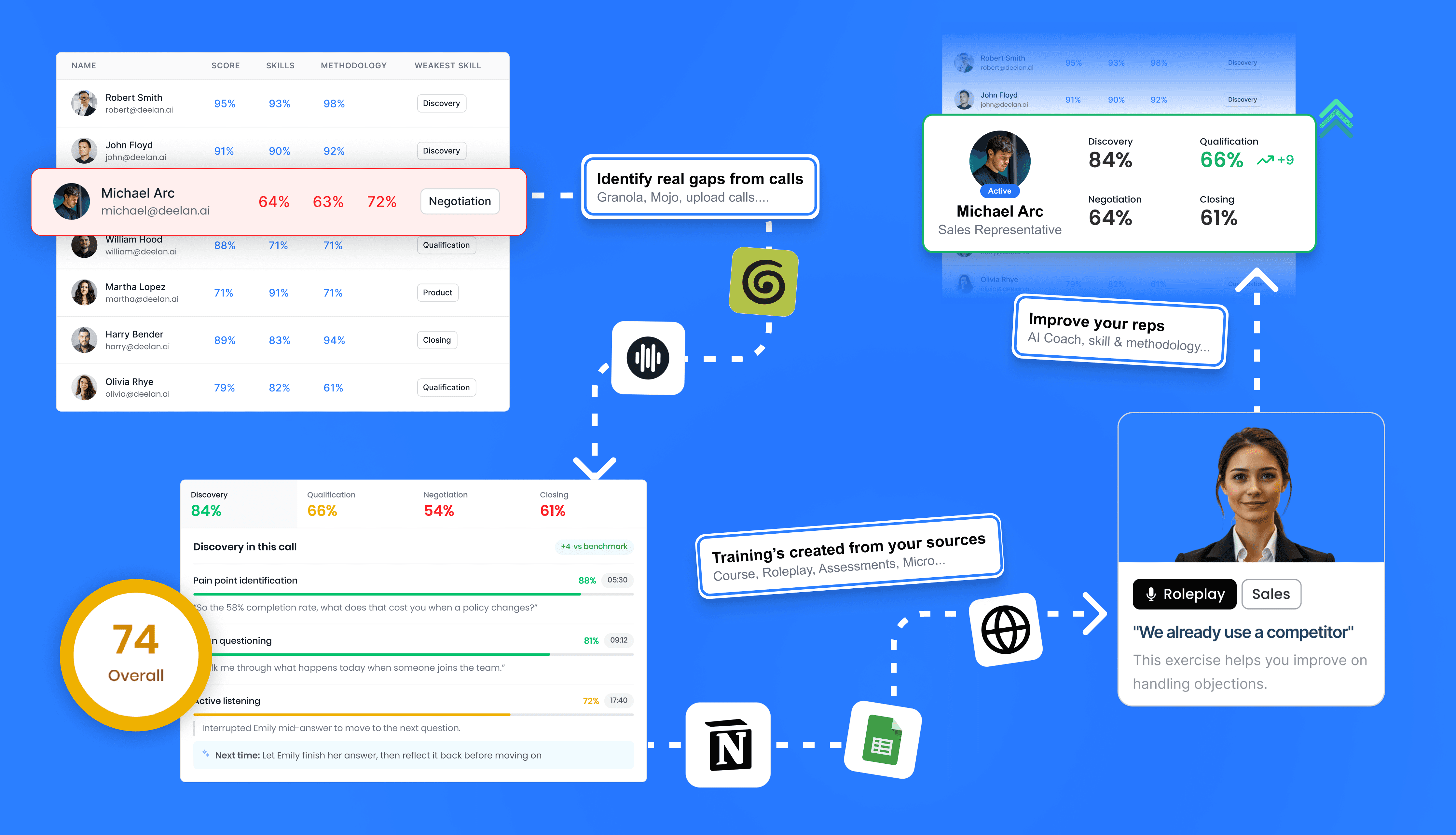
With deelan, you can:
Upload your product and messaging documents.
Turn them into courses, micro-courses, podcasts, quizzes, and assessments.
Create AI roleplays based on real buyer scenarios.
See where reps understand the new message and where they need more practice.
Keep adding training as new objections and questions appear after launch.
Your launch materials don't have to stay as documents people read once.
They can become training your team learns from, practices, and actually uses in customer conversations.
Ready to train your team for the next launch?