
Launches fail quietly before launch day
Sales uses one message. Marketing uses another. Support hears about the new feature too late. Customer success gets questions they cannot answer. Partners forward old slides.
A product gives each team the right version of the launch: what changed, who it helps, how to explain it, what to show, what to avoid saying, and how to answer questions when things get messy.
Build the training from what already exists
You probably do not need to start with a blank page. Most launch knowledge already exists somewhere. It is just scattered.
You might have:
Product docs
Demo notes
Competitor notes
Beta feedback
Customer questions
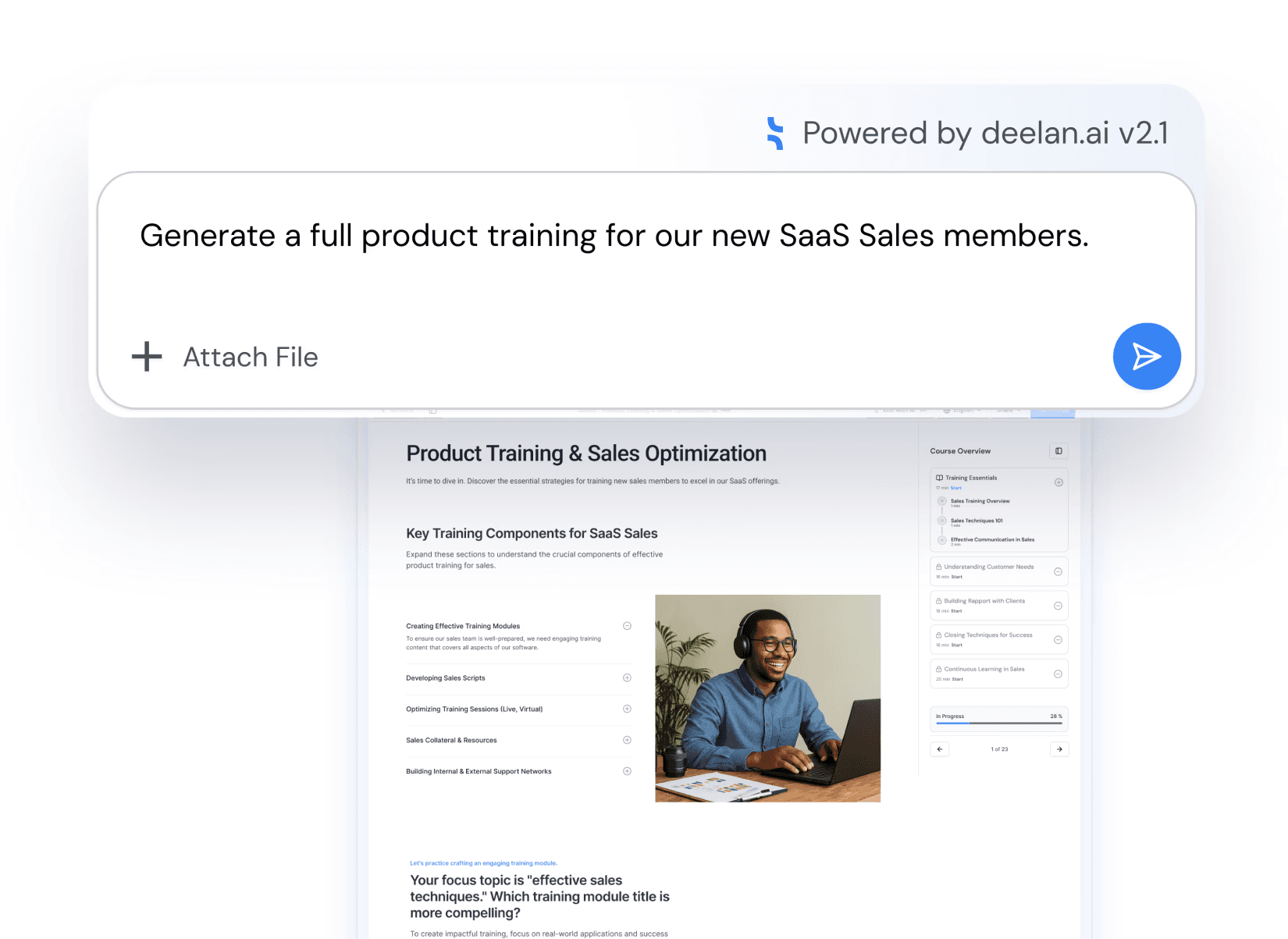
Teams can upload the resources they already have on deelan and use AI to create courses, roleplays, assessments, workshops, and learning paths. That helps when launch timelines are tight and the enablement team does not have weeks to build everything by hand.
Start with one clear launch message
Before building training, write the simple version of the launch story.
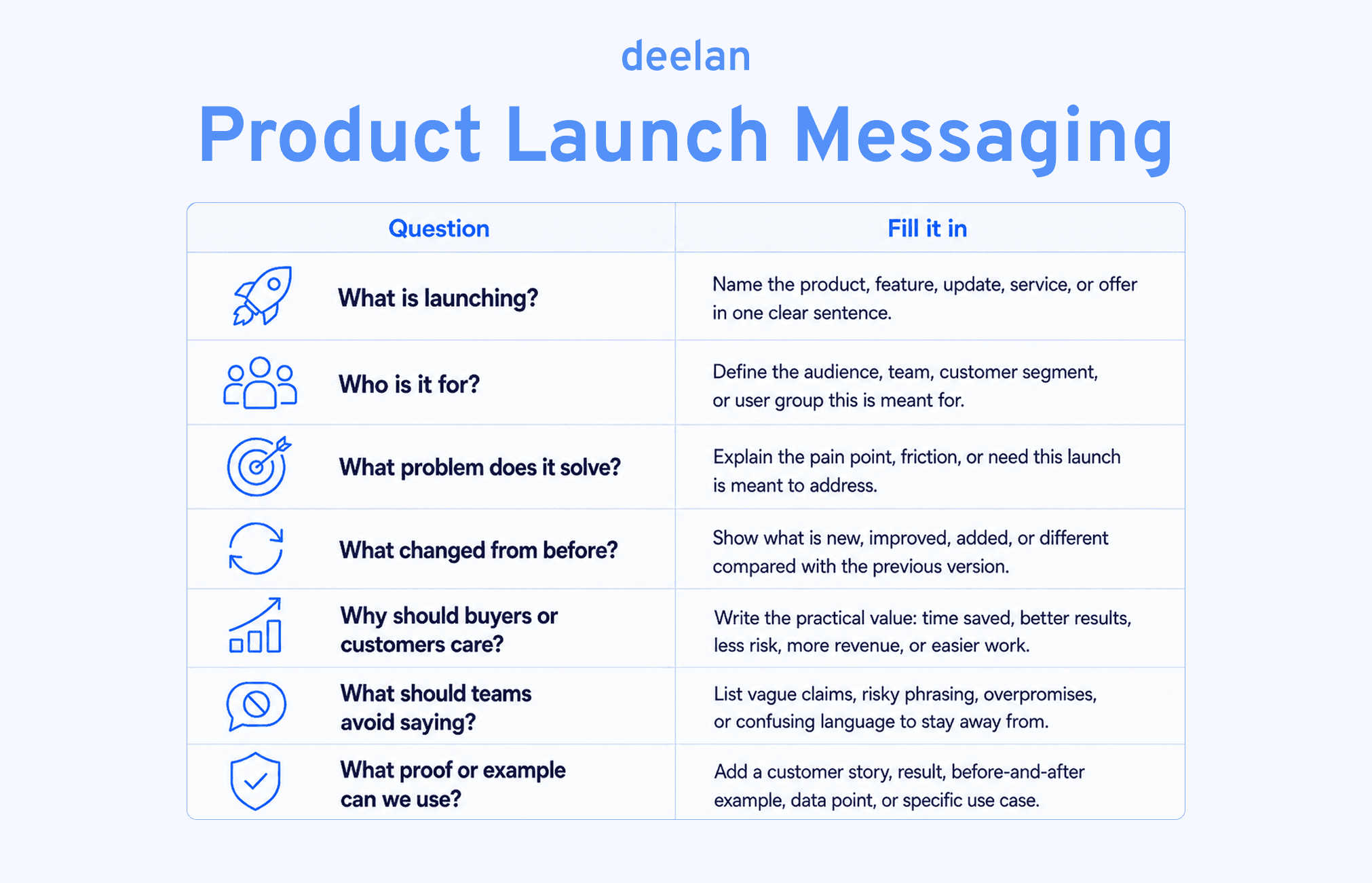
Use this table:
Question | Fill it in |
|---|---|
What is launching? | |
Who is it for? | |
What problem does it solve? | |
What changed from before? | |
Why should buyers or customers care? | |
What should teams avoid saying? | |
What proof or example can we use? |
This message becomes the base for the whole product launch training plan.
If your team cannot explain the product in simple words, training will not fix it. The message needs to be clear first.
A good launch message sounds like something a real person would say on a call. It should not be full of internal phrases, product jargon, or vague benefits like “improve efficiency.” Say what actually improves.
Weak message | Better message |
“Our new dashboard improves visibility.” | “Managers can now see which reps are struggling before it affects pipeline.” |
“This feature supports better collaboration.” | “Sales and CS can now work from the same customer notes instead of checking three tools.” |
“The product uses AI to optimize workflows.” | “The system suggests the next training exercise based on where the rep made mistakes.” |
How to train sales, marketing and other teams?
One of the easiest ways to make launch training boring is to give everyone the same deck. Different teams need different depth.
Team | What they need |
Sales | Buyer pain points, pitch, demo flow, pricing basics, objections |
Marketing | Positioning, audience, claims, proof points, message consistency |
Support | Product workflow, common issues, technical details, escalation |
Customer success | Adoption moments, account risks, expansion angles |
Partners | Simple pitch, use cases, customer fit, what to send next |
Customers | How to get value fast without too much detail |
Add some practice
Employees need to practice the real moments they will face.
A few examples:
Scenario | What the rep practices |
First discovery call | Connecting the product to a real pain point |
Demo call | Showing only the parts that matter |
Explaining value without rushing to discount | |
Competitor question | Staying clear without sounding defensive |
Technical question | Knowing what to answer and when to bring help |
AI roleplays are useful here because reps can practice without waiting for a manager. They can try a pitch, get feedback, improve, and try again.
In Deelan, for example, a launch owner could turn product notes and common objections into a roleplay where the AI buyer pushes back on price, timing, or competitor claims. The rep gets a safer place to make mistakes before the real call.
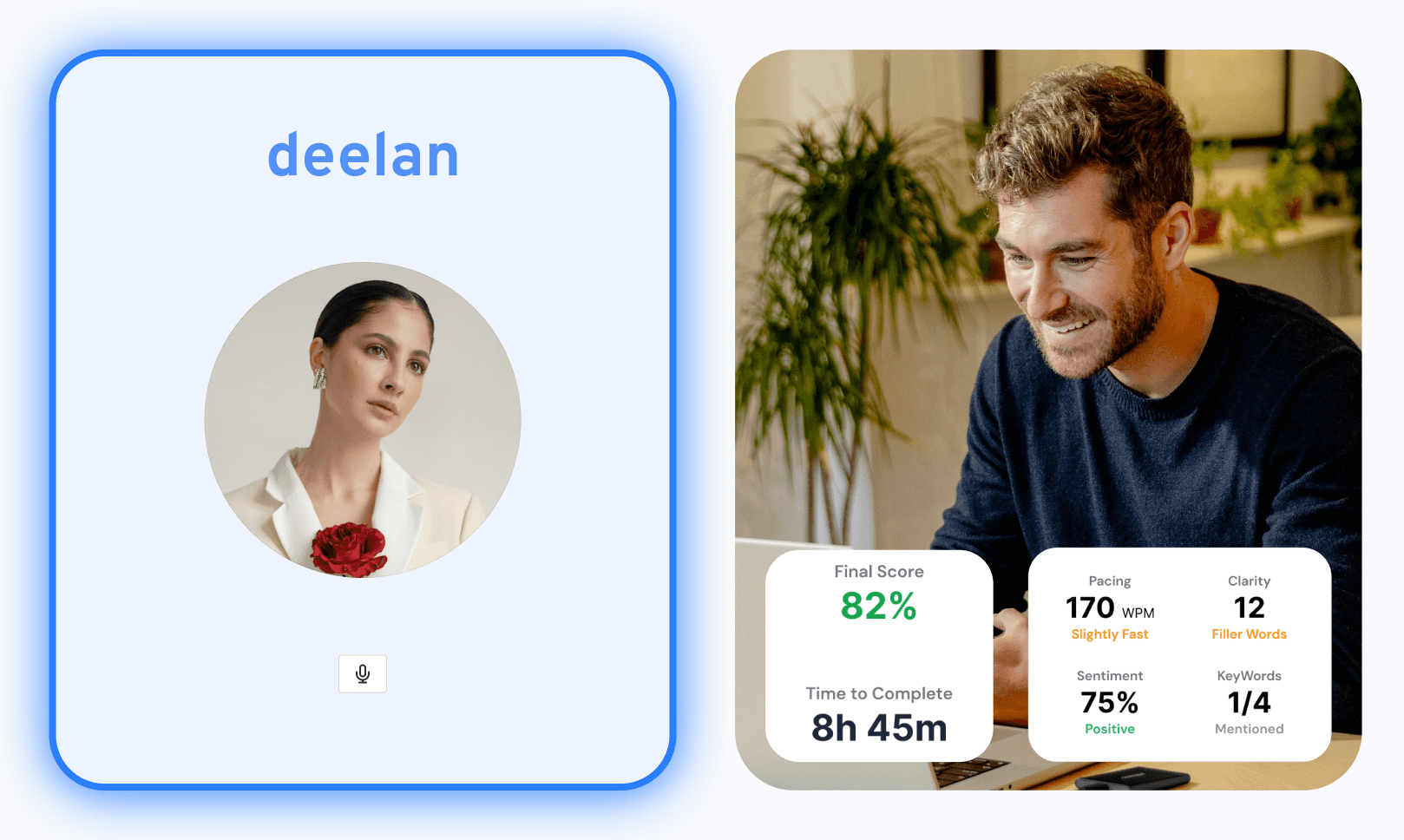
That kind of practice is especially useful for new reps, distributed teams, and launch-heavy companies where products change often.
Check readiness before launch
A rep can finish a course and still be unready. A partner can attend a webinar and still explain the product badly. A support agent can read documentation and still miss the escalation path.
Use a few simple checks:
Readiness check | What it tells you |
Short quiz | Did they understand the basics? |
Demo review | Can they show the product clearly? |
Can they handle real buyer pushback? | |
Manager review | Do they sound accurate and confident? |
Support test | Can they solve common issues? |
Free product launch training template
Use this simple template for your next launch.
Section | Notes |
Product or feature name | |
Launch date | |
Training owner | |
Main audience | |
Secondary audiences | |
Core launch message | |
Buyer or customer problem | |
Key product changes | |
Demo flow | |
Pricing notes | |
Main objections | |
FAQ | |
Support risks | |
Training formats needed | |
Practice scenarios | |
Readiness check | |
Post-launch update owner |
Keep this short. A launch template is only useful if people fill it in and come back to it.
Product launch training checklist
Before launch, make sure you have:
Item | Status |
One clear launch message | |
Sales talk track | |
Demo guide | |
FAQ and objection handling | |
Support documentation | |
Customer onboarding material | |
Roleplay or practice scenarios | |
Readiness check | |
Feedback process after launch | |
Training owner for updates |
A product launch training plan does not need to be heavy. It needs to be clear, role-based, and close to the real conversations people will have.
The best version helps sales speak with confidence, support answer faster, customers adopt sooner, and managers see who is actually ready.
That is the difference between a launch people hear about and a launch they know how to carry.