
A sales methodology gives your team a shared way to sell.
It can help reps ask better questions, qualify deals, run stronger demos, handle objections, and move opportunities forward.
But choosing a methodology is only the first step.
The real challenge is getting reps to understand it, practise it, use it during real calls, and keep improving over time.
That is where sales methodologies training comes in.
In this guide, we will explain how to train your team on frameworks like MEDDIC, SPIN, Challenger, Sandler, and others. We will also show how to build training around your own internal sales process.
Common sales methodologies to train your team on
Here are some of the most common frameworks.
Methodology | Main focus | Useful for |
|---|---|---|
MEDDIC or MEDDPICC | Deal qualification | Complex B2B and enterprise sales |
SPIN Selling | Discovery questions | Consultative selling |
Challenger | Teaching and reframing | Selling complex or new solutions |
Sandler | Qualification and mutual commitment | Avoiding weak or one-sided deals |
BANT | Basic qualification | Faster and simpler sales cycles |
GAP Selling | Understanding the current and future state | Problem-focused discovery |
Solution Selling | Connecting needs to a solution | Complex products and services |
Value Selling | Building a clear business case | Deals where value must be proven |
SNAP Selling | Making decisions easier for busy buyers | Fast-moving and competitive sales |
SPICED | Understanding pain, impact, events, and decisions | SaaS and recurring-revenue sales |
The right methodology depends on your product, sales cycle, average deal size, market, and buyer.
A large enterprise sales team may need a detailed qualification framework like MEDDPICC.
A smaller team with shorter deals may need something simpler.
How to build sales methodology training
Good sales methodology training should move from simple knowledge to real practice.
Here is a practical structure.
1. Explain the framework
Start with a short course that explains:
the purpose of the methodology;
each part of the framework;
where it fits into the sales process;
what good use looks like;
what bad use looks like.
Keep this part simple.
Reps do not need a long history lesson about the methodology. They need to understand how it helps them in real deals.
2. Adapt it to your company
Generic training is a useful start, but reps also need company-specific examples.
Use your own:
sales playbook;
product information;
ideal customer profile;
buyer personas;
messaging;
objection library;
call scripts;
discovery questions;
CRM fields;
real call examples.
This makes the training sound like your company instead of a generic online course.
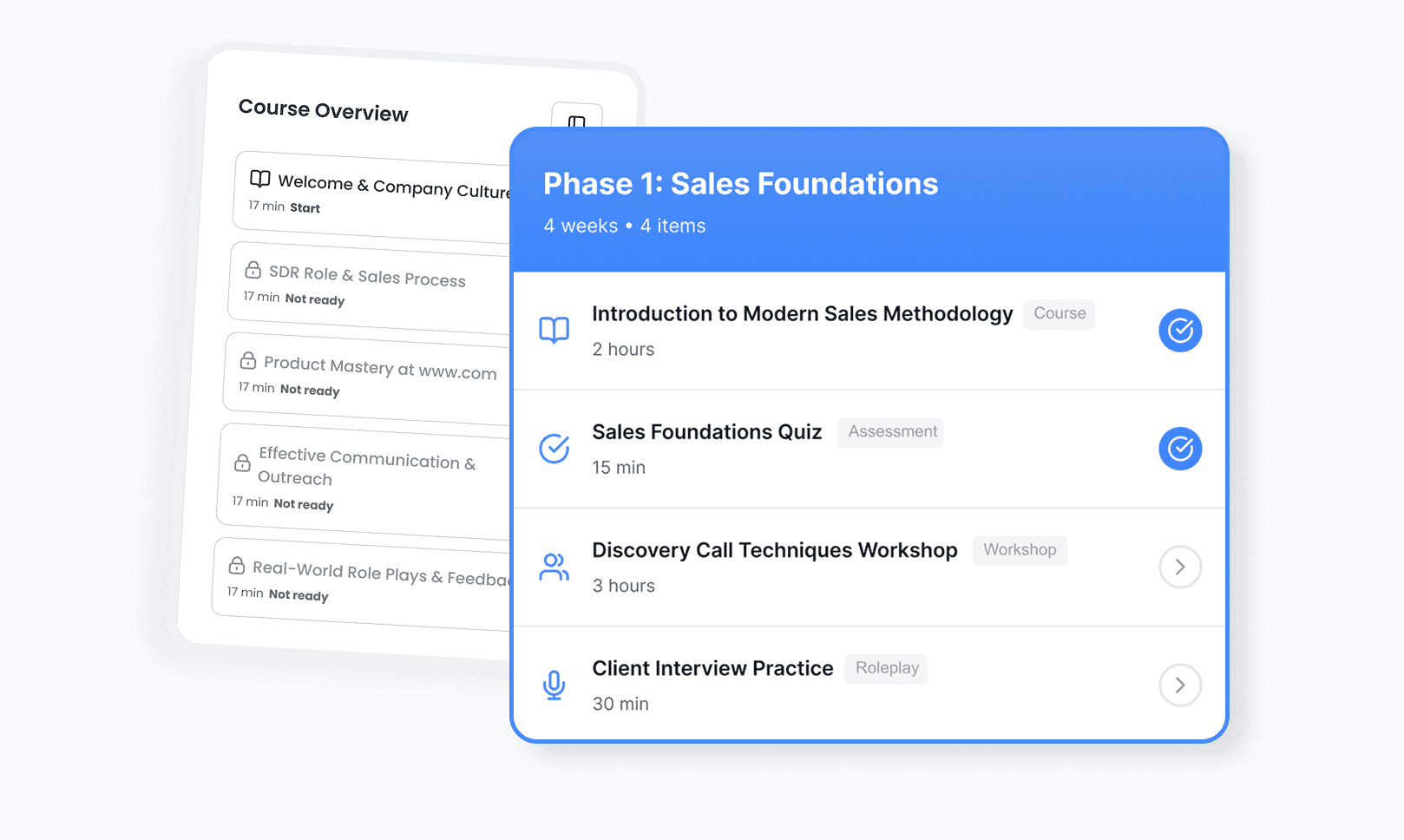
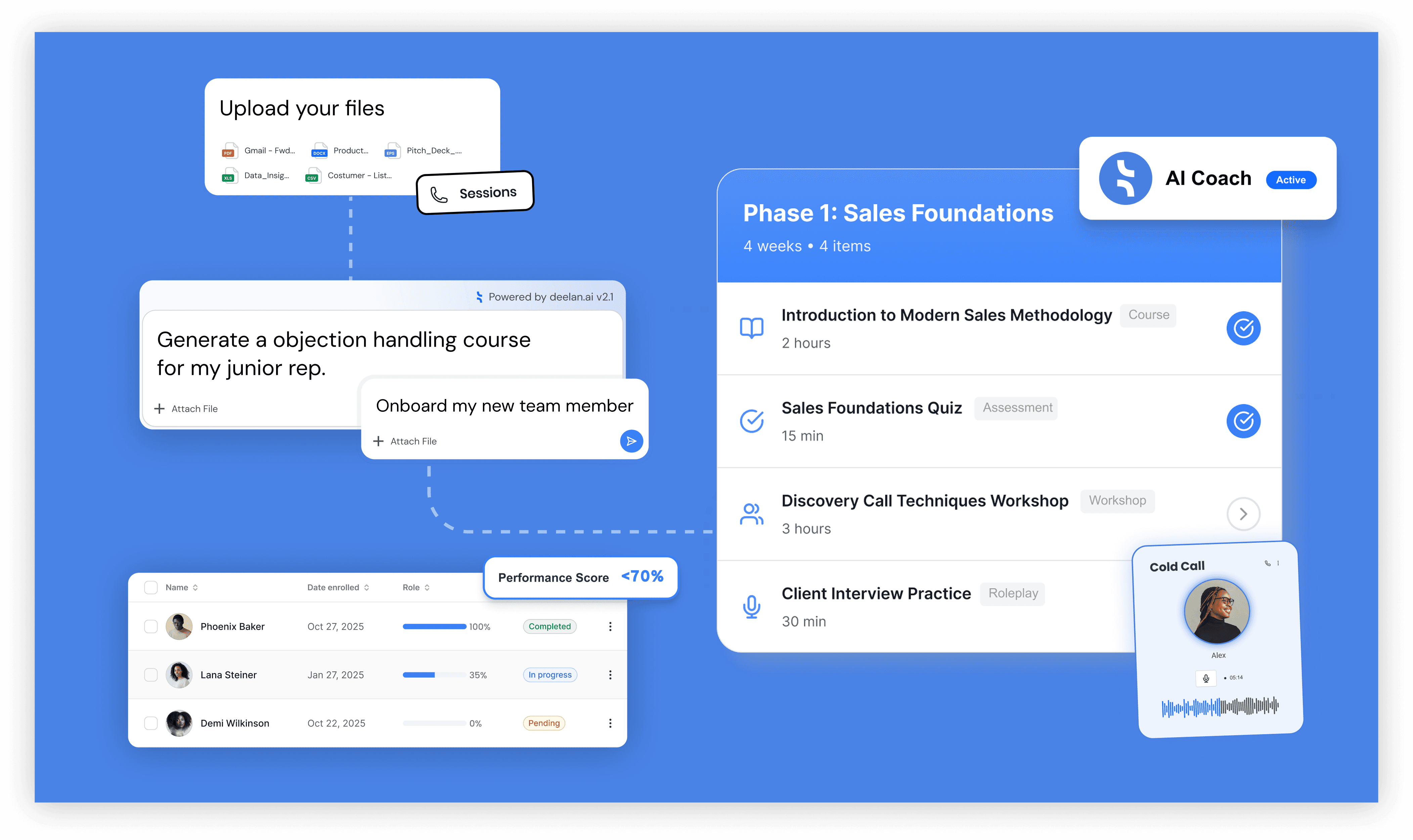
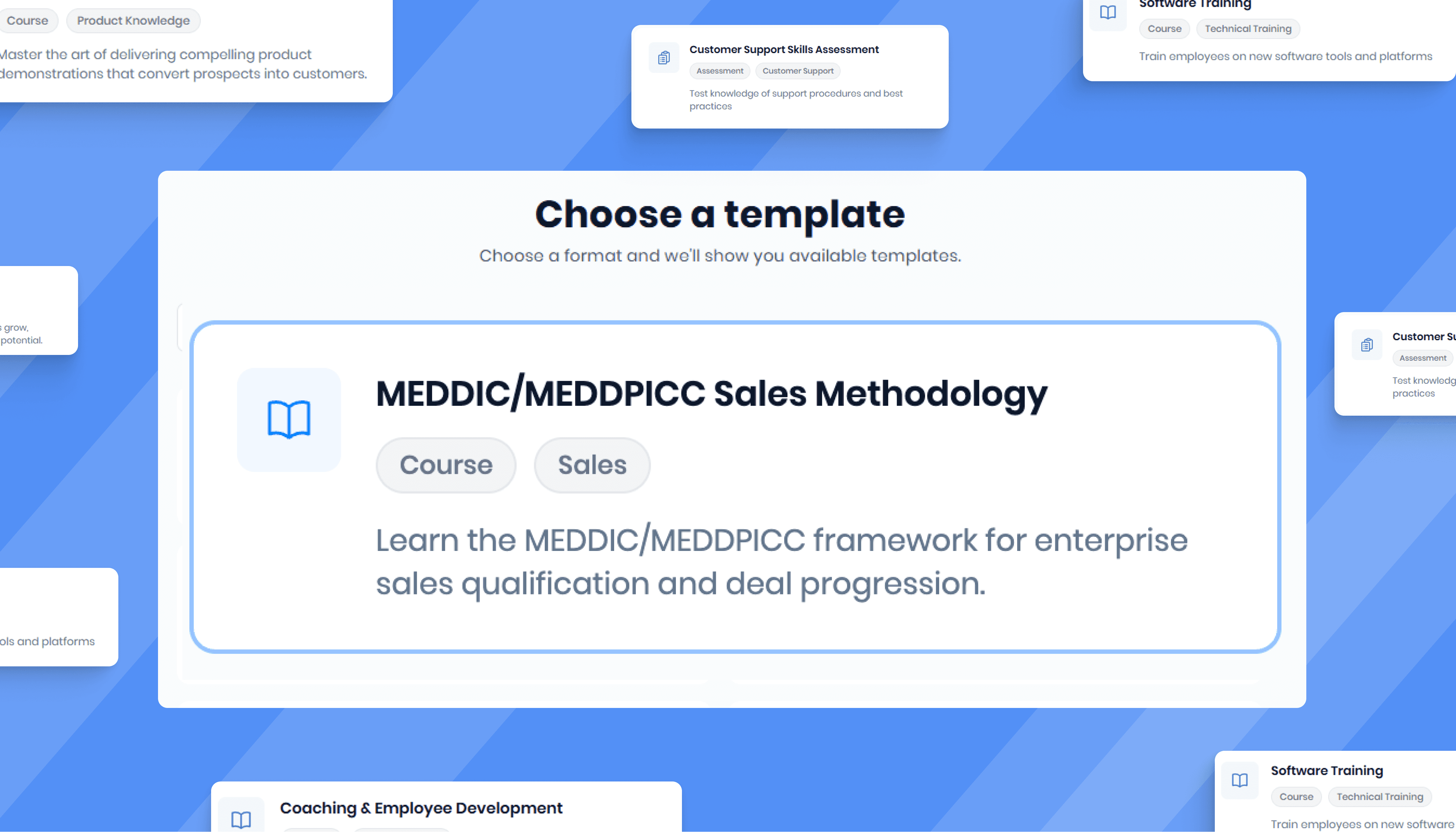
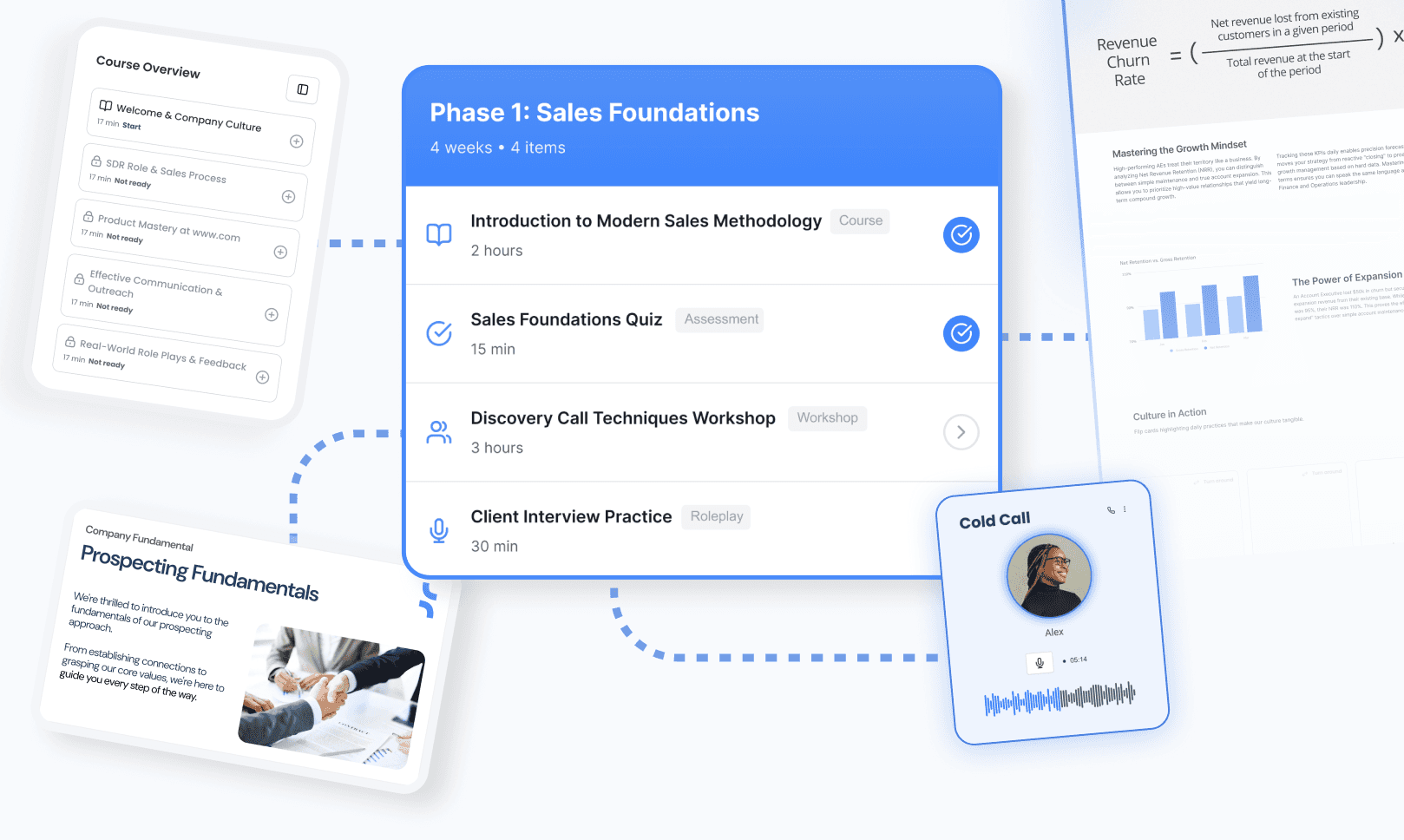
Deelan can build training from your existing documents or from ready-made methodology templates. Teams can use those sources to create courses, roleplays, assessments, workshops, and full programs in one platform.
3. Show real examples
Examples make the methodology easier to understand.
For SPIN, show the difference between a weak and strong implication question.
For MEDDIC, show what a real metric sounds like compared with a vague benefit.
Weak:
“The customer wants to improve efficiency.”
Stronger:
“The customer wants to reduce onboarding time from eight weeks to five weeks before the next hiring cycle.”
For Challenger, show how a rep can introduce a useful insight without sounding aggressive or overly scripted.
4. Add knowledge checks
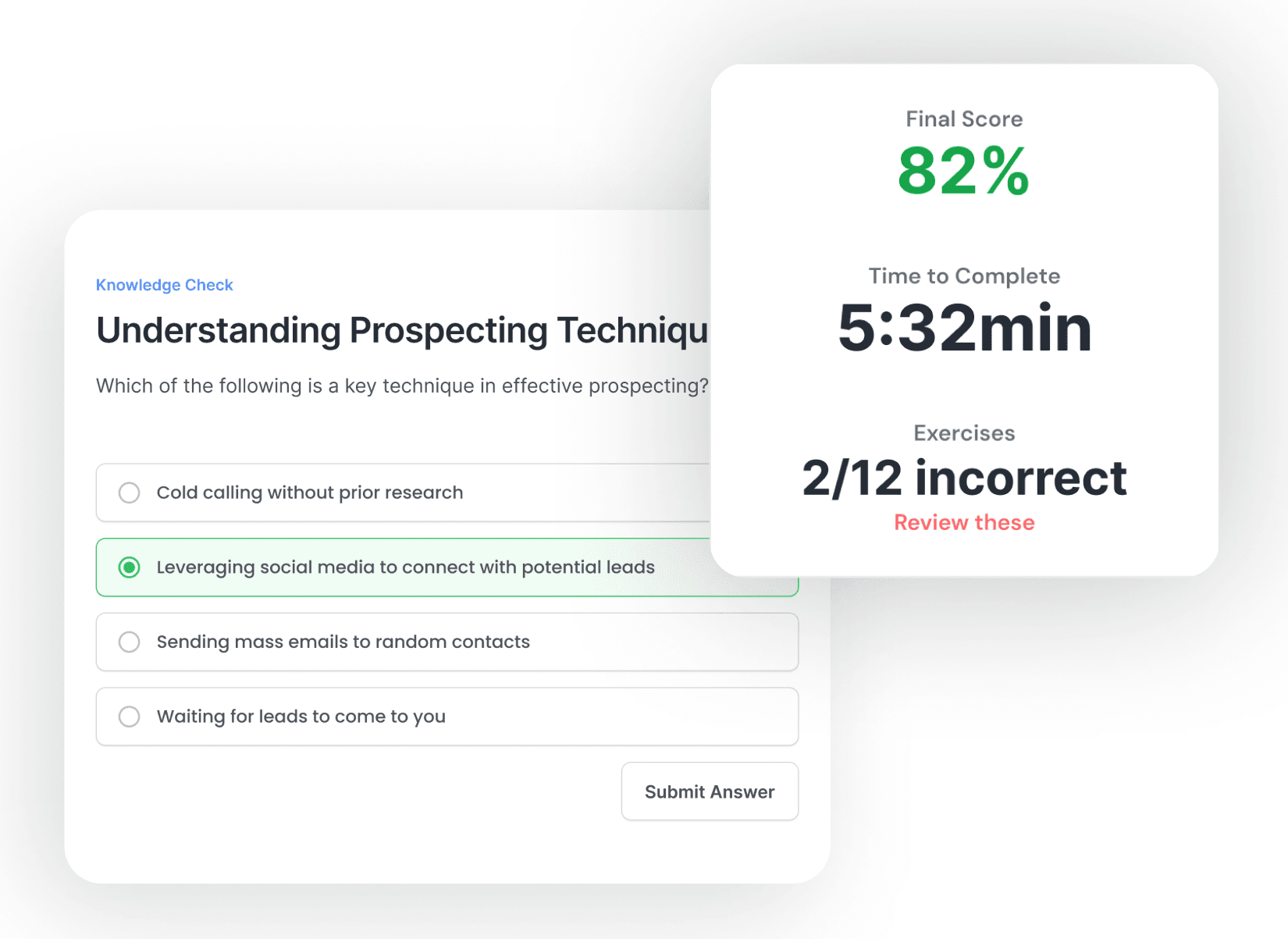
Use quizzes, written exercises, or short scenarios to check that reps understand the framework.
Ask practical questions such as:
Which MEDDIC element is missing from this deal?
Which SPIN question should come next?
Is this a real business metric or only a general benefit?
What would you ask to identify the decision process?
Which part of the methodology did the rep skip?
Knowledge checks help find gaps before reps practise with a customer.
5. Practise with roleplays
This is where the methodology starts becoming a real skill.
Give reps realistic situations such as:
a discovery call with a vague buyer;
a demo with several stakeholders;
a prospect who will not share budget;
a deal with no clear decision process;
a buyer who says the problem is not urgent;
an economic buyer who joins late;
a prospect comparing several vendors.
The roleplay should test specific parts of the methodology.
For example, a MEDDIC roleplay may score whether the rep identified metrics, pain, the economic buyer, and the decision process.
A SPIN roleplay may score the quality of the rep’s questions and whether they helped the buyer explain the impact of the problem.
Deelan can turn a detected weakness into the right type of training. A weak discovery skill can become a discovery roleplay, while a wider team gap can become a full program.

6. Score real calls against the methodology
Training should not stop after the course or roleplay.
The next question is: are reps using the framework in real conversations?
You can review sales calls against the methodology and check things like:
Did the rep identify a measurable business impact?
Did they speak with the right stakeholder?
Did they understand the decision criteria?
Did they explore the cost of doing nothing?
Did they ask enough problem and implication questions?
Did they challenge the buyer’s current view?
Did they confirm a clear next step?
Deelan can analyse call recordings or transcripts against the skills and methodology you define.
It can then identify what the rep missed and turn that gap into targeted follow-up training. This connects the real call directly to the next course, exercise, or roleplay.
Example: MEDDIC training program
Here is what a simple MEDDIC program could look like.
Step | Training activity |
|---|---|
Learn | Short course explaining each MEDDIC element |
Understand | Examples of strong and weak qualification |
Check | Quiz based on sample deals |
Practise | AI roleplay with an enterprise buyer |
Apply | Use MEDDIC on a live opportunity |
Review | Score a real call against MEDDIC |
Improve | Generate training for the missing elements |
Measure | Track progress across future calls |
Ready-made training or custom training?
You may be unsure whether to use a ready-made program or build your own. Both approaches can work.
Ready-made training | Custom training |
|---|---|
Faster to launch | More relevant to your business |
Gives a clear starting structure | Uses your language and sales process |
Helpful when the team is new to the framework | Better for long-term adoption |
Less work at the beginning | Takes more input to set up |
May feel generic | Can be built from real calls and playbooks |
A useful approach is to start with a ready-made methodology template, then adapt it using your own documents, examples, and calls.
This gives you speed without losing company context.
Why sales methodology training often fails
Most programs fail for simple reasons.
It is too theoretical
Reps learn the framework but do not practise using it.
It happens only once
A single workshop creates short-term awareness, not lasting behaviour.
Everyone gets the same training
One rep may struggle with discovery while another struggles with qualification. Giving both the same course wastes time.
It is not connected to real calls
Managers cannot see whether the methodology is actually being used.
There is no follow-up
The team completes the training, but nothing happens after that.
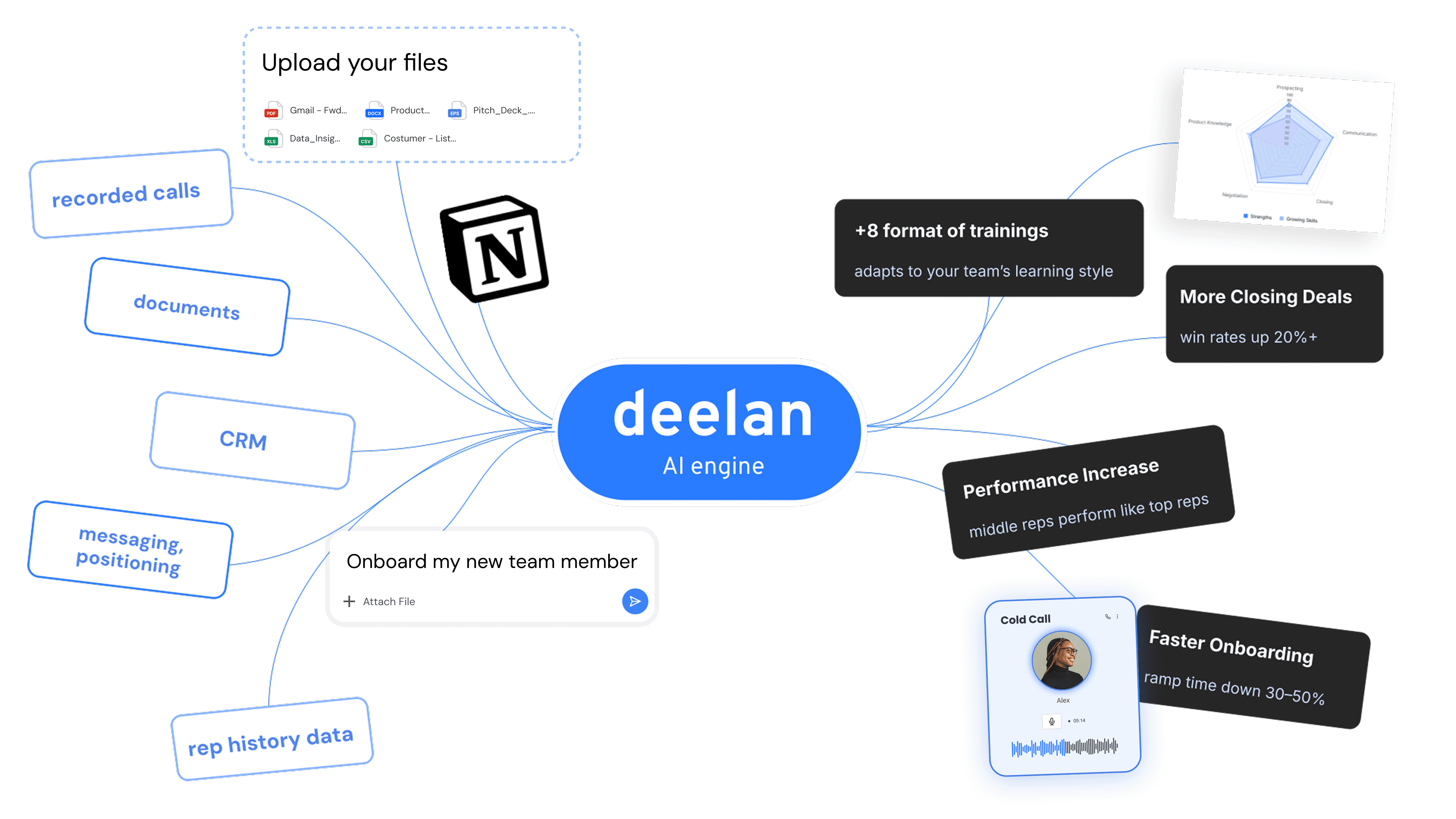
Deelan is designed around a continuous loop: detect the gap, generate training, adapt it to the rep, and measure improvement.
That means training does not have to remain a one-time project.
It can keep changing based on what happens in real sales conversations.
Build sales methodology training with Deelan
With Deelan, you can train your team on MEDDIC, SPIN, Challenger, Sandler, or your own methodology.
You can:
start with a ready-made methodology template;
upload your own playbooks and documents;
create courses, roleplays, assessments, workshops, and programs;
adapt training to each rep;
score real calls against your methodology;
identify missing skills;
generate the next training from those gaps.
Instead of creating a course once and hoping reps remember it, you can connect methodology training to what happens in real calls.
Final checklist
Before launching your program, check that you have:
chosen a framework that matches your sales problem;
adapted it to your sales process;
included real company examples;
added knowledge checks;
built practical roleplays;
explained how managers should coach it;
defined how calls will be reviewed;
created a plan for follow-up training;
decided how you will measure improvement.
A methodology is only useful when reps can apply it during a real conversation.
The best sales methodologies training does more than teach a framework. It helps reps practise it, use it, receive feedback, and improve every week