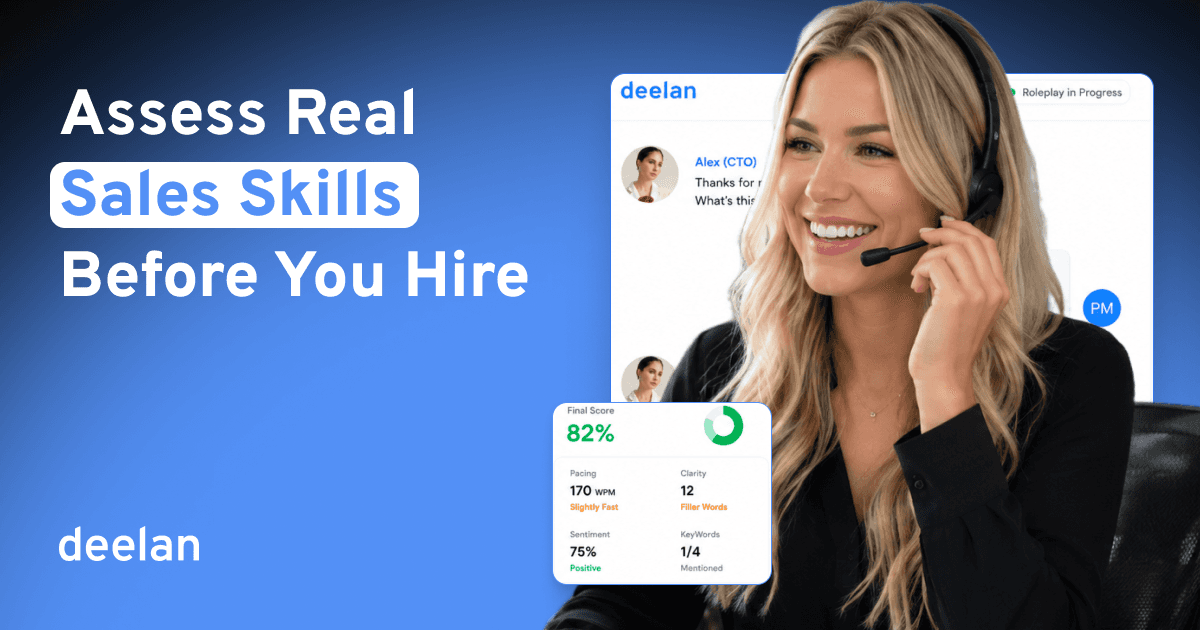

Junior sales reps do not only need more information. They need a structured way to learn the fundamentals, practise them safely, receive specific feedback, and apply what they learned in real conversations.
A strong coaching program should move reps through a continuous loop:
Learn → Practise → Perform → Review → Improve
This is especially important for junior reps, who may not yet recognise their own skill gaps or know how to correct them.
Help junior reps practise before the real call.
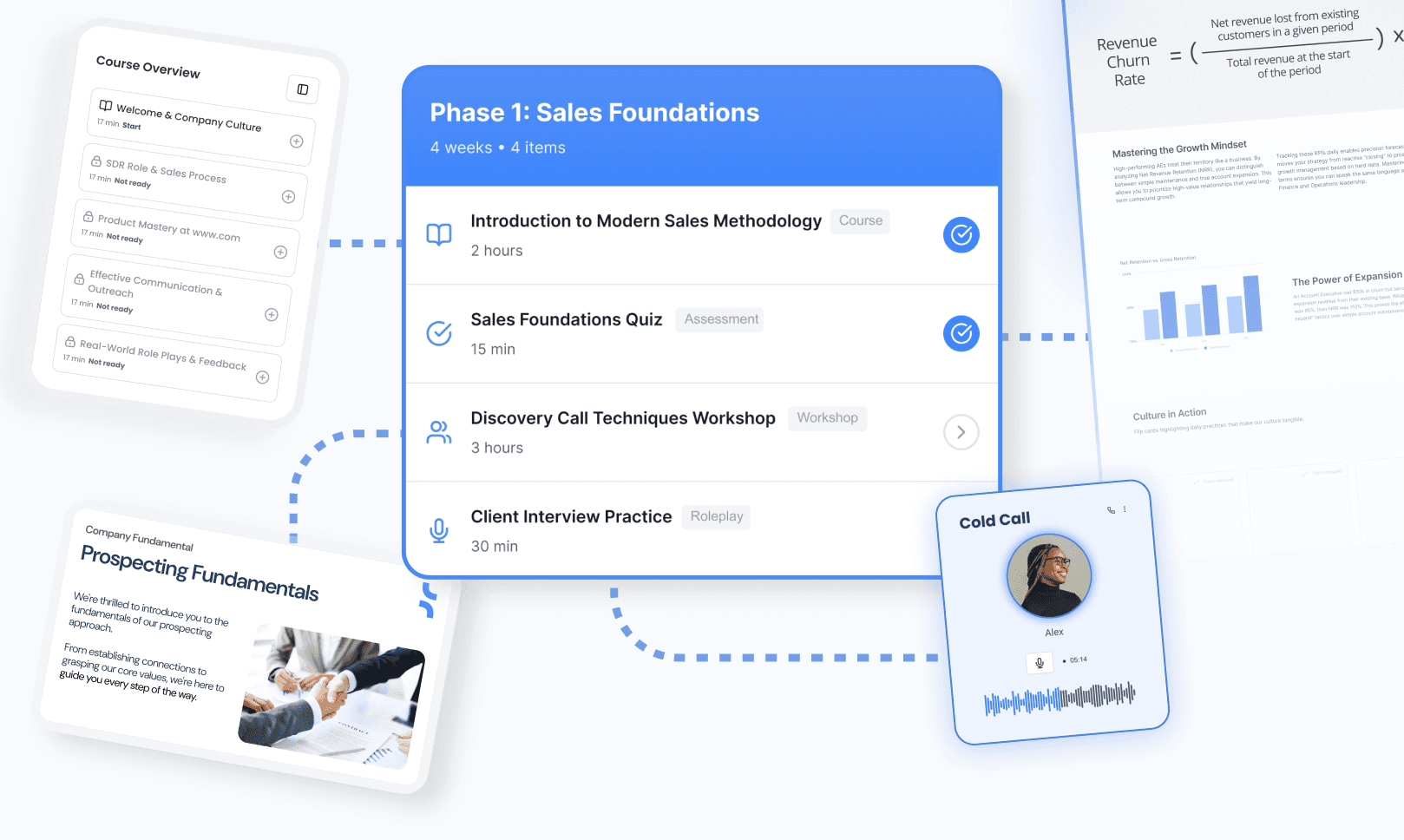
Build adaptive courses, assessments, and realistic AI roleplays with deelan.
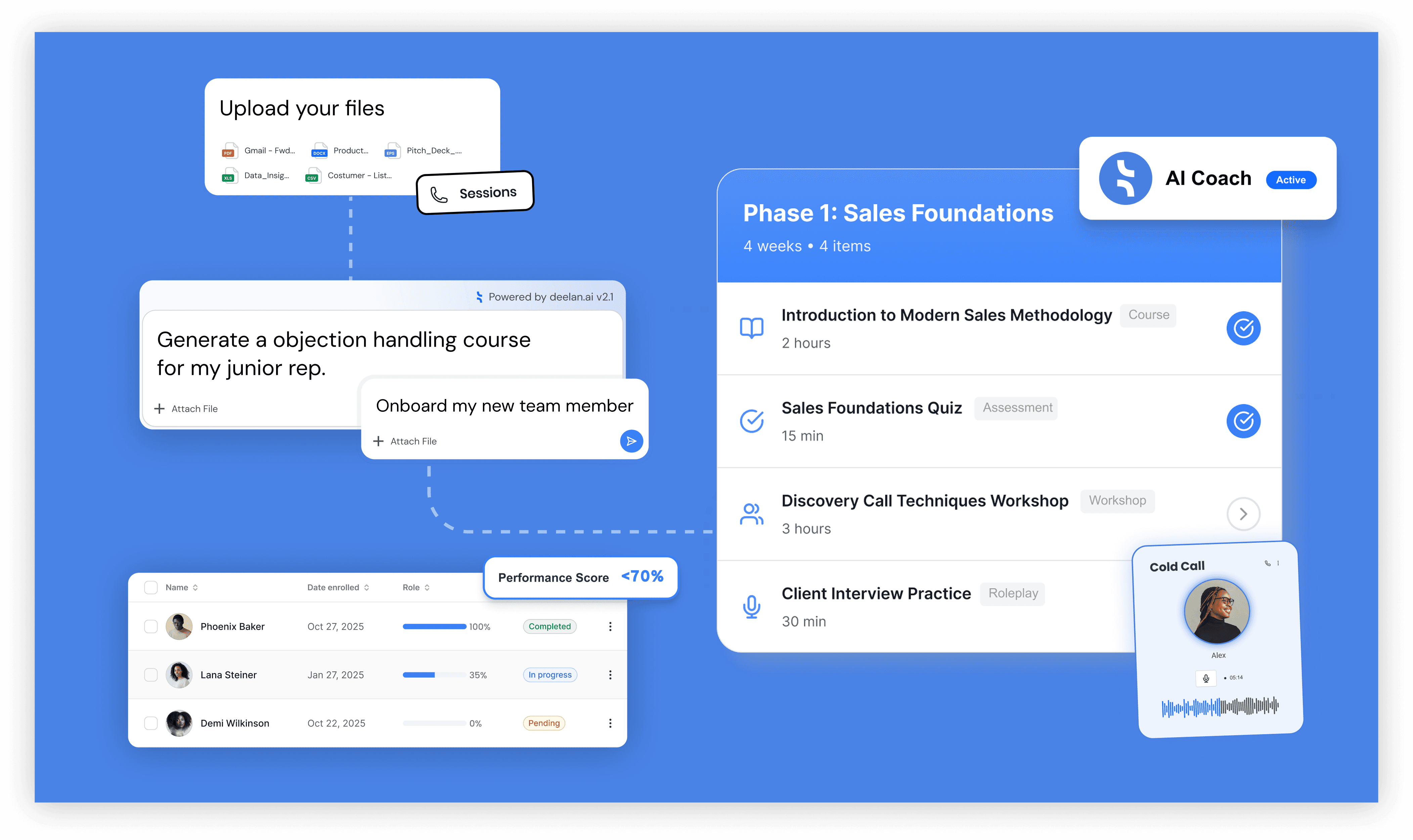
Junior vs. experienced sales reps
Junior and experienced reps should not receive exactly the same coaching and training.
Experienced sellers often need focused support around specific deals, advanced situations, or recurring performance gaps. Junior reps still need to build the foundations and develop confidence through repetition.
Junior sales reps | Experienced sales reps |
|---|---|
Need clear frameworks and examples | Usually already understand the basic framework |
Require more repetition and guided practice | Benefit from difficult or unusual scenarios |
May not recognise why a call went badly | Can often identify their own mistakes |
Need foundational product and market knowledge | Need updates, refinement, and deeper expertise |
Benefit from frequent, specific feedback | Benefit from targeted coaching based on real deals |
Should practise before handling important prospects | Can apply new skills directly in live opportunities |
Need structured progress from knowledge to practice | Need adaptive coaching around individual gaps |
Junior training should therefore begin with a structured foundation and become more personalised as assessments, roleplays, and real performance reveal what each rep needs next.
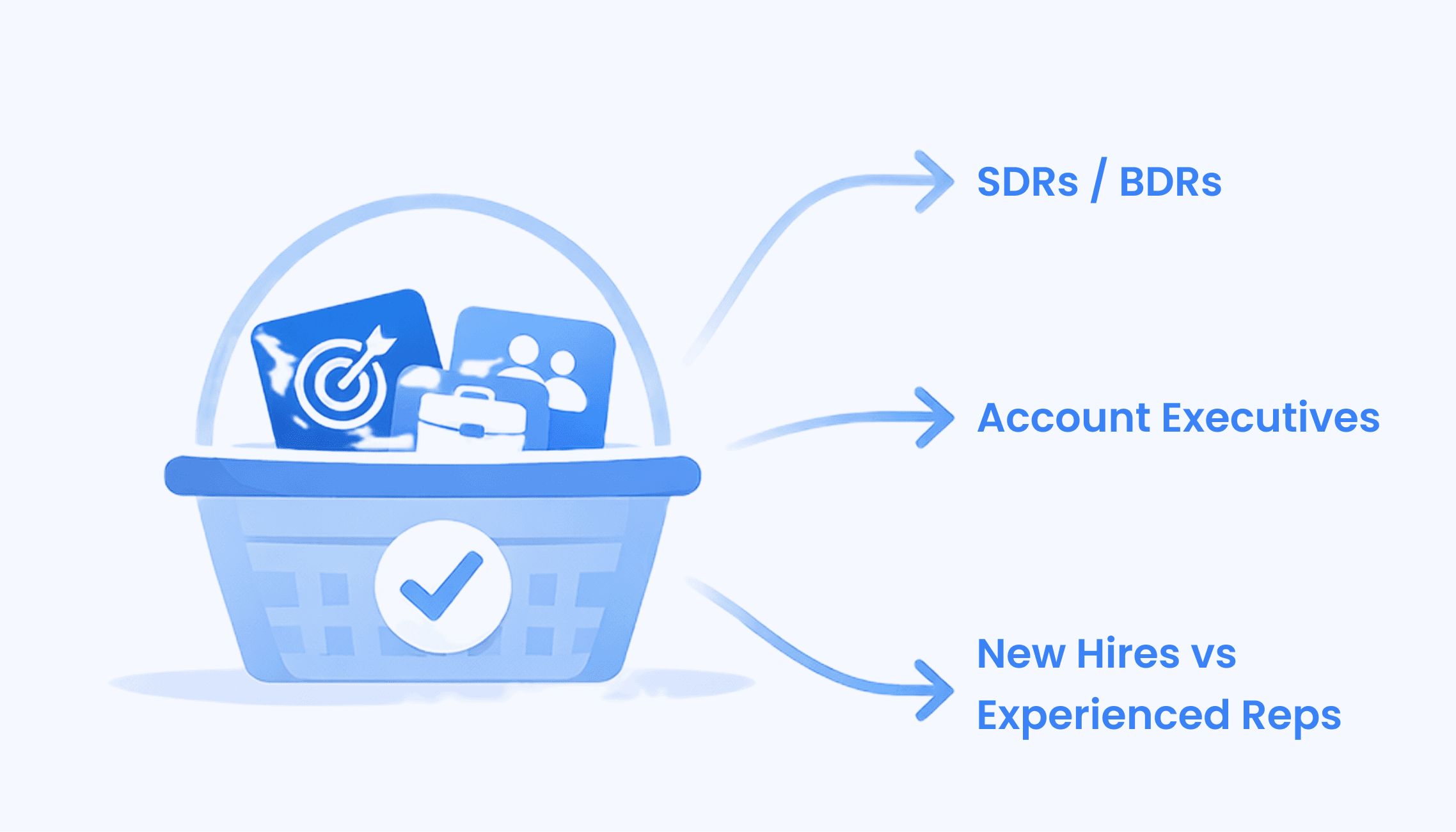
10 core skills to develop in junior sales reps
Core skill | What junior reps need to learn | Best way to train it |
|---|---|---|
The problems the product solves, key use cases, features, and limitations | Short courses, assessments, and pitch practice | |
2. ICP understanding | Which customers are a good fit and what usually motivates them to buy | Customer examples, scenario exercises, and quizzes |
3. Value communication | How to explain the product clearly without listing features | Messaging exercises and short pitch roleplays |
4. Discovery | How to ask useful questions and explore the prospect’s situation | Discovery roleplays and reviewed call examples |
How to respond to what the buyer says instead of following a script mechanically | Conversation practice and call review | |
6. Qualification | How to assess fit, urgency, decision process, and next steps | Framework training and realistic scenarios |
How to understand, clarify, and respond to resistance | Repeated AI roleplays with different objections | |
8. Call structure | How to open, guide, and close a conversation confidently | Call templates followed by full-call practice |
How to connect the demonstration to the prospect’s needs | Product demo simulations and feedback | |
10. Next-step control | How to recap value, confirm agreement, and secure a clear action | Closing exercises and follow-up email practice |
1. Product knowledge
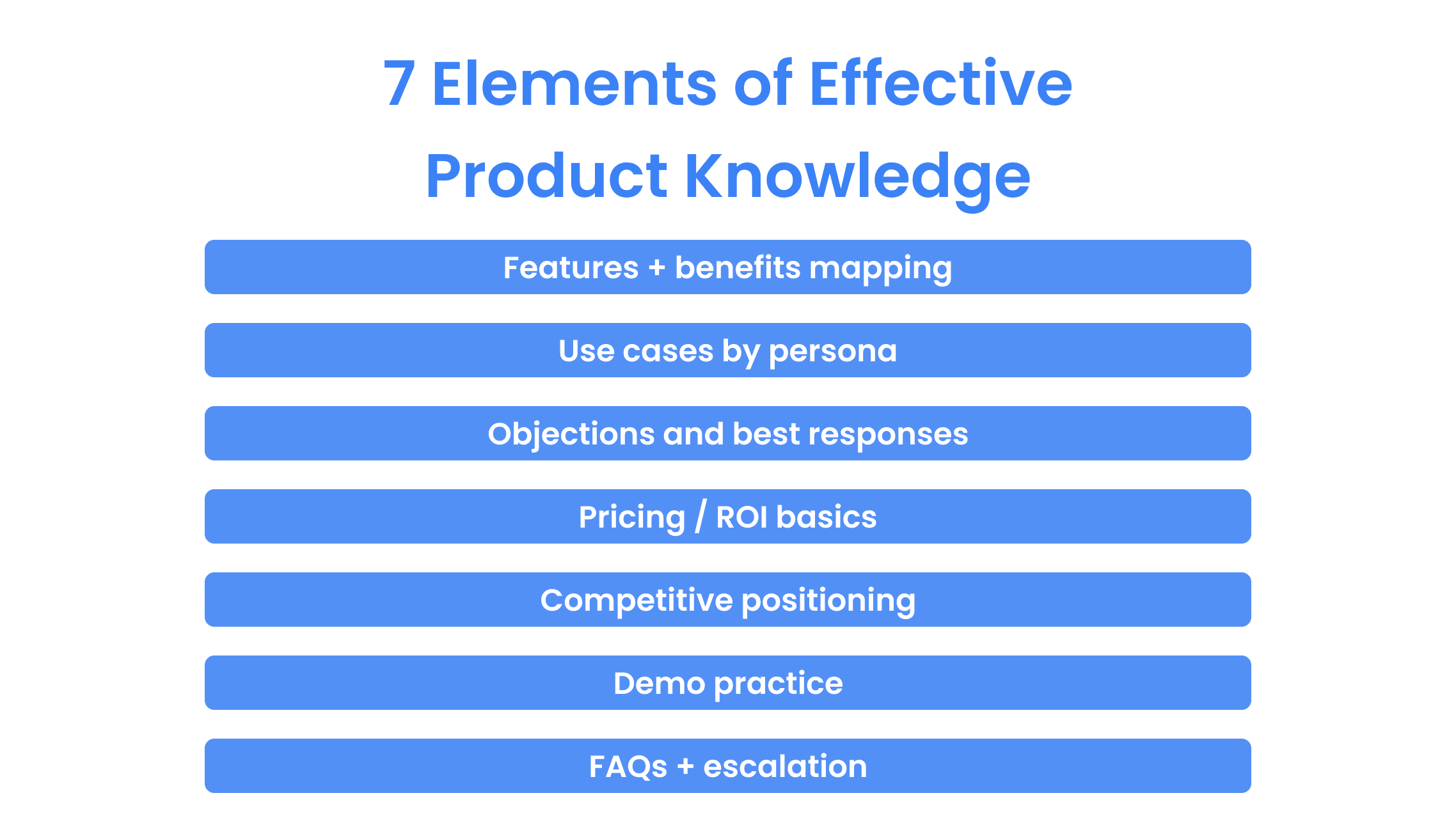
Junior reps need to understand more than a list of features. They should know which customer problems the product solves, how different use cases work, what the product cannot do, and how to explain it in simple language.
Product knowledge is usually taught through onboarding content, but it should also be tested in conversation. A rep may pass a quiz and still struggle when a prospect asks an unexpected question.
Use a short learning module first, then ask the rep to explain the product to different buyer personas.
2. Ideal customer profile understanding
A junior rep should be able to recognise whether a prospect is likely to be a good fit.
They need to understand:
common customer characteristics
typical pain points
relevant triggers
buyer roles
situations where the product is not suitable
This helps reps avoid generic pitches and ask more relevant questions.
3. Value communication
Junior reps often rely heavily on feature descriptions because they are easier to memorise.
Coach them to connect the product to a business problem:
Feature → Customer problem → Business impact
Instead of saying what the product does, they should explain why it matters to that specific buyer.
4. Discovery
Discovery is one of the most important - and most difficult - skills for a junior rep.
Teach them how to:
begin with an open question
explore the current situation
ask follow-up questions
understand the impact of the problem
avoid pitching too early
summarise what they heard
Discovery should be practised repeatedly because real buyers rarely answer questions in a perfect or predictable way.
5. Active listening
A rep can ask good questions and still run a weak call if they do not listen to the answers.
Junior reps may focus so heavily on remembering the next question that they miss important details.
During coaching, review whether the rep:
responded to the buyer’s actual answer
asked a relevant follow-up
interrupted too quickly
made assumptions
connected later questions to earlier information
Give feedback on one or two behaviours at a time rather than correcting everything at once.
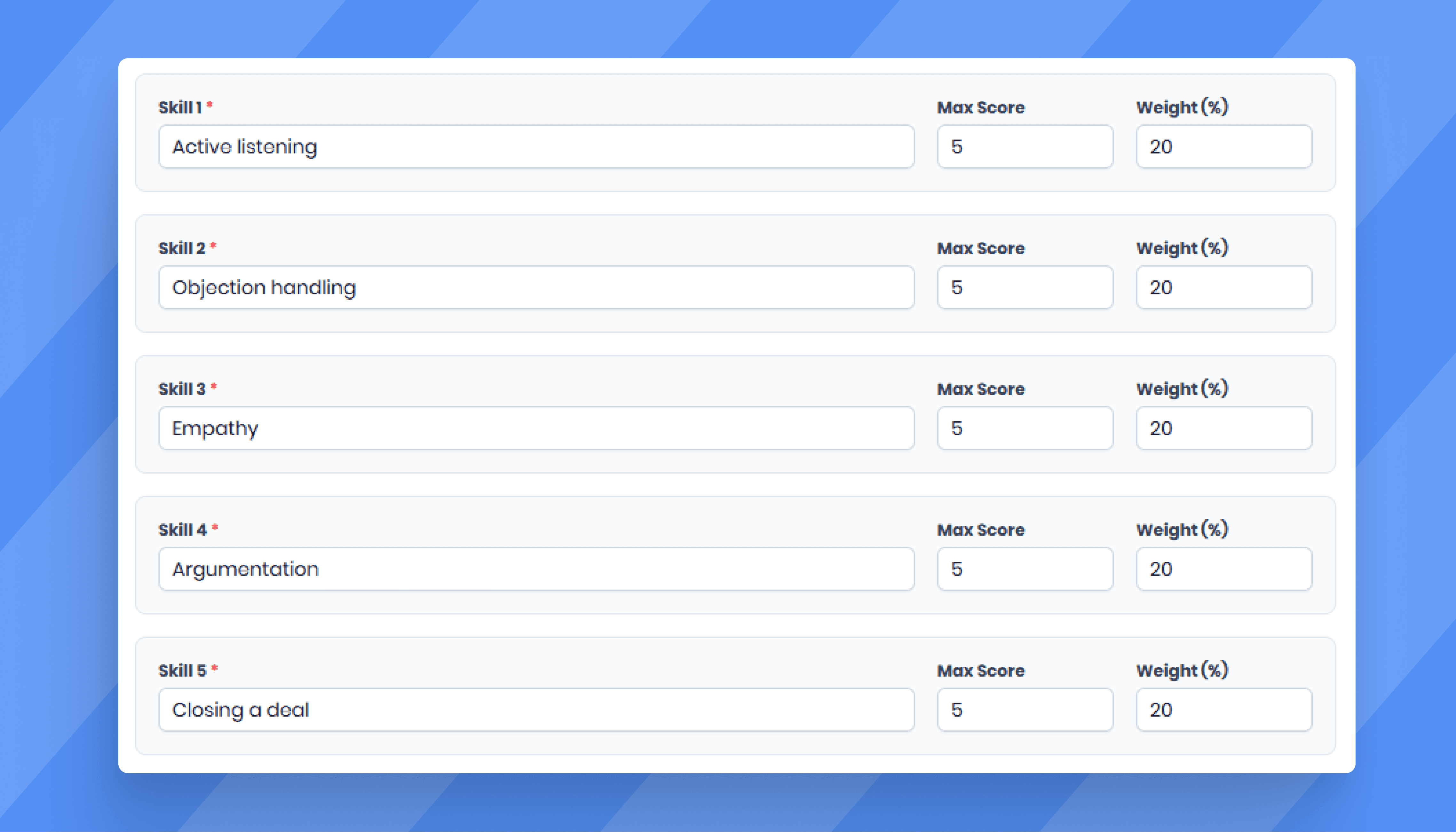
6. Qualification
Qualification helps reps understand whether an opportunity should progress.
Junior reps should learn how to explore:
the seriousness of the problem
the impact of doing nothing
priorities and timing
stakeholders
current alternatives
the decision process
The goal is not to turn qualification into an interrogation. Reps should learn how to gather the right information naturally throughout the conversation.
7. Objection handling
Objection handling should be taught as a process, not as a list of memorised answers.
A simple structure is:
Listen → Clarify → Acknowledge → Respond → Confirm
Junior reps should practise common objections such as:
“We already use another solution.”
“This is not a priority.”
“We do not have the budget.”
“Send me some information.”
“I need to speak to my manager.”
“We do not have time to implement this.”
AI roleplays are especially useful here because reps can repeat the same situation several times without practising on real prospects.
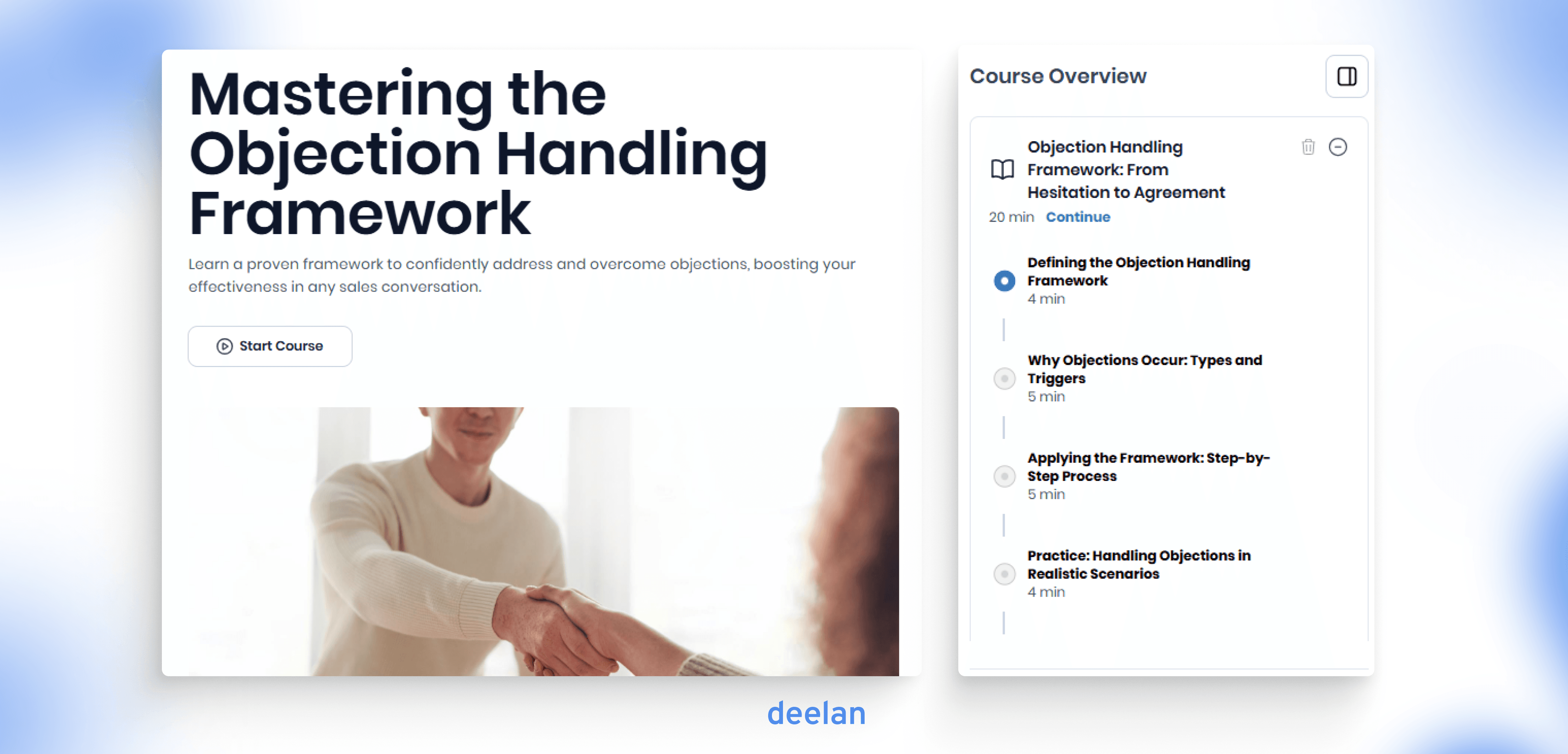
8. Call structure
A clear structure gives junior reps confidence while they are still developing flexibility.
Teach them how to:
Open the conversation
Set expectations
Understand the buyer
Explore the problem
Connect value to the need
Handle questions or objections
Confirm the next step
The framework should guide the conversation without turning it into a rigid script.
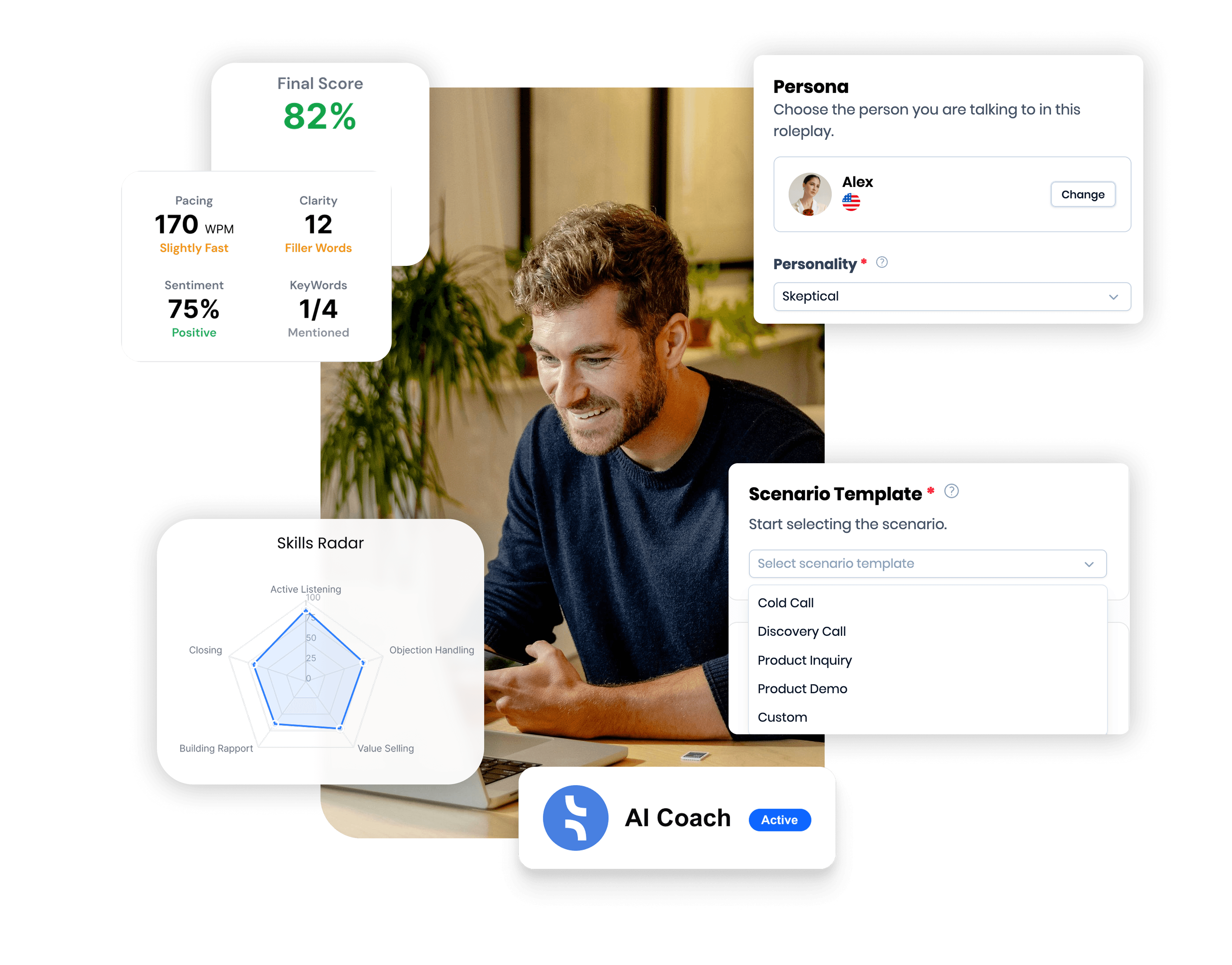
9. Demo delivery
A junior rep may know the product well but still deliver a feature-heavy demonstration.
Coach them to:
confirm the prospect’s priorities first
show only the most relevant areas
explain the value of each part
ask questions during the demo
connect the demonstration to the buyer’s situation
confirm whether the solution addresses the need
Practice demos in a safe environment before asking reps to present to important opportunities.
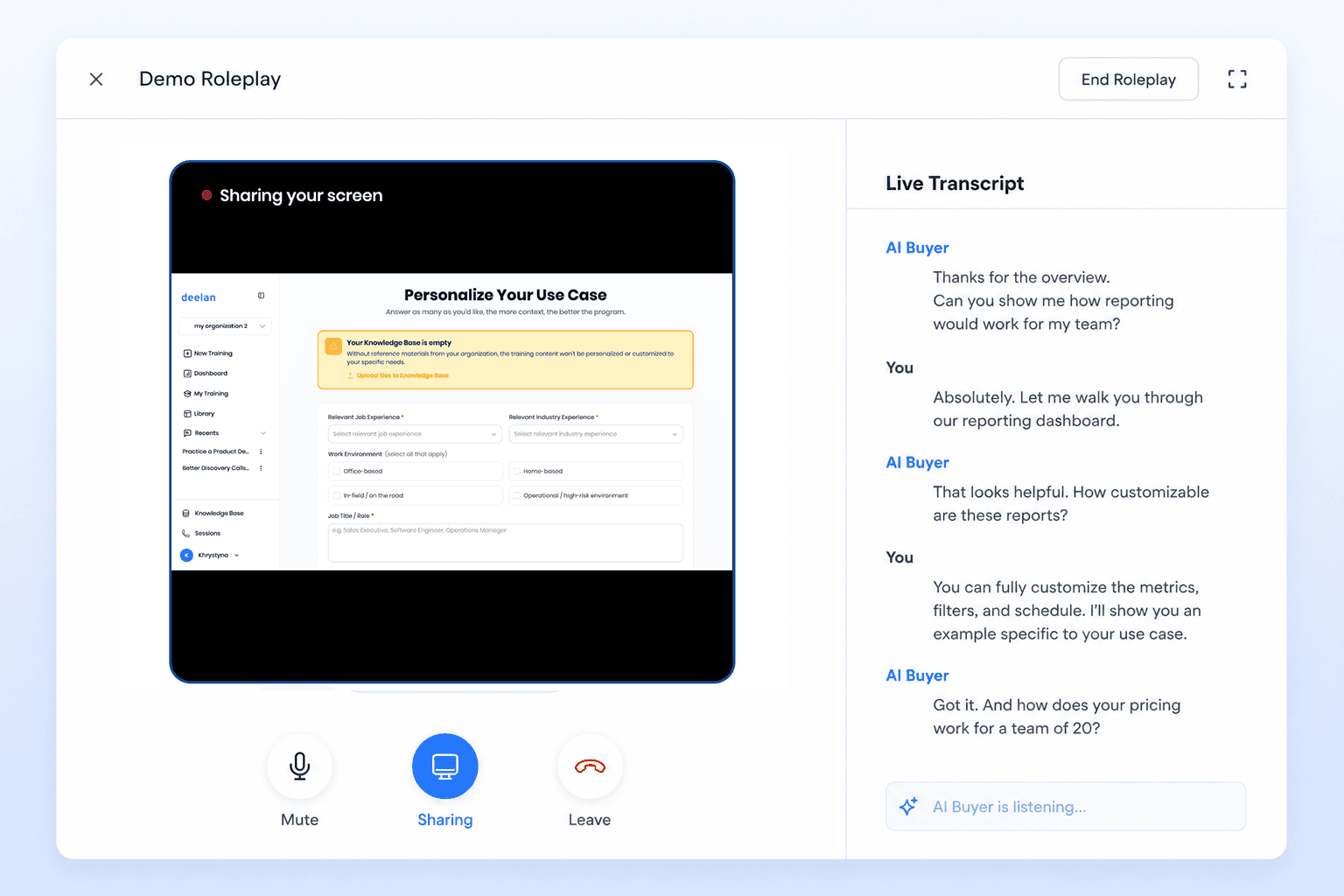
10. Next-step control
A good conversation can still lead nowhere if the rep does not secure a clear next step.
Junior reps should learn how to recap the main needs, confirm agreement, and suggest a concrete action.
For example:
“Based on what we discussed, the main priorities are improving onboarding consistency and reducing manager coaching time. The next useful step would be to involve your sales leader and review how this could work with your current process. Would Tuesday or Wednesday work?”
This skill should be practised through both conversation exercises and follow-up email writing.
5 tips for coaching and training junior reps
1. Combine knowledge with practice
Do not assume that completing a course means a rep can apply the information.
Every important topic should lead into an activity:
Product training → pitch practice
Discovery framework → discovery roleplay
Competitor training → objection scenario
Demo training → demo simulation
Closing framework → next-step exercise
2. Create a safe environment for repetition
Junior reps need room to make mistakes without risking real deals.
Roleplays allow them to repeat difficult moments, experiment with different approaches, and build confidence before speaking to prospects.
3. Give specific feedback
Avoid vague feedback such as:
“You need to improve your discovery.”
Use behavioural feedback instead:
“You accepted the first answer without exploring the impact. On your next attempt, ask one follow-up question before introducing the solution.”
Specific feedback gives the rep a clear action to practise.
4. Personalise training to the rep
Two junior reps with the same title may need completely different support.
One may understand the product but struggle with discovery. Another may communicate confidently but fail to qualify opportunities.
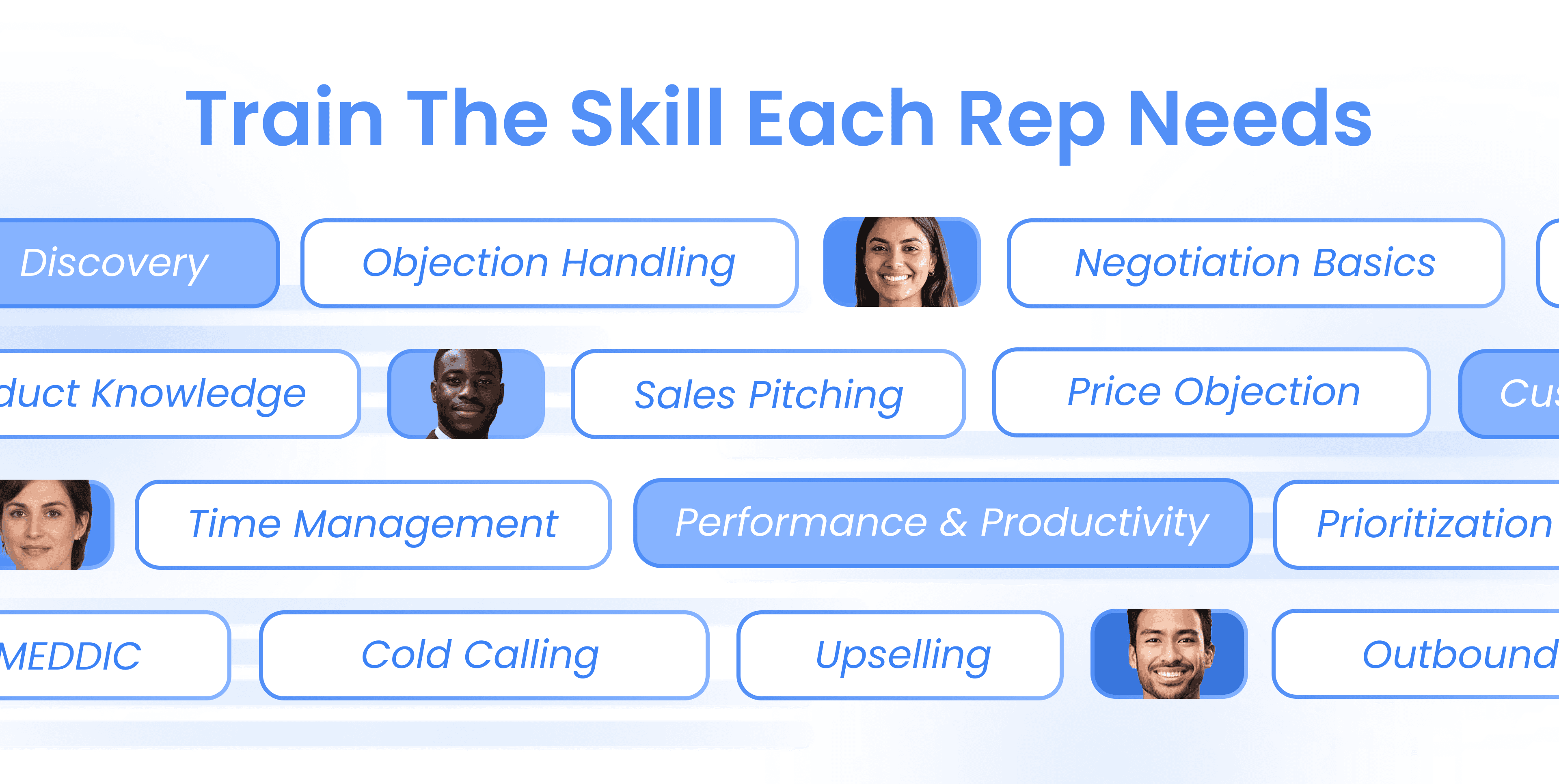
Training should adapt based on role, seniority, assessments, practice results, and real skill gaps—not only job title. Deelan is designed to create per-rep training paths around what is actually costing each seller performance.
5. Measure readiness, not only completion
Course completion tells you that a rep opened the material. It does not tell you whether they can handle a real conversation.
Measure signals such as:
assessment performance
roleplay results
improvement between attempts
ability to handle common objections
discovery quality
manager evaluation
consistency across multiple scenarios
How deelan helps coach junior sales reps
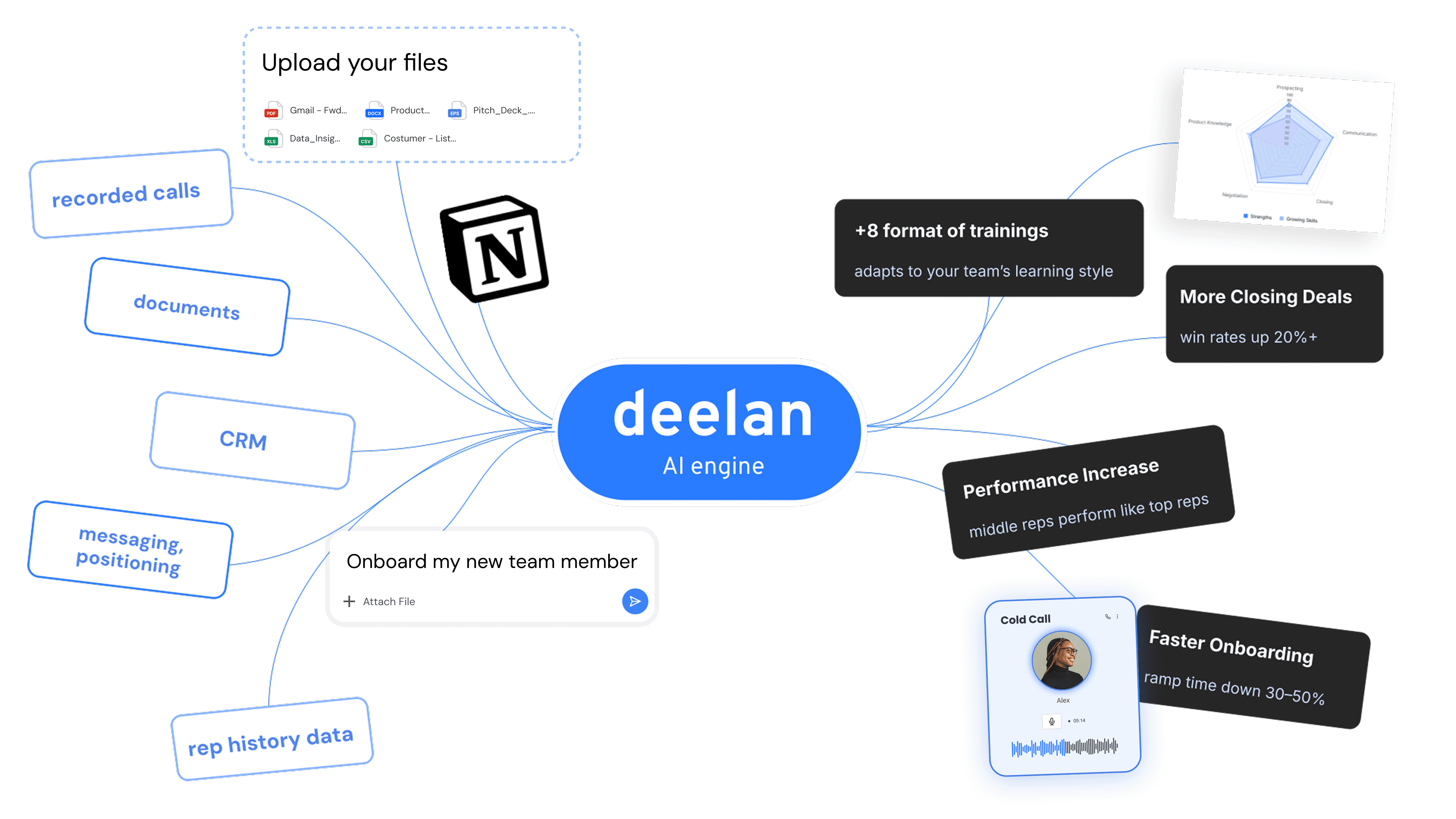
Deelan connects the full training process rather than treating courses, practice, call review, and coaching as separate activities.
It can help teams:
build courses and assessments from existing product content and playbooks
create realistic AI roleplays for discovery, cold calls, demos, and objections
identify gaps from real sales conversations
generate targeted training based on those gaps
adapt each rep’s path based on their role, seniority, and performance
track readiness and skill improvement over time
The platform supports courses, roleplays, workshops, coaching, assessments, and programs in one adaptive system.
Detect the gap → Generate training → Practise → Measure improvement
For junior reps, that means less time spent waiting for manager feedback and more opportunities to practise independently. For managers, it means less repetitive coaching and better visibility into who is actually ready.
Kidola used structured, adaptive, and largely self-driven training to make new reps productive faster, reducing ramp time by more than 30% while saving time previously spent on manual coaching and onboarding.
Help every junior rep develop the skills they actually need.
Turn your content and real sales conversations into adaptive courses, roleplays, assessments, and targeted coaching with deelan.
Coaching junior sales reps is not about giving them as much information as possible before their first call.
It is about teaching the right skills in the right order, creating a safe environment for practice, giving specific feedback, and adapting training as new gaps appear.
When knowledge, practice, real performance, and follow-up training work together, junior reps build confidence faster—and managers can see who is ready before putting more live opportunities at risk.