
Product knowledge affects almost every customer interaction.
Sales reps need it to answer questions and handle objections.
Customer success teams need it to drive adoption.
Support teams need it to resolve issues faster.
New hires need it to become productive.
When product knowledge is weak, teams become slower, less confident, and more dependent on managers for answers.
Want to build product knowledge training in minutes?
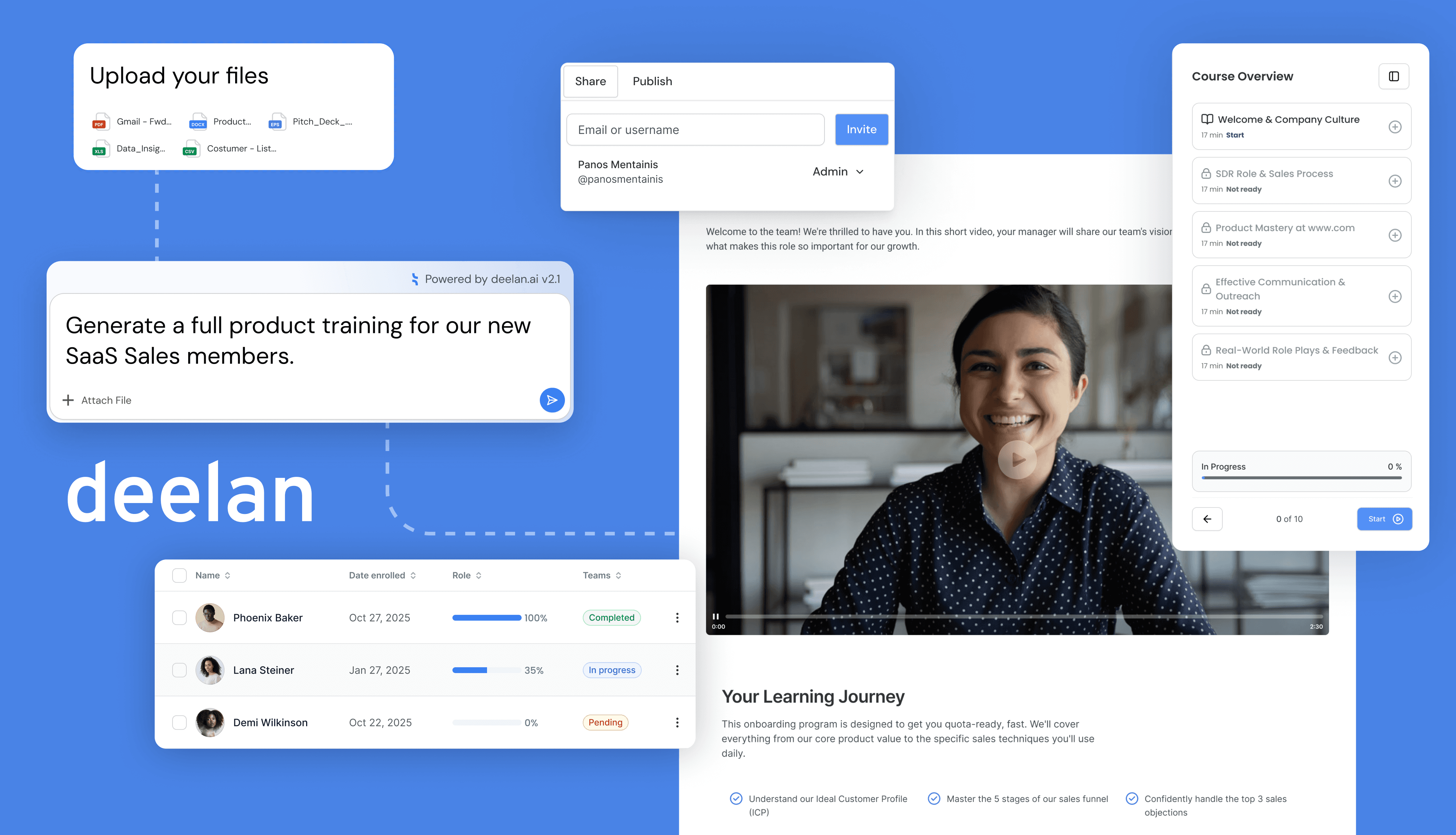
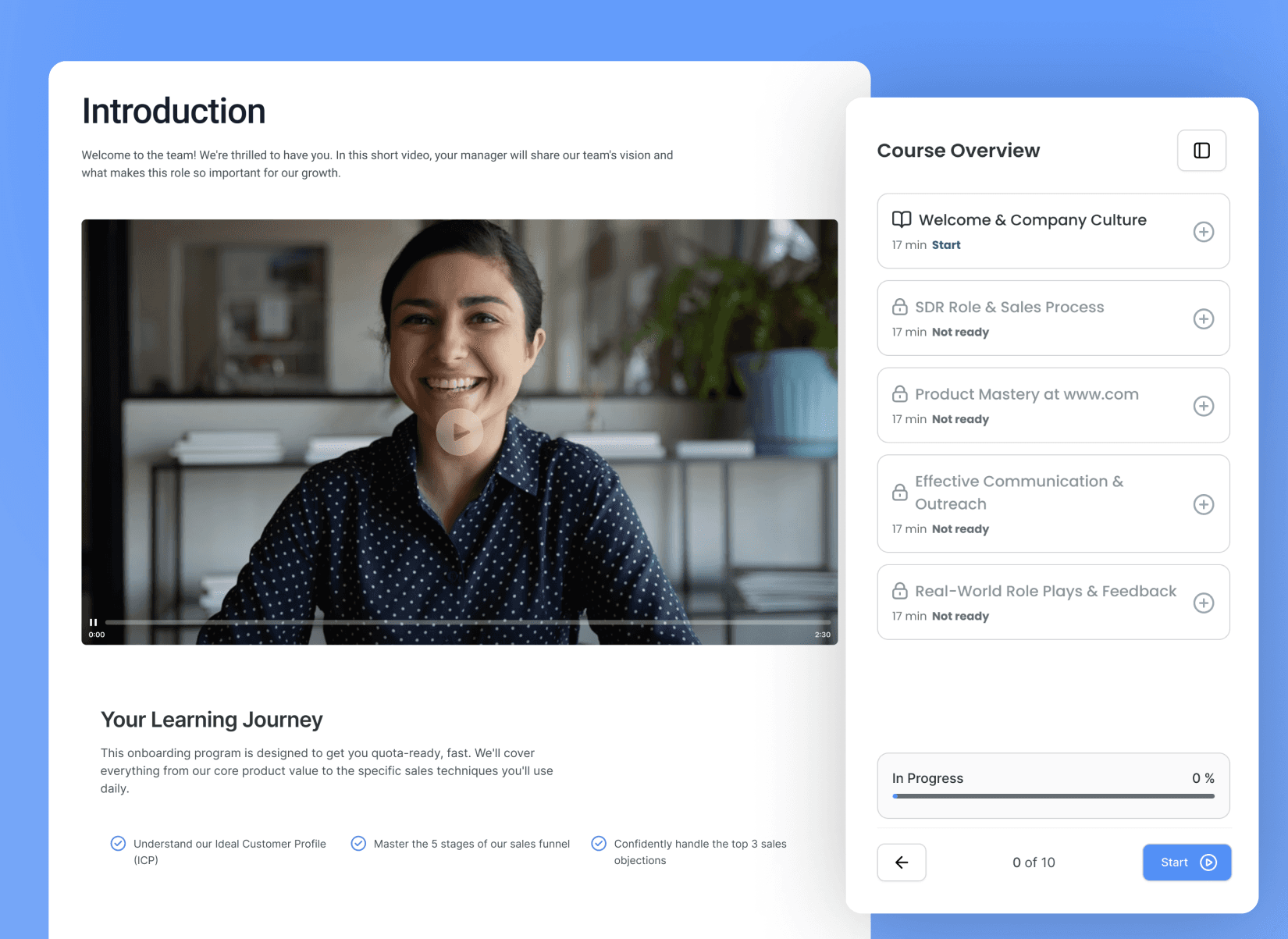
Create courses, roleplays, assessments, and onboarding programs directly from your existing documentation with Deelan.
Or test your own product expertise with our free Product Knowledge Check.
Challenge | Fix | Deelan feature |
|---|---|---|
Product information is scattered across multiple tools | Centralize product knowledge in one place | Import docs, videos, recordings, wikis, and internal resources into a single knowledge base |
Training becomes outdated | Update training continuously as products evolve | Update courses, assessments, and roleplays from updated materials with AI |
Employees know features but not customer value | Connect features to real customer problems | Build roleplays, use cases, and practical scenarios automatically |
Product expertise takes too long to build | Combine learning with practice | Use courses, roleplays, and assessments in one program |
What Effective Product Knowledge Training Looks Like
The strongest programs combine four elements.
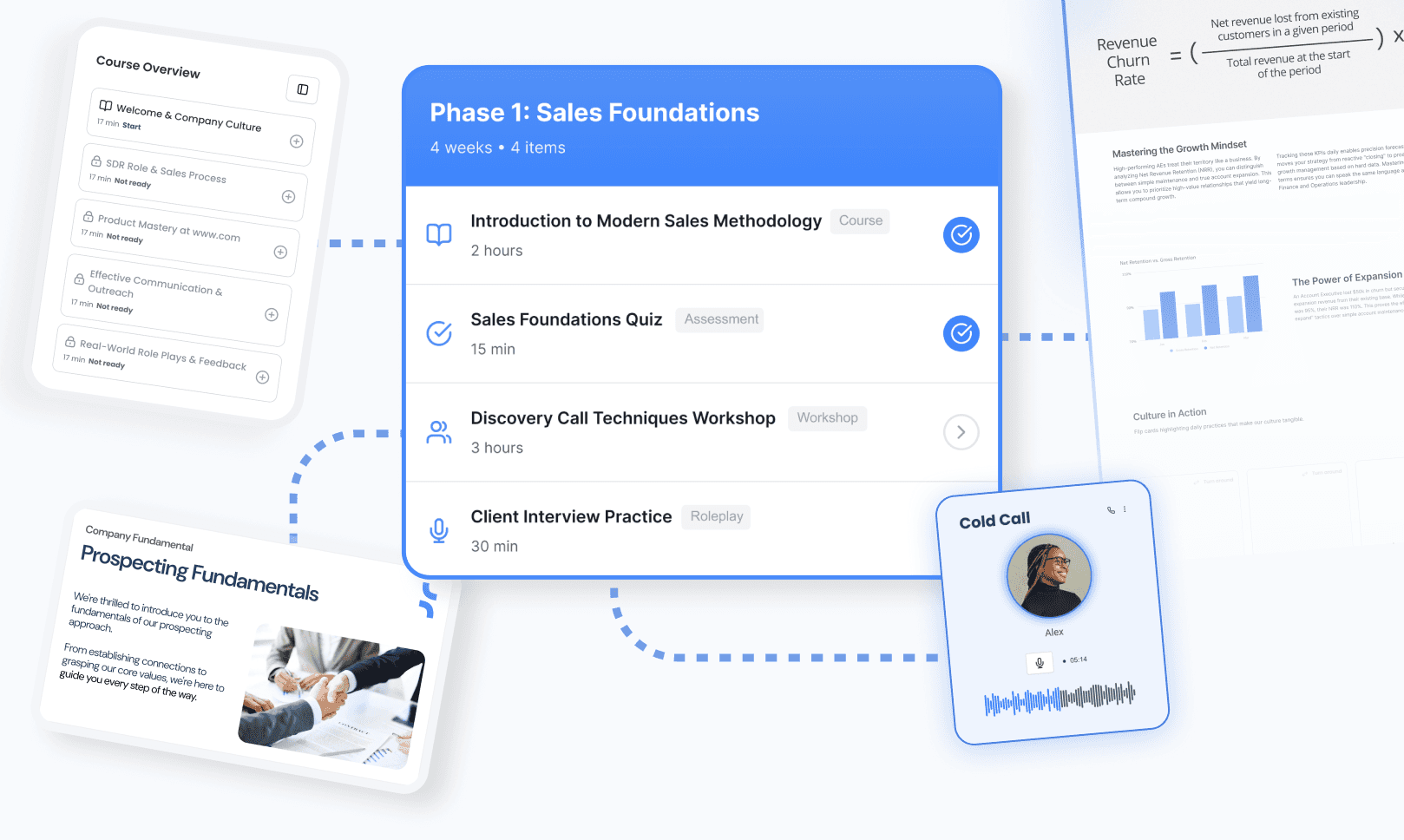
1. Structured Learning
Employees need a clear path through the information.
Instead of sending people twenty different documents, organize knowledge into logical learning modules.
For example:
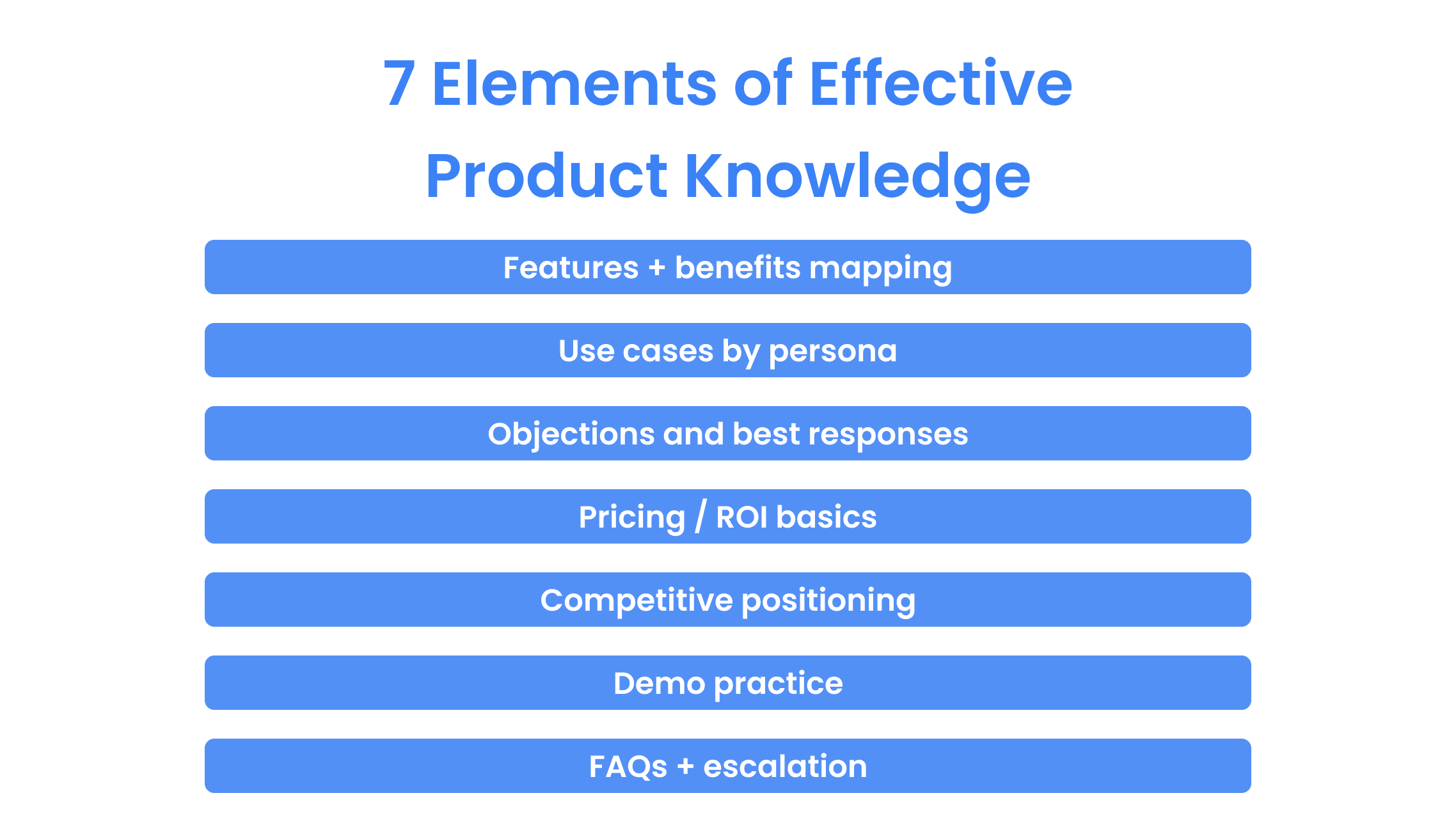
Product overview
Core features
Customer use cases
Competitive positioning
Industry-specific workflows
2. Practice
Knowledge becomes valuable when people can apply it.
Sales teams should practice explaining features.
Customer success teams should practice customer scenarios.
Support teams should practice troubleshooting situations.
Roleplay often reveals knowledge gaps that quizzes never uncover.

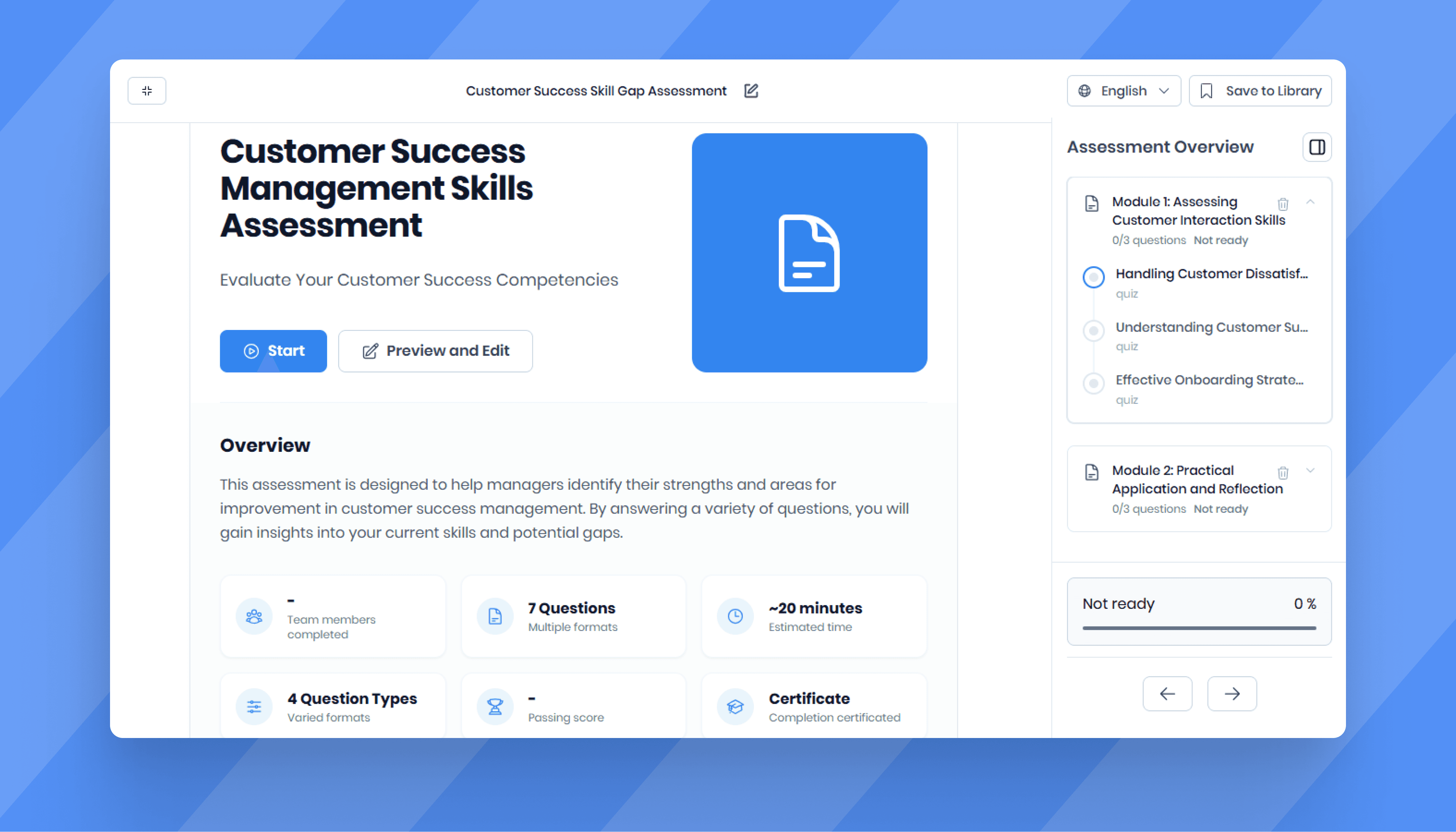
3. Assessments
Completion doesn't equal understanding.
Assessments help verify that employees can accurately explain the product and apply their knowledge.
This may include:
Knowledge checks
Certifications
Scenario-based questions
Competitive positioning exercises
4. Continuous Updates
Product knowledge training should evolve alongside the product.
New releases should trigger updates to learning materials, assessments, and practice scenarios.
The best teams treat product education as an ongoing process rather than a one-time onboarding activity.
Who actually needs product knowledge training?
Team | Why? |
|---|---|
New Hires | Learn the product faster and become productive sooner. |
Sales Teams | Answer questions confidently, handle objections, and position value effectively. |
Customer Success | Drive adoption, support onboarding, and identify expansion opportunities. |
Support Teams | Resolve issues faster and provide more accurate answers. |
Partner & Channel Teams | Deliver consistent messaging across distributors, resellers, and partners. |
What Should Be Included in Product Knowledge Training?
A common mistake is focusing only on features.
Great product knowledge training goes much deeper.
Product Fundamentals
What the product does, who it serves, and why it exists.
Customer Problems
The challenges customers face before they buy.
Core Use Cases
How different customer segments use the product.
Competitive Positioning
How the product compares to alternatives.
Common Questions
The questions employees hear most often from prospects and customers.
Real Scenarios
Examples of how product knowledge is applied in actual conversations and situations.
Building Product Knowledge Training With Deelan
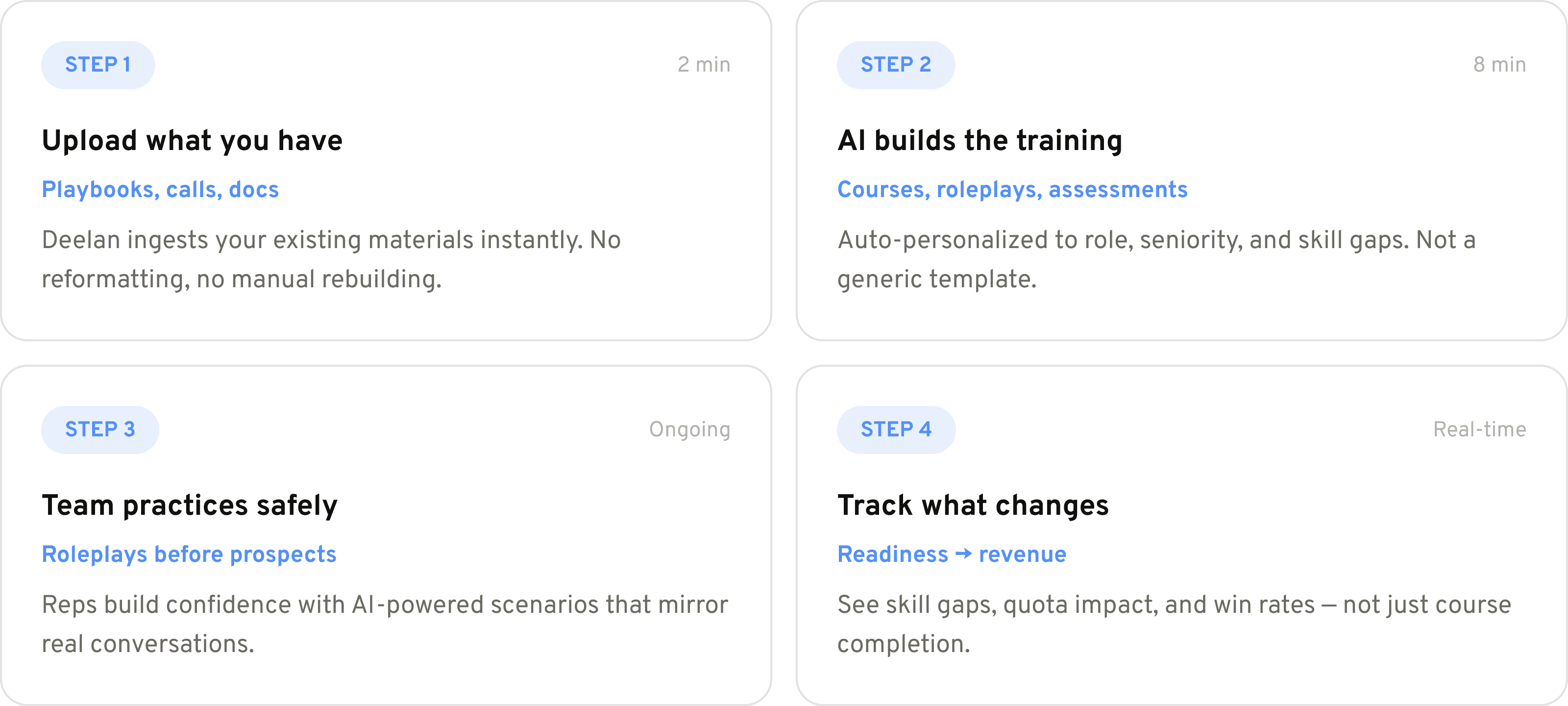
Deelan helps teams transform existing company knowledge into complete training programs in minutes.
Upload:
Product documentation
Release notes
Internal guides
Videos
Call recordings
Knowledge base articles
Competitive battlecards
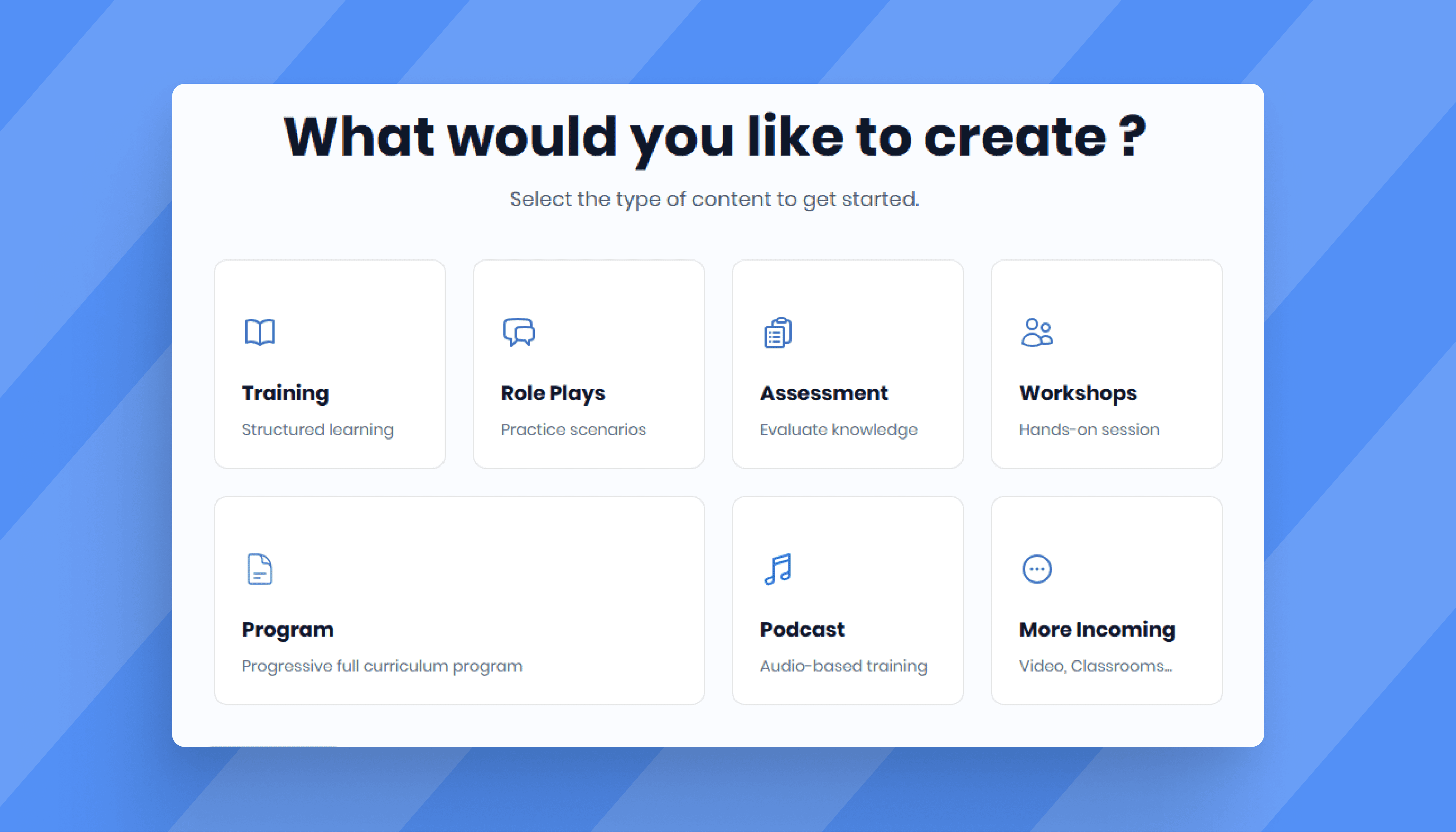
Deelan automatically generates:
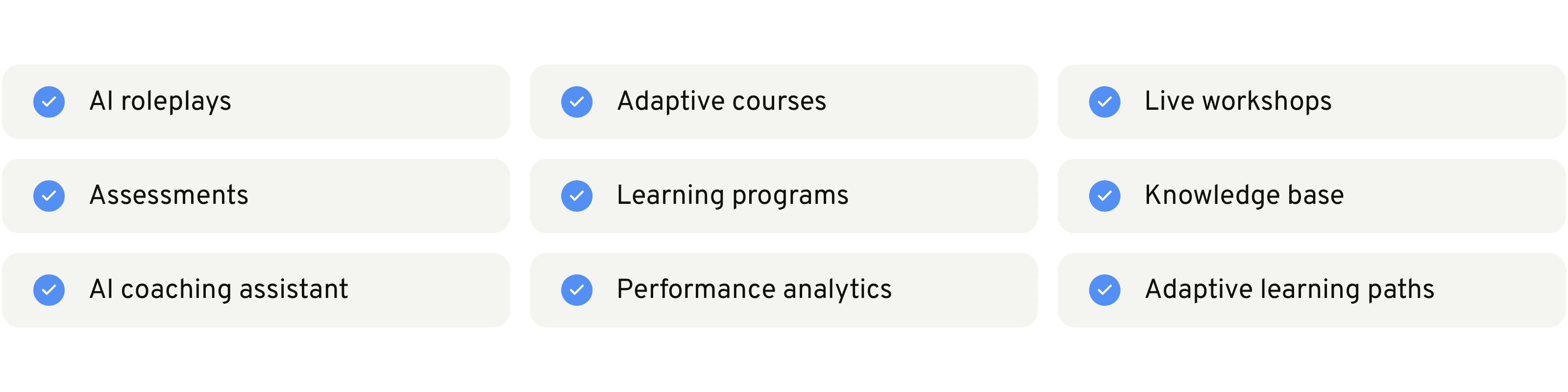
Courses
Structured learning modules tailored to specific roles and experience levels.
Roleplays
Practice product conversations, customer questions, competitive comparisons, and objections in realistic scenarios.
Assessments
Verify product understanding through quizzes, certifications, and knowledge checks.
Programs
Combine courses, roleplays, and assessments into complete onboarding and product certification paths.
Knowledge Base
Keep training connected to your latest company knowledge and updates.
From Product Knowledge to Product Confidence
The goal of product knowledge training is confidence.
Confidence to answer difficult questions.
Confidence to explain value clearly.
Confidence to support customers effectively.
Confidence to represent the company well.
The companies that build product expertise fastest often gain an advantage everywhere else: onboarding, sales performance, customer satisfaction, and employee productivity.
Try It Yourself
Build your first product knowledge course, assessment, or roleplay in minutes.
Or test your own product expertise with our free Product Knowledge Check.