
Conversation intelligence gives sales teams access to more information than a call recording or transcript alone.
Depending on the platform, it can highlight objections, customer questions, competitor mentions, talk patterns, important moments and agreed next steps. Managers can also use it to compare calls, identify behaviours across the team and review how sellers apply a sales methodology.
The real value of conversation intelligence comes from what happens afterwards: choosing the right action, helping the rep develop the missing skill and checking whether their behaviour changes in future calls.
Review the insights that affect performance
Conversation intelligence platforms can analyse calls at the level of an individual conversation, seller or entire team. Microsoft, for example, provides call and seller KPIs to help managers review performance and coach proactively, while Salesforce highlights automatic summaries, key talking points and suggested next steps.
The most useful performance insights usually fall into several areas.
Discovery and questioning
Look for whether the rep uncovered the customer’s real problem, explored its impact and asked meaningful follow-up questions.
The number of questions matters less than their quality. A call can contain many questions while remaining surface-level and overly scripted.
Active listening
Identify moments when the buyer mentioned an important concern, priority or signal.
Did the rep explore it? Did they adjust their presentation? Or did they continue with the next prepared question?
Conversation data can highlight speaking patterns, but managers should still connect those patterns to the quality of the interaction.
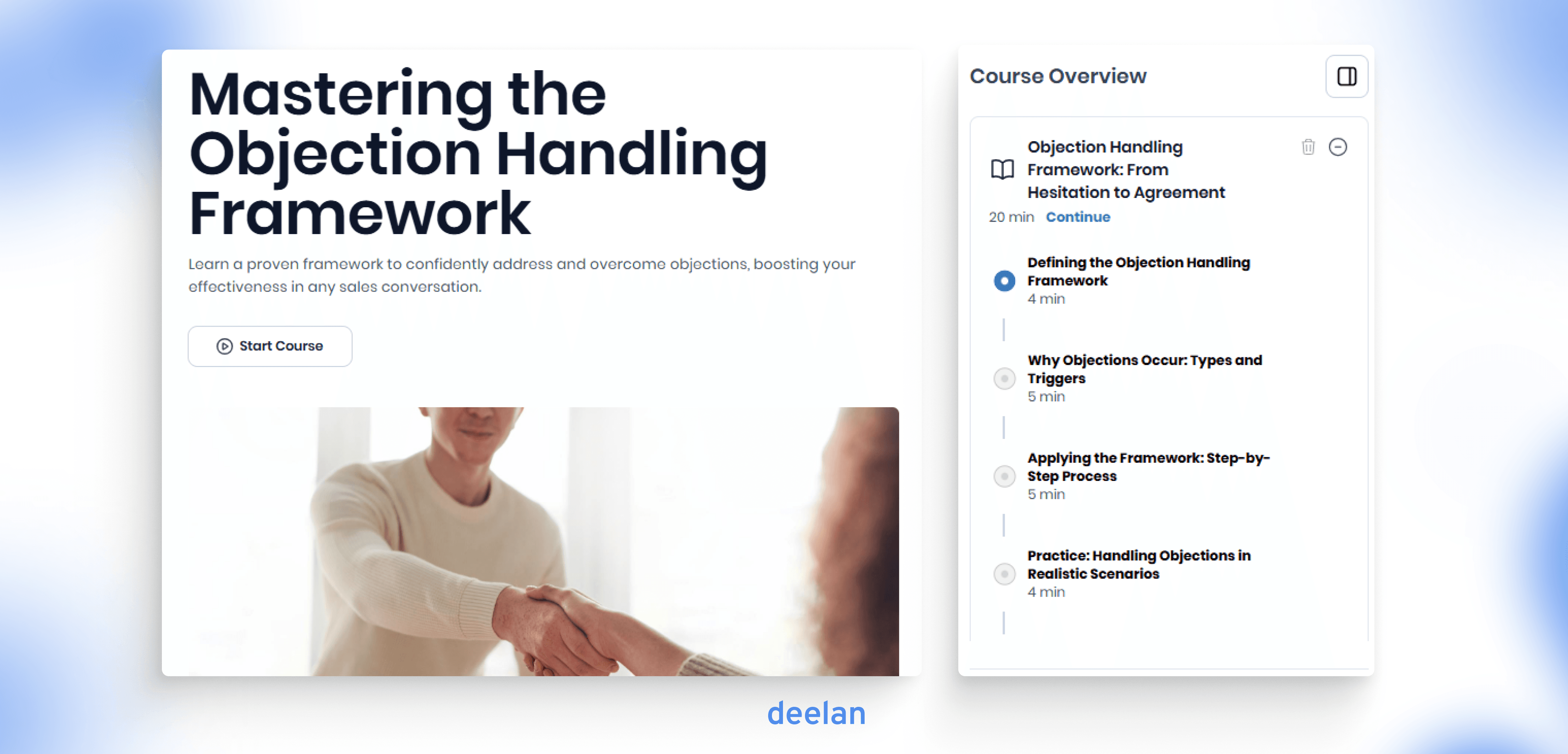
Objection handling
Review which objections appeared, when they appeared and how the seller responded.
The insight might show that the team frequently encounters concerns about pricing. The performance question is whether reps clarify the concern, connect price to value and confirm whether the objection has been resolved.
Messaging and product knowledge
Look at how consistently reps explain the product, positioning and value proposition.
This is particularly valuable after introducing new pricing, messaging, product features or a different sales methodology.
Next steps
Review whether the rep secured a clear, mutual next step.
A call may feel positive while still ending without an agreed action, timeline or responsible person.
Separate deal insights from skill insights
Conversation intelligence can uncover information about both the opportunity and the seller.
A competitor mention is a deal insight. Failing to ask why the buyer prefers that competitor is a skill insight.
A delayed purchasing decision may require a follow-up action. Repeatedly failing to uncover urgency may require training.
Keeping these categories separate leads to better decisions:
Insight | Appropriate action |
|---|---|
An important stakeholder was not involved | Arrange another meeting |
The rep regularly misses stakeholder questions | Qualification training and practice |
The buyer raised a product concern | Send relevant information |
Several reps struggle to explain the feature | Update product training |
A pricing objection blocked the conversation | Address the objection in the deal |
The rep repeatedly struggles with pricing | Create objection-handling practice |
Identify patterns, not isolated mistakes
One difficult call does not always indicate a serious training need.
Review several conversations before deciding what the rep needs to improve. Repeated patterns are more useful than isolated observations.
You may discover that a seller consistently:
Accepts short discovery answers without probing
Presents features before understanding the buyer’s priorities
Avoids discussing the decision process
Struggles when pricing is mentioned
Ends calls without a specific next step
Team-wide patterns can also reveal gaps in messaging, onboarding or enablement.
Gong describes conversation intelligence as a way to review real calls for discovery, objections and closing, while also identifying the behaviours of top performers that others can learn from.
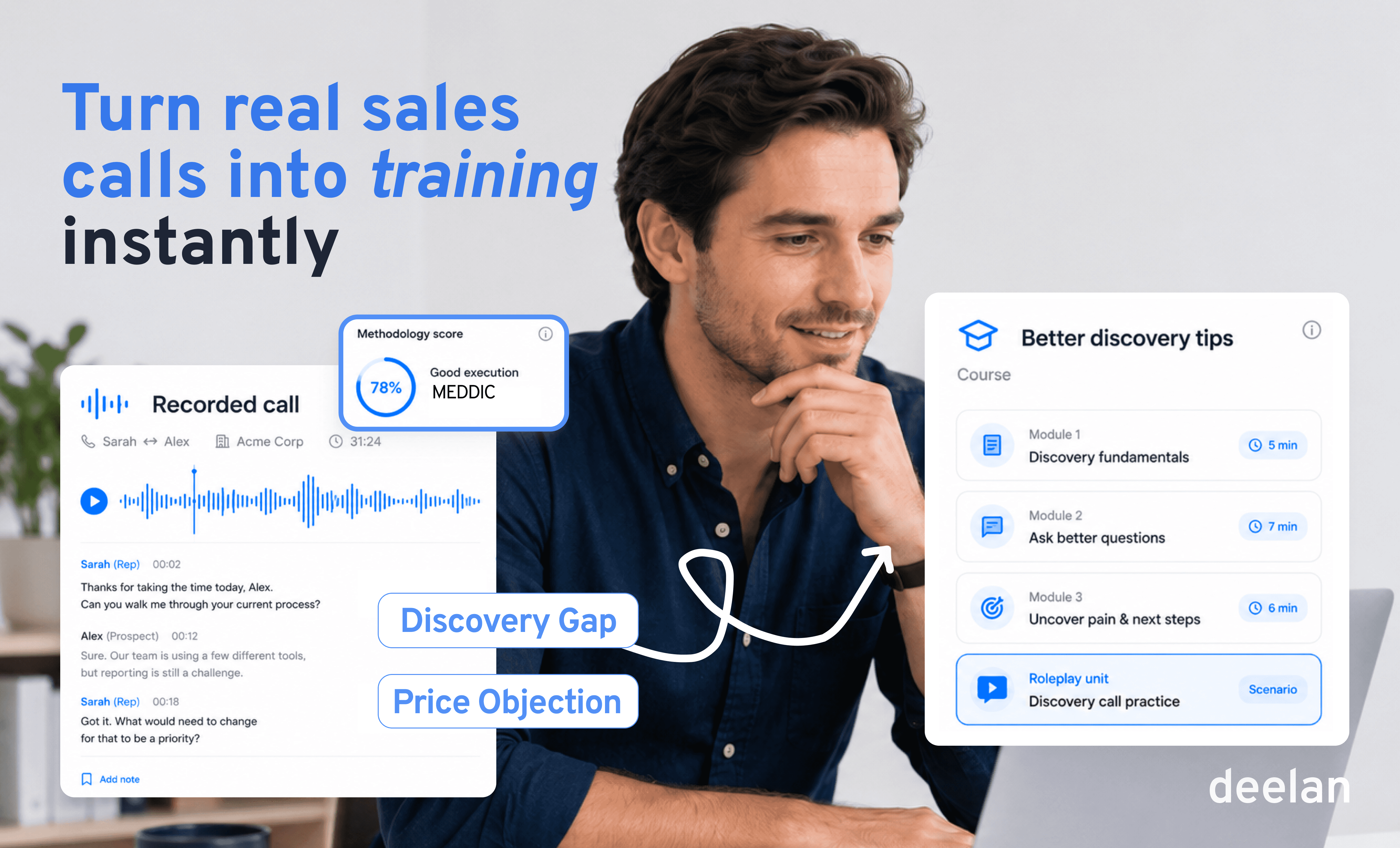
Once you identify the gap, decide whether the rep needs knowledge, feedback or practice.
Use learning for a knowledge gap
Create a course or short microlearning activity when the rep does not fully understand:
A sales methodology
New product messaging
Pricing
Qualification criteria
A discovery framework
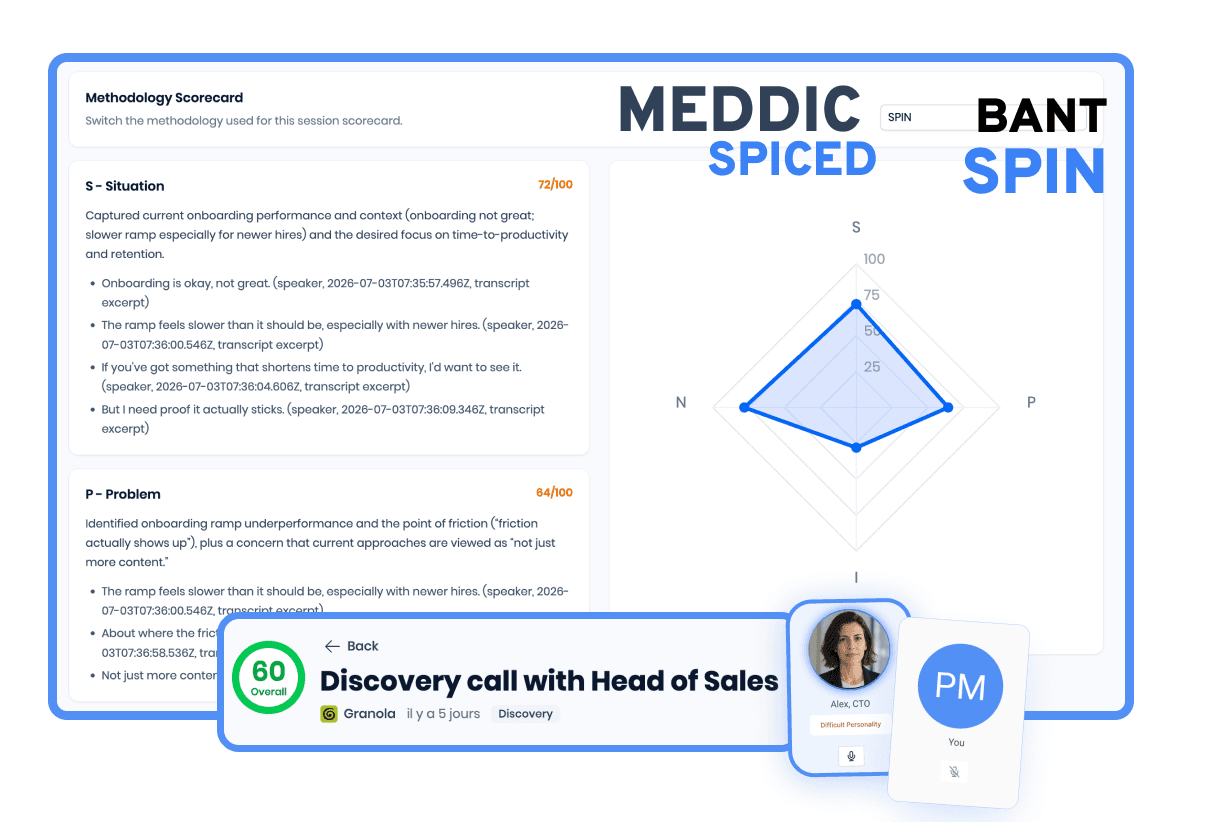
Use roleplay for an application gap
A rep may know how they should respond but still struggle during a real conversation.
Use roleplay to practise:
Difficult objections
Discovery questions
Pricing conversations
Product demonstrations
Conversations with senior buyers
The scenario should reflect the context and language found in the original call.
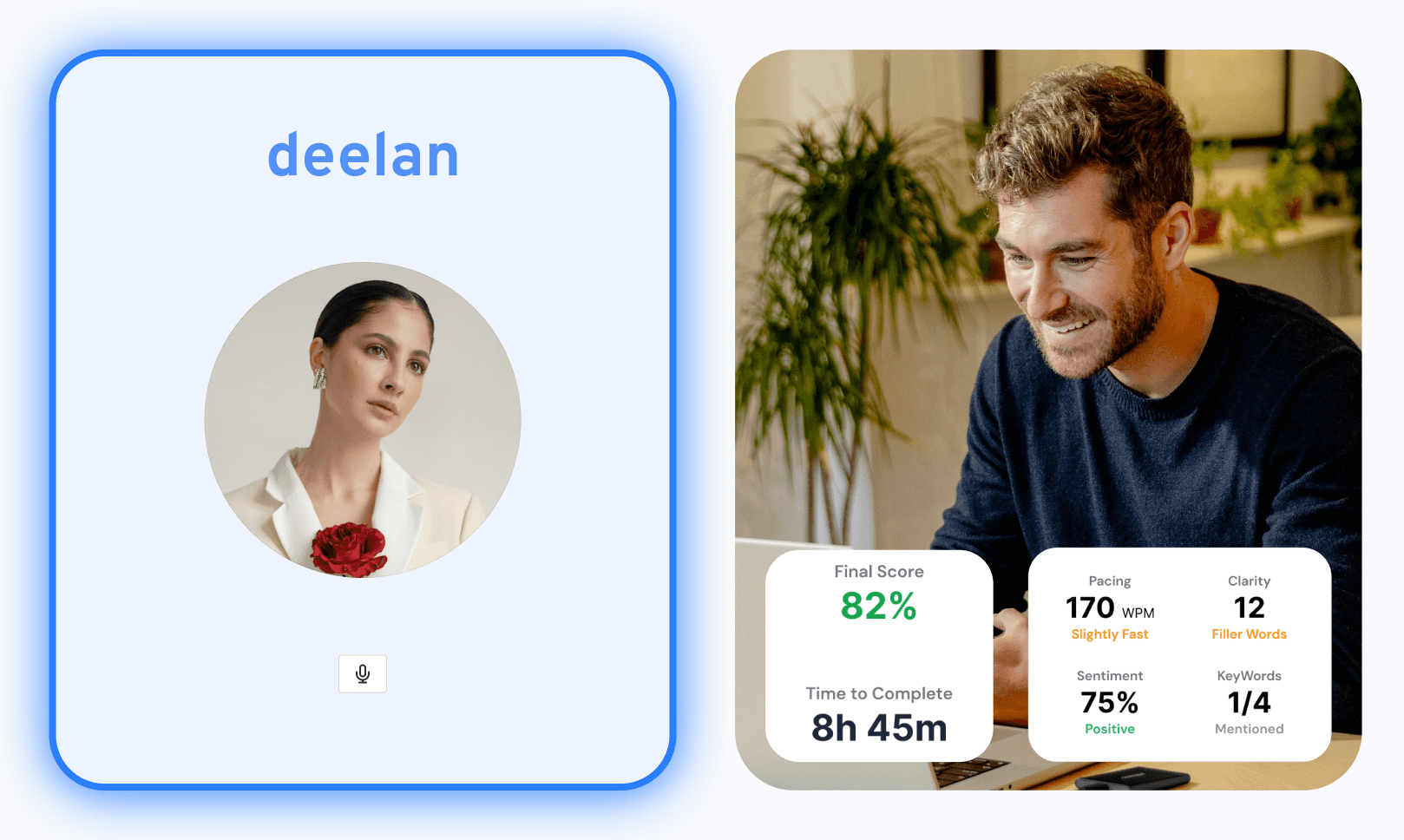
Measure the next calls
After training, review later calls and track whether the target behaviour changes.
Depending on the skill, you might monitor:
Stronger discovery questions
Better methodology scores
Fewer missed buyer signals
More confident objection handling
Clearer next steps
Improved conversion between sales stages
Ramp time for new hires
Win rate over a meaningful period
Gong reports a 7.4% increase in close rate on reviewed calls and a three-week reduction in new-rep ramp time in one customer example; another case study reports that Mintel increased win rate by 34%. These are individual vendor case studies rather than guaranteed benchmarks, but they demonstrate why teams should connect call data to action.
Turn conversation intelligence into training with Deelan
Deelan helps teams go beyond analysing what happened.
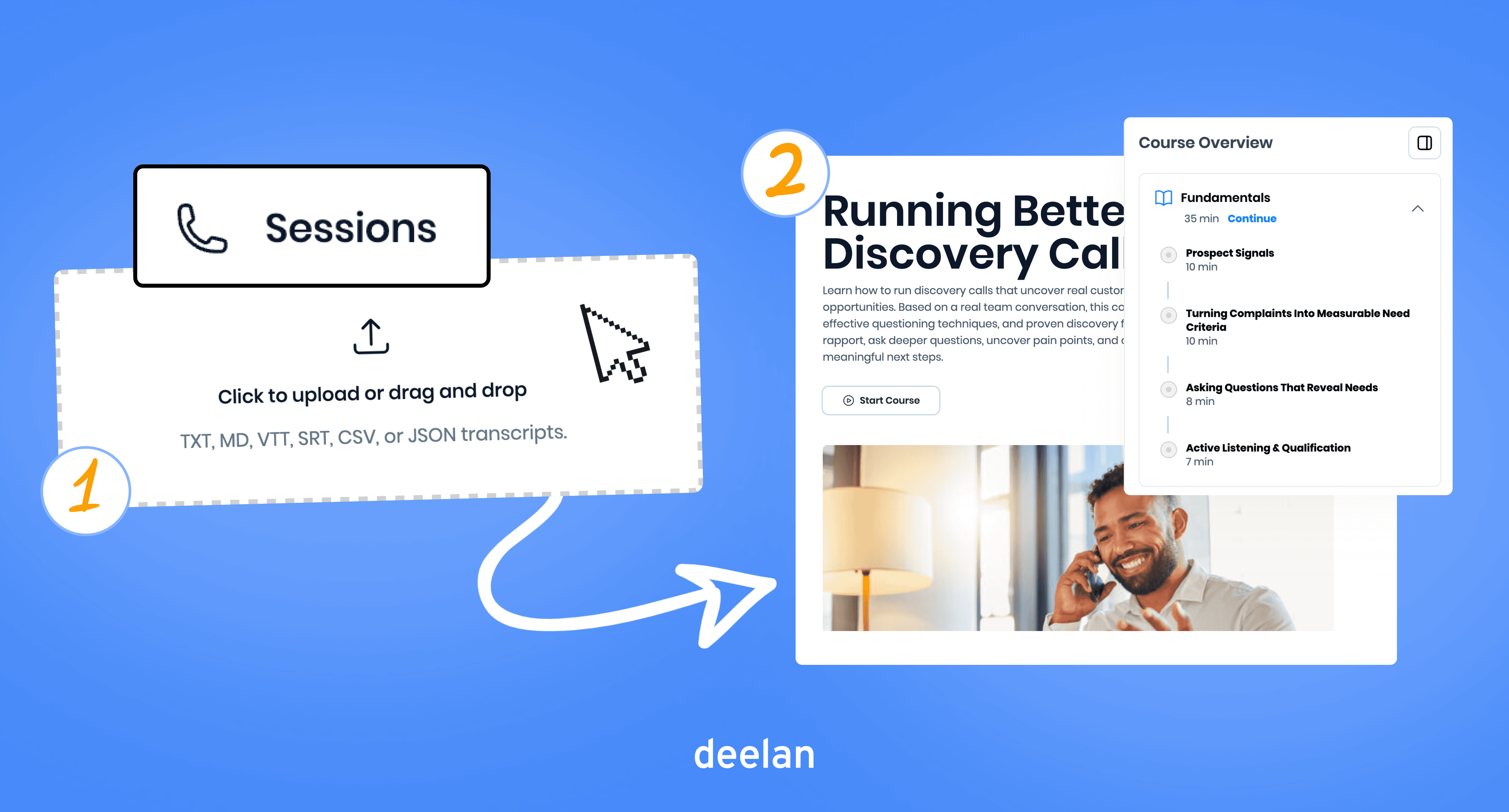
You can connect your tool, or upload a call recording or transcript directly.
Deelan analyses the conversation against the skills and sales methodology you define, helping you identify the areas that require attention.
You can then turn those insights into targeted:
Courses
Microlearning
Assessments
AI roleplays
Product-demo practice
Training programmes
A missed discovery opportunity can become a focused roleplay. A recurring knowledge gap can become microlearning. Inconsistent methodology adoption can become a course and assessment.
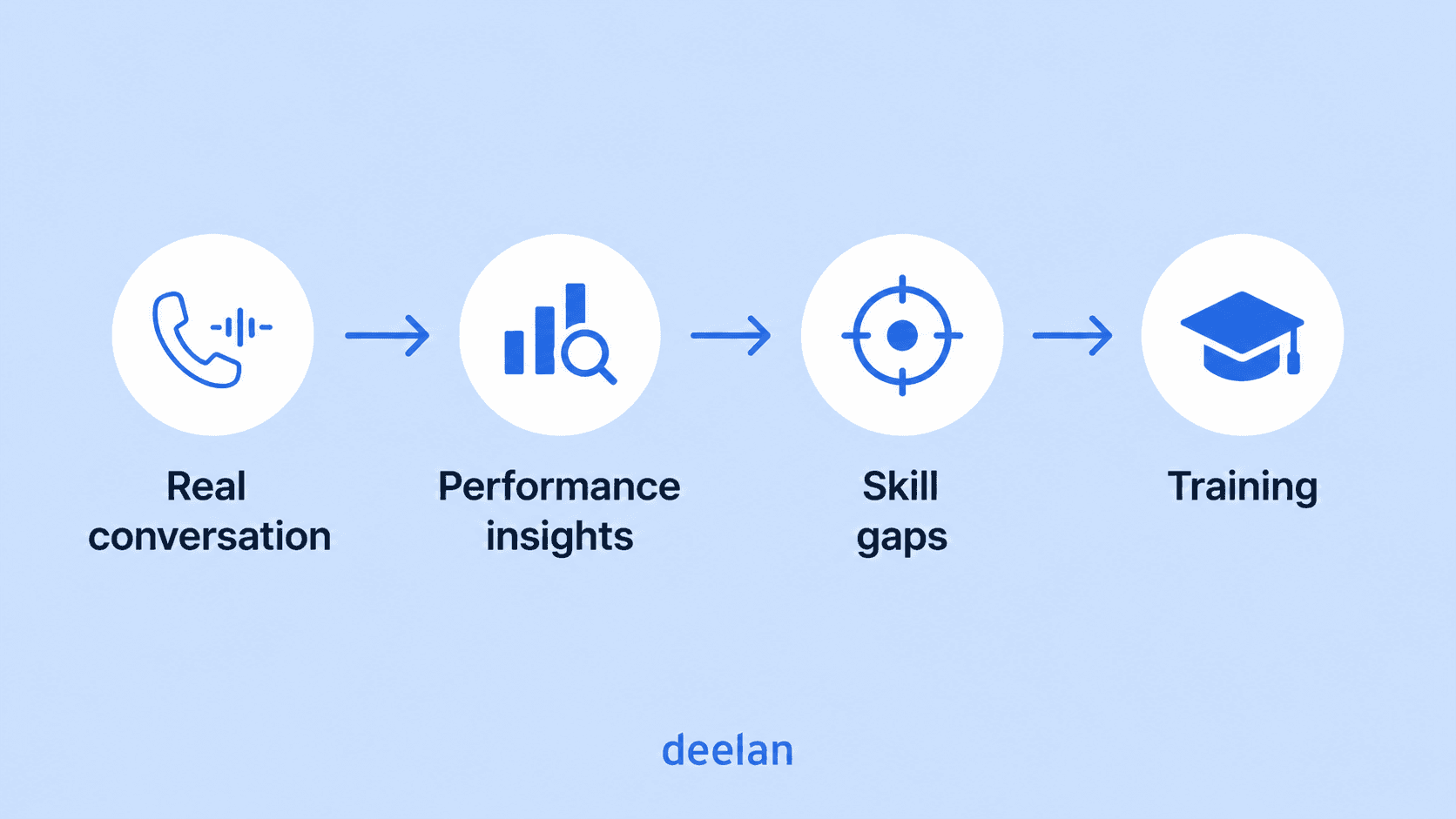
Conversation intelligence shows you what happened. Deelan helps your team do something useful with it.
Improve what happens after every call
Upload a real sales conversation, uncover the skills that need attention and create relevant training and practice in one workflow.