
When a buyer asks, "Why should we pay more for your solution?", it's easy to fall back on product features, discounts, or generic ROI promises.
Value-based selling training teaches reps to understand what matters to each buyer, connect solutions to business outcomes, and communicate value with confidence.
Here's how to build those skills across your team, from foundational knowledge to realistic sales practice and ongoing coaching.
What Is Value-Based Selling?
Value-based selling is a sales approach that focuses on the value a product or service brings to a specific customer rather than its features, specifications, or price.
Instead of explaining everything a product can do, the seller identifies the customer's challenges, understands their desired outcomes, and demonstrates how the solution can help achieve them.
Here's a simple example:
Product-focused selling | Value-based selling |
|---|---|
"Our software has automated reporting." | "Your managers could spend less time preparing reports and more time coaching their teams." |
"We offer 24/7 customer support." | "Your team can get help when an issue arises, reducing the risk of costly delays." |
"Our platform integrates with your CRM." | "Your reps can work with information already in your CRM instead of manually transferring data between tools." |
"We offer personalized training." | "Each rep can focus on the skills they need to improve, rather than taking the same training as everyone else." |

The difference is simple: features describe what the product does; value explains why the buyer should care.
And value isn't always financial. Buyers may care about saving time, reducing risk, improving productivity, growing revenue, or making their team's work easier.
6 Essential Skills for Value-Based Selling Training
A value-based selling training program needs to develop several skills that work together throughout the sales conversation.
Skill | What reps should learn | Training exercise |
|---|---|---|
Identify buyer needs, goals, and challenges | Practice discovery calls | |
Understand what buyers say and ask relevant follow-ups | Listening and questioning roleplays | |
Business understanding | Connect problems to operational or financial impact | Customer case studies |
Value communication | Explain benefits through customer outcomes | Feature-to-value exercises |
ROI calculation | Quantify potential financial value | ROI calculation scenarios |
Defend value without relying on discounts |
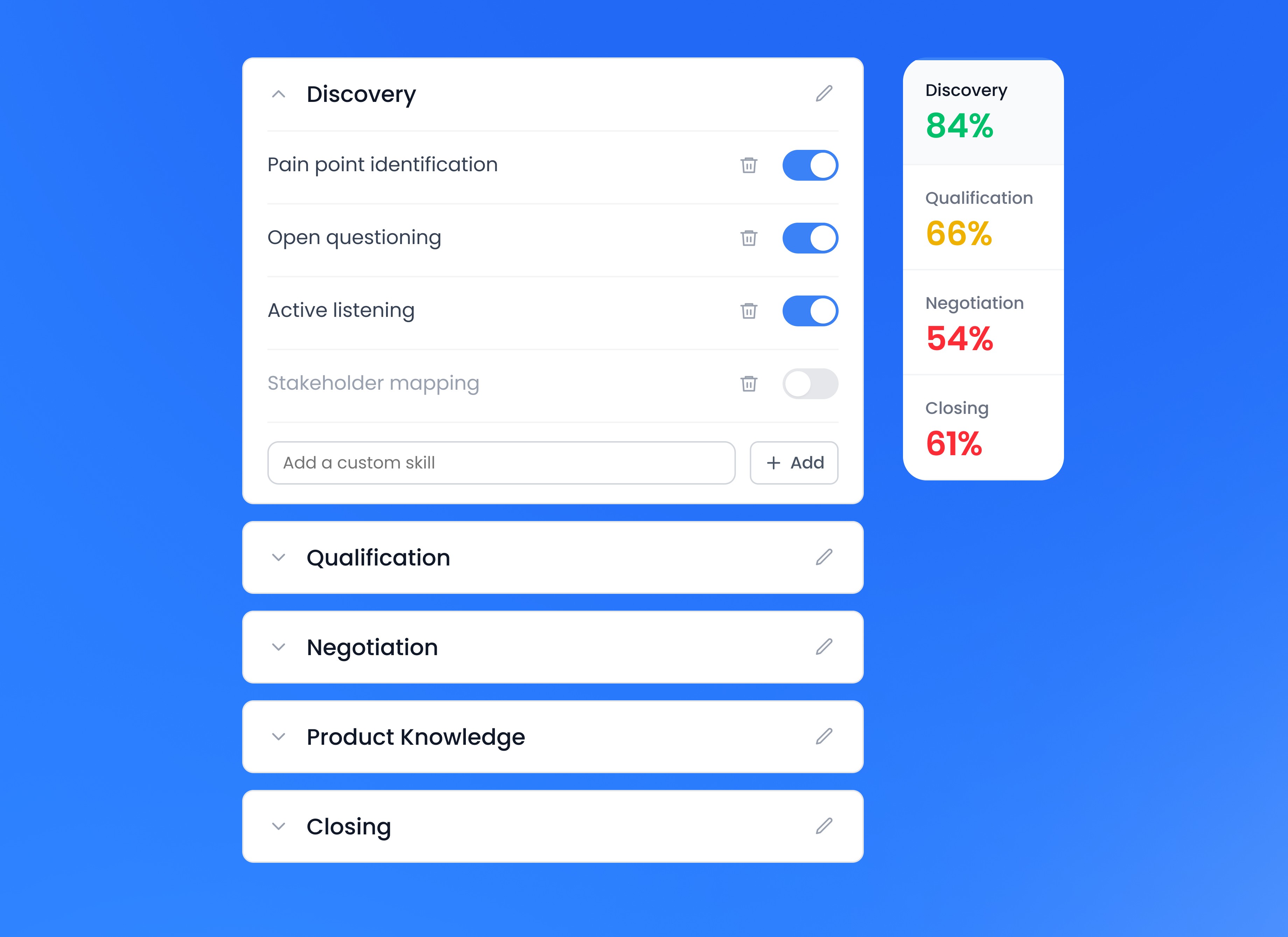
1. Asking better discovery questions
Value-based selling begins with understanding the buyer.
Reps need to move beyond basic qualification and ask questions that uncover why a problem matters.
Some useful questions to practice:
"What are you trying to improve this quarter?"
"How is this problem affecting your team today?"
"What happens if nothing changes?"
"How are you measuring success?"
"What would solving this problem mean for your business?"
Training tip: Give reps a buyer scenario and ask them to conduct a five-minute discovery call without pitching the product.
2. Translating features into business value
Knowing the product is important. But reps also need to explain why its capabilities matter to different buyers.
For example, an AI sales coaching platform might provide automated feedback.
For a sales rep, the value is knowing what to improve after each conversation.
For a sales manager, it's being able to support more reps without spending hours reviewing every call.
For a founder, it could mean building a more consistent sales team while keeping management resources focused elsewhere.
Training tip: Choose five product features and ask reps to explain their value to three different buyer personas.
3. Quantifying value and ROI
A strong value proposition becomes more convincing when reps can explain its potential financial impact.
For example:
A team spends 10 hours per week preparing manual reports. If automation saves eight of those hours, that's approximately 32 hours saved per month.
At an estimated labor cost of €40 per hour, the potential capacity value is €1,280 monthly.
This is an illustrative estimate, not guaranteed savings. Reps should learn to validate assumptions with buyers before presenting financial claims.
4. Handling price objections through value
When buyers say, "Your solution is too expensive," inexperienced reps often start defending the price or offering discounts.
Value-based selling takes a different approach.
A rep might ask:
"Is the main concern the available budget, or whether the expected results justify the investment?"
The answer helps identify whether the buyer needs a stronger business case, a different solution, or a different timeline.
This skill requires practice because price objections rarely follow a predictable script.
5 Practical Tips to Make Value-Based Selling Training Work
1. Train with your real customer scenarios
Generic scenarios are useful for introducing concepts, but practice becomes more relevant when it reflects your actual sales process.
Use real objections, anonymized call transcripts, customer personas, and your own product messaging.

2. Teach reps to sell value to different stakeholders
A CFO, sales manager, and end user may evaluate the same product differently.
Include exercises where reps adapt the same value proposition to different stakeholders without changing the product itself.
3. Don't teach scripts alone
Scripts can help new reps learn structure, but real buyers don't follow scripts.
Give reps opportunities to respond to unexpected questions, hesitation, and objections.
4. Make practice short and consistent
A 10-minute roleplay every week can be easier to sustain than an occasional full-day training session.
Rotate scenarios based on current sales challenges, new messaging, or changing customer objections.

5. Measure actual behavior improvement
Course completion alone doesn't tell you whether reps are selling value more effectively.
Track both selling behaviors and business outcomes:
Discovery and questioning quality
Ability to explain and quantify value
Price objection-handling performance
Roleplay and coaching score improvements
Discount frequency and average deal size
Win rates and sales cycle length
Compare performance over time, remembering that sales outcomes are also affected by pricing, market conditions, and lead quality.

Build Value-Based Selling Training With deelan
Value-based selling isn't about finding more persuasive ways to talk about your product.
It's about teaching reps to understand their buyers, ask better questions, and connect what they're selling to outcomes that actually matter.
That takes more than slides and scripts.
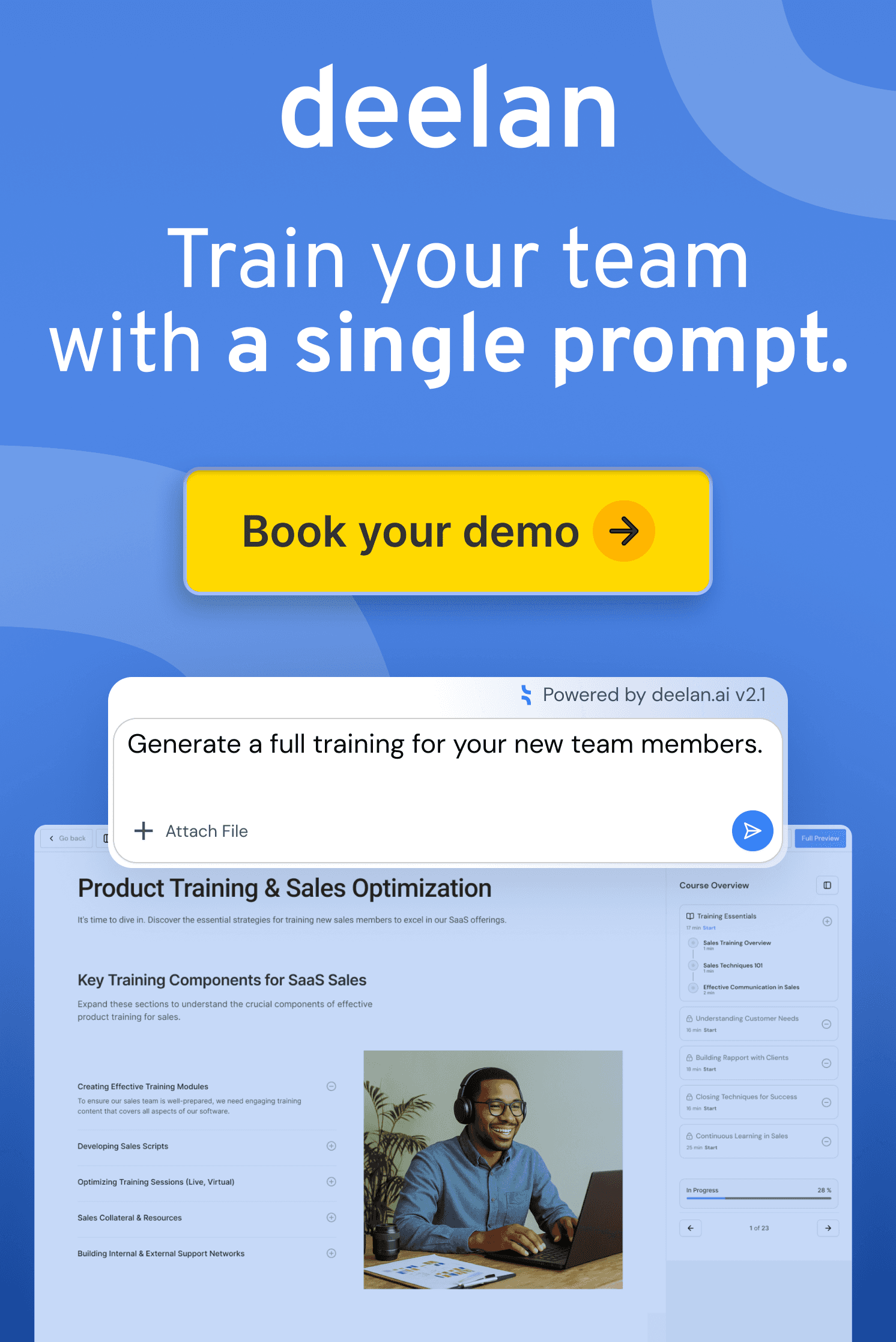
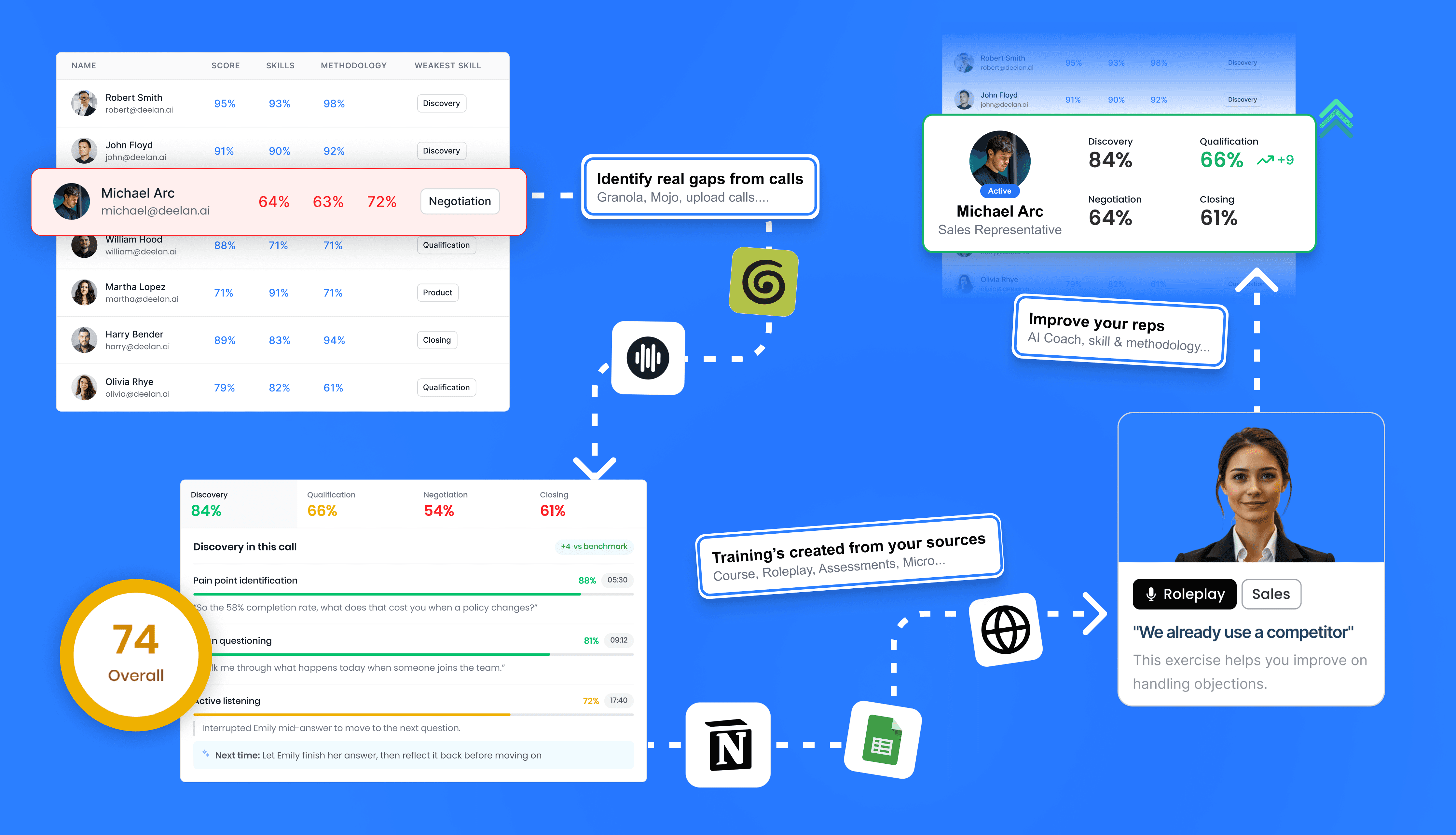
deelan helps sales teams turn their existing knowledge and real sales conversations into personalized courses, AI roleplays, assessments, and 1:1 AI coaching.
Sales managers and enablement teams can identify skill gaps, build targeted training, and track how reps improve over time.
Want to train your team to sell value, not just features?