Creating a training program used to take weeks.
Gathering content. Designing modules. Creating quizzes. Building assessments. Setting up learning paths.
For most companies, training creation is still a manual process.
But AI is changing that.
Today, teams can turn playbooks, SOPs, product documentation, call recordings, and internal knowledge into complete training programs in minutes.
In this guide, you'll learn exactly how to create an effective employee training program with AI, from identifying skill gaps to launching adaptive learning paths that scale.
Key Takeaways
AI can reduce training creation time from weeks to minutes.
Start with existing knowledge such as SOPs, playbooks, recordings, and documentation.
Build training around business outcomes, not just content consumption.
Use adaptive learning paths instead of one-size-fits-all programs.
Include assessments and practice activities to measure readiness.
Continuously update training as processes and products evolve.
Platforms like Deelan can automatically generate courses, roleplays, workshops, assessments, and learning pathways from a single source of knowledge.
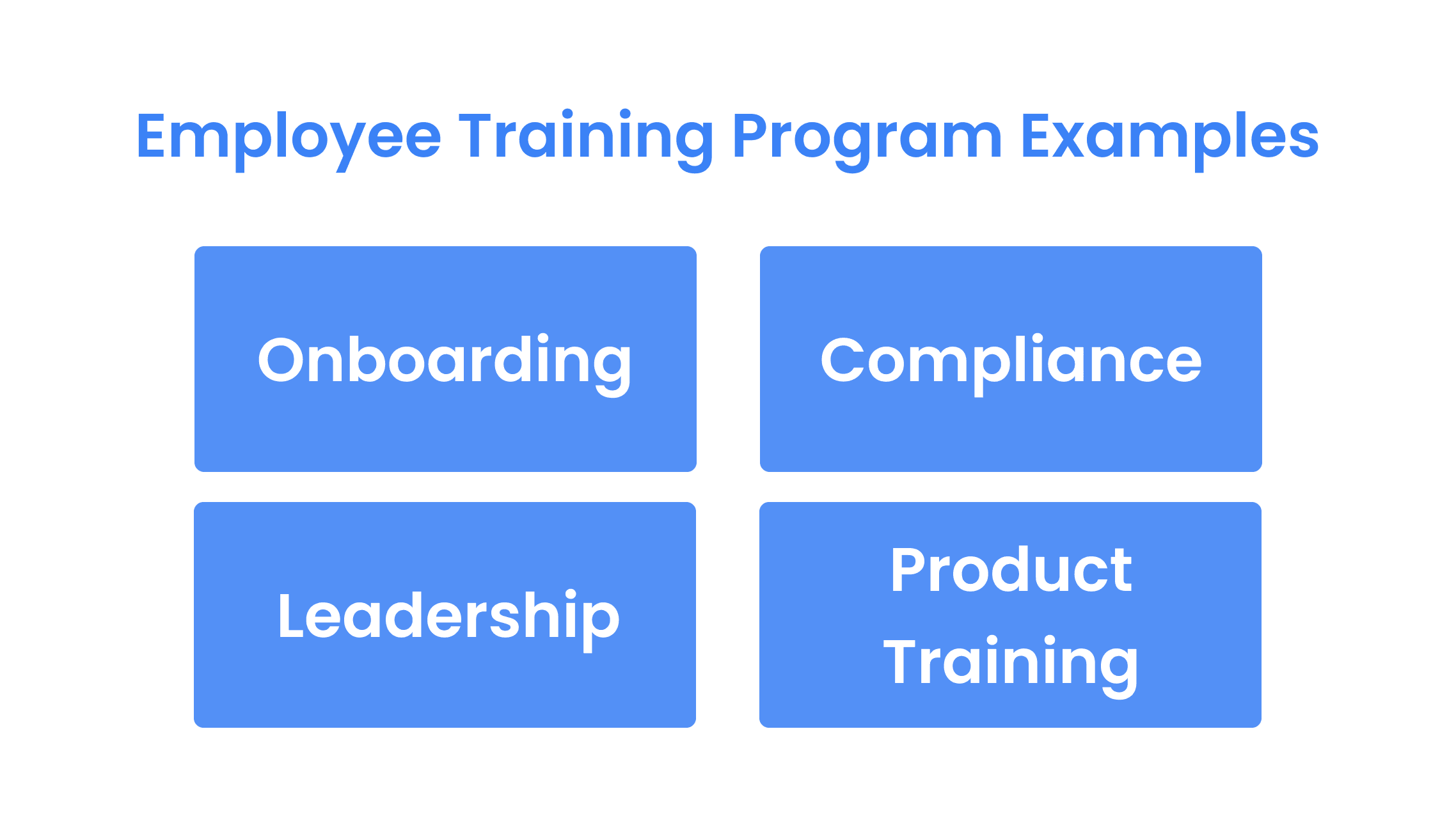
A strong online training program usually covers several use cases:
Onboarding: Automate the "First Week" experience with trackable courses.
Compliance: Ensure everyone is up to date on legal and safety standards.
Leadership: Build a pipeline of future managers with soft-skill modules.
Product Training: Keep your team updated on every new feature launch.
Sales Enablement: Improve call execution and increase win rates.
How to Create a Training Program for Employees (8 Steps)
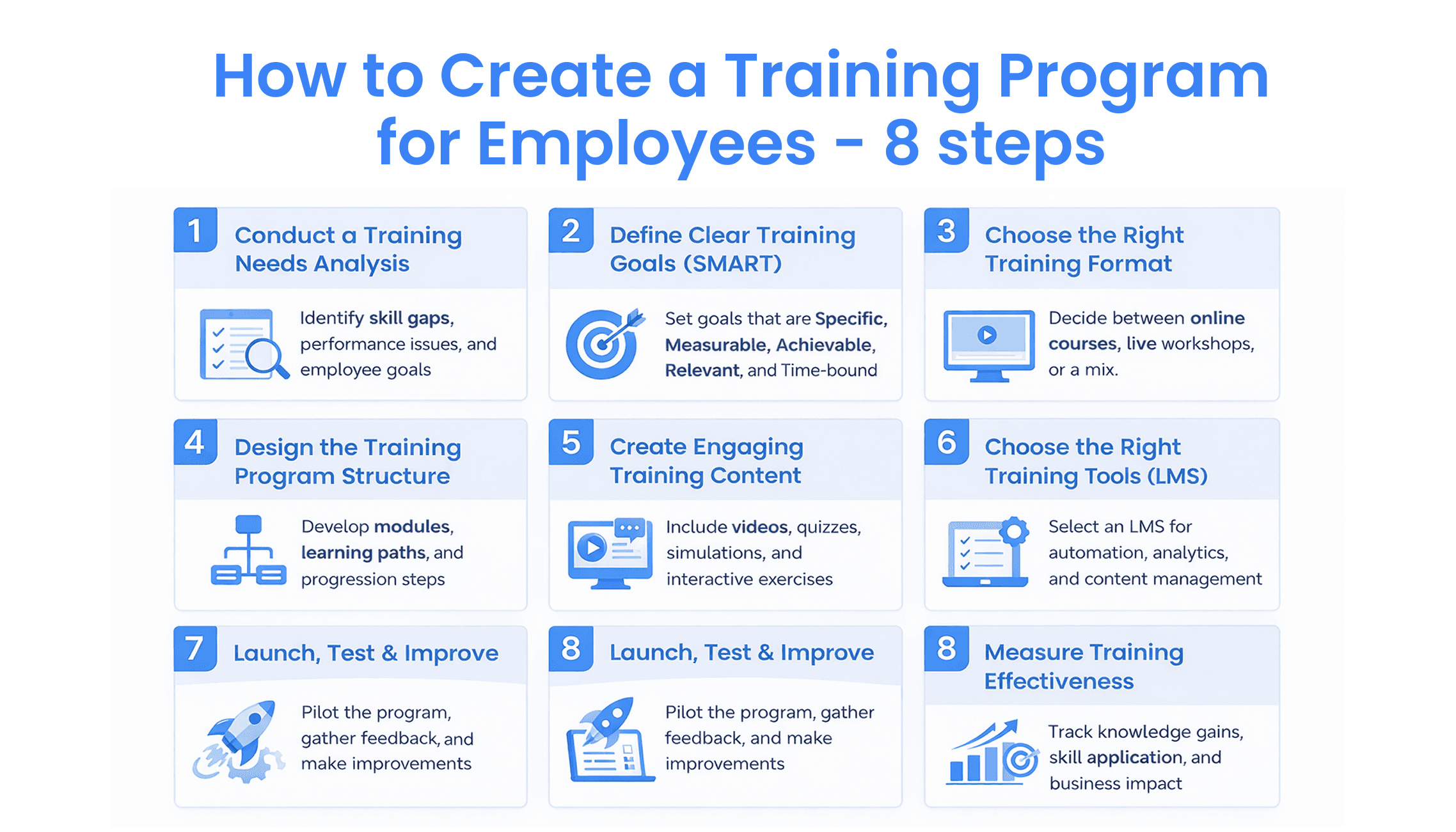
Step 1 – Conduct a Training Needs Analysis
Focus on:
Business goals
What outcomes matter most right now?Employee feedback
Where do employees feel stuck or unprepared?Performance data
Where are errors, delays, or inconsistencies?Skill gaps
What skills are missing today vs. required tomorrow?
Step 2 – Define Clear Training Goals (SMART)
Use the SMART framework:
Specific
Measurable
Achievable
Relevant
Time-bound
Examples:
“New hires complete onboarding and core tasks independently within 30 days.”
“All employees pass compliance certification with 90% accuracy.”
“Managers improve team feedback scores within 3 months.”
Step 3 – Choose the Right Training Format
Online training courses
Best for:
Remote or hybrid teams
Self-paced learning
Scalable knowledge sharing
Blended learning
Combines:
Online courses
Live workshops or coaching
Best for leadership and complex skills.
When online training works best
Distributed teams
Repetitive or standardized knowledge
Ongoing upskilling
Limited L&D resources
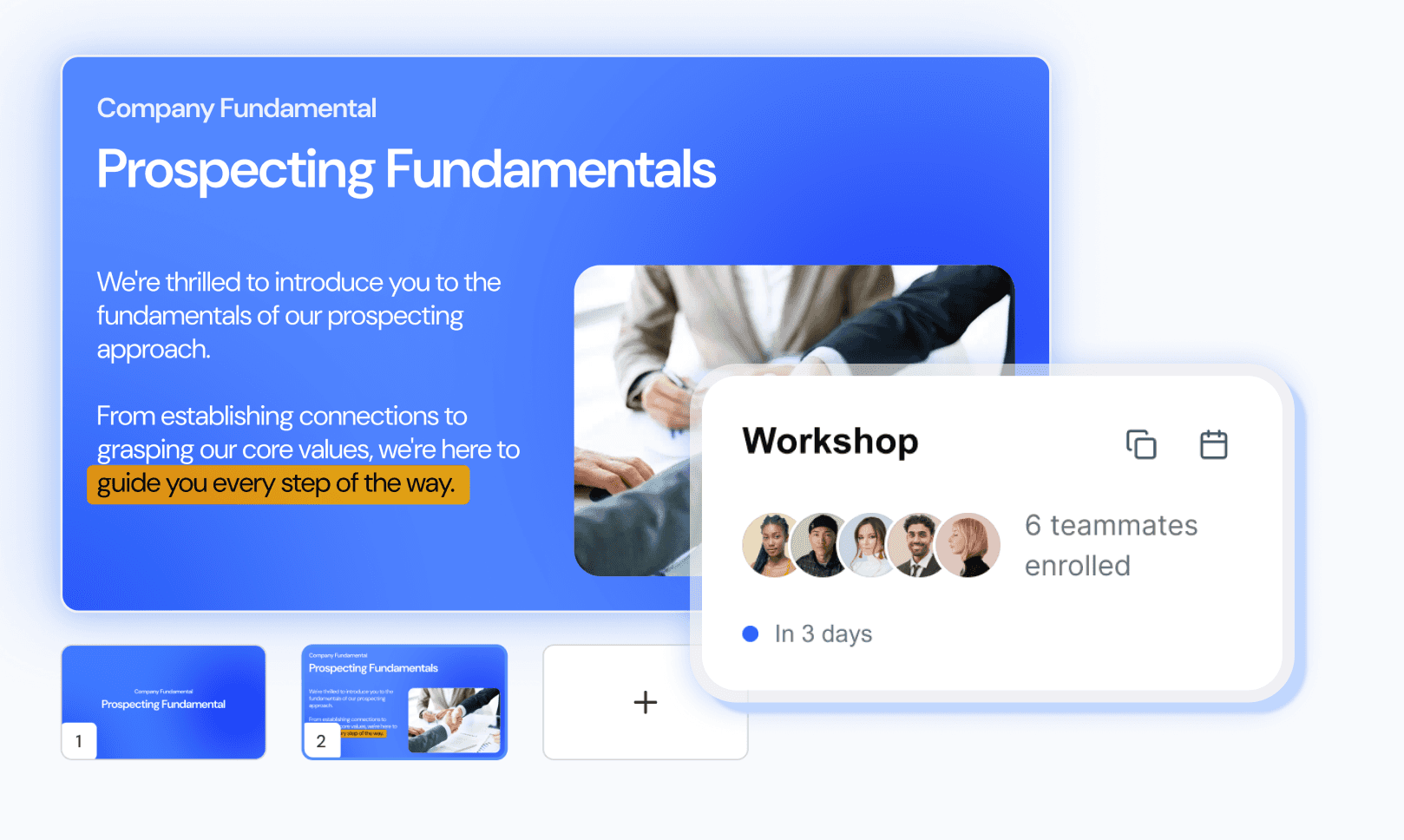
Step 4 – Design the Training Program Structure
Modules
Break training into small, focused units.
Microlearning
Short lessons (5–10 minutes) improve retention.
Learning paths
Guide employees step by step based on role or level.
Progression logic
Unlock advanced content only after mastering basics.
This keeps employees engaged and avoids overload.
Step 5 – Create Engaging Training Content
Include:
Scenarios → realistic work situations
Quizzes → reinforce key concepts
Videos → demonstrate processes
Interactive exercises → learn by doing
Real-life cases → connect theory to practice
The more employees interact, the more they retain.
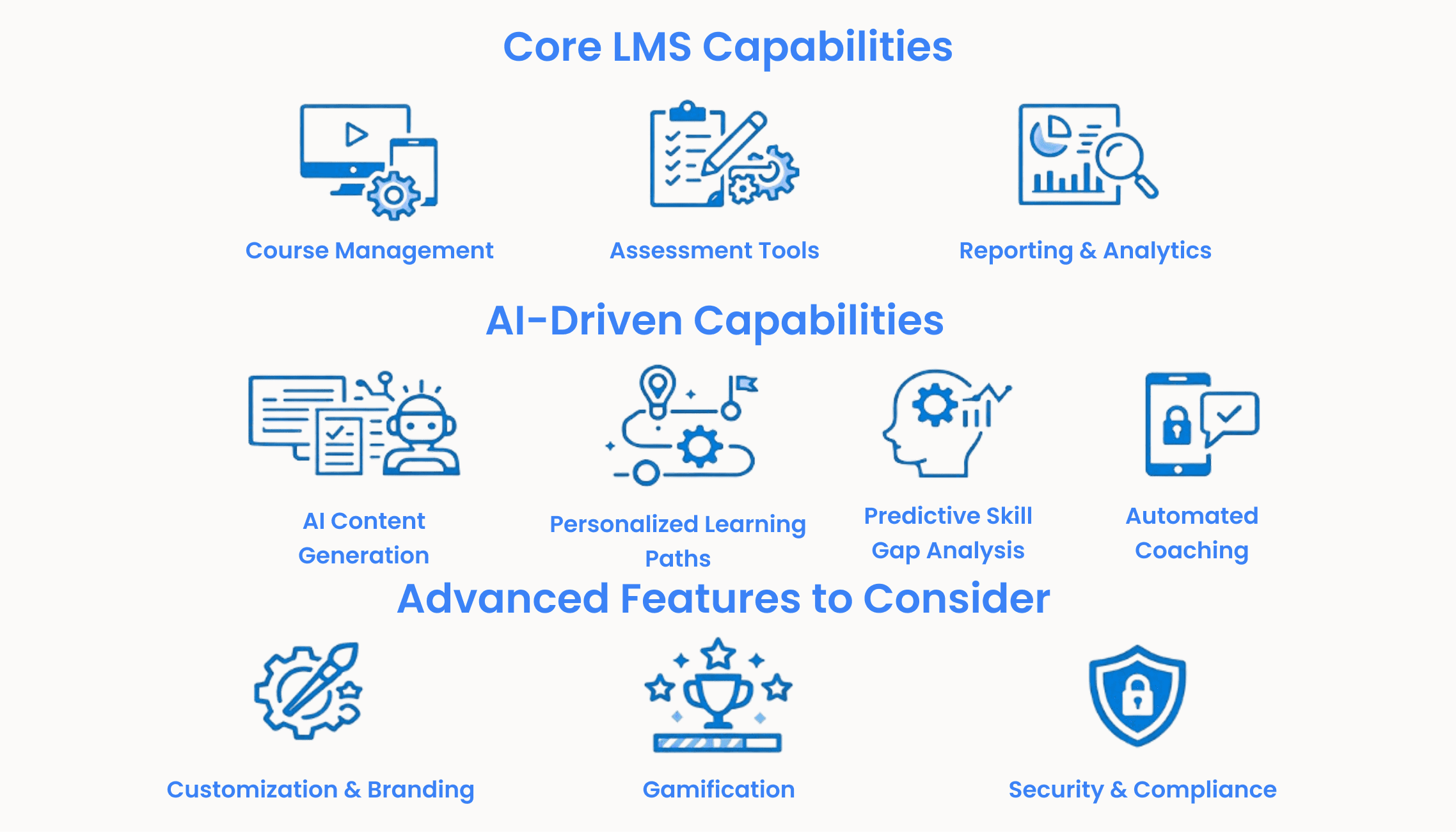
Step 6 – Choose the Right Training Tools (LMS)
Automation → less admin work (AI-features to create training faster)
Analytics → track progress and skill gaps
Ease of content creation → no heavy design work
Assessment Tools: Quizzes, tests, simulations, and progress tracking.
All-in-one platform Deelan combines course creation, programs, analytics, and AI-driven learning in one place.
Step 7 – Launch, Test & Improve
Start small:
Pilot with one team
Collect feedback
Fix friction points
Improve content continuously
Step 8 – Measure Training Effectiveness
Track:
Knowledge improvement (pre/post tests)
Behavior change on the job
Performance metrics
Business outcomes
How Deelan Helps You Build Training Programs Faster
Deelan.ai is built for teams that want to move fast — without sacrificing quality.
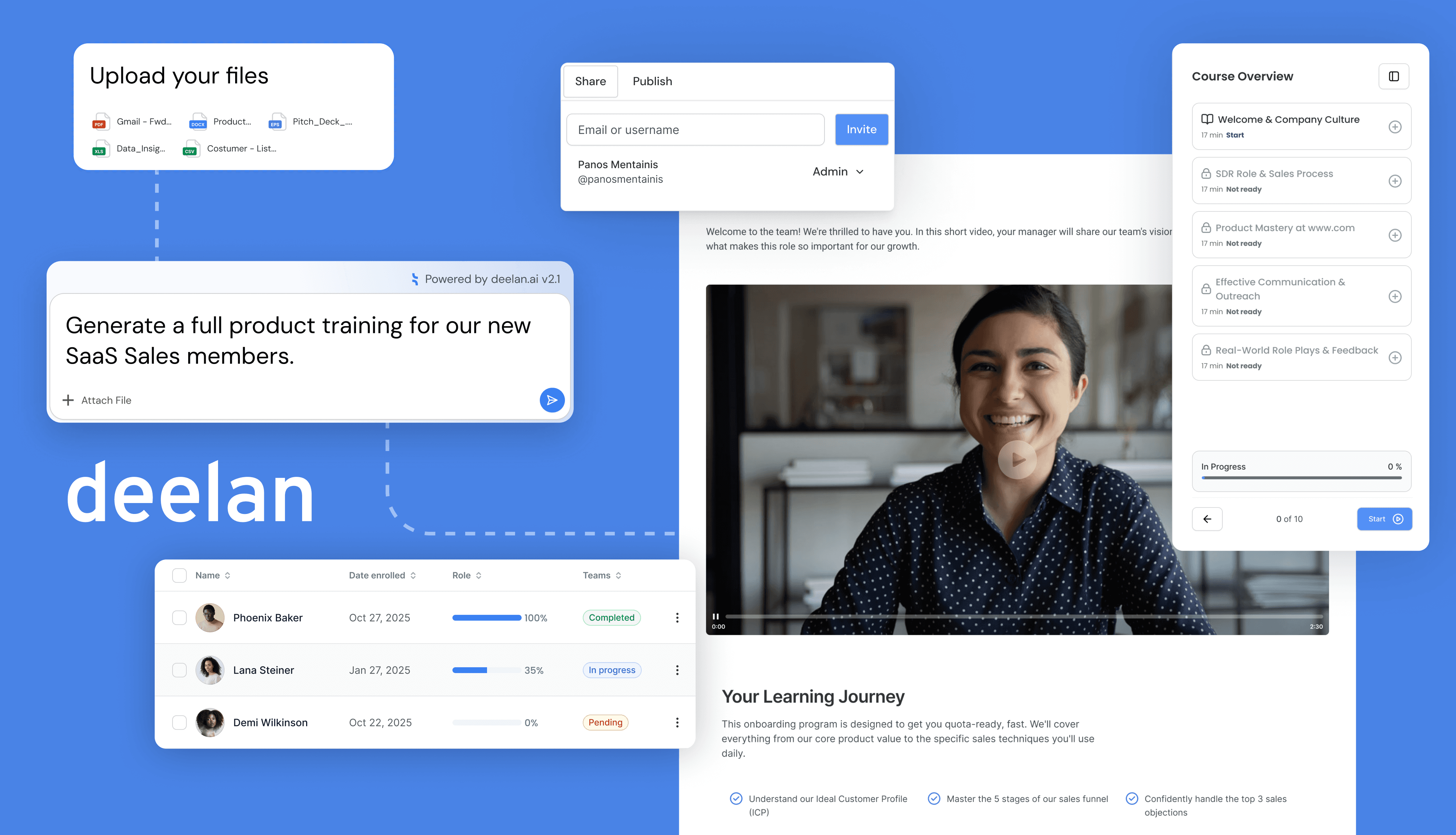
Turn Your Playbooks Into Training
Upload documents, recordings, messages, or product docs. Deelan converts them into structured training instantly.
AI-Generated Training
Create:
Discovery modules
Knowledge tests
Practice flows
Interactive assessments
Chat-Based Creation & Easy Mode Builder
Generate training from a single prompt
Or follow a step-by-step builder — zero design, zero prompting
Adaptive Learning Paths
Training adapts based on:
Role
Seniority
Performance
Skill gaps
AI Coach for Continuous Improvement
Employees can practice:
Real workplace conversations
Internal processes
Customer interactions
Decision-making scenarios
Courses & Programs
Courses → fast e-learning modules with quizzes
Programs → structured paths from onboarding to performance
Why teams choose Deelan
Cut ramp time
Improve execution quality
Increase performance consistency
Scale coaching without adding managers
Track skill gaps and progress in real time
Build Training 10× Faster with Deelan
Creating a training program for employees doesn’t have to be slow, complex, or overwhelming.
With the right structure — and the right platform — you can build training that employees actually enjoy and that drives real business impact.