
Most sales onboarding software is good at telling you one thing:
Did the rep finish onboarding?
But finishing onboarding and being ready to sell are not the same thing. A rep can complete every course, pass a product quiz, and still freeze when a prospect challenges pricing, asks an unexpected question, or pushes back during discovery.
The best sales onboarding software in 2026 helps teams build knowledge, practise real sales conversations, assess readiness, identify gaps, and continue developing reps after their first 30, 60, or 90 days.
That matters when the average SaaS sales rep can take around 5.7 months to reach full productivity.
Here are the platforms worth considering.
Best Sales Onboarding Software: Quick Comparison
Platform | Best For | LMS / Courses | AI Practice | Readiness & Assessment | Ongoing Development |
|---|---|---|---|---|---|
Full-cycle sales onboarding & performance | ✅ | ✅ | ✅ | ✅ | |
Enterprise sales readiness | ✅ | ✅ | ✅ | ✅ | |
SalesHood | Structured enterprise onboarding | ✅ | ✅ | ✅ | ✅ |
WorkRamp | LMS-first onboarding | ✅ | ✅ | ✅ | ✅ |
Practice and coaching-heavy teams | ✅ | ✅ | ✅ | ✅ | |
Seismic Learning | Enterprise content + enablement | ✅ | ✅ | ✅ | ✅ |
360Learning | Collaborative learning | ✅ | Practice & coaching | ✅ | ✅ |
Dedicated AI sales roleplay | Limited | ✅ | ✅ | Limited |
1. Deelan — Best Overall Sales Onboarding Software
Best for: Revenue teams that want onboarding, training, AI roleplay, assessments and continuous development in one platform.

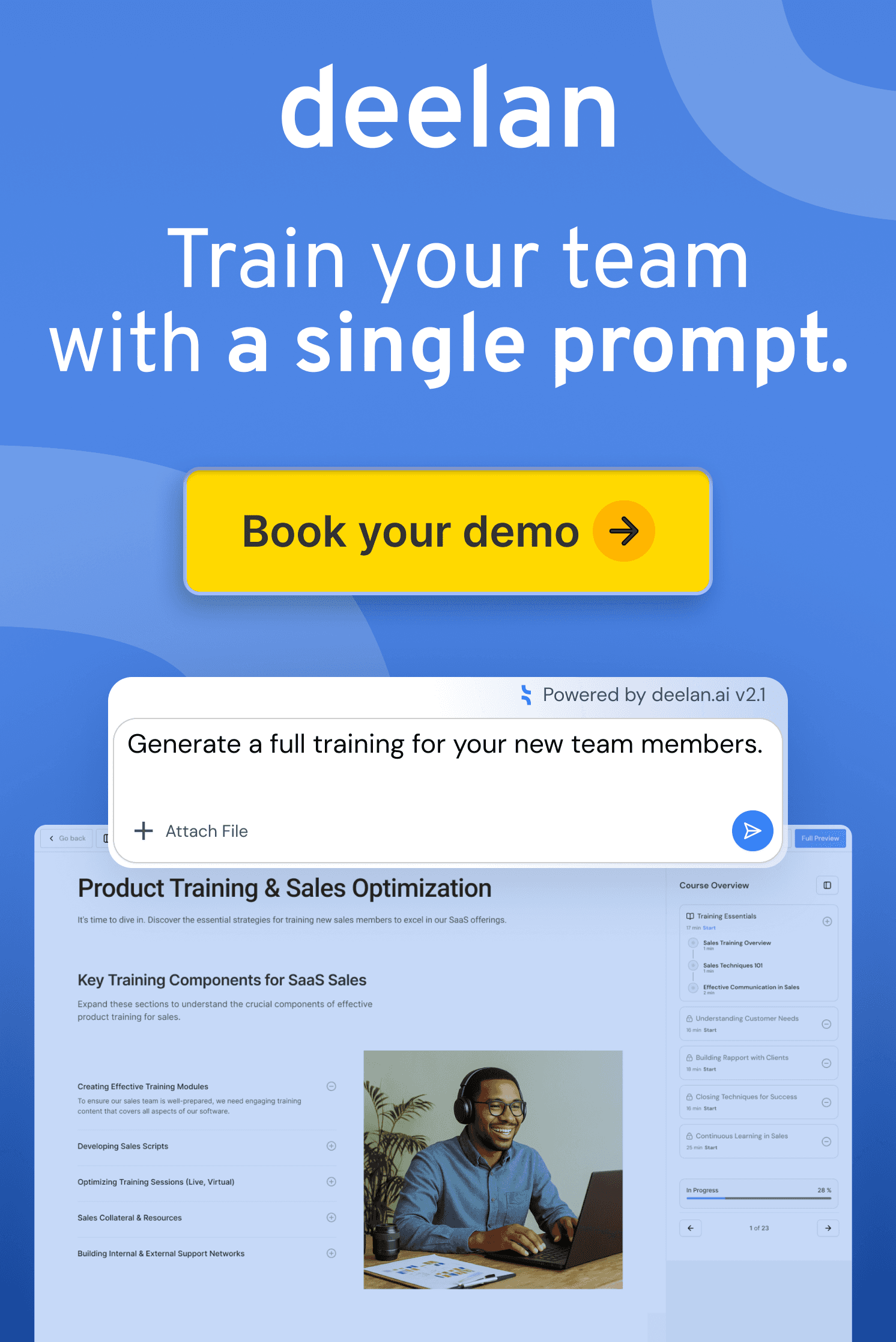
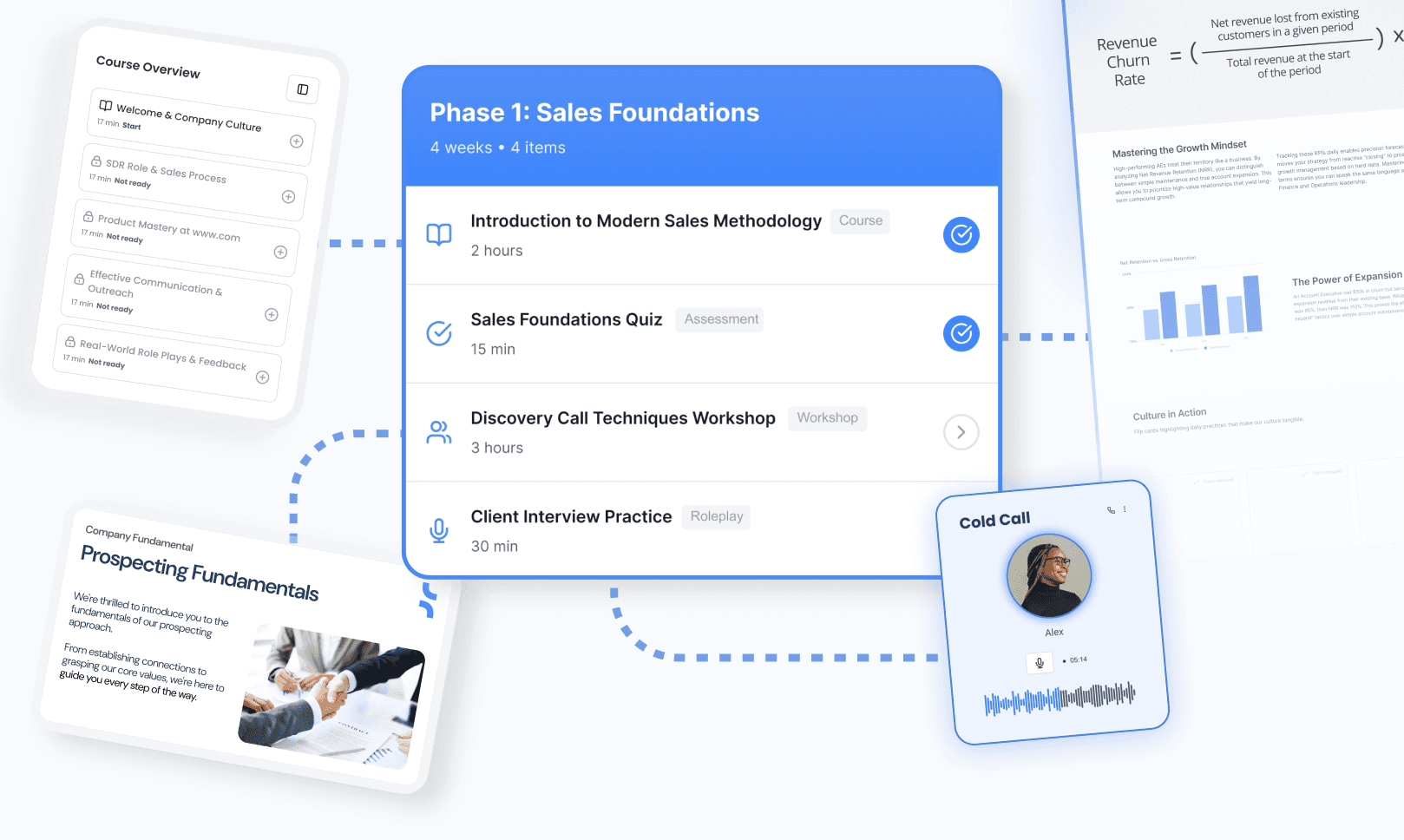
Deelan is built around a simple idea: sales onboarding should get reps to performance faster, not just get them through a curriculum.
Teams can upload existing sales material — playbooks, call recordings, product documentation, scripts, methodology, objection lists or other company knowledge — and turn it into complete onboarding programs with AI.
That can include:
Assessments
Workshops
Microlearning
Knowledge training
Structured programs
Personalized follow-up training
Instead of building every onboarding module manually, enablement teams can create the structure from their existing knowledge in minutes.
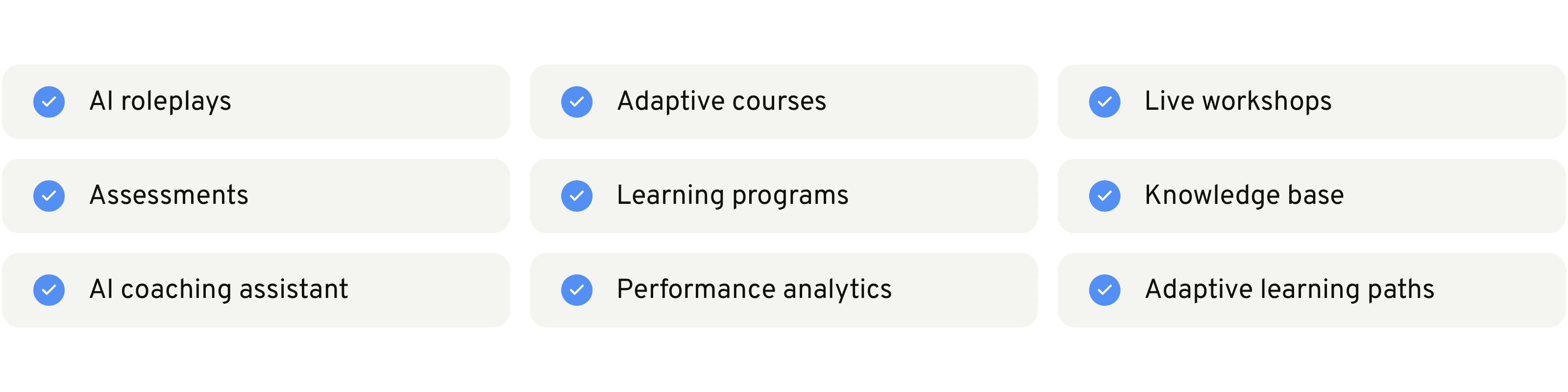
1. Knowledge and skills live in the same onboarding system
A rep can first learn the product or methodology through structured LMS content, then immediately practise applying it through an AI sales roleplay.
That closes one of the biggest gaps in traditional onboarding: knowing something does not mean being able to say it during a customer conversation.
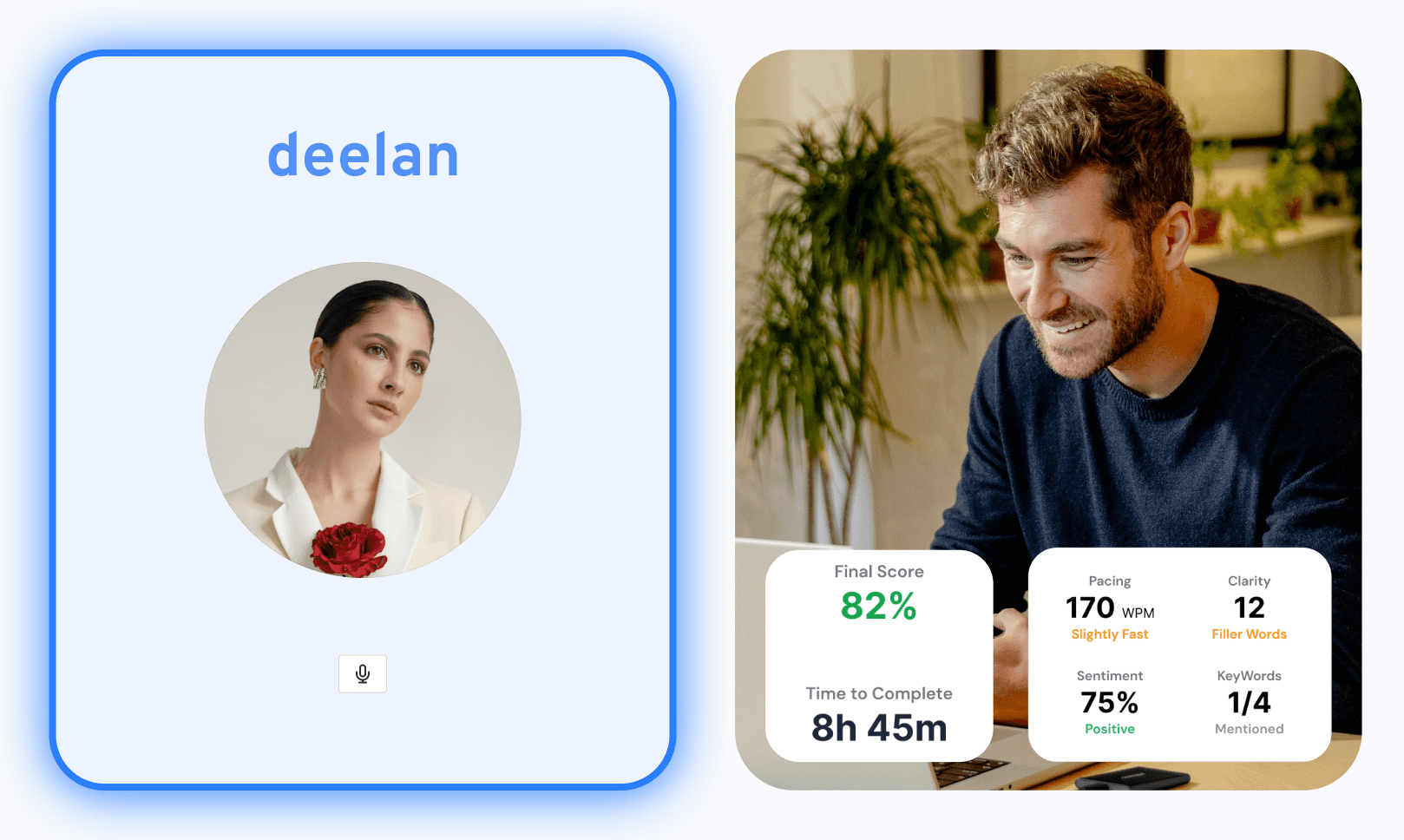
2. Onboarding adapts to the rep
An experienced AE and a first-time SDR should not receive identical training.
Deelan can personalize training around role, seniority, experience and identified skill gaps.
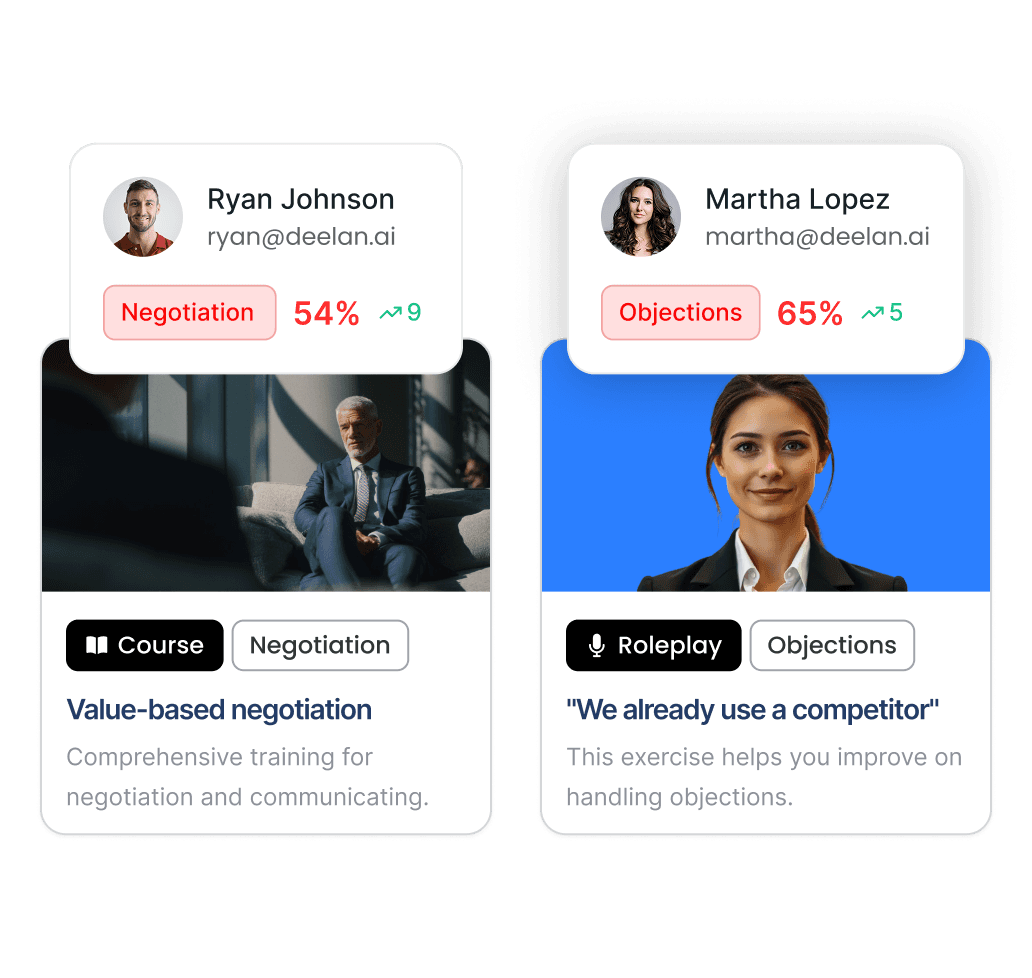
3. Readiness is demonstrated through real performance improvement
Assessments and roleplays give teams more evidence than a completion percentage.
Managers can see where someone is strong, where they need more practice and whether they are ready for real conversations.
4. Development continues after onboarding
The system can keep identifying gaps and recommending follow-up practice rather than ending development on day 30 or 90.
Deelan starts at $299/month with unlimited learners, making it particularly attractive for growing sales teams where per-seat pricing becomes expensive quickly.
Best fit: Startups, scale-ups and mid-market revenue organizations that want one system covering the full path from first-day onboarding to continuous improvement.
2. Mindtickle — Best for Enterprise Sales Readiness
Best for: Large organizations with formal competency and certification requirements.
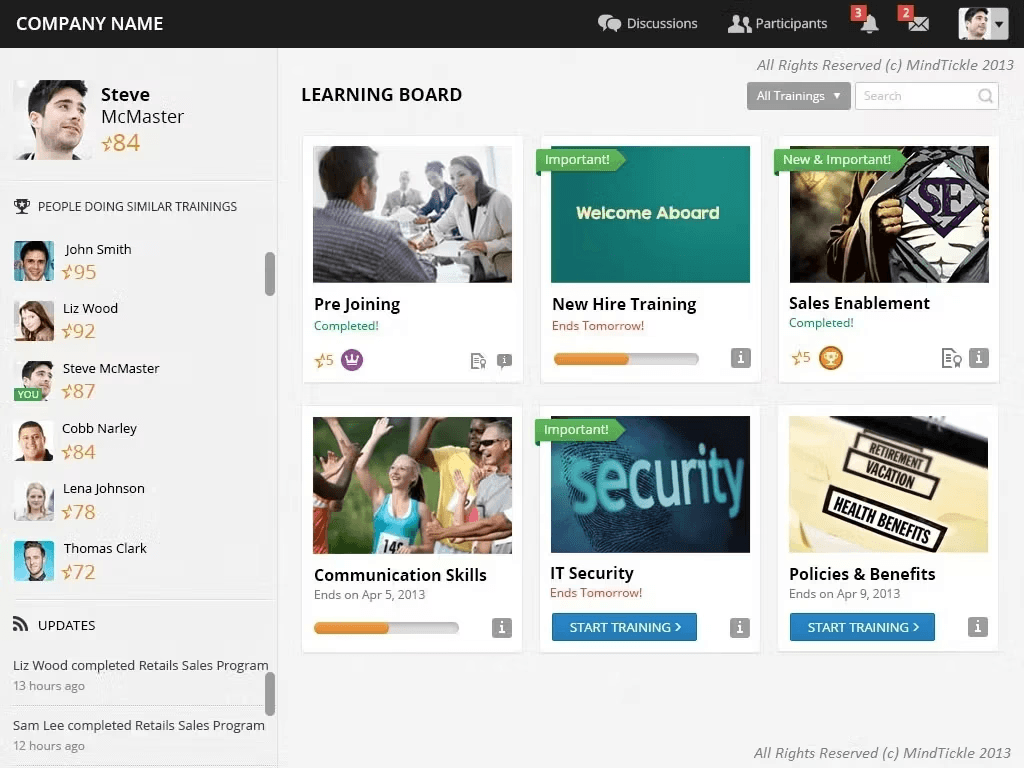
Mindtickle is one of the established names in sales readiness.
Its platform combines structured sales training with onboarding programs, AI roleplay, competencies, coaching and readiness measurement.
The biggest strength is structure.
Large organizations can define what a fully ready seller looks like, assess reps against those expectations and build programs around specific roles or skills.
Mindtickle makes the most sense when onboarding is part of a much larger global sales enablement operation.
Potential limitation: That depth also means more implementation, governance and administration than smaller teams may need.
Best fit: Enterprise sales organizations with established enablement teams.
3. SalesHood — Best for Structured Sales Learning
Best for: Mid-market and enterprise organizations combining onboarding, content and seller readiness.
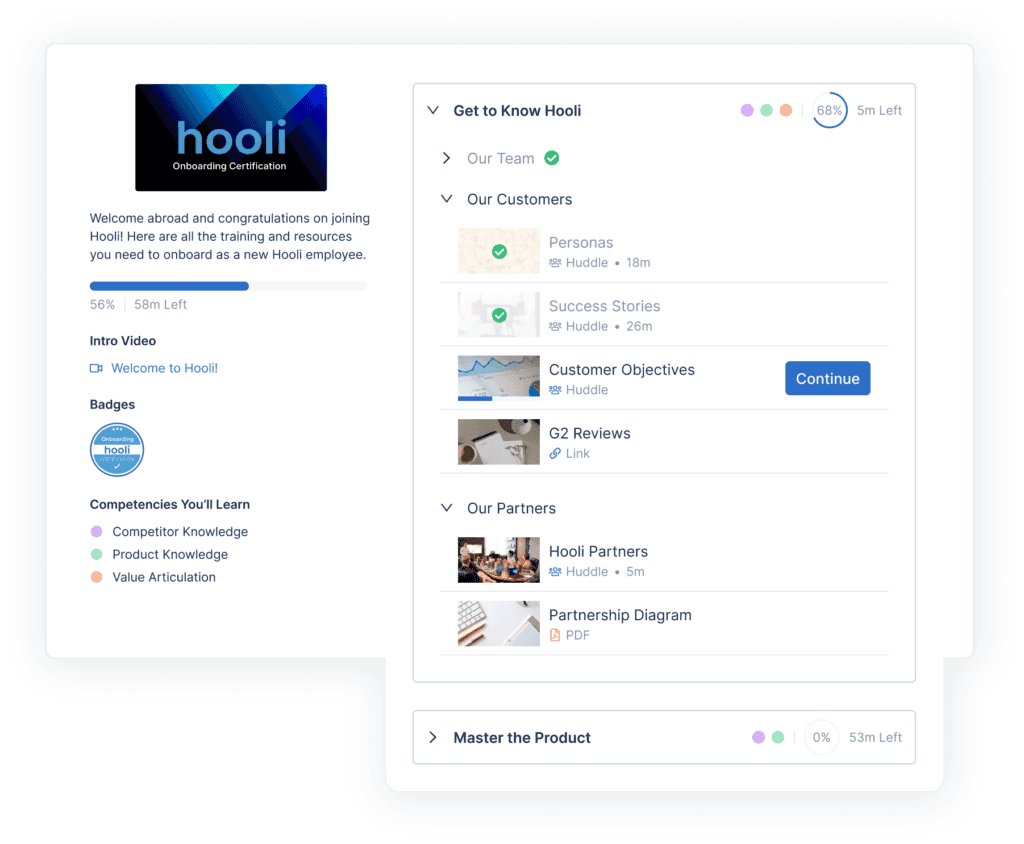
SalesHood brings together sales content, onboarding, learning paths, seller readiness and AI practice.
It works particularly well for organizations that already have a defined sales methodology and need a structured system for rolling it out consistently.
Key strengths
Learning paths
Sales onboarding programs
AI pitch practice
AI roleplay
Content management
Gamification
Analytics and reporting
SalesHood also supports ongoing learning, making it useful for product launches, methodology reinforcement and continued seller development.
Potential limitation: AI usage and more advanced functionality can depend on the package selected.
Best fit: Established B2B sales organizations that want structured enablement and onboarding in the same environment.
4. WorkRamp — Best LMS-First Sales Onboarding Platform
Best for: Teams that want a broader LMS with increasingly strong sales-practice capabilities.
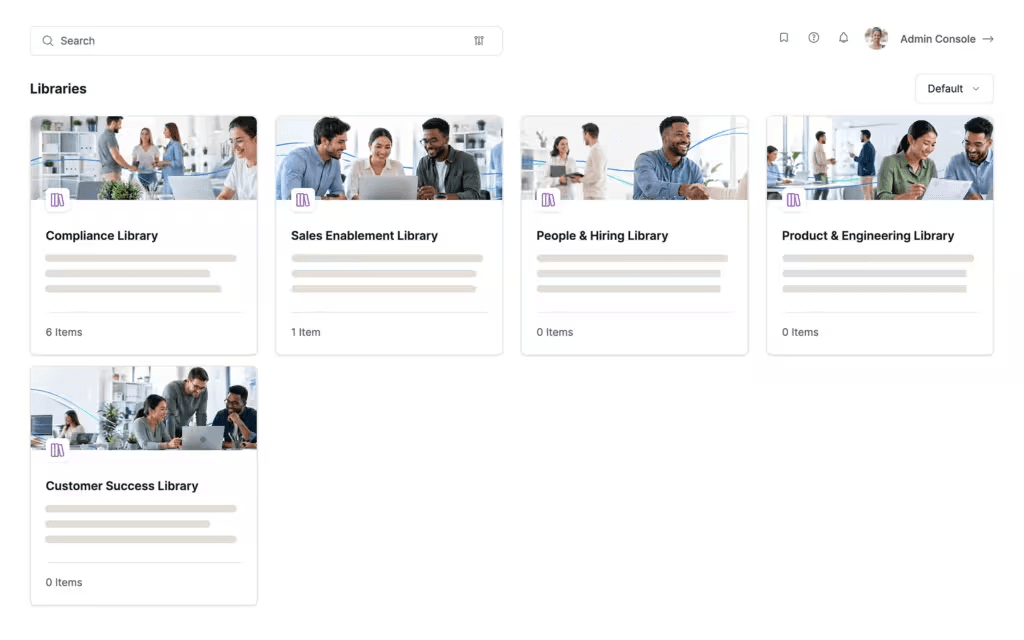
WorkRamp approaches onboarding from the learning-management side.
Teams can build structured courses and learning programs, assign training, track progress and support broader employee learning beyond the revenue organization.
The platform has also expanded its sales practice capabilities with AI simulations.
Reps can practise conversations such as:
Discovery
Objection handling
Pricing conversations
Sales pitches
Customer scenarios
Potential limitation: Organizations focused exclusively on revenue performance may find the platform broader than necessary.
Best fit: Companies wanting one LMS for sales onboarding and other employee training.
5. Allego — Best for Practice and Continuous Coaching
Best for: Distributed sales organizations that prioritize frequent practice and coaching.
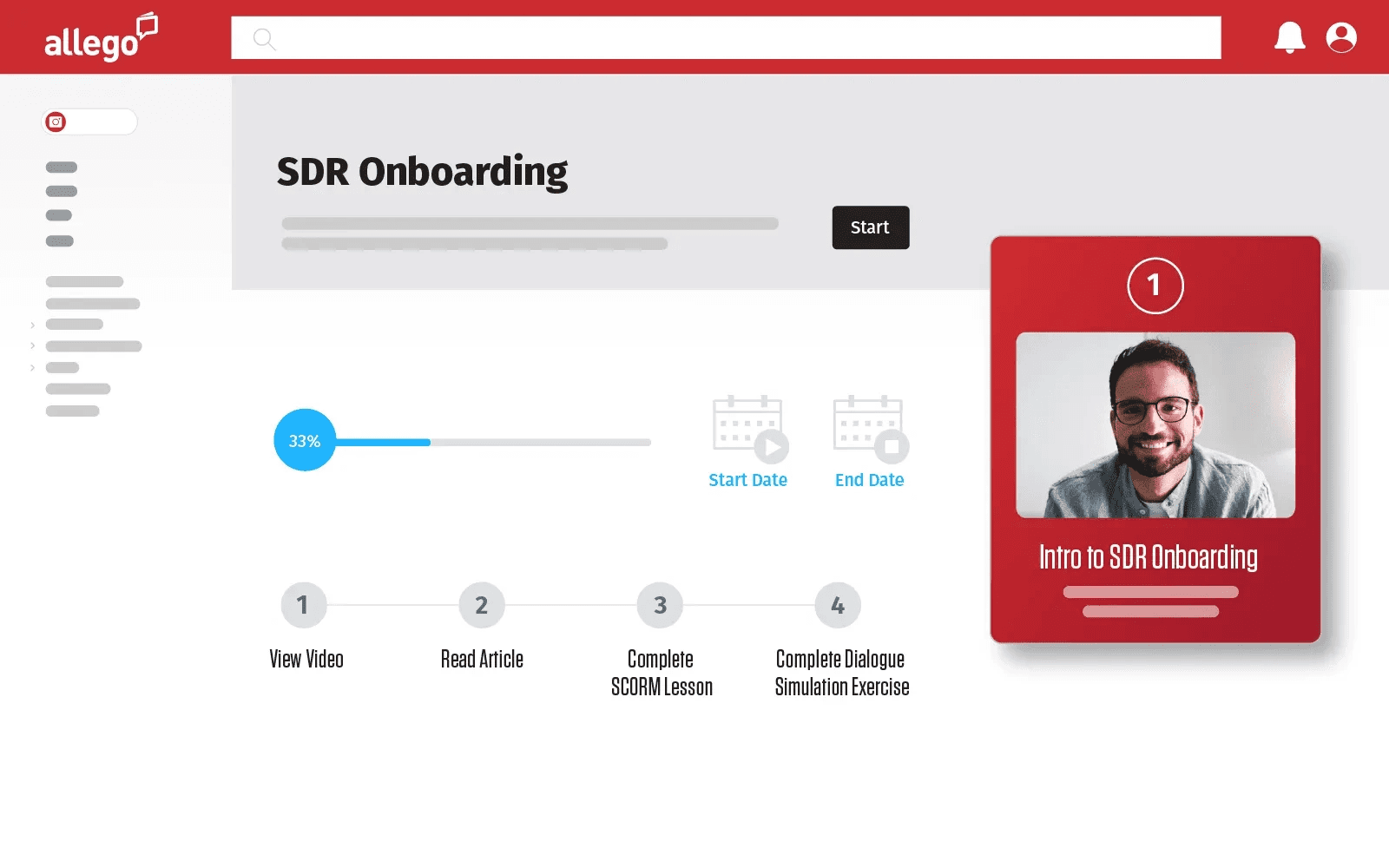
Allego has a strong history in sales learning and video-based coaching.
Its approach extends onboarding beyond a course library by combining learning with repeated practice, reinforcement, peer knowledge and coaching.
New hires can move through guided learning experiences and practise the skills they will need in the field.
Key strengths
AI sales roleplays
Video coaching
Structured learning
Reinforcement
Peer learning
Knowledge access
Continuous readiness
This makes Allego particularly useful for organizations where ongoing seller development matters as much as initial onboarding.
Potential limitation: The breadth of the wider enablement suite can make the platform heavier than necessary for smaller teams.
Best fit: Large or distributed revenue teams with mature coaching programs.
6. Seismic Learning — Best for Onboarding Connected to Sales Content
Best for: Enterprise companies already building their enablement ecosystem around sales content.
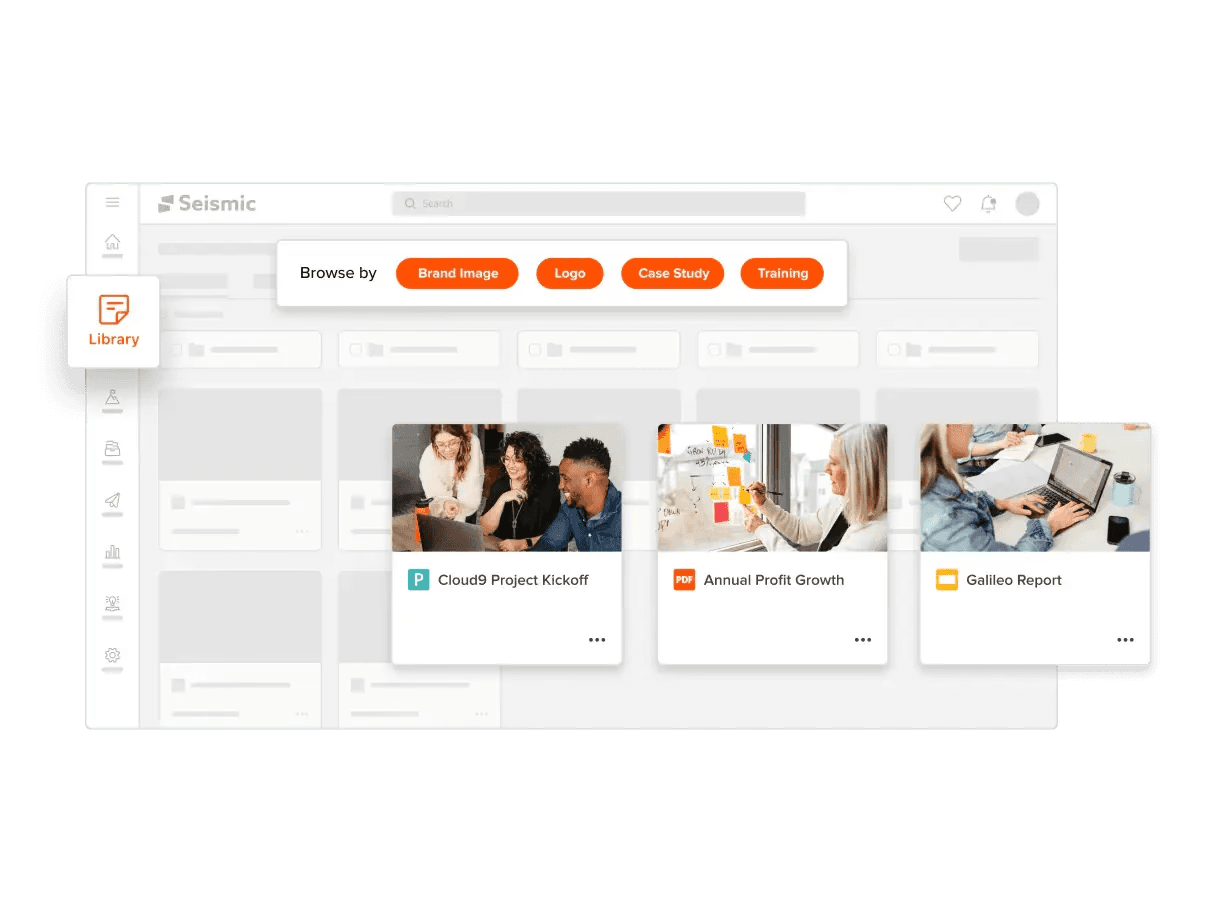
Seismic combines sales learning with a much broader revenue enablement platform.
Its onboarding capabilities include personalized learning, training content, practice, AI roleplay and performance visibility.
Where Seismic becomes especially useful is when training needs to stay closely connected to the content sellers actually use with prospects.
Key strengths
Personalized learning
AI roleplay
Content management
Coaching
Enterprise enablement
Performance insights
Potential limitation: If your main requirement is simply faster sales onboarding, buying into a large enterprise enablement ecosystem can add unnecessary complexity.
Best fit: Large enterprises that need onboarding, governed content and enablement infrastructure together.
7. 360Learning — Best for Collaborative Onboarding
Best for: Organizations that want internal experts involved in creating training.
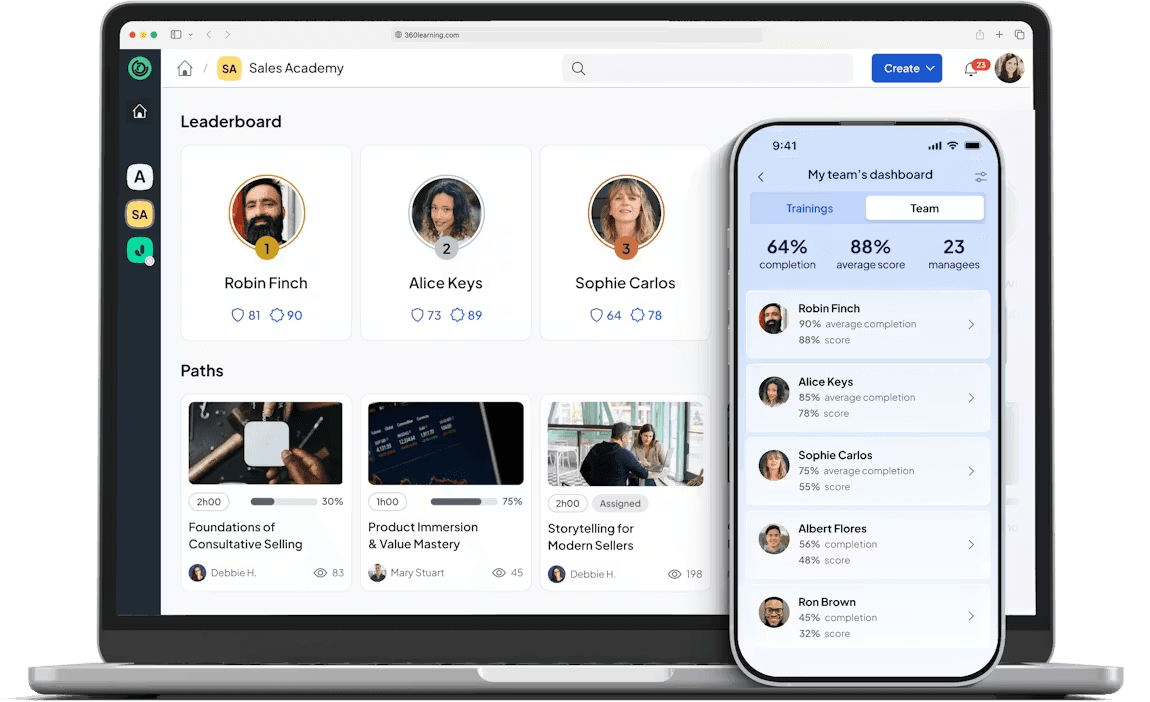
360Learning is built around collaborative learning.
Instead of relying entirely on a central L&D or enablement team, subject-matter experts can help create and update training themselves.
That can be valuable in sales organizations where product, market and messaging knowledge changes constantly.
Plans for smaller teams start around $8 per user/month, while larger deployments use custom pricing.
Potential limitation: Its strongest differentiation is collaborative LMS functionality rather than deep revenue-specific performance workflows.
Best fit: Companies that want sales experts actively contributing to onboarding content.
8. Second Nature — Best for AI Sales Roleplay
Best for: Teams that already have an LMS and mainly need more sales conversation practice.
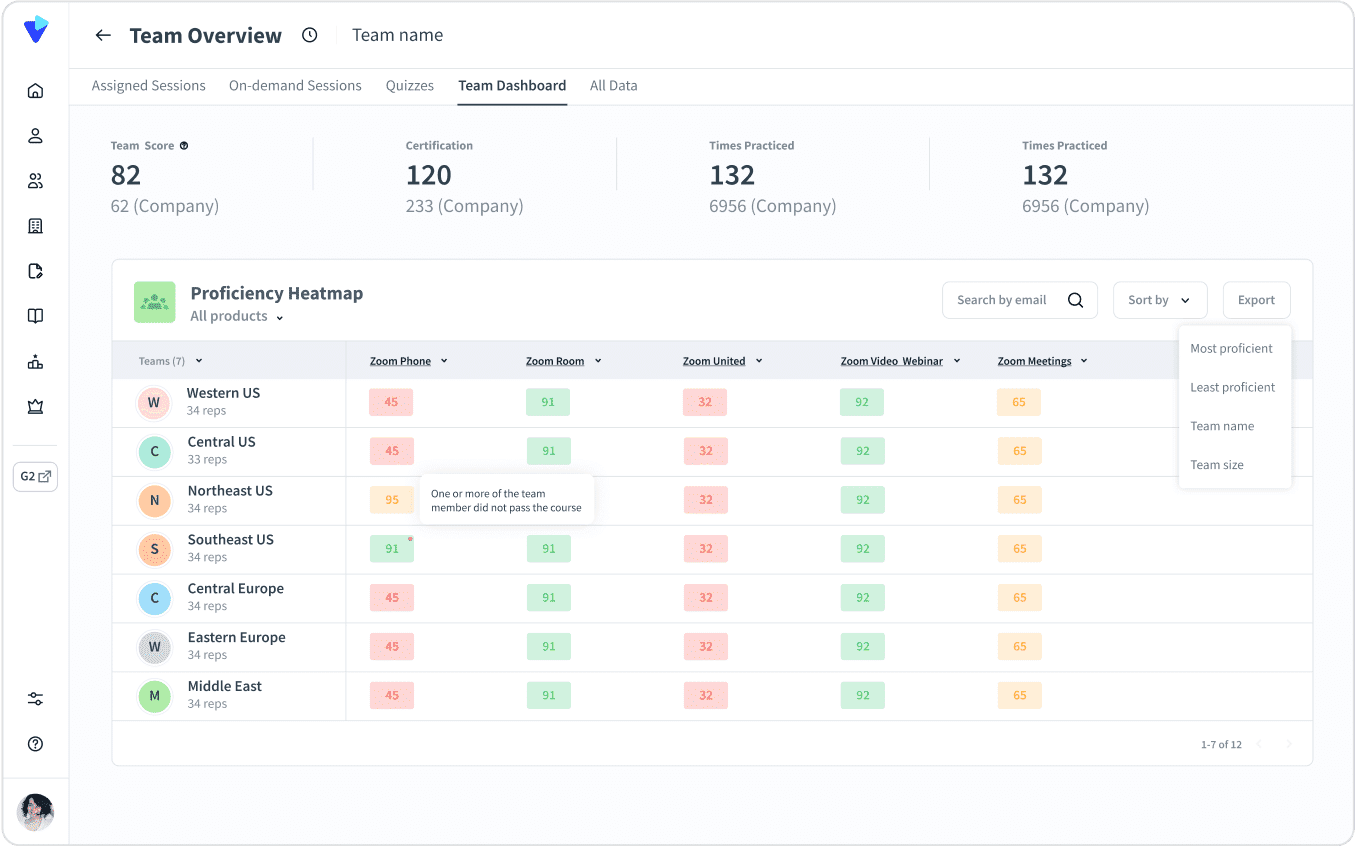
Second Nature takes a narrower approach.
Instead of trying to own the entire onboarding journey, it focuses heavily on realistic AI sales simulations.
Reps can practise conversations such as cold calls, discovery, objection handling and pitches with AI buyers before having those conversations with prospects.
Key strengths
Realistic AI conversations
Sales scenario practice
Immediate feedback
Repeatable practice at scale
Conversation certification
That specialization can be valuable if the knowledge and curriculum side of onboarding is already solved.
Potential limitation: Teams that also need courses, complete onboarding programs, broader assessments and adaptive development may need another platform alongside it.
Best fit: Organizations looking specifically for an AI practice layer.
Want More Sales Onboarding Data?
Freebies
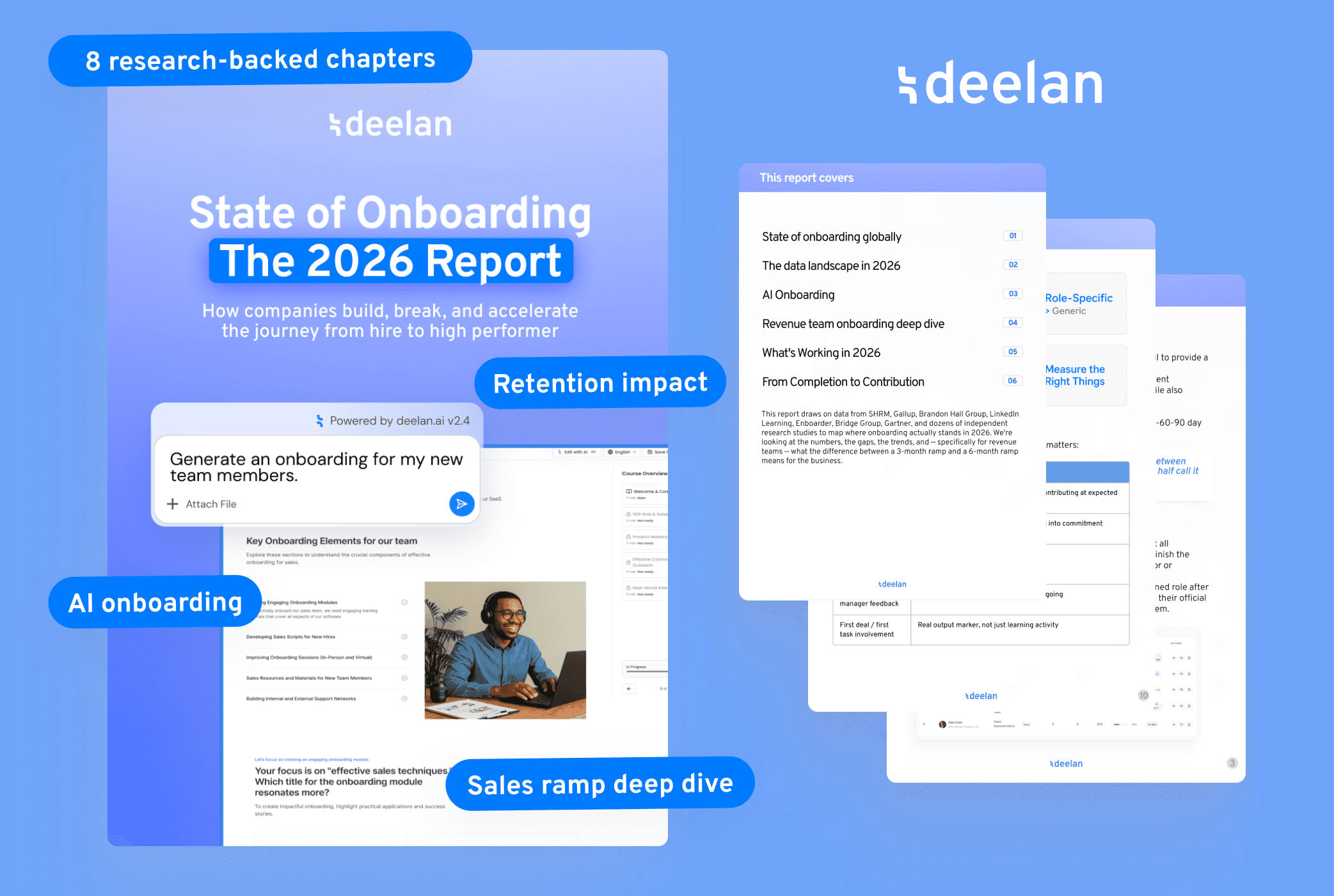
Get our Report about state of onboarding
This report breaks down exactly where the gaps are, what it's costing revenue teams, and what the fastest-ramping organizations are doing differently.
The Best Sales Onboarding Software Should Reduce Manager Dependency
There is another cost of poor onboarding that does not always appear in LMS analytics:
manager time.
Without a scalable system, managers become the onboarding platform.
Good sales onboarding software automates the repeatable part of coaching so managers can focus on higher-value development.
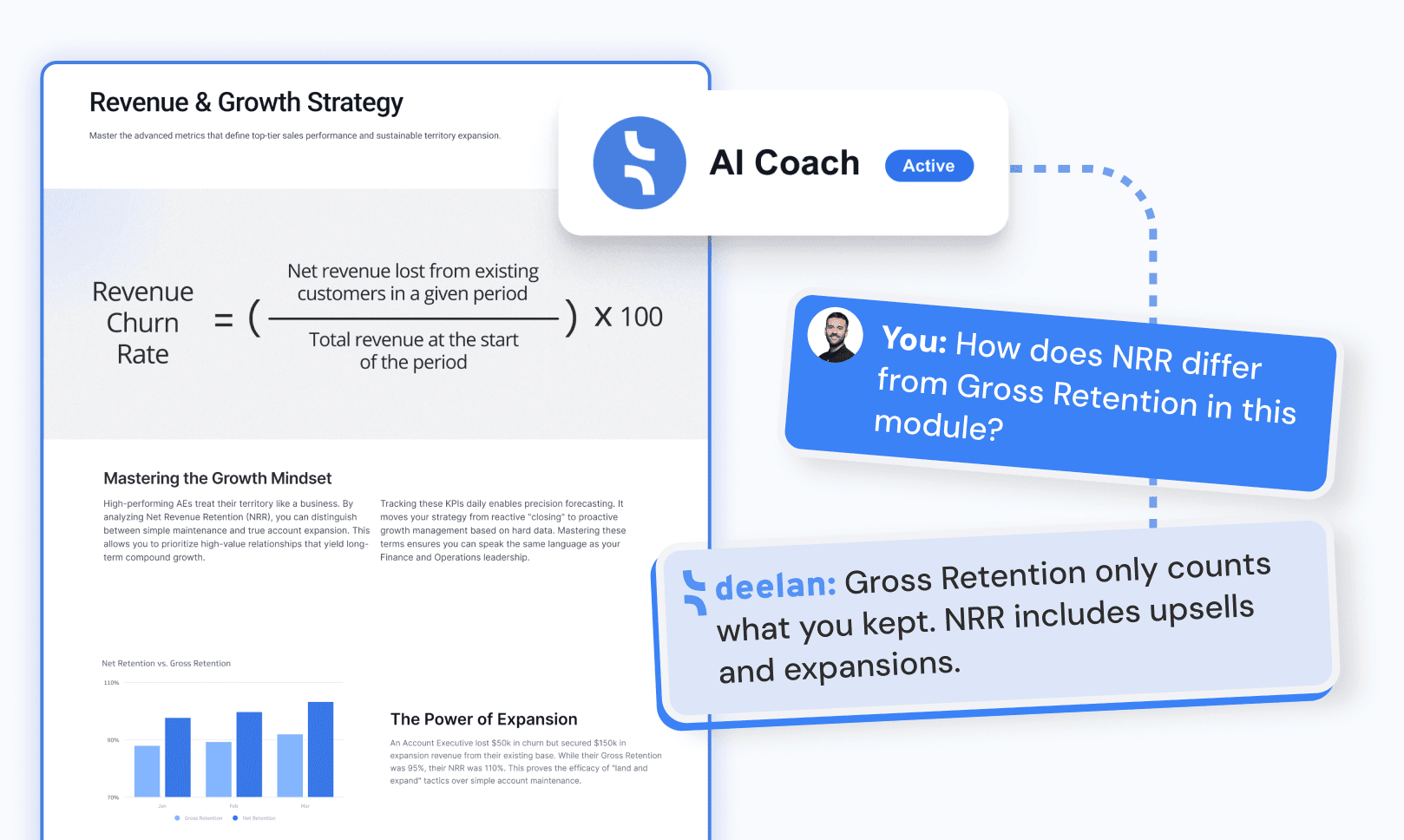
AI can handle foundational practice, immediate feedback, assessments and reinforcement.
Managers can then spend their time on strategy, complex deals and the gaps where human coaching actually matters.
Which Sales Onboarding Platform Should You Choose?
The right choice depends on what is slowing your onboarding down.
Choose Deelan if you want the complete system: knowledge training, AI-created courses, roleplays, assessments, structured onboarding programs, adaptive follow-up and continuous performance development.
Choose Mindtickle if you need deep enterprise readiness frameworks and formal competency management.
Choose SalesHood if you want established sales learning, content and readiness workflows.
Choose WorkRamp if you need a broader LMS that also supports sales simulations.
Choose Allego if ongoing coaching, practice and peer learning are central to your enablement strategy.
Choose Seismic if onboarding needs to live inside a larger enterprise sales-content ecosystem.
Choose 360Learning if collaborative content creation is the priority.
Choose Second Nature if your LMS is already solved and you mainly need AI roleplay.
Build Sales Onboarding Around Readiness, Not Completion
Deelan turns your existing playbooks, product knowledge and sales conversations into complete onboarding programs in minutes.
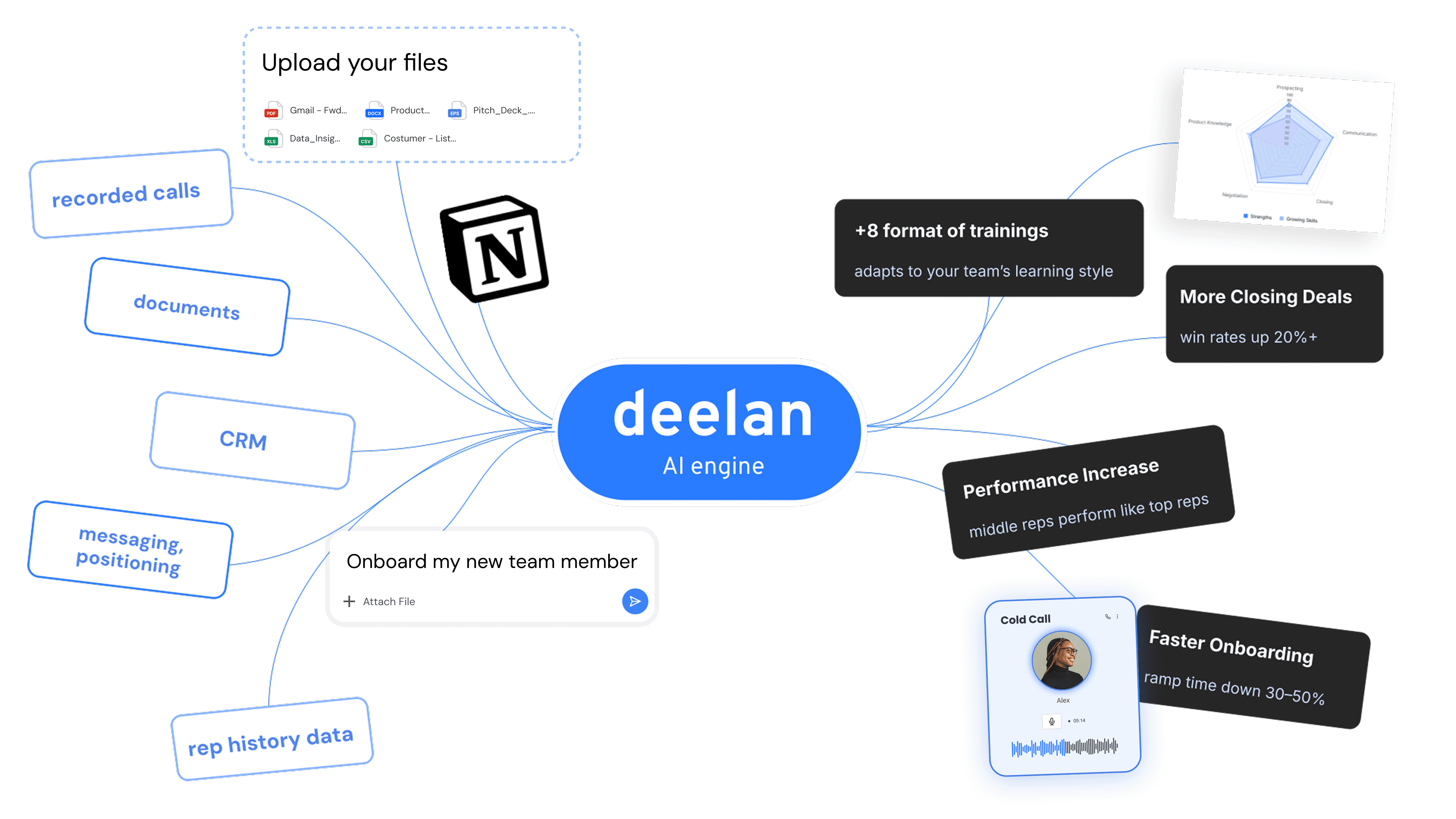
Build courses. Assess knowledge. Practise real conversations with AI. Identify skill gaps. Personalize follow-up training. Track readiness.
One continuous path from new hire to top performer.