Training your sales force is one of the highest-leverage investments a revenue leader can make - but the costs vary wildly depending on the approach you take. From hiring a high-ticket consultant to fly in for a two-day workshop, to subscribing to a modern AI training platform, the price range is enormous.
This guide breaks down what you'll actually pay in 2026 for each type of sales force training, the hidden costs most budgets overlook, and how to get the best return on your investment without overspending.
Sales Force Training Cost at a Glance
Training Type | Typical Cost | Best For |
|---|---|---|
Free / Self-Directed | $0 | Individuals, founders |
Online Courses (self-paced) | $100 – $1,000 / rep | Entry-level skill building |
Cohort / Group Programs | $1,500 – $4,000 / rep | Mid-sized teams |
Corporate Trainer (on-site) | $5,000 – $20,000+ / day | Intensive workshops |
Executive Sales Coach | $500 – $1,500 / hour | Leadership & AEs |
Custom Enterprise Program | $25,000 – $100,000+ | Large, global teams |
Scaling teams, ongoing reinforcement |
The Traditional Sales Force Training Market and Why It's Expensive
Before exploring what things cost, it helps to understand why traditional sales force training has become so costly.
1. Corporate Trainers and Consulting Firms
Hiring a well-known sales methodology firm — think trainers certified in SPIN Selling, Challenger, MEDDIC, or Miller Heiman — is the most common approach for mid-to-large sales organizations. And it comes at a significant price.
What you'll typically pay:
Half-day or full-day workshop: $5,000 – $15,000 flat fee, plus travel
Multi-day on-site program: $15,000 – $40,000+
Named-brand consultant with industry prestige: $20,000 – $50,000 for a single engagement
Follow-up coaching add-ons: $2,000 – $8,000 extra per month
These fees cover the trainer's IP, preparation time, facilitation, and travel. What they often don't cover: lasting behavioral change. Most traditional workshops are one-and-done events. Without reinforcement, research consistently shows that up to 70% of training content is forgotten within 24 hours.
2. Individual Sales Coaches
One-on-one coaching has become a popular investment for high-value AEs and sales leaders. Rates vary significantly based on the coach's background and reputation:
Freelance / generalist coach: $150 – $400/hour
Experienced sales coach with track record: $400 – $1,000/hour
Top-tier executive sales coach: $1,000 – $1,500/hour or more
Monthly retainer (4–8 sessions): $2,000 – $6,000/month
Coaching delivers excellent personalized feedback, but it doesn't scale. If you have 20, 50, or 100 reps, individual coaching for every team member is simply not economically viable.
3. Online Course Platforms
Platforms like LinkedIn Learning, Coursera, Udemy, or sales-specific providers offer a lower-cost alternative:
Individual course: $25 – $500 per course
Annual platform subscription (per user): $300 – $800/rep/year
Specialized sales programs: $500 – $2,000/rep
The main drawback: these are passive, self-directed formats. Completion rates for corporate e-learning hover around 20–30%, and without role-specific practice or real-time feedback, knowledge rarely transfers to the sales floor.
4. Bootcamps and Intensive Programs
For teams undergoing a major GTM shift or methodology overhaul:
2–3 day in-person bootcamp: $3,000 – $8,000 per attendee
6–12 week virtual program with live sessions: $1,500 – $4,000/rep
Full custom cohort program: $30,000 – $80,000+ total
The Hidden Costs of Sales Force Training
The invoice from your training provider is only part of the story. The true Total Cost of Ownership (TCO) includes:
Opportunity Cost
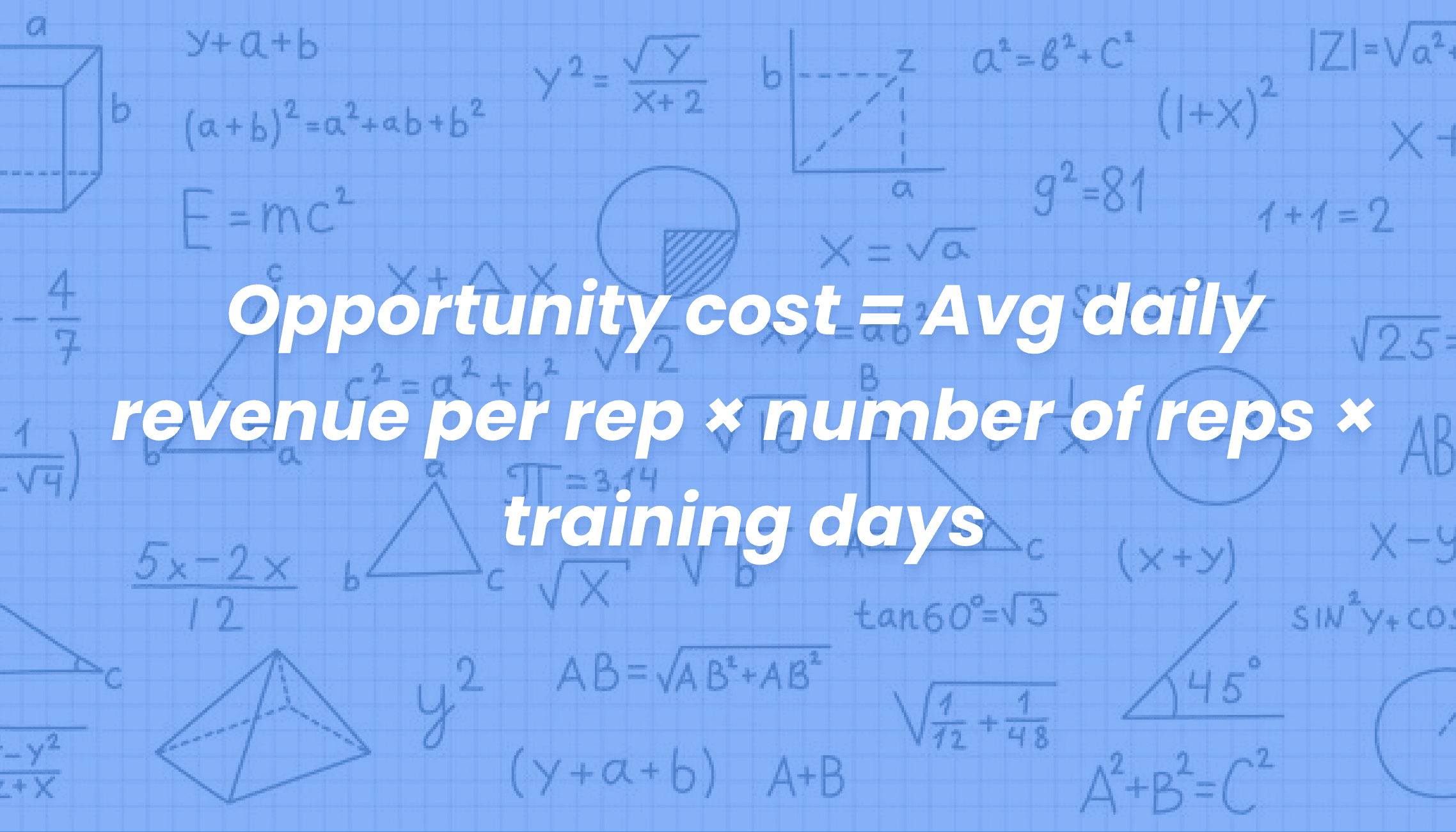
Every hour a rep spends in training is an hour not spent on the phone, in discovery calls, or closing deals. For a team of 20 reps with an average quota of $800K, even one full day off the floor represents significant revenue at risk.
The Productivity Dip
After training, reps typically go through an adjustment period. Expect a temporary 10–15% drop in activity as they try to implement new techniques before they become second nature.
CRM & Process Updates
Your RevOps or Enablement team will need to update your Salesforce or HubSpot playbooks, sequences, and talk tracks to reflect any new methodology. This is rarely accounted for in training budgets.
The Reinforcement Void
This is the biggest hidden cost. Without structured reinforcement — roleplay, coaching, spaced repetition — most training investment evaporates quickly. If you spend $30,000 on a training program and $0 on reinforcement, you've likely wasted most of that budget.
Sales Force Training Cost by Company Size
Startups (5–20 reps)
Typical total spend: $3,000 – $12,000
At this stage, you don't need a Fortune 500 methodology program. Focus on foundational playbooks, structured onboarding, and basic objection handling. The biggest risk here is over-investing in complex enterprise training before your sales motion is fully proven.
Scale-ups (20–100 reps)
Typical spend: $2,500 – $5,000 per rep annually
This is where training costs can spiral quickly — especially if you're running training through individual coaches and one-off workshops. The pressure to standardize across a growing team, reduce ramp time for new hires, and coach managers makes this stage the most expensive for most companies.
Enterprise (100+ reps)
Typical annual enablement budget: $250,000+
At scale, global alignment, region-specific customization, and integration with CRM workflows all add significant cost. Enterprise programs from major training firms often start at $50,000 and scale into six-figure engagements.
Is Sales Force Training Worth the Investment?
The ROI data is clear: well-executed sales training delivers measurable results.
Companies that invest in structured sales training report an average return of $4.53 for every $1 spent
A 10-person team that improves its win rate by just 3 percentage points — from 15% to 18% — can generate hundreds of thousands in additional ARR annually
Reducing ramp time by even 5% for a team of 100 reps can represent millions in recovered productivity
The challenge isn't whether to invest — it's how to invest without overpaying for formats that don't deliver lasting results.
AI-Powered Training Is Changing the Cost Equation
Traditional sales training has a fundamental economic problem: the most effective formats (coaching, live workshops, custom programs) are also the most expensive — and don't scale.
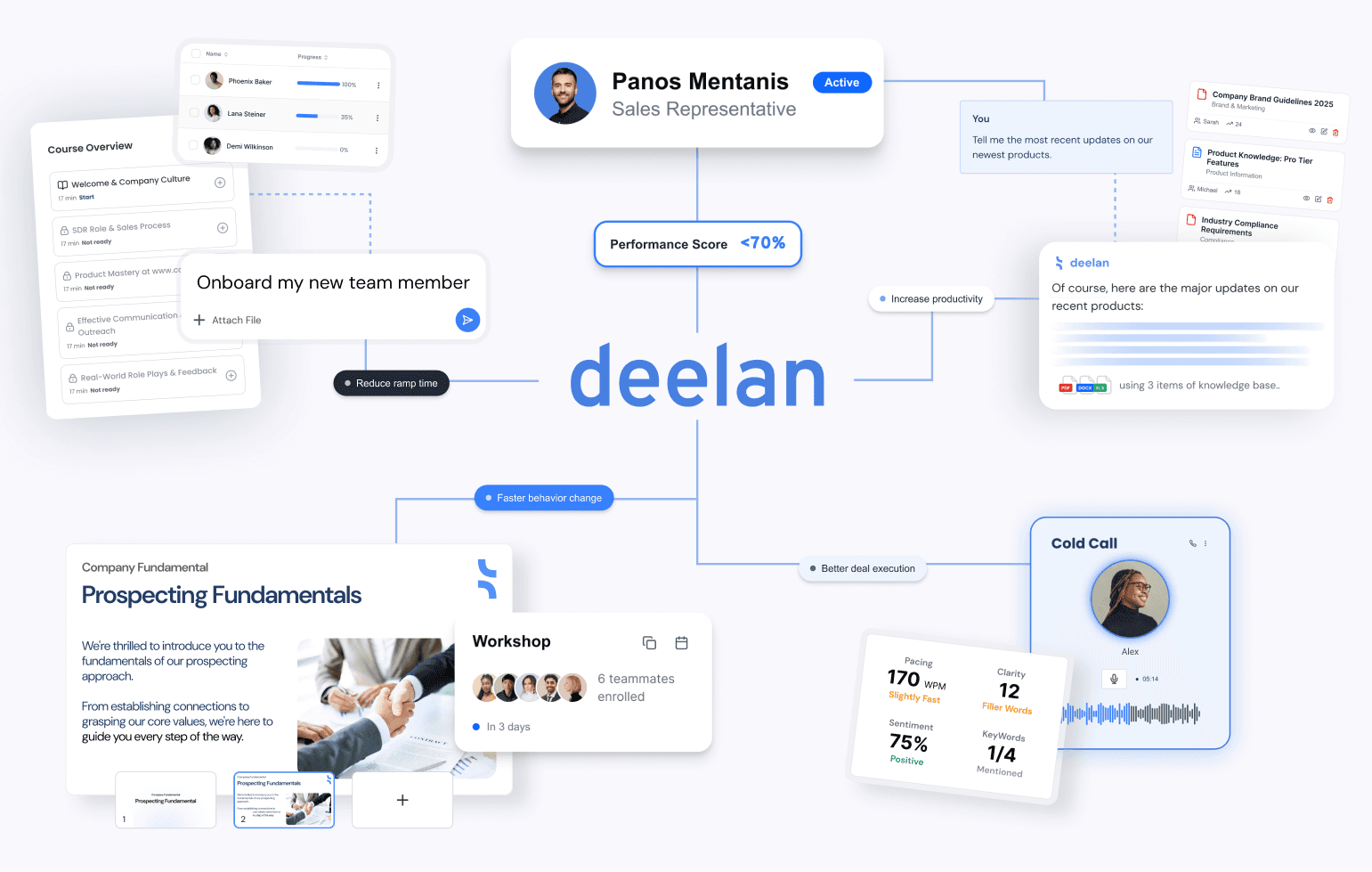
Modern AI training platforms are changing this calculus. Instead of paying $10,000–$50,000 for a consultant to train your team once, platforms like Deelan let you:
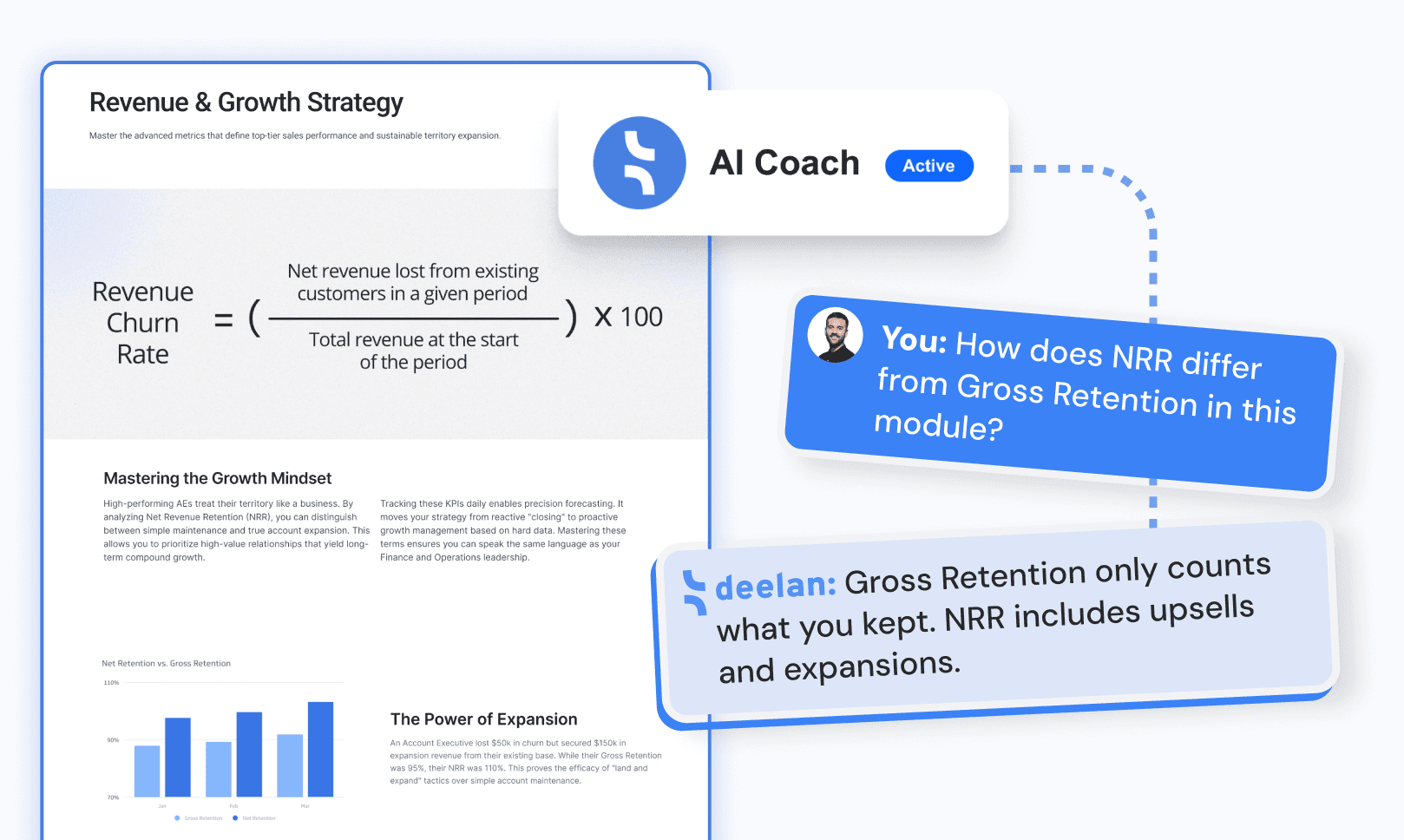
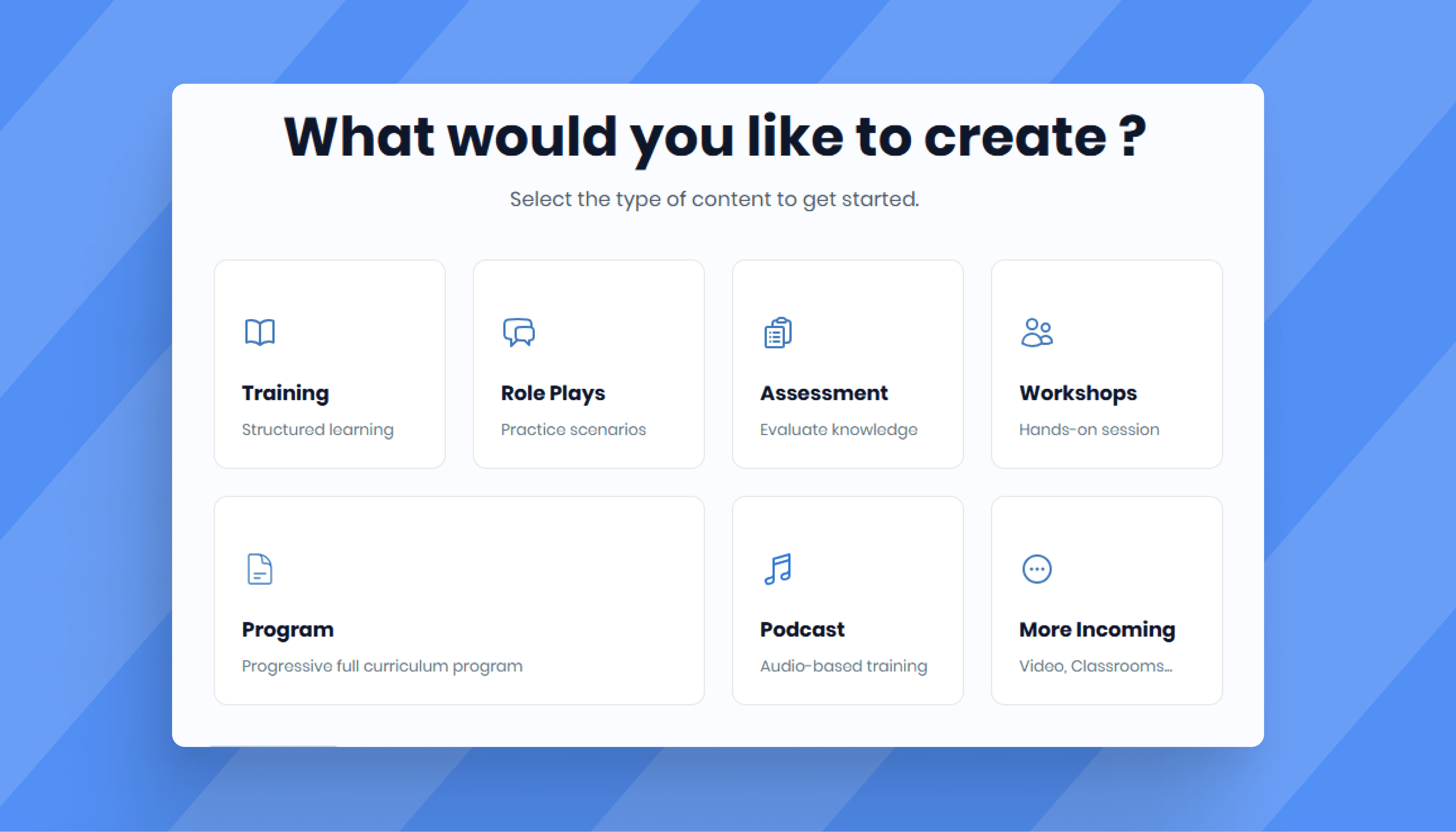
Convert your existing playbooks, call recordings, and scripts into interactive training in minutes
Run unlimited AI-powered roleplays for every rep on your team — at any time
Automatically adapt learning paths based on each rep's role, seniority, and skill gaps
Scale coaching-level feedback without adding headcount to your enablement team
Deelan's pricing is transparent and flat:
Plan | Price | What's Included |
|---|---|---|
Starter | €129/month | Unlimited learners, courses, workshops, standard templates |
Growth | €300/month | Everything in Starter + roleplays, programs, assessments, micro-learning, podcasts |
Enterprise | Custom | Everything in Growth + AI webinars, API integrations, L&D and enablement support |
No per-seat fees. No hidden costs per learner. A team of 5 or 50 pays the same monthly rate.
"Before Deelan, onboarding new sales reps was a huge time sink. With Deelan, training became structured, adaptive, and largely self-driven. We reduced ramp time by over 30% and saved countless hours of manual coaching and onboarding." — Jonathan Kindermans, Founder of Kidola
For most growing teams, this means getting enterprise-level training capability at a fraction of what a single consultant workshop would cost.
→ See Deelan's full pricing or talk to us for a tailored offer
How to Choose the Right Sales Force Training Approach
Questions to Ask Any Provider
How do you customize content for our specific product, industry, and buyer persona?
What does reinforcement look like at 30, 60, and 90 days after delivery?
Can you share a case study with a company our size and average deal value?
How do you measure behavioral change — not just course completion?
Red Flags to Watch For
"One-and-done" delivery — no reinforcement or follow-up plan included
No measurement framework — they track attendance, not quota impact
Generic content — the same slides they deliver to every company in every industry
Per-seat pricing that scales into the thousands — this is how traditional LMS vendors and training firms extract maximum revenue from growing teams
Sales Force Training Budget Checklist
Before you sign any contract, work through these questions:
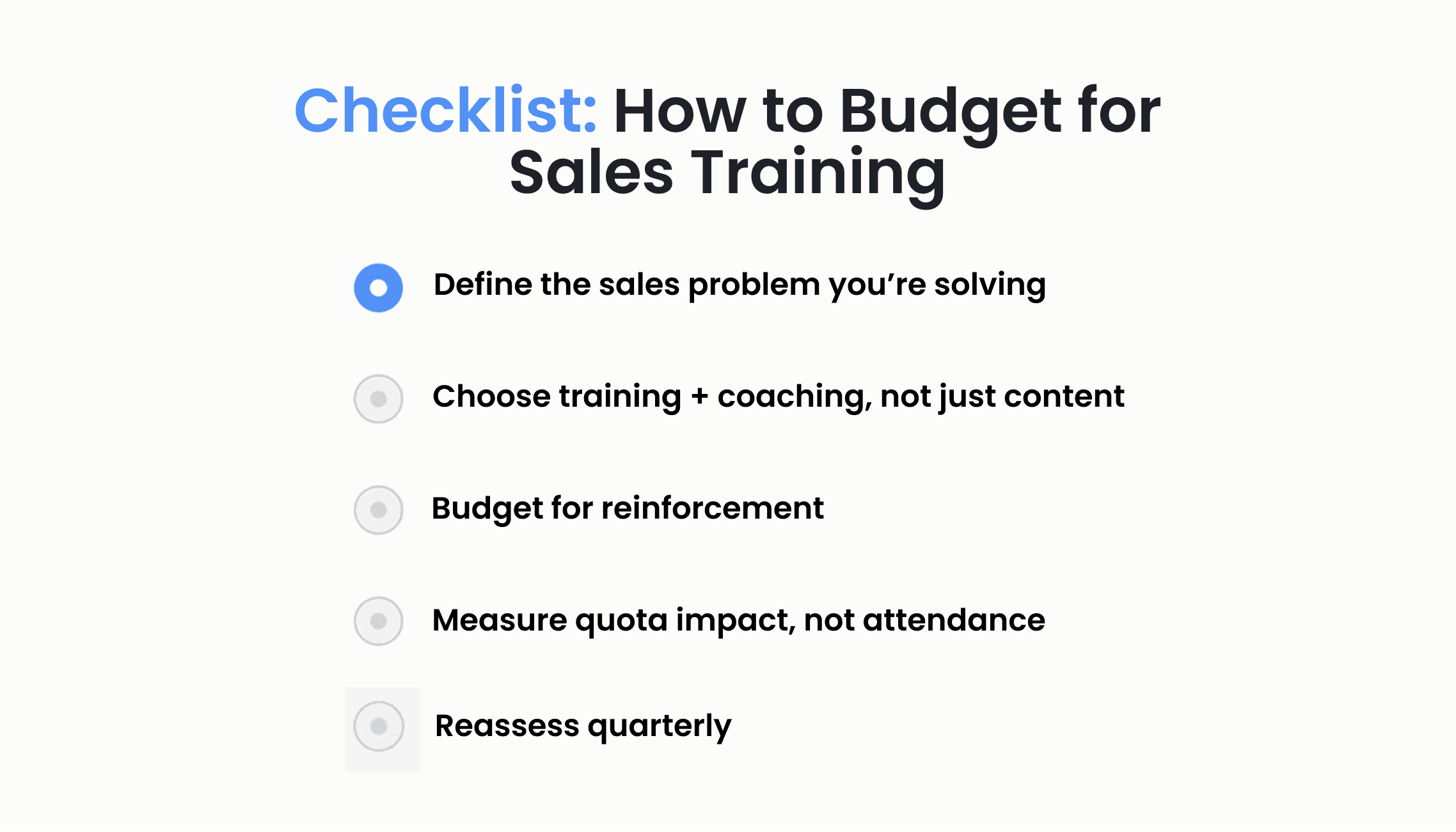
What specific sales problem are we solving? (Ramp time, win rate, objection handling, methodology adoption?)
Have we accounted for both training and reinforcement in the budget?
Does this solution adapt to different roles — SDRs, AEs, CSMs, managers?
Can we measure quota impact, not just completion rates?
Is the cost per rep sustainable as the team grows?
What does the vendor's own renewal/retention rate look like?
Frequently Asked Questions
How much does sales force training cost per employee?
On average, companies spend between $1,500 and $3,500 per employee annually for comprehensive sales training. Basic online programs can start as low as $100–$400, while high-end custom coaching engagements can exceed $10,000 per rep.
What's the difference between sales training and sales coaching?
Sales training delivers structured content — a methodology, a playbook, a course. It's the "what to do." Sales coaching is the ongoing feedback and practice that makes those skills stick. It's the "how to actually do it consistently." Both are needed; most companies underinvest in coaching.
Is AI-based sales training as effective as live training?
AI-based training platforms have closed the gap significantly. Modern platforms offer real-time roleplay feedback, adaptive content, and personalized learning paths — capabilities that previously required dedicated human coaches. For reinforcement and ongoing skill development, AI training is often more effective than periodic live events because it's continuous and measurable.
How can I reduce sales training costs without sacrificing quality?
The most effective approach is to shift from event-based training (expensive, one-off workshops) to a continuous training model using an AI platform. This eliminates per-head costs, reduces dependence on external consultants, and delivers better long-term retention through spaced repetition and roleplay.
Deelan is an adaptive AI training platform built for modern revenue teams. From onboarding to ongoing coaching, Deelan turns your playbooks and recordings into interactive, role-specific training — without the overhead of traditional consultants or LMS tools.