Key Takeaways
Teams that practice regularly report 20–45% higher win rates and measurably lower average discount rates
6 scenarios you can practice to imrpove sales negociation skills: price objections, competitor threats, multi-stakeholder deals, deadline pressure, unearned discounts, and accessing decision-makers.
Effective sessions follow a clear structure: realistic setup, defined success criteria, recorded performance, and specific post-exercise feedback
AI role play on deelan platoform removes the two biggest barriers to consistent practice — scheduling constraints and inconsistent buyer simulation quality
Most sales training never reaches the rep when it matters most: in the moment a buyer pushes back.
Reps read the playbook, attend the workshop, understand the frameworks — and then a buyer says "your competitor quoted us 30% less" and everything they prepared evaporates. The gap between knowing a technique and executing it under real pressure is not a knowledge problem. It is a practice problem.
Sales negotiation can help to create a controlled environment where reps can rehearse high-stakes conversations, build genuine response fluency, and develop the composure that only comes from having navigated the same situation many times before.
This guide covers the six most effective scenarios, complete with scripts and scoring criteria, the structural principles that make sessions productive, the most common mistakes that undermine training programs, and how AI simulation is changing what consistent, high-quality negotiation practice looks like at scale.
6 Sales Negotiation Role Play Exercises to Try With Your Team
Exercise 1: The Price Objection
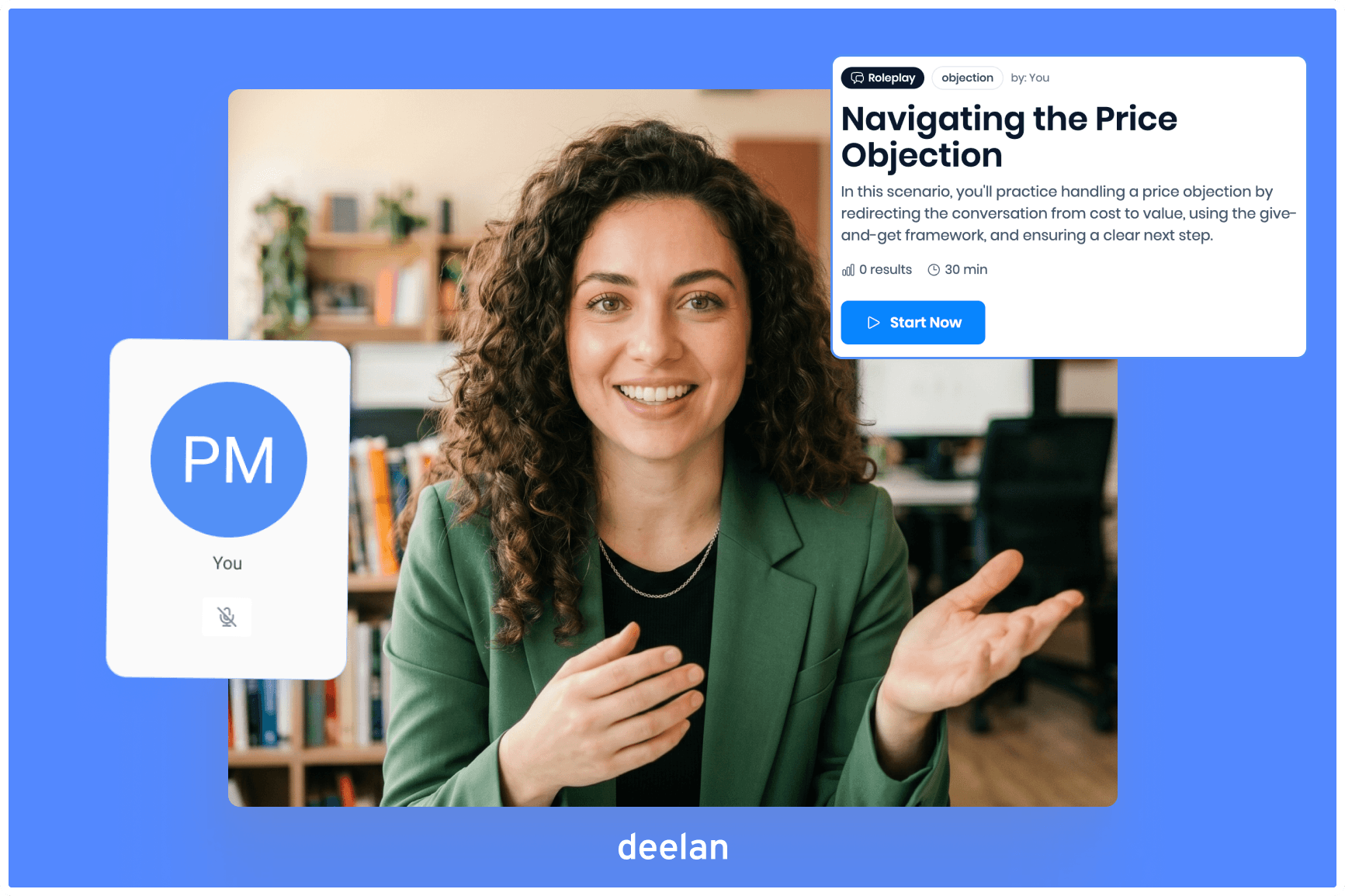
Core skill: Redirecting from price to value; executing the give-and-get framework
Price objections are the most common point of failure in sales negotiations. Reps default to discounting before they have fully understood the buyer's concern.
Scenario setup: The buyer responded positively to the demo. At the moment pricing is introduced, their enthusiasm visibly shifts. They request a 25% reduction and signal that their CFO will be resistant.
Sample dialogue:
Buyer: "I appreciated everything you walked us through, but the price is well above what we had in mind. We were expecting something closer to 25% lower. Our CFO is going to have serious reservations."
Rep: "I understand, and I appreciate you being direct about that. Before we discuss the numbers, I'd like to make sure I understand what's most valuable to your team from what you saw today. Which components stood out?"
Buyer: "The automated reporting would save my team roughly 15 hours per week. And the integration with our existing systems would eliminate a significant amount of manual work."
Rep: "Those two areas tend to deliver the fastest return on investment. At 15 hours per week, assuming an average loaded cost of $60 per hour, you're looking at approximately $46,000 in recovered productivity annually. That puts payback at under a year. One option worth considering: a phased implementation beginning with those high-impact modules now, with the remaining features added in Q3 when your new budget cycle opens. In exchange, would you consider an 18-month agreement rather than a 12-month term?"
Buyer: "That approach is more workable. If we're committing to 18 months, could we secure priority onboarding to ensure we capture those savings quickly?"
Rep: "For clients on an 18-month agreement, we include our premium onboarding package at no additional cost. That typically reduces time-to-value by 40%. I can draft revised terms reflecting what we've discussed and have them to you today, if that helps your internal process."
Common errors to watch for:
Offering a discount before the buyer has fully articulated their concern
Failing to quantify value in concrete terms
Treating the concession as a favor rather than a trade
Scoring Criteria | What Strong Performance Looks Like |
|---|---|
Value reframe | Redirects to ROI and outcomes before addressing price |
Give-and-get discipline | No concession is offered without a reciprocal commitment |
Composure | Responds without hesitation or apologetic language |
Progression | Closes with a defined, time-bound next step |
Exercise 2: The Competitor Threat
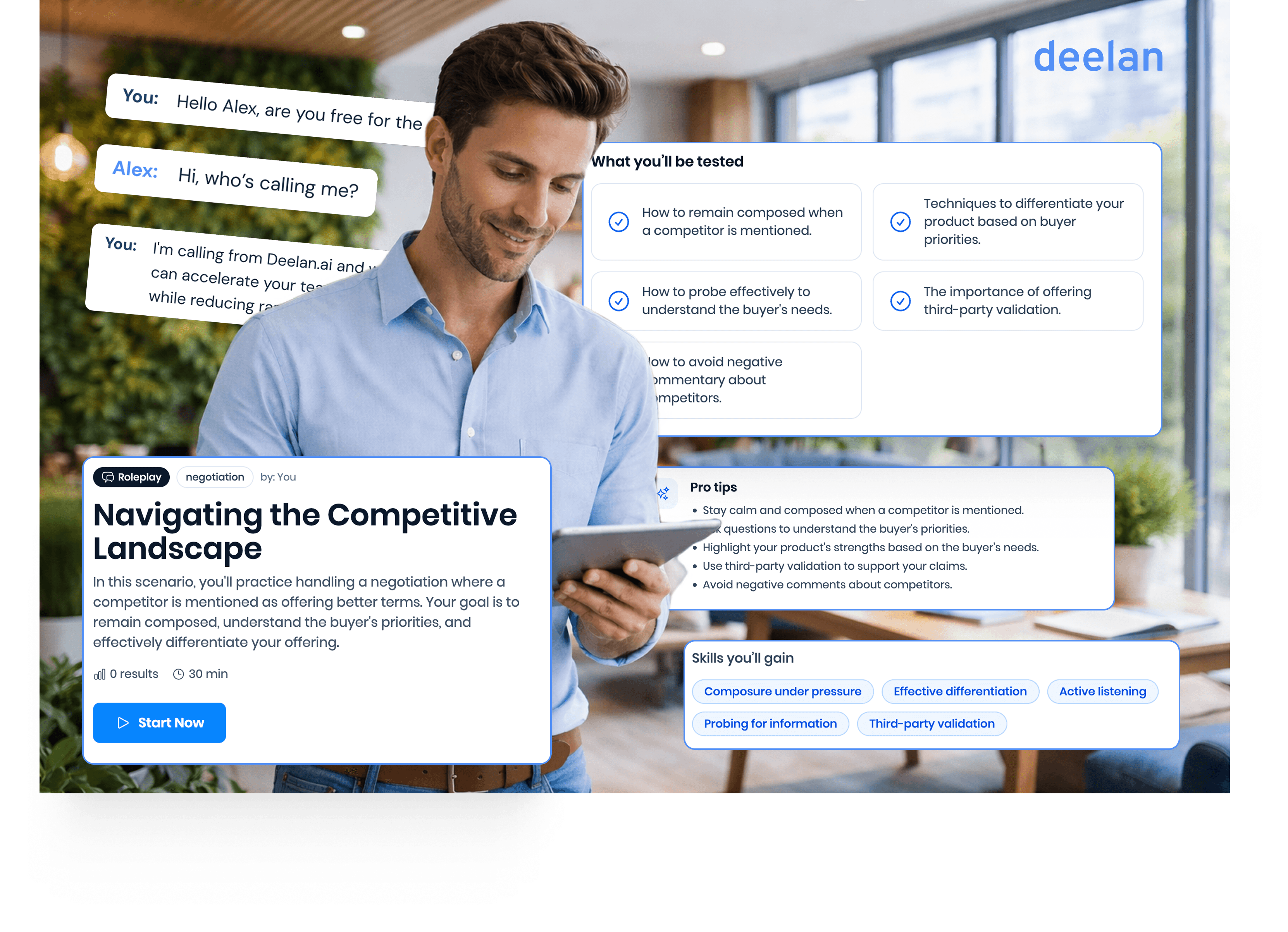
Core skill: Staying composed under competitive pressure; differentiating without defensiveness
Whether the competitive threat is real or a negotiation tactic, reps who haven't practiced their response will typically either go defensive or panic-discount. Neither serves the deal.
Scenario setup: Mid-negotiation, the buyer mentions that a competitor has offered better terms at a lower price point.
Sample dialogue:
Buyer: "We're also evaluating [Competitor]. They've come in significantly lower, and the feature set appears comparable. I want to be transparent about where things stand."
Rep: "I appreciate that — and I'm familiar with their offering. To make sure I'm addressing the right comparison points, could you tell me which capabilities are most critical to your decision? I want to focus the conversation there."
Buyer: "Primarily implementation speed and ongoing support quality."
Rep: "Those are two areas where our clients consistently tell us we differentiate. Our average implementation is two weeks, and we have a dedicated success team that stays with accounts beyond onboarding. I'd be glad to connect you with a client who evaluated both and can speak directly to that experience — would a reference call be useful at this stage?"
Common errors to watch for:
Any negative commentary about the competitor
Matching price without understanding the full context of the comparison
Failing to probe what "better terms" actually means to this buyer
Exercise 3: The Multi-Stakeholder Negotiation

Core skill: Managing competing priorities across a buying committee
Enterprise deals rarely involve a single decision-maker. Reps who default to a single-thread approach will find themselves navigating contradictory demands without a framework for managing them.
Scenario setup: Three stakeholders are present — a CFO focused on financial return, an operational lead focused on team adoption, and an IT lead concerned about implementation complexity.
Sample dialogue:
CFO: "Before we can move forward, I need a credible picture of the return timeline."
Rep: "Understood. Based on the workflow gaps your team described, clients at comparable scale typically see full return within 9 to 14 months. I can build a business case model using your specific numbers — that may also help you navigate the internal approval process."
Operational Lead: "My concern is user adoption. My team is resistant to new systems."
Rep: "That's one of the most common implementation risks we plan for specifically. Most teams are fully operational within two weeks, and we structure the rollout to work around your existing workload. Adoption rates at 90 days are consistently high — I can share benchmarks if that's useful."
IT Lead: "I need to understand integration requirements before I can sign off on anything."
Rep: "Absolutely. Rather than risk giving you inaccurate information here, let me arrange a direct conversation between our implementation engineer and your team. Would a 30-minute session this week work?"
Exercise 4: The Deadline-Driven Deal
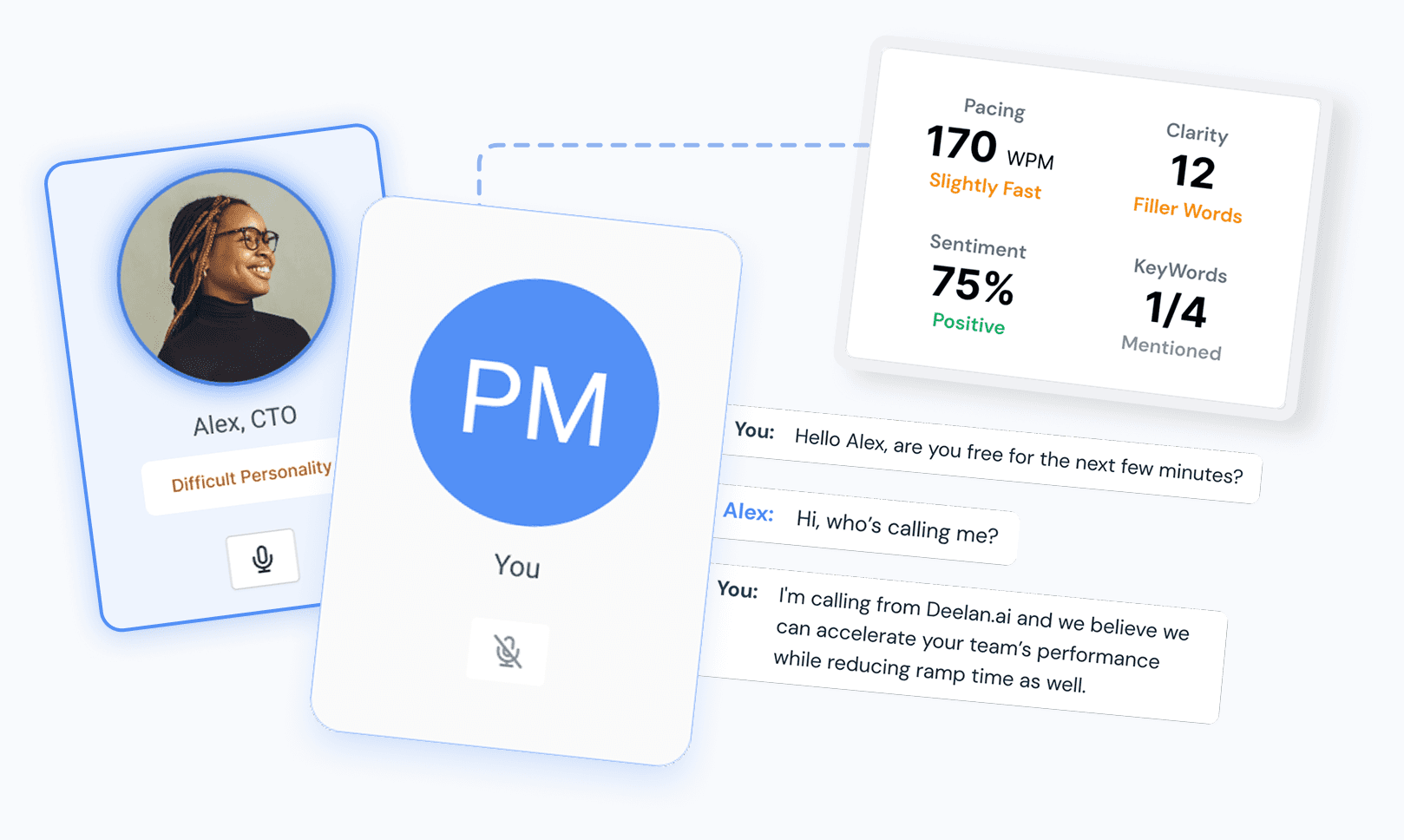
Core skill: Maintaining margin discipline under time pressure
Quarter-end dynamics are predictable — and buyers know how to leverage them. Reps under genuine urgency will frequently make concessions they had no authorization to offer. This exercise builds the discipline to create urgency without surrendering control.
Scenario setup: End of quarter. The rep has genuine pressure to close. The buyer senses it and is not moving quickly.
Sample dialogue:
Buyer: "I don't think we can realistically execute a signature by Friday. There's internal process we'd need to compress."
Rep: "I understand your process, and I don't want to create undue pressure. What I can share is that pricing committed before the 30th locks in the current rate structure, which protects you from a likely Q3 adjustment. With that in mind, what would need to be in place on your end to make Friday feasible?"
Buyer: "Legal would need to review the contract."
Rep: "I can send a pre-approved redline this afternoon that addresses the terms most commonly flagged in legal review. That typically cuts turnaround time considerably. Would that help move things forward?"
Exercise 5: The Unearned Discount
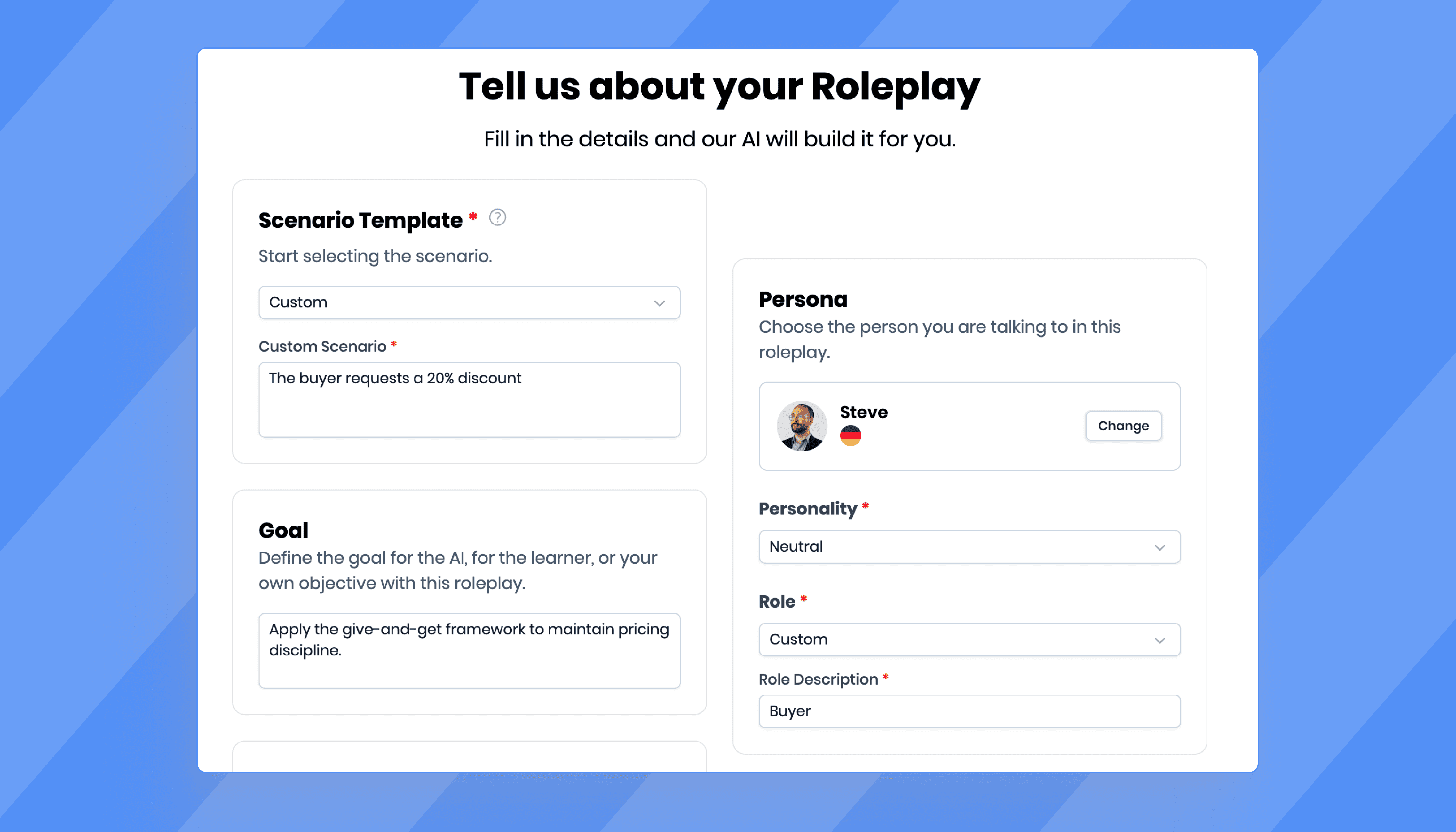
Core skill: Applying the give-and-get framework; establishing pricing discipline
This is the single most costly negotiation habit in B2B sales. When reps concede price without a reciprocal commitment, they establish a pattern — and every future deal with that buyer or team starts from a worse position.
Scenario setup: The buyer requests a 20% discount.
Sample dialogue:
Buyer: "We need 20% off to make this work internally."
Rep: "I want to find a structure that works for your budget. If we move to a two-year agreement, I can make that pricing work — and it also gives you rate protection through the next pricing cycle. Does that structure fit your planning horizon?"
Buyer: "Two years is a longer commitment than we'd anticipated."
Rep: "That's a fair point. An alternative: we could build in a structured review at 12 months with the option to expand scope based on what's working. That preserves your flexibility while allowing us to offer the pricing you need. Would that be worth exploring?"
Exercise 6: Accessing the Decision-Maker
Core skill: Enabling the champion; advancing deals to executive level
Deals stall consistently when reps remain single-threaded with a champion who lacks authority to commit. This exercise develops the skill to advance deals upward without damaging the relationship with the champion.
Scenario setup: The champion is engaged and supportive but is deferring every decision to leadership without facilitating the introduction.
Sample dialogue:
Buyer (Champion): "Everything looks strong. I just need to get this in front of my VP before we can move ahead."
Rep: "That makes complete sense. To help you prepare for that conversation, what objections do you think she's likely to raise? I'd rather help you address those now than have them slow things down in the room."
Buyer: "Probably ROI justification and how this compares with what we already have in place."
Rep: "I can prepare a concise brief specifically for that conversation — the ROI case, the comparison points, and the implementation plan. And if it would be helpful, I'm happy to join the call directly so I can handle technical questions on the spot and take that burden off you."
Buyer: "That would actually be useful."
Quick Reference: Scenarios by Role and Tenure
Role | Priority Scenarios | Recommended Frequency |
|---|---|---|
New SDRs / BDRs | Price objection, Competitor threat | Weekly during ramp period |
Account Executives | Multi-stakeholder, Deadline pressure, Unearned discount | Bi-weekly |
Senior AEs | All scenarios, progressively harder buyer personas | Monthly + before major deals |
Sales Managers | Observer role; focus on feedback quality and debrief | Every session |
Customer Success | Unearned discount, Accessing decision-makers | Quarterly |
How to Structure Effective Role Play Sessions
Define specific parameters
Generic scenarios produce generic preparation. The scenario setup should reflect real conditions: industry, company stage, stakeholder dynamics, competitive context. "A healthcare company that recently absorbed a 15% budget reduction following a merger" creates meaningful preparation. "A company with budget concerns" does not.
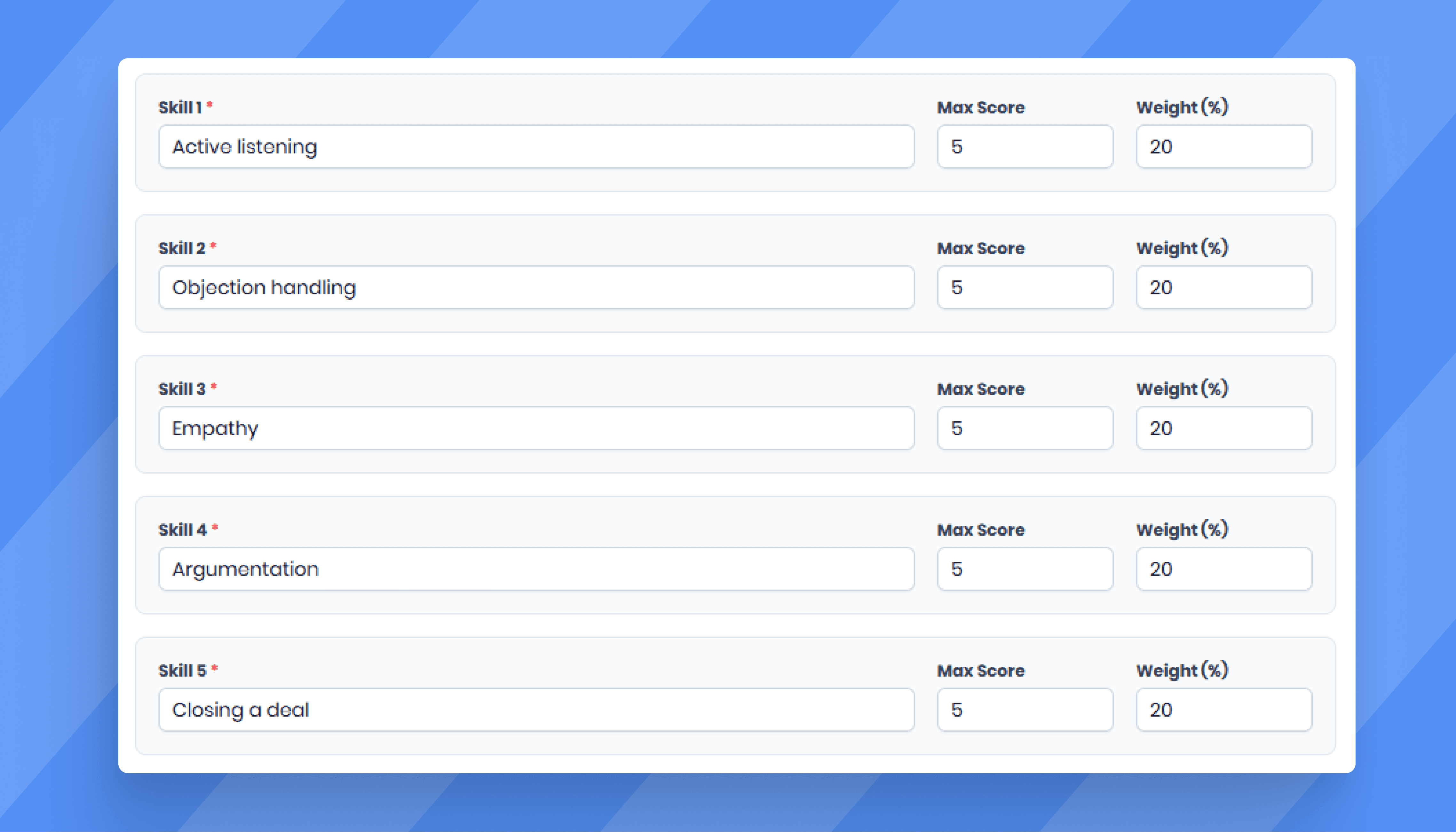
Establish psychological safety before the exercise begins
Reps who fear judgment from peers will not experiment with new approaches. The value of role play comes precisely from the willingness to try techniques that might fail. Make the purpose of the session explicit: this is a development environment, not a performance evaluation.
Apply the SAIL feedback method
Vague feedback — "good instincts" or "try to be more confident" — provides nothing a rep can act on. SAIL structures feedback around observable, actionable observations:
Specific — "You offered a discount at the two-minute mark, before the buyer had finished explaining their concern"
Action impact — "That caused the buyer to anchor lower for the rest of the conversation"
Insight — "Pausing and asking what was driving the concern would have given you more information and more control"
Learning commitment — "In the next exercise, hold your position and ask one clarifying question before making any concession"
Keep session length disciplined
15 to 20 minutes of active role play followed by 10 minutes of structured debrief is the optimal format. Longer sessions tend to produce fatigue without producing proportionally more learning.
Record every session
Recording creates an objective reference point and, over time, generates a library of examples that are genuinely useful for onboarding and ongoing development.
Common Mistakes That Undermine Role Play Programs
Oversimplified buyer behavior. Buyers who fold after a single reframe do not prepare reps for real negotiations. The buyer persona should be consistent, reasonably persistent, and realistic in their objections and reactions.
Prioritizing winning over learning. Reframe the goal explicitly: the objective is to test new approaches, not to beat a colleague.
Feedback that lacks specificity. Every piece of feedback should reference a specific moment in the exercise and a specific alternative action.
Skipping progressive difficulty. Structure programs to increase complexity as foundational skills are established.
Scenarios disconnected from live pipeline. The most effective role play programs draw directly from deals the team is currently working.
Debrief Questions for Every Session
Before providing any feedback, ask the rep to reflect on their own performance:
At what point did you feel you lost control of the conversation? What did you do in response?
Where did you successfully redirect from price to value — and how did the buyer react?
What concession did you make, and what did you receive in return?
If you ran this scenario again, what would you change in the first 90 seconds?
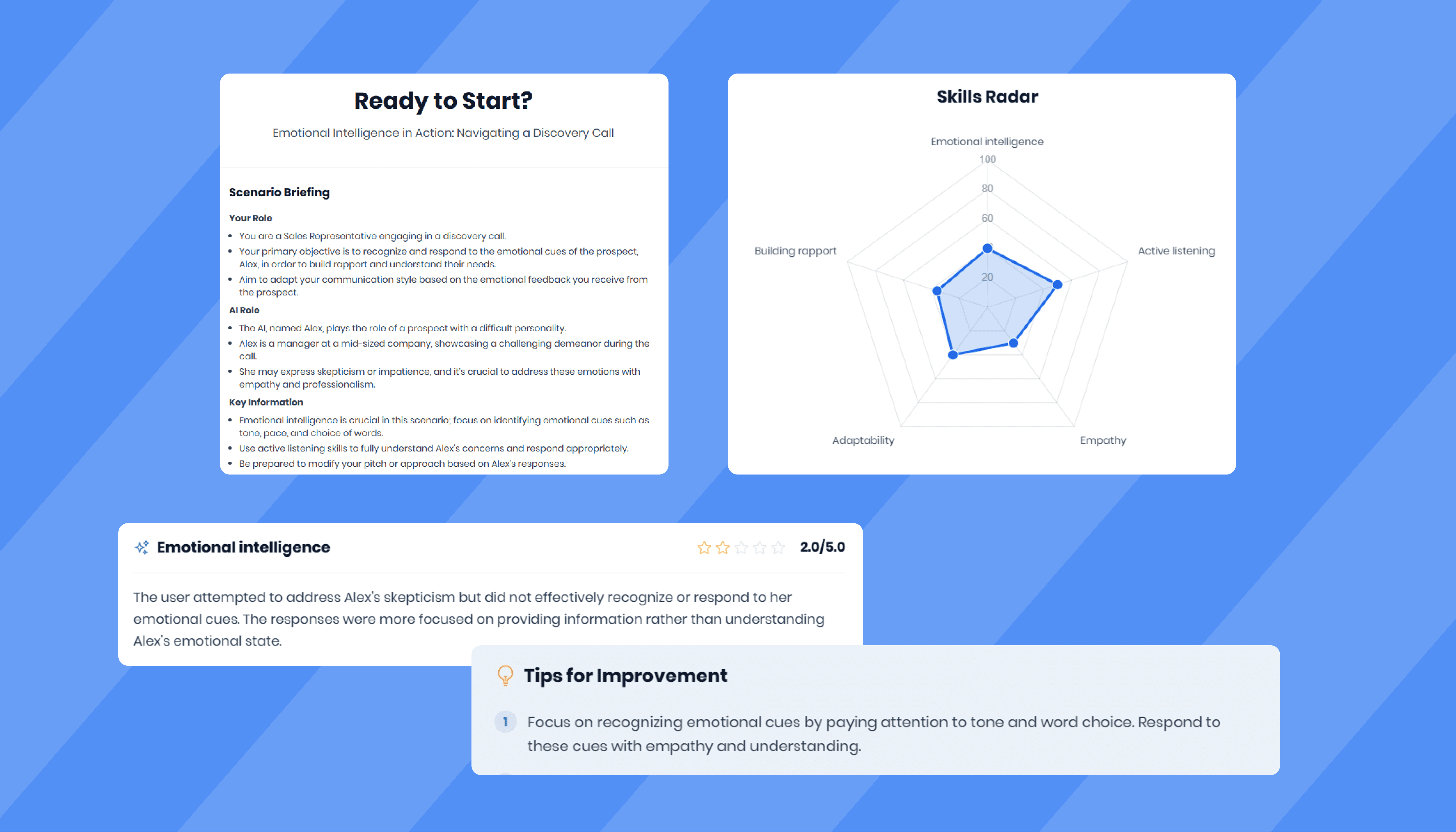
Sales Negotiation Practice Role Play with deelan AI
Instead of waiting for a manager or coordinating practice sessions with colleagues, sales teams can train whenever they need it with deelan roleplays — after a difficult call, before an important negotiation, or as part of an ongoing development routine. Every scenario delivers realistic buyer behavior, immediate feedback, and measurable performance insights.
Deelan transforms role play from an occasional training activity into a repeatable system for skill development. Teams can practice the exact scenarios that influence deal outcomes most — from price objections and competitor threats to executive conversations and high-pressure negotiations.
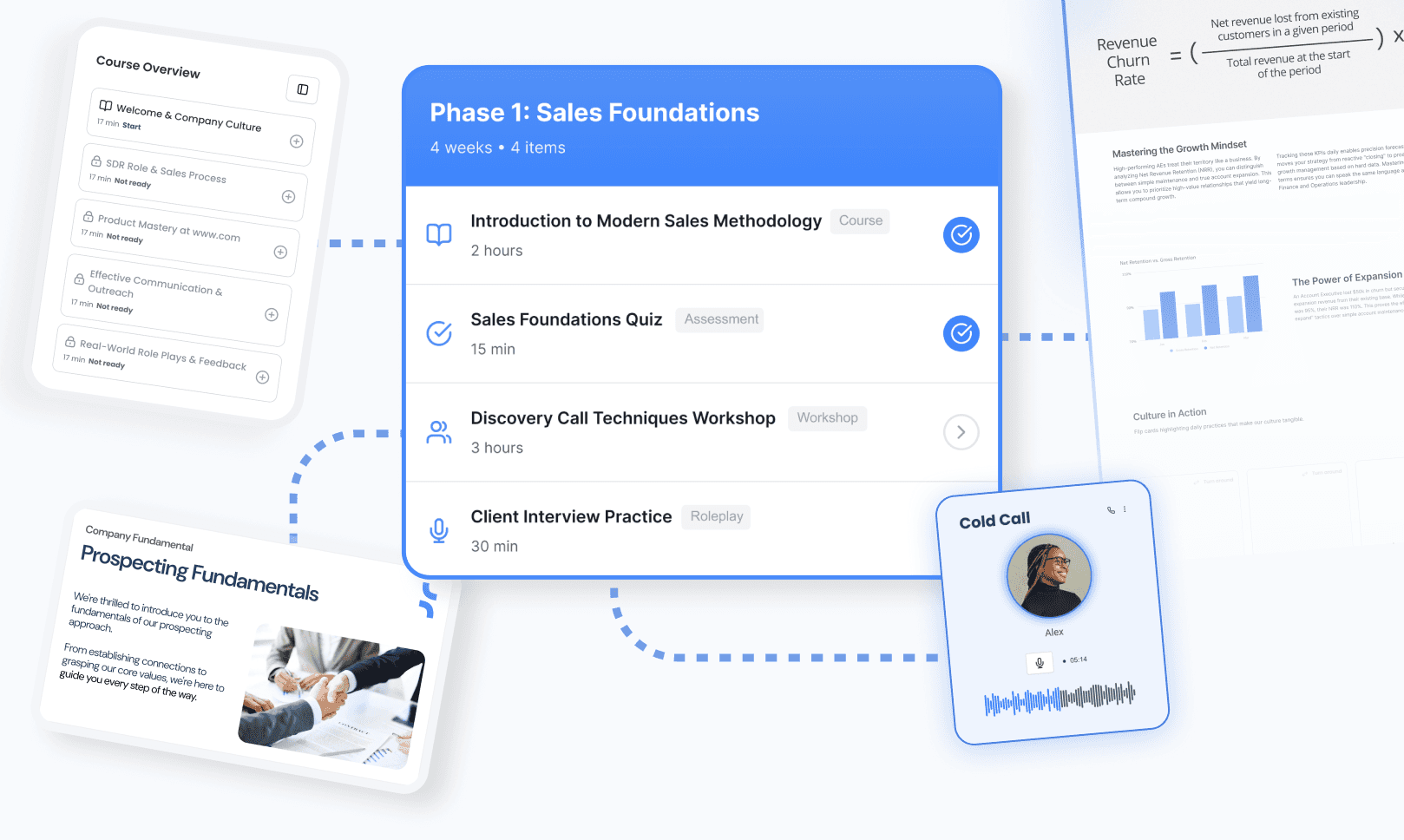
The strongest sales organizations understand that negotiation confidence does not come from reading frameworks or attending workshops. It comes from repetition.
With Deelan, practice becomes accessible, scalable, and directly connected to real performance outcomes — allowing reps to prepare for the conversations that matter before they happen.
Ready to Build a Negotiation Practice Program That Scales?
Consistent role play practice is one of the highest-leverage investments a sales organization can make. The reps who handle price pressure without flinching, navigate multi-stakeholder complexity with confidence, and protect margin quarter after quarter are not naturally gifted — they are better prepared.
See how AI-powered negotiation simulations can be configured for your specific ICP, objection set, and sales environment — and what structured practice at scale looks like for your team.