Onboarding has a structural flaw built into it: it ends. The first 30, 60, or 90 days are planned carefully, then the structure disappears and employees are expected to develop on their own.
For HR teams, that means retention problems that show up months later with no obvious cause. For revenue teams, it means reps who plateau early or never fully close the gap between what they learned and what they actually need to perform.
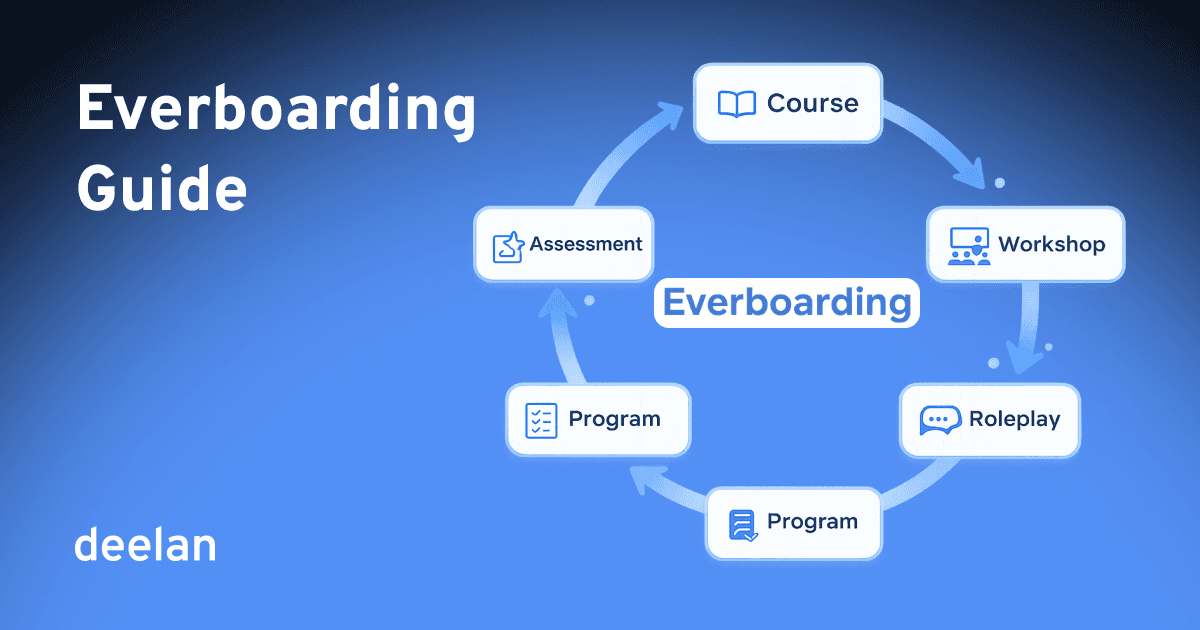
Everboarding treats development as a continuous system that runs throughout an employee's tenure.
This guide covers what everboarding actually involves, how it differs from traditional onboarding, and how HR and sales enablement teams are building it in practice.
How Everboarding Differs from Onboarding
Onboarding is a process. Everboarding is a system.
Onboarding gets someone from zero to functional. It covers the essentials: company culture, tools, role responsibilities, initial product knowledge. It has a start date and, critically, an end date. Most programs wrap up somewhere between 30 and 90 days.
Everboarding is continuous learning built into the entire employee journey, not just the first few weeks.
Everboarding removes that end point. It assumes employees at every career stage still have gaps, still benefit from reinforcement, and still need structured development.
Onboarding | Everboarding | |
|---|---|---|
Who it's for | New hires | All employees |
Duration | 30–90 days | Ongoing |
Format | Fixed, sequential | |
Content | Role basics, company culture | Skill development across career stages |
Ownership | HR or enablement team | Shared across managers, HR, leadership |
Measures | Completion, time to ramp | Performance, retention, skill mastery |
Benefits of Everboarding - Why It's Worth Building
The business case for everboarding isn't hard to make, but it requires looking beyond training completion rates.
Benefit | What It Looks Like in Practice |
|---|---|
Companies with effective continuous learning are 4.9x more likely to ramp sellers quickly | |
Lower turnover | Undesired attrition drops from 45.5% to 33.8% in organizations with strong training programs |
Better retention | A good onboarding-to-everboarding experience improves new hire retention by up to 82% |
Higher engagement | Highly engaged workforces produce 18% higher sales productivity and 23% higher profitability |
Stronger performance | Teams are 3.5x more likely to have better-prepared sellers when continuous learning is embedded |
For HR teams, the retention and engagement numbers matter most. For revenue teams, it's ramp time and win rates.
Freebies
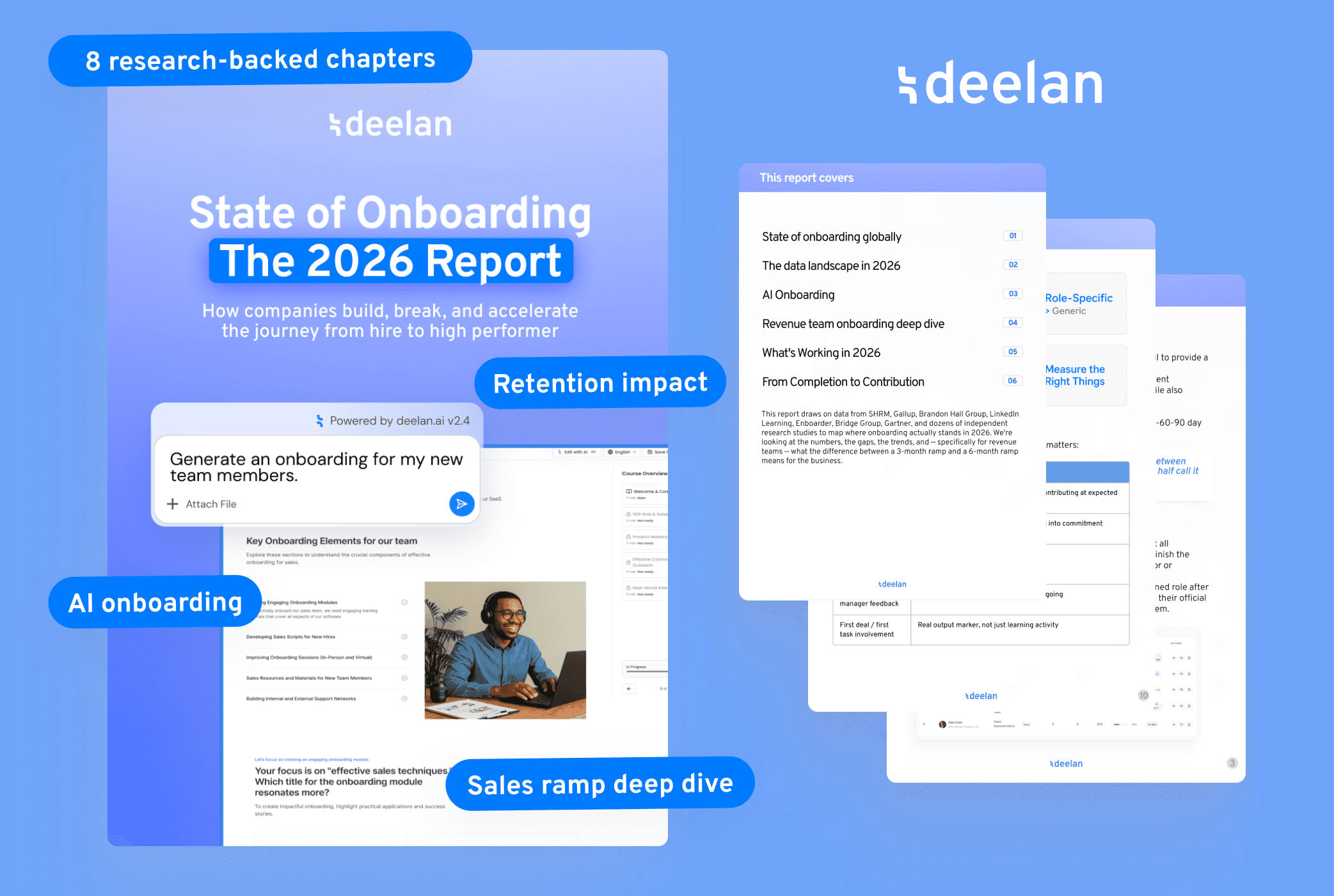
Get our Report about state of onboarding
This report breaks down exactly where the gaps are, what it's costing revenue teams, and what the fastest-ramping organizations are doing differently.
What to Include in an Everboarding Program
The specifics vary by team and role, but the core components are consistent.
Structured learning paths with clear stages and milestones, adapted by role and skill level. Not everyone starts at the same place or moves at the same pace.
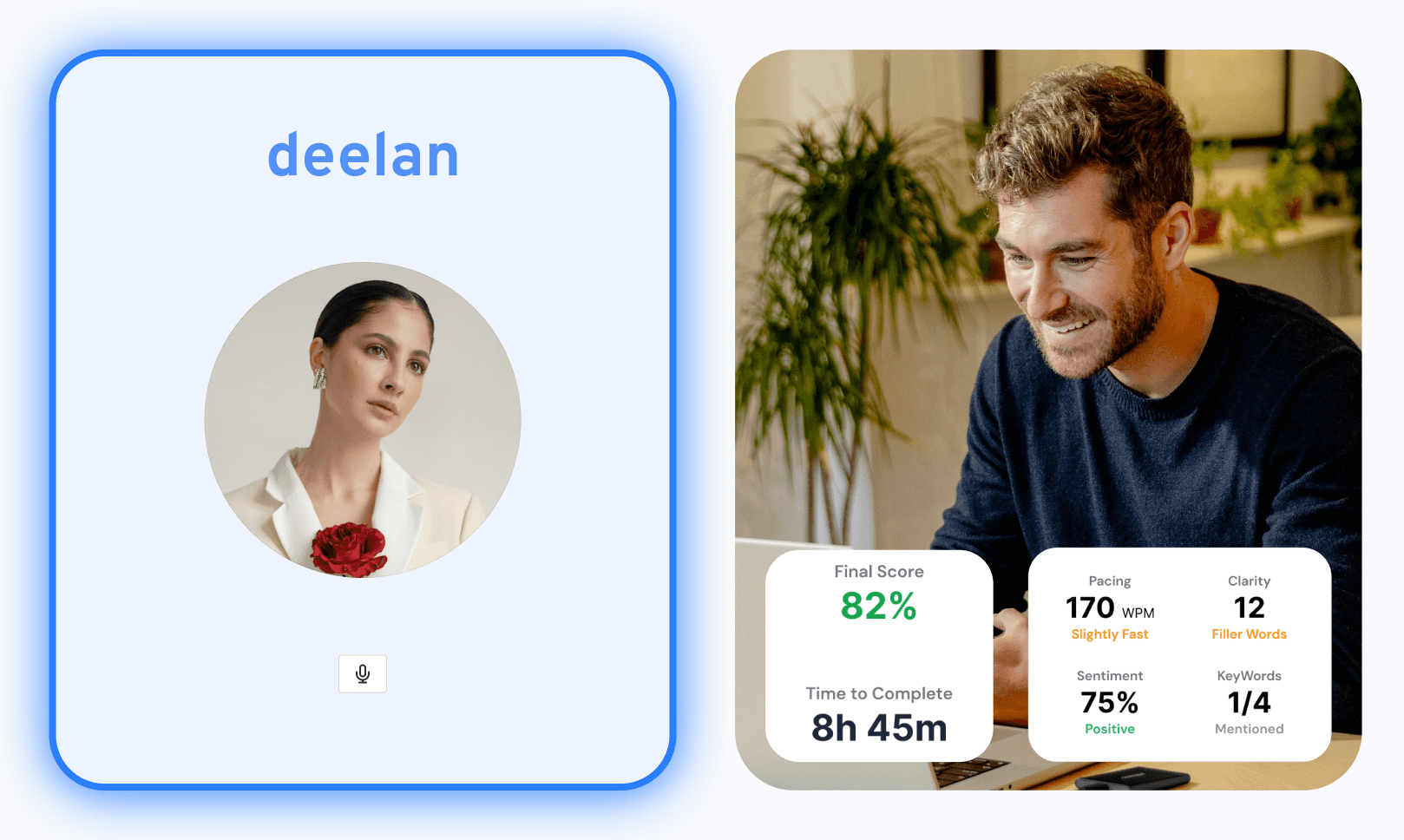
Roleplay and simulation built into the cadence, not reserved for onboarding.
Deelan generates roleplay scenarios from your own playbooks and call recordings, so practice reflects your actual sales environment.
Coaching loops with both scheduled sessions and space for ad hoc conversations. Managers need insight into where reps are struggling before those struggles show up in lost deals.
A centralized knowledge base reps can access independently. The goal is to reduce the friction between a rep having a question and getting an answer.
Assessments that reveal actual gaps, not just completion. Quizzes, certifications, and exercises that show where knowledge isn't sticking.
Workshops for live, collaborative skill-building. Some things are better practiced in groups, objection handling, discovery conversations, negotiation, where real-time dynamics matter.
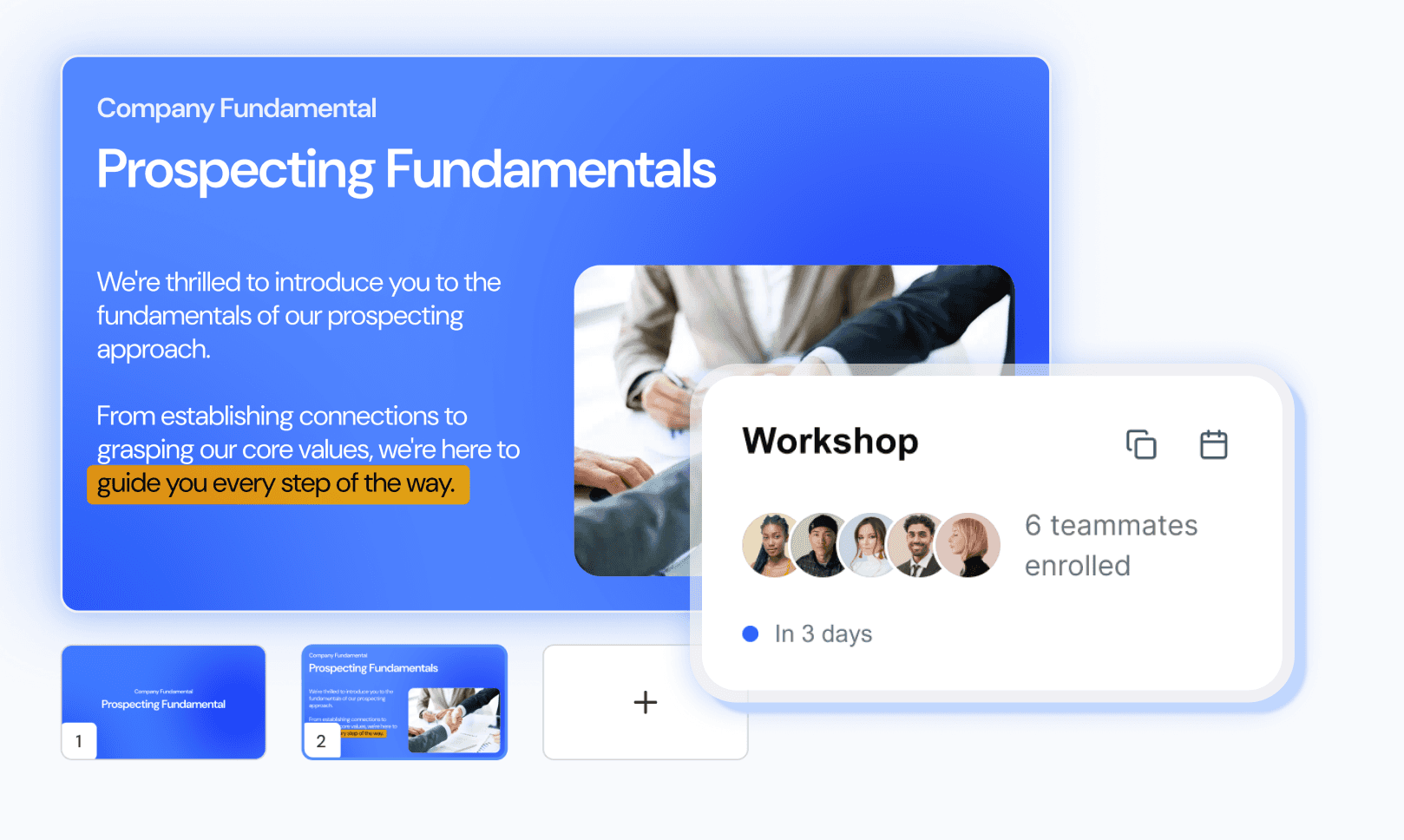
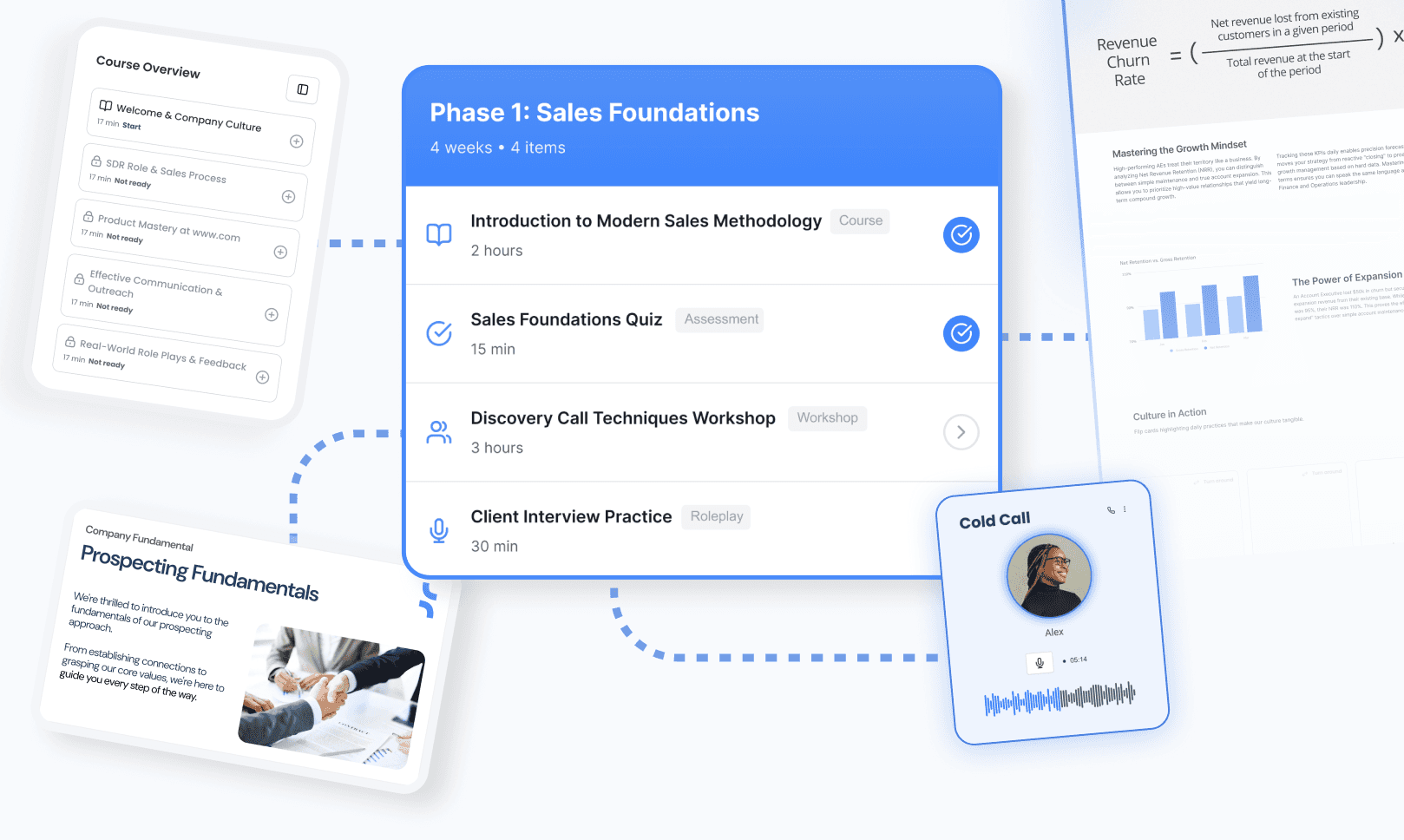
Program continuity that connects all of these into a single path. Deelan's Programs feature combines courses, roleplays, and assessments into one progression with prerequisites and milestones, so there's no gap between formats.
Tools You Need to Make It Work
Everboarding isn't a spreadsheet project. The right infrastructure makes the difference between a program that runs and one that quietly gets abandoned after the first quarter.
Tool Category | What It Does |
|---|---|
Hosts and delivers training, tracks progress and completion | |
Creates courses, modules, quizzes, and interactive content | |
Roleplay & Simulation | Lets employees practice real conversations before they happen live |
Records calls, surfaces patterns, gives managers data to coach from | |
Knowledge Base | Centralizes company content in a searchable, always-available format |
Communication & Engagement | Keeps learning visible and connected to daily work |
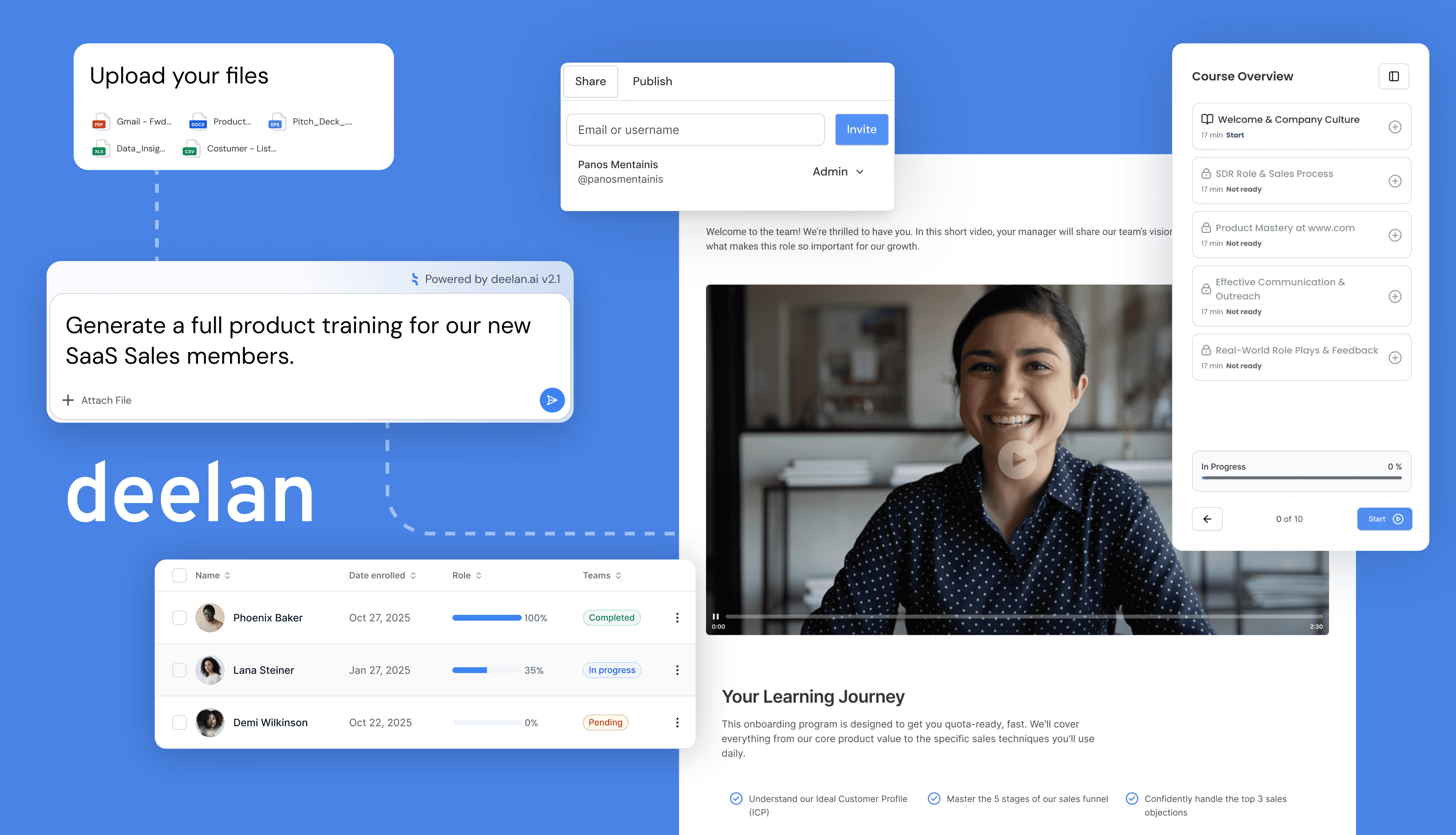
Deelan combines several of these into one platform, which matters for smaller HR and enablement teams that can't manage five separate tools. You upload existing content, playbooks, call recordings, product docs, and it generates courses, roleplays, and assessments from that. For teams without a dedicated L&D function, that's a meaningful reduction in overhead.
Getting Started
You don't need to rebuild everything at once. Most teams that move from onboarding to everboarding do it in stages.
Start by extending what already exists. If you have a solid onboarding program, map out what comes after it. What skills should a rep have at 6 months? At 12? At 24? Build the path backward from those expectations.
Then add reinforcement mechanisms: micro-lessons, a knowledge base, roleplay practice. Layer in coaching structure. Measure what's changing.
Deelan is designed to make this practical for teams without a full L&D department. You upload what you already have, playbooks, recordings, product docs, and training content is generated and deployed from there. Creating a course, workshop, or roleplay scenario takes minutes, not weeks.
If you want to see how it works for your team, book a free demo with Deelan. Most teams see measurable improvement in ramp time and training completion within the first few weeks.