50–60%of sales reps hit quota in any given year — an unchanged benchmark for nearly a decade.
$920K - true cost of one rep at 25% quota attainment on a $1M book — before replacement costs
3x - companies underestimate the real cost of underperforming reps, according to sales analysts
The performance gap most teams have normalized
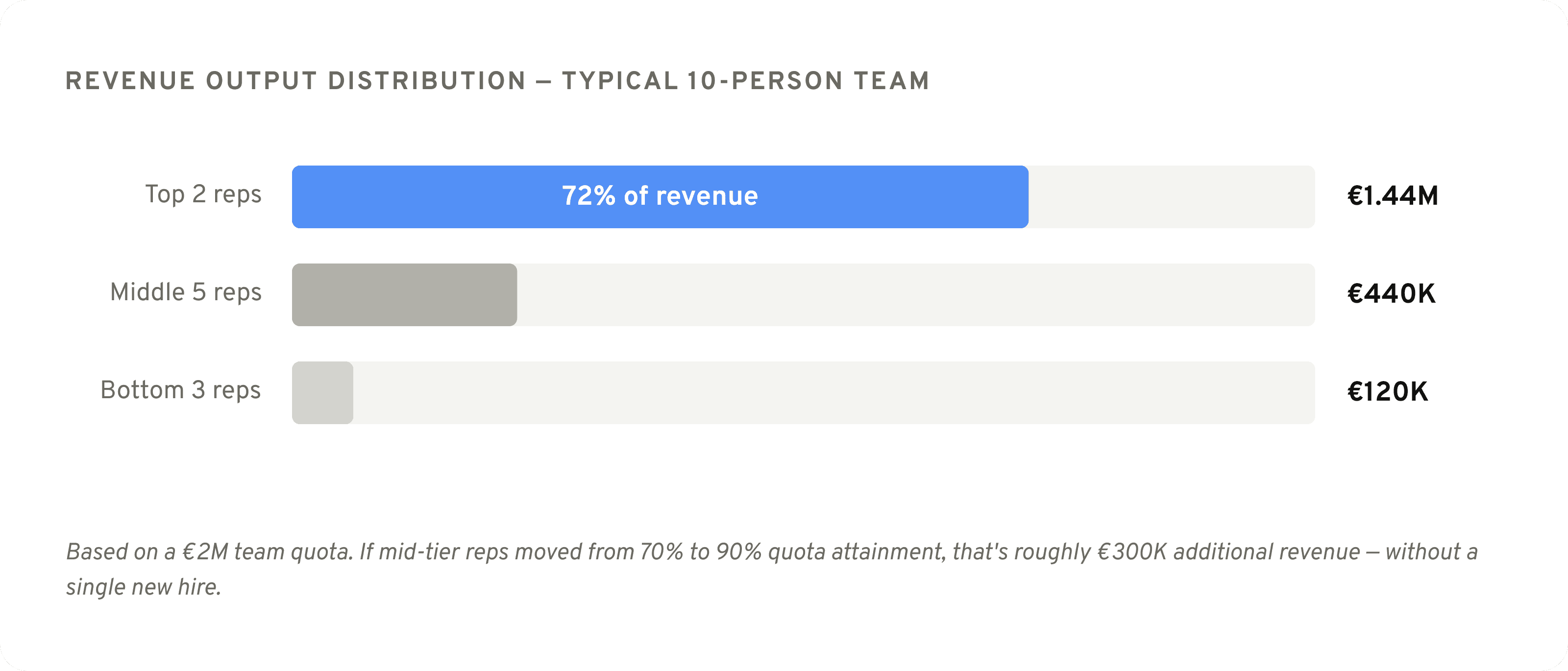
On a 20-person sales team, analysis of over 2.2 million salespeople suggests you'll typically find two strong performers, four weak ones, and fourteen in the middle. The fourteen average reps are where the real money is being left on the table.
It's not because they're bad, but because the gap between what they produce and what they could produce is enormous, and nobody is closing it systematically.
Strong performers typically produce around twice what average performers do.
If your average rep is $125K short of your strong reps annually, and you have fourteen of them, that's $1.75M in margin sitting on the floor.
Add the four genuinely weak reps at $250K each below the top, and you're looking at a $2.75M opportunity gap on a single team.
Most CEOs accept this because their cost-of-sales ratio looks fine. It does look fine — until you account for all the revenue that was never generated.
One rep at 25% of a $1M quota costs you $920K per year.
That includes lost productivity, salary, onboarding, and the leads they burned through. Multiply that by the bottom 20% of your team. The number gets uncomfortable fast.
The issue isn't just the reps at the bottom. Average performers, the quiet middle of your team, cost more in aggregate than your weak performers simply because there are more of them. Focusing exclusively on your worst rep while your median rep stays at 70% quota attainment is where companies lose the most ground.
Why this isn't a hiring problem
The instinct when revenue is short is to blame the reps and plan a hiring cycle.
But look at the data before you do that: Over the last five years, companies globally increased investment in sales tech and training by $28 billion. In the same period, quota attainment went down, not up. More spend, worse results.
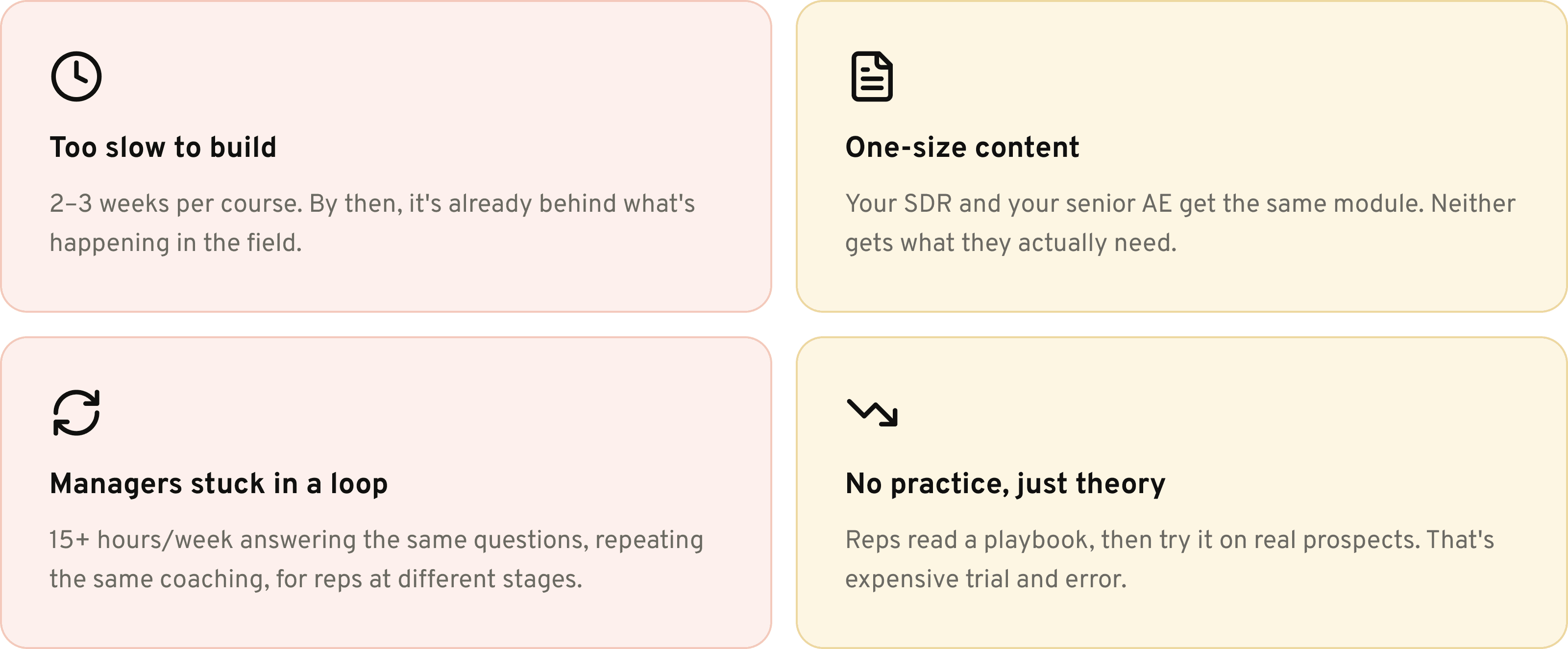
The problem isn't usually who you hired. It's what happens after they join. Most teams onboard new reps into the same broken environment, send them through the same generic training, and then wonder why they perform like everyone else did before them.
A lot of the training that exists is generic, outdated, and ignores the actual skill gaps that matter — objection handling, discovery quality, deal progression. More critically, almost none of it gives reps a safe place to practice before they're in front of real prospects burning real pipeline.
The resignation risk
Beyond the daily cost of underperformance, there's a structural risk that most leadership teams are carrying quietly: revenue concentration. When 2 reps are generating 70–80% of your bookings, your entire quarter is one resignation letter away from disaster.
This is more common than it sounds. In the B2B world, top performers get poached. They get recruited constantly. They leave for a salary increase that felt minor to management but enormous to them. One company lost a rep who brought in over $300M annually because a competing firm offered double salary and a promotion. Several peers followed. The SVP who wouldn't approve a modest raise was terminated for the talent exodus he caused.
The solution would be to stop being dependent on them by building the rest of the team to a level where losing one person doesn't crater the number. That requires deliberate, ongoing training — not a one-time onboarding session and a quarterly all-hands.
Closing the gap without hiring
A few things that consistently move average performers toward top-performer behavior:
Practice before prospects
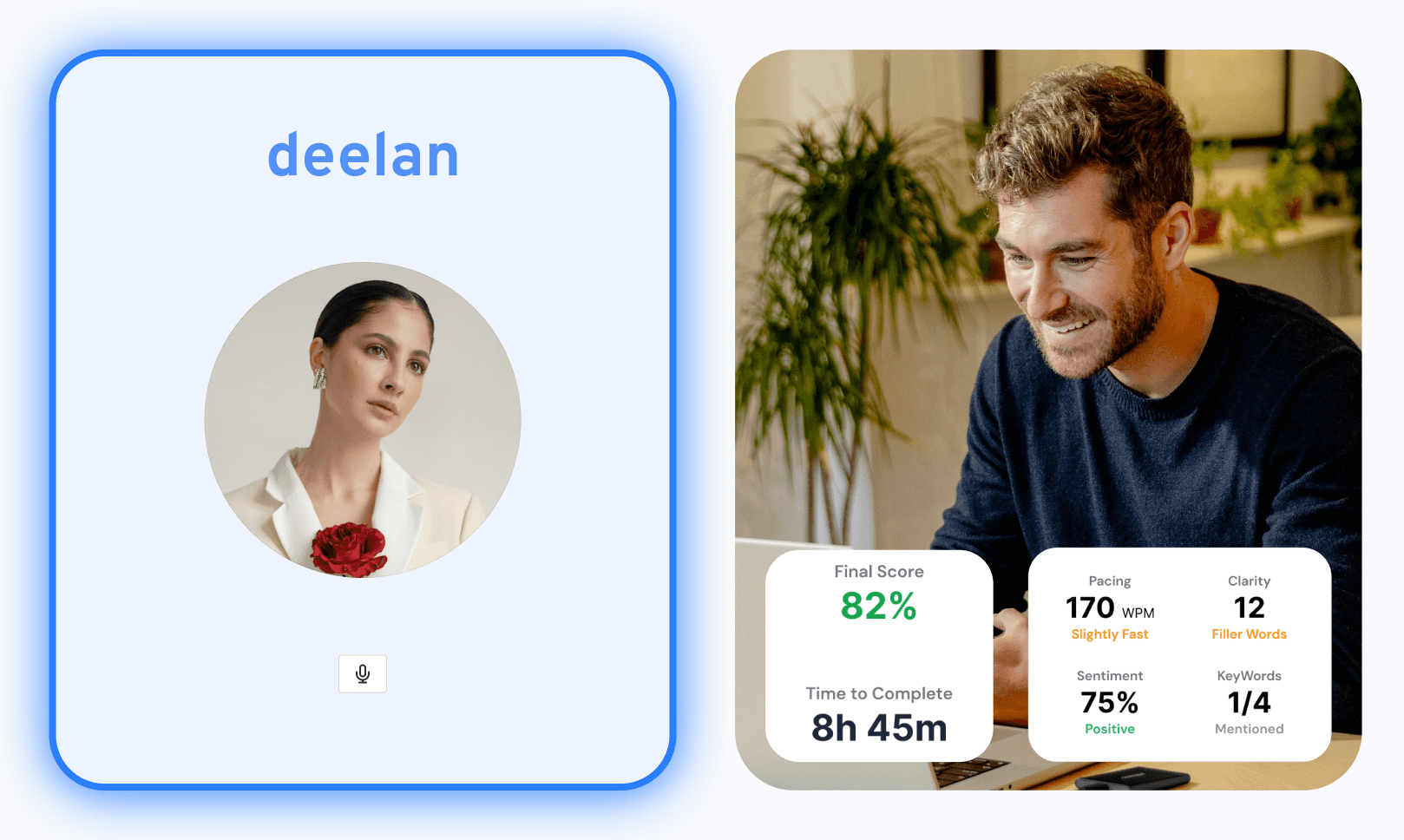
The single biggest differentiator between a rep who handles objections well and one who fumbles them is repetition. Top performers have had those conversations hundreds of times. Average reps practice on real deals, which is expensive for the company and demoralizing for the rep when it doesn't go well. AI roleplays give teams a safe environment to build that repetition without burning pipeline.
Training built from what actually works at your company
Generic sales training teaches principles. What closes deals for your product, against your specific competitors, with your buyer personas, is specific. The most effective training is built from your own call recordings, your own objection patterns, your own wins.
Paths that adapt to the individual
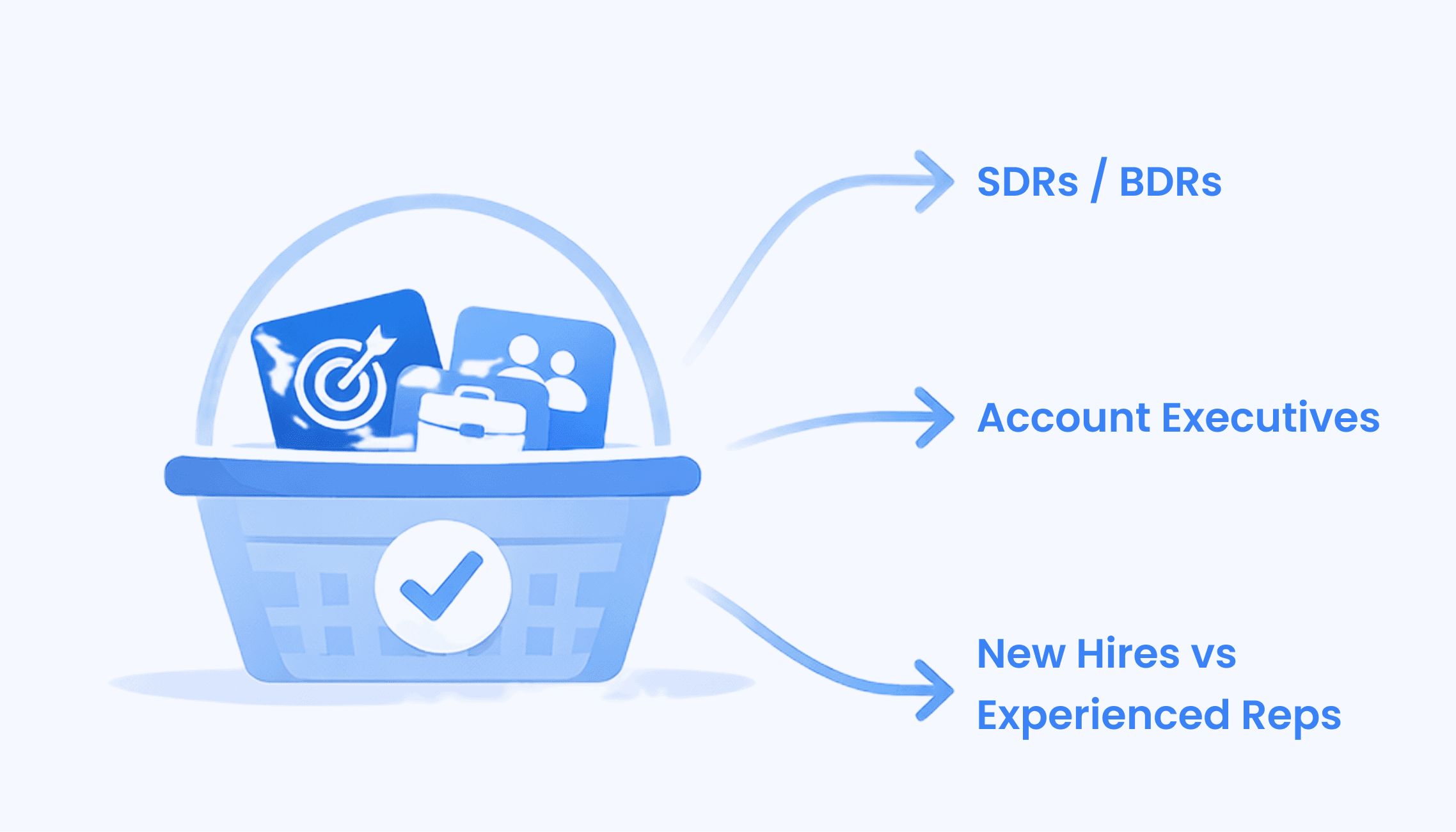
A new SDR struggling with cold calls needs something completely different from an experienced AE who's good at demos but weak on discovery. When everyone gets the same training, most of it is wasted on people who don't need that particular thing right now. Adaptive paths focus development time on actual gaps, which is where improvement happens fastest.
Managers freed from the coaching loop
When foundational skill-building is handled by training, managers stop repeating themselves. They stop being the first line of Q&A for every question a new rep has about pricing, objections, or process. That time goes back to high-value coaching — the complex deal, the rep who needs a different kind of challenge, the strategic conversation that actually requires a manager's experience.
How Deelan AI can helps
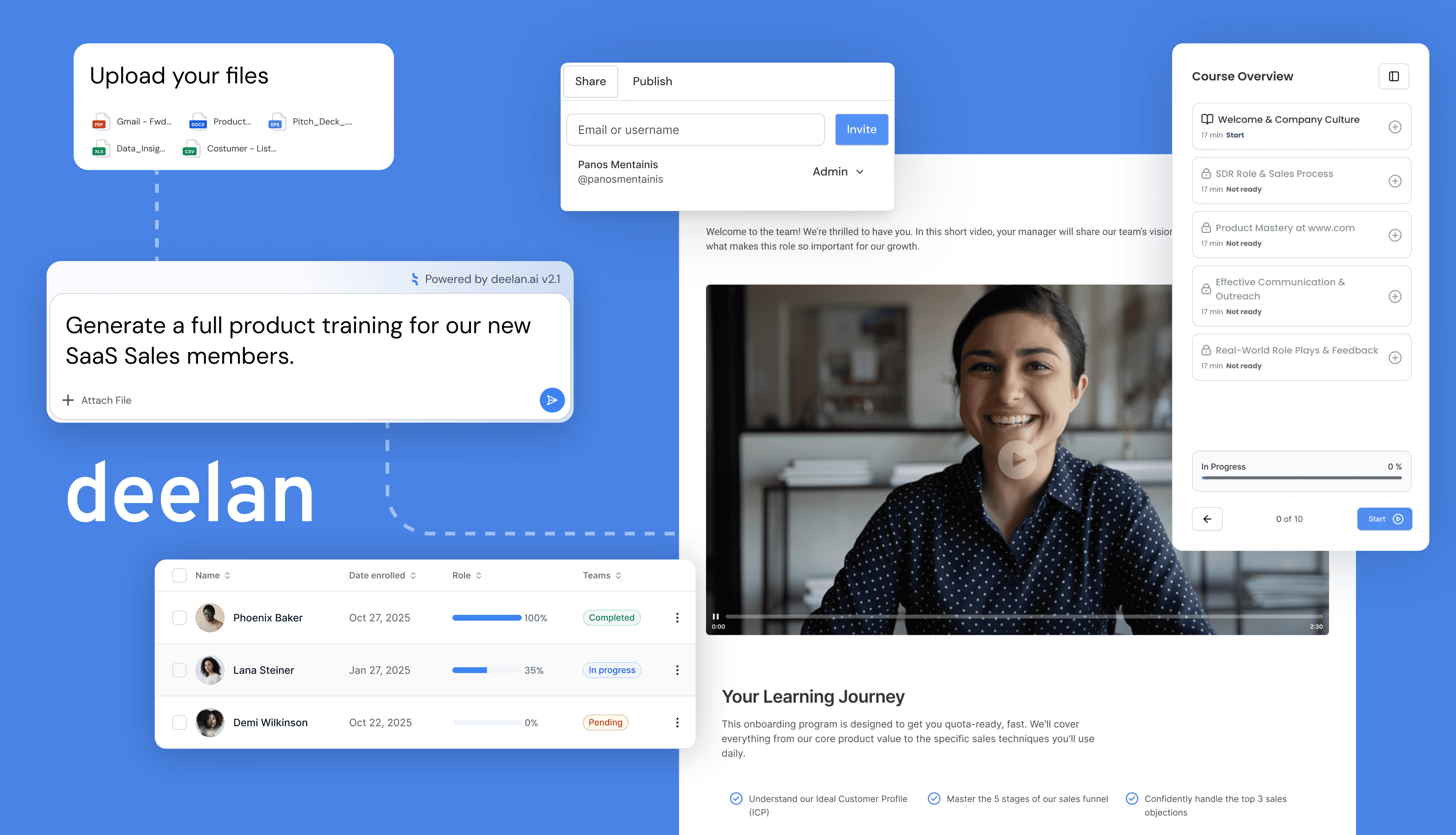
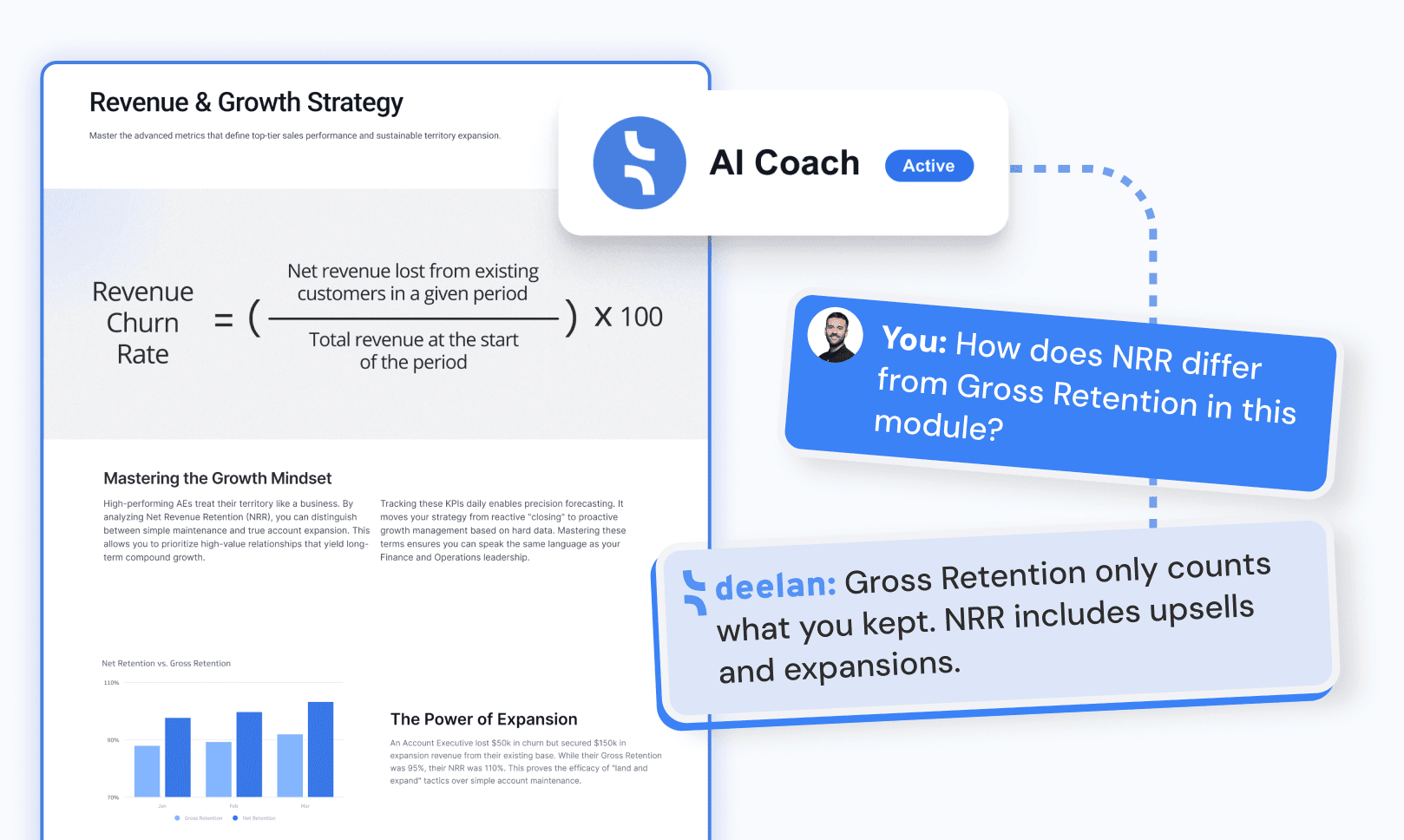
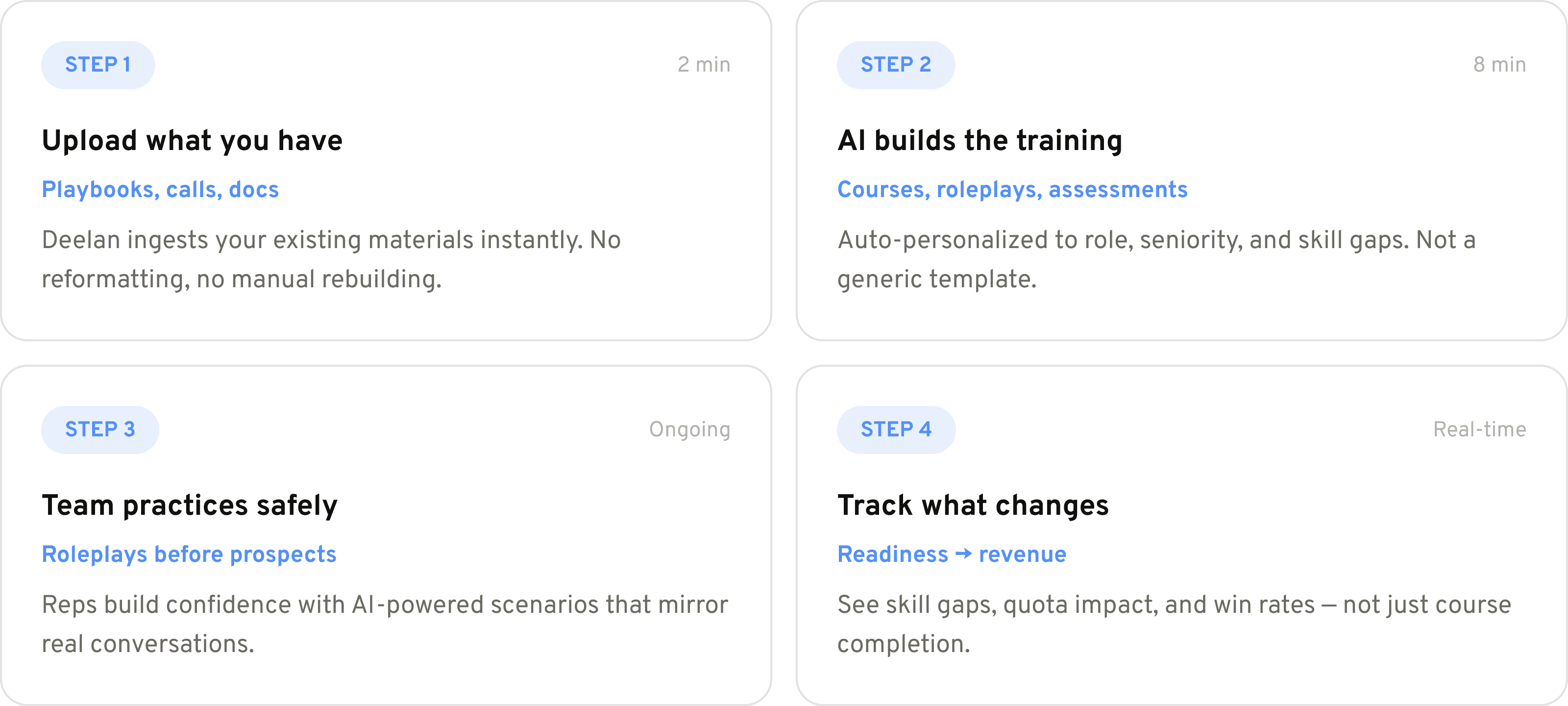
Deelan is a revenue training platform built for sales teams that don't have a dedicated L&D department and can't afford to wait weeks for new training to be ready. You upload what already exists — playbooks, call recordings, product docs, scripts — and Deelan builds adaptive training from it. Courses, roleplays, assessments, personalized by role and skill gap. Ready in minutes, not weeks.
The cost of waiting
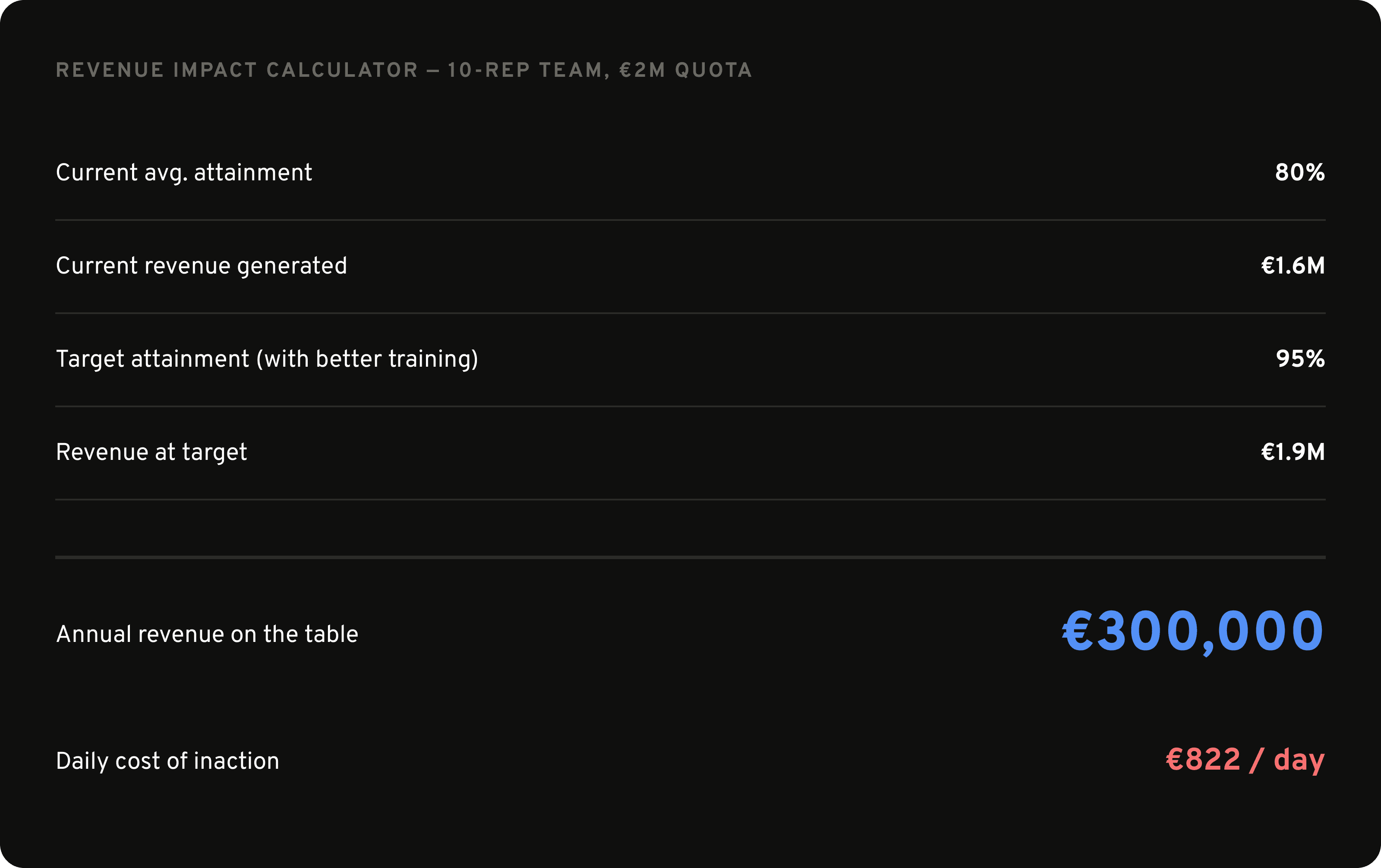
Every quarter where the performance gap doesn't close is another quarter where that €822 a day walks out the door. Not because the reps aren't capable — most of them are — but because they're not getting training that adapts to their actual gaps, doesn't give them anywhere to practice, and isn't built from what your team specifically needs to sell.
The solution isn't to fire the bottom half and hope the next hire is better. That cycle costs more than fixing the environment that's keeping average performers average. The data on this is clear: companies that invest in ongoing, adaptive coaching and training see faster ramp times, higher quota attainment, and lower turnover — all three at once.
If you've been waiting to fix this, the math on waiting doesn't look good.
See how your reps could perform like your top seller
We'll turn your playbook into adaptive AI training in a 15-minute demo.