Selling SaaS requires more than product knowledge.
Reps need to understand business problems, run strong discovery calls, connect product capabilities to outcomes, navigate multiple stakeholders, and handle objections without relying on discounts.
The strongest teams treat training as an ongoing process. New hires ramp faster. Managers spend less time repeating the same feedback. Reps improve throughout the year, not just during onboarding.
This guide covers the four building blocks of a strong SaaS sales training program: onboarding, coaching, roleplay, and certification.
Traditional Sales Training | SaaS Sales Training |
|---|---|
Focuses on the pitch | Focuses on discovery and value |
Trains for one-time sales | Trains for recurring revenue |
Covers basic objection handling | Covers pricing, ROI, technical, and competitive objections |
Measures course completion | |
Often one-size-fits-all |
The Core Skills Every SaaS Rep Needs
Before you build a training program, get clear on what you're training for. Here are the five skills that separate average SaaS reps from top performers:
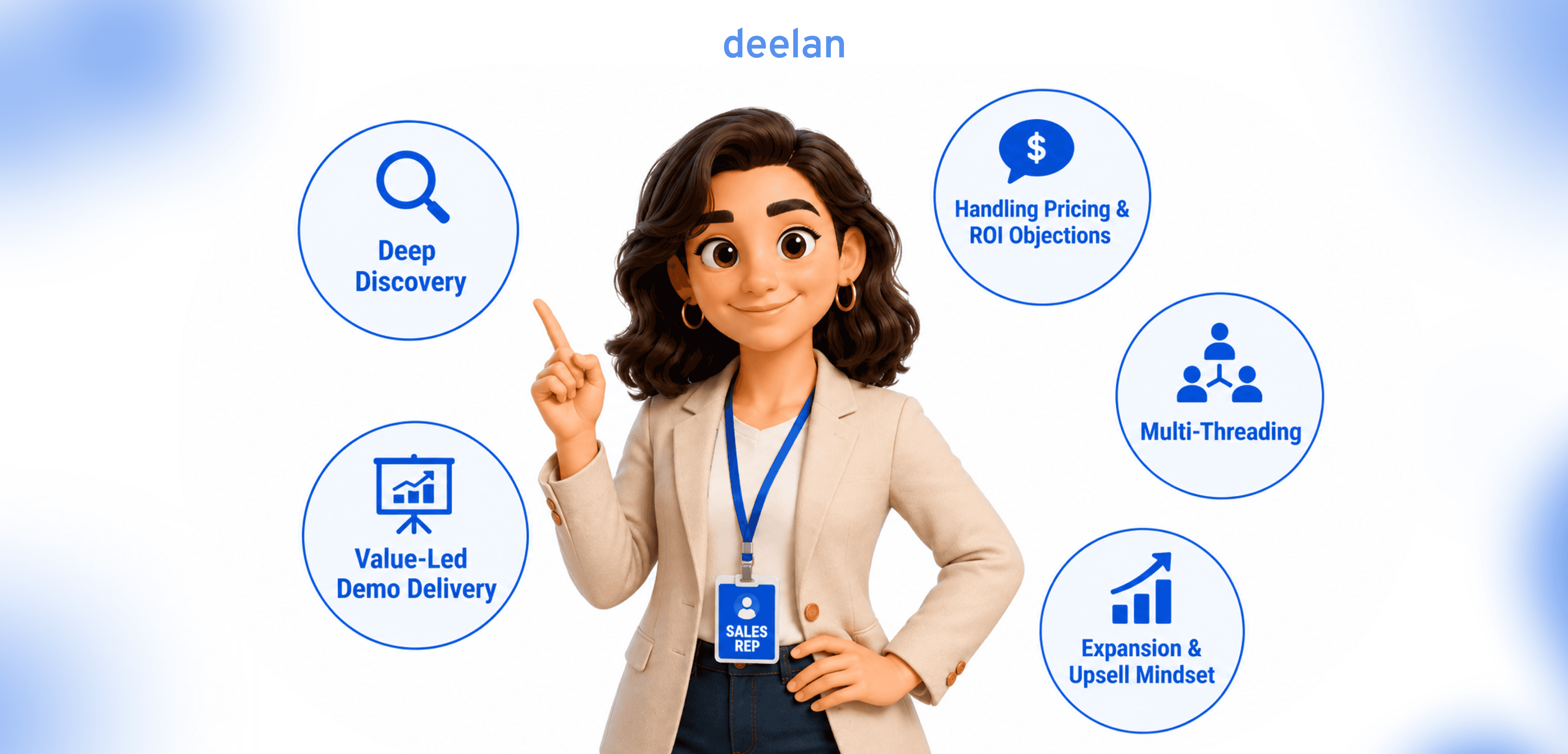
1. Deep Discovery
Not "what's your current solution?" but "what's the real business cost of this problem?" Reps need to uncover pain that the prospect hasn't fully articulated themselves. Surface-level discovery leads to shallow demos and stalled deals.
2. Value-Led Demo Delivery
The fastest way to lose a deal is to walk through features. The best reps show outcomes. They build the demo around the specific pain the buyer just told them about — not around what's in the product roadmap.
3. Handling Pricing & ROI Objections
SaaS buyers will push back on price. Always. Reps who can build a clear ROI case — showing the cost of inaction, not just the cost of the product — are the ones who don't discount their way to a close.
Objection | What the rep needs to do |
|---|---|
“It’s too expensive” | Reframe around cost of inaction |
“Your competitor is cheaper” | Compare outcomes, not features |
“We don’t have budget” | Connect the solution to revenue, time saved, or risk reduced |
“Maybe next quarter” | Create urgency around the current business gap |
4. Multi-Threading
In most SaaS deals, you're not selling to one person. You're navigating a buying committee: an end user, a manager, a finance contact, sometimes IT or legal. Reps who only build one relationship lose deals to internal blockers they never saw coming.
5. Expansion & Upsell Mindset
The close isn't the finish line — it's mile one. Reps need to understand customer lifetime value, spot expansion signals early, and position themselves as long-term partners. This mindset shift alone can change how a rep carries themselves throughout the entire sales cycle.
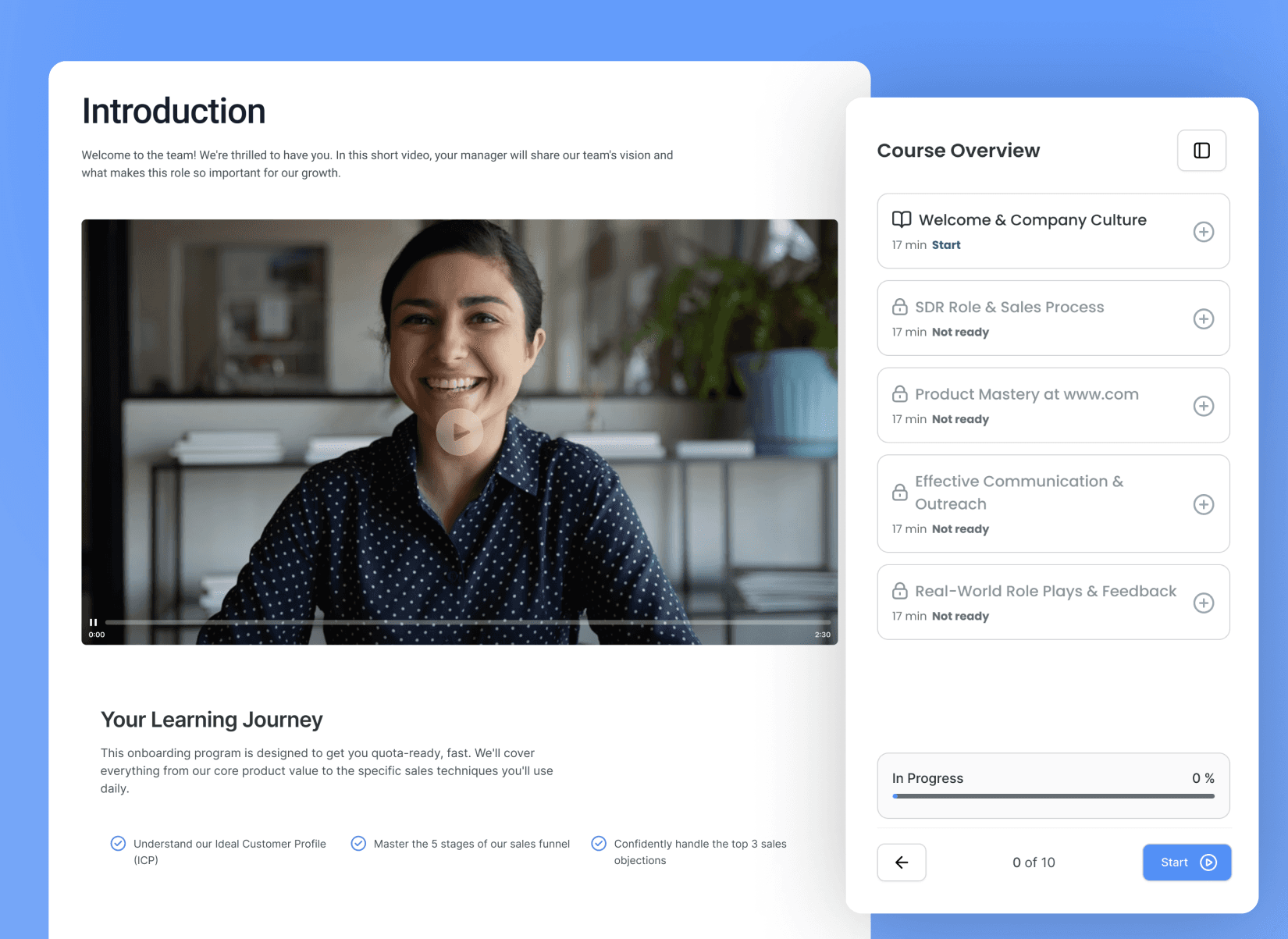
SaaS Sales Onboarding
A common onboarding structure looks like this:
Focus Area | Goal |
|---|---|
Product knowledge | Understand the platform |
Buyer personas | Understand customer challenges |
Messaging | Communicate value clearly |
Discovery | Ask better questions |
Demo delivery | Connect features to outcomes |
Objection handling | Build confidence in difficult conversations |
Live call observation | Learn from real situations |
Practice sessions | Apply learning before customer calls |
By the end of onboarding, a rep should be able to explain the product, run a conversation, and demonstrate readiness for customer interactions.
Sales Coaching
Training does not stop after onboarding.
Managers often spend a large portion of their week answering the same questions, reviewing the same mistakes, and repeating the same coaching points.
Good coaching focuses on behavior.
Instead of saying:
"Your discovery needs work."
A manager can identify a specific area:
"You moved into the demo before understanding how the team currently solves the problem."
Specific feedback is easier to apply.
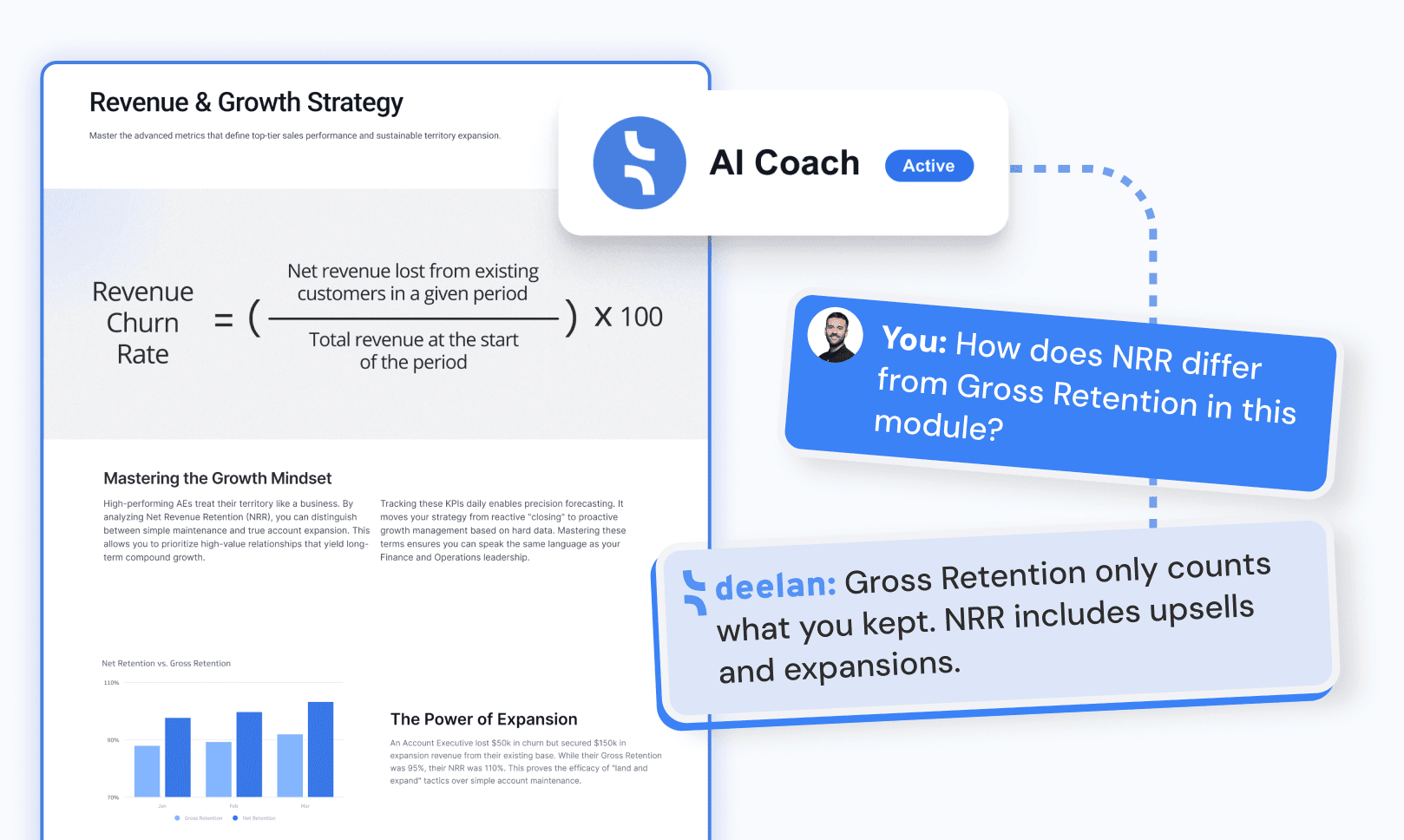
The most effective coaching usually combines:
Call reviews
Deal reviews
One-on-one coaching
Practice sessions
Skill assessments
Best SaaS Sales Training Methods
There is no single perfect method. The strongest SaaS teams usually combine several.
Here are the most effective ones.
1. Call Recording Review
Call recording review is useful because it shows what actually happens in real conversations.
Managers can review discovery calls, demos, objections, and closing conversations to identify patterns.
But there is one limitation: it is reactive. The call already happened. The prospect already heard the weak answer. The opportunity may already be damaged.
Call reviews are great for learning from the past, but they do not fully prepare reps before the next call.
That is why SaaS teams need proactive training too.
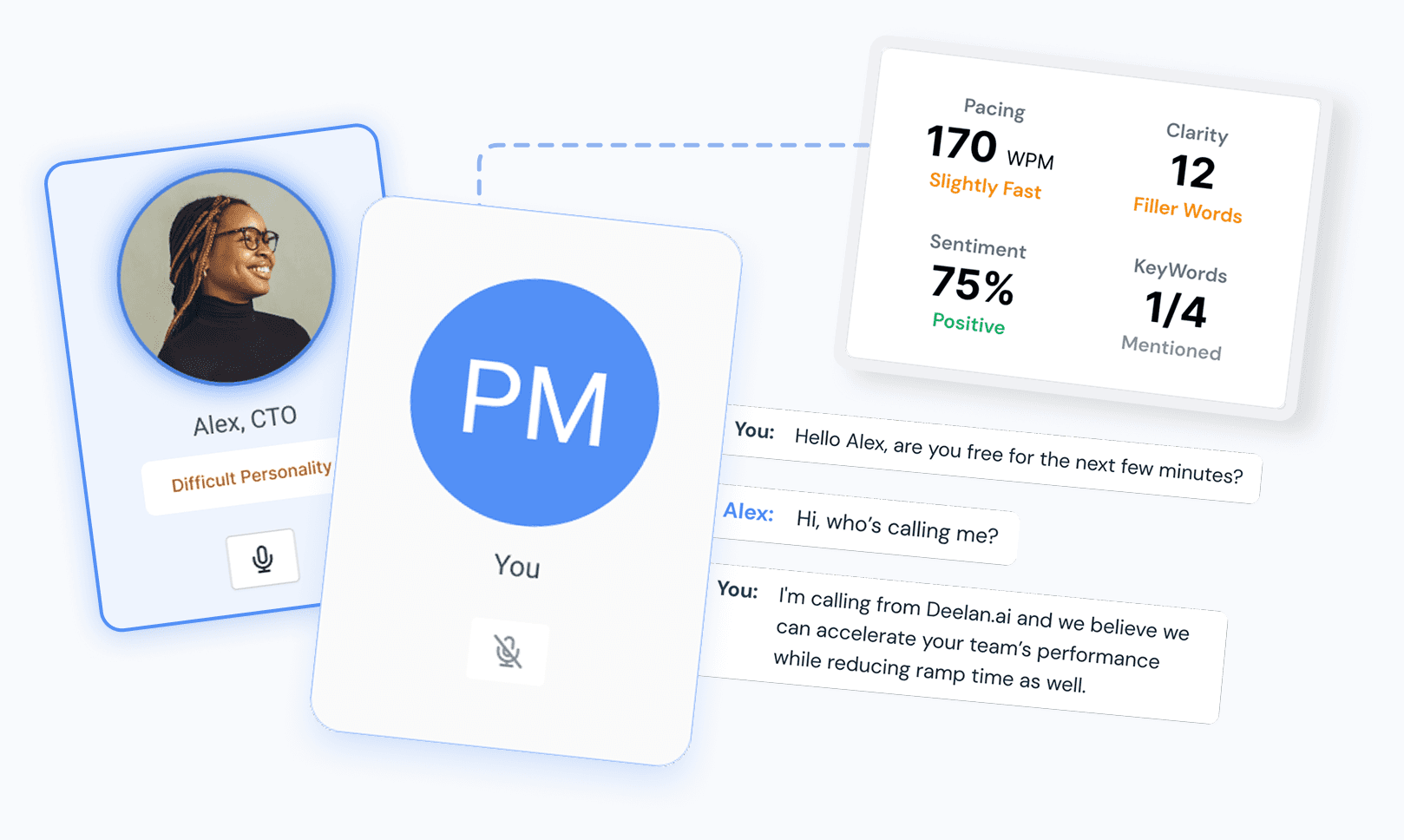
2. Role-Play and Live Practice
Role-play helps reps build confidence before they speak with real prospects.
But it only works when the scenarios are realistic.
Here are role-play ideas for SaaS teams:
Scenario | Best for |
|---|---|
“We already use a competitor” | Competitive objection handling |
“Your price is 40% higher” | ROI and value selling |
“Send me information by email” | SDR cold call practice |
“I need to ask my boss” | Multi-threading |
“Does it integrate with our current stack?” | Technical buyer conversations |
“We are not ready this quarter” | Urgency creation |
“We tried a similar tool and it failed” | Trust rebuilding |
“We like it, but finance is blocking us” | Business case building |
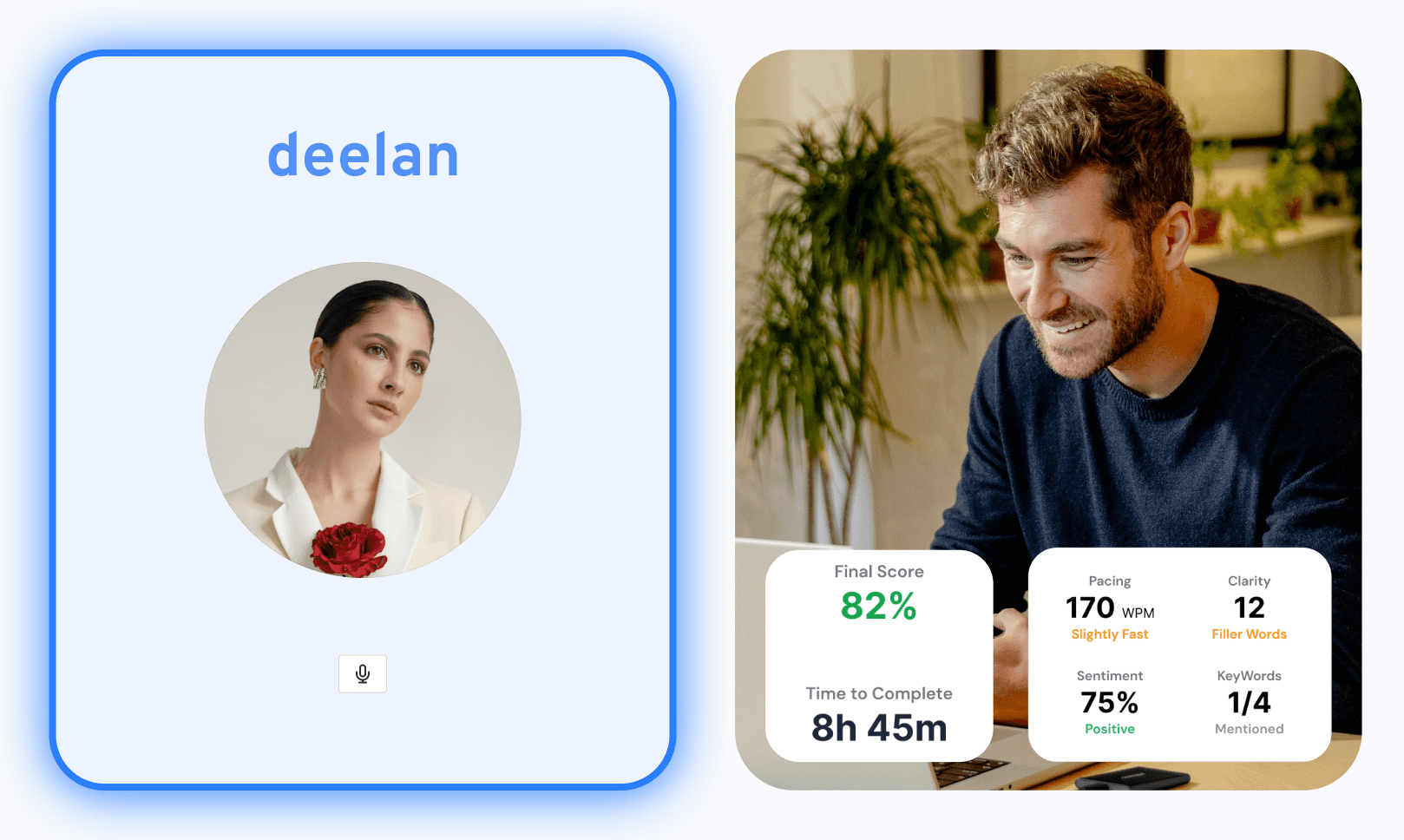
3. AI Sales Training Platform
An AI sales training platform helps SaaS teams train faster, more consistently, and with less manager time.
Instead of waiting for a manager to schedule practice, reps can train anytime.
Deelan - AI Training Platform to Improve Performance of your SaaS Sales Team
Deelan turns your playbooks, call recordings, product docs, and sales materials into adaptive AI training. It can create courses, roleplays, assessments, workshops, and learning programs in minutes.
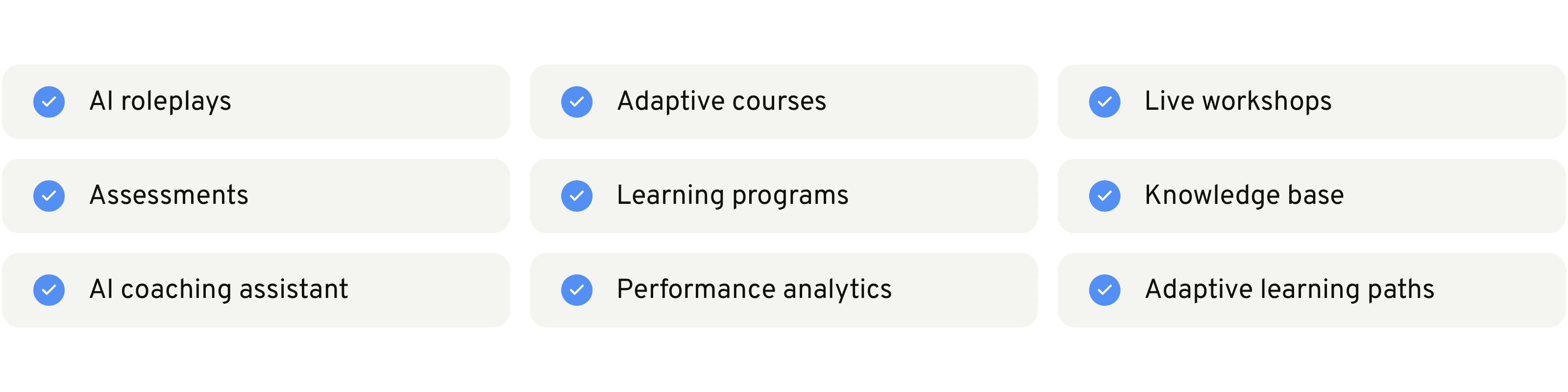
For SaaS teams, this matters because training needs to adapt to your product, your market, your sales cycle, and your buyer objections.
With Deelan, your reps can practice realistic AI roleplays before real calls. The AI persona can push back, ask follow-up questions, raise objections, interrupt, challenge the rep, and test how they respond under pressure.
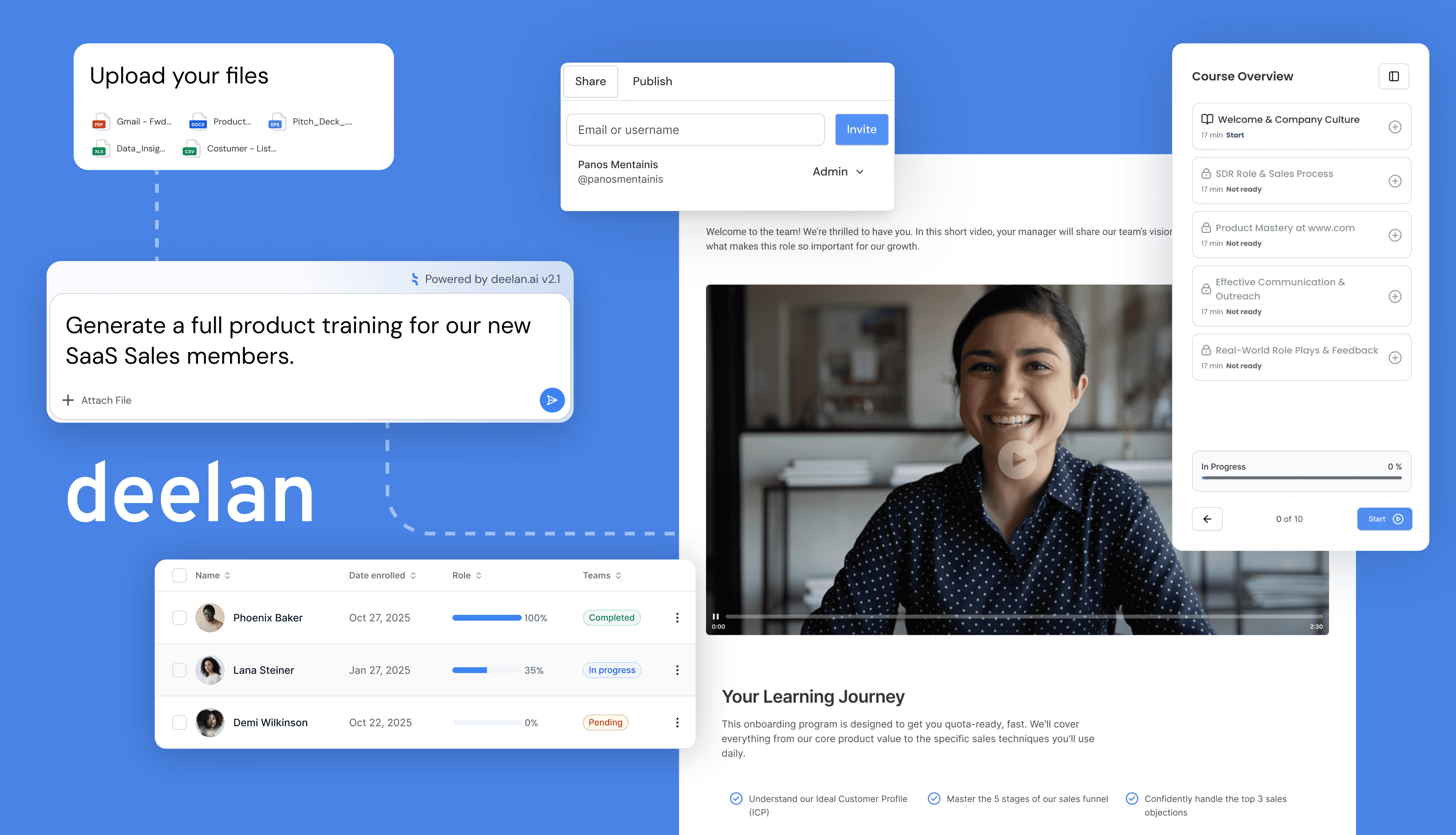
Deelan is built for revenue teams that need to ramp reps faster, improve win rates, and scale coaching without adding more managers.
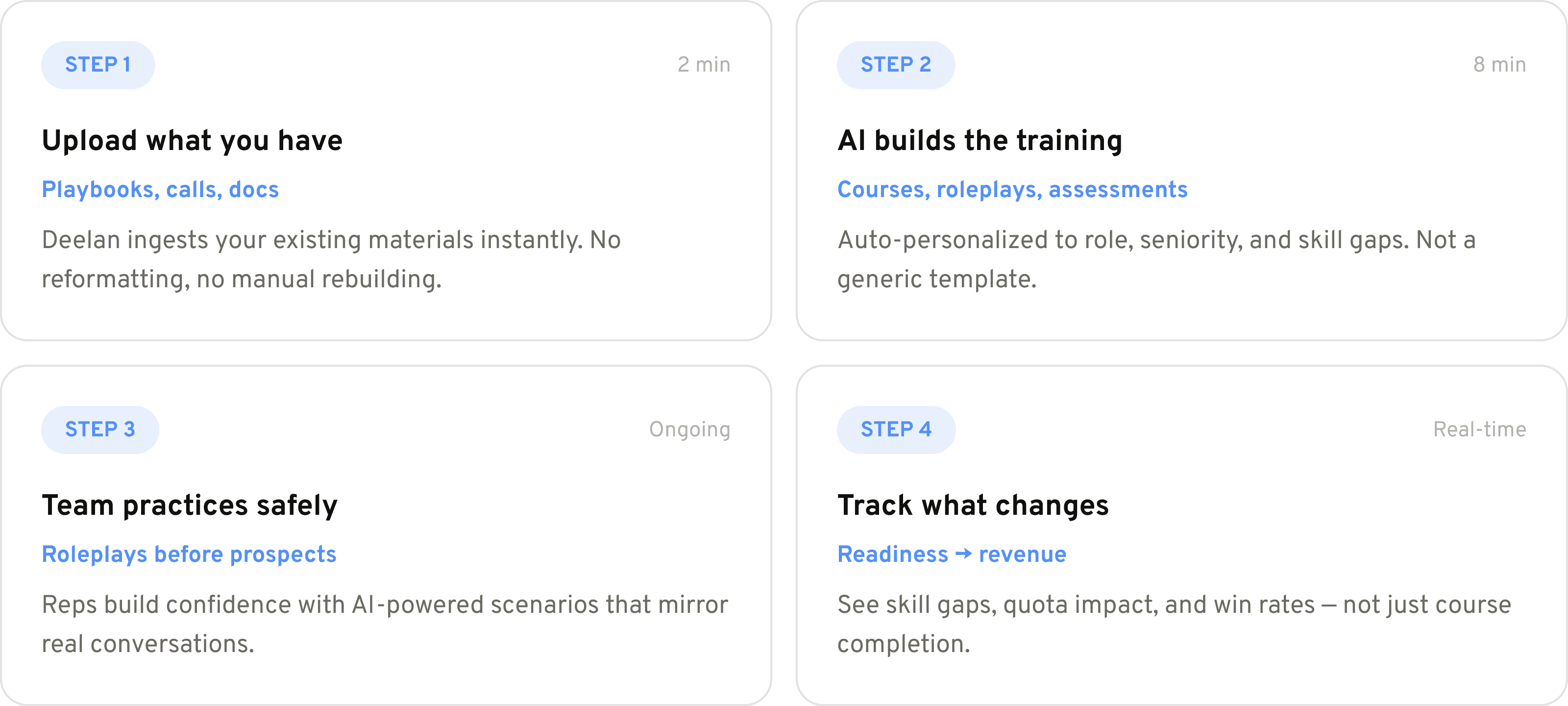
You can also read our guide reviewing the best sales training software to compare different options and choose the right fit for your team.
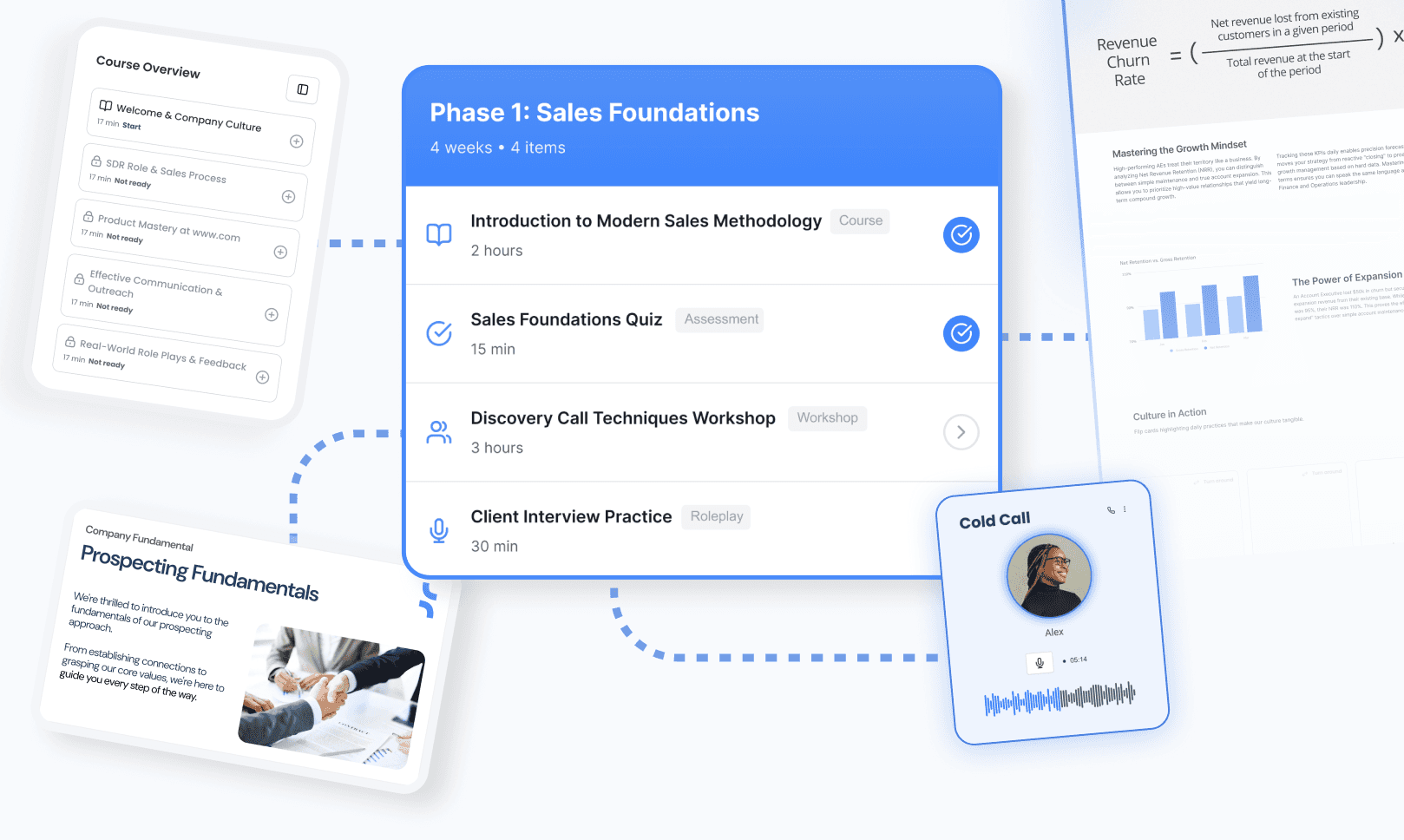
Want to see how your reps could perform like your top seller? Book a short demo with Deelan and turn your playbook into adaptive AI training in minutes.
4. Shadowing Top Reps
Your best reps already know what works.
New reps should listen to their calls, watch their demos, and understand how they run discovery, handle objections, and create urgency.
But shadowing should be structured.
Instead of saying “watch this call,” give reps a checklist:
What to Observe | Questions to Ask |
|---|---|
Opening | How did the rep set the agenda? |
Discovery | What questions uncovered real pain? |
Demo | How did they connect features to outcomes? |
Objections | How did they avoid discounting too early? |
Next steps | Was the call closed with clear action? |
The goal is not to copy top performers word-for-word. The goal is to capture what makes them effective and turn it into repeatable training.
5. Deal Review Cadences
Deal reviews help reps improve live opportunities.
A good deal review should answer:
Question | Why It Matters |
|---|---|
Who is the economic buyer? | Prevents single-threaded deals |
What business pain are we solving? | Keeps the deal value-based |
What is the cost of doing nothing? | Creates urgency |
Who could block the deal? | Reduces surprise objections |
What is the next mutual commitment? | Keeps momentum |
Frameworks like MEDDIC, MEDDPICC, SPICED, or Challenger can help structure these conversations.
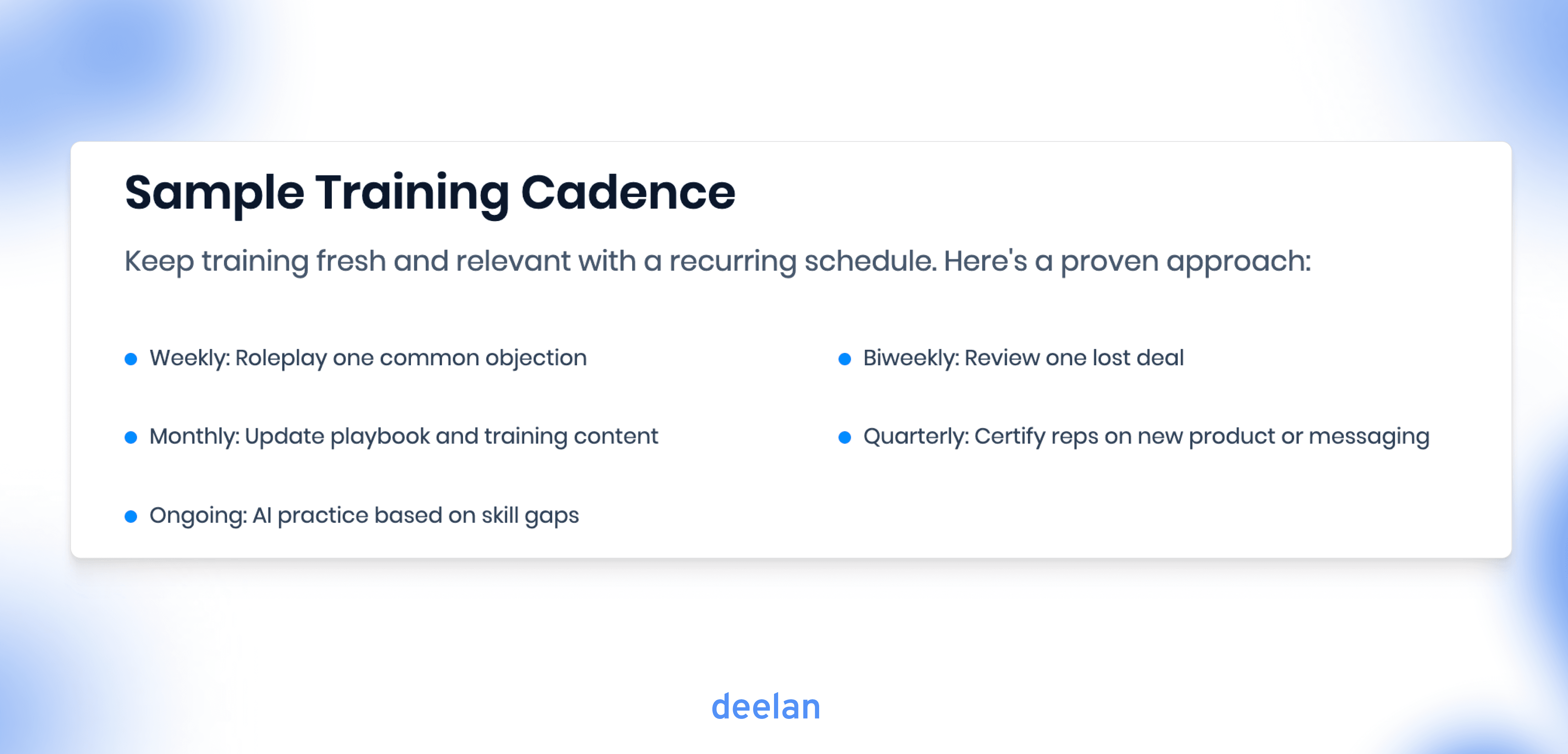
But the key is consistency. A methodology only works if reps use it every week, not just during onboarding.
6. Certification Programs
Certifications can be useful for checking whether reps completed training.
But completion does not always mean performance improvement.
A rep can pass a quiz and still struggle on a real discovery call.
That is why certification should include practical assessments, roleplays, call simulations, and manager review.
The best SaaS certification programs measure whether reps can actually perform, not just whether they watched the content.
With Deelan AI, SaaS companies can turn their existing knowledge into adaptive training in minutes, create realistic AI roleplays, and help every rep practice like they are preparing for the real buyer conversation.
Book a demo with Deelan and see how your sales reps could perform like your top seller.