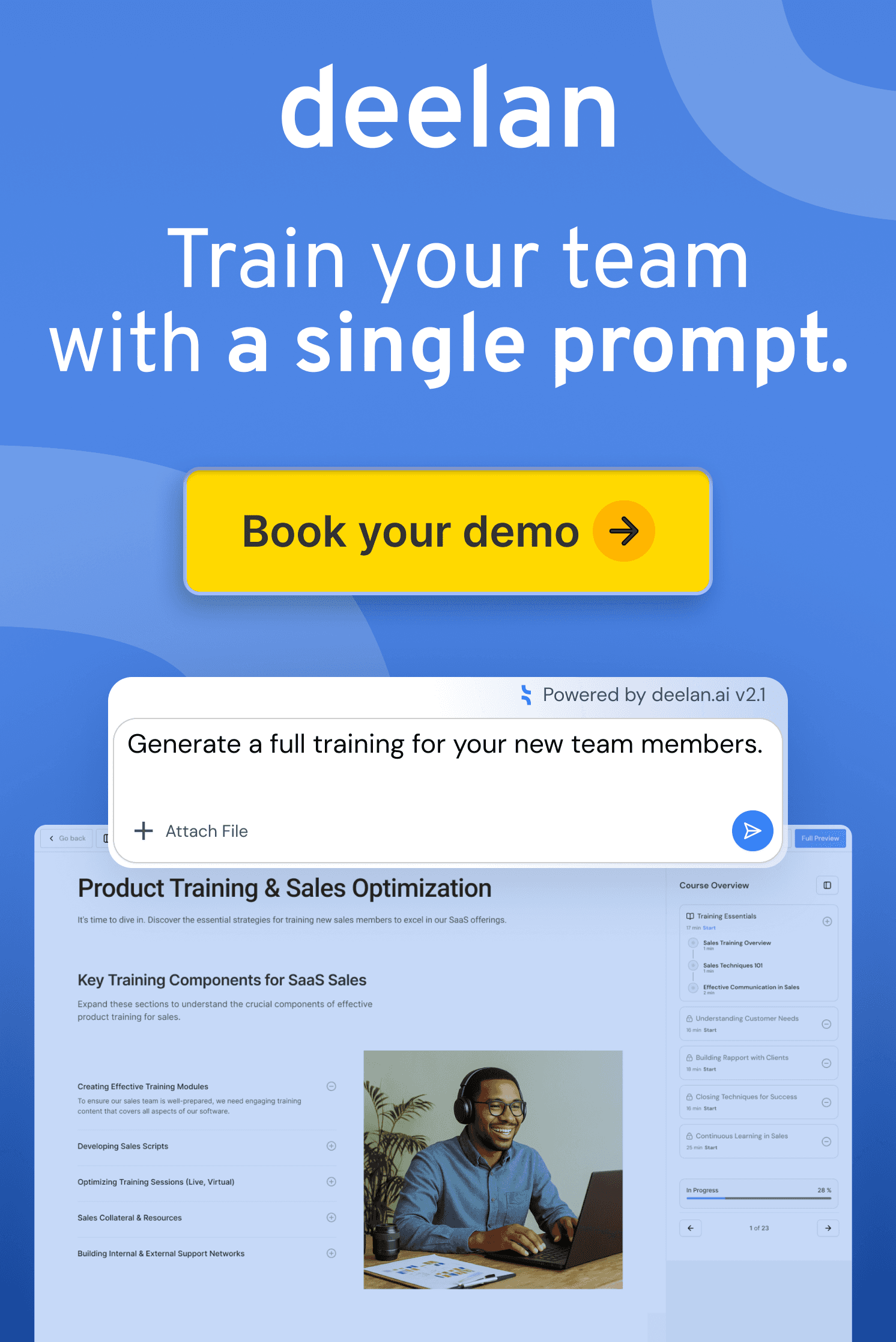
Most sales training software still looks like this:
long video courses, static playbooks, and dashboards nobody checks after onboarding week.
Reps forget most of the material within days. Managers repeat the same coaching conversations over and over. New hires take months to ramp. And half the team quietly stops using the training platform altogether.
In this guide, we’ll break down the best sales training software in 2026, focusing on platforms that actually change rep behavior, improve win rates, and scale coaching across revenue teams.
Platform | Best For | AI Roleplay | Starting Price | Reality Check |
|---|---|---|---|---|
Revenue teams needing onboarding + coaching + AI roleplay + training | ✅ | Full adaptive system | ||
Second Nature | Conversation practice | ✅ | Custom | Great roleplay, limited beyond that |
Gong | Coaching from real calls | ❌ | Enterprise | Expensive but powerful |
Allego | Large enablement teams | Limited | Custom | Heavy implementation |
Salesloft | Coaching inside outreach workflows | Limited | Custom | Less training depth |
What to Look for in Sales Training Software in 2026
Before you sit through another demo, here's the buying framework that separates tools that drive adoption from tools that collect dust.
Realistic, Customizable AI Role-Play
CRM and Workflow Integration
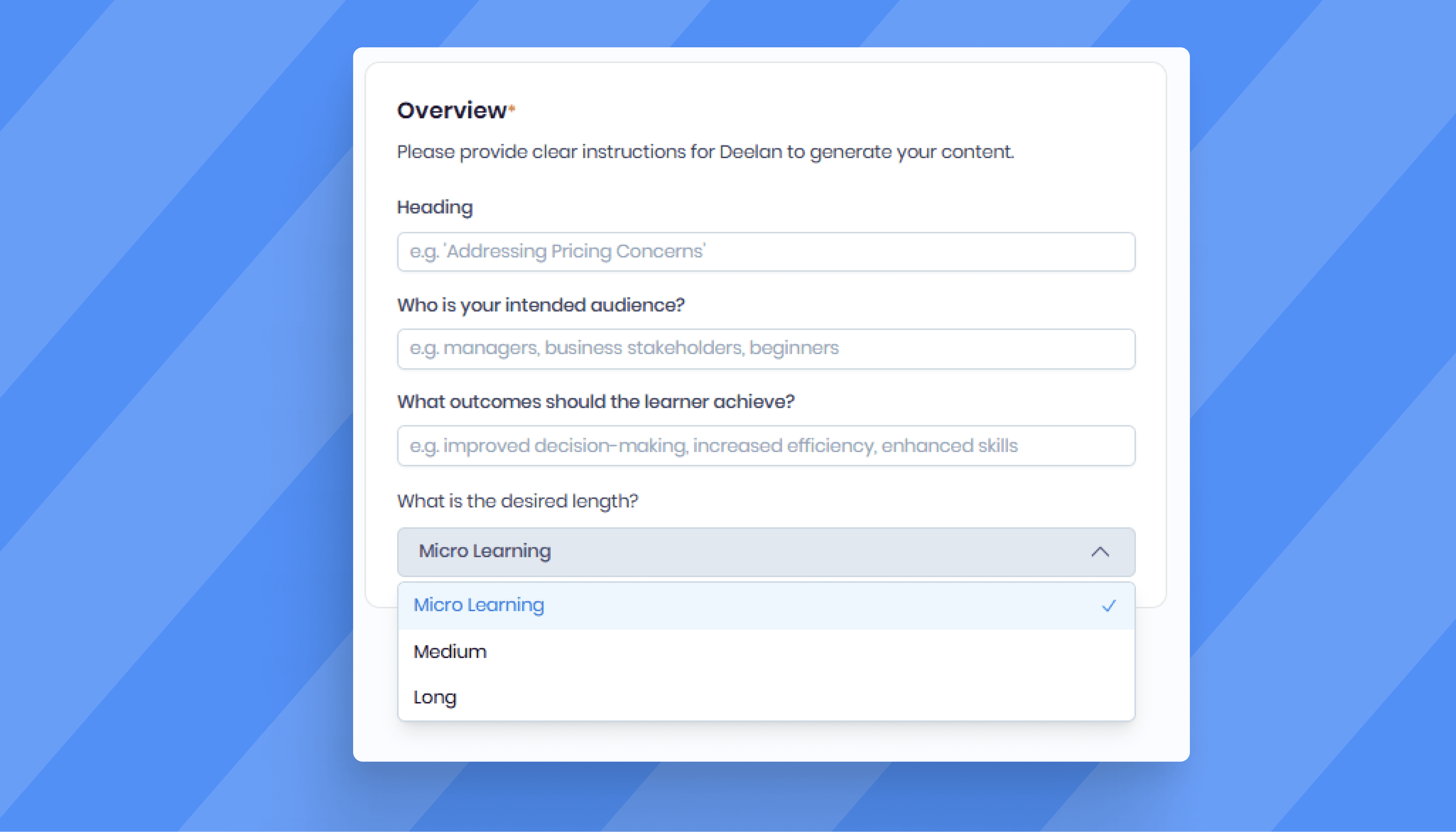
Short-Form and Microlearning Format
Feedback Tied to Real Behaviors, Not Vanity Metrics
Manager Visibility and Coaching Tools
Scalability from Pilot to Full Rollout
The 5 Best Sales Training Software Platforms in 2026
1. Deelan — The AI Training Platform Built for Revenue Teams
Best for: Revenue teams that need adaptive, role-specific training generated fast and deployed at scale — without managing five separate tools.
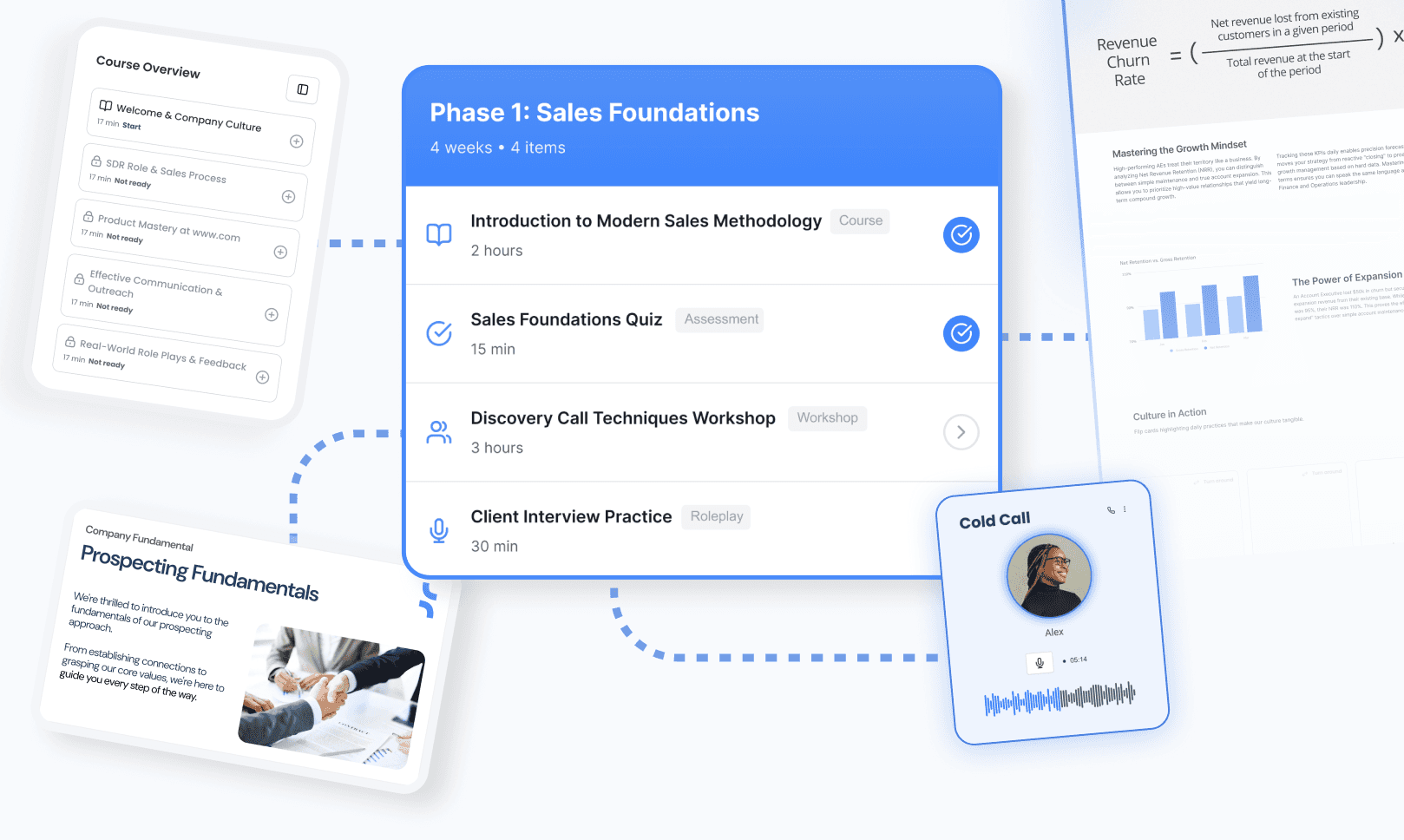
Overview: Deelan is the most advanced AI sales training platform purpose-built for modern revenue organizations. Where most platforms force you to choose between content management and coaching, Deelan unifies adaptive course generation, AI roleplay simulations, live workshops, and performance analytics into a single engine. The result: reps ramp faster, training actually gets built and updated, and managers finally have visibility into skill gaps before they cost deals.
Key Features:
AI-Generated Training in Minutes: Upload a sales playbook, call recording, product deck, or even a URL and Deelan converts it into a structured, interactive training course automatically. Training creation is 80% faster than building manually.
Adaptive Learning Paths: Training adjusts dynamically based on each rep's role (SDR, AE, CSM), seniority level, quota performance, and identified skill gaps — not one-size-fits-all modules.
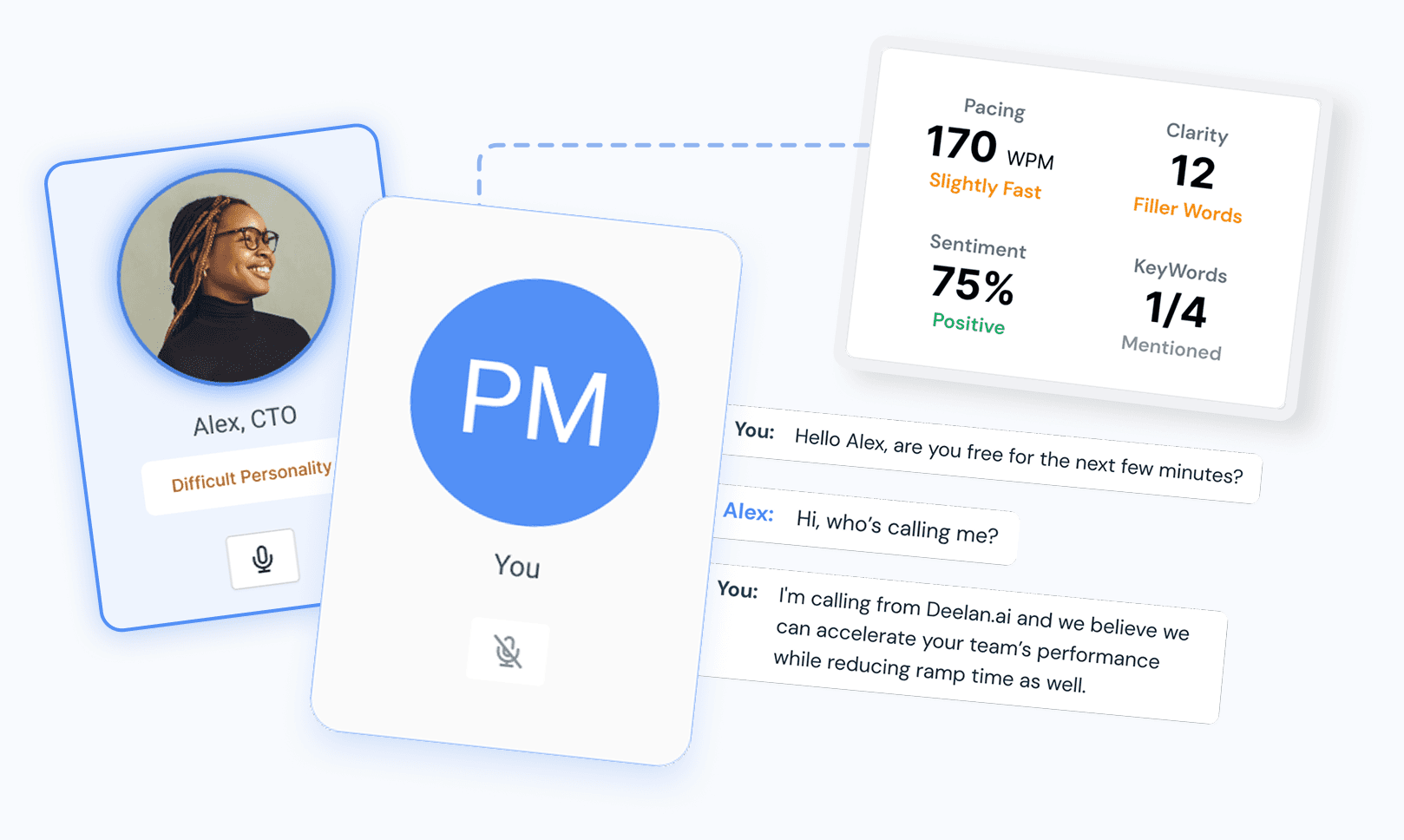
AI Roleplay Simulations with Audio Feedback: Reps practice real conversation scenarios — cold calls, discovery, objection handling, renewals — with an AI that responds realistically and scores tone, clarity, confidence, and tactical execution.
Real-Time Skill Analytics: Managers see a live skills map of the entire team — who is ready to run a demo, who needs work on discovery, where the gap between training completion and actual performance exists.
Workshops + Courses + Assessments in One Program: Structured programs combine all learning formats — not just video or just roleplay — into a continuous path from first day to full performance.
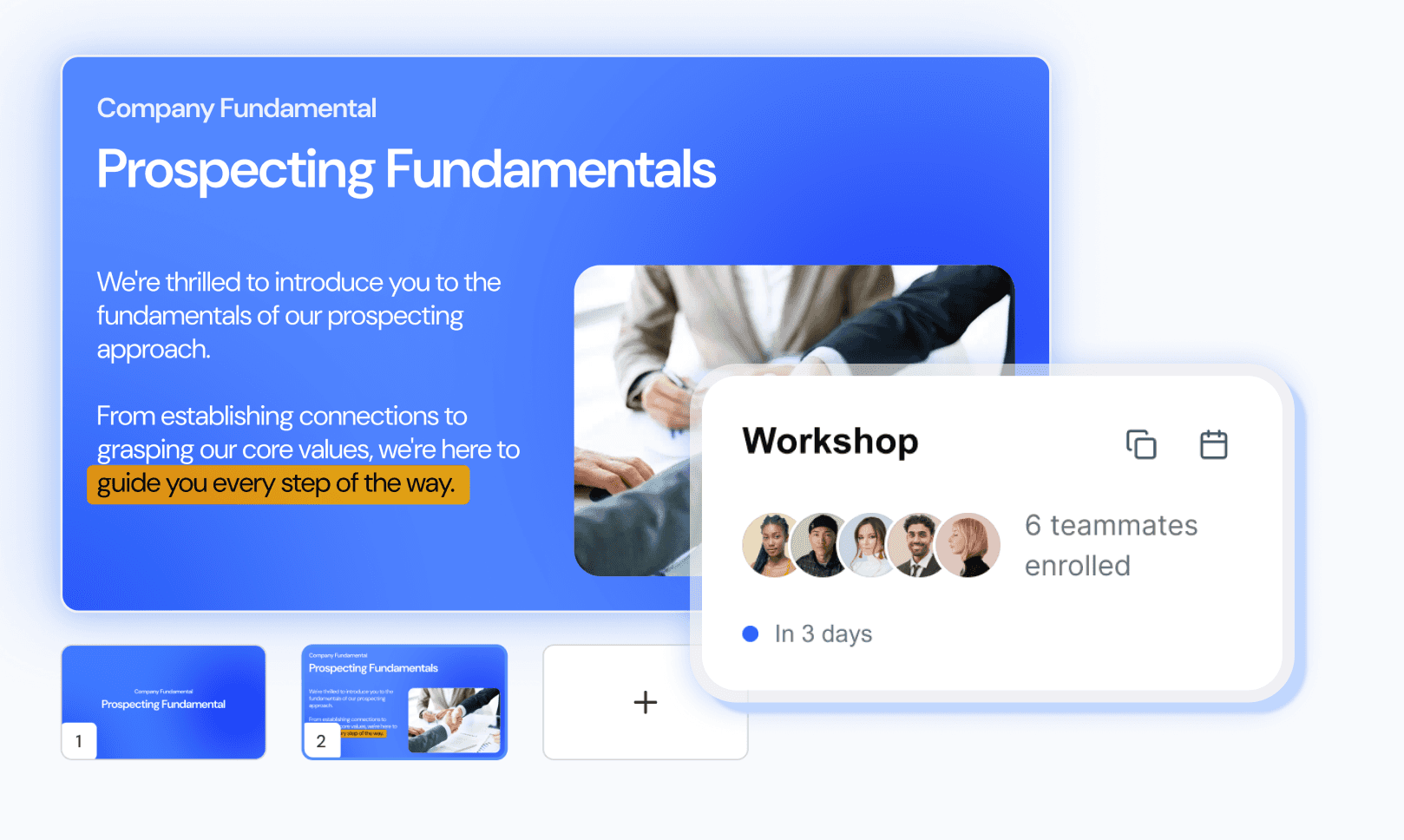
What Users Say: Teams using Deelan consistently highlight two things: the speed of training creation (going from prompt to published course without a dedicated instructional designer) and the quality of the AI roleplay feedback. The audio analysis — scoring tone and clarity, not just keywords — is a genuine differentiator from competitors. The main learning curve is in the initial scenario setup for highly technical products, but the AI assistant accelerates that significantly.
Proof Points:
55% faster ramp time for SDRs and AEs
15–25% higher win rates reported by revenue teams
80% faster training creation vs. manual LMS workflows
Pricing: Pricing page. Free demo available.
Best for: VP Sales, RevOps, and Sales Enablement leaders who need a single platform that handles the full lifecycle — from day-one onboarding to ongoing performance coaching — and can keep training updated as fast as the product and market change.
Why AI Sales Training Platforms Are a Game-Changer
Traditional training is passive. Reps watch. Maybe they answer a quiz. Then they get on a real call and the muscle memory isn't there because watching is not practicing.
AI-native platforms flip this. Instead of consuming content, reps engage in realistic, adaptive conversations with AI buyer personas modeled on your actual ICP. The AI doesn't follow a script — it responds to what the rep says, escalates objections, signals buying intent, or goes cold, exactly the way real prospects behave.
2. Second Nature — Dedicated AI Roleplay Specialist
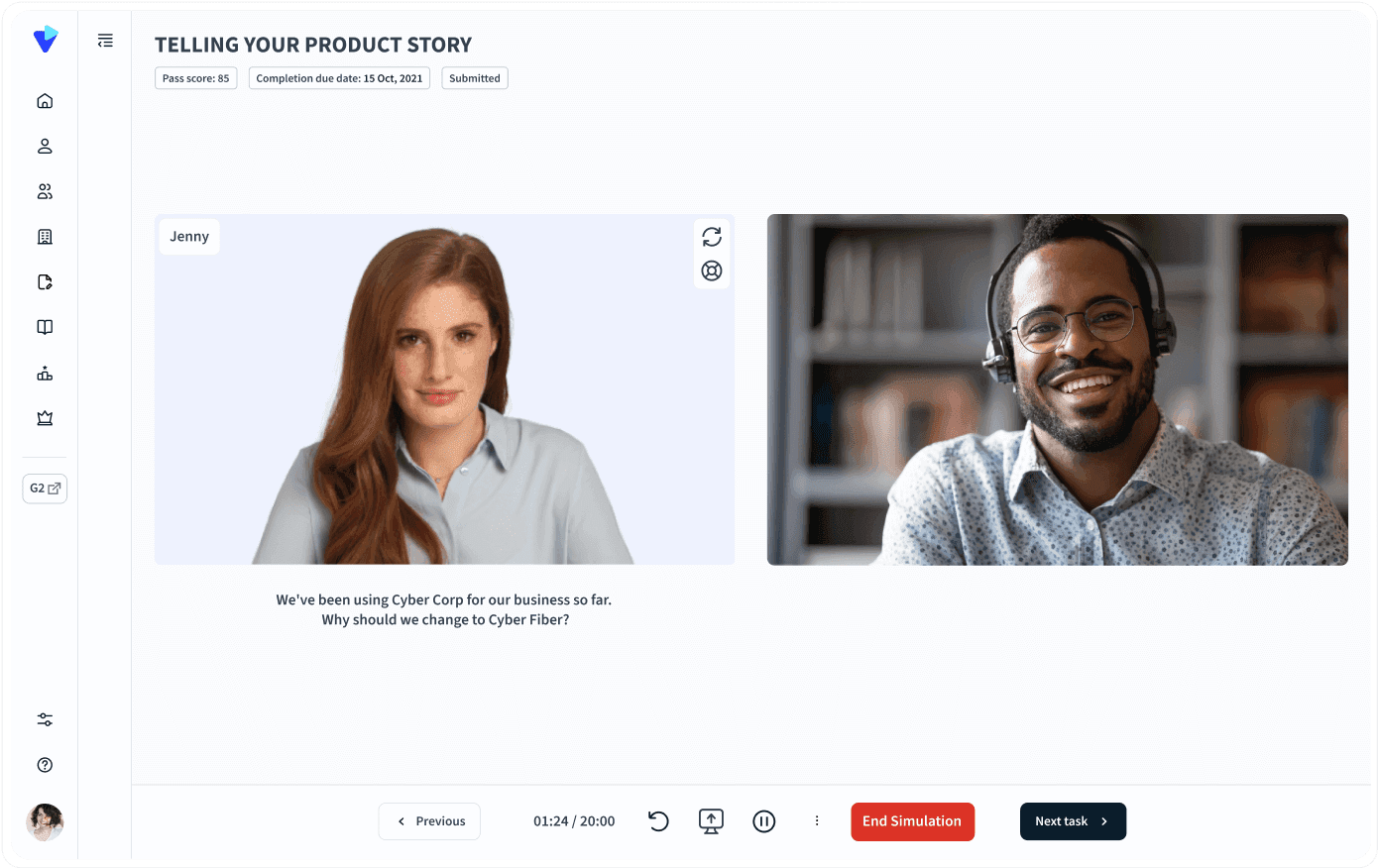
Best for: Teams focused purely on building conversation muscle memory and scaling pitch practice without manager involvement.
Overview: Second Nature built its reputation on one thing: making AI roleplay genuinely useful. Its virtual pitch partner "Jenny" engages reps in realistic sales conversations, responds dynamically, and delivers objective performance reports. It's a focused tool — not trying to be a full LMS or enablement suite — which is both its strength and its limitation.
Key Features:
Customizable roleplay scenarios for cold calls, demos, objection handling, and QBRs
Advanced NLP that adapts to rep tone, pacing, and phrasing
Alignment with specific sales methodologies (SPIN, MEDDIC, Challenger)
Manager scorecards and progress tracking across the team
Mobile-accessible for practice anywhere
What Users Say: Practitioners consistently praise Second Nature for the realism of its AI interactions — it doesn't feel like talking to a chatbot. The weakness most cited is that it doesn't connect practice performance to real call outcomes or integrate deeply with CRM data, making it harder to measure business impact beyond completion metrics.
Pricing: Custom pricing. Demo required.
Best for: Mid-market sales teams that want a dedicated, high-quality practice environment without investing in a full platform rebuild.
3. Allego
Best for: Enterprise sales enablement programs combining training and content management.
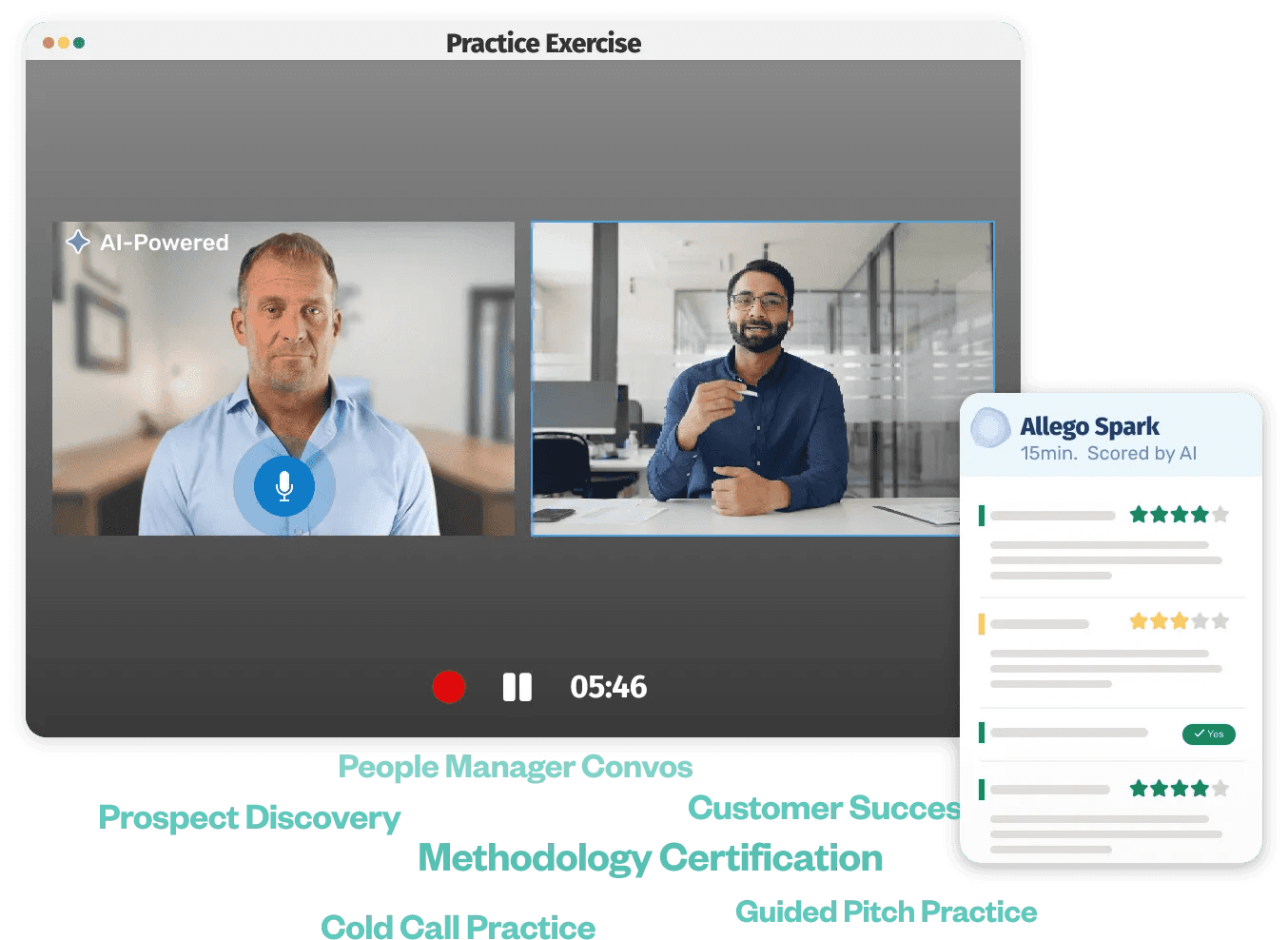
Overview: Allego offers a comprehensive sales enablement platform that includes training, coaching, and content sharing.
It’s widely used by large organizations running structured enablement programs.
Key Features
video-based coaching
content distribution for sales materials
AI learning recommendations
digital sales rooms for buyers
practice and certification tools
What Users Say - Teams appreciate Allego’s enterprise capabilities
Pricing - Enterprise pricing available via demo.
4. Gong — Conversation Intelligence Leader
Best for: Revenue teams that prioritize coaching from real customer interactions over simulated practice.
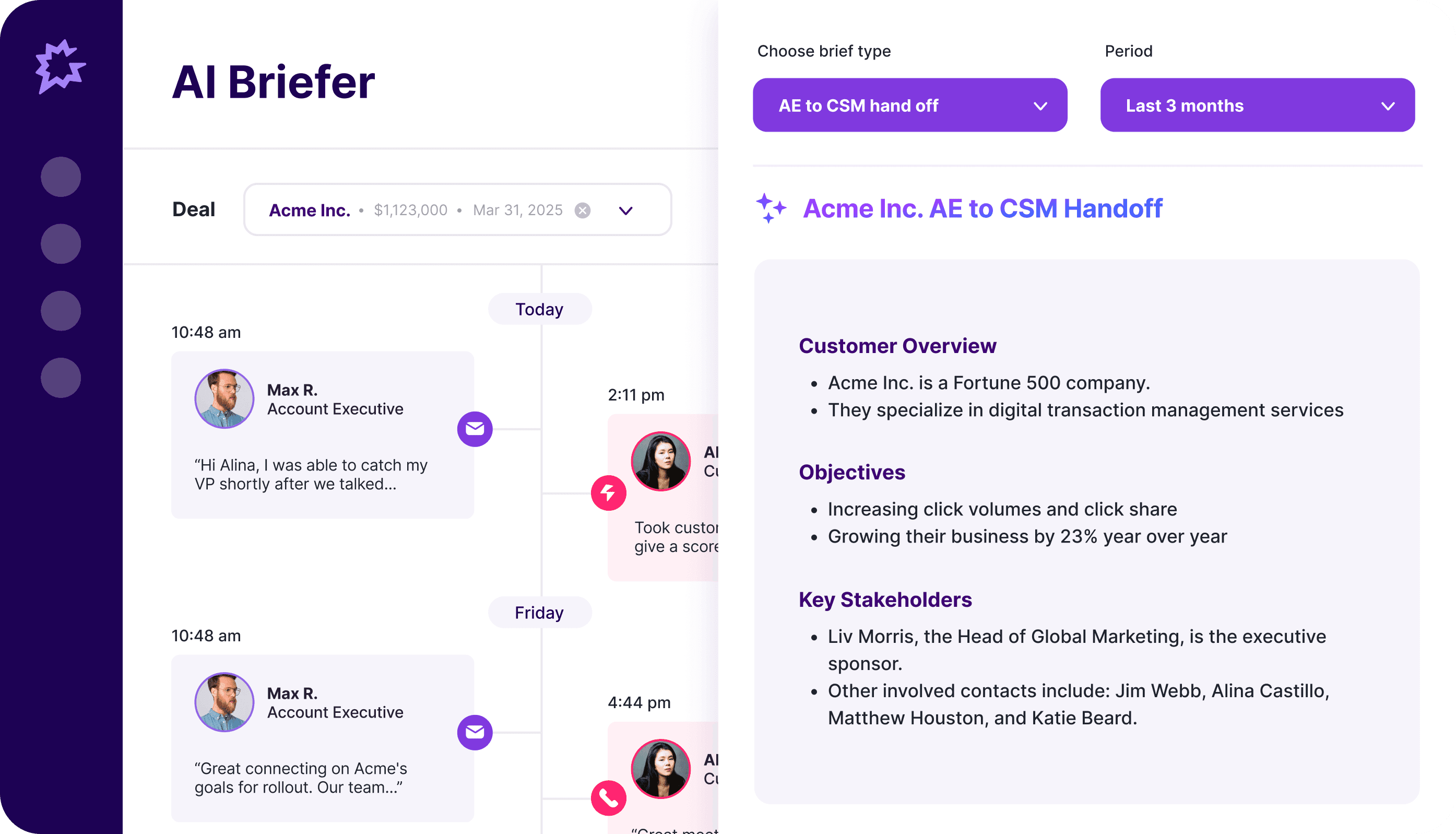
Overview: Gong isn't primarily a sales training platform in the traditional sense — it's the market leader in conversation intelligence. It records, transcribes, and analyzes every customer interaction, then surfaces patterns: what top performers do differently, where deals go cold, which objections go unaddressed. Coaching is derived from reality, not simulation.
Key Features:
Automatic recording and AI analysis of all calls, emails, and meetings
AI Smart Trackers flagging competitor mentions, pricing discussions, and buying signals
Deal Intelligence: pipeline health based on actual conversation content
Manager coaching workflows with time-stamped call feedback
Integrations with all major CRMs and sales engagement platforms
What Users Say: Gong users are often its most vocal advocates — particularly practitioners who believe (with good evidence) that coaching from real calls drives more behavior change than roleplay. The main objection is cost: Gong is enterprise-priced and the full value requires significant data volume to realize. It also doesn't offer structured onboarding training or practice environments — it's a coaching tool, not a training platform.
Pricing: Contact for pricing. High-end enterprise positioning.
Best for: Mid-market to enterprise revenue teams that already have onboarding infrastructure and want to layer in world-class coaching intelligence from real deal activity.
5. Salesloft — AI Coaching Inside Sales Engagement
Best for: Teams that want AI coaching embedded within their primary sales engagement and sequencing platform.
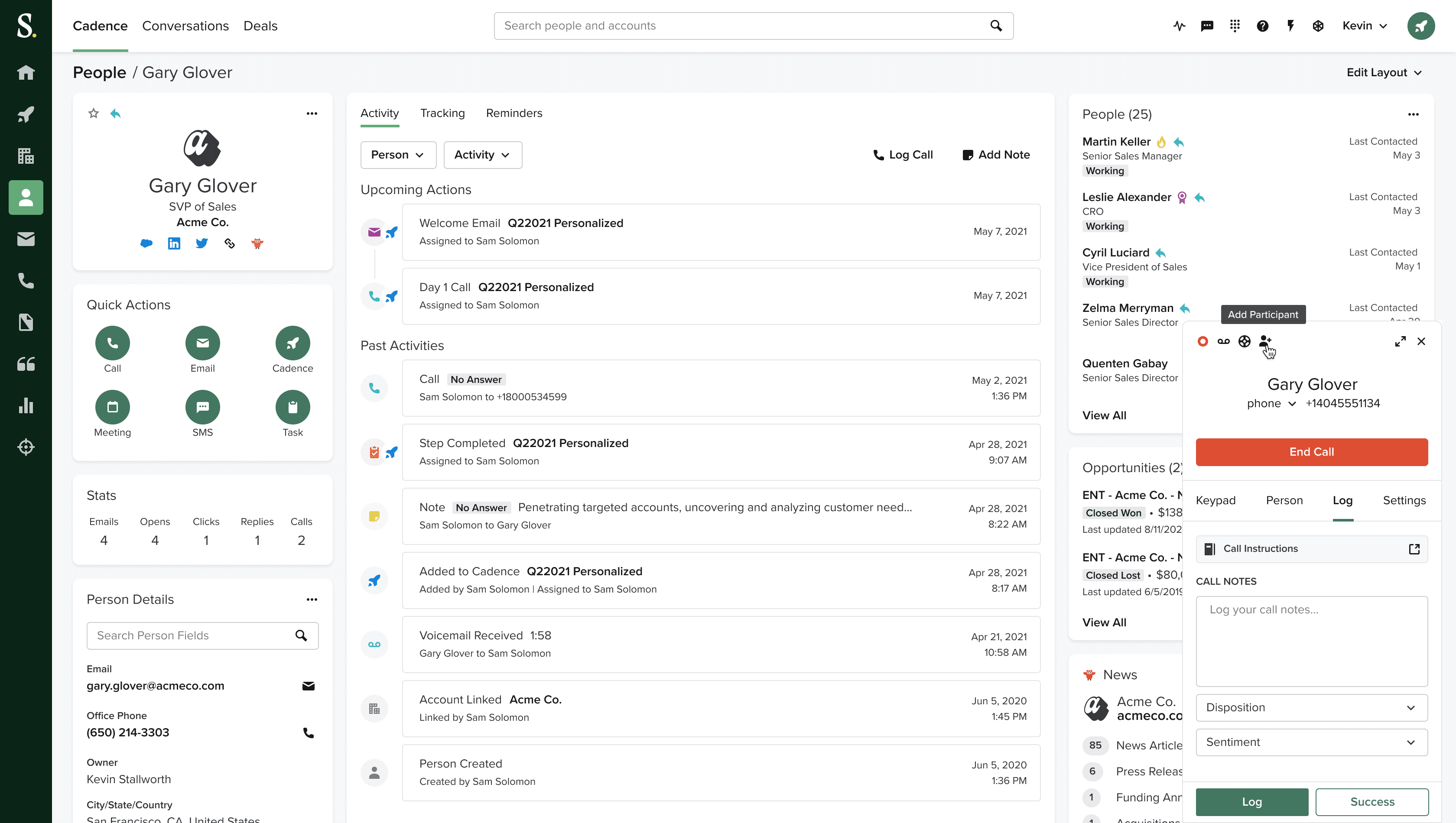
Overview: Salesloft evolved from a pure sales engagement platform into a broader revenue orchestration suite. Its Conversation Intelligence module adds coaching capabilities directly inside the platform reps are already using for cadences, outreach, and deal management — reducing the friction of yet another tool.
Key Features:
Cadences: multi-channel outreach automation with embedded coaching triggers
Conversation Intelligence: call recording and AI analysis within the same workflow
Manager coaching playlists: curated best-practice call libraries reps can self-study
AI Deal Forecasting: pipeline signals derived from conversation patterns
Native Salesforce and HubSpot integrations
What Users Say: The core value proposition — coaching inside the engagement platform reps already live in — is real and drives adoption. The tradeoff is depth: Salesloft's coaching features are solid but not as specialized as Gong's conversation intelligence or Deelan's adaptive training engine. For teams consolidating tools, it's a strong choice. For teams building a best-in-class training program, it's a starting point, not a ceiling.
Pricing: Contact for pricing.
Best for: SMB to mid-market teams looking to reduce tool sprawl by embedding coaching into their existing sales engagement workflow.
How to Choose the Best Sales Training Software
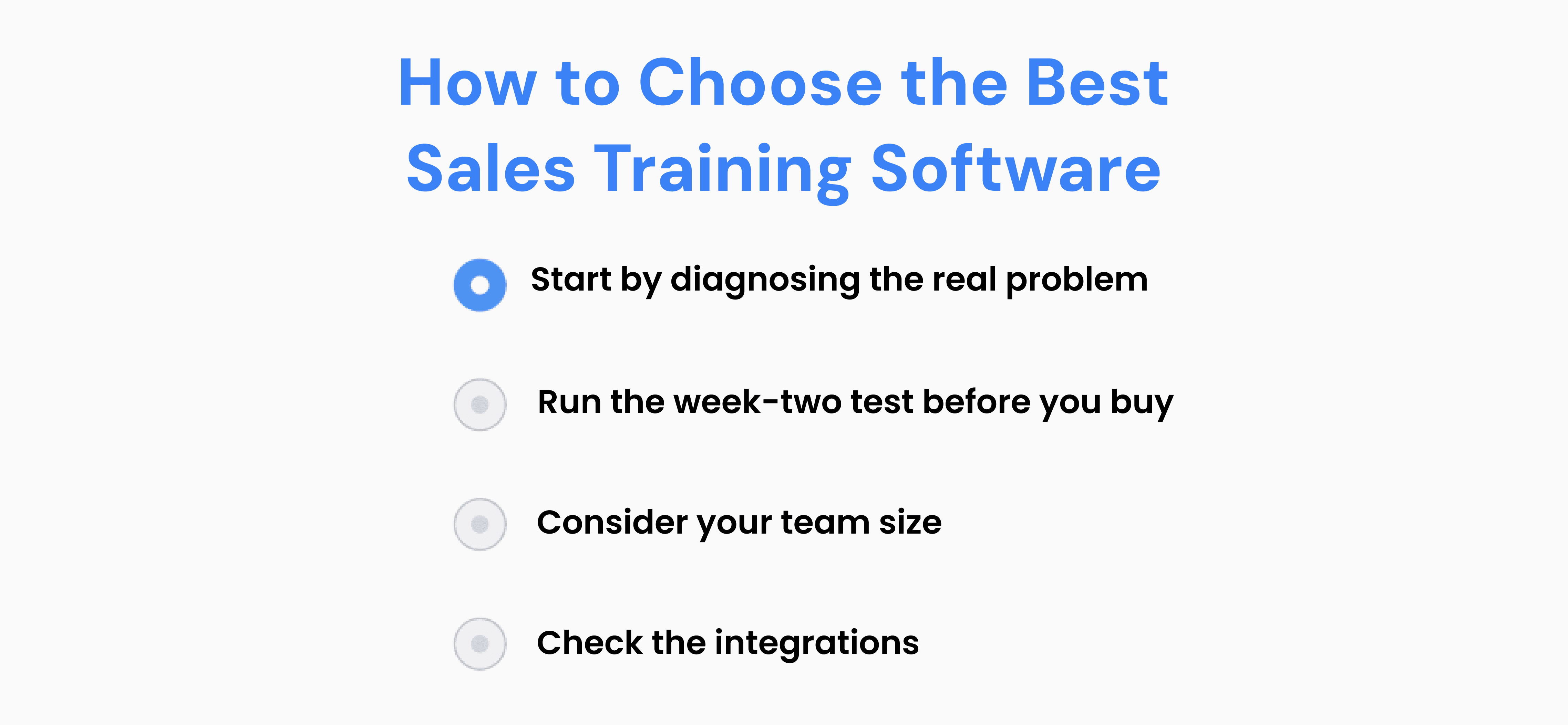
Choosing the right sales training software starts with diagnosing your actual problem. Many companies buy the wrong tool because they treat training as a content problem.
Start with the real issue
Ask:
Is onboarding too slow?
Are reps struggling with objections?
Are managers overwhelmed with coaching?
Different platforms solve different problems.
The Week-Two Test
One question matters more than anything else:
Will reps still use this platform after week two?
If the answer is no, adoption will collapse.
Consider Team Size
Small teams often need lightweight tools.
Enterprise teams usually need:
advanced analytics
integration with CRM
structured training programs
Check Your Sales Stack
Make sure the platform integrates with:
Salesforce
HubSpot
Slack
Zoom
Gong
Frequently Asked Questions
How does AI sales training software work?
AI sales training software creates realistic practice environments where sales reps interact with simulated buyers.
The AI analyzes the conversation in real time and scores specific skills such as discovery questions, objection handling, and closing techniques.
Many platforms also connect training data to real call recordings, helping reps improve based on real sales conversations.
What’s the difference between a sales training platform and an LMS?
A traditional LMS focuses on content delivery. A sales training platform focuses on performance improvement.Instead of simply tracking course completion, these platforms measure outcomes like win rates, ramp time, and call quality.
What is the difference between sales coaching and sales training?
Sales training teaches structured knowledge and methodologies.
Sales coaching focuses on improving individual rep performance through feedback and practice.
Modern platforms combine both through AI simulations and data-driven coaching insights.
How much does sales training software cost?
Pricing varies widely depending on team size and features.
Typical ranges include:
SMB tools: $30–$100 per user/month
Mid-market platforms: $100–$300 per user/month
Enterprise platforms: custom pricing
Some vendors charge per active user, while others charge per registered user, which can significantly affect costs.
Can AI replace sales coaches?
No — but it can scale coaching dramatically. AI provides instant feedback and practice opportunities, while managers focus on strategic guidance and complex deal coaching. The combination of human coaching and AI practice tends to produce the best results.
Build Training 10× Faster with Deelan
If you're evaluating platforms, start with the diagnosis: what specific behavior gap is costing you deals right now? Then find the tool that closes that gap with the shortest path to adoption for your team.
If the answer is "we need adaptive training that builds itself, roleplays that actually prepare reps for real calls, and coaching visibility that doesn't require three manager hours per rep per week" — that's exactly what Deelan was built to solve.
Book a free demo with Deelan See the adaptive training engine in action and run the 'day-in-the-life workflow' test yourself.