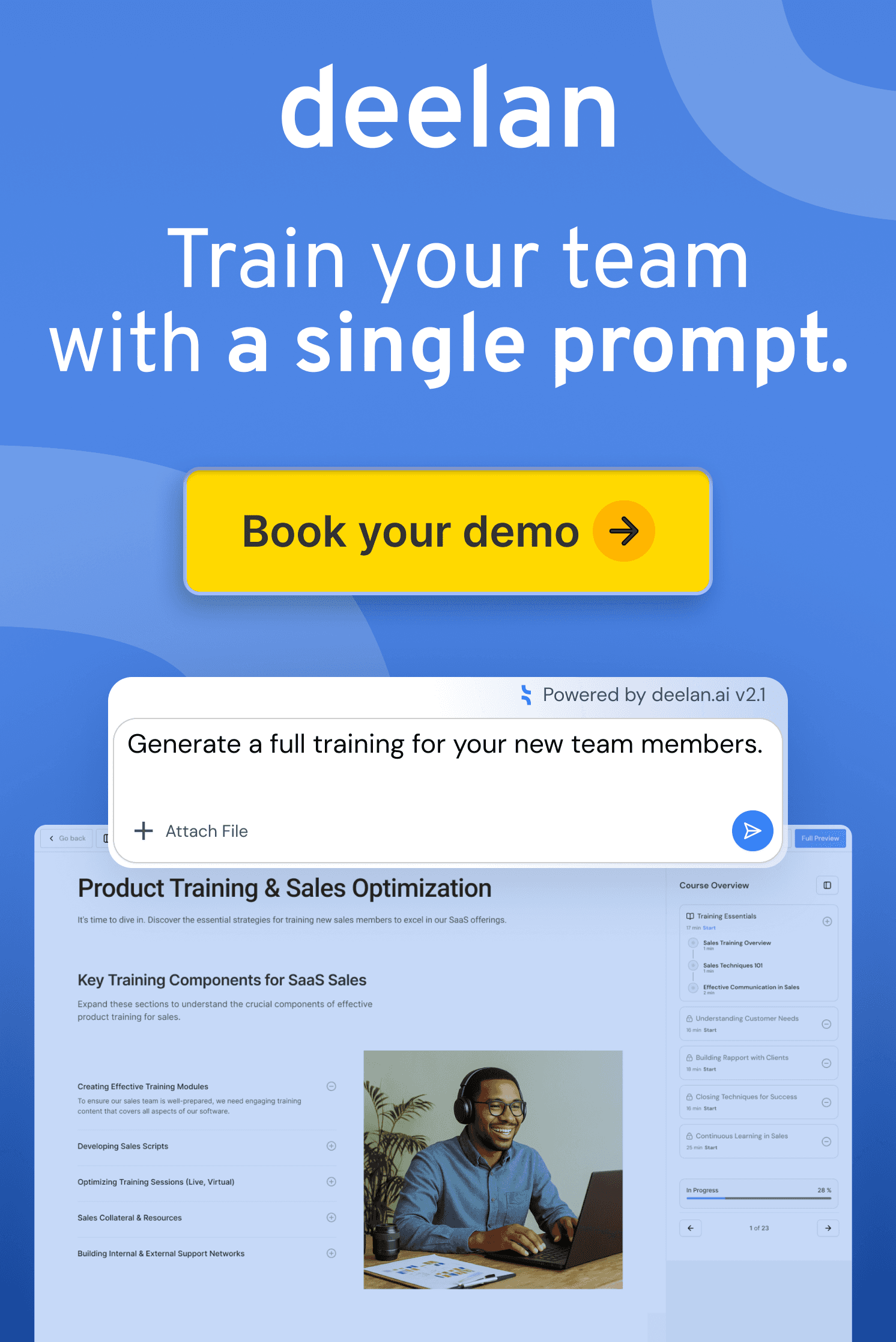

Most sales teams already have a playbook somewhere. A PDF nobody reads. A Notion page from two years ago. Slides from the last sales kick-off. A folder called "resources" with 47 files and zero context.
The problem isn't that sales teams don't have playbooks. It's that the playbook doesn't change anything once it's written.
Reps read it during onboarding. Maybe they skim it. Then they go back to doing what they've always done, or worse, winging it based on what they picked up from a senior rep over Zoom.
In 2026, building a winning sales playbook means something different than it did five years ago. It's not about writing a more thorough document. It's about building a system that helps reps actually get better, not just one that stores information they'll forget.
Here's how to do it in eight steps.
Step 1: Define What "Winning" Means for Your Team
Before you write a single word, get clear on what the playbook is supposed to fix. Most companies skip this and start with structure: "we need a section on discovery, one on objections, one on competitive positioning." That's backwards.
Start from the outcomes you're not hitting. Where are deals stalling? What are reps getting wrong on calls? How long is ramp taking, and what's slowing it down?
The best playbooks are built around specific performance gaps — shorter ramp time, better discovery calls, fewer deals lost to "no decision," stronger objection handling at the end of the quarter. If you can't name the problem your playbook is solving, you'll end up with something generic that helps nobody in particular.
Step 2: Map How Reps Actually Sell
Before building anything, spend time with your actual data. Pull call recordings. Look at CRM notes from won deals. Interview your top three closers and ask them what they actually do at each stage — not what they're supposed to do.
You'll find patterns that don't show up in any existing documentation: the exact way a top rep handles a procurement delay, the phrase that consistently moves a deal forward after a competitor mention, the two questions that almost always unlock real budget conversations.
That's the material your playbook should be built from. Not hypotheticals. Real, documented behavior from real deals.
Step 3: Build Around Buyer Situations
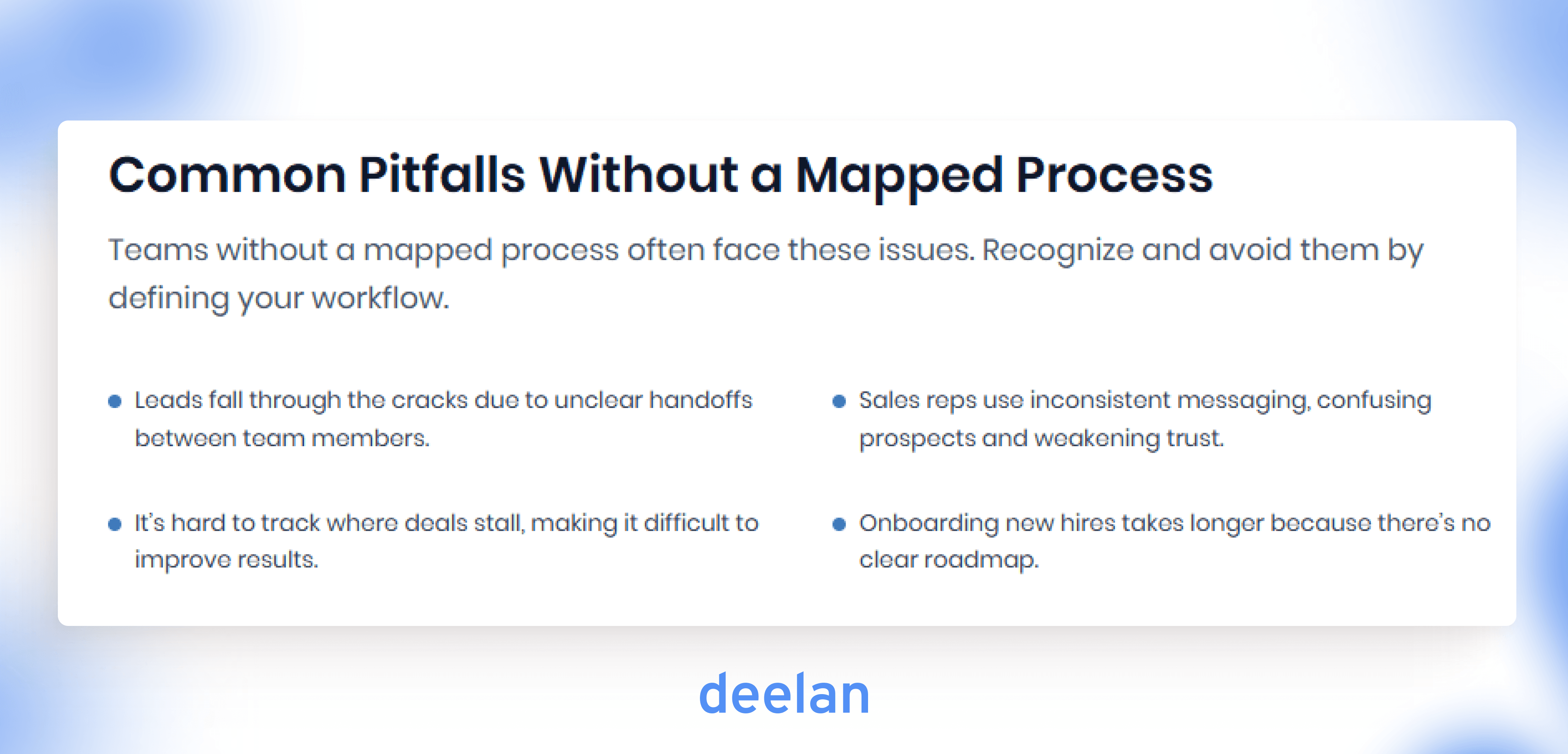
"Discovery. Demo. Proposal. Close." Every playbook has these. They're not wrong, but they're not specific enough to help a rep in the middle of a real conversation.
The situations that actually trip reps up are messier than pipeline stages. Think about what actually happens:
A prospect says your price is twice what a competitor quoted. A deal goes dark after a strong demo. A renewal call turns into a product complaint session. An inbound request comes in from a company that's already 80% bought in and just needs to justify the decision internally.
Each of those situations needs its own guidance — specific questions, positioning, things to avoid. When you organize your playbook around real buyer moments instead of abstract stages, reps can actually find what they need when they need it.
Step 4: Use What You Already Have
Companies waste weeks trying to build a playbook from scratch when the raw material already exists everywhere.
Call recordings with strong objection handling. Email threads where a senior rep solved a pricing conversation beautifully. Battlecards from the last competitive review. Onboarding documents with product positioning that someone wrote really well eighteen months ago. Slack answers from the sales manager that reps screenshot and save.
All of that is playbook content. It just hasn't been organized into something usable.
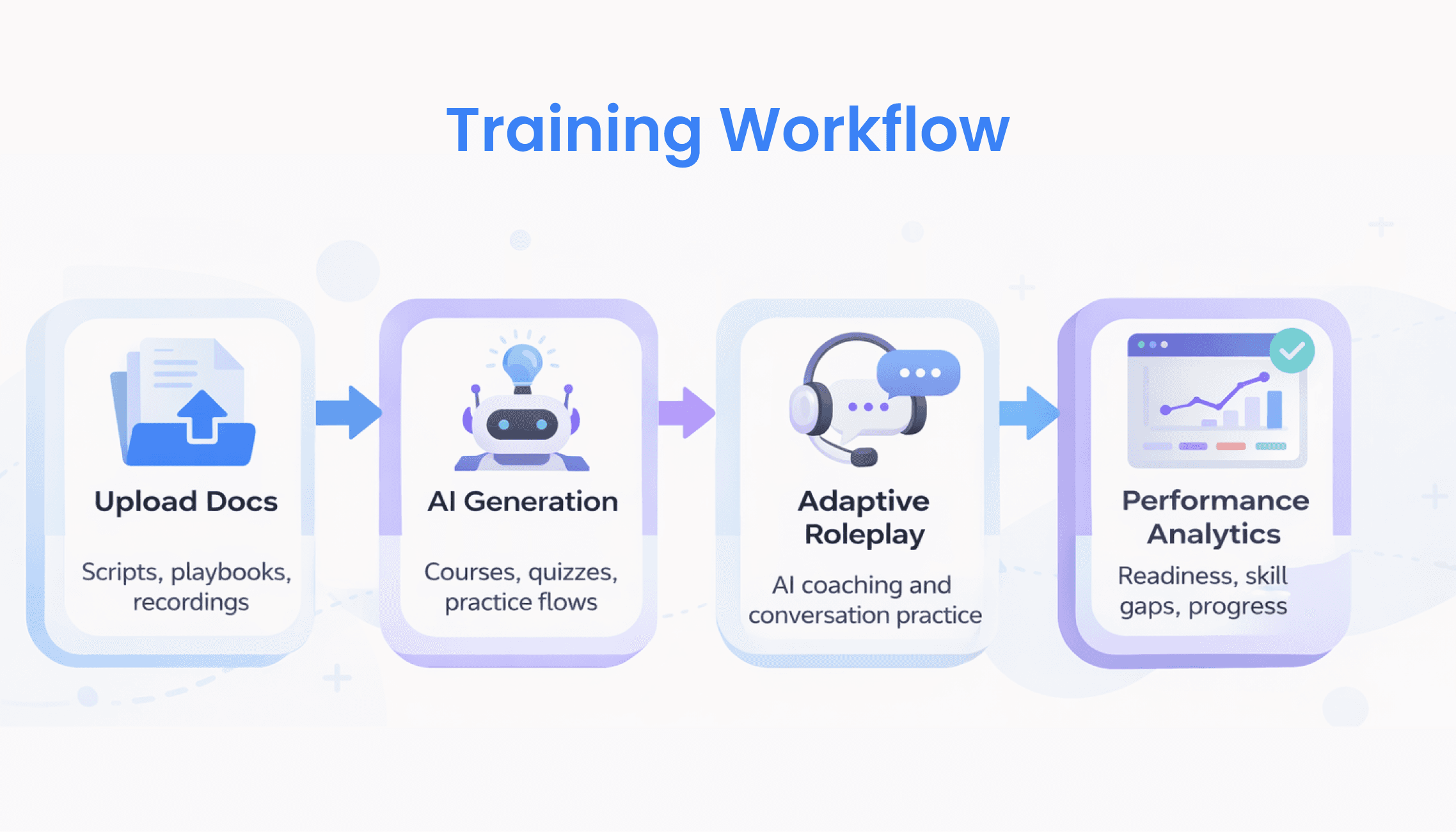
Modern platforms can take these existing files and transform them into structured training, assessments, and practice scenarios without starting from zero. You're not building a playbook from nothing — you're turning what your team already knows into something the whole team can access and learn from.
Step 5: Build Practice In, Not Just Information
This is the step almost every playbook skips, and it's the reason most of them don't work.
Reading about how to handle a pricing objection doesn't prepare you to handle it on a live call. Knowing the right discovery questions in theory doesn't mean you'll ask them under pressure. There's a well-documented gap between knowing something and being able to do it — and for sales skills, that gap is wide.
A playbook only works if reps can practice it before they need it.
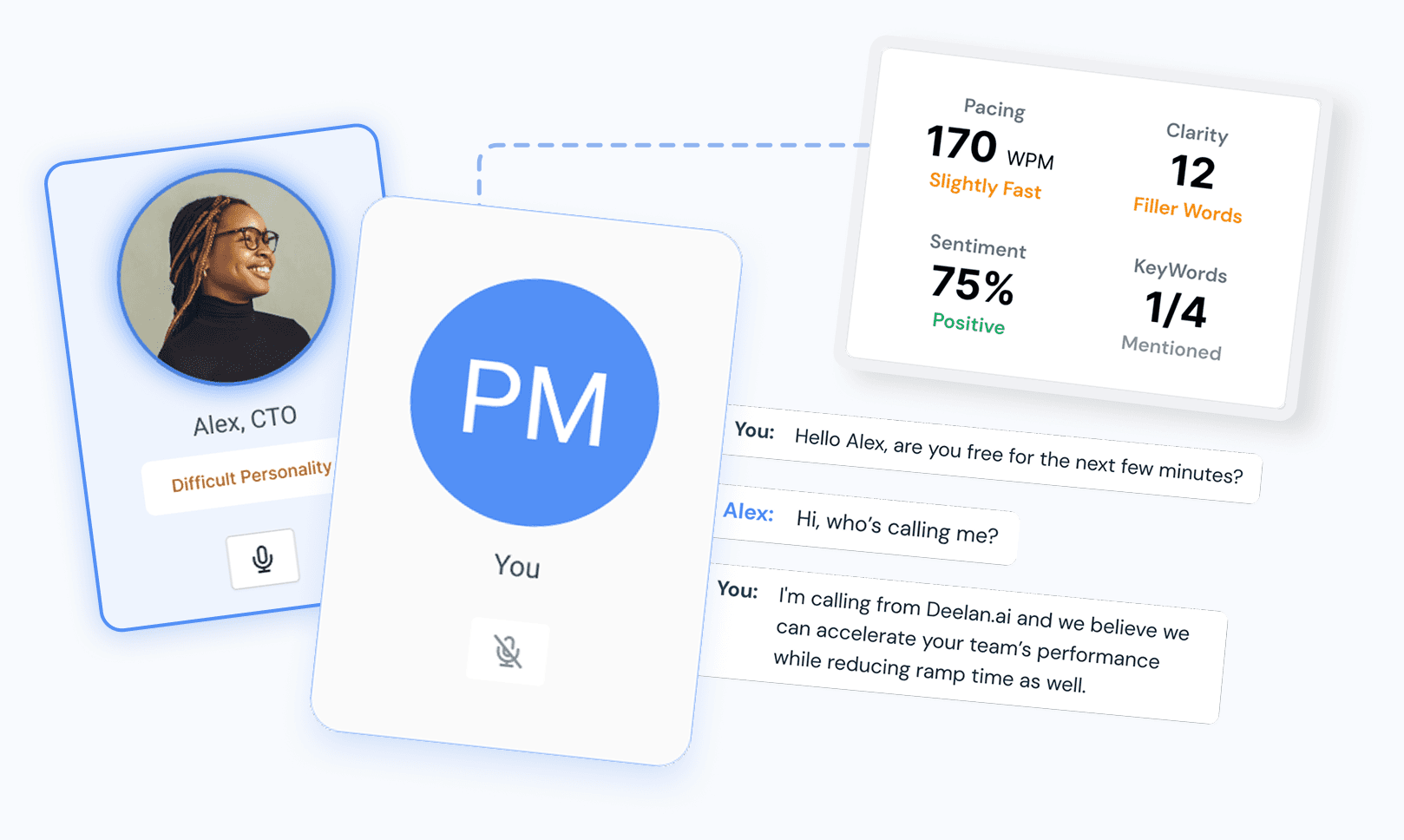
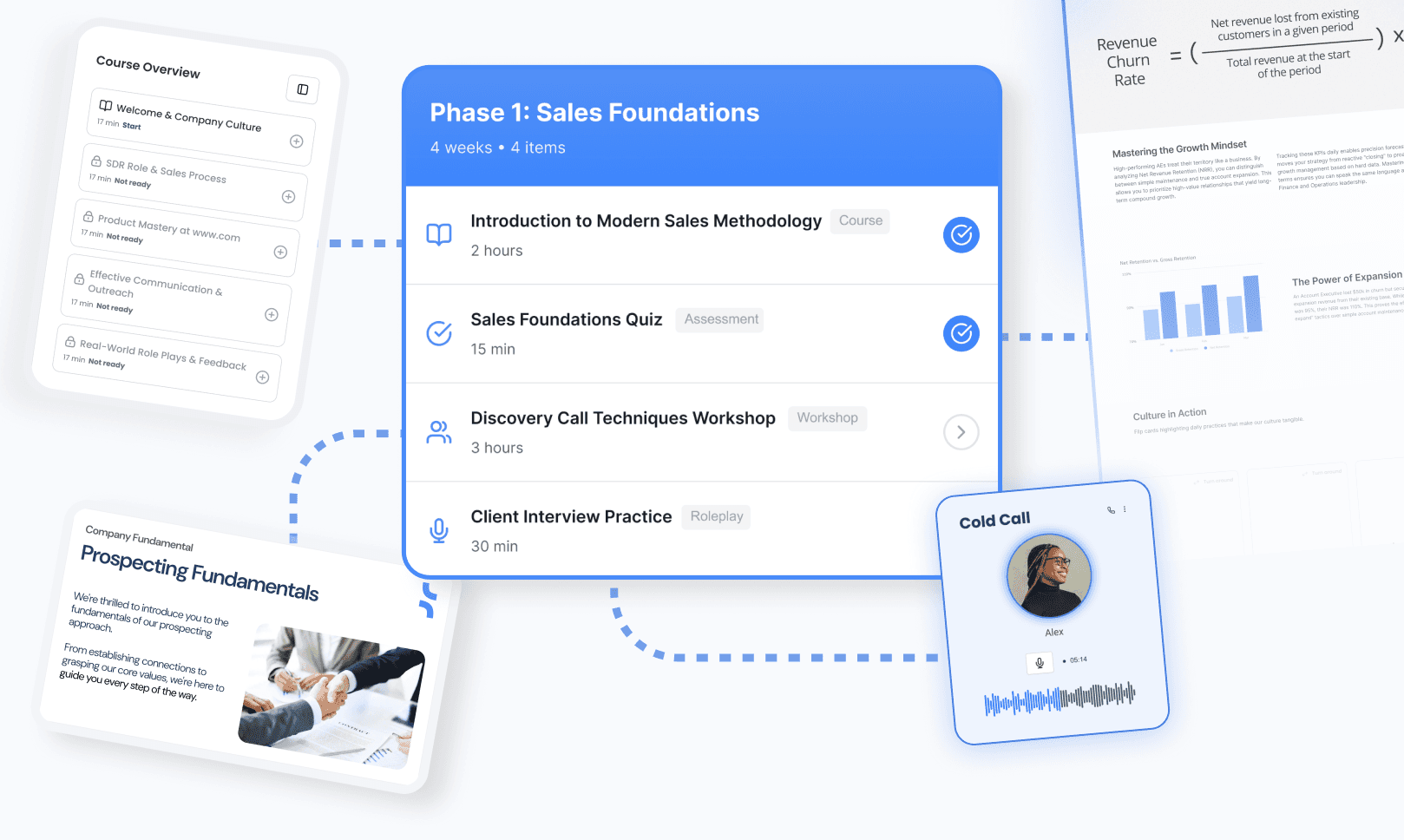
That means building in roleplays, simulations, and structured exercises alongside the documentation. Let reps practice the pricing conversation in a low-stakes environment before they face it with a real prospect. Run them through a scenario where the deal goes dark after the proposal and they have to re-engage it.
The companies seeing real improvement in win rates aren't the ones with the most thorough documentation. They're the ones that treat the playbook as a training tool, not a reference document.
Step 6: Make It Different for Different Roles
An SDR prospecting into mid-market tech companies needs completely different guidance than a CSM handling an enterprise renewal. A new AE in month two needs different support than someone hitting 140% of quota.
One playbook that tries to serve everyone usually serves nobody well. The SDR skips the enterprise negotiation section. The senior AE ignores the basic discovery questions. The new hire drowns in content that was written for someone who already knows the product.
Role-specific content, different learning paths by seniority, and guidance that adjusts based on where someone actually struggles — this is what separates playbooks that get used from ones that don't. Adaptive training paths aren't a nice-to-have in 2026. They're how you make sure the right rep is working on the right skill at the right time.
Step 7: Keep It Updated
A playbook that reflects how your product was positioned eight months ago is worse than no playbook, because reps will use it confidently and be wrong.
Most companies update their playbook once a year, usually after an SKO. Meanwhile, competitors launch new features, buyers shift their priorities, pricing changes, and the objections reps hear on calls evolve constantly.
The teams that maintain effective playbooks treat them more like living documents — adding new objection responses when they come up, updating competitive positioning after a loss review, incorporating messaging that worked in recent deals. This doesn't have to be a heavy process. Even a lightweight habit of monthly reviews keeps a playbook from going stale.
Step 8: Measure Whether It Actually Moves Performance
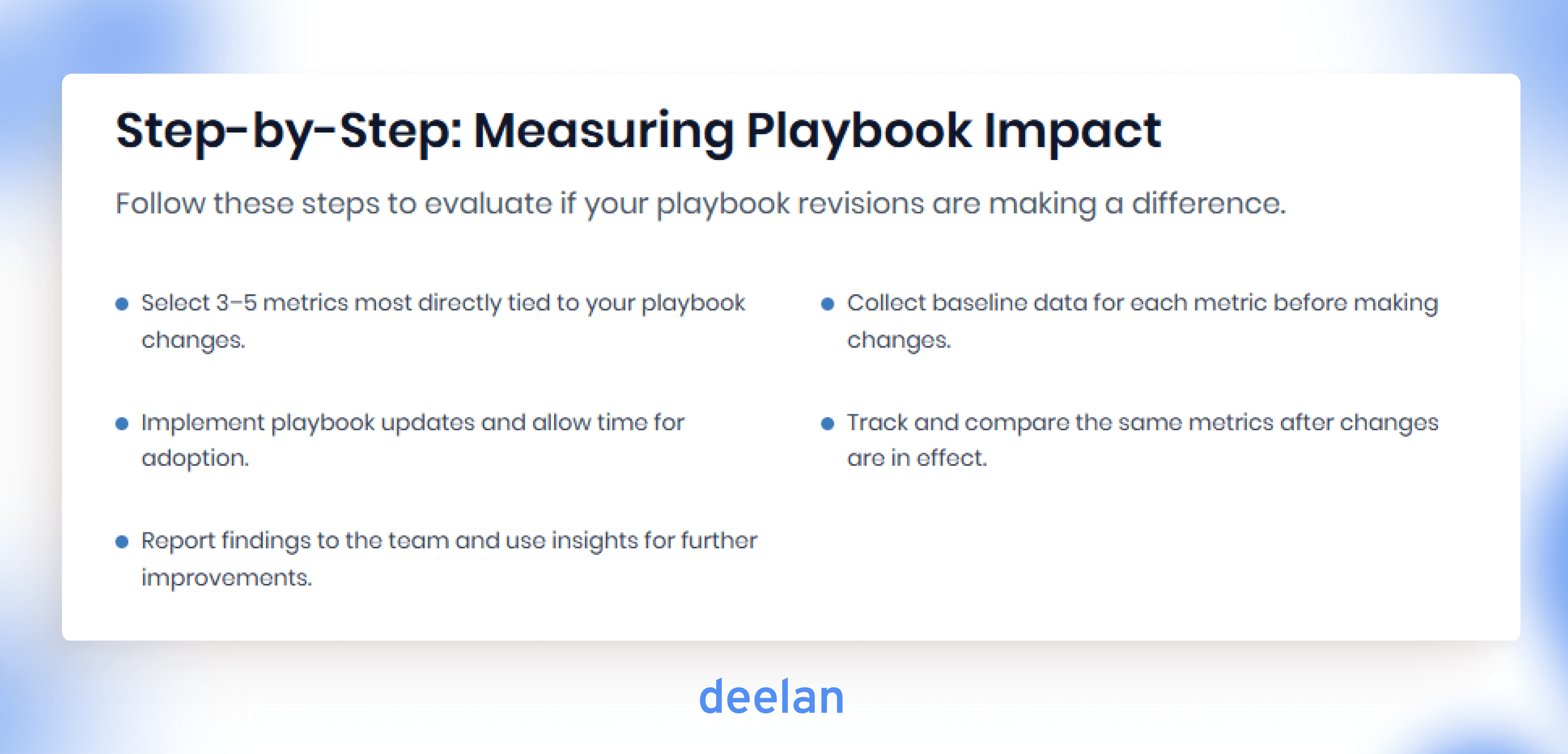
The metrics that matter are the ones connected to what you identified in Step 1. If the goal was faster ramp, measure ramp time before and after. If it was better discovery, listen to calls and score them. If it was fewer deals lost to "no decision," look at that rate over the next two quarters.
A playbook that can't demonstrate an effect on any revenue metric is a documentation project, not a performance system.
What a Winning Sales Playbook Looks Like in 2026
The difference between the old approach and what works now isn't subtle.
Old playbook: written once, stored somewhere, read during onboarding, forgotten. Updated maybe annually. Organized around pipeline stages. Measured by whether reps opened it.
Modern playbook: built from real sales data, organized around actual buyer situations, role-specific, practice-based, continuously updated, connected to performance metrics.
The shift isn't about making a fancier document. It's about treating rep development as an ongoing process rather than a one-time information dump. The playbook is the starting point, not the product.
What If You Don't Have a Playbook Yet?
Don't wait until you have the perfect process documented to start. You already have more than you think.
Start with your top five call recordings. Pull the email templates your best reps actually use. Gather product docs, onboarding materials, battlecards. Ask your best closer to walk through how they run a discovery call.
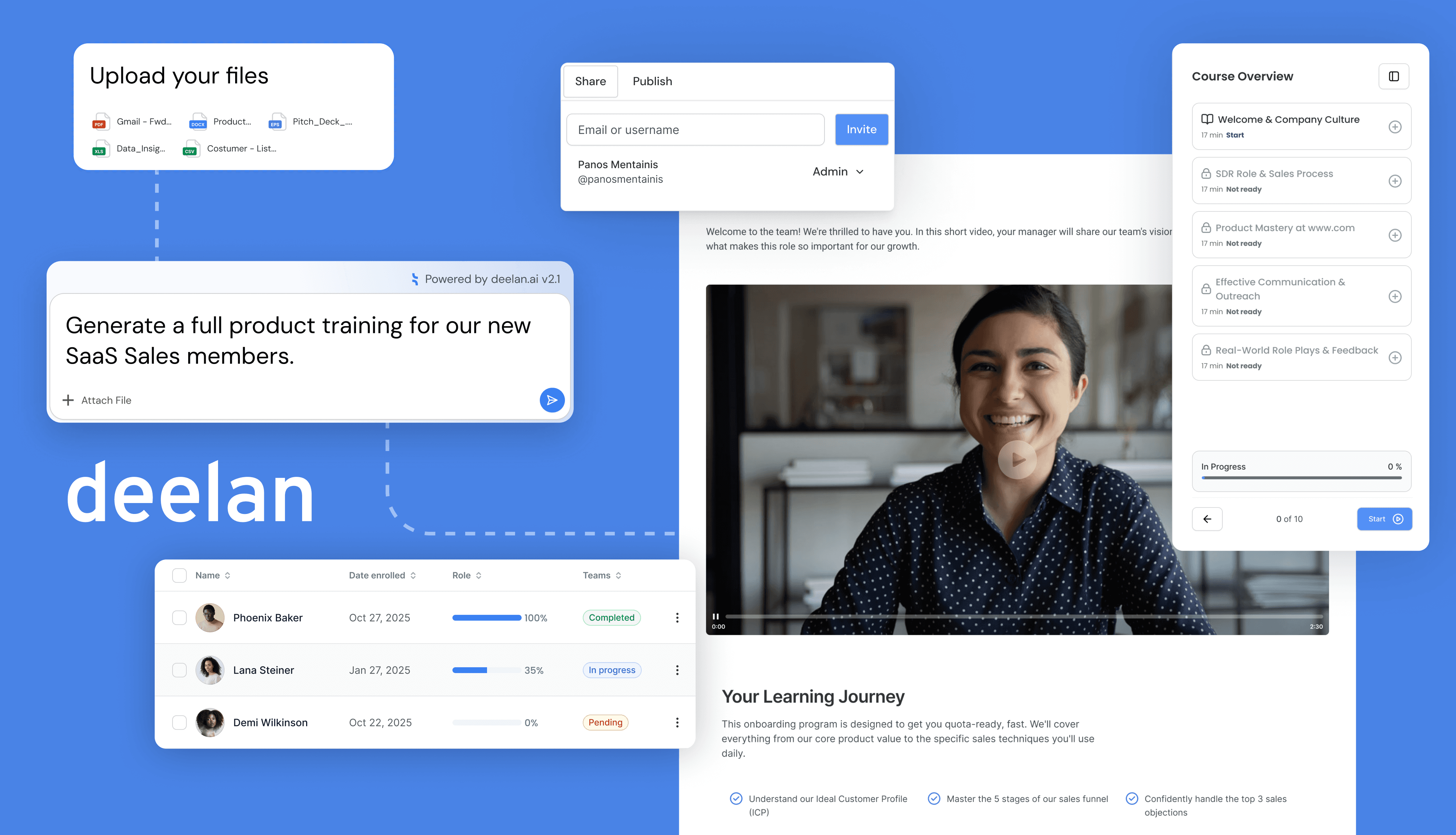
From there, you have the foundation. Platforms like Deelan can take that existing knowledge — documents, scripts, recordings, internal files — and turn it into structured training, roleplays, and adaptive learning paths in minutes. You don't need a dedicated enablement team or weeks of content production to get started.
The best sales playbook in 2026 is not a document people forget after their first week. It's a system that helps your team learn faster, practice the things that actually matter, and execute more consistently on every call.
Most of what you need to build it already exists in your company. The question is whether you're turning that knowledge into something reps can actually learn from, or just filing it away somewhere nobody looks.
Book a demo with Deelan to see how you can turn your playbooks, docs, call recordings, and internal knowledge into adaptive sales training your team will actually use.
FAQ
What should a sales playbook include?
At minimum: your real sales process mapped to actual buyer behavior, role-specific guidance for the situations reps encounter most, objection handling with specific language that works, competitive positioning, and practice materials. Company overview and mission can be included, but they shouldn't take up space that real sales guidance needs.
How long should a sales playbook be?
Long enough to be useful, short enough to actually get used. Most playbooks fail because they're comprehensive rather than practical. A focused 20-page playbook organized around real scenarios will outperform a 100-page document every time. If reps can't find what they need in under two minutes, it's too long.
What's the difference between a sales playbook and a sales script?
A script tells a rep exactly what to say. A playbook gives reps the context, positioning, and frameworks to adapt to real conversations. Scripts can be part of a playbook — cold call openers, voicemail templates — but a playbook built entirely on scripts makes reps sound robotic. The goal is to build judgment, not just talking points.
Can AI help build a sales playbook?
Yes, and it's significantly faster than building from scratch. AI tools can take existing recordings, documents, and internal knowledge and structure them into playbook content, training modules, and practice scenarios in a fraction of the time it would take manually. The quality depends on the quality of input — good raw material produces good output. The bigger shift is that AI can also keep the playbook current, flagging outdated content and suggesting updates based on what's actually happening in deals.