
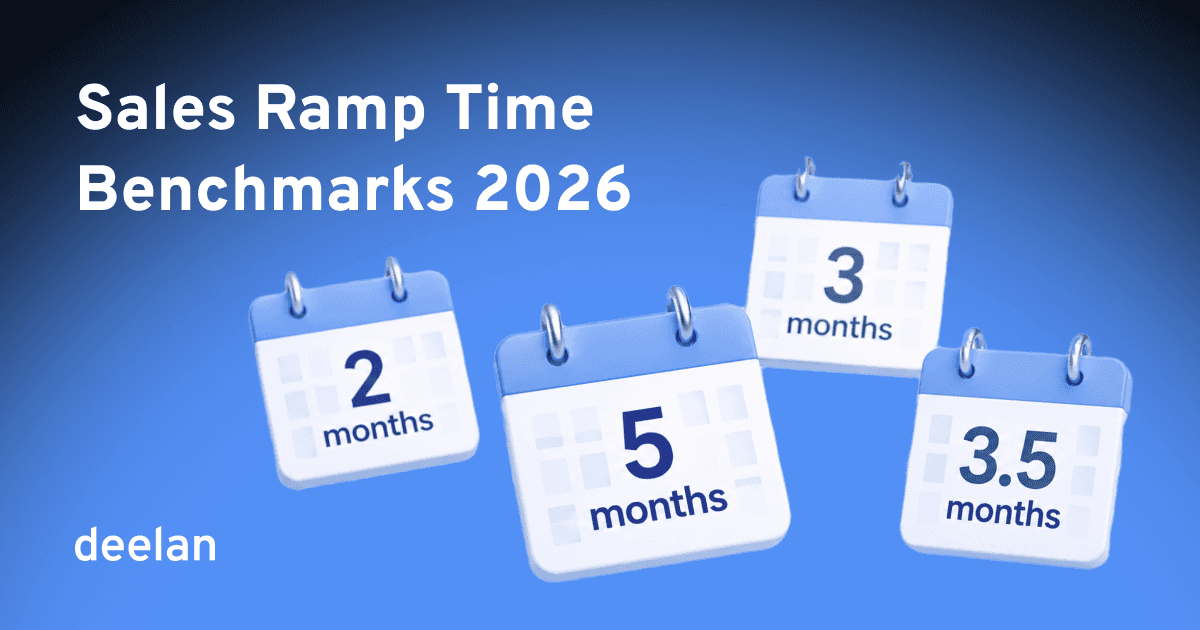
A good sales ramp time in 2026 is:
Sales Role | Good Ramp Time | Industry Average |
|---|---|---|
SDR / BDR | 2-3 months | 3.1-3.2 months |
SMB / Mid-Market AE | 4-5 months | 4-6 months |
Enterprise AE | 7-10 months | 9-12 months |
SaaS Average (All Roles) | 4-5 months | 5.7 months |
For most B2B revenue teams, anything significantly above these benchmarks is worth investigating.
According to sales onboarding research, average SaaS ramp time reached 5.7 months in 2025, up from 4.3 months in 2020. Revenue leaders are spending more on hiring while waiting longer for reps to become productive.
However, companies with structured onboarding and AI-powered practice programs are reducing time-to-productivity by 30-44%.
Want More Sales Onboarding Data?
We recently analyzed onboarding trends, ramp time benchmarks, AI onboarding adoption, and revenue team productivity in our State of Onboarding 2026 Report.
Freebies
Get our Report about state of onboarding
This report breaks down exactly where the gaps are, what it's costing revenue teams, and what the fastest-ramping organizations are doing differently.
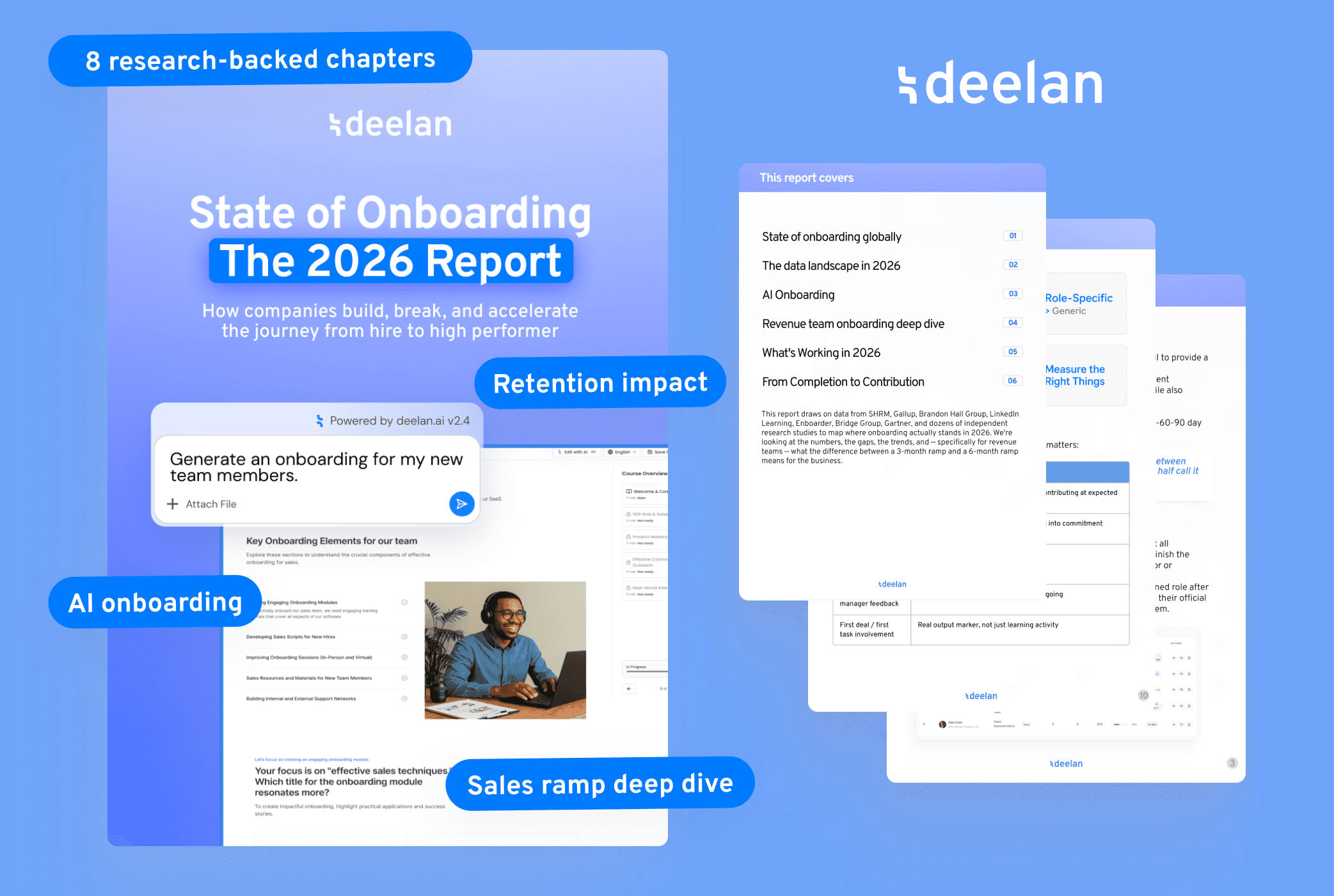
The report covers:
Global onboarding benchmarks
Revenue team ramp time data
AI onboarding trends
What high-performing onboarding programs do differently
Read the full report and see how leading teams are reducing time-to-productivity while improving retention.
What Is Sales Ramp Time?
Sales ramp time is the period between a rep's start date and the moment they consistently perform at expected productivity levels.
For SDRs, that usually means consistently booking meetings.
For Account Executives, it means hitting quota or operating at full pipeline generation targets.
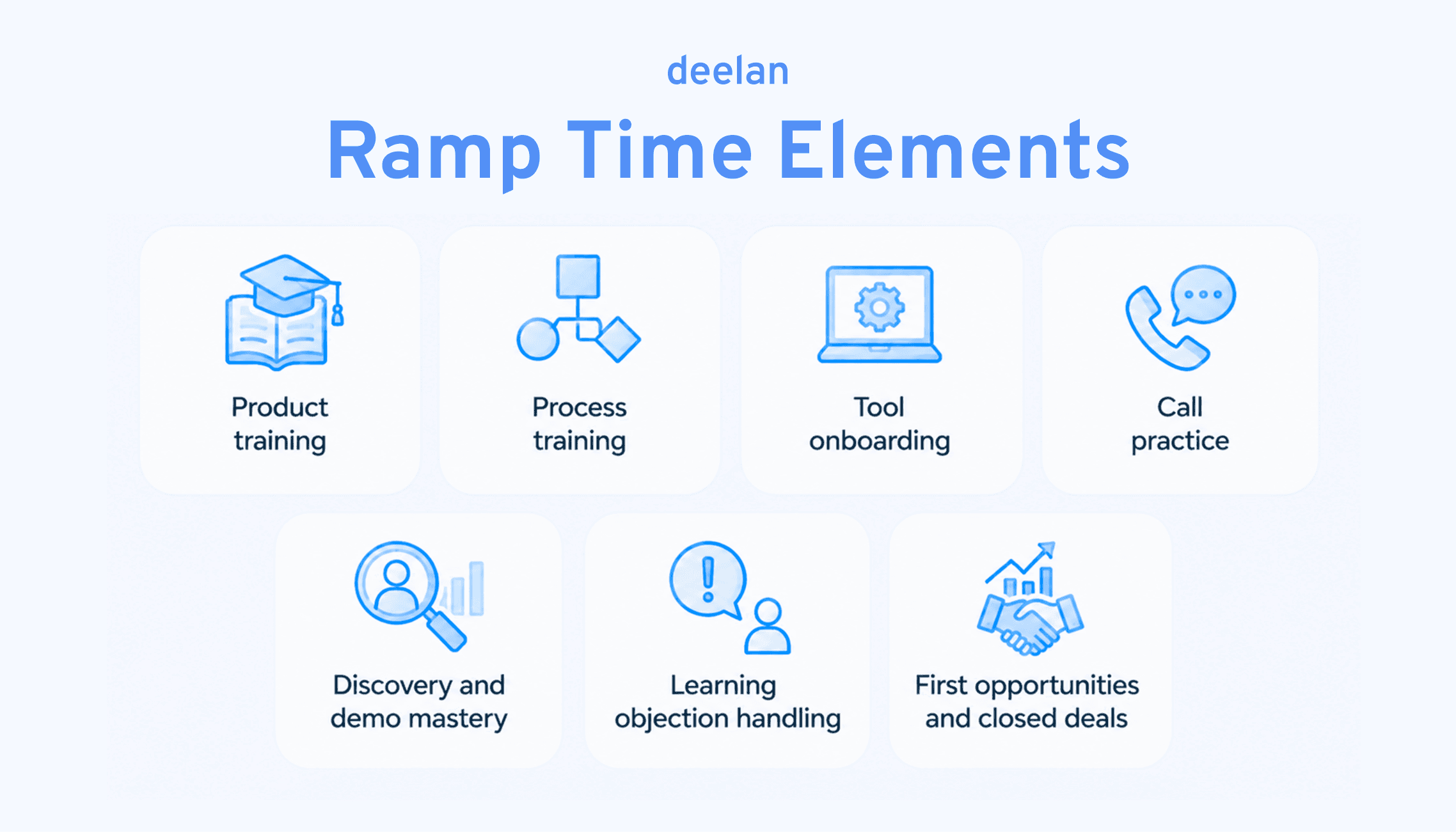
Ramp time includes:
Process training
Tool onboarding
First opportunities and closed deals
The clock stops when the rep can perform independently without requiring exceptional support.
Sales Ramp Time Benchmarks for 2026
SDR / BDR Ramp Time
Average ramp time: 3.1-3.2 months
High-performing teams often reach productivity in 2-3 months.
Because SDR work follows a higher-volume motion with shorter feedback loops, reps can build skills faster through repetition.
Typical milestones:
Milestone | Timeline |
First outbound activity | Week 2 |
First qualified meeting | Weeks 3-6 |
Consistent meeting generation | Month 2 |
Full productivity | Month 3 |
Mid-Market Account Executive Ramp Time
Average ramp time: 4-6 months
AEs require deeper product knowledge, stronger discovery skills, and the ability to manage full sales cycles.
Typical milestones:
Milestone | Timeline |
First discovery calls | Month 1 |
First opportunities created | Month 2 |
First closed deal | Months 2-3 |
Full quota productivity | Months 4-6 |
Enterprise AE Ramp Time
Average ramp time: 9-12 months
Enterprise reps face longer sales cycles, multiple stakeholders, procurement processes, and complex negotiations.
A rep may perform well long before quota attainment appears because deal cycles themselves are longer.
For enterprise sales, measuring leading indicators often matters more than waiting for quota attainment.
Why Ramp Time Keeps Increasing
Ramp-up time has increased by roughly 32% since 2020.
Several factors are driving the trend.
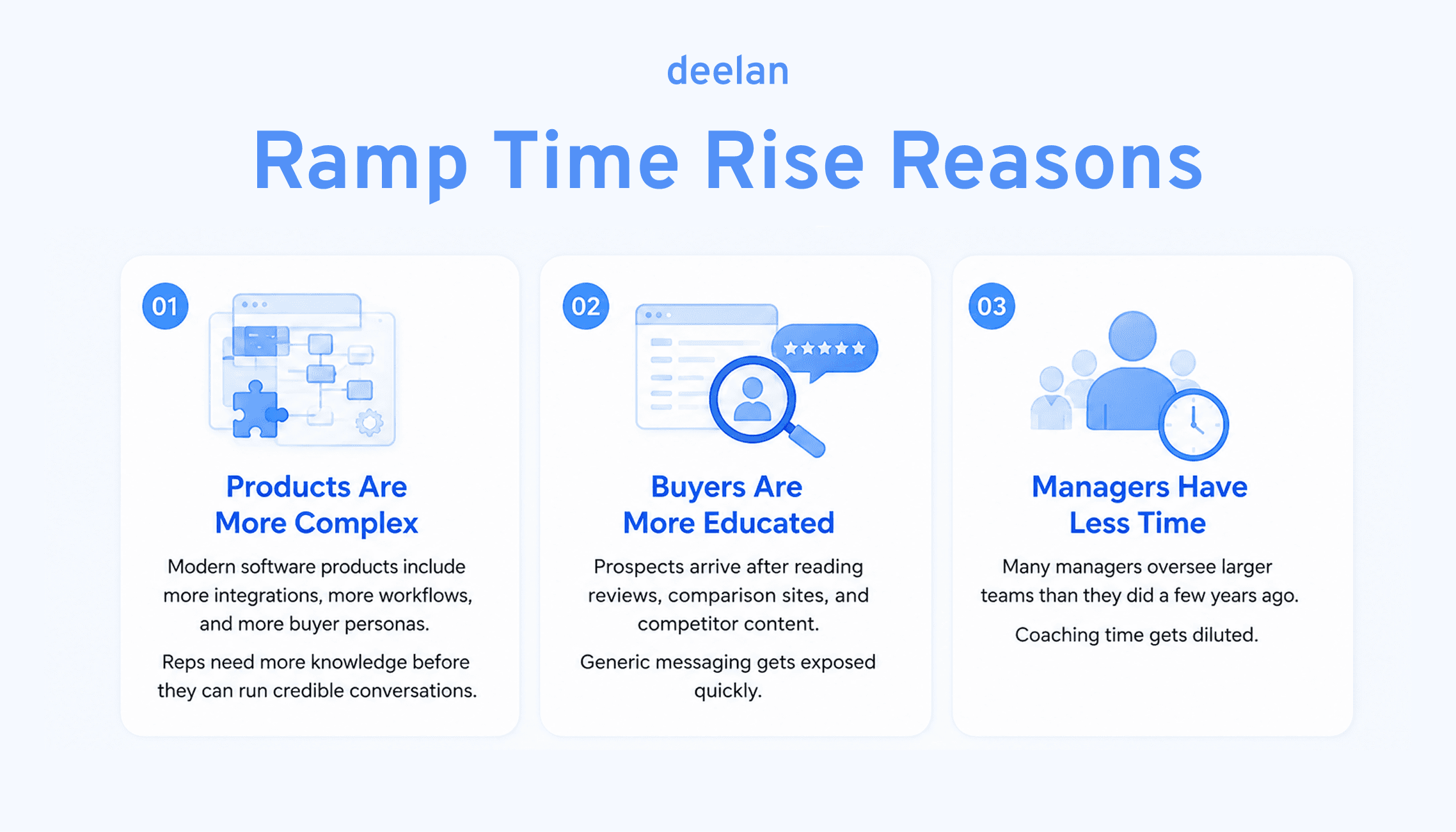
Products Are More Complex
Modern software products include more integrations, more workflows, and more buyer personas.
Reps need more knowledge before they can run credible conversations.
Buyers Are More Educated
Prospects arrive after reading reviews, comparison sites, and competitor content.
Generic messaging gets exposed quickly.
Managers Have Less Time
Many managers oversee larger teams than they did a few years ago.
Coaching time gets diluted.
According to onboarding research, 83% of managers have no formal training in people management and nearly one-third of HR leaders have seen managers provide little or no onboarding guidance.
What Actually Reduces Sales Ramp Time?
The strongest onboarding programs have several characteristics in common.
Roleplay Before Real Calls
Reps practice before talking to customers.
Not once.
Dozens of times.
Teams using AI roleplay simulations report significantly faster ramp times because reps build conversational muscle memory before going live. Research cited in the State of Onboarding Report found AI roleplay programs associated with up to 40% reductions in ramp time.

Continuous Learning Instead of One-Week Onboarding
Top-performing organizations treat onboarding as a 6-12 month process.
Training is delivered over time rather than compressed into the first week.
Role-Specific Training
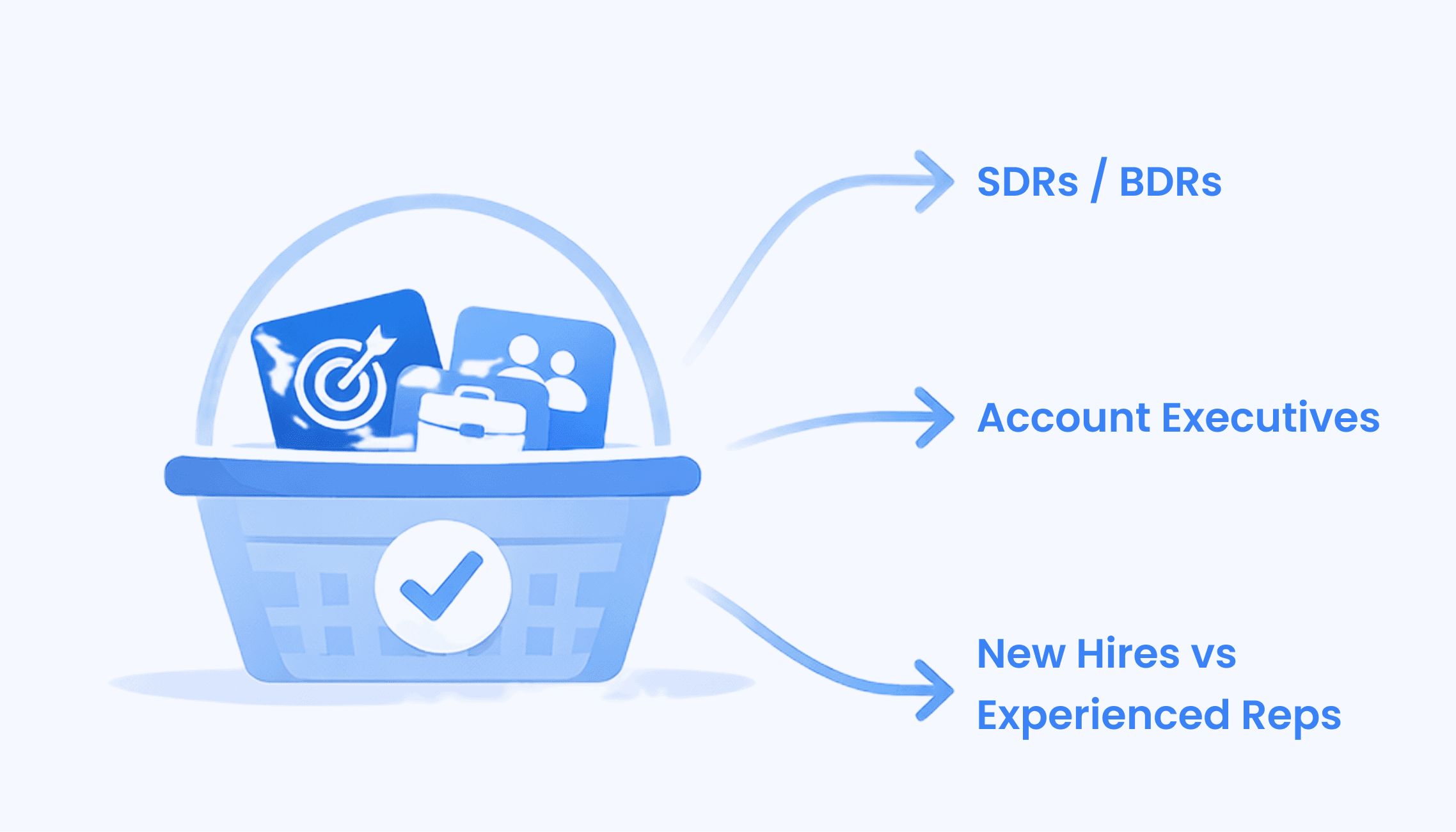
SDRs, AEs, Customer Success Managers, and Sales Engineers do not need the same training.
Companies using role-specific onboarding reduce ramp-up times by approximately 25%.
Measure Time-to-Productivity
The best teams track:
Time to first meeting
Time to first opportunity
Time to first deal
30/60/90-day performance
Time to full productivity
Not course completion.
Completion does not equal capability.
How Sales Team Use AI-training Platform to Ramp Faster
Deelan helps revenue teams convert existing playbooks, call recordings, product documentation, and sales processes into adaptive onboarding programs in minutes. Training automatically adjusts based on role, experience level, performance, and skill gaps.
Instead of sending new hires through generic courses, teams can generate:
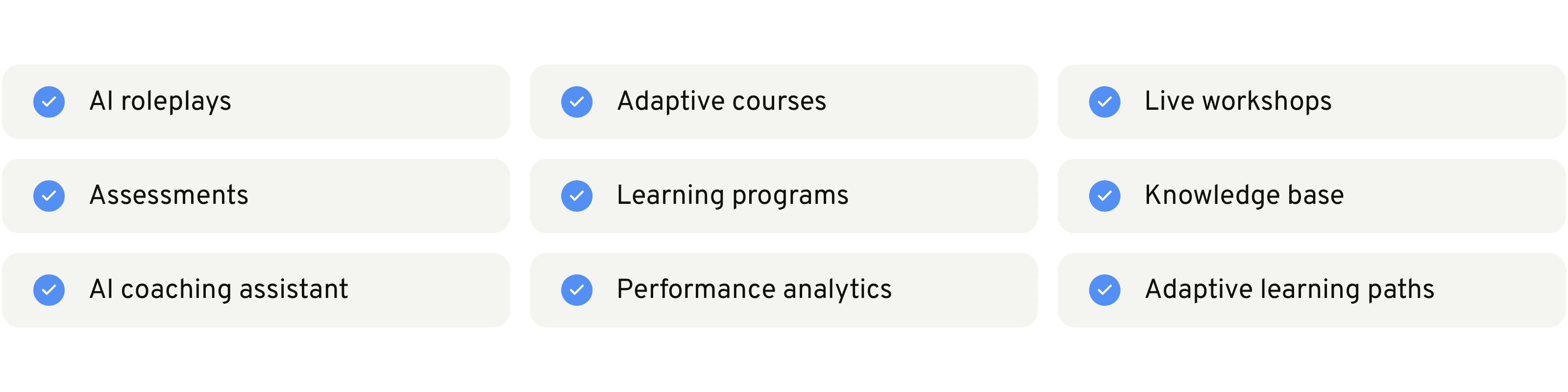
from a single knowledge base.
Teams using Deelan report:
30-55% faster ramp time
10-25% higher win rates
Up to 80% less time spent creating training content
The result is simple: reps get more practice, managers spend less time repeating the same coaching, and new hires reach productivity faster.
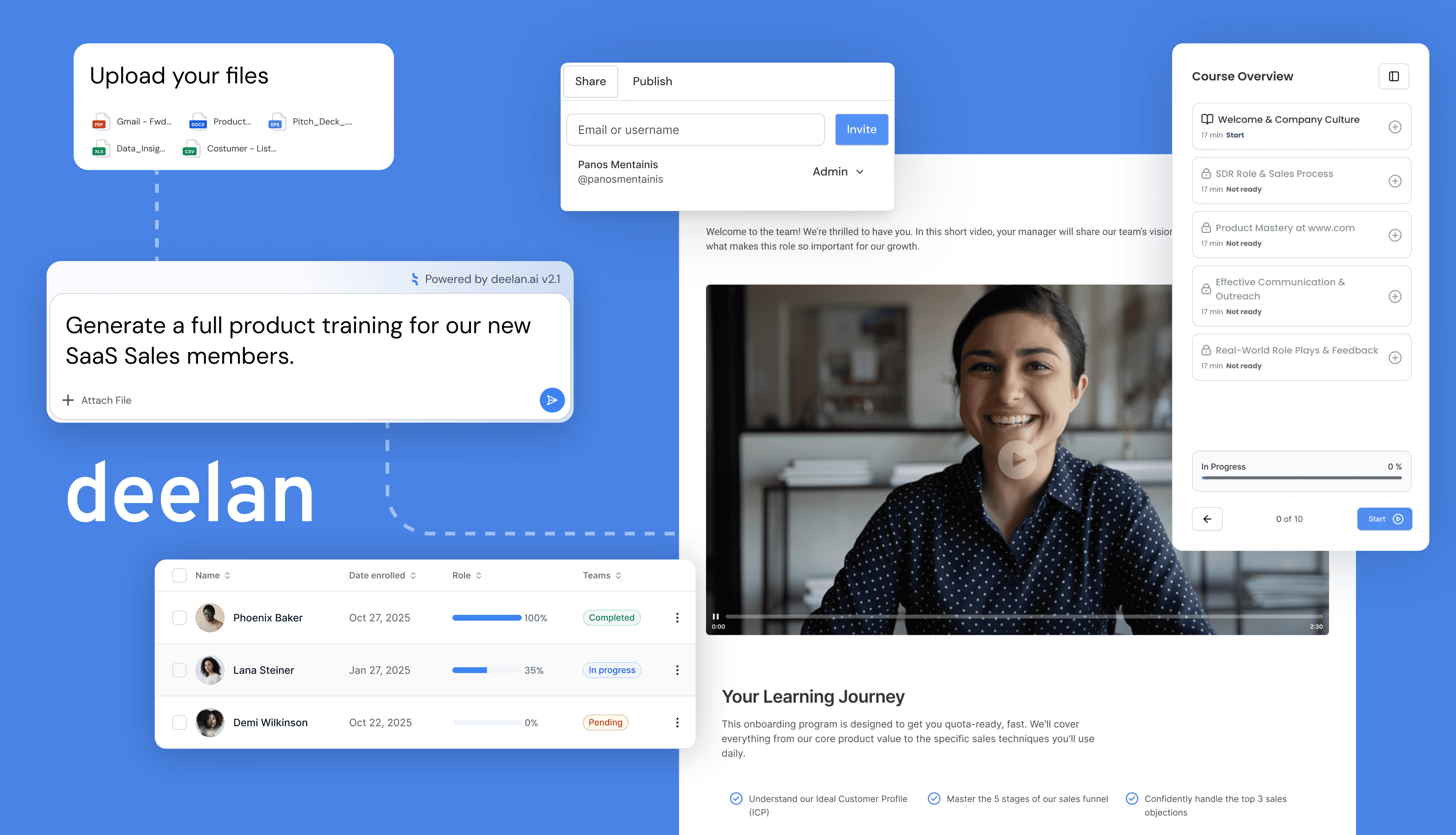
Build Training 10× Faster with Deelan
The all-in-one AI training platform for revenue teams.
Generate onboarding programs, AI roleplays, courses, assessments, workshops, and learning pathways from a single prompt.