
Call shadowing is one of the simplest ways to train a sales rep.
A new rep joins a call led by someone more experienced. They listen to how the rep opens the conversation, asks questions, explains the product, handles objections and agrees on next steps.
But listening to calls alone is not enough. Reps also need to understand what happened, practise the same skills and receive feedback before they start using them with real prospects.
The best approach combines call shadowing with recorded calls, structured training and roleplay practice.
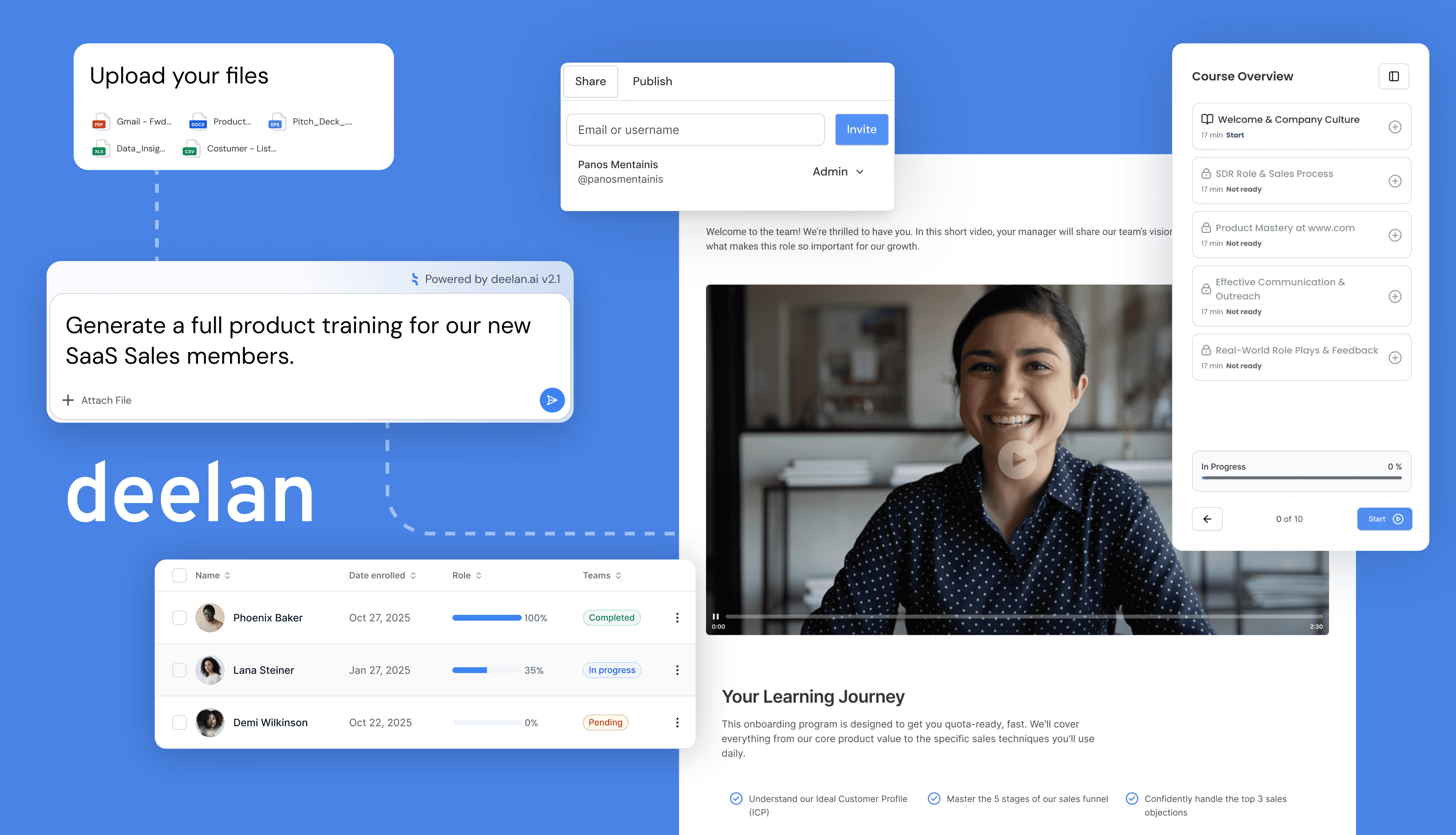
Deelan can turn your call recordings, playbooks and product materials into courses, assessments and AI roleplays.
What Is Call Shadowing?
Call shadowing is a training method where a rep listens to another team member speak with a prospect or customer.
The trainee usually stays muted and does not take part in the conversation. Their job is to observe how the call is prepared, managed and followed up.
Sales teams can use call shadowing for:
Discovery calls
Product demos
Proposal calls
Negotiations
Renewal conversations
Upsell calls
It is often used during onboarding, but it can also help experienced reps develop a specific skill or learn how another team member approaches difficult situations.
Call Shadowing, Recording and Roleplay
These methods support different parts of sales training.
Training method | What happens | Best used for |
|---|---|---|
Live call shadowing | A rep listens to a real call as it happens | Seeing the full process and asking the rep questions afterward |
Recorded call review | A rep watches or listens to a completed call | Replaying important moments and studying specific skills |
A manager reviews a rep’s performance | Giving feedback based on real conversations | |
Call nesting | A new rep leads a call while an experienced rep listens | Moving from observation to real calls with support |
A rep practises with an AI buyer | Repeating difficult situations without risking a real opportunity |

Benefits of Call Shadowing
Reps hear how real conversations work
Training materials often present a clean version of a sales call.
Real calls are less predictable. Prospects change the subject, give short answers, question the product and introduce concerns that were not in the script.
Call shadowing shows reps how experienced sellers adapt without losing control of the conversation.
New hires learn from several selling styles
There is rarely one correct way to run a sales call.
One rep may be very good at asking follow-up questions. Another may be stronger at handling technical concerns. Someone else may know how to move a slow deal forward.
New hires should shadow several people rather than copy one person’s habits.
Reps understand why certain decisions were made
A useful debrief can reveal details the trainee may have missed.
The experienced rep can explain why they changed the order of the demo, avoided answering a question immediately or spent more time on one business problem than another.
That discussion often teaches more than simply hearing the words used during the call.
Teams can share practical knowledge
Your best reps already know how to deal with common objections, difficult buyers and unusual situations.
Much of this knowledge is never written down.
Call shadowing helps transfer it to the rest of the team.
Reps gain confidence before taking their own calls
It is easier to lead a discovery call after hearing several real examples.
The rep becomes familiar with the pace, common questions and moments where the conversation may become difficult.
Shadowing will not remove all pressure, but it gives the rep a clearer idea of what to expect.
The Best Combination: Shadow, Learn and Practice
A practical call-based training process can follow four stages.
1. Shadow a real call
The trainee joins a live conversation and observes how the rep prepares, leads the meeting and follows up.
They should know the purpose of the call and the main skill they are expected to watch.
2. Review the recording
After the call, the trainee and manager return to the important moments.
They can discuss what worked, what could have gone better and why the rep made certain choices.
3. Complete focused training
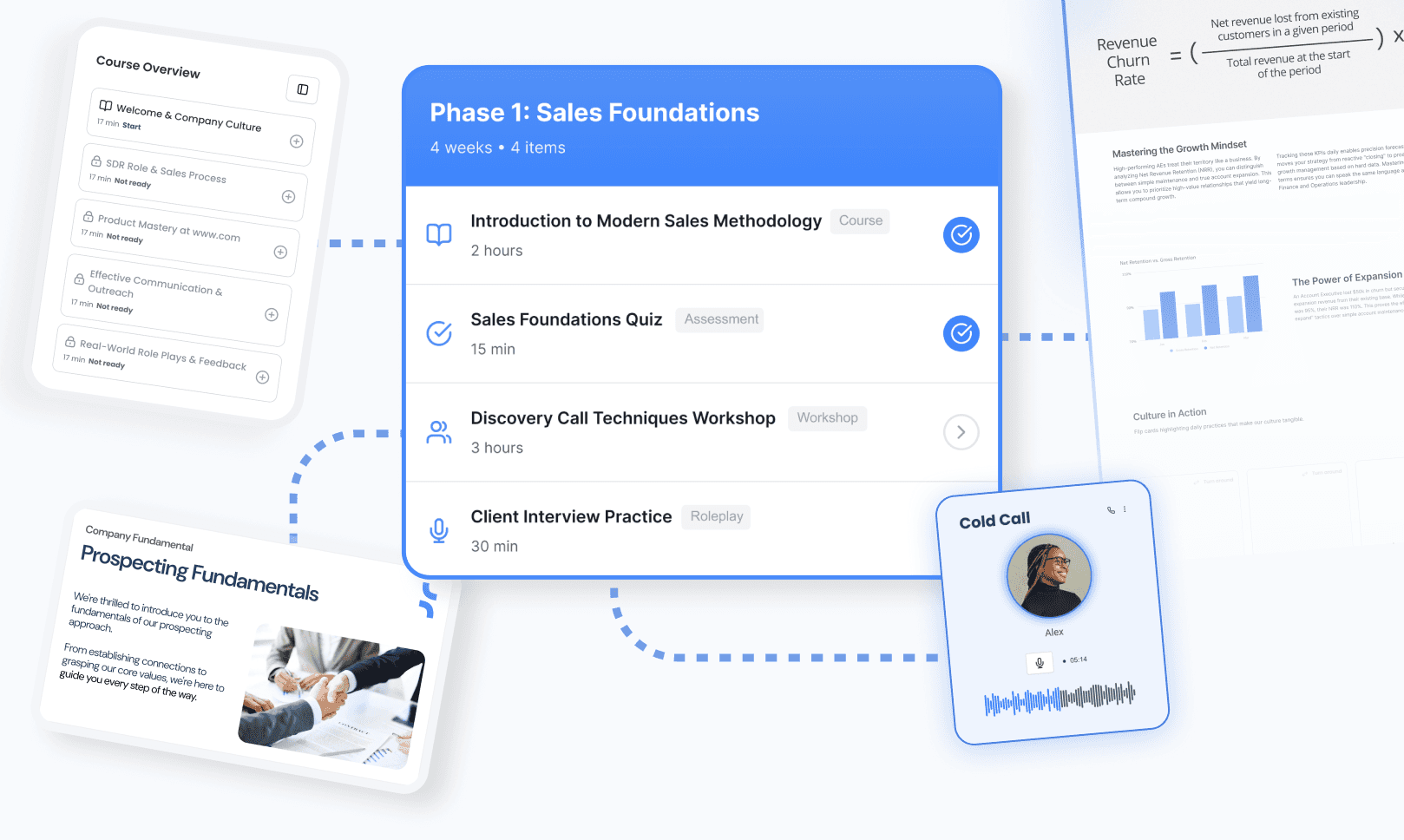
The trainee takes a short course or assessment connected to the call.
For example, after shadowing a discovery call, the training could cover question structure, active listening and how to separate surface problems from deeper business needs.
4. Practice in a roleplay
The trainee then faces a similar buyer in an AI roleplay.
They need to ask the questions, handle the objection or explain the value themselves. Feedback shows whether they can apply what they heard.
This closes the gap between recognising good selling and being able to do it.

How to Organise Call Shadowing
Keep the process simple enough that managers and reps will actually follow it.
Stage | What to do |
Set the goal | Choose the skill or call type the trainee needs to learn |
Select calls | Include different reps, deal stages, industries, deal sizes and outcomes |
Give context | Explain who the prospect is, the call objective and what the trainee should watch |
Take notes | Use a short worksheet based on the selected skill |
Debrief | Discuss the strongest moments, mistakes and decisions made during the call |
Practise | Create a course, exercise or roleplay based on what happened |
Check readiness | Review performance before letting the rep handle similar calls alone |
A new hire may shadow around 15 to 20 calls during their first weeks, but the number matters less than the variety and quality of the calls.
Twenty nearly identical discovery calls will not prepare someone for the full job.
Include different reps, stages and outcomes. Let the trainee hear good calls, average calls and calls that did not go well.
Failed calls can be especially useful because they make it easier to discuss missed questions, unclear positioning and poor next steps.
Tips for Getting More Value From Call Shadowing
Give the trainee one clear focus for each call. Watching everything at once usually leads to weak notes.
For one call, they might focus on discovery questions. For another, they might track objections. During a demo, they could study how the rep connects features to business needs.
Do not only use calls from your highest-performing rep. Strong results do not always mean that every habit should be copied.
Pick calls that show clear and teachable behaviour.
Leave time for a debrief directly after the call when possible. The experienced rep can explain what they noticed, what they would change and what they plan to do next.
Ask the trainee to explain the call in their own words. This shows whether they understood the reasoning rather than only copying phrases.
Use the same observation criteria across the team. This could be based on your sales methodology, call stages or internal competency framework.
Move into practice quickly. A rep should not spend weeks listening without testing the skills themselves.
How to Train Reps With Deelan
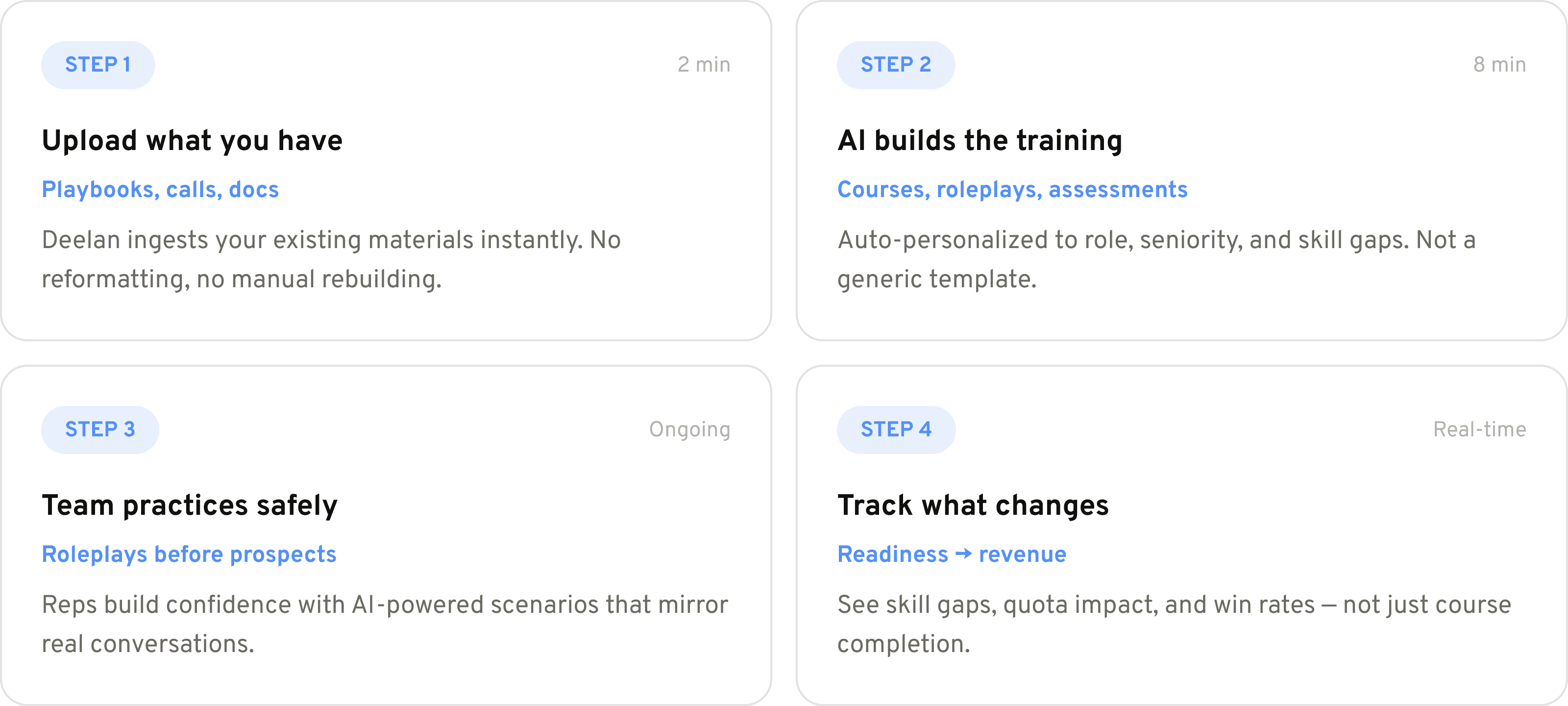
Deelan helps sales teams turn real calls into complete training instead of leaving recordings inside a call library.
Start by uploading a call recording, transcript, playbook or related product documents.
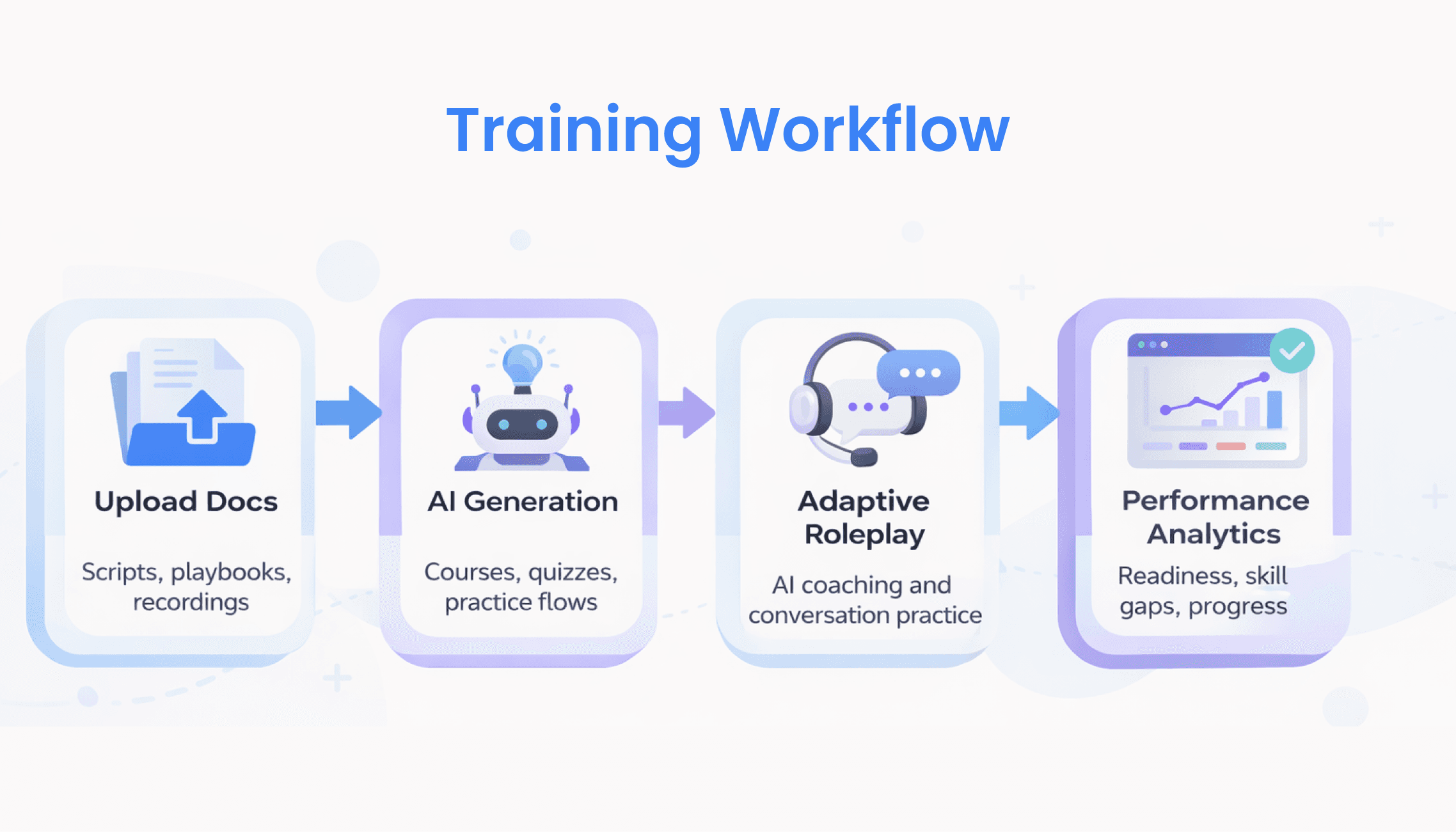
Deelan can use those materials to generate training focused on what happened in the conversation.
For example, a discovery call may show that a rep moved to the demo too early and failed to understand the buyer’s current process.
You could create a program containing:
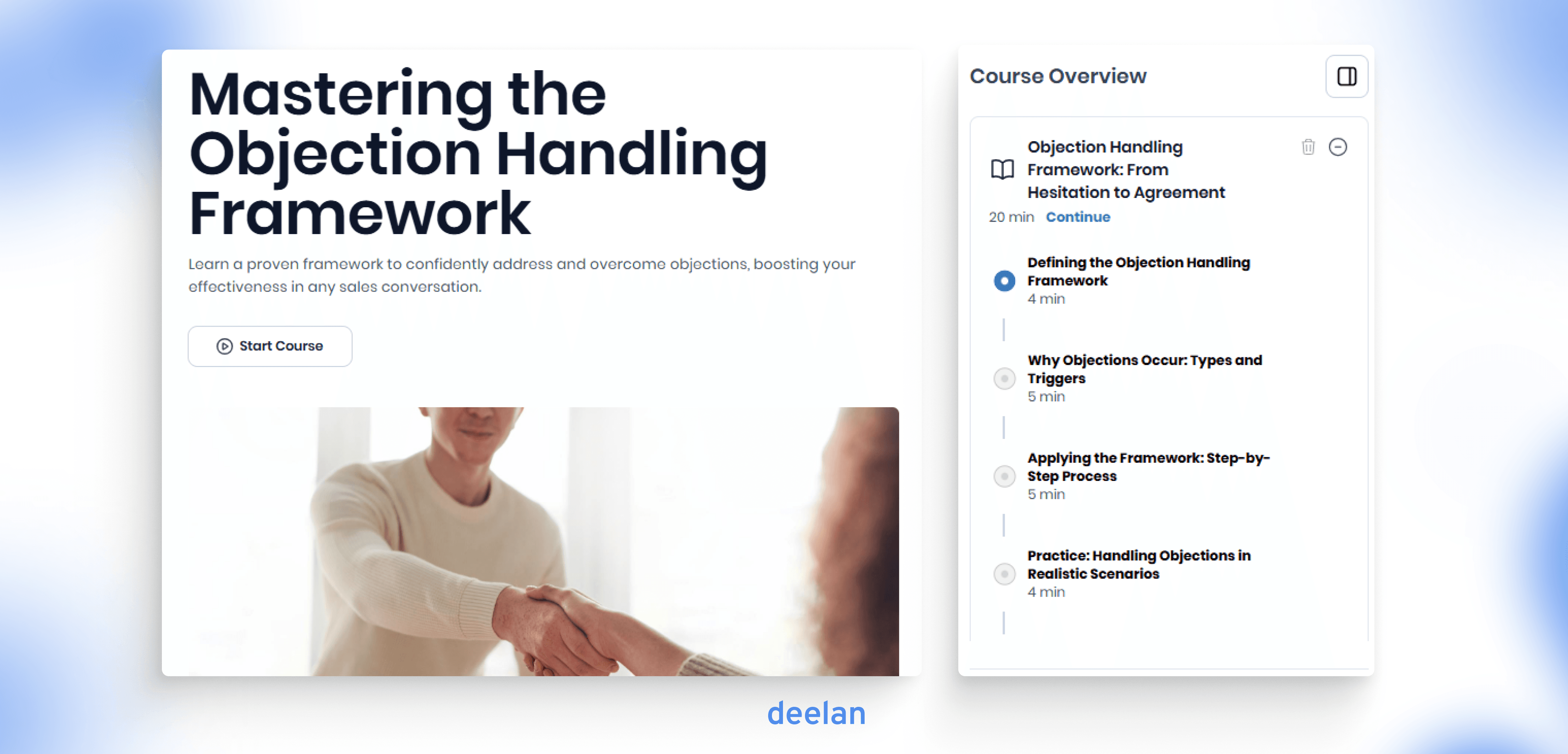
A short course on discovery structure and follow-up questions
An assessment that checks the rep’s understanding
An AI roleplay with a similar buyer and situation
A scoring framework based on your sales methodology
Recommended training based on the rep’s results
During the roleplay, the AI buyer can answer questions, push back, raise objections and react to the rep’s approach.
After the session, the rep receives feedback on what was said and how the conversation was handled.
Managers can use this process for onboarding, ongoing coaching or a regular call-of-the-week session.
The team can analyse one call together, identify a common gap and turn that gap into training for everyone who needs it.
Deelan also lets you combine courses, roleplays and assessments into one program. Each rep can receive training based on their role, experience and performance.
Start a free trial to turn your team’s call recordings into courses and AI roleplays.