
Sales coaching should help a rep change something they do: asking better discovery questions, qualifying deals earlier, handling objections with more confidence, or agreeing on clearer next steps.
Too much coaching stays at the level of advice: “Be more confident,” “Ask better questions,” or “You need more pipeline.”
Effective sales coaching is more specific. It finds one important gap, gives the rep time to practise, and checks whether their behaviour improves.
The 12 techniques below can be used in one-to-one meetings, call reviews, deal coaching, onboarding, and team training.
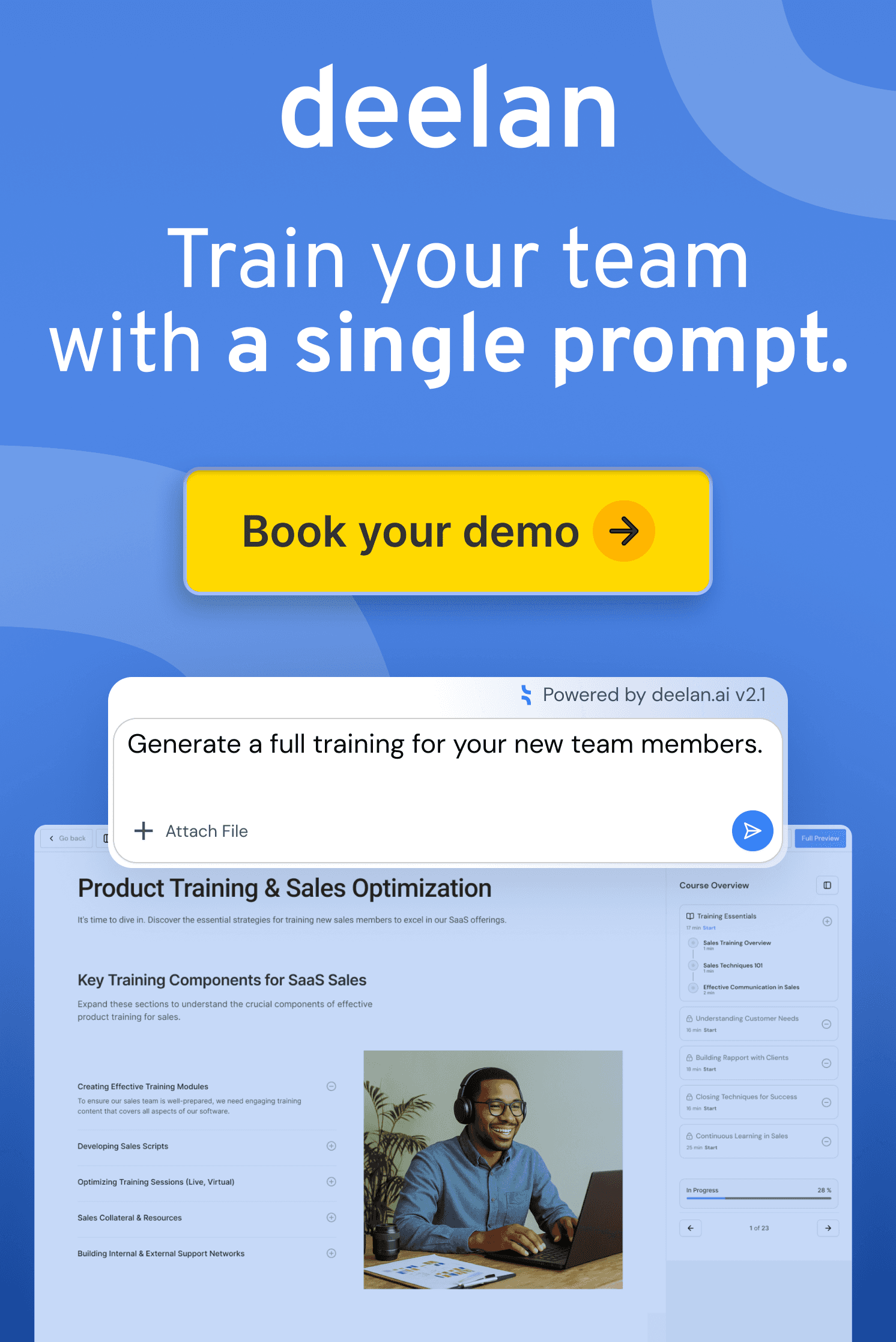
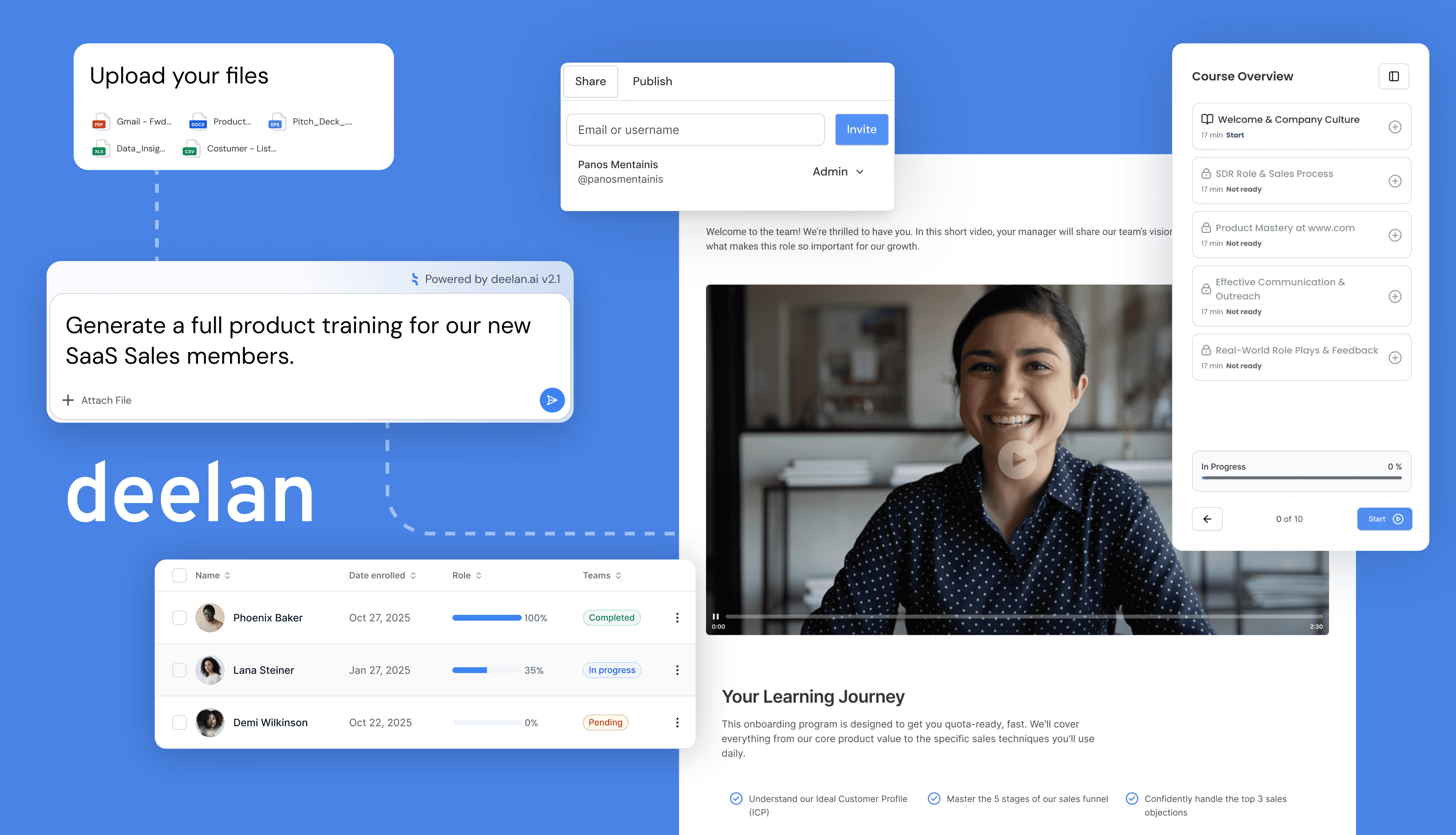
Deelan helps managers turn call recordings, playbooks, product documents, and sales materials into courses, assessments, and AI roleplays.
Start a free trial to build training around the skill gaps your team is already seeing.
12 Sales Coaching Techniques
Coaching technique | Best used for | Simple example |
|---|---|---|
Self-evaluation | Building rep ownership | Ask the rep to review their call first |
One-skill coaching | Avoiding overload | Focus only on discovery questions |
Data-based coaching | Finding the real problem | Compare conversion by pipeline stage |
Call review | Improving live conversations | Review one key moment from a recording |
Building confidence | Practise a pricing objection | |
Action planning | Turning feedback into work | Set one action and one deadline |
Peer coaching | Sharing internal knowledge | Review a strong call as a team |
Positive reinforcement | Repeating good behaviour | Highlight a well-handled objection |
Deal coaching | Supporting active opportunities | Prepare for a difficult stakeholder |
Helping different reps improve | Adjust practice by role and experience | |
Consistent coaching routines | Making progress repeatable | Use weekly one-to-ones |
Progress measurement | Checking real improvement | Track behaviour and business results |
1. Start With Rep Self-Evaluation
After a call, you could ask:
What went well?
Where did the conversation become difficult?
What would you change?
Which part do you want help with?
Most reps already know at least part of what went wrong. Letting them say it first creates more ownership.
2. Coach One Skill at a Time
A call can contain ten different problems. Trying to fix all of that in one session usually leads to little improvement.
Choose the skill with the biggest effect on performance.
A simple coaching cycle could be:
Choose one skill
Show the rep what good looks like
Practise it
Use it on real calls
Review the result
Move to the next skill once progress is visible.
3. Use Data to Find the Real Problem
Low revenue does not automatically mean the rep needs help closing. The real problem could be poor targeting, weak qualification, low meeting volume, slow follow-up, or small deal sizes.
Look at the funnel before choosing the coaching topic.
Performance issue | Possible coaching focus |
Few meetings booked | Prospecting message, targeting, call opening |
Many meetings but few opportunities | Discovery and qualification |
Strong pipeline but low win rate | Value, objections, decision process |
Long sales cycle | Next steps, stakeholder access, urgency |
Many discounts | Value communication and negotiation |
Low renewals | Customer communication and risk detection |
4. Review Real Calls
Call reviews keep coaching connected to what the rep actually does.
Choose one or two moments that show a clear behaviour. Avoid reviewing an entire hour-long call unless there is a good reason.
You might review:
The first two minutes of a cold call
A discovery question and the follow-up
A pricing objection
The move from discovery to demo
How next steps were agreed
Good call coaching should finish with a clear next action. Listening to a mistake again will not fix it by itself.
5. Use Roleplays Before the Next Call
Keep the scenario close to something they really face. A generic practice conversation will often feel easy and produce little value.
A useful roleplay includes:
A clear buyer persona
A realistic sales stage
A common objection or problem
A specific skill to practise
Clear scoring criteria
For example, an account executive preparing for a pricing discussion could practise with a buyer who says a competitor is 30% cheaper.

6. End Every Session With an Action Plan
At the end of the coaching session, agree on:
What the rep will do
Where they will apply it
How progress will be checked
When you will review it again
Keep the plan small.
The rep should help create the plan. People are more likely to follow an action they helped choose.
7. Build Peer Coaching Into the Team
One rep may be strong at cold-call openings. Another may be better at enterprise discovery. Someone else may know how to manage technical stakeholders.
Give reps simple ways to share that knowledge.
You could run a weekly call review where one person brings:
A call that went well
A call that went badly
A difficult objection
A deal they need help with
Reviewing poor calls can be more useful than only sharing perfect examples.
8. Reinforce Good Behaviour
Point out strong behaviour as well. Be specific about what the rep did and why it worked.
“You asked a short follow-up after the buyer mentioned onboarding problems. That helped you uncover the real cost of the issue.”
9. Coach Active Deals Carefully
During deal coaching, the manager helps the rep make decisions about a current opportunity. This could involve stakeholder access, competition, next steps, pricing, or risk.
The danger is that the manager takes over. If the manager writes every email, leads every call, and decides every move, the deal may progress but the rep learns little.
10. Personalize Coaching by Rep
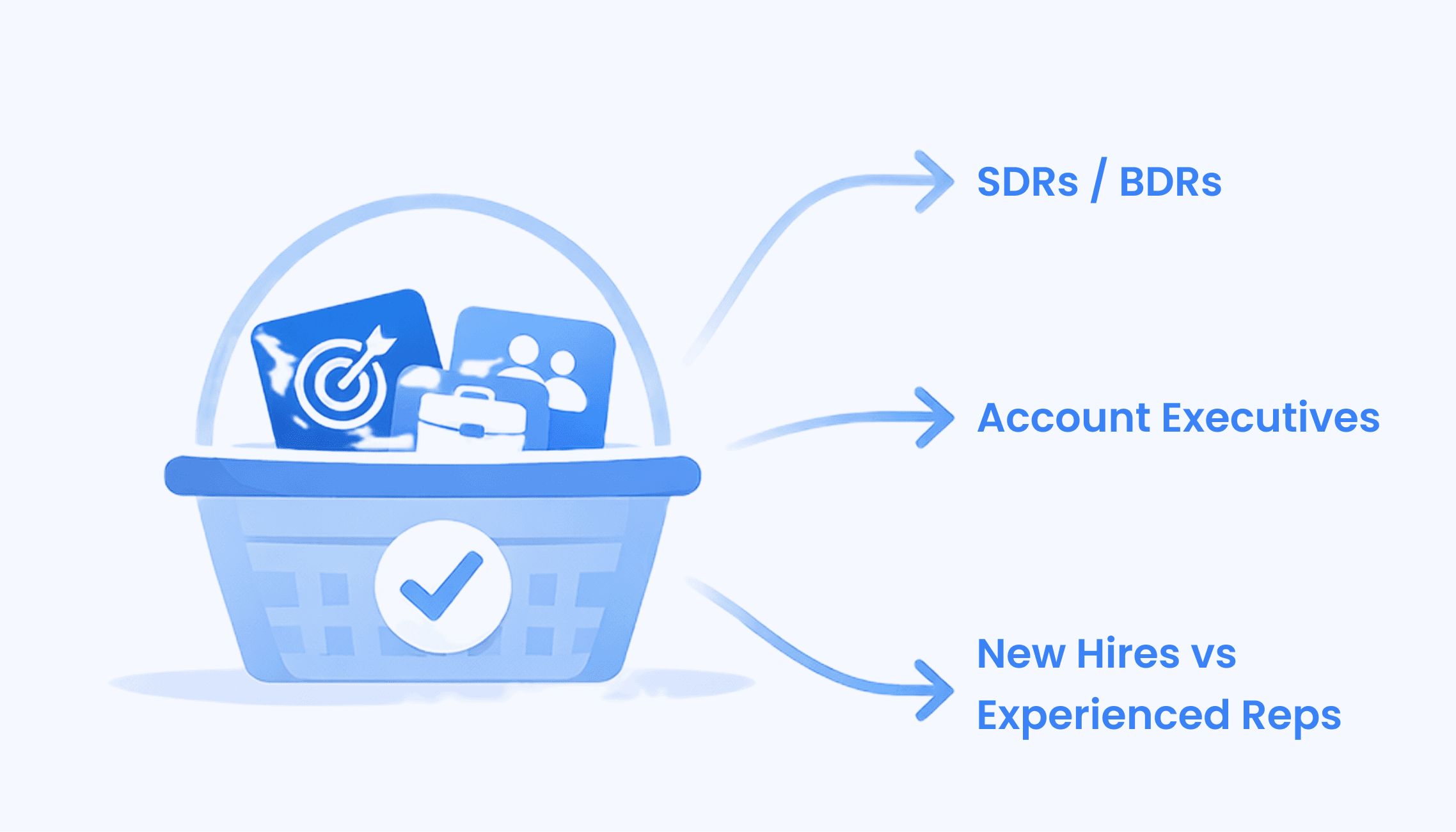
A new SDR may need support with call openings and confidence. An experienced account executive may need help managing several stakeholders. A customer success manager may need renewal and expansion practice.
Coaching should consider:
Role
Experience
Current performance
Deal type
Skill gaps
Previous coaching
Learning pace
Personalization does not mean creating a completely different process for everyone.
Use the same coaching structure, then change the content, difficulty, and support.
11. Create a Consistent Coaching Rhythm
Coaching becomes weak when it only happens after a bad month.
Use a simple and repeatable schedule.
A weekly one-to-one could include:
Time | Coaching topic |
3 minutes | Check-in and current concerns |
5 minutes | Wins and progress |
10 minutes | One or two priority deals |
10 minutes | One skill and practice |
2 minutes | Actions and follow-up |
Keep pipeline updates separate when possible. If the whole meeting is spent asking for deal status, there will be no time left for coaching.
Document the agreed action and return to it in the next meeting. Without follow-up, coaching becomes a series of unrelated conversations.
12. Measure Behaviour Before Revenue
For discovery coaching, you might track:
Number of follow-up questions
Problems uncovered
Stakeholders identified
Clear next steps
Then connect these changes to business results such as conversion rate, sales cycle, average deal size, quota attainment, or retention.
Measurement level | Examples |
Participation | Sessions completed, roleplays completed |
Knowledge | Assessment score, methodology understanding |
Behaviour | Better questions, stronger objections, clearer next steps |
Pipeline | Higher qualification or stage conversion |
Revenue | Win rate, deal size, quota attainment |
Team health | Engagement, retention, internal promotion |
How Deelan Supports Sales Coaching
Deelan helps managers build training around real company material.
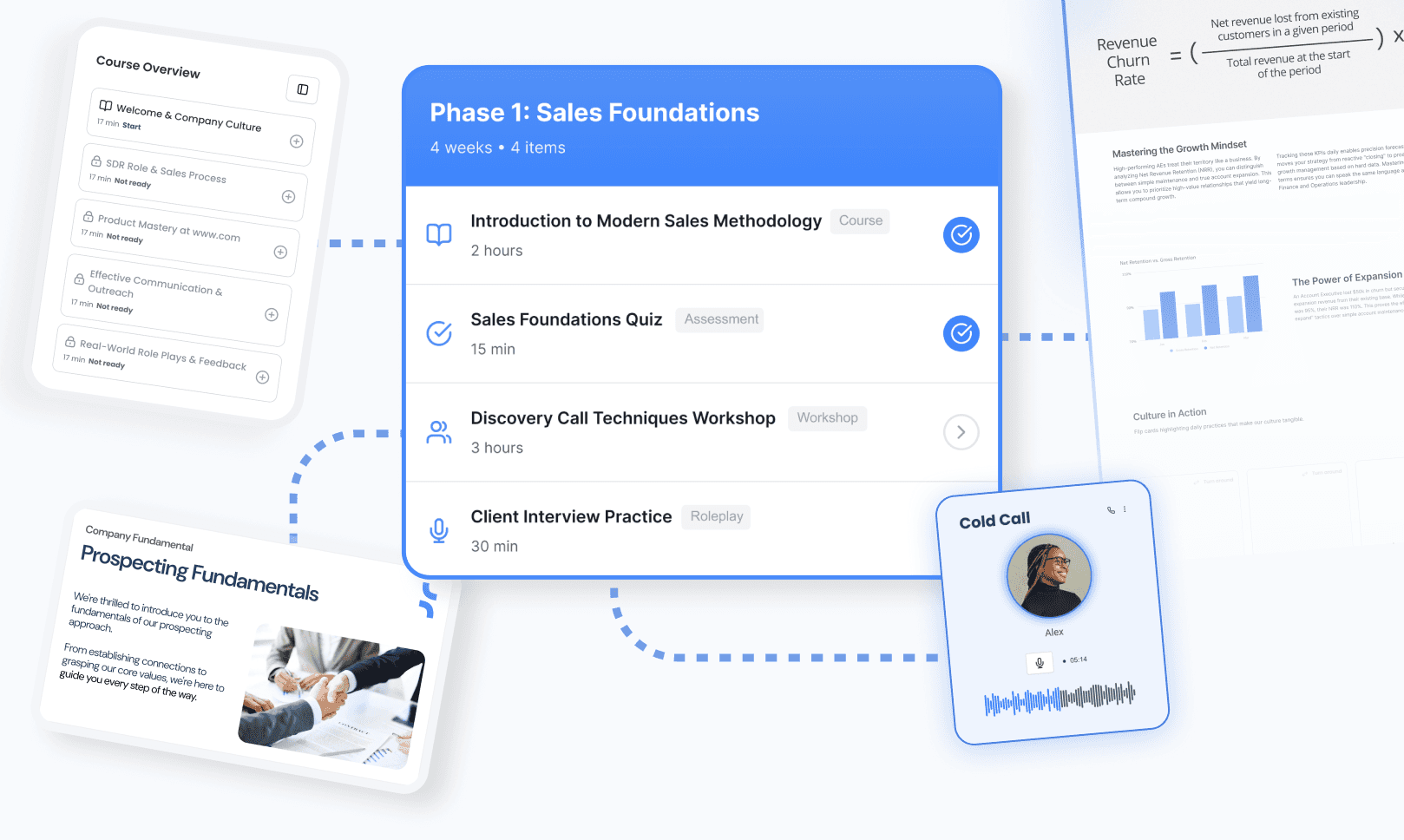
You can upload call recordings, scripts, playbooks, product documents, battlecards, and other sales content. Deelan can then turn them into different training formats.
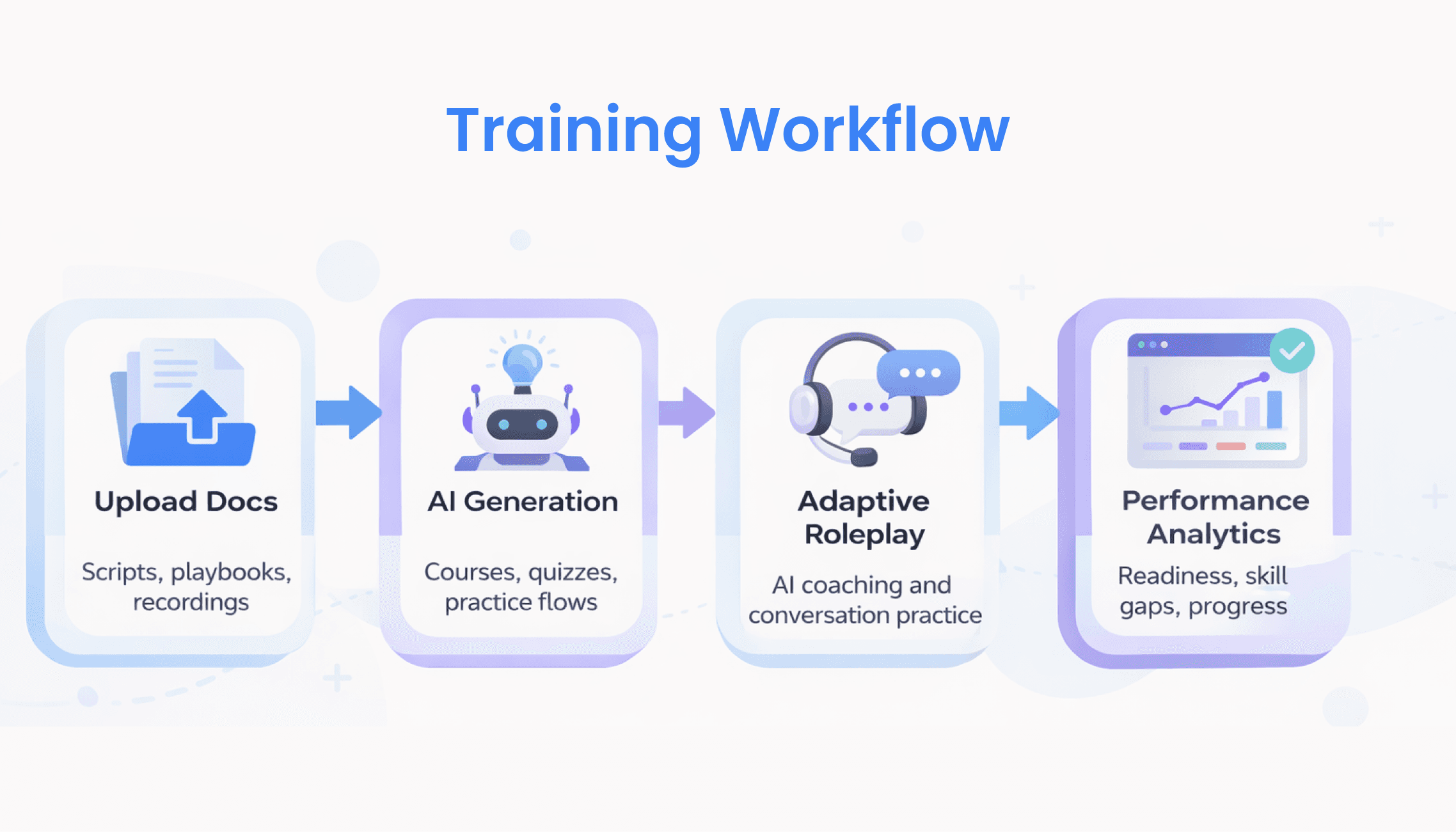
A manager could take a weak discovery call and build:
A short course on discovery structure
An assessment to check understanding
An AI roleplay with a similar buyer
A scoring framework based on the company’s method
Follow-up training based on the rep’s result
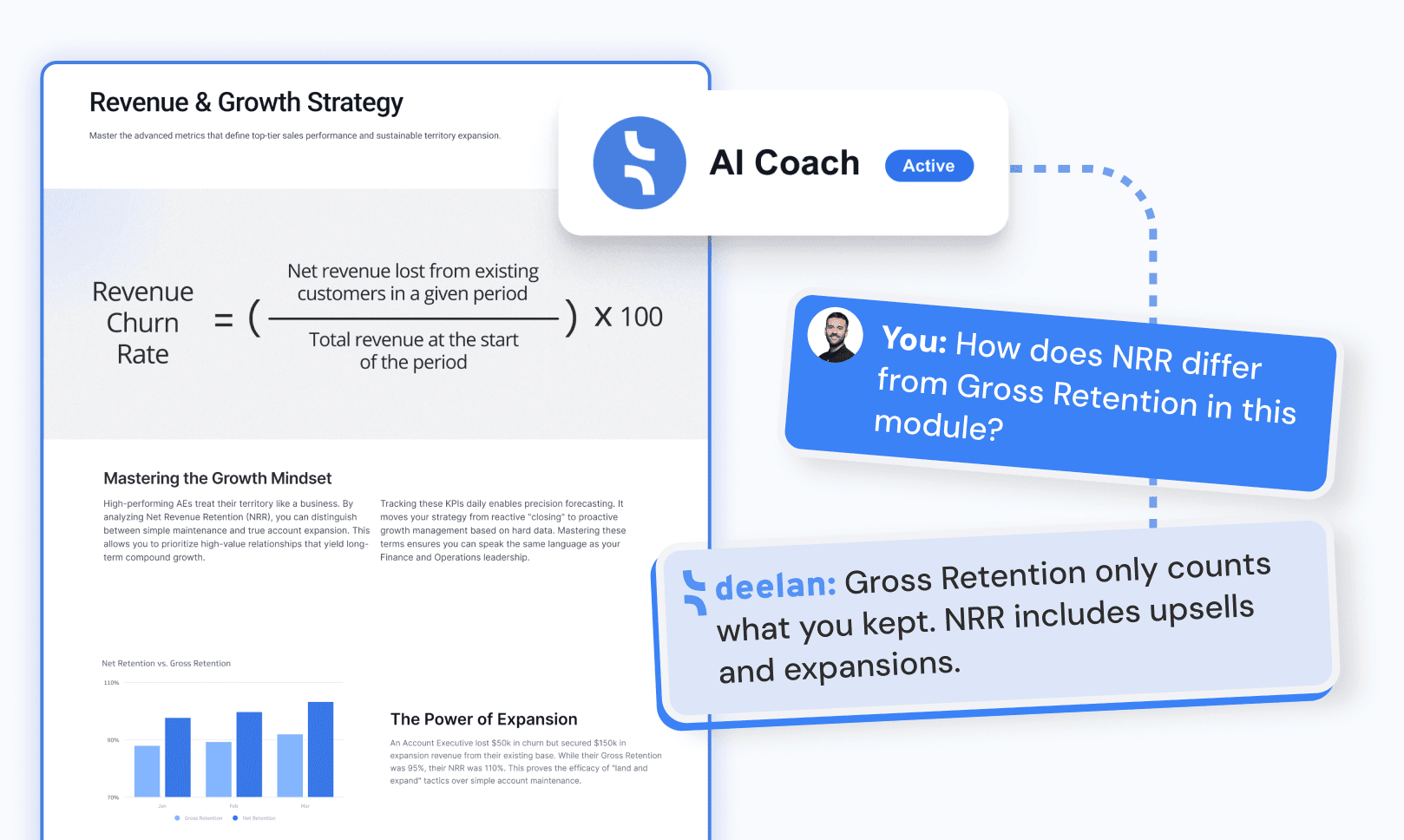
During the roleplay, the AI buyer can answer naturally, push back, raise objections, and react to the rep’s questions.
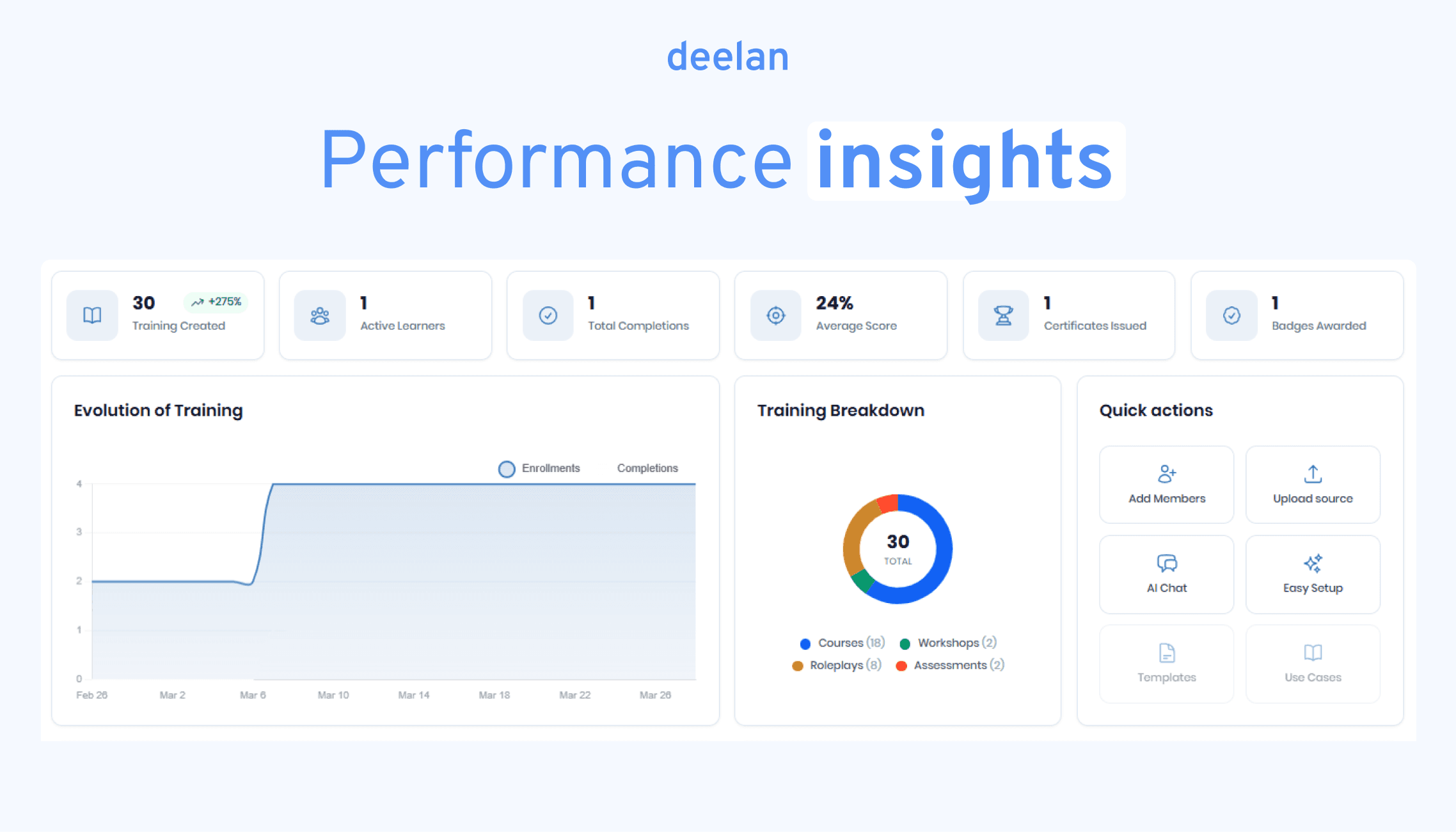
After the session, the rep can receive feedback on:
Discovery quality
Talk-to-listen ratio
Question depth
Clarity
Confidence
Missed opportunities
Suggested improvements
Recommended next training
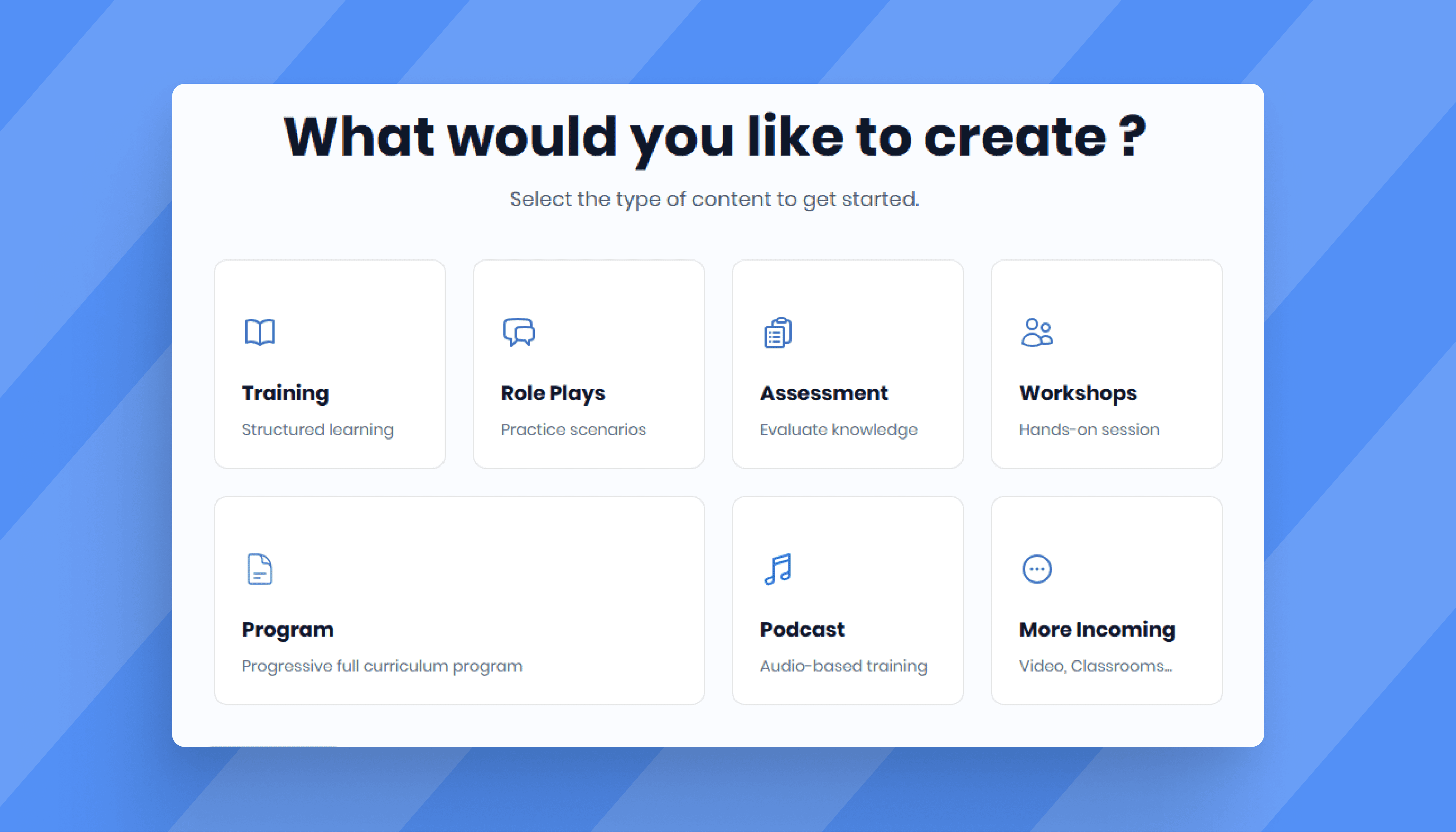
Managers can also combine courses, roleplays, and assessments into one program.
This makes it easier to move from call feedback to practice. Reps do not need to wait until the next manager meeting to repeat a difficult scenario.
Want to scale coaching without asking managers to repeat the same feedback every week?