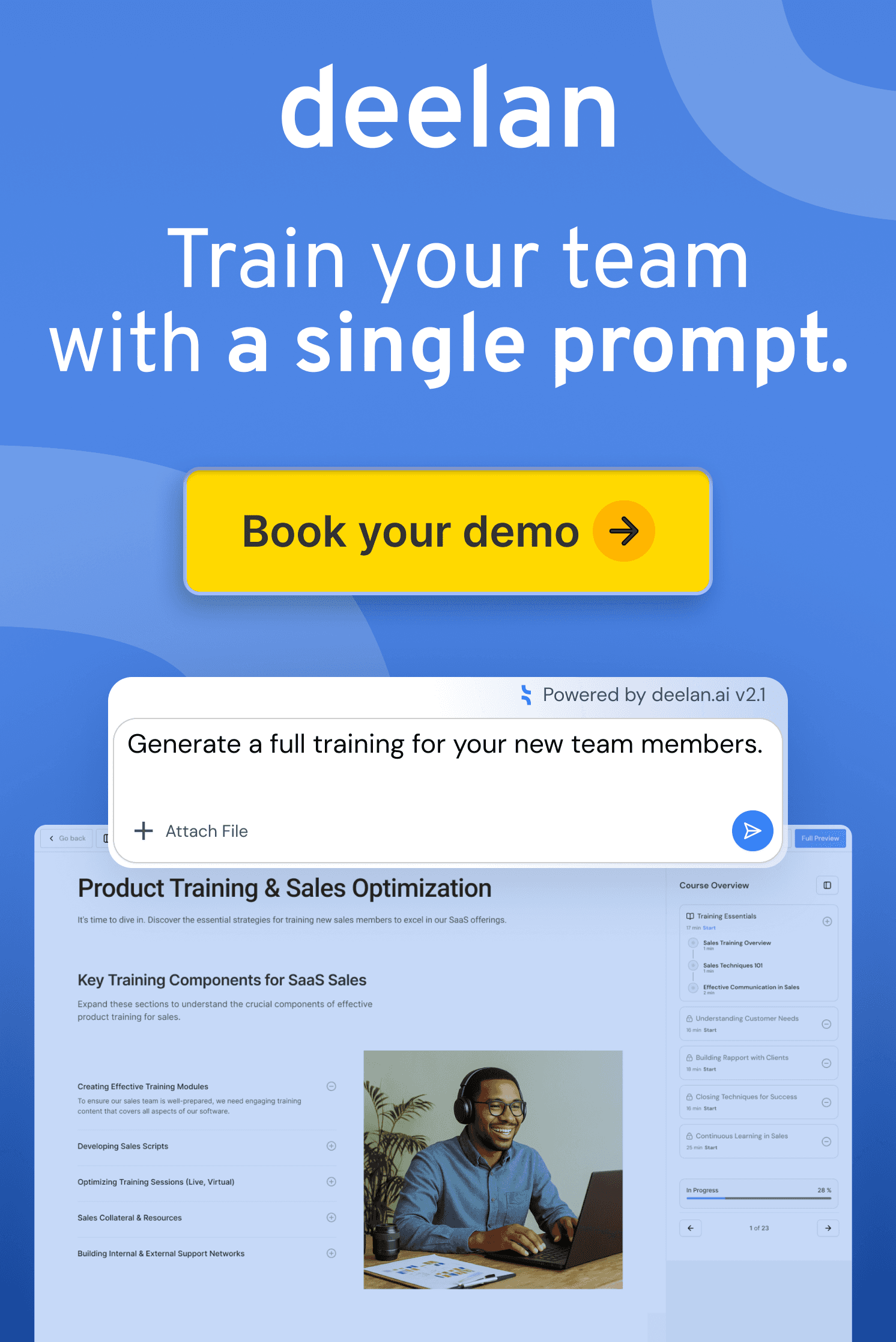

Sales onboarding is one of the most underrated growth levers in modern revenue teams.
Many companies invest heavily in hiring great sales talent, but the real difference between average and high-performing sales organizations happens after the hire - during the onboarding phase.
Traditional sales onboarding often takes 6–7 months before reps reach full productivity. During that time, managers spend hours repeating the same coaching, new hires feel overwhelmed by information, and pipeline growth slows.
But top-performing companies approach onboarding differently. Instead of relying on static documents and generic training sessions, they accelerate sales onboarding using structured frameworks, adaptive learning, real-world practice, and measurable outcomes.
When done well, sales onboarding can:
Reduce ramp time from 7 months to 3–4 months
Improve win rates and quota attainment
Increase retention of new hires
Build consistent selling behaviors across teams
In this guide, we’ll break down how to onboard sales teams faster and the five strategies leading companies use to accelerate sales onboarding and how AI powered platforms like Deelan help revenue teams scale training and coaching.
Sales Onboarding Process
Sales onboarding is the structured process of equipping new sales hires with the knowledge, skills, tools, and confidence they need to successfully generate pipeline and close deals.
A strong sales onboarding process typically includes:
Product and market education
Ideal customer profile (ICP) training
Sales methodology and messaging
CRM and sales tech stack training
Roleplay and real-world practice
Continuous coaching and performance tracking
The goal is not simply to teach information. The goal is to create confident, capable reps who can perform in real sales conversations.
Companies that invest in structured onboarding see:
Faster ramp-to-quota timelines
Higher win rates
More consistent pipeline creation
Better retention among sales reps
Common Sales Onboarding Problems That Slow Teams Down
Before discussing how to accelerate sales onboarding, it's important to understand why traditional onboarding often fails.
Most companies struggle with the same issues.
Information overload
New hires receive dozens of documents, videos, and presentations in the first week. Much of it is forgotten within days.
One-size-fits-all training
A new SDR and a senior account executive often receive the same onboarding material - even though their roles and skill levels differ significantly.
Too much theory, not enough practice
Many onboarding programs focus on knowledge instead of real selling practice, leaving reps unprepared for live calls.
Managers repeating the same coaching
Sales managers often spend hours repeating the same explanations and roleplays for each new hire.
Training completion instead of performance outcomes
Most onboarding programs measure course completion, not metrics like ramp time or quota attainment.
Stale content
Sales playbooks evolve constantly, but onboarding materials often stay outdated.
5 Ways Top Companies Accelerate Sales Onboarding
1. Start Before Day One With Strategic Pre-Boarding
High-performing revenue teams start the sales onboarding process before the new hire’s first day.
This approach removes administrative friction and helps new reps arrive prepared.
What effective pre-boarding includes
CRM and tool access
Welcome videos and company context
Product overview and ICP introduction
Sales process and messaging basics
A clear first-week schedule
This early preparation reduces first-day confusion and helps new hires start learning faster.
Practical implementation tip
Create a pre-boarding hub that includes essential materials and tool access.
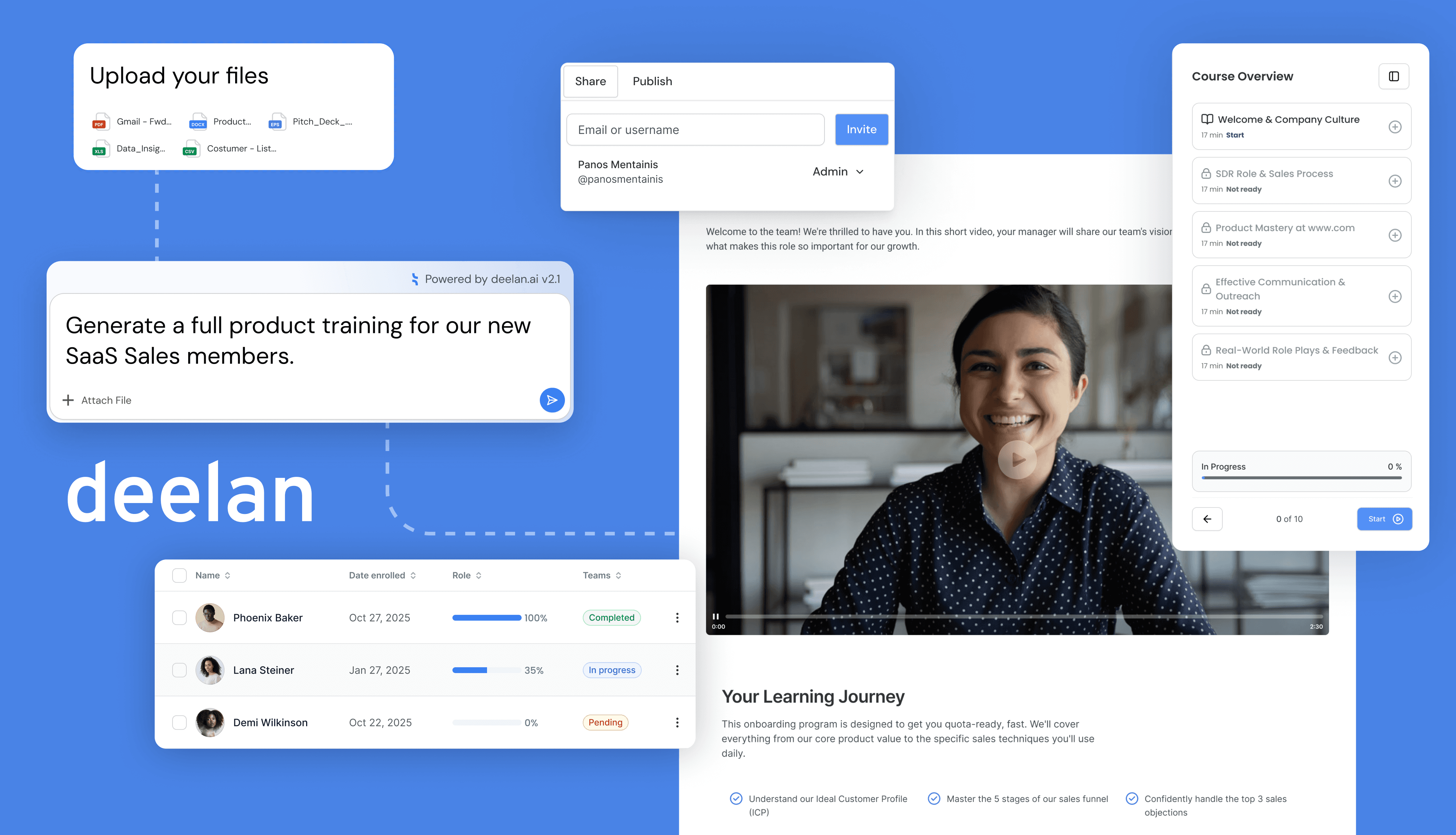
Platforms like Deelan make this easier by converting existing materials - playbooks, product docs, call recordings - into structured training modules automatically.

This allows companies to launch onboarding programs instantly rather than manually building training from scratch.
2. Build a Structured 30-60-90 Day Sales Onboarding Plan
The most effective onboarding programs follow a 30-60-90 day sales onboarding plan. This framework breaks onboarding into progressive learning stages.
Days 1–30: Foundations
Focus on knowledge and controlled practice.
Key priorities:
Product knowledge
Ideal customer profile (ICP)
Sales methodology
CRM training
Basic roleplays
Milestones may include:
Product certification
First roleplay assessment
Shadowing experienced reps
Days 31–60: Execution With Coaching
Reps begin selling while receiving structured feedback.
Activities include:
Prospecting and outreach
Discovery call practice
Objection handling
Pipeline reviews
Days 61–90: Autonomy
Reps start owning their pipeline and managing opportunities.
Focus areas:
Independent selling
Pipeline generation
Deal qualification
Consistent CRM usage
A structured onboarding plan provides clarity and measurable milestones, which significantly shortens ramp time.
3. Try Microlearning
Traditional onboarding relies on long presentations and documents. Modern onboarding uses microlearning. Microlearning breaks training into short, focused learning modules delivered when reps need them.
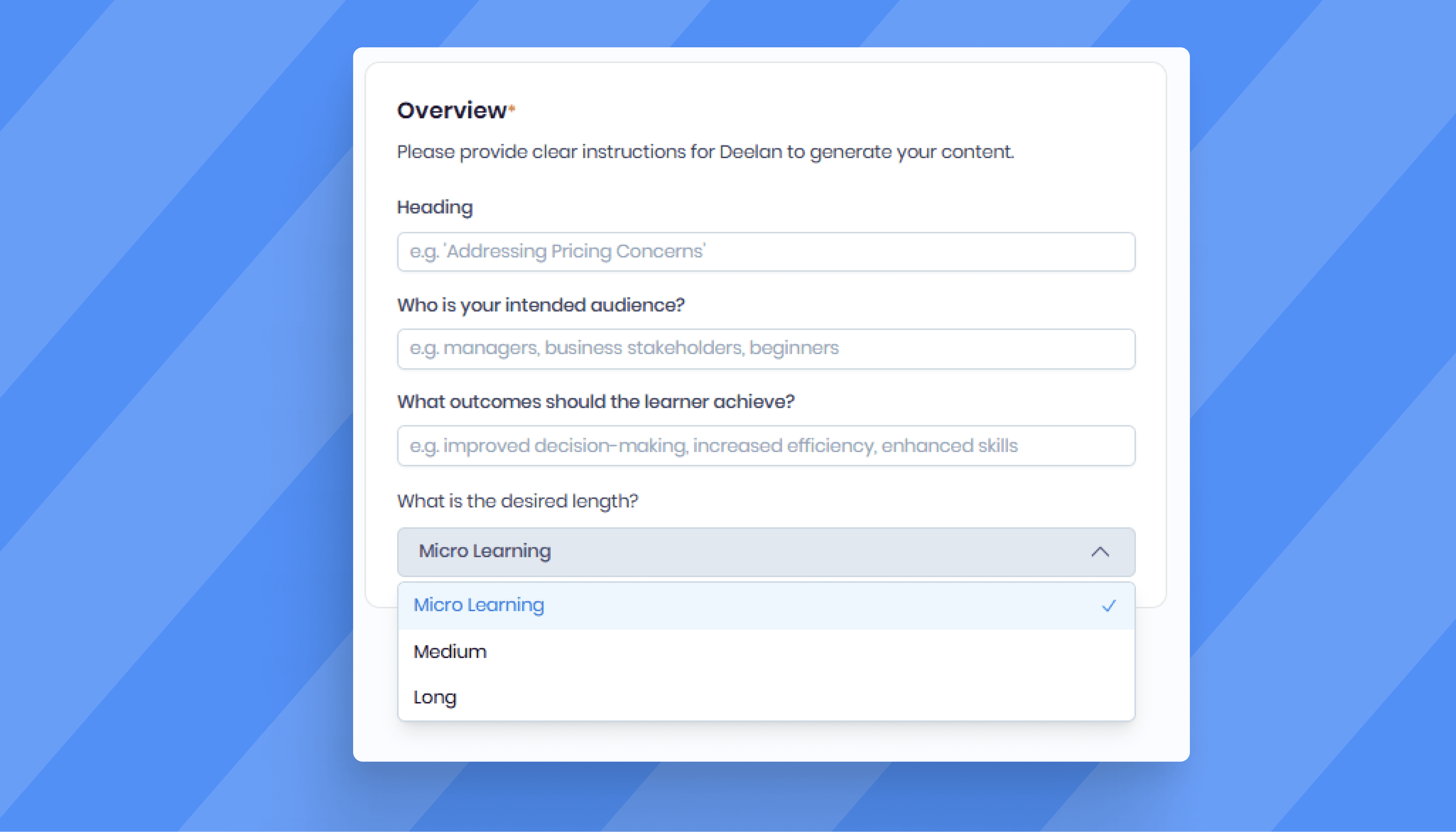
Benefits of microlearning
Higher knowledge retention
Faster skill development
Less cognitive overload
Training that fits real workflows
Instead of a two-hour training session, reps receive:
short product modules
roleplay scenarios
quick knowledge checks
targeted exercises
How adaptive learning improves results
Modern training platforms like Deelan personalize learning paths based on:
role (SDR, AE, CSM)
experience level
skill gaps
performance data
This means reps learn only what they actually need, rather than generic content.
4. Turn Practice Into Performance With AI Coaching and Roleplay
Sales skills improve through practice, not theory.
Leading companies incorporate roleplay and simulation-based training into onboarding.
This includes practicing:
discovery calls
objection handling
product demos
negotiation conversations
Realistic simulations allow reps to practice without risking real deals.
Why AI coaching accelerates learning
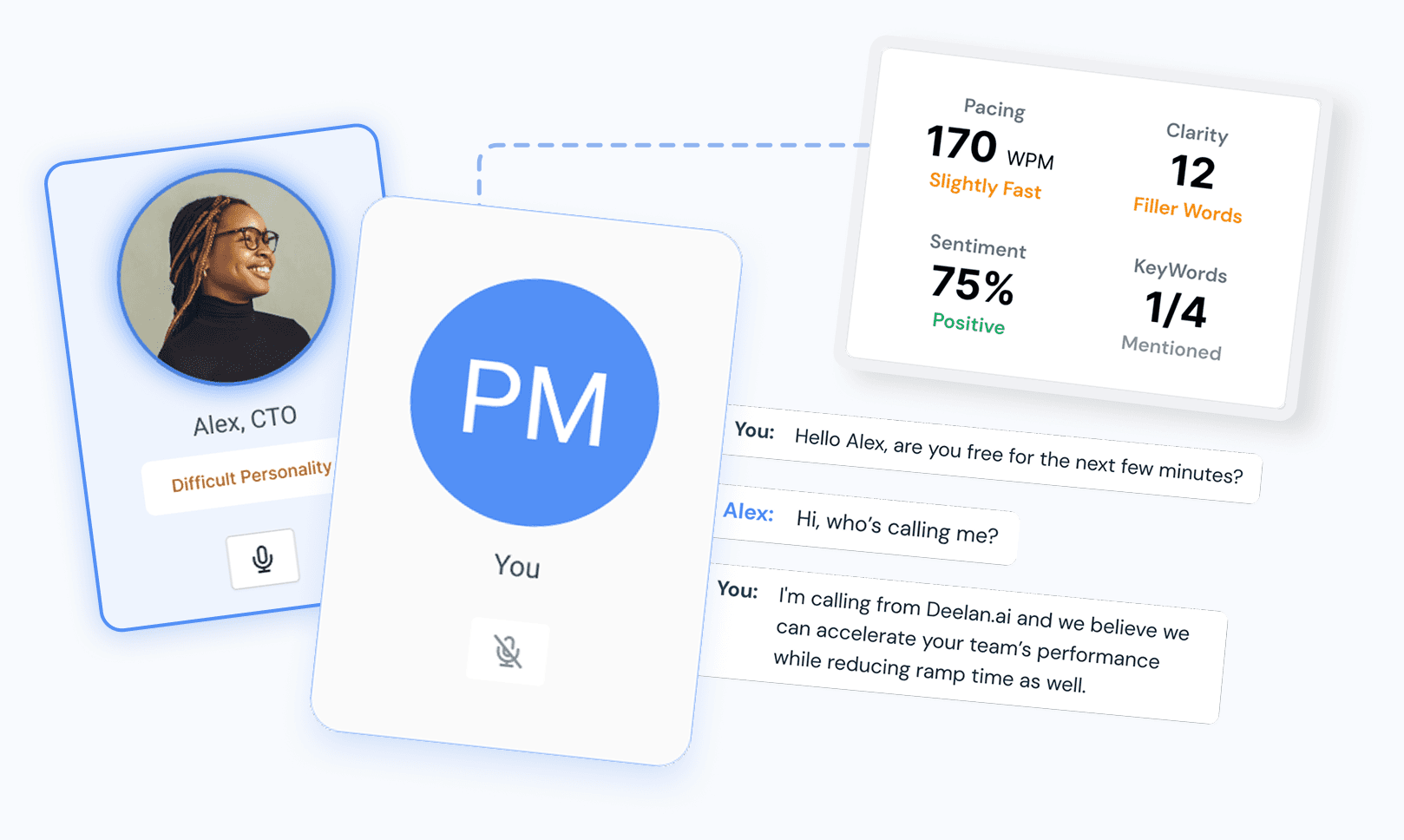
AI coaching platforms can:
simulate real customer conversations
analyze sales calls
provide instant feedback
identify skill gaps
With Deelan, revenue teams can generate realistic roleplay scenarios from actual sales materials, allowing reps to practice real-world selling situations.
5. Measure Sales Onboarding by Business Outcomes
Many companies measure onboarding success by training completion.
Top organizations measure revenue outcomes instead.
Key sales onboarding metrics
Metric | Why It Matters |
|---|---|
Ramp-to-quota time | Measures productivity speed |
Time to first meeting | Early sales activity indicator |
Time to first deal | Revenue impact |
Win rate | Quality of sales execution |
Pipeline creation | Future revenue potential |
Tracking these metrics helps sales leaders understand whether onboarding is actually improving performance.
Platforms like Deelan connect onboarding activity with revenue performance by analyzing:
skill development
coaching feedback
training progress
sales execution data
This allows leaders to continuously improve onboarding programs.
The RAMP Framework: How to Onboard Sales Reps Faster
A useful model for accelerating sales onboarding is the RAMP framework.
Step | Meaning | Impact |
|---|---|---|
R | Remove friction before day one | Faster onboarding start |
A | Adapt learning by role and skill gap | Personalized training |
M | Make practice continuous | Stronger sales skills |
P | Prove impact with metrics | Data-driven improvement |

Deelan AI for Fast and Efficient Sales Onboarding Process
Deelan is designed specifically for revenue organizations and supports every stage of the sales onboarding process.
Key capabilities
Adaptive onboarding programs
Training paths automatically adjust based on role, skill level, and performance.
AI-generated training content
Deelan converts existing company materials—playbooks, call recordings, scripts, and documents—into structured courses.
Realistic roleplay simulations
Reps practice discovery calls, demos, and objections before real conversations.
AI coaching and feedback
Instant coaching suggestions help reps improve faster.
Knowledge base and centralized learning
All training content lives in one searchable platform.
Teams using Deelan report:
30–50% faster rep onboarding
55% faster ramp time
10–25% higher win rates
80% less time creating training
Instead of static onboarding documents, revenue teams get continuous skill development tied directly to performance.
Example of a High-Performing Sales Onboarding Workflow
Pre-boarding
Welcome message and company overview
CRM and sales tool access
Product introduction modules
Introductory roleplay exercises
With Deelan, companies can generate these modules automatically from existing materials.
First Week
Sales methodology training
ICP and messaging modules
Roleplay practice with AI coaching
Shadowing experienced reps
First 30 Days
Product certification
Discovery call practice
CRM training
Objection handling exercises
Days 30–60
Prospecting campaigns
Live call practice
Pipeline creation
Weekly coaching sessions
Days 60–90
Independent pipeline ownership
Deal qualification
Advanced sales skills training
Sales Onboarding Is a Revenue Strategy
Sales onboarding is not just a training process. It is a revenue growth strategy.
Companies that accelerate sales onboarding see faster ramp times, stronger pipelines, and higher win rates.
The most effective onboarding programs share five characteristics:
Pre-boarding before day one
Structured 30-60-90 day onboarding plans
Adaptive microlearning instead of information overload
Continuous roleplay and coaching
Measurement tied to revenue outcomes
Platforms like Deelan enable these practices by transforming sales knowledge into adaptive training programs, AI coaching, and performance-driven learning.
For modern revenue teams, the goal is simple:
Turn onboarding into a system that consistently produces top-performing sales reps.
FAQ
What is sales onboarding?
Sales onboarding is the structured process of training new sales hires on product knowledge, sales processes, tools, and skills needed to generate pipeline and close deals effectively.
How long should sales onboarding take?
Traditional onboarding often takes 6–7 months, but structured onboarding programs can reduce ramp time to 3–4 months or less.
How do you accelerate sales onboarding?
Companies accelerate sales onboarding by using structured frameworks, adaptive training, roleplay practice, continuous coaching, and data-driven performance metrics.
How to onboard sales reps effectively?
To onboard sales reps effectively, companies should implement a 30-60-90 day onboarding plan, provide realistic sales practice, offer continuous coaching, and measure performance outcomes.
What metrics should you track in sales onboarding?
Key metrics include ramp-to-quota time, time to first meeting, time to first deal, win rate, pipeline creation, and training certification scores.
Ramp your sales team faster with Deelan - book a demo.
Turn your sales playbooks, call recordings, and product documentation into adaptive training programs that accelerate onboarding and improve win rates.
Start building a performance-driven onboarding system today.