
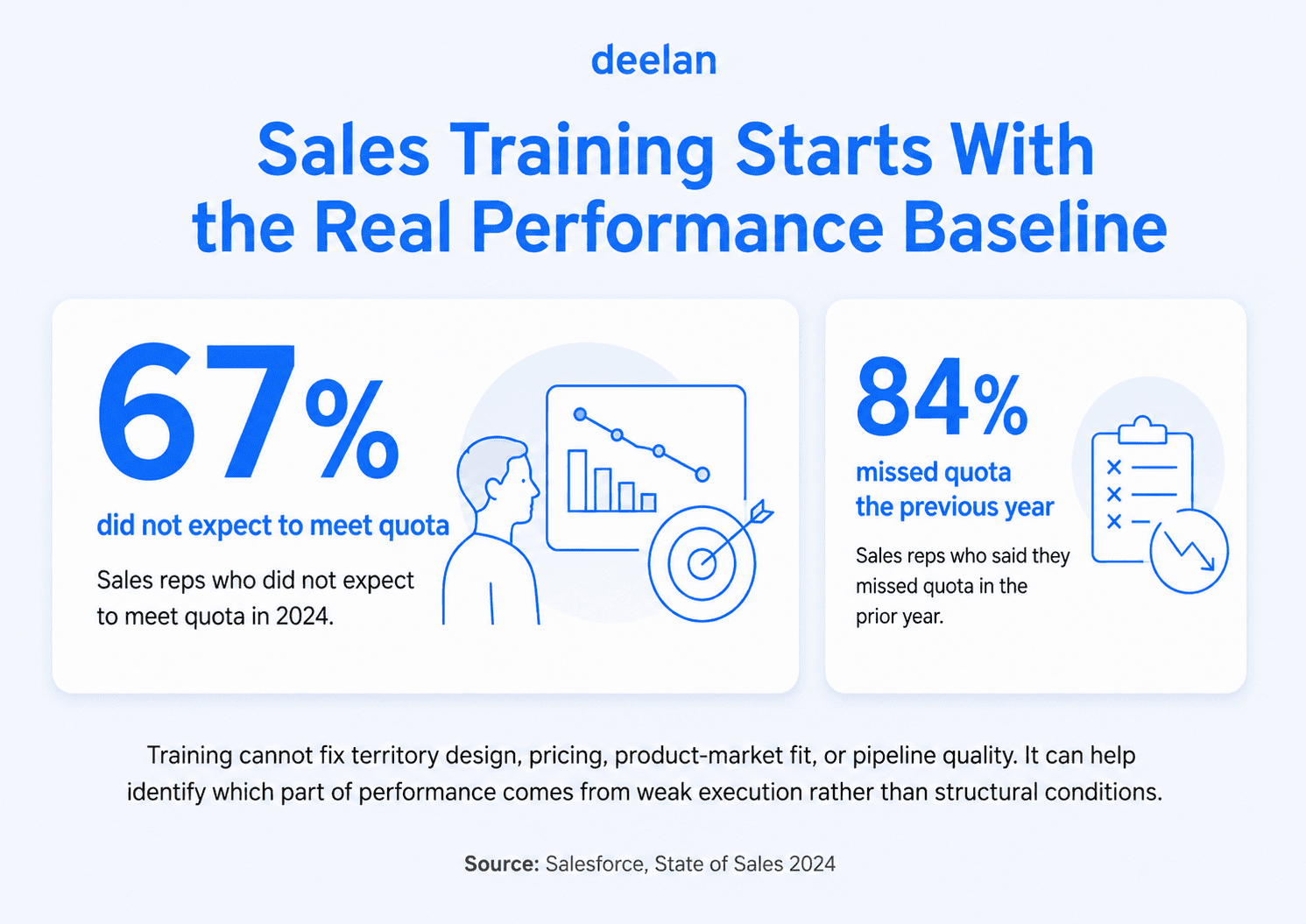
67% of sales representatives did not expect to meet their quota in 2024, while 84% said they had missed quota the previous year (Salesforce, State of Sales 2024).
Sales representatives also reported spending 70% of their working time on activities other than selling, and 72% of B2B sellers said they felt overwhelmed by the number of skills their role required (Salesforce, State of Sales 2024; Gartner, Seller Skills Survey 2024).
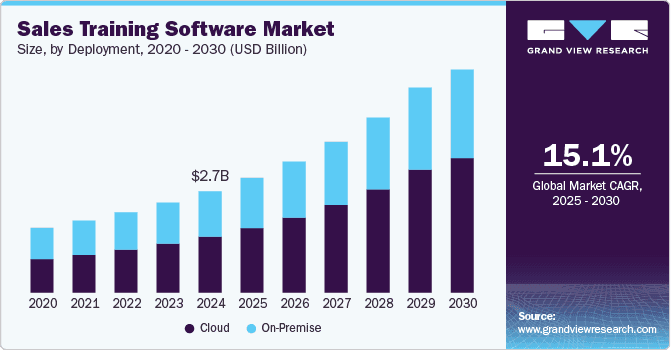
The technology category supporting sales training is expanding quickly: Grand View Research estimates that the global sales training software market will grow from $2.7 billion in 2024 to $6.1 billion in 2030 (Grand View Research, Sales Training Software Market Report 2025–2030).
We aggregated data from Salesforce, Gartner, LinkedIn Learning, ATD, the World Economic Forum, McKinsey, and dozens of other primary and methodology-backed sources to compile this report.
The data matters because sales teams are being asked to adopt AI, learn more complex products, adjust to independent buyers, and improve productivity at the same time that formal learning hours and manager capacity remain limited.
Key Takeaways
67% of sales representatives did not expect to meet quota in 2024 (Salesforce, State of Sales 2024).
Sales representatives spend 70% of their time on non-selling work (Salesforce, State of Sales 2024).
72% of B2B sellers feel overwhelmed by the number of skills required for their role (Gartner, Seller Skills Survey 2024).
Sellers who effectively partner with AI are 3.7 times more likely to meet quota (Gartner, Seller Skills Survey 2024).
83% of sales teams using AI reported revenue growth, compared with 66% of teams not using AI (Salesforce, State of Sales 2024).
U.S. organizations spent an estimated $102.8 billion on employee training in 2025 (Training magazine, 2025 Training Industry Report).
Employees received an average of 40 training hours in 2025, down from 47 in 2024 (Training magazine, 2025 Training Industry Report).
49% of L&D professionals say executives are concerned that employees lack the skills needed to execute business strategy (LinkedIn Learning, Workplace Learning Report 2025).
88% of organizations are concerned about retention, and learning opportunities are their most frequently cited retention strategy (LinkedIn Learning, Workplace Learning Report 2025).
59% of the global workforce is expected to need training by 2030 (World Economic Forum, Future of Jobs Report 2025).
Only 13% of organizations in McKinsey’s research calculated a quantifiable return on their learning investments, the most recent available figure from that study series (McKinsey, Building Capabilities for Performance 2014).
1. Sales Training Market Size and Growth
Market estimates vary significantly because researchers measure different categories. Grand View Research measures software used to deliver and manage sales training, while Mordor Intelligence measures the wider product-based sales training market, including services and instructor-led delivery.
The figures should therefore be compared as separate views of the industry, not combined into a single market estimate.
Sales training software
The sales training software market is projected to more than double between 2024 and 2030. That rate of expansion suggests businesses are moving part of training delivery, practice, assessment, and reporting into dedicated digital systems rather than relying entirely on live workshops.
Metric | Value | Source |
|---|---|---|
Global sales training software market, 2024 | $2.7 billion | Grand View Research, Sales Training Software Market Report 2025–2030 |
Estimated market size, 2026 | $3.4 billion | Grand View Research, Sales Training Software Market Report 2025–2030 |
Forecast market size, 2030 | $6.1 billion | Grand View Research, Sales Training Software Market Report 2025–2030 |
Forecast compound annual growth rate | 15.1% from 2025 to 2030 | Grand View Research, Sales Training Software Market Report 2025–2030 |
North American share, 2024 | More than 43% | Grand View Research, Sales Training Software Market Report 2025–2030 |
See the Grand View Research sales training software market report.
Product-based sales training
Mordor Intelligence’s broader category is much larger because it covers product-focused training services and delivery formats beyond standalone software. It forecasts slower percentage growth than the software-only estimate, indicating that digital systems may be taking share within a larger, more mature training economy.
Metric | Value | Source |
Product-based sales training market, 2026 | $13.29 billion | Mordor Intelligence, Product Based Sales Training Market 2026–2031 |
Forecast market size, 2031 | $18.20 billion | Mordor Intelligence, Product Based Sales Training Market 2026–2031 |
Forecast compound annual growth rate | 6.48% from 2026 to 2031 | Mordor Intelligence, Product Based Sales Training Market 2026–2031 |
Because the two research firms use different definitions, their figures are not contradictory. They measure overlapping but non-identical markets.
See the Mordor Intelligence product-based sales training market analysis.
2. Sales Performance and Quota Attainment
Sales training is operating against a difficult performance baseline. The problem is not limited to a small group of new or underperforming representatives: Salesforce’s global study suggests that missed quota has become the common experience.
Training cannot fix territory design, pricing, product-market fit, or pipeline quality. It can, however, help teams identify which part of performance is caused by weak execution rather than structural conditions.
Metric | Value | Source |
Sales representatives who did not expect to meet quota in 2024 | 67% | Salesforce, State of Sales 2024 |
Sales representatives who said they missed quota in the previous year | 84% | Salesforce, State of Sales 2024 |
AI-enabled sales teams reporting revenue growth | 83% | Salesforce, State of Sales 2024 |
Sales teams without AI reporting revenue growth | 66% | Salesforce, State of Sales 2024 |
Relative likelihood of revenue growth for teams using AI | 1.3 times higher | Salesforce, State of Sales 2024 |
Sales professionals saying selling had become harder | 54% | HubSpot, Sales Trends Report 2024 |
Companies missing a sales forecast in at least one quarter over two years | More than 80% | Gong, Reality of Sales Forecasting 2024; survey of 2,015 U.S. and U.K. business leaders |
The gap between 83% revenue growth among AI-using teams and 66% among non-users is an association, not proof that AI alone caused the growth. Better-resourced or better-managed organizations may also be more likely to adopt AI.
Teams trying to separate structural performance problems from individual execution gaps can use a formal training-needs analysis before assigning the same program to every seller.
See Salesforce’s summary of the sixth State of Sales report.
3. Seller Workload, Complexity, and Skill Gaps
The challenge is no longer simply teaching a sales methodology once. Representatives are expected to use larger technology stacks, understand more complex buying groups, adapt their approach, work with AI, and maintain product knowledge as offerings change.
72% of sellers saying they are overwhelmed by the skills required for their job is a warning against solving every performance problem by adding another course. Training must remove uncertainty and prioritize the few behaviors that affect the seller’s current role and deals.

Metric | Value | Source |
Sales representatives’ time spent on non-selling tasks | 70% | Salesforce, State of Sales 2024 |
Sales teams experimenting with or fully implementing AI | 81% | Salesforce, State of Sales 2024 |
B2B sellers overwhelmed by the number of technologies required | 70% | Gartner, Seller Skills Survey 2024; 1,026 sellers |
B2B sellers overwhelmed by the number of skills required | 72% | Gartner, Seller Skills Survey 2024; 1,026 sellers |
Chief sales officers using coaching, tools, or training among their top three productivity measures | 57% | Gartner, Sales Transformation Survey 2024 |
Sales organizations simultaneously achieving commercial success and executing transformation | 11% | Gartner, Sales Transformation Survey 2024 |
Salespeople saying buyers are less dependent on representatives than several years ago | 57% | HubSpot, Buyers Speak Out 2025 |
The 11% transformation-success finding suggests that adding tools and training initiatives is not enough. Sellers need fewer conflicting priorities, clear standards, manager reinforcement, and practice connected to the actual sales process.
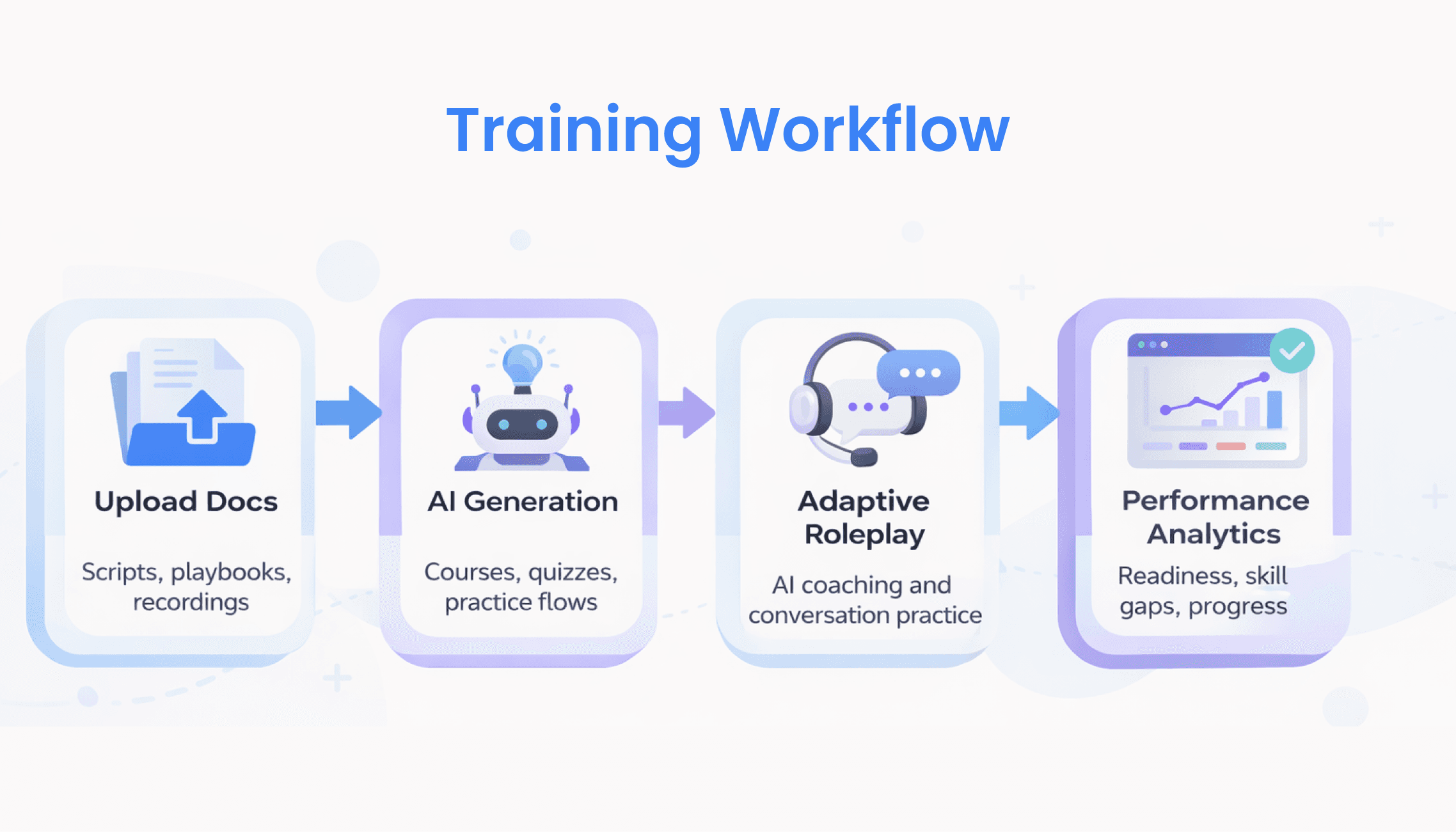
This is where role-based training becomes more useful than a general content library. Deelan’s adaptive sales training guide explains how programs can vary by role, seniority, and demonstrated skill gaps rather than giving every representative the same sequence.
See the Gartner sales transformation findings.
4. Training Budgets, Hours, and Delivery Methods
Training expenditure is rising in aggregate, but the amount of training received per employee is not rising at the same rate. That creates pressure to make each hour more relevant and easier to apply.
Training magazine and ATD report different hourly figures because they use different respondent groups and definitions. Training magazine counts broader employee training hours among U.S. organizations with at least 100 employees, while ATD reports formal learning hours across its participating organizations.
Spending and learning hours
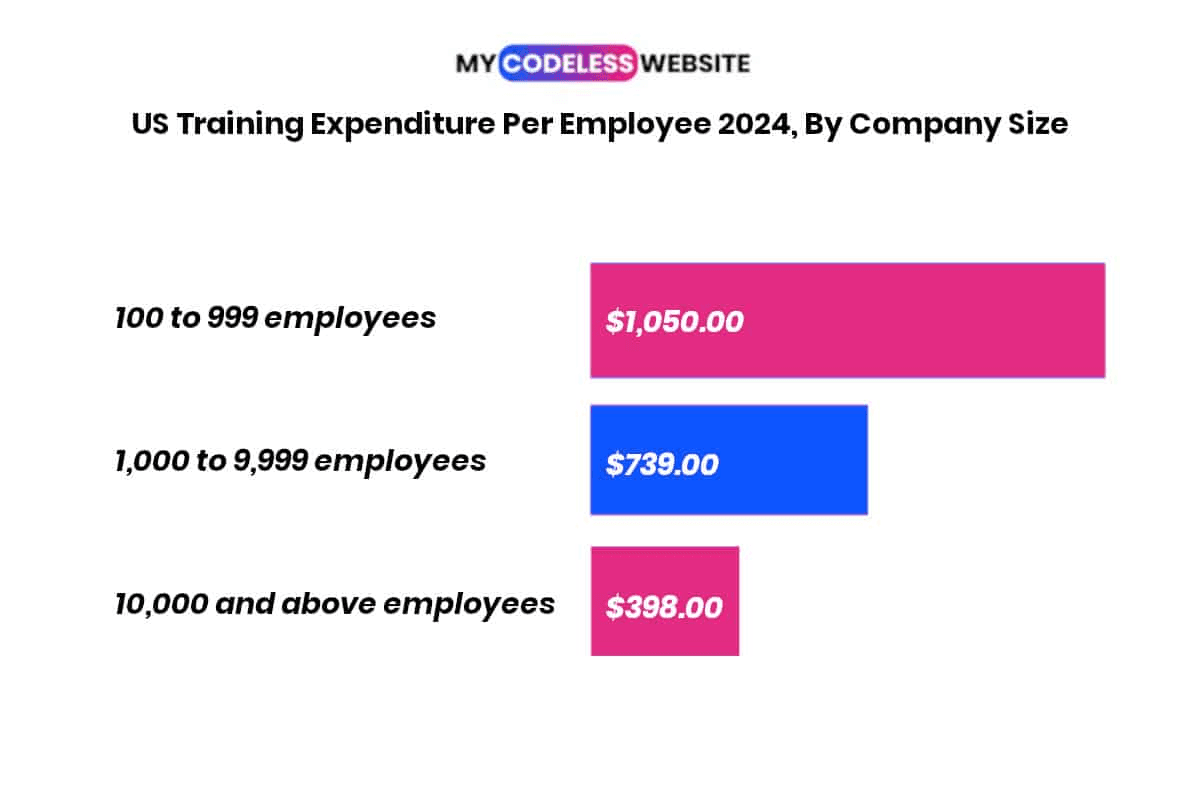
U.S. training expenditure reached an estimated $102.8 billion in 2025, yet average annual training time fell to 40 hours per employee. The combination points to higher costs, changing delivery methods, or spending on systems and services that does not translate directly into more learner hours.
Metric | Value | Source |
Estimated U.S. training expenditure, 2025 | $102.8 billion | Training magazine, 2025 Training Industry Report |
Annual increase in U.S. training expenditure | 4.9% | Training magazine, 2025 Training Industry Report |
Spending on outside training products and services | $16 billion | Training magazine, 2025 Training Industry Report |
Increase in outside-product and service expenditure | 29% | Training magazine, 2025 Training Industry Report |
Average expenditure per learner | $874 | Training magazine, 2025 Training Industry Report |
Average annual training per employee | 40 hours | Training magazine, 2025 Training Industry Report |
Average formal learning per employee in 2025 | 16.7 hours | ATD, State of the Industry Report 2026 |
Average direct learning expenditure per employee in 2025 | $846 | ATD, State of the Industry Report 2026 |
See the 2025 Training Industry Report and ATD’s 2026 State of the Industry highlights.
Delivery formats and purchasing priorities
Recent purchasing intentions point toward more active training formats. In Training magazine’s 2024 survey, games and simulations became the most frequently anticipated purchase category, ahead of online learning systems and business-skills content.
Metric | Value | Source |
Organizations anticipating purchases of games or simulations | 46% | Training magazine, 2024 Training Industry Report |
Organizations anticipating online-learning tools or systems | 39% | Training magazine, 2024 Training Industry Report |
Organizations anticipating business-skills purchases | 39% | Training magazine, 2024 Training Industry Report |
Organizations anticipating assessment or analysis testing | 31% | Training magazine, 2024 Training Industry Report |
Organizations anticipating coaching or mentoring purchases | 28% | Training magazine, 2024 Training Industry Report |
Organizations providing at least some sales training online | 56% | Training magazine, 2024 Training Industry Report |
These purchasing figures cover corporate training overall, not only sales departments. Their relevance to sales training is the movement toward practice, assessment, and mixed delivery rather than passive course consumption alone.
Sales teams considering simulation-based learning can compare formats in Deelan’s guide to realistic AI sales roleplay.
5. Coaching, Learning Culture, and Retention
Training affects more than initial onboarding. LinkedIn and Gallup data indicate that employees connect learning with career progress, retention, and the belief that their organization is investing in them.
For sales organizations, that matters because valuable discovery, negotiation, account-management, and product knowledge leaves with experienced representatives when they depart.
Career development and retention
88% of surveyed organizations are concerned about employee retention, and learning opportunities are their most commonly reported retention strategy. The implication is that development should not stop once a seller reaches full ramp.
Metric | Value | Source |
L&D professionals reporting executive concern about critical skill gaps | 49% | LinkedIn Learning, Workplace Learning Report 2025 |
Organizations classified as career-development champions | 36% | LinkedIn Learning, Workplace Learning Report 2025 |
Organizations with limited-adoption career programs | 31% | LinkedIn Learning, Workplace Learning Report 2025 |
Organizations with no career initiatives or only beginning | 33% | LinkedIn Learning, Workplace Learning Report 2025 |
Organizations concerned about retention | 88% | LinkedIn Learning, Workplace Learning Report 2025 |
Employees receiving employer-supported training to develop new skills | 45% | Gallup, Advancement Opportunities and Workplace Training 2025 |
Employees receiving task-specific on-the-job training | 57% | Gallup, Advancement Opportunities and Workplace Training 2025 |
Employees participating in mentorship programs | 28% | Gallup, Advancement Opportunities and Workplace Training 2025 |
See the LinkedIn Workplace Learning Report 2025.
Recognition and continuous learning
Learning culture is influenced by what managers notice and reward. Gallup found that skill development is recognized much less often than project performance or tenure, despite its relationship with motivation to continue learning.
Metric | Value | Source |
Employees saying learning a new skill is commonly recognized | 14% | Gallup and Workhuman, Employee Upskilling Is Vital 2024 |
Increase in perceived organizational encouragement where learning is recognized | 75% | Gallup and Workhuman, Employee Upskilling Is Vital 2024 |
Increase in motivation to learn where skill development is recognized | 56% | Gallup and Workhuman, Employee Upskilling Is Vital 2024 |
These findings are based on employee perceptions and associations. They do not establish that recognition alone produces a 56% improvement in completed learning or sales results.
See Gallup’s employee upskilling analysis.
6. AI in Sales Training and Execution
AI adoption is already widespread in sales, but adoption and effective use are not the same. Gartner’s results suggest that the performance advantage comes from knowing how to work with AI rather than merely having access to it.
That distinction makes AI training increasingly practical: representatives need to judge outputs, add account context, recognize errors, protect sensitive information, and decide when human judgment should override a recommendation.
AI-linked sales performance
Sellers who effectively partner with AI are 3.7 times more likely to meet quota, according to Gartner’s survey of 1,026 B2B sellers. Tactical adaptability and the ability to infer buyers’ unspoken intentions were also strongly associated with quota attainment.
Metric | Value | Source |
Quota-attainment likelihood for sellers effectively partnering with AI | 3.7 times higher | Gartner, Seller Skills Survey 2024 |
Quota-attainment likelihood associated with tactical flexibility | 3.4 times higher | Gartner, Seller Skills Survey 2024 |
Quota-attainment likelihood associated with mentalizing ability | 2.9 times higher | Gartner, Seller Skills Survey 2024 |
Increase in sales conversations mentioning AI since November 2022 | 2,200% | Gong Labs, ROI of AI in Sales 2024 |
Increase in win rate associated with using AI to optimize activities | 50% | Gong Labs, ROI of AI in Sales 2024 |
Increase in win rate associated with using AI to inform deals | 26% | Gong Labs, ROI of AI in Sales 2024 |
Increase in win rate associated with using AI to guide deals | 35% | Gong Labs, ROI of AI in Sales 2024 |
Gong’s analysis covered more than one million opportunities across 1,418 sales organizations. As observational product data, it shows strong associations but does not isolate every organizational factor that may influence win rates.
See the Gartner seller skills study.
AI skills and training responsibility
AI is also changing what employees and managers are expected to learn. Microsoft’s research indicates that employees may soon be responsible not only for using AI tools but for training and managing AI agents.
Metric | Value | Source |
Leaders expecting teams to train AI agents within five years | 41% | Microsoft, Work Trend Index 2025 |
Leaders expecting teams to manage AI agents within five years | 36% | Microsoft, Work Trend Index 2025 |
Leaders saying AI will enable employees to take on complex work earlier | 83% | Microsoft, Work Trend Index 2025 |
For sales enablement teams, this supports training AI use within actual workflows rather than offering a single general introduction. Representatives can practice researching accounts, preparing discovery questions, reviewing calls, and validating outputs against approved product material.
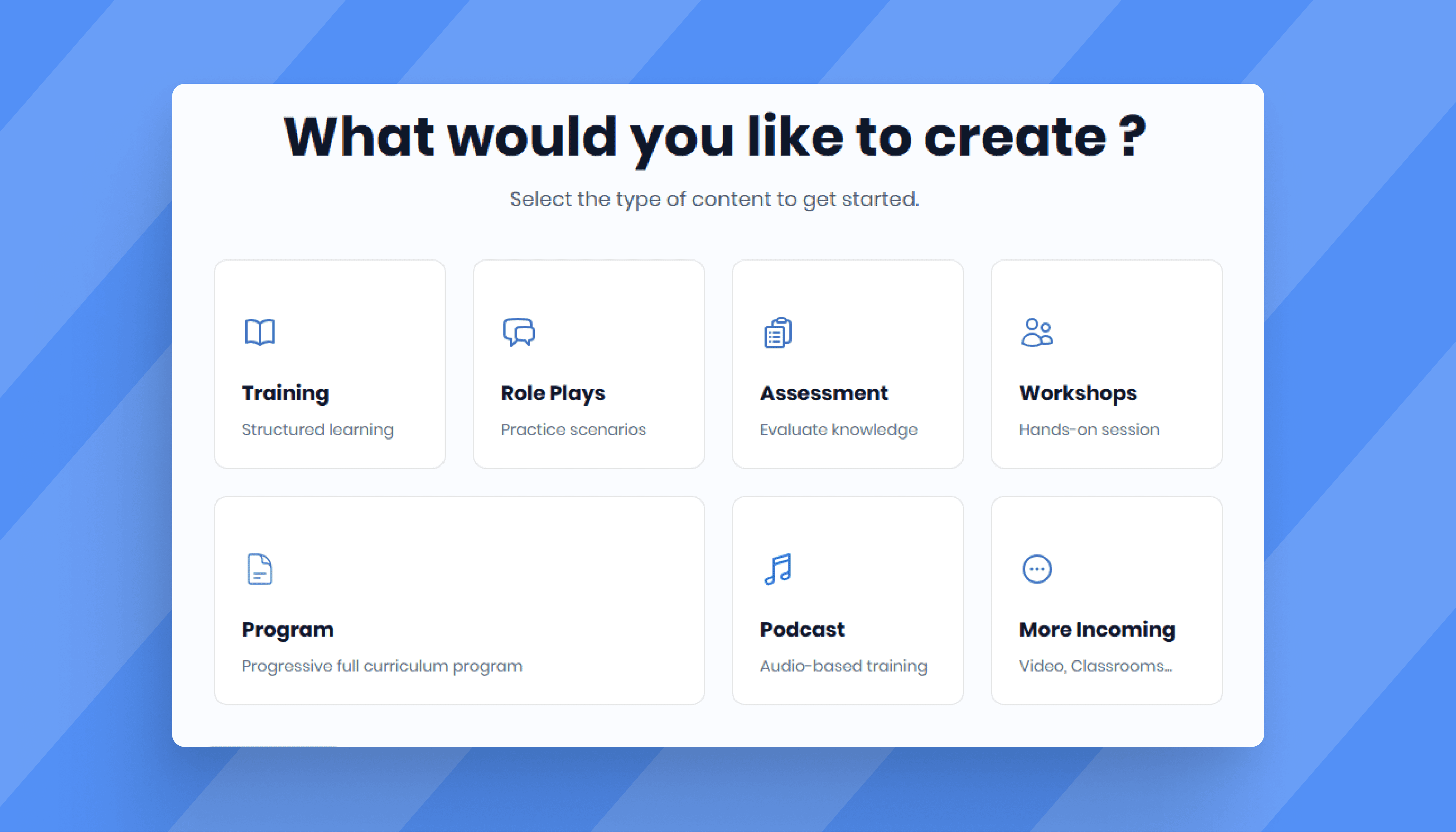
Deelan’s AI-powered training guide covers how company knowledge can be turned into role-specific courses, assessments, and practice activities.
7. Future Sales Skills and Reskilling Requirements
Sales roles are not changing in isolation. The World Economic Forum’s employer survey indicates that skill disruption will affect a large share of the global workforce and that human skills will remain important alongside AI literacy.
For sales leaders, this means technical AI training should not replace work on listening, adaptability, judgment, negotiation, and leadership. The highest-value programs are likely to combine both.
Metric | Value | Source |
Existing worker skills expected to change or become outdated by 2030 | 39% | World Economic Forum, Future of Jobs Report 2025 |
Employers identifying skill gaps as a major transformation barrier | 63% | World Economic Forum, Future of Jobs Report 2025 |
Employers planning to prioritize workforce upskilling | 85% | World Economic Forum, Future of Jobs Report 2025 |
Global workers expected to require training by 2030 | 59% | World Economic Forum, Future of Jobs Report 2025 |
Workers expected to be upskilled in their existing roles | 29% | World Economic Forum, Future of Jobs Report 2025 |
Workers expected to be reskilled and redeployed | 19% | World Economic Forum, Future of Jobs Report 2025 |
Workers expected to need training but not receive it | 11% | World Economic Forum, Future of Jobs Report 2025 |
The World Economic Forum findings are projections based on employer expectations, not guaranteed outcomes. The survey covers more than 1,000 employers representing over 14 million workers across 55 economies.
See the World Economic Forum Future of Jobs Report 2025.
8. Training Measurement and Commercial ROI
Training measurement remains one of the weakest parts of capability building. Participation, satisfaction, and completion are easier to track than whether representatives ask better questions, progress opportunities, shorten ramp time, or improve win rates.
The most detailed McKinsey measurement figures are older than three years, so they should be treated as the most recent available from this study series, not as a new 2026 survey.
Metric | Value | Source |
Organizations not measuring learning-program impact | 20% | McKinsey, Building Capabilities for Performance 2014, most recent available |
Organizations calculating quantifiable learning ROI | 13% | McKinsey, Building Capabilities for Performance 2014, most recent available |
Organizations using structured third-party diagnostics to identify skill gaps | 18% | McKinsey, Building Capabilities for Performance 2014, most recent available |
Effective capability builders using coaching extensively | 60% | McKinsey, Building Capabilities for Performance 2014, most recent available |
Greater likelihood that sales-growth outperformers measure training effectiveness | 56% | McKinsey, The Five Things Sales-Growth Winners Do 2018, most recent available |
McKinsey also documented a six-week telesales pilot in which revenue per call rose 17%, with an estimated tenfold return on program cost. This is a single company case study, not a general benchmark for expected training ROI (McKinsey, Transforming Telesales Capabilities).
A useful 2026 measurement model should connect four levels:
Participation and completion.
Demonstrated skill in assessments or simulations.
Behavior on real calls and opportunities.
Commercial outcomes such as conversion, ramp time, win rate, retention, or discounting.
Teams designing that system can use a broader set of sales training metrics rather than relying on course completion as the primary success measure.
See McKinsey’s capability-building research.
Sales Training by the Numbers: Summary Table
Metric | Value | Source |
Sales representatives not expecting to meet quota | 67% | Salesforce, State of Sales 2024 |
Representatives who missed quota the prior year | 84% | Salesforce, State of Sales 2024 |
Seller time spent on non-selling activities | 70% | Salesforce, State of Sales 2024 |
Sellers overwhelmed by required skills | 72% | Gartner, Seller Skills Survey 2024 |
Sellers overwhelmed by required technology | 70% | Gartner, Seller Skills Survey 2024 |
Quota likelihood for effective AI partners | 3.7 times higher | Gartner, Seller Skills Survey 2024 |
AI sales teams reporting revenue growth | 83% | Salesforce, State of Sales 2024 |
Non-AI sales teams reporting revenue growth | 66% | Salesforce, State of Sales 2024 |
Global sales training software market, 2024 | $2.7 billion | Grand View Research, Sales Training Software Market Report |
Forecast sales training software market, 2030 | $6.1 billion | Grand View Research, Sales Training Software Market Report |
Software-market CAGR | 15.1% | Grand View Research, Sales Training Software Market Report |
U.S. employee-training expenditure, 2025 | $102.8 billion | Training magazine, 2025 Training Industry Report |
Average annual training time | 40 hours | Training magazine, 2025 Training Industry Report |
Average spending per learner | $874 | Training magazine, 2025 Training Industry Report |
Organizations planning simulation or game purchases | 46% | Training magazine, 2024 Training Industry Report |
Organizations concerned about employee retention | 88% | LinkedIn Learning, Workplace Learning Report 2025 |
L&D professionals reporting critical skill concerns | 49% | LinkedIn Learning, Workplace Learning Report 2025 |
Existing skills expected to change by 2030 | 39% | World Economic Forum, Future of Jobs Report 2025 |
Employers prioritizing workforce upskilling | 85% | World Economic Forum, Future of Jobs Report 2025 |
Global workforce expected to require training | 59% | World Economic Forum, Future of Jobs Report 2025 |
Methodology and Sources
We prioritized original surveys, first-party datasets, official research reports, and market-research firms that publish category definitions and methodology information. Figures were checked for publication date, sample size, population, metric definition, and compatibility with other estimates; data older than three years is labeled “most recent available” where retained for historical measurement or ROI context.
Sources cited:
Salesforce, State of Sales, sixth edition, 2024.
Gartner, Seller Skills Survey, 2024.
Gartner, Sales Transformation Survey, 2024.
HubSpot, Sales Trends Report, 2024.
HubSpot, Buyers Speak Out: How Sales Needs to Evolve, 2025.
Gong, Reality of Sales Forecasting, 2024.
Gong Labs, ROI of AI in Sales, 2024.
Grand View Research, Sales Training Software Market Size Report, 2025–2030.
Mordor Intelligence, Product Based Sales Training Market, 2026–2031.
Training magazine, 2024 Training Industry Report.
Training magazine, 2025 Training Industry Report.
Association for Talent Development, 2026 State of the Industry Report.
LinkedIn Learning, 2025 Workplace Learning Report.
Gallup, One in Four U.S. Employees Lack Advancement Opportunities, 2025.
Gallup and Workhuman, Employee Upskilling Is Vital in Rapidly Evolving Job Market, 2024.
Microsoft, 2025 Annual Work Trend Index.
World Economic Forum, Future of Jobs Report 2025.
McKinsey & Company, Building Capabilities for Performance, 2014, most recent available for cited measures.
McKinsey & Company, The Five Things Sales-Growth Winners Do to Invest in Their People, 2018, most recent available for cited comparison.
McKinsey & Company, Transforming Employees’ Mindsets and Behaviors to Build Telesales Capabilities, company case study.
Last updated: July 2026
We update this page quarterly with the latest data.