

Your best rep is one recruiter message away from leaving.
Sales turnover sits at around 27%, which is roughly twice the rate of the broader workforce.
The average sales rep stays at a company for 18 months.
In B2B specifically, only 65% of reps make it to their one-year anniversary — and for SDRs, nearly half are gone before then.
And because 80% of revenue typically comes from 20% of the team, losing your top two or three people blows up the quarter.
Most sales leaders already know the turnover is bad, the harder question is what actually causes it and what actually fixes it.
Key Strategies
Retention strategy | Short description | Example |
|---|---|---|
Hire for alignment, not just experience | Retention starts before the employee even joins. People who believe in the mission and see long-term fit stay longer than people motivated only by salary. | During interviews, ask: “Why this company and where do you see your career in five years?” A candidate who connects their goals with the company vision is more likely to stay. |
Use onboarding as a retention tool | Onboarding should build confidence, context, and trust—not just speed. Early experiences shape whether reps feel invested in. | Month 1: learn customers and products. Month 2: create early wins. Month 3: build independence and ownership. |
Develop people continuously | Training should not stop after onboarding. Growth keeps top performers engaged and loyal. | A rep struggling with discovery receives targeted coaching and AI roleplay practice instead of generic sales training. |
Personalize skill development | Different reps have different weaknesses. One-size-fits-all coaching often fails. | A rep struggling with negotiations practices objection handling; another focuses on improving discovery conversations. |
Create visible career paths | High performers want to understand what opportunities come next. | Show a clear path: Account Executive → Senior AE → Team Lead → Sales Manager, or specialized roles like RevOps. |
Recognize more than results | Recognition should focus on growth and behaviors, not only quota numbers. | A manager privately says: “I noticed how you handled that difficult objection last week—great improvement.” |
Protect autonomy and avoid micromanagement | High performers want trust and support, not constant oversight. | Instead of monitoring every activity, managers remove obstacles and let reps control their workflow. |
Reduce unnecessary friction | Reps leave when admin work and repeated issues consume selling time. | Create knowledge systems and clear training resources so managers are not repeating the same answers weekly. |
Pay competitively and fairly | Compensation alone won't retain people, but unfair pay practices push them away quickly. | Regularly benchmark salaries, keep commission structures stable, and avoid quietly shrinking territories |
Why Your Best Reps Leave (And It's Not Always the Money)
Compensation gets blamed for almost every resignation, and while underpaying people obviously doesn't work, it's rarely the whole story with your top performers.
The reps who are already hitting quota, closing deals, and outperforming the team — they're not just shopping for the next pay bump. They're looking for something most companies never give them: a reason to stay.
What that actually looks like varies.
Sometimes it's being used as a crutch to cover for the rest of the team while their territory quietly shrinks.
Sometimes it's a manager who praises them in all-hands and then hikes their target 15% the next quarter.
Sometimes it's just that nobody talks to them about where they're going next.
Top performers don't quit their company. They quit the environment that's making it hard to succeed, or the leadership that stopped investing in them, or the ceiling they just figured out is real.
One pattern that comes up often: the rep realizes your company doesn't have a plan for them. Not a career path, not a development conversation, not a real answer to "where does this go?" And once they clock that, the next recruiter who calls starts to sound a lot more interesting.
What Actually Keeps Them
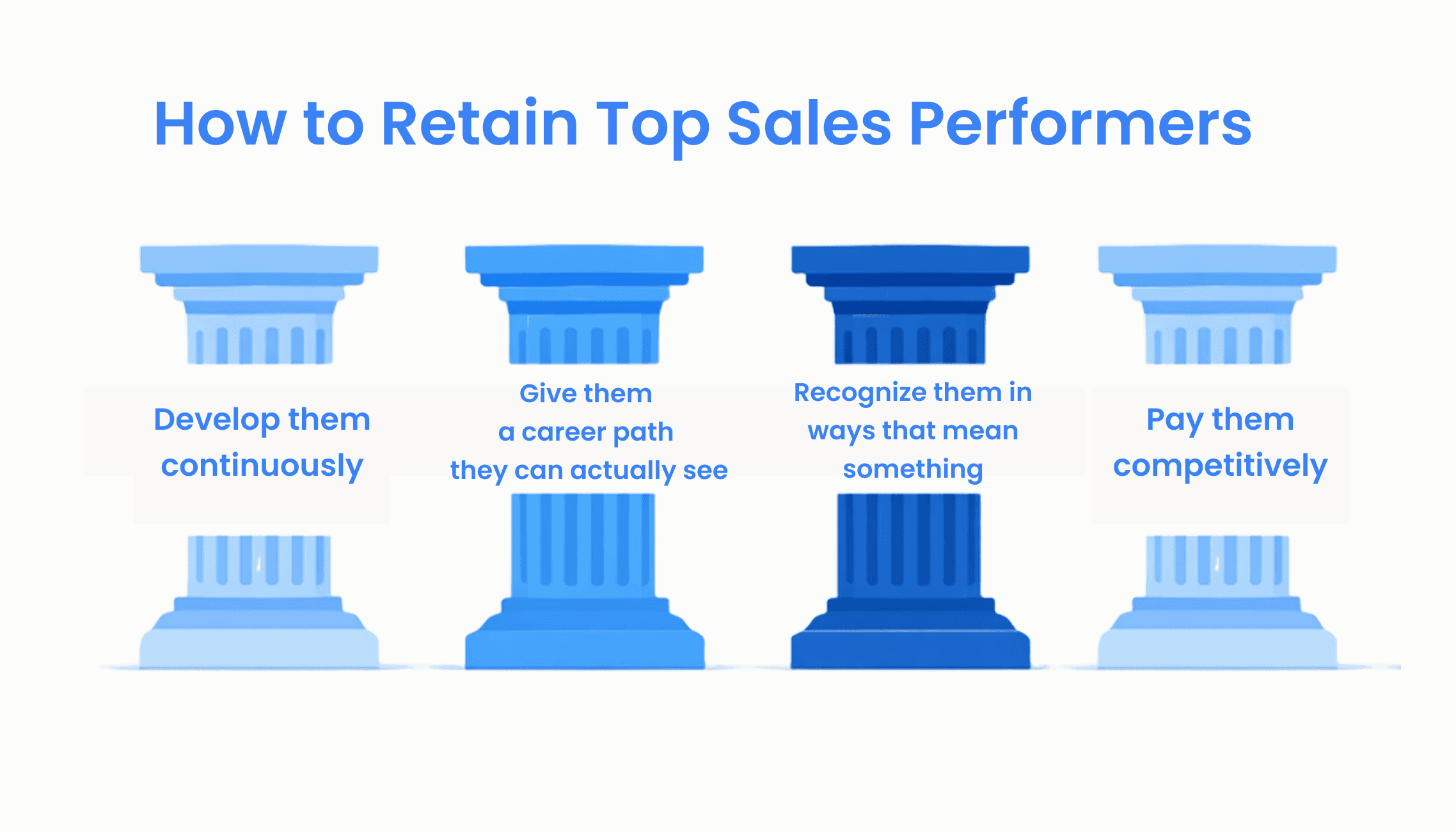
Hire for alignment, not just experience
Retention starts at the offer stage. Reps who genuinely believe in what the company is building stay longer than reps who are just executing for a check. It shows up in how they handle rejection, how they grind through slow months, and how loyal they are when competitors come recruiting.
During interviews, push past the numbers. Ask why this company and not the three others they could have joined. Ask what they're trying to build in their own career over the next five years. The answers tell you whether their ambition lines up with where you're headed, or whether they're treating the role as a stepping stone to something else.
Onboarding is a retention tool, not just a formality
The first 90 days are when reps decide — usually without realizing it — whether they trust this company to invest in them.
Companies that structure onboarding around understanding (who the customer is, what problems are being solved, why deals are won and lost) produce reps who ramp faster and stay longer. Companies that throw new hires into quota-chasing before they have any real clarity tend to lose them by month six.
Freebies
Get our Report about state of onboarding
This report breaks down exactly where the gaps are, what it's costing revenue teams, and what the fastest-ramping organizations are doing differently.
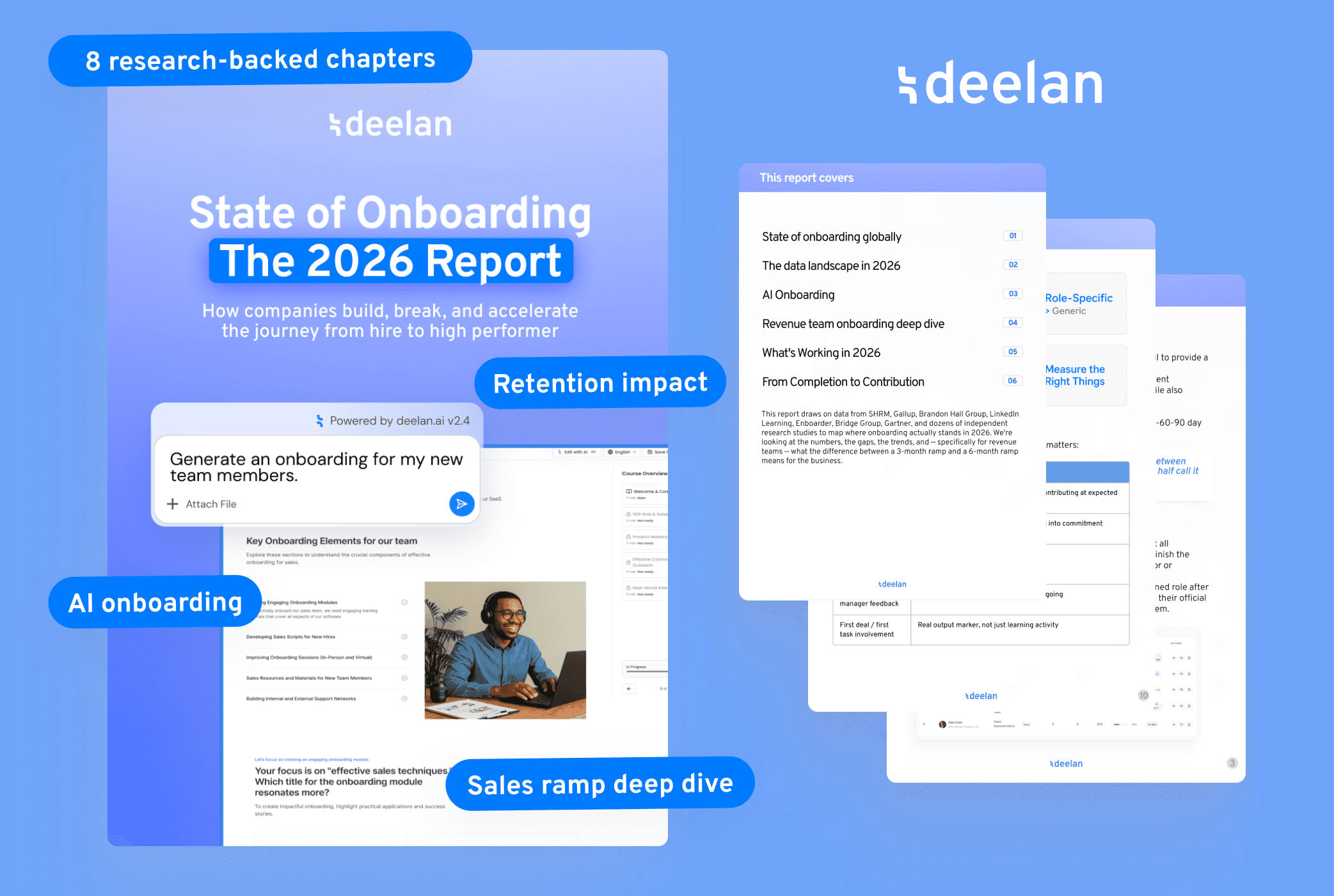
A structured approach works:
use the first month to build confidence and context before revenue pressure kicks in. The second month to build early wins and reinforce good habits. The third month to shift toward independence — coaching the rep to own their outcomes, not just follow instructions.
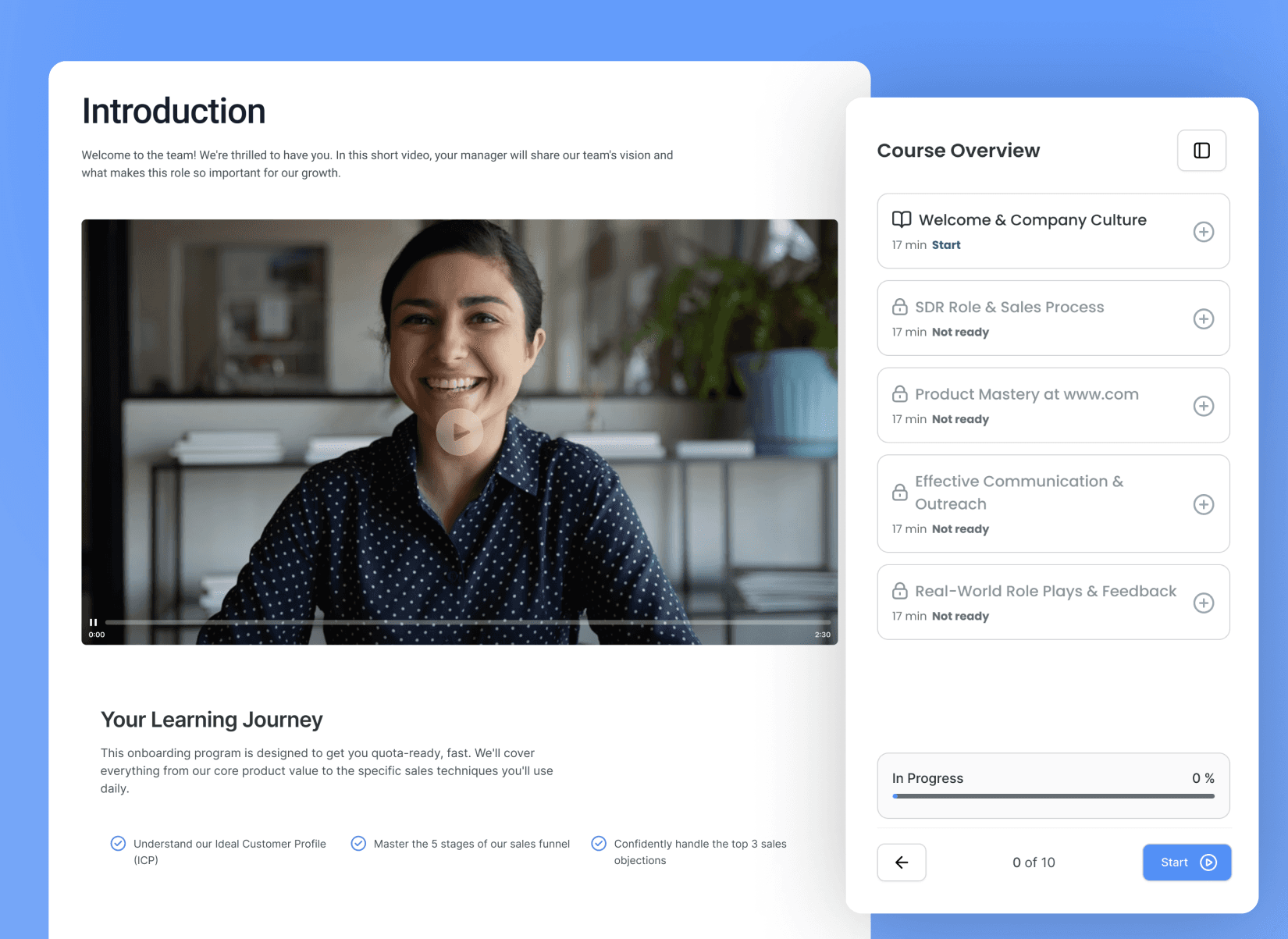
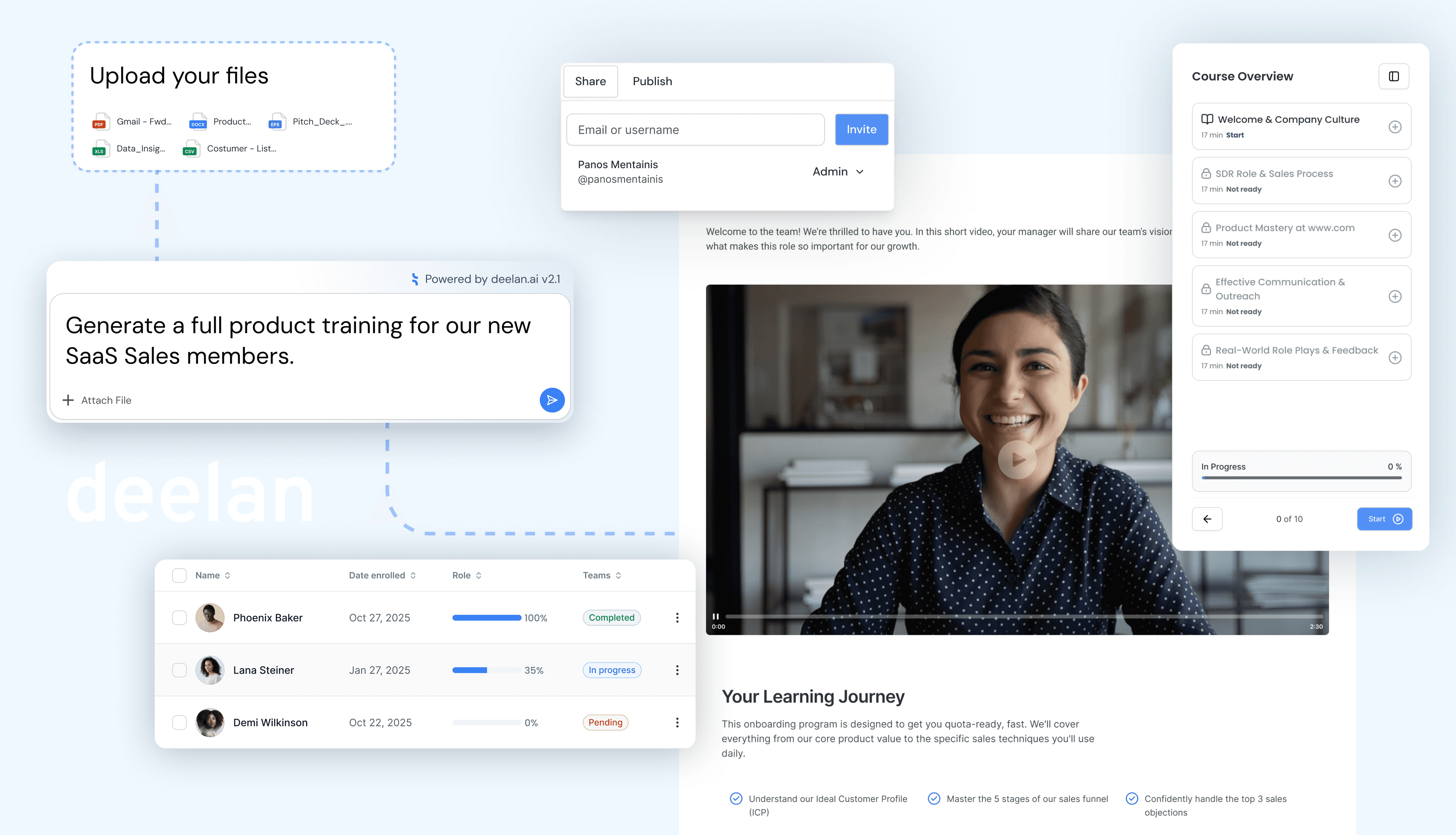
Deelan AI let teams build structured onboarding programs from existing playbooks, call recordings, and product docs — so the experience is consistent whether you're onboarding one person or ten, without a dedicated team to hold it together.
Develop them continuously, not just at the start
Here's a counterintuitive thing that experienced sales leaders eventually figure out: the best way to retain top performers is to invest in making them so good they could leave.
When reps feel like their skills are growing and their manager genuinely cares about their development, they don't want to leave. They know how rare that is.
Ongoing training matters. Real skill development tied to where each rep is actually struggling. A rep who loses deals in discovery needs different practice than one who falls apart in final negotiations.
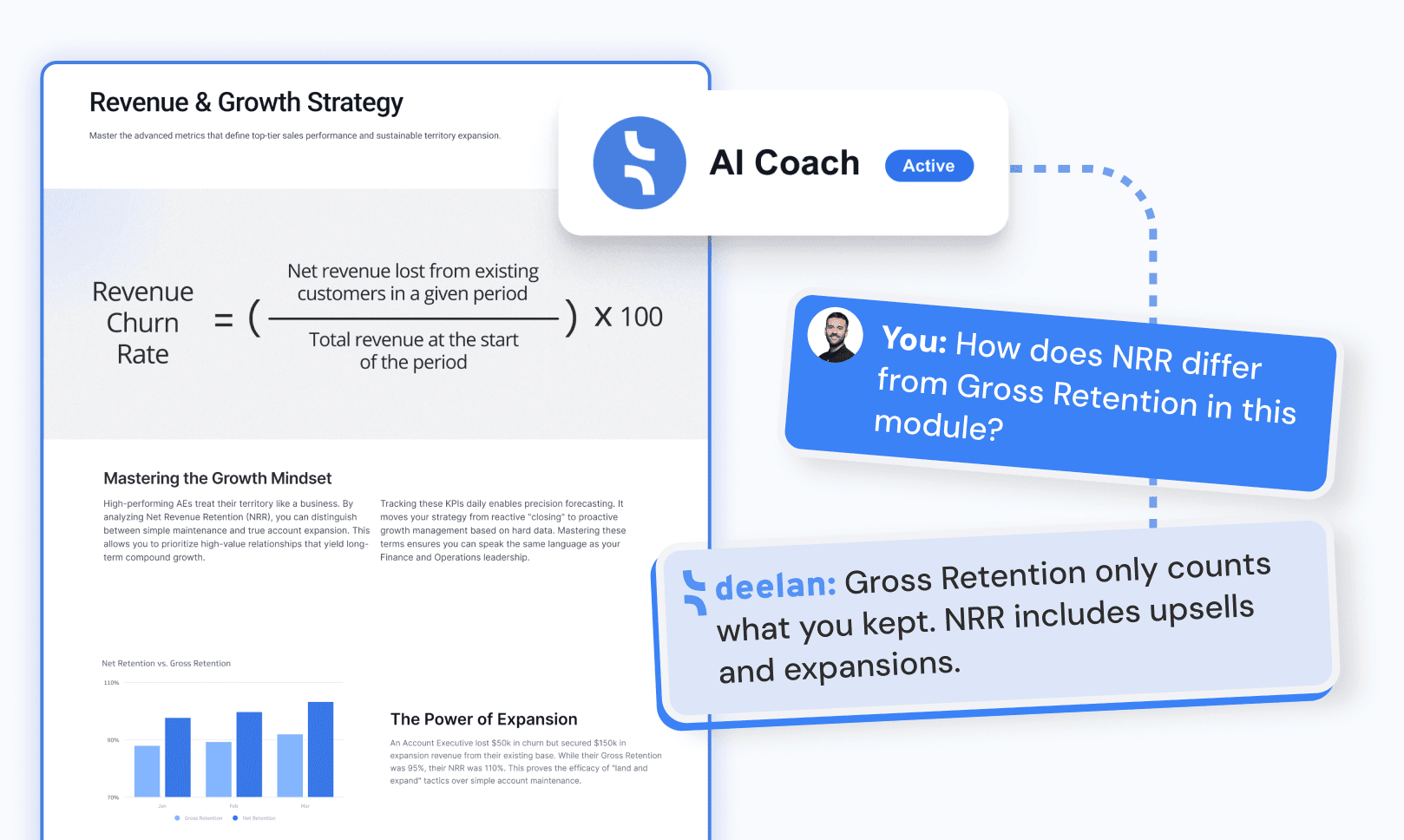
The reps who grow fastest get targeted input on their real gaps, regular feedback on actual calls, and opportunities to practice before it costs them real deals. AI roleplay simulations have become a practical tool for this — reps can practice objection handling or difficult discovery calls without burning live prospects, and the feedback is immediate.

Give them a career path they can actually see
Top performers want to know what's next — whether that's a path into management, a senior individual contributor role, a specialized function like RevOps or enablement. If you can show them that future clearly, and connect today's performance to tomorrow's opportunity, the next recruiter call becomes a lot less tempting.
If you can't show them a path, they'll build their own — somewhere else.
Recognize them in ways that mean something
Public recognition for big wins matters. So does the private conversation where a manager says "I saw how you handled that objection last week and I want to talk about it."
Reps who feel seen — not just for their number but for how they're developing — are more likely to stay through the hard stretches.
Protect their time and give them autonomy
Micromanagement is one of the fastest ways to lose a high performer.
Reps who consistently hit their numbers don't need someone looking over their shoulder. They need someone clearing obstacles and trusting them to execute.
Good managers also protect their reps from the things that waste time: repetitive coaching sessions for the same questions, unclear messaging that makes every call harder, admin overhead that pulls them out of selling.
When you see managers spending 15+ hours a week answering the same questions from the team, that's usually a sign the training infrastructure isn't built well enough to hold the knowledge.
Pay them competitively
Compensation isn't the whole story, but underpaying people or changing the terms after the fact is a fast path to losing them. Top reps know the market, and they know when they're being undervalued.
Review comp regularly against market rates, keep commission structures clear and stable, and never quietly shrink a territory or adjust quota in a way that punishes performance.
The Secret of Companies with Low Sales Turnover
They hire people whose ambitions line up with the company's direction.
They structure onboarding as a real investment, not a checkbox.
They coach and develop reps continuously, not just when performance drops.
And their managers actually talk to people about where they want to go.
If your onboarding is inconsistent, your training is manual, or your managers are stuck repeating the same coaching conversations, Deelan can be a fix to these problems. It turns what you already have — playbooks, call recordings, product docs — into structured, adaptive training your team actually uses.
Book a free demo and see what your ramp and retention could look like with a real training system behind it.