

A sales rep can walk into a meeting with the right deck, the right numbers, and the right product knowledge - and still lose the deal.
A rep may explain the product well, but fail to read the room. They may answer questions, but not build trust. They may present clearly, but not make the buyer feel understood. And that is often what separates a technically correct pitch from a persuasive one.
The good news is that these skills can be trained.
This guide covers 12 essential sales soft skills and, more importantly, how to train them in ways that actually stick. You will find practical methods, role-play ideas, workshop exercises, coaching techniques, and ways AI sales training can make practice more consistent.
12 essential soft skills sales teams should train
Soft skill | Example | Best training methods | Example exercise or role play |
|---|---|---|---|
Active listening | Reps ask thoughtful follow-up questions and do not jump to pitching | Call reviews, listening scorecards, role plays | Prospect shares a vague pain point; rep must uncover root causes |
Communication clarity | Reps explain value simply and confidently without jargon | Message workshops, recorded practice, peer feedback | Explain the offer to a buyer in under 60 seconds |
Empathy | Reps acknowledge concerns without sounding scripted | Role plays, reflection drills, manager coaching | Buyer is frustrated with current vendor; rep must respond constructively |
Emotional intelligence | Reps read tone, tension, hesitation, and adjust their approach | Simulations, manager debriefs, self-review | Rep handles a defensive prospect without escalating pressure |
Adaptability | Reps shift their questions or positioning when the conversation changes | Scenario-based training, workshop practice | Buyer changes priorities mid-call and rep must pivot |
Curiosity | Reps explore context instead of settling for surface-level answers | Discovery coaching, peer exercises | Ask layered discovery questions to uncover hidden blockers |
Confidence | Reps stay composed and clear under pressure | Rehearsal, objection drills, recorded practice | Rep handles a tough objection without rushing or discounting |
Resilience | Reps learn from losses and keep quality high after rejection | Coaching, journals, team debriefs | Review a lost deal and identify better next moves |
Critical thinking | Reps connect customer needs to tailored solutions | Case-based training, deal reviews | Build a recommendation for a complex multi-stakeholder deal |
Negotiation | Reps protect value while exploring win-win options | Negotiation workshops, simulations | Buyer asks for a 20% discount and rep must respond strategically |
Relationship building | Reps create trust over time, not just in one call | Account planning, follow-up reviews | Design a multi-touch relationship plan for a key account |
Time management and prioritization | Reps spend more time on high-value actions | Planning reviews, coaching, self-assessment | Rework a chaotic weekly schedule around pipeline priorities |
Want ready-made training exercises for these skills?
The Deelan Academy includes free courses, roleplays, and assessments designed to improve active listening, discovery, objection handling, communication, negotiation, and buyer psychology.
Popular resources include:
• The Art of the Discovery Call
• How to Handle Any Objection
• Reading the Room: Buyer Psychology
• Run a Discovery Call Live
• Adapt on the Fly: Live Buyer Call
1. Active listening
In real sales conversations, active listening looks like slowing down, picking up on what the buyer actually means, and asking follow-up questions that deepen the conversation. The rep is not waiting for their turn to speak; they are gathering signals that improve discovery, objection handling, and positioning.
Weak active listening usually shows up when reps interrupt, miss important details, or repeat the same generic questions on every call. You can also spot it in discovery calls where the rep leaves with plenty of notes but very little insight.
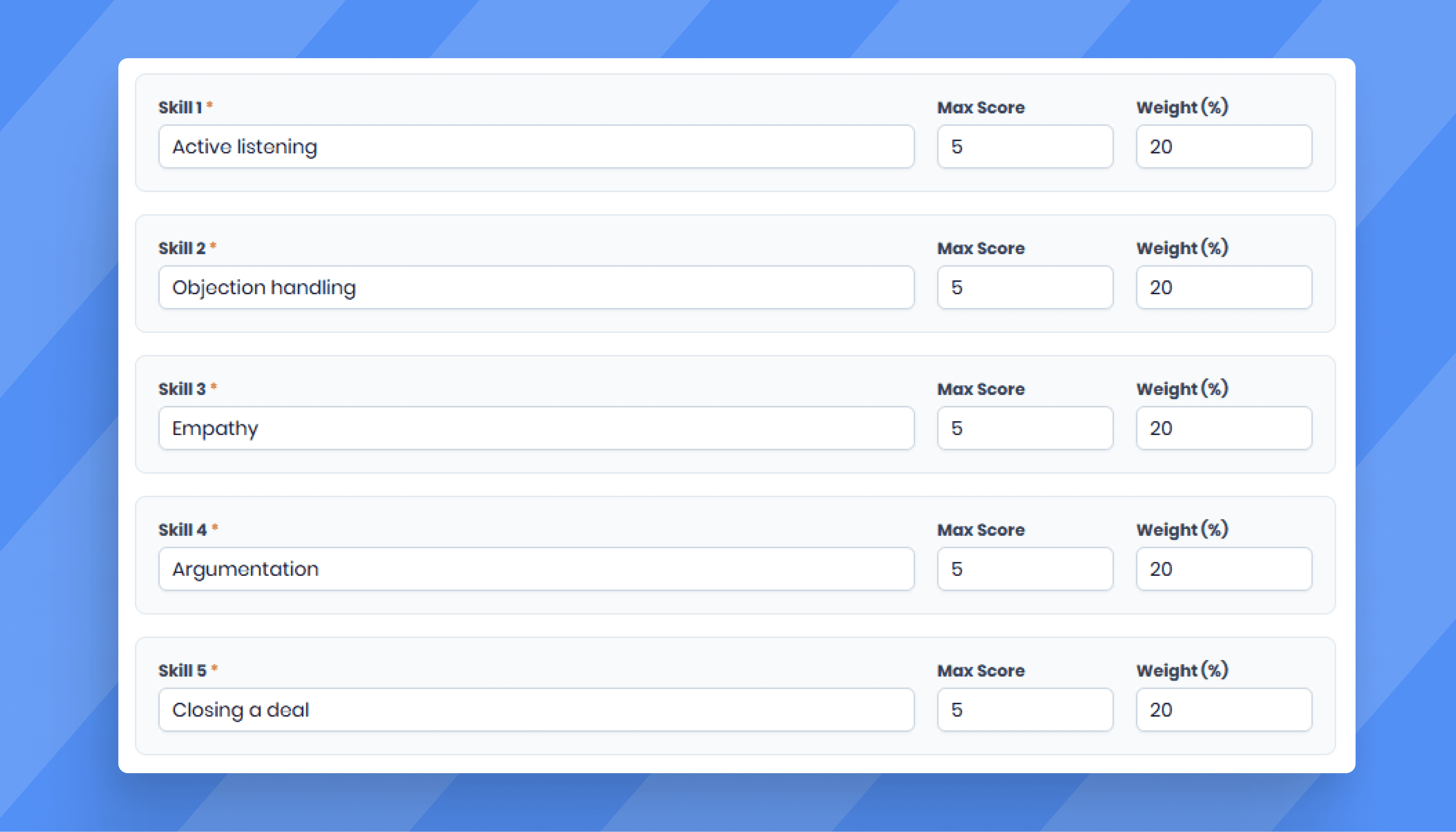
The best training methods are call reviews, role plays, and scorecards focused on listening behaviors. In role-play practice, you can customize scoring around active listening, empathy, emotional intelligence, and other soft skills, then review performance over time to show progress instead of relying on guesswork.
Example exercise: Run a discovery role play where the prospect gives incomplete answers like, “Our current process is slow and causing issues.” The rep’s goal is not to pitch, but to uncover the business impact, emotional stakes, and internal blockers through better listening.
2. Communication clarity
Strong communication means explaining value in plain language, adjusting to the audience, and staying concise. Great reps make complex ideas feel easy to understand, whether they are speaking to a founder, a VP of Sales, or a procurement lead.
This skill is weak when reps over-explain, rely on jargon, or speak in a way that sounds polished but unclear. If buyers often ask, “Can you explain that another way?” the issue is usually not product knowledge alone but communication clarity.
Train it through message workshops, recorded talk-track practice, peer feedback, and manager review. One useful workshop format is to ask reps to explain the same value proposition to three different buyer personas and then compare how well they adapted.
Example exercise: Ask each rep to answer, “What do you actually help companies improve?” in under 45 seconds. Then coach for clarity, simplicity, and relevance.
3. Empathy
Empathy in sales does not mean being soft. It means showing that you understand the buyer’s situation, pressure, and hesitation before moving the conversation forward. That is what makes buyers feel heard rather than handled.
When empathy is weak, reps move too quickly to solutions, dismiss concerns, or sound like they are following a script. Buyers may respond politely, but the conversation stays shallow and trust never fully develops.
The best training methods include role plays, call analysis, shadowing top reps, and reflection drills. During role-play sessions, managers can score empathy separately from communication so reps can see whether they acknowledge concerns or simply move past them.
Example exercise: Create a scenario where the prospect says, “We’ve already tried something similar and it did not work.” The rep must respond with curiosity and empathy before discussing the offer.
4. Emotional intelligence
Emotional intelligence helps reps read the room. It shows up when they notice tension, defensiveness, hesitation, excitement, or confusion and adjust how they respond.
Weak emotional intelligence often appears when reps push too hard, miss nonverbal or tonal cues, or keep using the same energy level regardless of what the buyer is signaling. That can turn a salvageable conversation into a lost one.
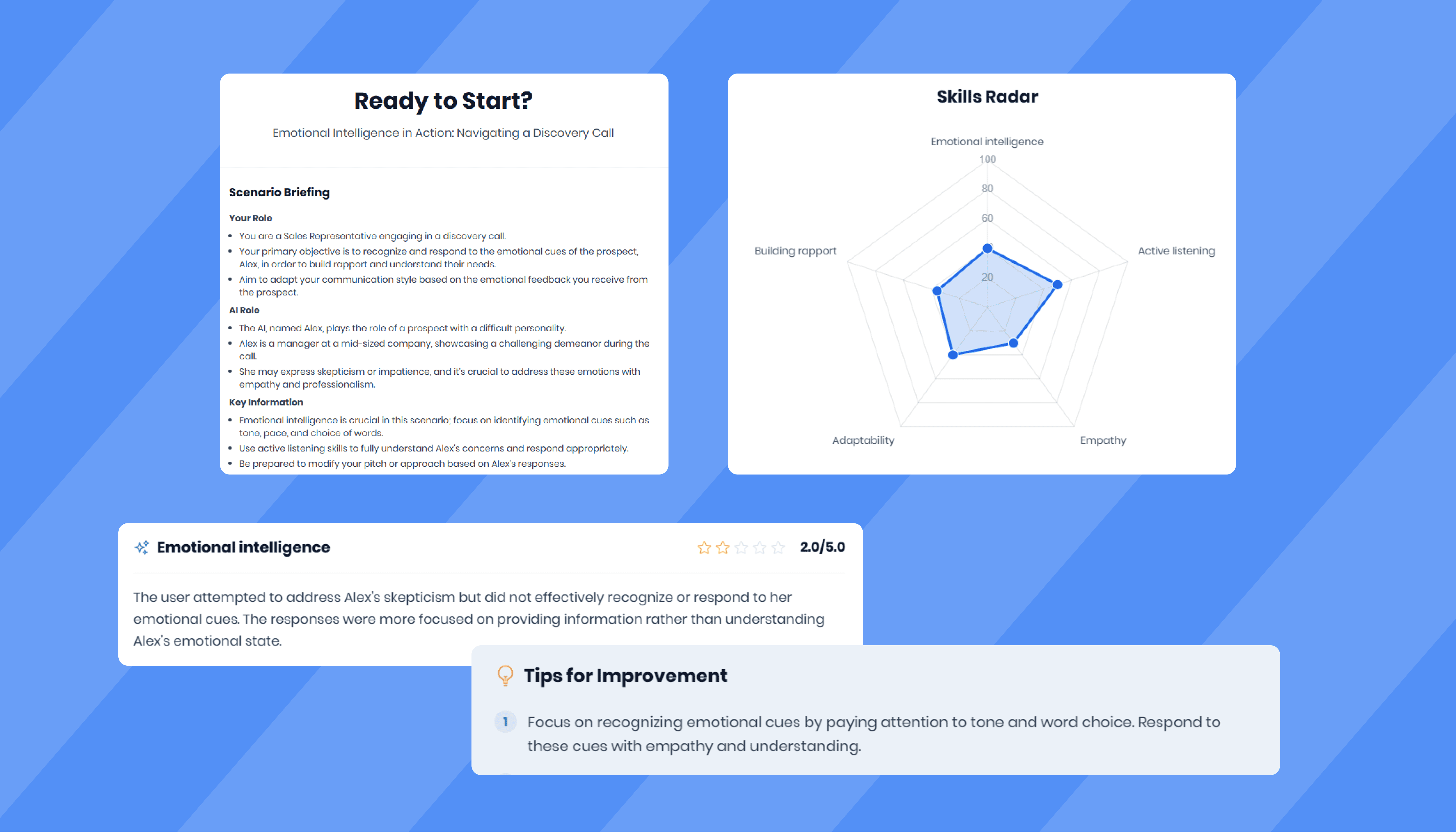
Train this skill through simulation practice, recorded call reviews, coaching debriefs, and self-assessment. AI sales training can be especially useful here because it allows reps to repeat conversations and receive feedback on emotional cues, pacing, interruptions, and tone.
Example exercise: Role-play a late-stage pricing conversation where the buyer becomes guarded and brief. The rep must recognize the shift and change their approach instead of continuing with the same script.
5. Adaptability
Adaptability matters because sales conversations rarely go exactly as planned. Buyers bring unexpected objections, shift priorities, invite new stakeholders, or focus on different pain points than expected.
This skill is weak when reps cling to the script, force the same message into every call, or struggle to recover when a conversation moves in a new direction. You often see it when a rep has a strong opener but weak follow-through once the buyer goes off-script.
Train adaptability with branching role plays, workshop scenarios, and real-call analysis. Give reps multiple versions of the same sales conversation so they learn to pivot based on what they hear.
Example exercise: In a role play, the buyer starts interested in efficiency, then reveals their real concern is risk and internal adoption. The rep must adapt the conversation in real time.
6. Curiosity
Curiosity is what separates surface-level discovery from meaningful discovery. Curious reps want to understand the business context, internal dynamics, timing, and unspoken concerns behind the first answer.
When curiosity is missing, reps ask standard questions but stop too soon. They collect information without uncovering what really drives urgency or blocks action.
The best training methods are discovery workshops, question-building exercises, peer feedback, and deal reviews. A good coach will not only ask, “Did you ask enough questions?” but also, “Were they the right questions?”
Example exercise: Give reps a simple buyer statement such as, “We need better reporting.” Their job is to ask five follow-up questions that reveal strategic context, not just technical requirements.
7. Confidence
Confidence in sales is not about being loud. It is about sounding steady, credible, and composed, especially when conversations get harder. Buyers notice quickly whether a rep believes in their message.
Weak confidence often shows up as rushed talking, over-explaining, unnecessary discounting, or backing away from hard questions. It can also appear in demos and discovery when the rep loses structure under pressure.
Train confidence through rehearsal, objection handling drills, recorded practice, and coaching. Repetition matters here. The more often reps practice difficult moments, the less likely they are to panic in real ones.
Example exercise: Run a rapid-fire objection workshop where reps respond to common pushbacks such as “This is too expensive” or “We already have a solution” without defaulting to discounts or vague answers.
8. Resilience
Resilience helps reps recover after rejection, poor calls, slow cycles, or lost deals. Without it, even technically strong reps can become inconsistent.
Weak resilience shows up when one bad week affects energy, follow-up quality, or motivation. Managers often notice it in pipeline behavior before they hear it in coaching conversations.
Train resilience with deal debriefs, team reflection routines, coaching, and peer support. This is one of the most overlooked areas in soft skills training for sales team programs because it is often treated as personality rather than a trainable habit.
Example exercise: After a lost opportunity, have the rep complete a structured reflection: what happened, what was in their control, what signal they missed, and what they will test next time.
9. Critical thinking
Critical thinking allows reps to move beyond scripts and make smart decisions in complex deals. It helps them connect information, spot patterns, and shape better recommendations.
This skill is weak when reps rely too heavily on standard messaging, miss stakeholder complexity, or cannot connect the product to the buyer’s actual situation. In practice, they sound informed but not strategic.
Train it through deal reviews, case-based workshops, account planning sessions, and manager coaching. Instead of asking reps to repeat what happened, ask them to explain why the buyer responded the way they did and what they would change.
Example exercise: Give a rep a case with three stakeholders who care about different things. Ask them to build a messaging plan and anticipate likely objections from each person.
10. Negotiation
Good negotiation is not about pushing harder. It is about protecting value, understanding constraints, and finding room for movement without damaging the deal.
Weak negotiation often appears when reps respond to pressure with immediate discounts, vague concessions, or defensiveness. That usually signals weak preparation as much as weak skill.
Train negotiation with structured workshops, role plays, concession planning, and post-call reviews. Use scorecards that track whether the rep explored the reason behind the request, reinforced value, and traded rather than gave.
Example exercise: The buyer asks for a 15% discount and faster implementation. The rep must explore the real issue, re-anchor on value, and negotiate without giving away both points immediately.
11. Relationship building
Relationship building is the ability to create trust over time, not just perform well in one meeting. In modern sales, that often means staying relevant across multiple interactions and multiple stakeholders.
It is weak when reps focus only on the next meeting instead of the broader relationship. Buyers may move forward initially, but engagement drops because trust was never deep enough.
Train it through account planning workshops, follow-up reviews, stakeholder mapping, and manager coaching. Reviewing email follow-ups and meeting recaps can be just as useful as reviewing calls.
Example exercise: Ask reps to build a 30-day relationship plan for a strategic account, including what value they will deliver at each touchpoint and how they will involve multiple stakeholders.
12. Time management and prioritization
In sales, time management is not just productivity. It is the ability to focus on the right accounts, the right follow-ups, and the right preparation at the right time.
Weak prioritization shows up when reps stay busy but not effective. They spend too much time on low-value admin work, weak opportunities, or reactive tasks that do not move deals forward.
Train it through weekly planning reviews, manager coaching, self-assessment, and pipeline audits. This is one area where short self-paced courses and microlearning can reinforce better habits between coaching sessions.
Example exercise: Give reps a packed weekly calendar and pipeline snapshot, then ask them to redesign their week around deal impact, not busyness.
How to build a soft skills training program for a sales team
A strong sales team training program should feel systematic, not occasional.
Start with a skills assessment. You can use the Deelan assessment feature and type soft skill sales assessment to evaluate how reps perform across areas like active listening, empathy, emotional intelligence, adaptability, and communication. This gives you a more structured baseline before you build workshops or coaching plans.
Identify where reps struggle in real conversations. Review discovery calls, demos, follow-ups, and objection handling moments to find patterns. The best training programs are built around real breakdowns, not generic assumptions.
Prioritize by role. SDRs may need stronger listening, curiosity, and confidence. AEs may need more help with negotiation, emotional intelligence, and critical thinking. CSMs and managers may need more relationship-building and communication coaching.
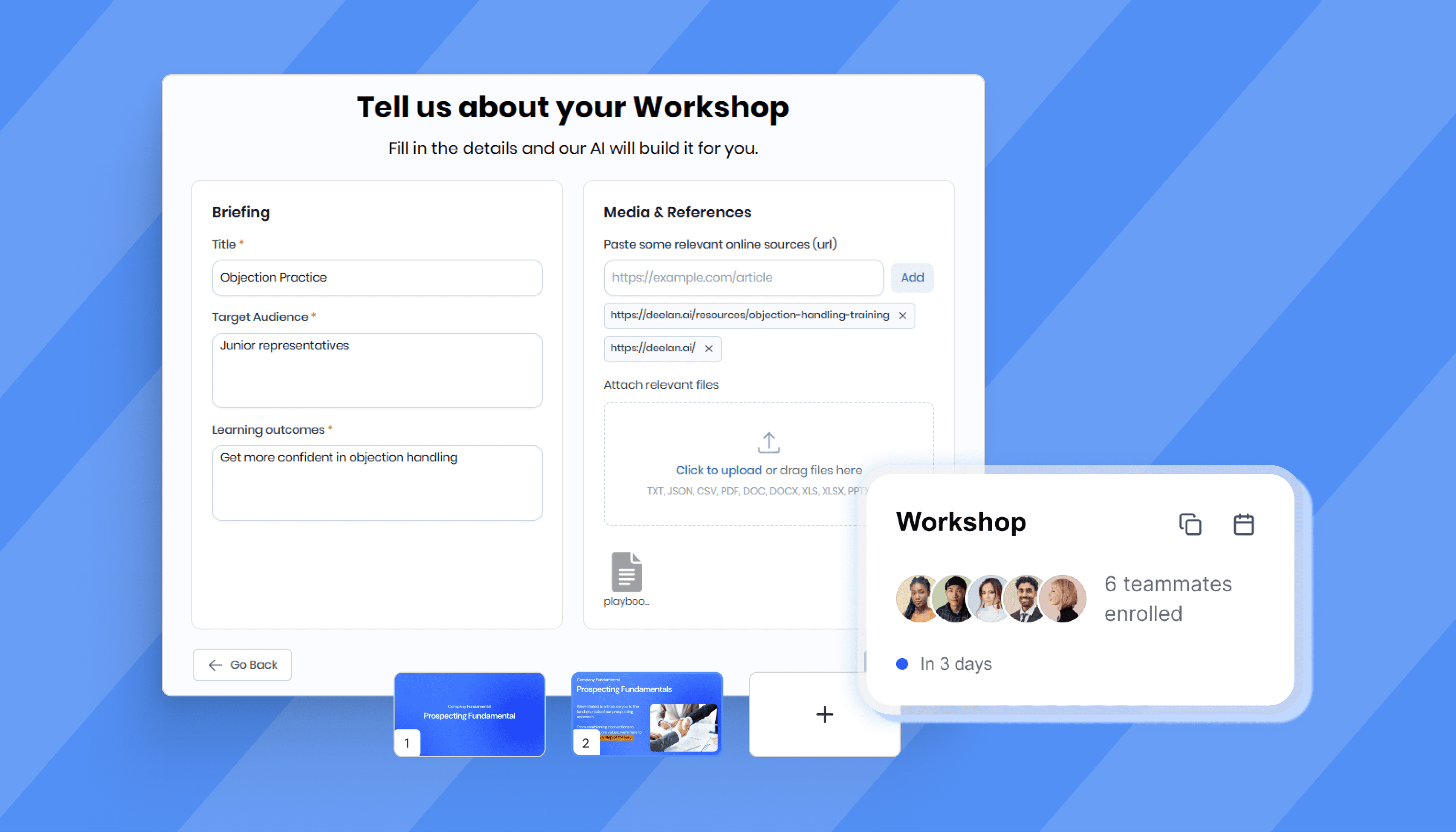
Combine formats instead of relying on one method. Use workshops for frameworks, role plays for practice, coaching for reinforcement, and self-paced microlearning for consistency. That mix usually works better than one-off courses alone. For broader program design ideas, see [how to create an effective employee training program].
Reinforce skills regularly. One session will not change behavior. Build weekly or biweekly practice into team rhythms through call reviews, peer feedback, simulations, and manager debriefs.
Measure progress in visible ways. Use scorecards, manager notes, self-assessments, and role-play reviews so improvement is clear. Skills like empathy, active listening, and emotional intelligence should be reviewed over time, not treated as vague qualities.
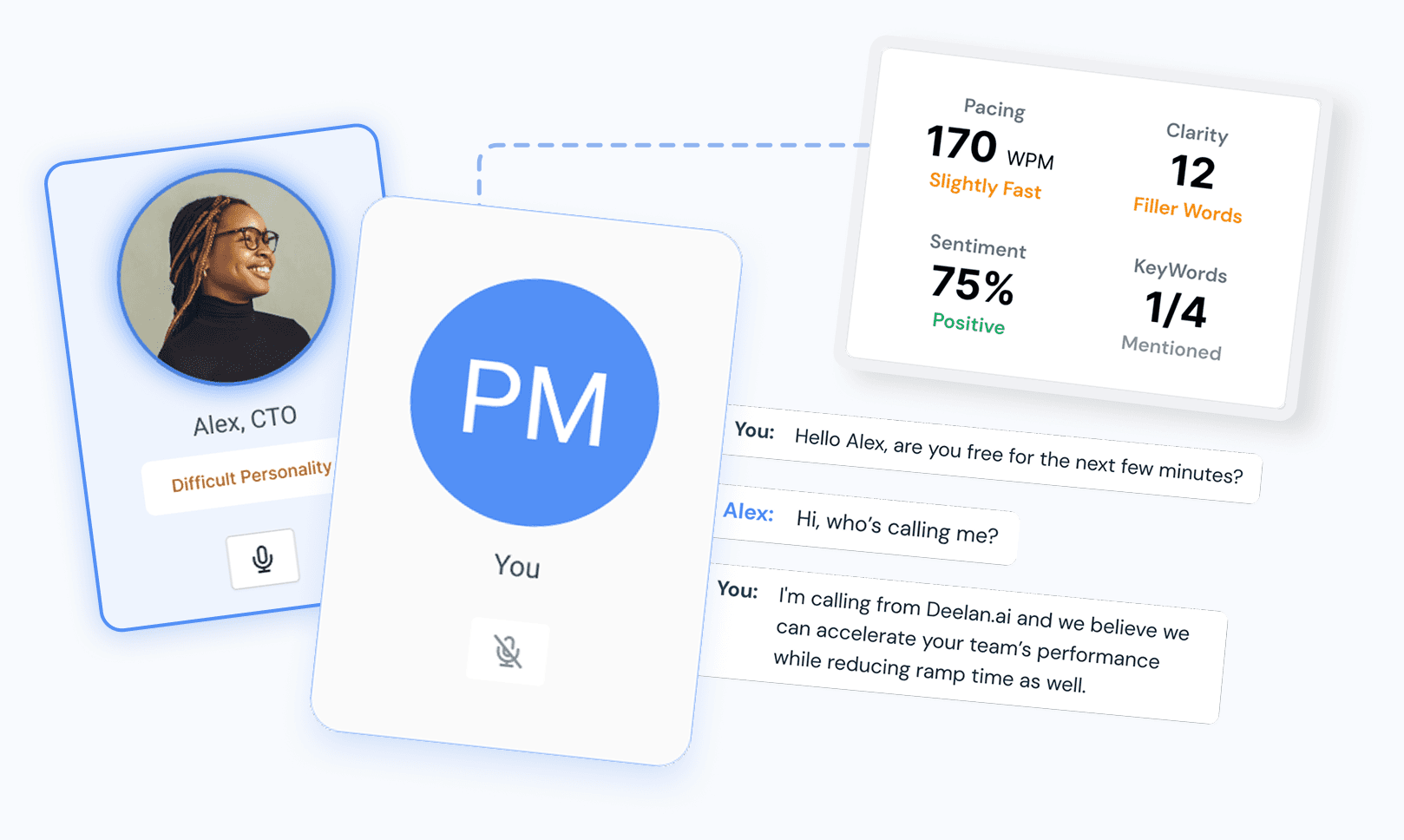
AI training platform for soft skill sales training
Traditional soft skill sales training has a scaling problem. Reps need repetition, but managers do not have unlimited time for live coaching.
Traditional training often creates awareness without enough practice. A workshop may introduce a concept well, but without repetition, most reps return to their old habits quickly.
Managers cannot coach every rep with the same frequency or depth. That creates inconsistency across the team, especially when onboarding new hires or supporting multiple regions.
AI role plays make practice available anytime. Reps can rehearse discovery, objection handling, negotiation, or follow-up conversations without waiting for a manager or peer to be free. If you want to go deeper into that approach, explore [AI roleplay training for sales].
AI can personalize training by role, seniority, product, or sales motion. An SDR does not need the same practice scenarios as an enterprise AE, and a new hire should not train the same way as a top performer.
AI can score soft skills such as active listening, empathy, and emotional intelligence, along with other behaviors. That makes coaching more concrete because managers and reps can review patterns instead of relying on memory.
AI supports continuous coaching, not just onboarding. It helps teams keep training after the first month, which is usually where the biggest gaps start to show.
For teams comparing options, it can also help to review best sales training platforms before choosing how to scale practice and coaching.
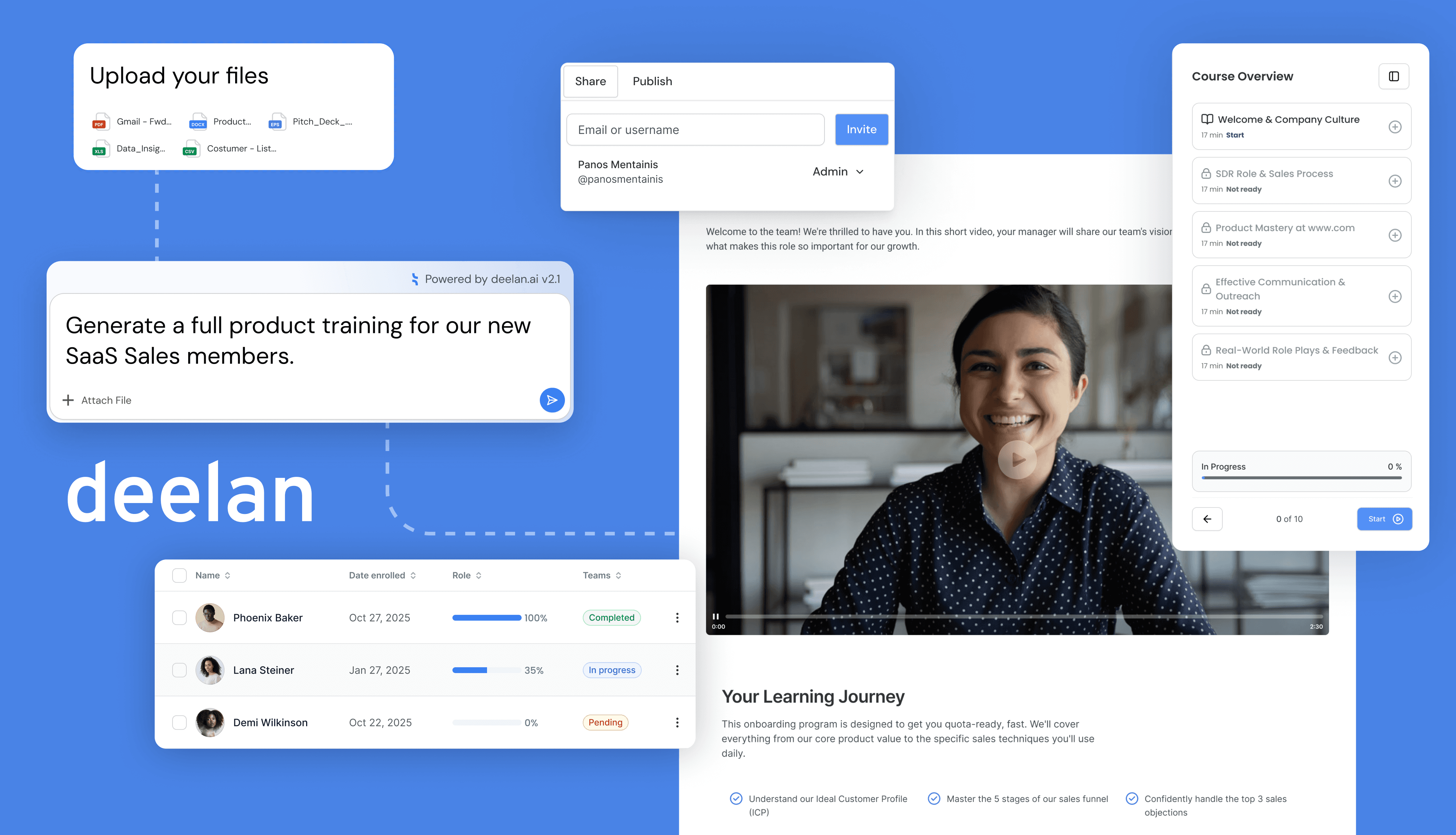
The strongest sales soft skills are not built through theory alone. They develop through repeated practice, targeted feedback, realistic role plays, manager coaching, and consistent reinforcement over time.
If you want better soft skills for sales reps, the goal should not be to run one inspiring workshop and hope for change. The goal should be to create a system where reps can practice, get scored, improve, and repeat.
Ready to improve soft skills training across your sales team?
If your team wants a more practical way to run soft skills training for sales team development, Deelan can help you move faster. Teams use Deelan to create training quickly, run adaptive learning paths by role, and give reps AI role plays to practice real conversations at scale.
With Deelan, you can reinforce skills like active listening, empathy, and emotional intelligence, score performance over time, and scale coaching without overloading managers. Instead of treating soft skills as hard to measure, you can turn them into trainable, repeatable behaviors.
Book a free demo to see how Deelan helps revenue teams ramp faster, improve win rates, and train soft skills more effectively.