AI roleplay training for retail is changing how stores train associates, managers, and customer service teams.
A store associate can practice handling an angry customer. A luxury advisor can rehearse guiding a hesitant buyer. A cashier can train on refund policies before ever stepping onto the shop floor. The AI adapts to the role, customer persona, difficulty level, and learning goals—then evaluates performance instantly.
Why Retail Teams Need AI Roleplay Training
Retail teams face the same challenge everywhere: employees learn in training sessions, but struggle when they face real customers.
Across multiple stores, managers often repeat the same coaching again and again:
How to upsell naturally
How to calm an angry customer
How to explain return policies
How to handle objections without sounding scripted
At the same time, retail brands deal with:
Inconsistent customer experience across locations
Slow onboarding for new associates
Managers spending too much time on repetitive coaching
Difficulty training teams across many stores
No clear visibility into skill gaps
Employees forgetting what they learned after a workshop
Traditional retail role play training helps, but it is hard to scale. In-person practice takes time, depends on the manager running it well, and often gives employees only one or two chances to practice.
AI roleplay training solves this by allowing employees to practice as often as they need.
With AI-generated retail sales role play scenarios, teams can:
Rehearse difficult conversations before they happen
Train for different customer personalities and situations
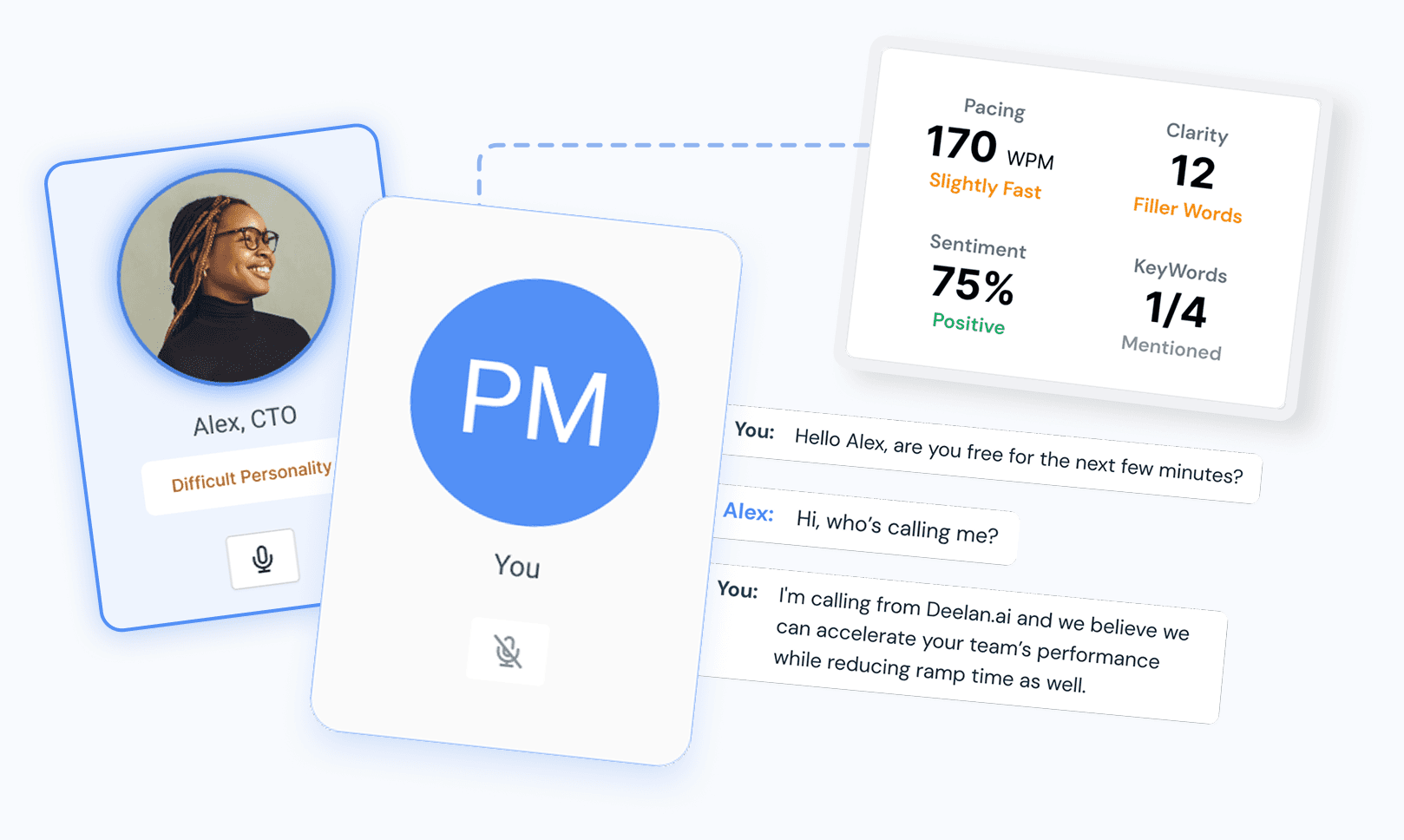
Receive instant feedback after every interaction
Improve confidence and consistency across every store
Personalize learning based on each employee’s strengths and weaknesses
The result is faster onboarding, stronger customer interactions, higher conversion rates, and more effective retail sales coaching.
10 Retail Sales Role Play Scenarios to Practice
1. Upselling and Cross-Selling to the Right Customer
Situation: A customer is buying running shoes and may benefit from socks, insoles, or a premium version.
What the employee must practice: Identifying the right moment to recommend additional products without sounding pushy.
Skills to assess: Product knowledge, upselling ability, timing, confidence, listening skills.
2. Handling an Angry Customer Whose Click-and-Collect Order Is Delayed
Situation: A customer arrives in-store but their click-and-collect order is not ready.
What the employee must practice: Staying calm, showing empathy, explaining next steps, and de-escalating the situation.
Skills to assess: Empathy, communication, conflict resolution, tone, policy knowledge.
3. Managing a Customer Who Refuses to Wait Their Turn
Situation: A customer becomes impatient and interrupts while another customer is being served.
What the employee must practice: Managing the situation respectfully without escalating tension.
Skills to assess: Professionalism, communication, emotional control, customer service.
4. Helping an Indecisive Shopper Make a Decision
Situation: A shopper is comparing products and cannot decide which option to buy.
What the employee must practice: Asking questions, understanding objections, and recommending the best fit.
Skills to assess: Listening skills, product knowledge, objection handling, sales confidence.
5. Responding to Suspected Theft Professionally
Situation: An employee notices suspicious behavior from a customer.
What the employee must practice: Following company procedures while staying professional and avoiding confrontation.
Skills to assess: Policy compliance, professionalism, observation, communication.
6. Handling a Return When the Customer Has No Receipt
Situation: A customer wants a refund but does not have proof of purchase.
What the employee must practice: Explaining store policy clearly while staying empathetic.
Skills to assess: Policy knowledge, communication, empathy, conflict resolution.
7. Answering a Customer With Many Product Questions
Situation: A customer asks detailed questions about product features, materials, warranties, or pricing.
What the employee must practice: Providing accurate answers confidently and clearly.
Skills to assess: Product knowledge, confidence, listening, clarity.
8. Managing a Customer Who Takes Too Long to Decide
Situation: A customer spends a long time asking questions but does not seem ready to buy.
What the employee must practice: Moving the conversation forward while remaining helpful.
Skills to assess: Time management, closing skills, communication, professionalism.
9. Turning Around a Dissatisfied Customer Experience
Situation: A customer complains about poor service or a negative experience.
What the employee must practice: Understanding the issue, apologizing appropriately, and resolving the problem.
Skills to assess: Empathy, active listening, problem-solving, communication.
10. Reassuring a Customer Who Needs Confidence Before Buying
Situation: A customer likes the product but still feels uncertain.
What the employee must practice: Reassuring the customer with information, confidence, and the right tone.
Skills to assess: Listening, empathy, product knowledge, trust-building.
How to Create AI Roleplay Training for Retail in Minutes
Deelan makes it possible to create AI roleplay training for retail in minutes instead of weeks.
Step 1: Upload Existing Knowledge
With Deelan, you can upload:
Retail playbooks
SOPs
Store scripts
Product documentation
PDFs
Google Docs
Notion pages
Confluence pages
Training manuals
Existing workshop notes
Turn your playbooks, Notion files, PDFs, and SOPs into retail training instantly.
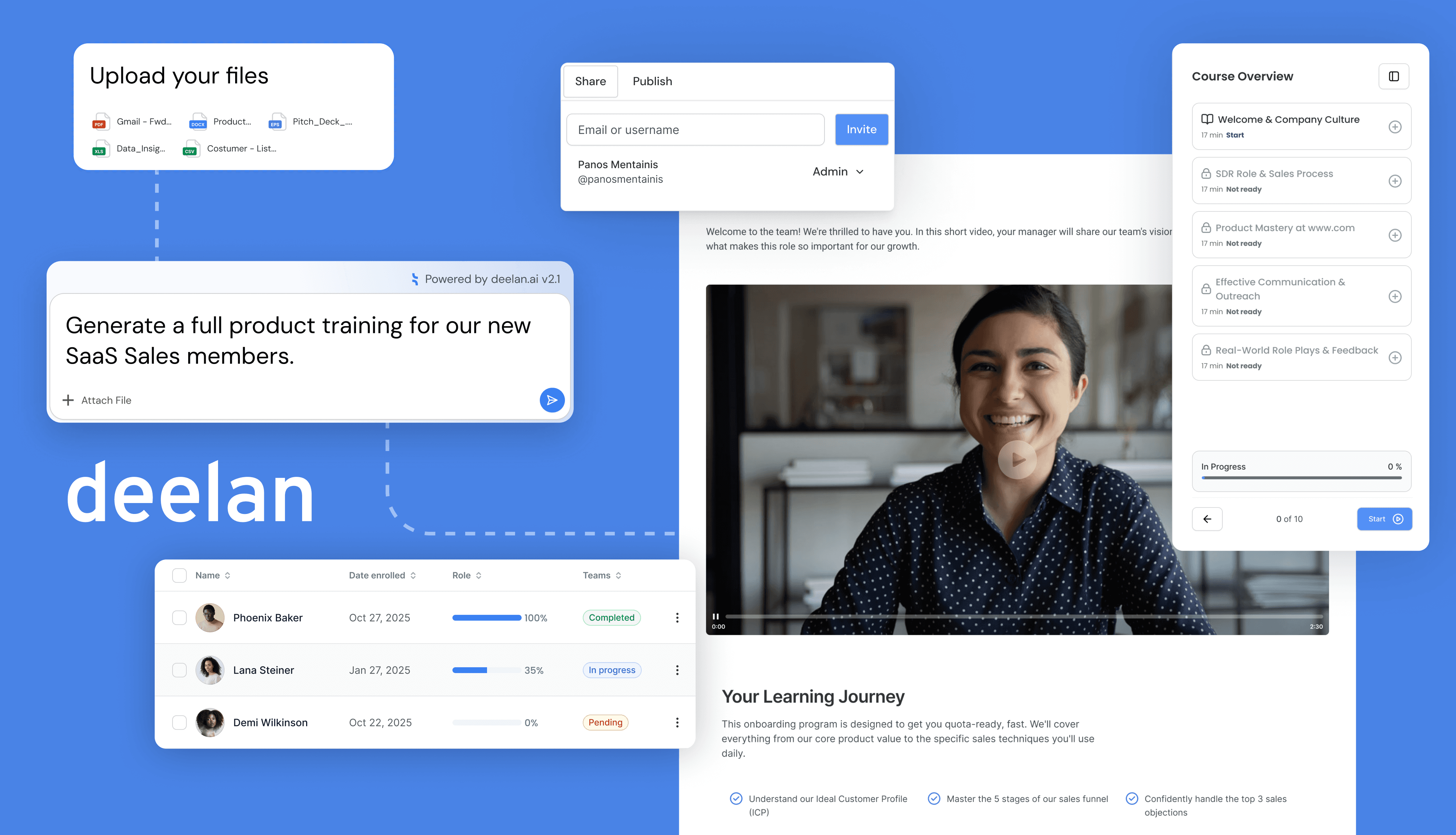
Instead of rebuilding training from scratch, Deelan transforms your existing knowledge into AI roleplays, courses, workshops, and assessments.
Step 2: Generate Training From a Prompt or Template
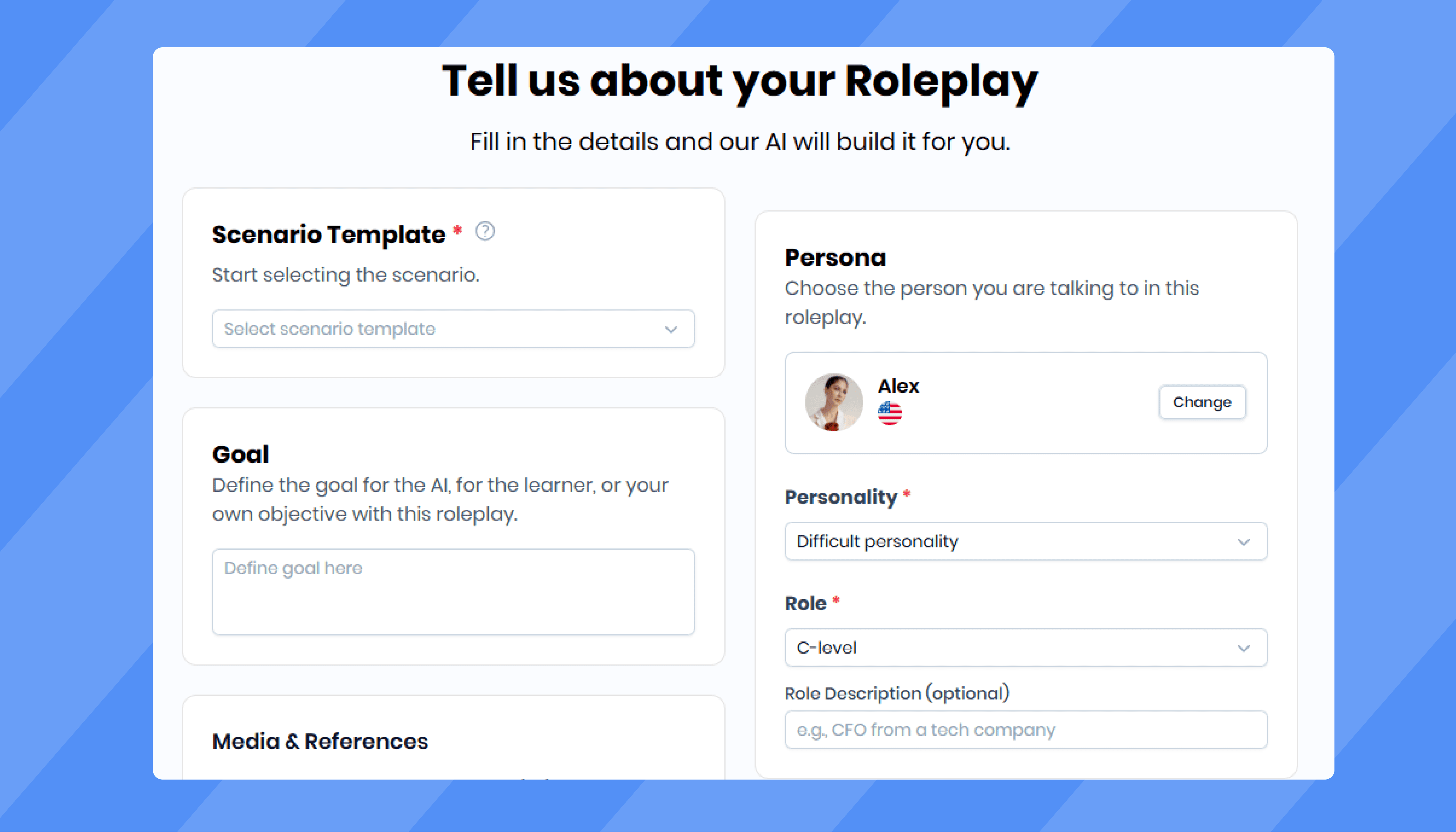
Once your content is uploaded, managers can create role-based retail sales role play scenarios with a simple prompt or template.
For example:
“Create a scenario where a store associate handles an angry customer whose order is delayed.”
“Generate a luxury retail advisor roleplay with a hesitant buyer comparing two products.”
“Create a cashier scenario for a customer requesting a refund without a receipt.”
“Generate an electronics associate roleplay where the customer compares two similar products.”
Managers can:
Write a short prompt
Start from a template
Select a retail scenario
Choose the employee role
Choose the customer persona
Select the difficulty level
Define the desired learning outcomes
Deelan supports role-based training for:
Store associates
Store managers
Supervisors
Customer service representatives
Luxury retail advisors
Electronics sales teams
Step 3: Personalize the Training Experience
Deelan adapts each training session based on the employee’s role, experience level, and previous performance.
A new associate may start with basic customer service scenarios. A more experienced employee may receive advanced situations with difficult objections, upselling opportunities, or demanding customers.
This adaptive approach helps every employee practice exactly what they need most.
Step 4: Track, Evaluate, and Improve Performance
After each roleplay, Deelan automatically evaluates the employee’s performance.
The platform:
Scores performance
Gives instant feedback
Identifies skill gaps
Recommends the next training activity
Tracks improvement over time
Traditional LMS vs Deelan AI
Traditional LMS | Deelan AI |
|---|---|
Static courses | AI-generated roleplays |
Generic training | Role-based training |
One-size-fits-all content | Adaptive difficulty |
No feedback after completion | AI evaluation and coaching |
No visibility into skill gaps | Skill-gap tracking |
Takes weeks to build | Ready in minutes |
Tracks completion only | Tracks real performance |
Instead of choosing between different systems, retail teams can manage everything in one place:
Evaluate Roleplay Retail Employee Performance
The value of AI roleplay training is not only practice - it is knowing exactly how employees performed.
After every scenario, Deelan evaluates employees based on many criteria. Deelan identifies the gaps automatically and recommends the next best training.
Managers can see:
Team-wide trends
Store-by-store performance
Which employees need more coaching
Which skills are improving over time
Which locations are struggling with specific scenarios
This makes retail sales coaching more targeted and more effective.
Instead of guessing where employees need support, managers get clear, measurable insights.
Why Retail Brands Choose Deelan
Retail brands choose Deelan because it reduces manual work while improving employee performance.
Instead of spending weeks building training or relying on inconsistent coaching across stores, teams can generate structured, adaptive learning experiences in minutes.
Deelan helps retail brands:
Train employees faster
Improve consistency across locations
Reduce the time managers spend coaching
Identify skill gaps earlier
Deliver better customer experiences
Ready to Build AI Roleplay Training for Retail?
You already have the knowledge your team needs. It is sitting in your playbooks, SOPs, Notion pages, PDFs, scripts, and workshop notes.
Deelan helps you turn that content into AI roleplay training for retail in minutes.
Upload your retail playbooks, Notion files, SOPs, or PDFs. Generate roleplays, courses, and assessments instantly. Track employee performance, identify skill gaps, and scale retail sales coaching across every location.
Book a free demo and see how Deelan can turn your retail training into measurable performance.