The average B2B sales team now runs 13 different tools. Yet 70% of reps still missed quota in 2024. More software hasn't solved the problem — and for most organizations, it has made it worse.
What you'll find here: a practical breakdown of six tool categories, a comparison of top platforms in each, an honest evaluation framework, and a deep look at Deelan — the AI training platform purpose-built for revenue teams.
Why AI Alone Won't Fix Your Sales Results
AI tools are everywhere in sales right now. And the best ones genuinely do deliver. They save hours of research, automate repetitive outreach, and surface deal risks before they become losses.
But here is the problem: according to MIT's 2025 research, 95% of companies see zero measurable bottom-line impact from their AI spending. The tools get bought. The demos impress. The contracts get signed. And then the results don't follow.
The reason is almost never the technology itself. It's the people using it.
A rep who can't run a discovery call won't suddenly become effective because their emails are AI-personalized. An SDR who doesn't know how to handle objections won't close more meetings just because they have better intent data. Automation scales activity — it doesn't fix skill gaps.
Tools automate processes. Training improves people. You need both.
The most important investment a revenue leader can make is in the capability of their team. Every tool in your stack performs better when reps know how to use the intelligence it surfaces, execute the conversations it sets up, and handle the objections it flags.
The 6 Categories of AI Tools for B2B Sales
Not all AI sales tools do the same thing. Understanding the six categories prevents the most common buying mistake: treating every tool as interchangeable, or buying them in the wrong order.
1. Account Intelligence & Research
These tools monitor external signals — leadership changes, funding rounds, earnings language, hiring patterns — to tell reps which accounts to prioritize and why. This is the foundational layer that makes every downstream tool more effective.
2. Prospecting & Lead Generation
Contact discovery platforms that use firmographic, technographic, and intent data to build and prioritize prospect lists. They answer 'who to contact' — not 'what to say' or 'why now.'
3. Conversation Intelligence
Tools that record, transcribe, and analyze sales calls to surface winning behaviors, flag objection patterns, and generate coaching insights from real conversations at scale.
4. Sales Engagement & Outreach Automation
Multi-channel sequence platforms that automate email, phone, and social outreach. AI enhancements include send-time optimization, personalization, and adaptive cadence management.
5. Revenue Forecasting & Pipeline Intelligence
AI-driven deal prediction and pipeline health tools that analyze deal progression patterns to predict close likelihood and flag at-risk opportunities before they slip.
6. Sales Training & Coaching
The most underrated category in the stack. These platforms improve the people executing every other tool — delivering role-specific training, AI-powered roleplays, adaptive coaching, and onboarding that actually reduces ramp time.
Category | What It Does | Best For | Key Tools |
Account Intelligence | Research + signals | Pre-call prep | Salesmotion, 6Sense |
Prospecting | Contact discovery | List building | Apollo, ZoomInfo, Clay |
Conversation Intelligence | Call analysis | Post-call coaching | Gong, Fireflies |
Sales Engagement | Outreach automation | SDR sequences | Outreach, Instantly |
Forecasting | Pipeline health | RevOps + leadership | Clari, HubSpot |
Training & Coaching | Rep development | Entire revenue team | Deelan, Highspot, Seismic |
The 6 Best AI Tools for B2B Sales in 2026
One standout platform per category. Evaluated on operational impact, integration depth, and measurable outcomes — not feature counts or demo quality.
1. Salesmotion — Account Intelligence
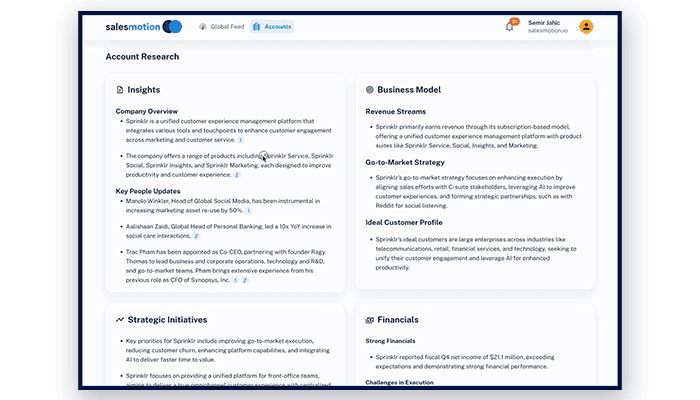
Salesmotion monitors 1,000+ sources to generate one-click account briefs, replacing hours of manual pre-call research. It continuously surfaces buying signals, leadership changes, and strategic initiatives across a rep's entire territory.
Key features:
• Real-time signal monitoring across 1,000+ external sources
• One-click account briefs for pre-call preparation
• Buying window detection based on strategic triggers
• Proactive alerts delivered automatically
• Native CRM integration (Salesforce, HubSpot)
Best for: B2B teams managing strategic accounts where preparation quality directly impacts win rates.
Pricing: Starts at $85/month. Enterprise plans available.
• Pros: Cuts research from hours to minutes per account
• Foundational layer that improves every downstream tool
• Cons: Not a contact database — needs pairing with a prospecting tool
• Intelligence without trained reps acting on it is still shelfware
2. Apollo.io — Prospecting & Lead Generation
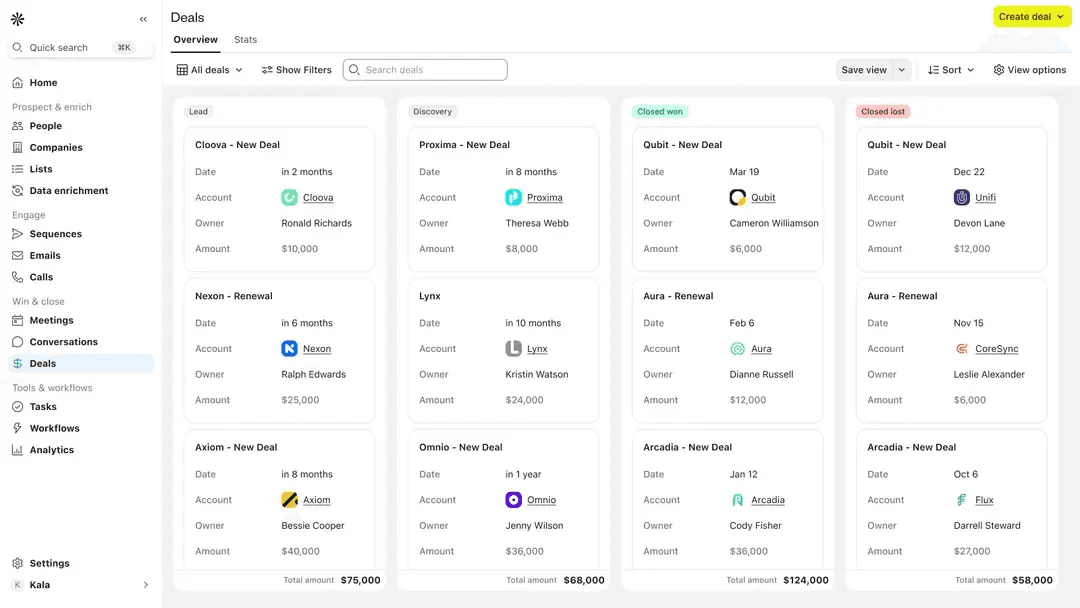
Apollo combines a B2B database of 275M+ contacts with enrichment, intent signals, and outreach automation in one platform. SDR teams use it to build targeted lists, verify contact data, and launch multi-channel sequences without switching tools.
Key features:
• 275M+ verified B2B contacts with firmographic and technographic filters
• AI-powered lead scoring based on intent and ICP match
• Email, LinkedIn, and call sequences in one workflow
• Real-time email verification to protect sender reputation
• CRM sync with Salesforce, HubSpot, and Pipedrive
Best for: SDR teams and outbound-heavy orgs building and prioritizing prospect lists at scale.
Pricing: Free plan available. Paid plans from $49/month per user.
• Pros: All-in-one: prospecting, enrichment, and outreach in one platform
• Strong ICP filtering across firmographic and technographic data
• Cons: Contact data decays — 30% accuracy loss within a year industry-wide
• Shallow strategic context: tells you 'who,' not 'why now'
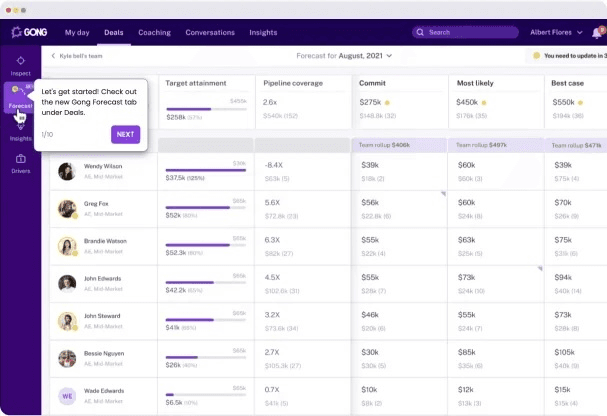
3. Gong — Conversation Intelligence
Gong records, transcribes, and analyzes every customer-facing conversation — calls, emails, and meetings. Its AI identifies winning behaviors, tracks competitor mentions, and generates coaching recommendations from patterns across hundreds of calls.
Key features:
• AI transcription and analysis of calls, emails, and meetings
• Winning behavior identification from top-performing reps
• Deal health scoring based on buyer engagement signals
• Coaching dashboards for managers with data-backed recommendations
• Integrations with Salesforce, HubSpot, Zoom, and Slack
Best for: Sales organizations with 50+ reps where coaching at scale and deal visibility are the priority.
Pricing: Custom pricing. Approximately $1,400–$1,600/user/year plus a platform fee.
• Pros: 38% improvement in rep performance reported by Gong customers
• 29% reduction in new-hire ramp time through pattern-based onboarding
• Cons: Backward-looking: analyzes calls after they happen
• Addresses call technique but not rep readiness before the call
4. Outreach — Sales Engagement & Outreach Automation
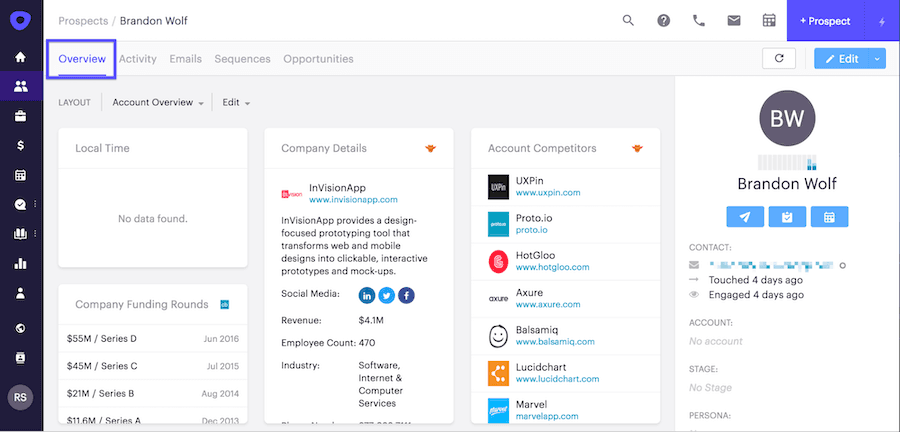
Outreach is the enterprise standard for multi-channel sales engagement. It automates email, phone, and LinkedIn sequences with AI enhancements for send-time optimization, personalization, and adaptive cadence management.
Key features:
• Multi-channel sequences across email, phone, and LinkedIn
• AI-powered send-time prediction and message personalization
• Pipeline and engagement analytics with deal-level insights
• Task automation for follow-ups and prospect management
• Native Salesforce integration with bi-directional sync
Best for: Enterprise SDR and AE teams managing high-volume outreach across complex sales cycles.
Pricing: Custom pricing. Contact Outreach for a quote.
• Pros: Proven at enterprise scale with deep CRM integration
• A/B testing and analytics to optimize messaging and sequences
• Cons: Only as effective as the data and training feeding the sequences
• Steep learning curve for smaller or less technical teams
5. Clari — Revenue Forecasting & Pipeline Intelligence
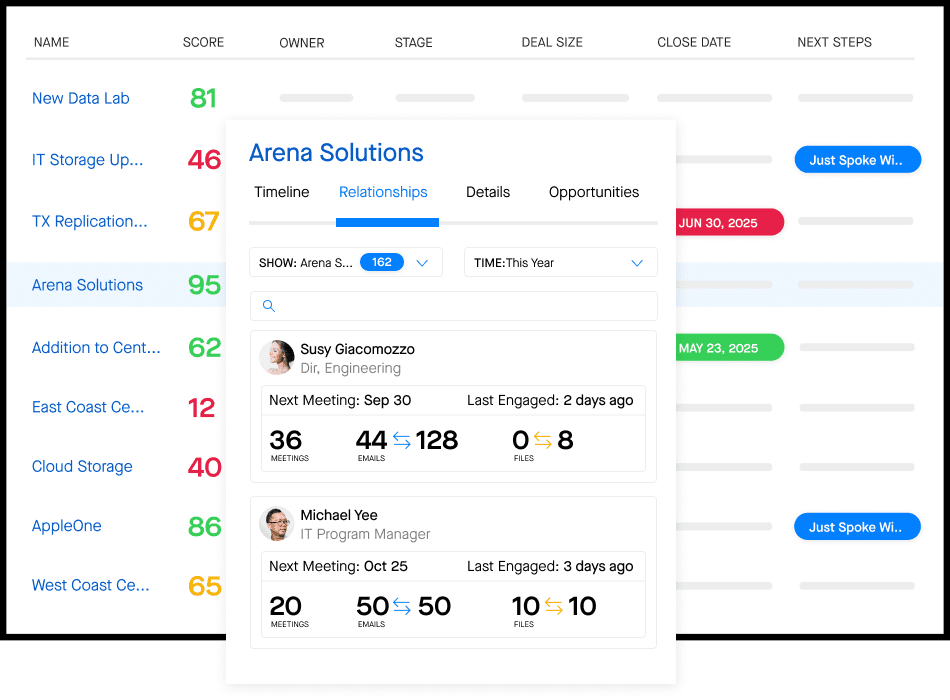
Clari analyzes deal progression patterns using AI to predict close likelihood, flag at-risk opportunities, and deliver forecast accuracy that replaces gut-feel pipeline calls. Revenue leaders use it for board-level forecasting and proactive deal management.
Key features:
• AI deal prediction with forecast accuracy within 3–4% quarterly
• Pipeline health scoring with visual at-risk deal flagging
• Activity capture across CRM, email, and calendar
• Revenue orchestration across the full sales team
• Integrations with Salesforce, HubSpot, and Slack
Best for: Revenue operations and leadership teams managing complex, multi-quarter pipelines.
Pricing: Custom enterprise pricing.
• Pros: 20% faster deal closures reported by Clari customers
• Forecast accuracy far exceeds the industry average of 7% of orgs hitting 90%+ precision
• Cons: Forecast quality depends entirely on CRM data quality
• Less valuable without the intelligence and engagement layers already in place
Deelan — The AI Training Platform Built for Revenue Teams
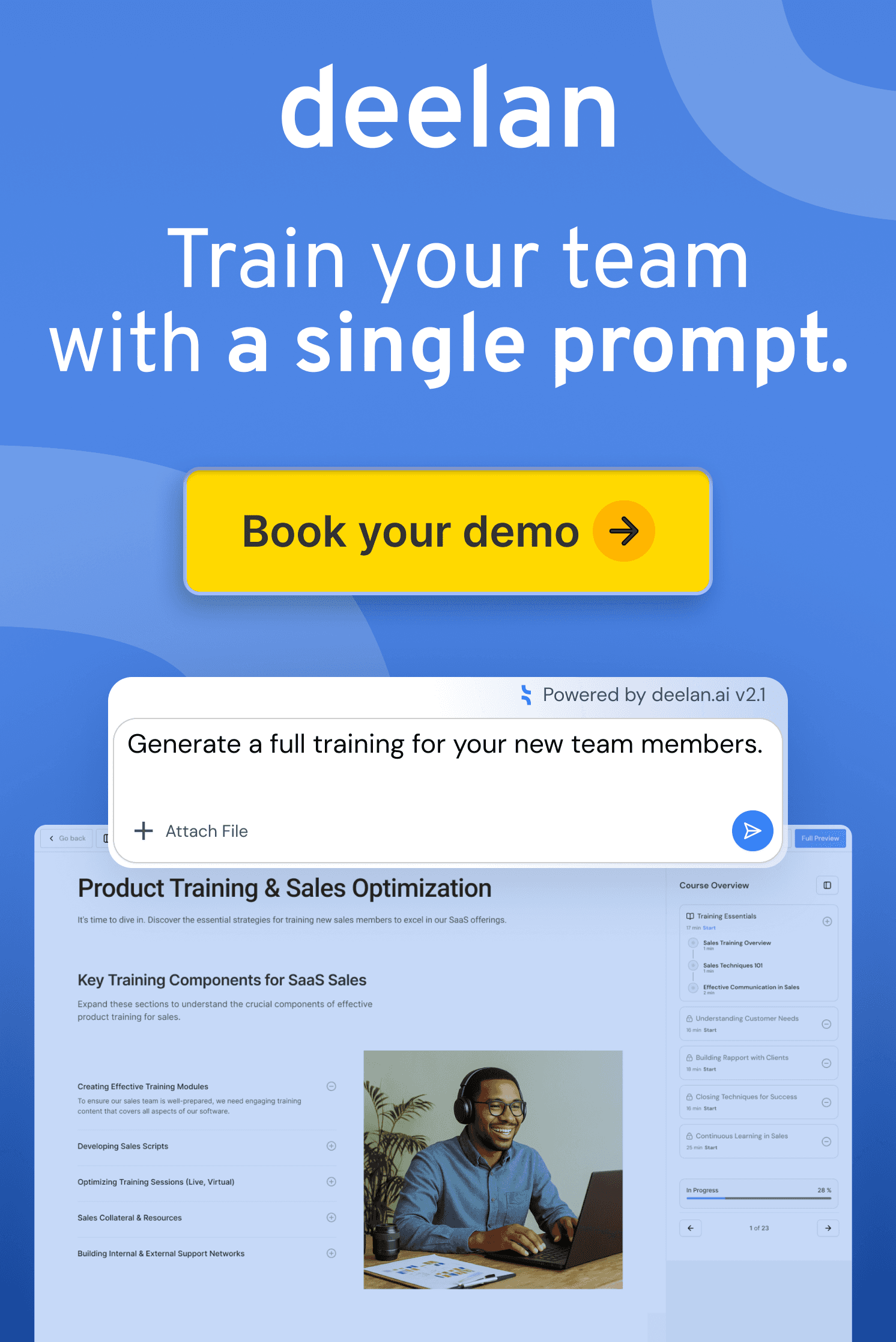
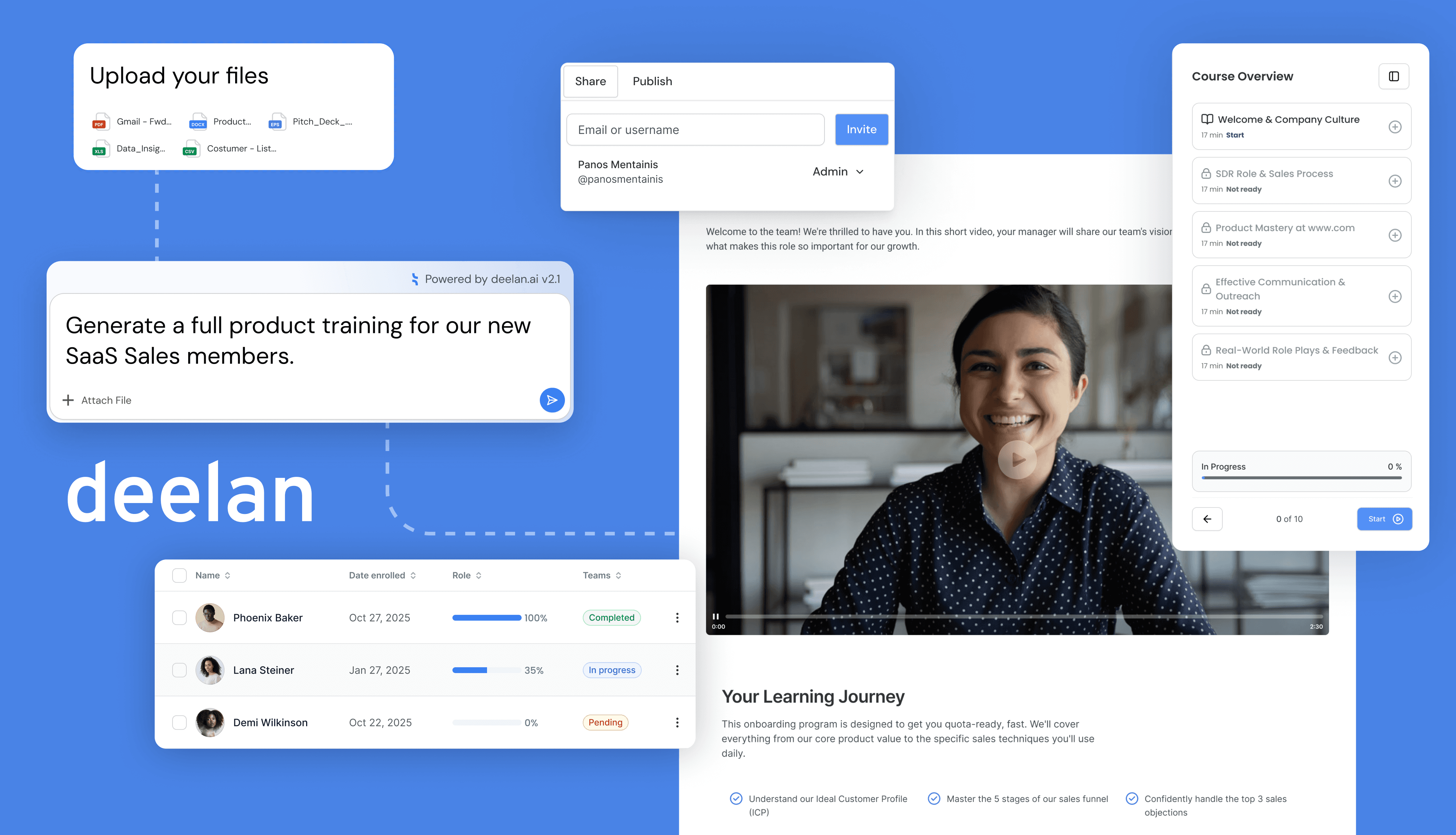
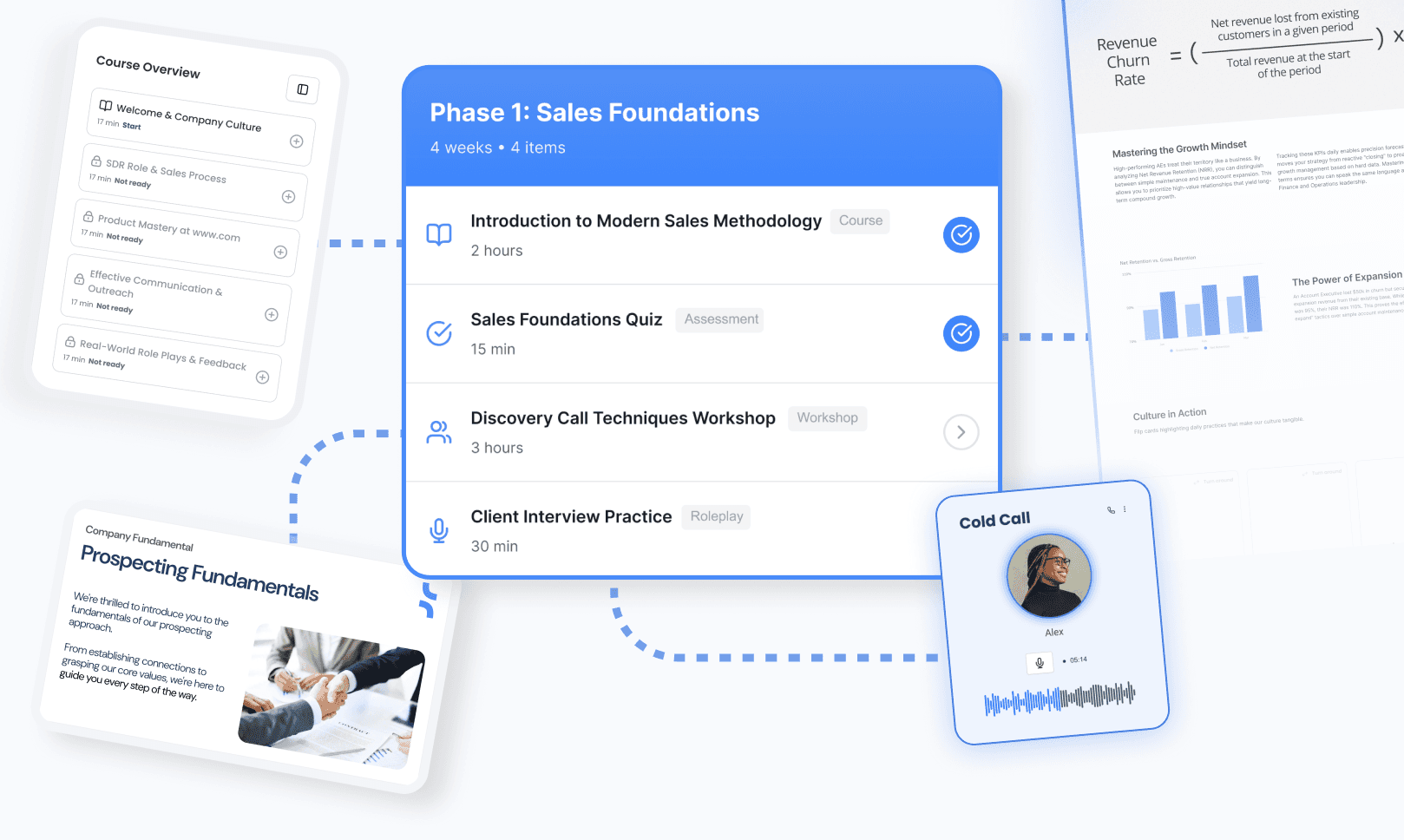
Deelan is an all-in-one adaptive training platform built specifically for revenue organizations. It converts existing playbooks, call recordings, scripts, and product docs into structured training in minutes — and then delivers that training through role-specific adaptive paths for every function on the team.
Key Features
• AI Roleplay Builder: simulate cold calls, objections, demos, negotiations, and customer conversations with AI audio analysis that evaluates tone, clarity, and technique
• Adaptive Learning Paths: training automatically adjusts based on role, seniority, quota performance, and individual skill gaps — SDRs, AEs, and CSMs each get a different path
• Rapid Training Creation: upload scripts, recordings, playbooks, or product docs and Deelan generates complete training modules, quizzes, and exercises in minutes
• AI Coach: an in-platform assistant that reinforces learning in real time, answering questions and surfacing practice opportunities throughout training
• Assessments & Knowledge Base: generate exams, quizzes, and exercises that reveal real skill gaps — not just course completion metrics
• Integrations: Salesforce, HubSpot, Gong, Slack, Notion, Confluence
Results
55% faster ramp time for SDRs & AEs
15–25% higher win rates
80% faster training creation vs. manual methods
"Before Deelan, onboarding new sales reps was a huge time sink. With Deelan, training became structured, adaptive, and largely self-driven. We reduced ramp time by over 30% and saved countless hours of manual coaching and onboarding." — Jonathan Kindermans, Founder of Kidola
Who It's For
Deelan is built for the entire revenue organization — not just one function.
• SDRs & BDRs: book more meetings, improve cold call execution, handle objections with confidence
• AEs: stronger discovery, better demos, sharper negotiations
• CS Teams: improve renewal conversations, upsell execution, and customer outcomes
• Sales Managers: scale coaching without spending hours on repetitive feedback loops
• HR & L&D: structured, measurable onboarding aligned to revenue outcomes
• Enablement & RevOps: build and update training instantly, track skill gaps by team and role
Pricing
Deelan offers a free demo to explore the platform. View pricing for plan details.
Pros:
• Role-specific adaptive training paths for every function on the revenue team
• AI-powered roleplay with audio analysis — practice before the real call
• 80% faster content creation from existing playbooks and recordings
• Strong integrations with Salesforce, HubSpot, Gong, Slack, and more
• Scales coaching without adding manager headcount
Cons:
• Not a CRM or outreach tool — it's the people layer, designed to complement your existing stack
How to Evaluate AI Sales Tools
60% of AI sales tools that launched in mid-2024 were shut down or pivoted by Q4 2025. The evaluation process matters as much as the selection. Use these four criteria.
1. Test with real reps and real accounts, not demo scenarios. Ask every vendor to run their tool against 10–20 of your actual accounts. If the output doesn't change what your reps say or do, it won't change results.
2. Measure operational impact, not features. Define the specific workflow change each tool should produce before you buy. If you can't describe the behavior change, you can't measure ROI.
3. Check data quality and integration depth. Ask where the data comes from and how it gets into your CRM. Manual data transfers guarantee stale intelligence and low adoption.
4. Run a 30-day pilot before committing annually. Track daily active usage, time savings, and impact on downstream metrics. If adoption drops after week two, the tool solves a problem your team doesn't have.
The Most Common AI Sales Tool Mistakes
1. Buying engagement tools before solving the intelligence gap. AI that automates outreach is only as good as the research feeding it. Start with the intelligence layer.
2. Skipping the training layer. Tools that sit in the hands of undertrained reps become expensive shelfware. Investing in the intelligence layer without investing in people leaves most of the ROI on the table.
3. Evaluating on features, not outcomes. A tool with 50 features and no measurable pipeline impact is worse than one with 5 features that saves reps three hours per week.
4. Ignoring adoption and change management. According to Gartner, 60% of AI project failures trace back to inadequate data governance and change management — not bad technology.
5. Expecting overnight ROI. Realistic timelines are 3–6 months with clean data and established processes, 6–9 months if building from scratch. Teams that declare AI 'doesn't work' after 30 days usually have a people and process problem, not a technology problem.
Frequently Asked Questions
What is the best AI tool for B2B sales in 2026?
There is no single best tool because AI sales tools serve different functions. The best starting point for most B2B teams is an account intelligence platform (to prioritize accounts and improve rep preparation), paired with a training platform like Deelan to ensure reps can execute on the insights they receive. From there, add conversation intelligence for call analysis and a sales engagement platform for outreach execution.
How do AI tools improve B2B sales performance?
AI tools improve sales performance by eliminating time-consuming manual tasks (research, data entry, follow-ups), surfacing account intelligence that reps can't gather alone, and analyzing call and deal data to reveal patterns that improve execution.
What is the best sales training platform for revenue teams?
Deelan stands out as the purpose-built option for revenue teams. Unlike general LMS platforms, it is designed specifically for SDRs, AEs, CS teams, and revenue managers — with AI-powered roleplays, adaptive learning paths, and 80% faster content creation from existing playbooks.
How long does it take to see ROI from AI sales tools?
Expect 3–6 months with clean CRM data and established processes, or 6–9 months if building from scratch.
What AI tools help with sales rep onboarding?
Deelan is the most direct answer: it converts existing playbooks, recordings, and product docs into structured onboarding training in minutes, with adaptive paths by role and seniority.
Ready to Improve Your Revenue Team's Performance?
Deelan helps B2B teams ramp reps 55% faster, increase win rates by up to 25%, and scale coaching without adding headcount.