Revenue enablement platforms have expanded far beyond sales content libraries.
Today, teams use them to onboard reps, build skills, practice sales conversations, distribute content, coach performance, and understand whether enablement is actually improving execution.
Quick Comparison: Best Revenue Enablement Platforms
Platform | Best For | Main Strength |
|---|---|---|
Adaptive training and rep performance improvement | AI training, roleplay, assessments, adaptive learning | |
Seismic | Large enterprise enablement | Content governance, learning, buyer engagement |
Sales readiness | Certification, skills, AI roleplay | |
Field sales and content-heavy teams | Content, readiness, buyer engagement | |
Broad enterprise enablement | Learning, coaching, content, conversation intelligence | |
Gong Enable | Gong customers | Call intelligence connected to coaching and practice |
360Learning | Collaborative learning | SME-created training and coaching |
HubSpot Sales Hub | HubSpot teams | CRM-native playbooks and coaching |
The 9 Platforms, Honestly Reviewed
Here's an honest look at the leading platforms - what they do well, who they're for, and where they fall short.
1. Deelan - Best for Adaptive Revenue Training and Rep Performance
Best for: Revenue teams that need reps to learn, practice, get assessed, and continuously improve.
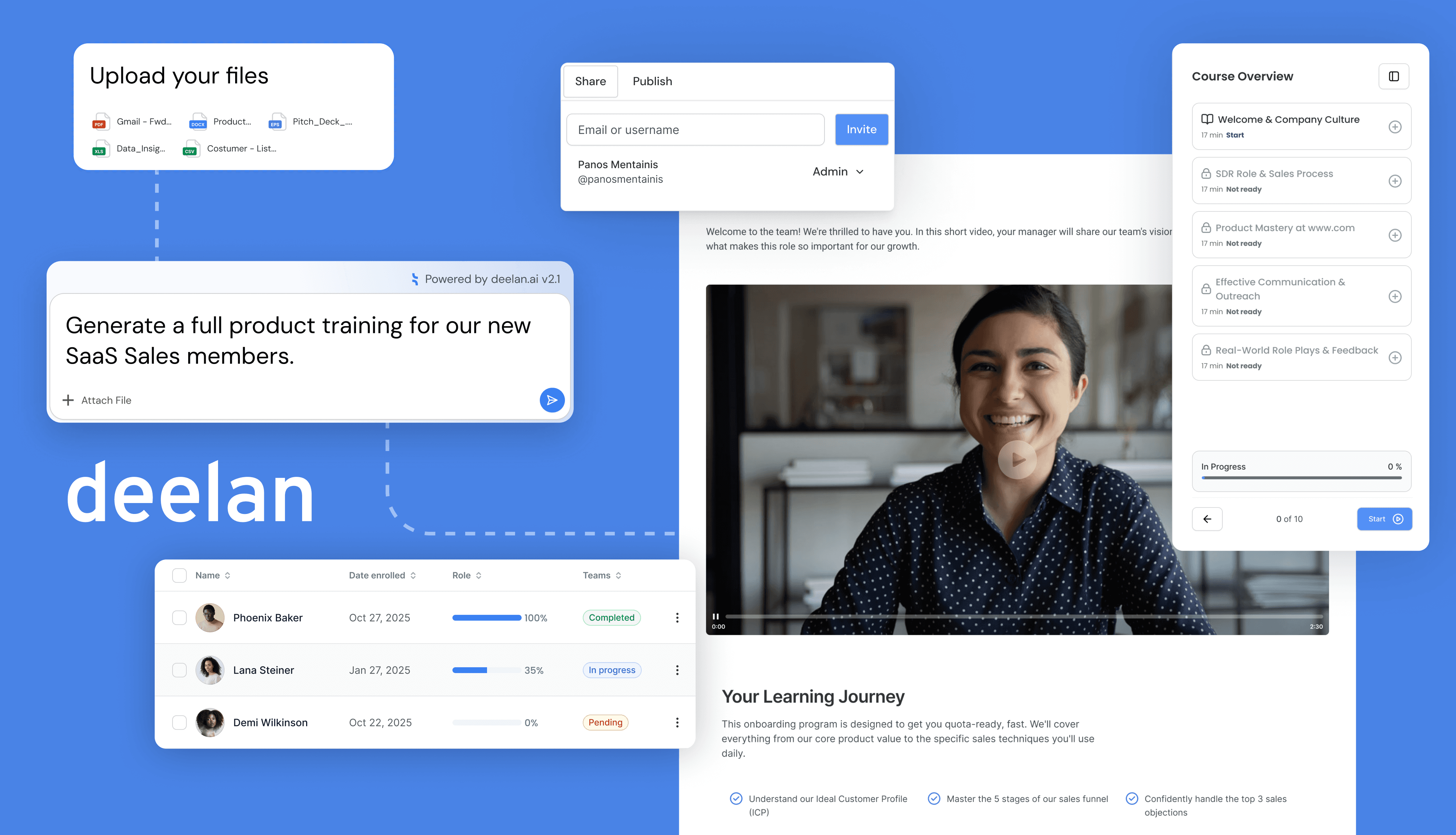
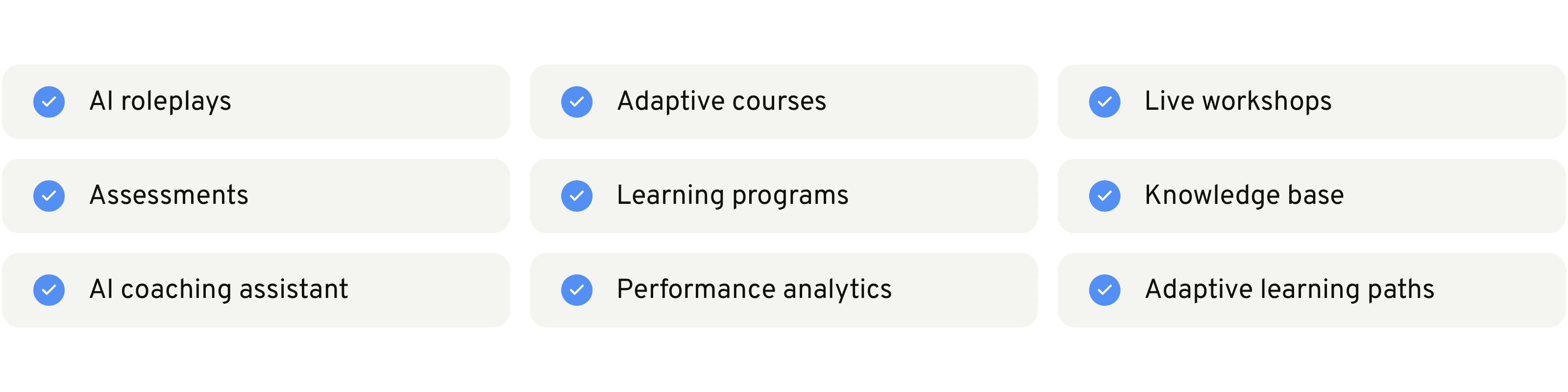
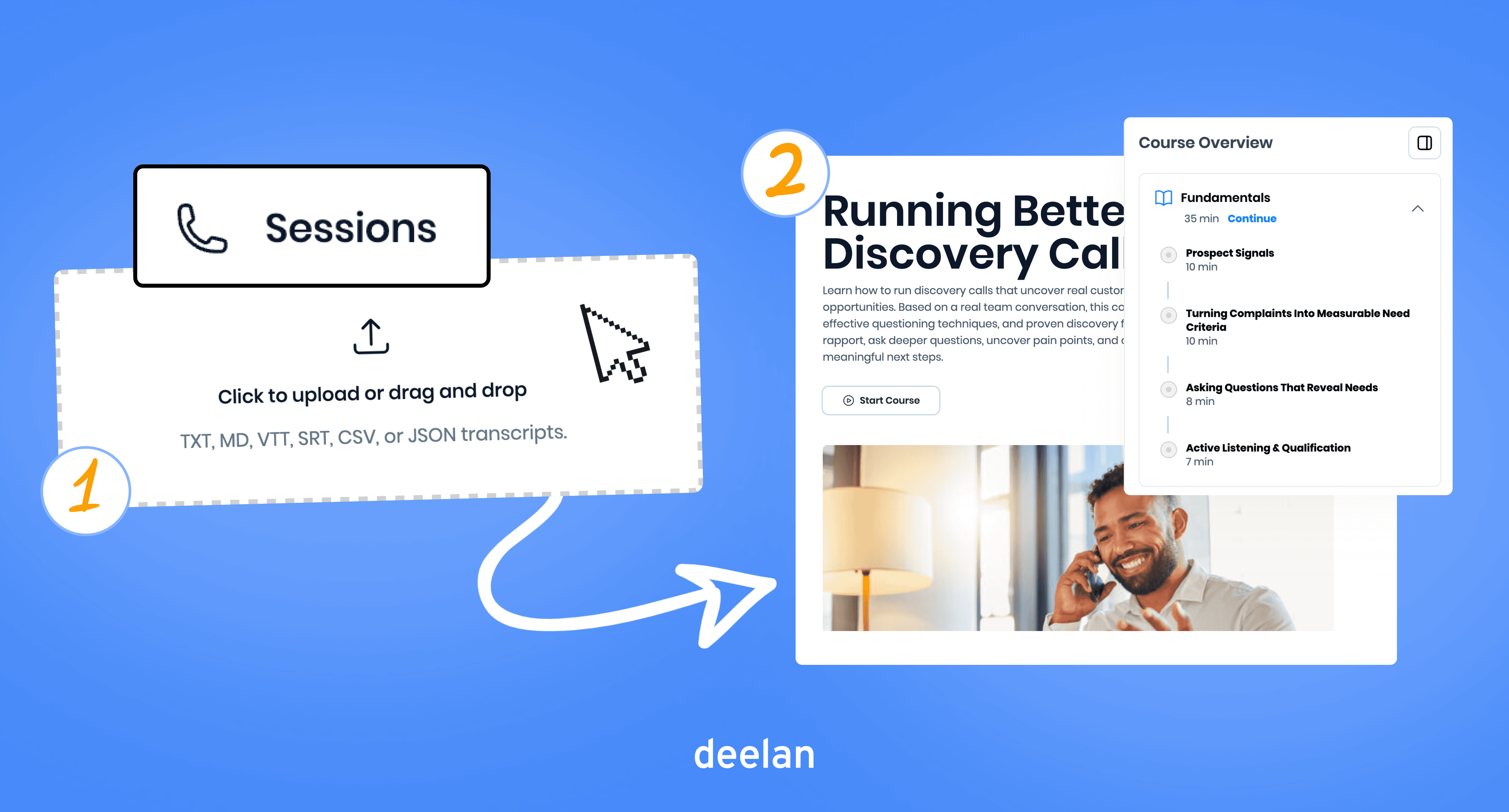
Adaptive paths are the core product, not a feature.
An SDR and a senior AE get different experiences from the same program -automatically, based on role, seniority, quota performance, and skill gaps. No manual branching logic.

AI roleplays are native. Built in, with feedback tied directly to skill tracking.
It replaces the stack. LMS, authoring tool, video, quizzes, roleplays — one engine instead of five tools that don't talk to each other.
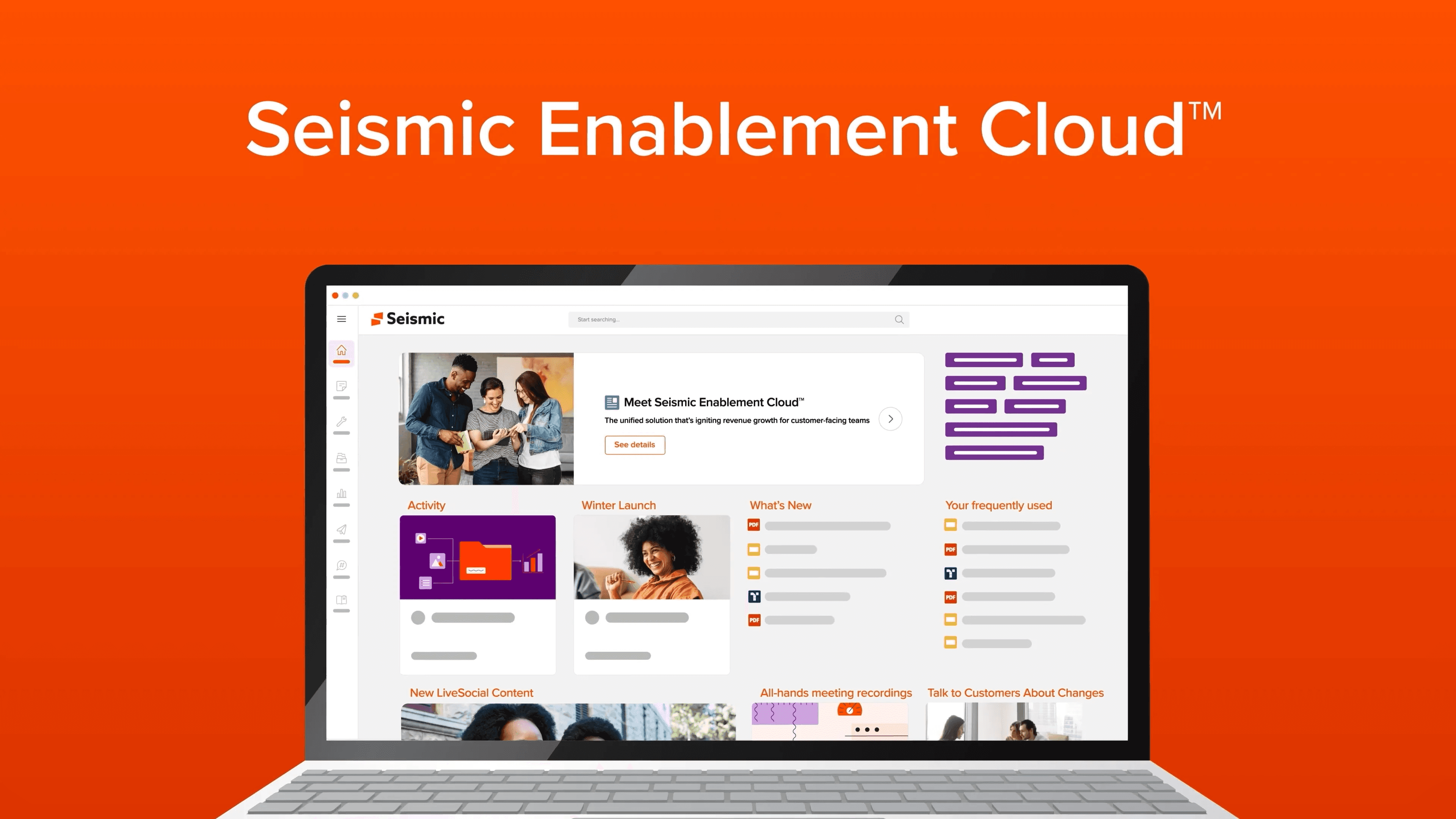
2. Seismic Enablement Cloud
Best for: Enterprise orgs with dedicated enablement ops and serious governance requirements
Seismic is the category's most established enterprise platform — deep content management, version control, engagement analytics, and 150+ integrations. For organizations with 1,000+ reps, a full enablement team, and complex content governance needs, it's the most mature option available.
The elephant in the room: the February 2026 merger with Highspot. Both platforms carried 4.7-star Gartner Peer Insights ratings — but those scores reflect products that are now mid-integration. What you're buying today is a combined entity still working out its roadmap. That's not disqualifying, but it's worth pressure-testing in your evaluation: ask specifically what's changing, what's being deprecated, and which roadmap commitments are locked.
3. Highspot
Best for: Mid-to-large orgs prioritizing content management alongside guided selling
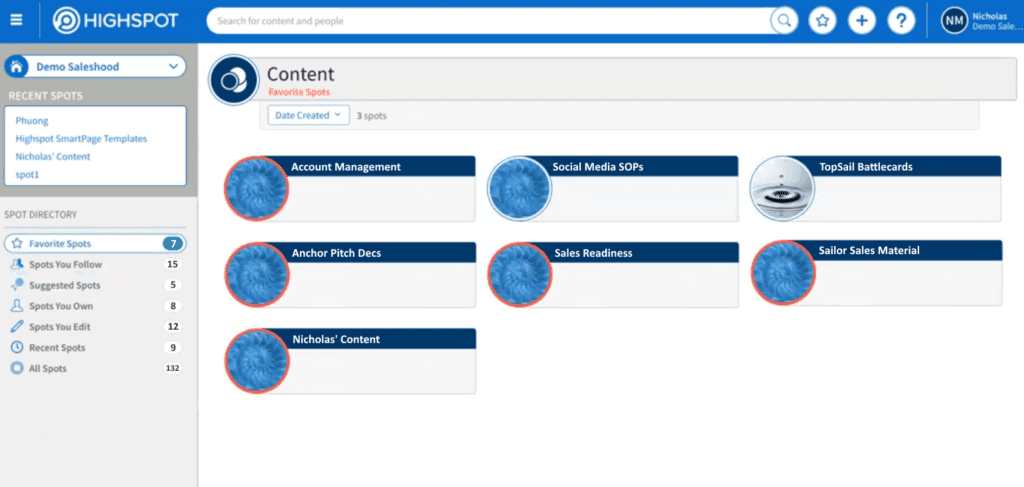
Highspot's interface is genuinely excellent — one of the best in the category — and the Nexus AI engine delivers strong content recommendations and guided selling workflows. Its 2025 Gartner Customers' Choice designation is earned.
Same merger caveat as Seismic applies. Evaluate both as one combined entity, not two separate options.
4. Mindtickle
Best for: Teams whose primary pain is ramp time
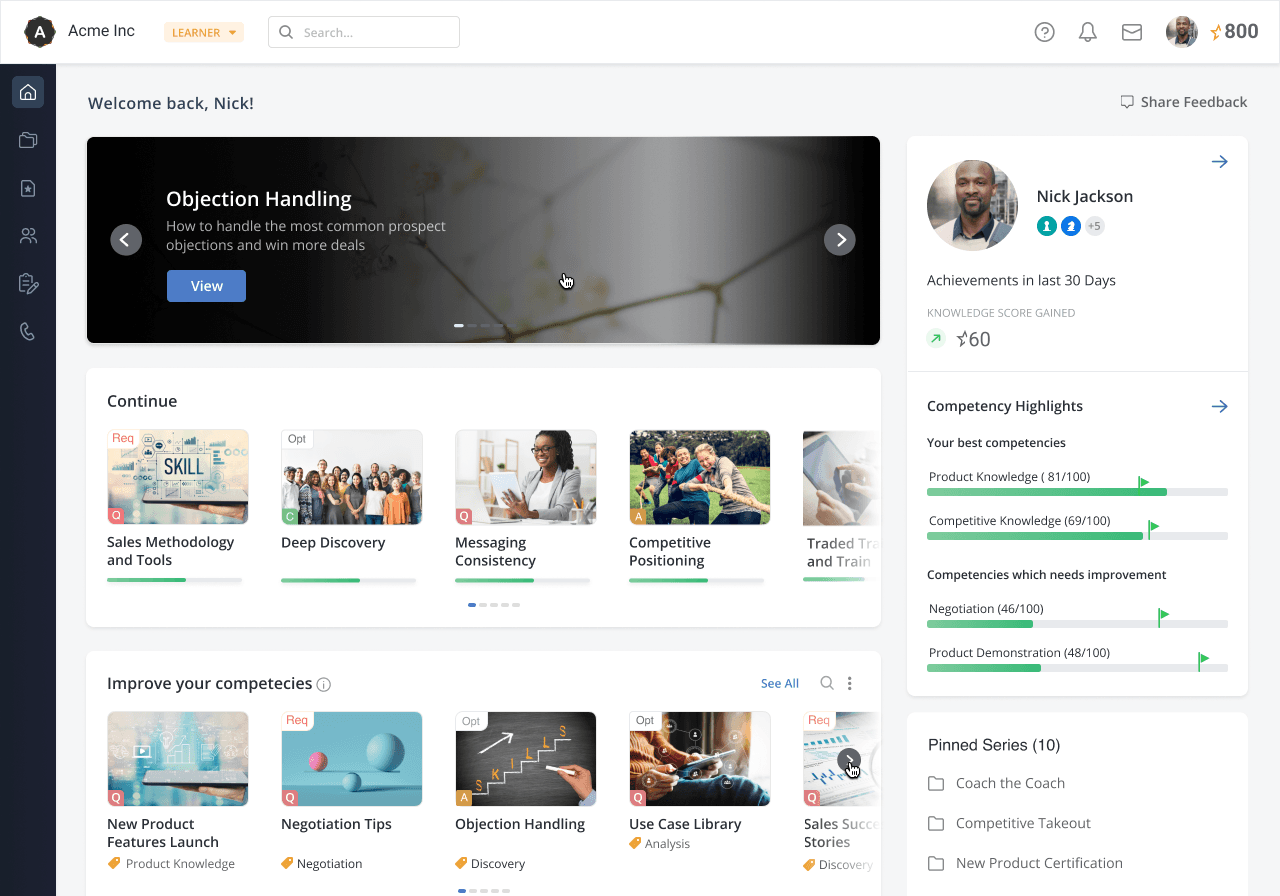
If you need to get new SDRs, AEs, or CSMs to productivity faster and that's the core problem, Mindtickle is the most direct path. Onboarding programs, certifications, AI roleplays, skill assessments, and coaching workflows are all built with readiness as the first priority — not content distribution.
The tradeoff is real: content management and buyer engagement features are less developed than Seismic or Highspot. If both problems are urgent, that's a harder fit. If ramp time is the primary gap, it's an acceptable trade and the pricing reflects it.
5. Showpad
Best for: Content-heavy orgs running Salesforce and Marketo
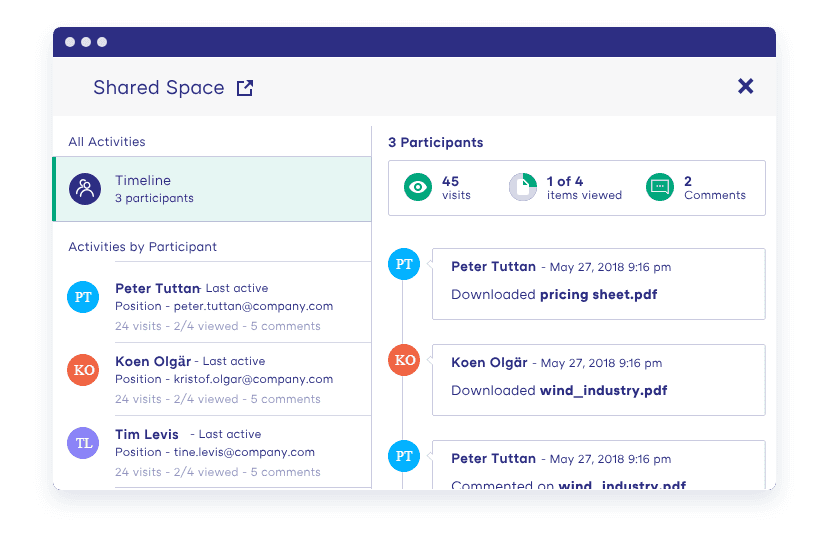
Showpad's reputation for strong adoption is earned. The interface is clean, search works well at moderate content volumes, and the Salesforce integration is genuinely deep. For organizations where the primary dysfunction is reps not finding or using the right content, Showpad fixes that problem reliably.
The October 2025 Bigtincan merger means Showpad is actively navigating its own integration roadmap — similar due diligence applies as with Seismic/Highspot. Coaching and readiness are not Showpad's strength. If that's also on the list, plan for a gap.
6. Allego
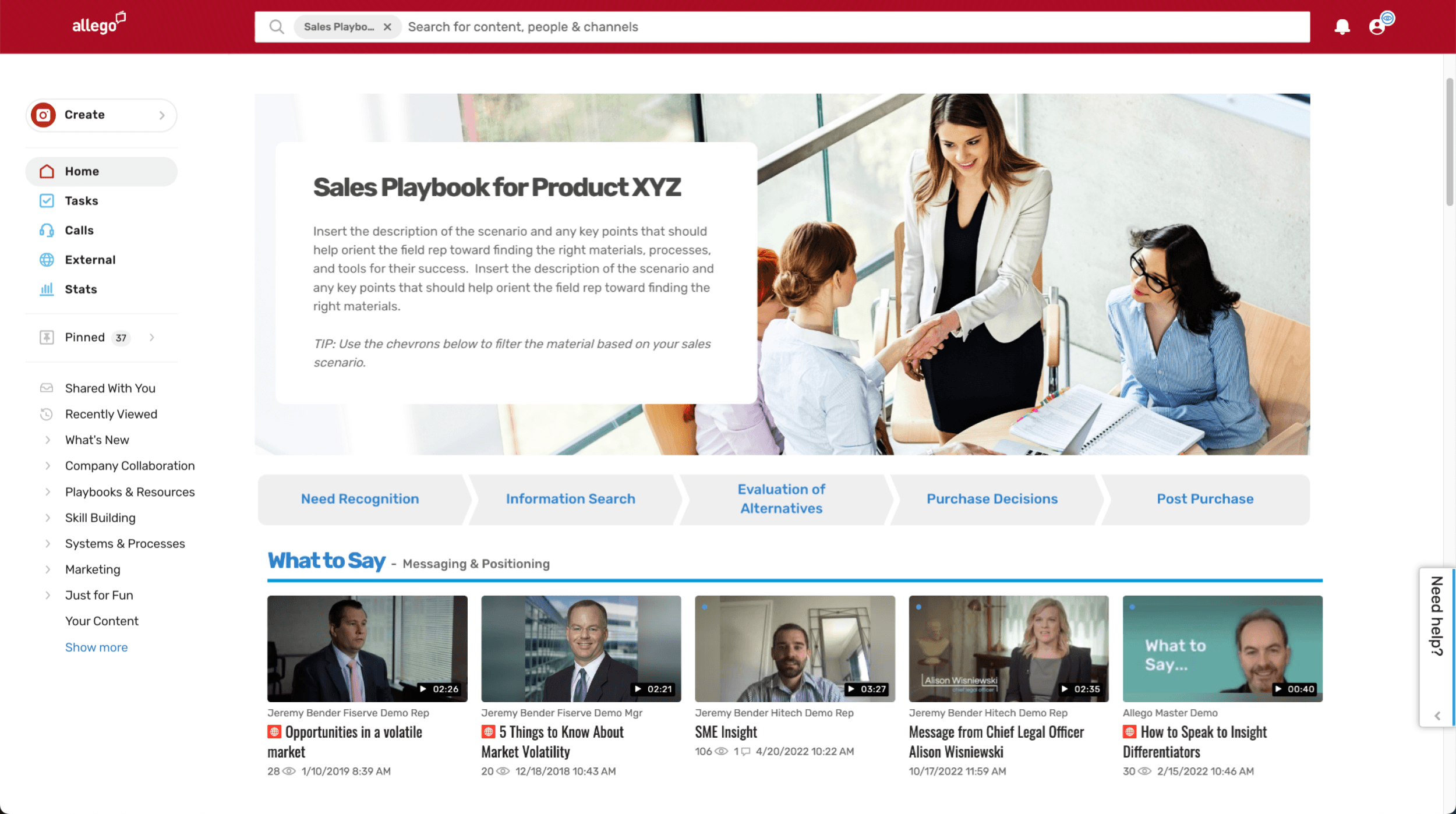
Best for: Enterprise teams that need readiness and conversation intelligence unified
Allego is the most complete platform for video-based coaching combined with AI call analysis and modern learning. For enterprise revenue teams that want a single environment covering all three — and have the budget for it — the combination is genuinely unified in a way most platforms aren't. G2 users report an average 13-month time to ROI, which is longer than it sounds at enterprise deal sizes.
7. Gong Enable
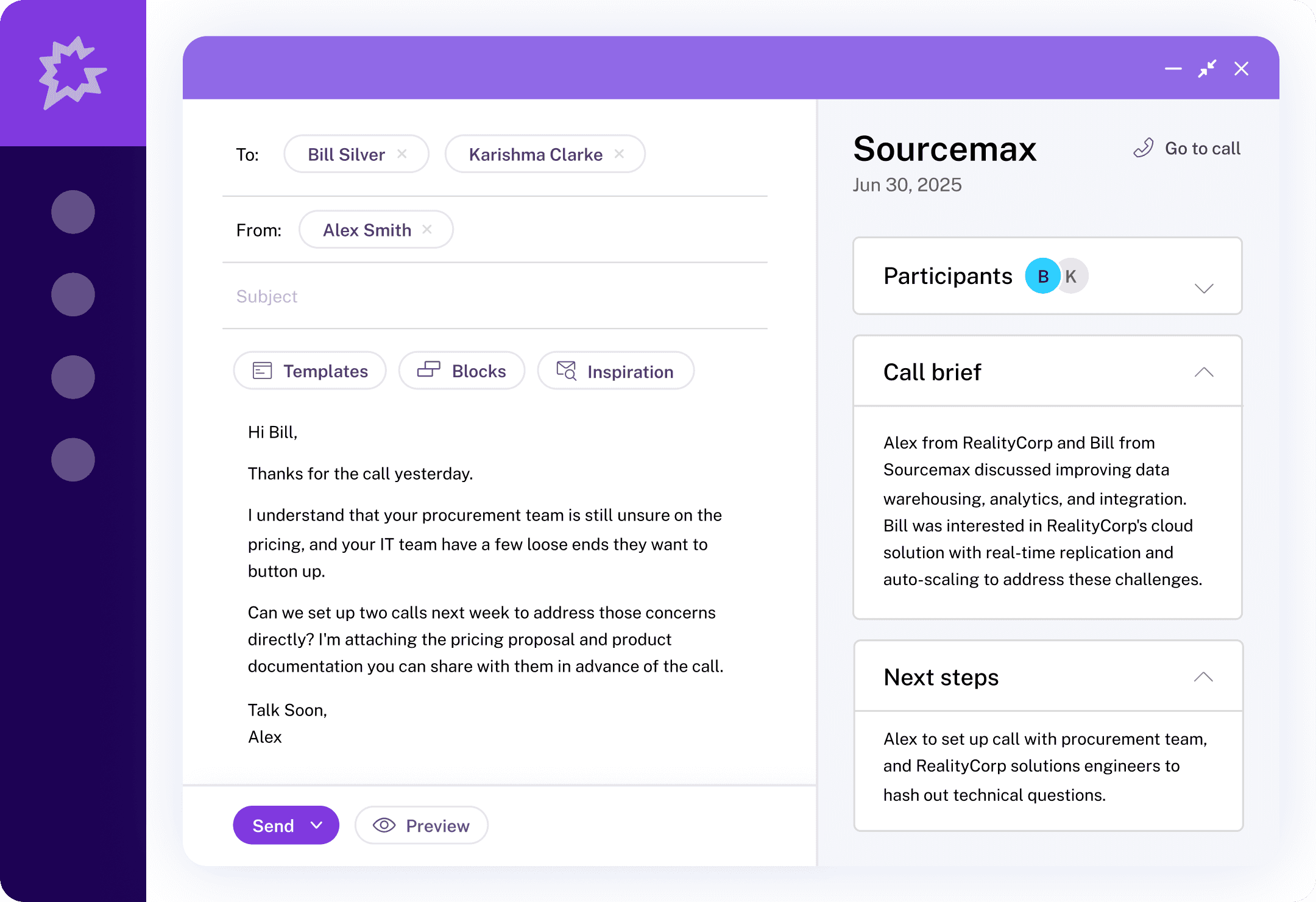
Best for: Teams already running Gong for conversation intelligence
Launched in February 2026 as part of Gong's Mission Andromeda, Gong Enable bundles AI Call Reviewer, AI Trainer, Initiative Tracking, and Gong Assistant into a single enablement layer. The insight is correct: training built from actual call data is more relevant than training built from slide decks.
The critical caveat: this only makes sense if you're already a Gong customer. Buying Gong primarily to access Enable is buying the foundation to justify the add-on. For existing Gong users, the incremental cost is meaningfully lower than standing up a separate platform — that math is worth running.
8. 360Learning
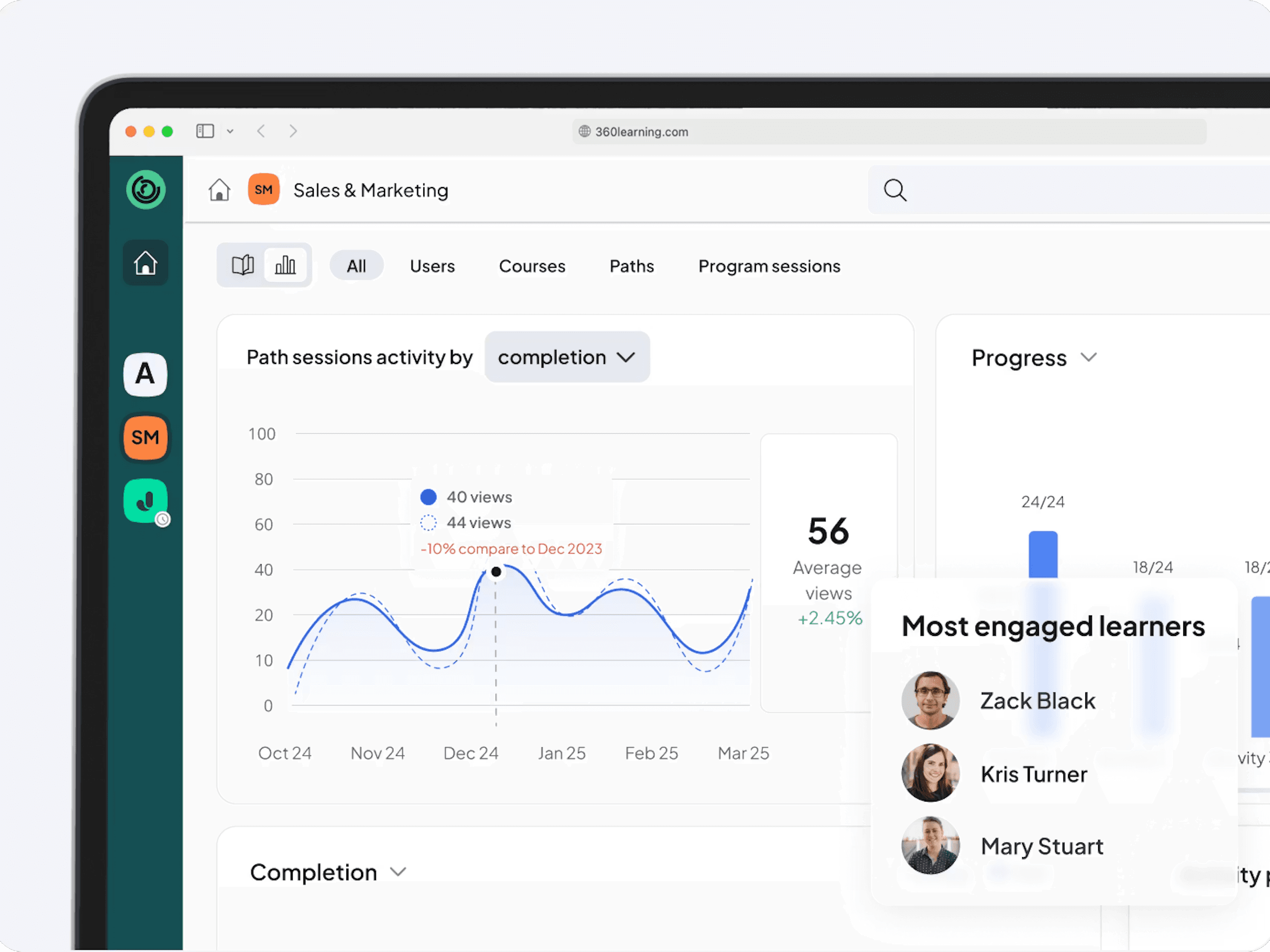
Best for: Teams that want internal experts building the training, not just consuming it
360Learning inverts the standard model. Rather than top-down content delivery, the platform turns in-house subject matter experts into training contributors. Sales teams create, refine, and share knowledge within the platform — AI-powered Skills features push targeted upskilling into the flow of work.
Strong Salesforce integration. The Video Pitch Assessment is a practical tool for remote coaching that managers actually use. Less suited for orgs that need centralized governance or highly structured adaptive paths.
9. HubSpot Sales Hub
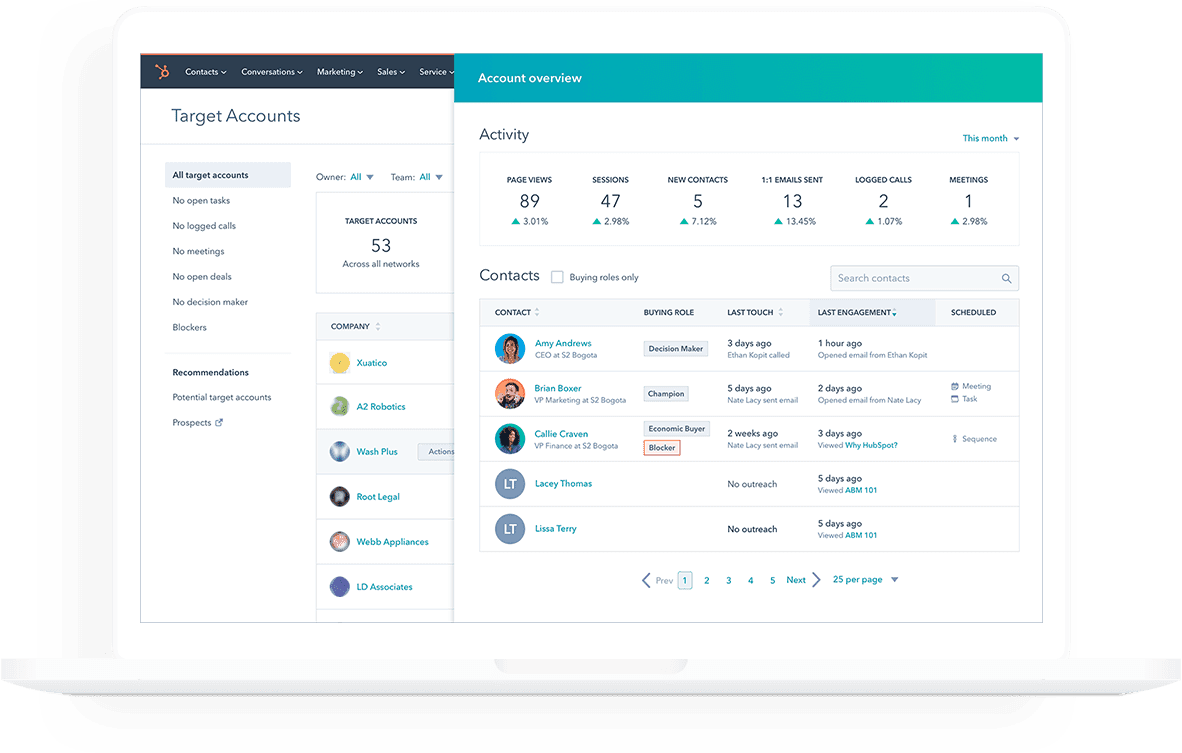
Best for: SMB and mid-market teams already running HubSpot CRM
HubSpot Sales Hub's enablement case is simple: if your reps already live in HubSpot, enablement that lives there too gets used. Playbooks, content libraries, AI conversation coaching, and document tracking are all in the same environment — which is a genuine adoption advantage most standalone platforms can't replicate.
It's not a readiness platform. Adaptive learning paths, certifications, and AI roleplays are not the product's strength. But for teams that need basic enablement woven into their CRM without a separate system and a separate budget, the value is real.
Which Revenue Enablement Platform Should You Choose?
There is no universal winner because these platforms solve different problems.
Choose Deelan if:
You want reps to learn, practice, be assessed, and automatically receive training based on their gaps.
Choose Seismic if:
You run a large enterprise organization and need content governance, buyer engagement, learning, and enablement operations at scale.
Choose Mindtickle if:
Your primary focus is formal sales readiness, certification, and skill development.
Choose Showpad if:
Your sellers work with a large amount of product and marketing content, particularly in complex field-selling environments.
Choose Allego if:
You want a broad platform combining learning, coaching, content, conversation intelligence, and buyer engagement.
Choose Gong Enable if:
You already rely on Gong and want your training to start with what actually happens on customer calls.
Choose 360Learning if:
You want your internal experts and managers to create and share knowledge across the organization.
Choose HubSpot if:
You need basic enablement capabilities directly inside the CRM your team already uses.
Ready to Train a High-Performing Revenue Team?
Deelan is the AI training platform built for SDRs, AEs, CS teams, and revenue leaders who need results.