
Cold calling is not a skill reps learn by reading a script once and immediately making 100 dials.
They need to understand who they are calling, what to say, how to react when the conversation changes, and how to improve after every call.
Learn → Practice → Get Feedback → Call → Identify Gaps → Train Again
This guide breaks down how to train sales reps for cold calling, which skills to focus on, and how to combine courses, roleplays, real calls, assessments, and coaching.
What should cold calling sales training include?
Training area | What reps need |
|---|---|
Knowledge | ICP, product, pain points, messaging |
Call structure | Opener, qualification, value, next step |
Realistic cold call roleplays | |
Feedback | Specific feedback after each attempt |
Real calls | Analysis of actual conversations |
Skill tracking | Progress by rep and skill |
Follow-up training | Training based on individual gaps |

1. Start With the Knowledge Behind the Call
Before practicing cold calls, reps need enough context to have a relevant conversation.
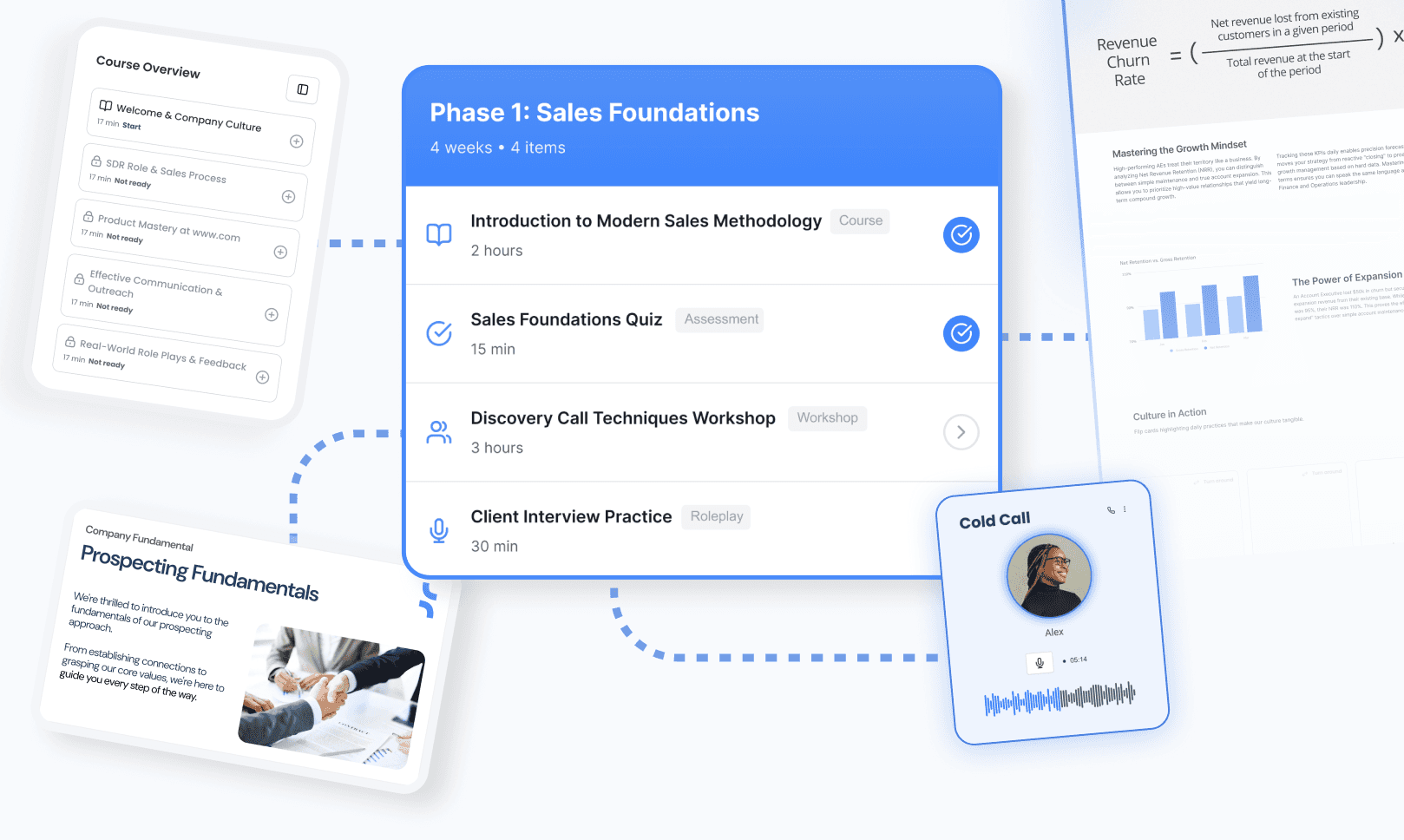
Give reps short courses and assessments, then quickly move from knowing the information to actually using it.
2. Train the Cold Call in Parts
A cold call contains several different skills. Training the whole conversation at once makes it difficult to understand exactly where a rep is struggling.
Break it down.
Part of the call | What to train |
|---|---|
Opener | Earn the next 10–30 seconds |
Brush-off | Keep the conversation alive |
Qualification | Ask useful questions without interrogating |
Active listening | React to what the prospect actually says |
Objection handling | Respond naturally to pushback |
Value communication | Connect the product to a relevant problem |
Call control | Keep the conversation moving |
Next step | Confidently ask for the meeting |
A rep might have an excellent opener but struggle as soon as the buyer says, “Just send me an email.”
3. Move to Practice
Courses are useful for explaining what good looks like.
Practice teaches reps how to actually do it.
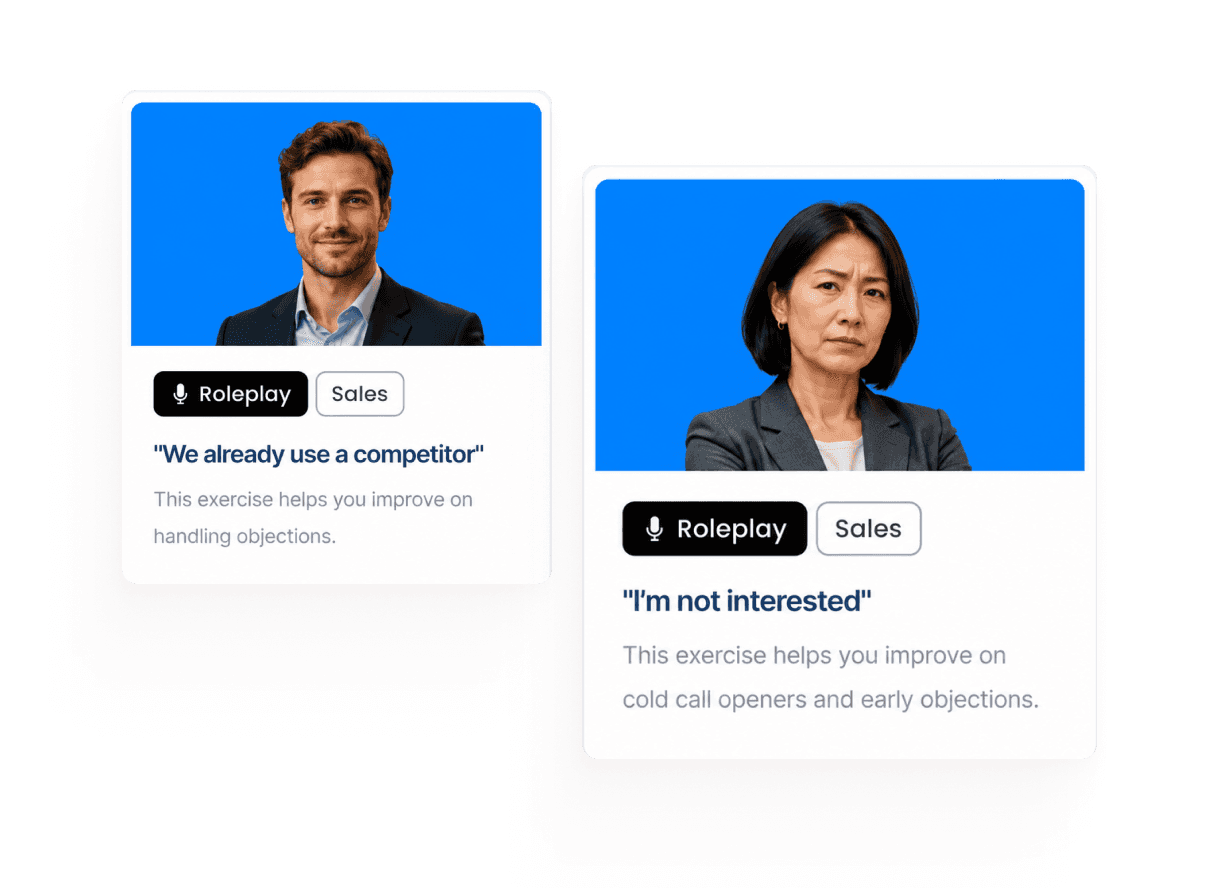
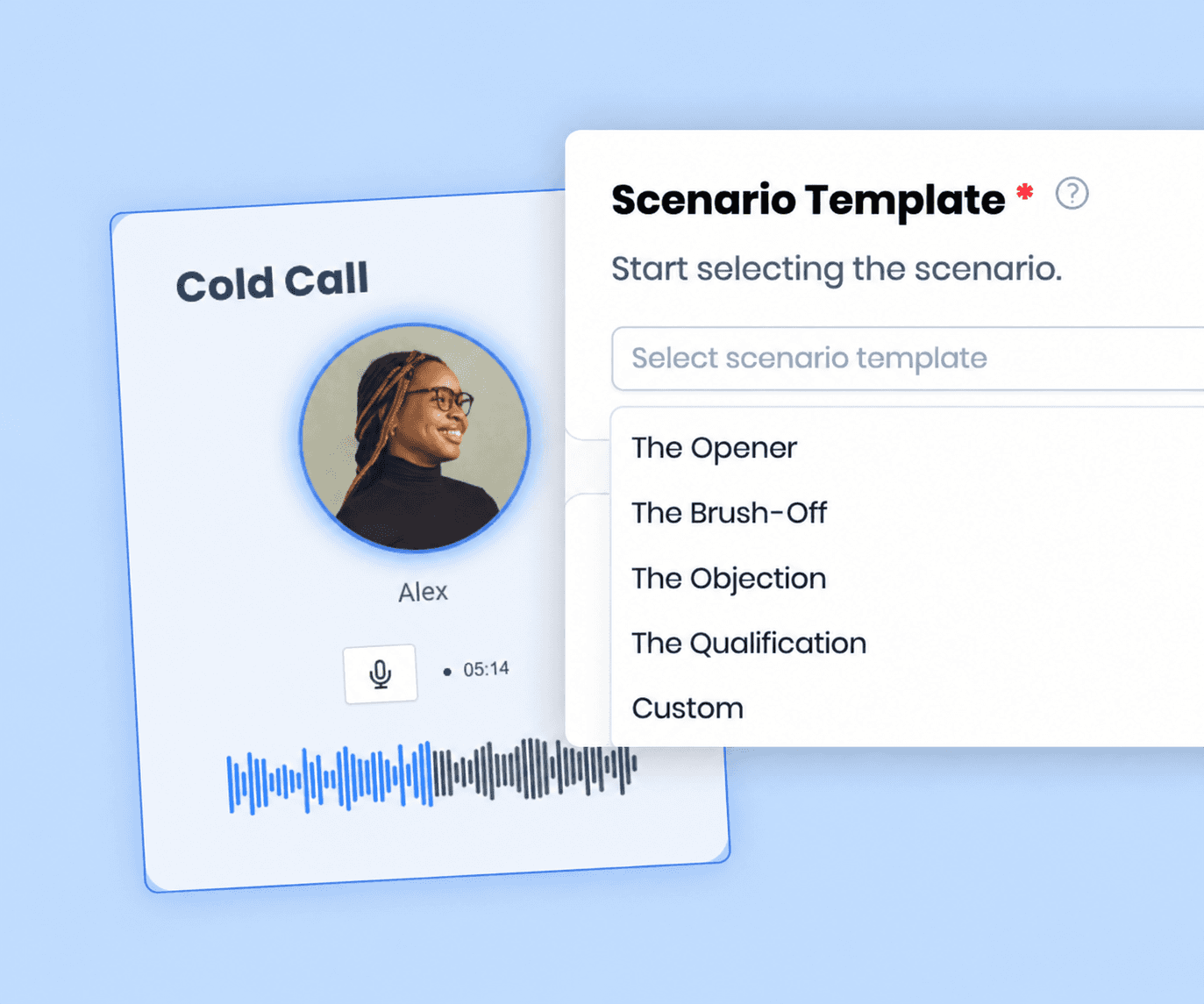
After learning a framework, put reps into realistic cold call scenarios where they have to apply it immediately.
Want your reps to practice before calling real prospects?
Run realistic cold calls with AI prospects, instant feedback, and personalized follow-up training.
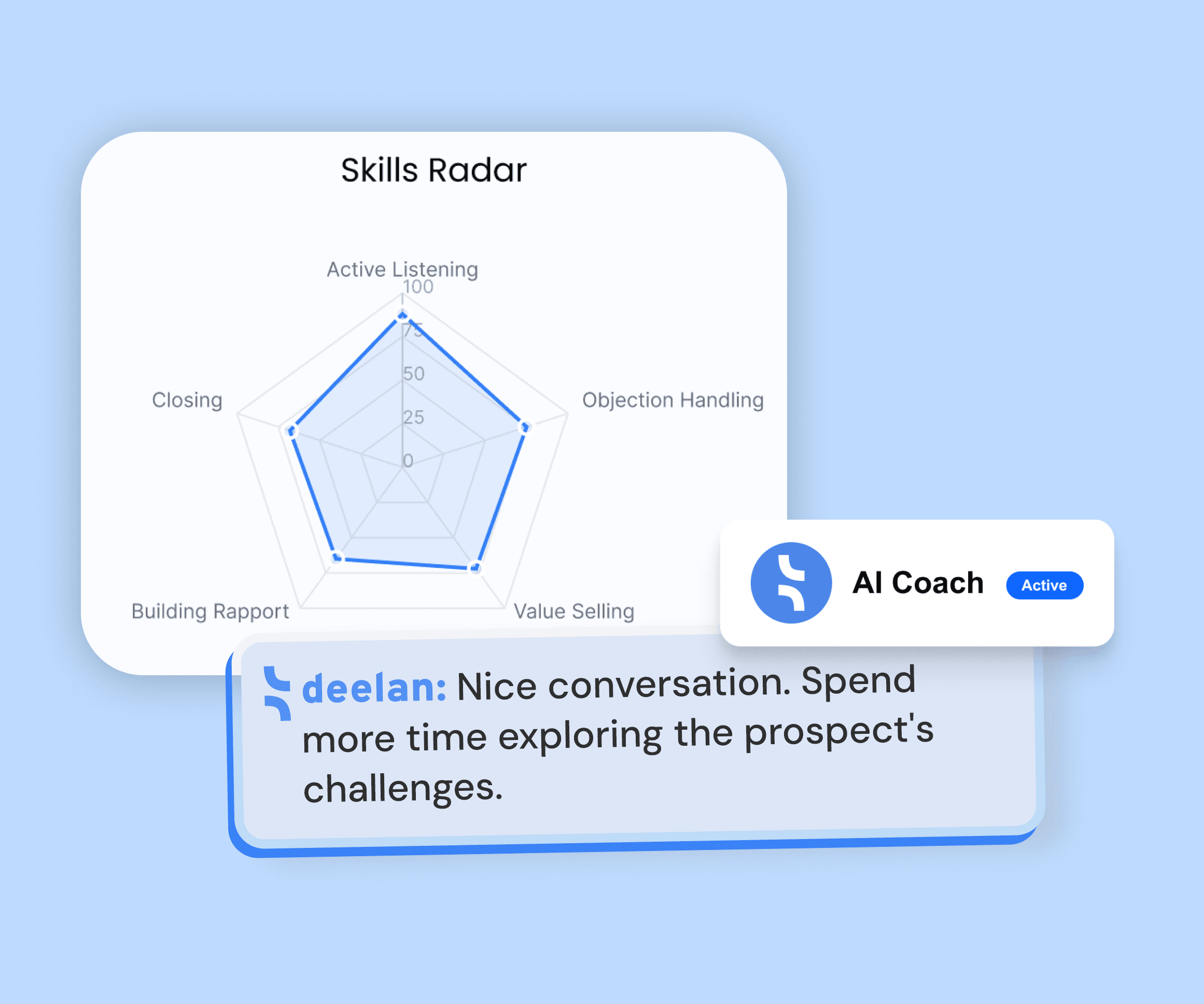
4. Give Feedback Immediately
Practice without feedback can reinforce bad habits.
After each cold call practice session, reps should understand:
What went well?
Where did the conversation break down?
What should I change next time?
Useful feedback can cover areas like:
Opening
Question quality
Objection handling
Value communication
Speaking pace
Talk-to-listen balance
Filler words
Missed opportunities
Call control
5. Train From Real Cold Calls
Training should not exist separately from what happens in the field.
Your real sales calls are some of your best training material.
Review calls to find:
Where prospects disengage
Common objections
Strong openings
Missed questions
Messaging that resonates
Behaviors used by top performers
6. Track Skills
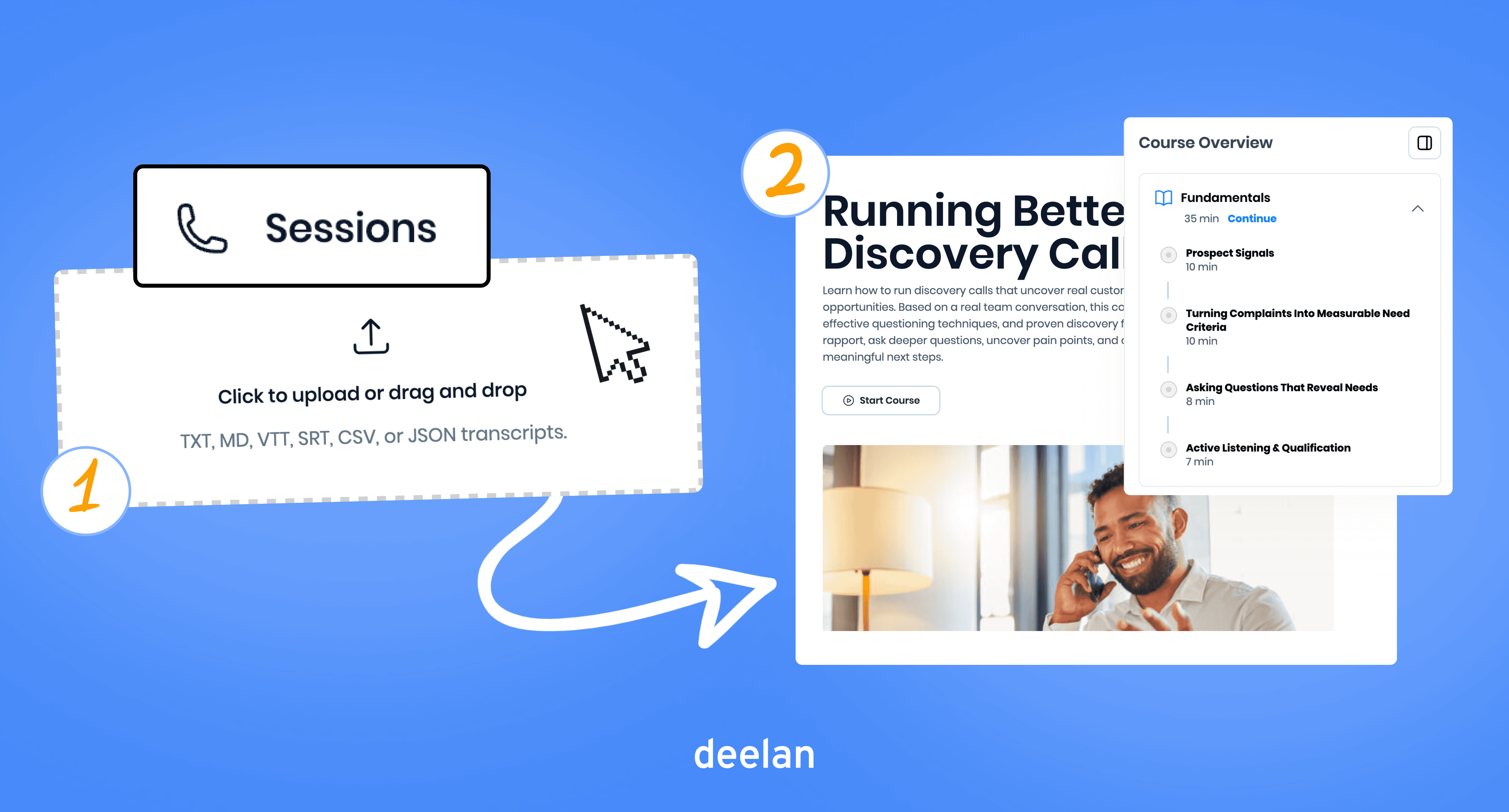
Knowing that an SDR completed five courses doesn't tell you whether they can cold call.
Track performance at the skill level instead.
For example:
Rep | Opener | Questions | Objections | Listening | Next Step |
|---|---|---|---|---|---|
Maya | 88% | 74% | 52% | 81% | 69% |
Ben | 65% | 82% | 77% | 71% | 84% |
Ana | 92% | 90% | 89% | 94% | 91% |
Now training can become personalized. This is far more useful than giving every rep exactly the same training.

Example Cold Calling Training Routine
Monday: Learn or refresh one skill
Tuesday: Practice it in an AI roleplay
Wednesday: Make real calls
Thursday: Review feedback and call performance
Friday: Practice the weakest area again
Cold Calling Sales Training With deelan
deelan brings the different parts of sales training into one system.
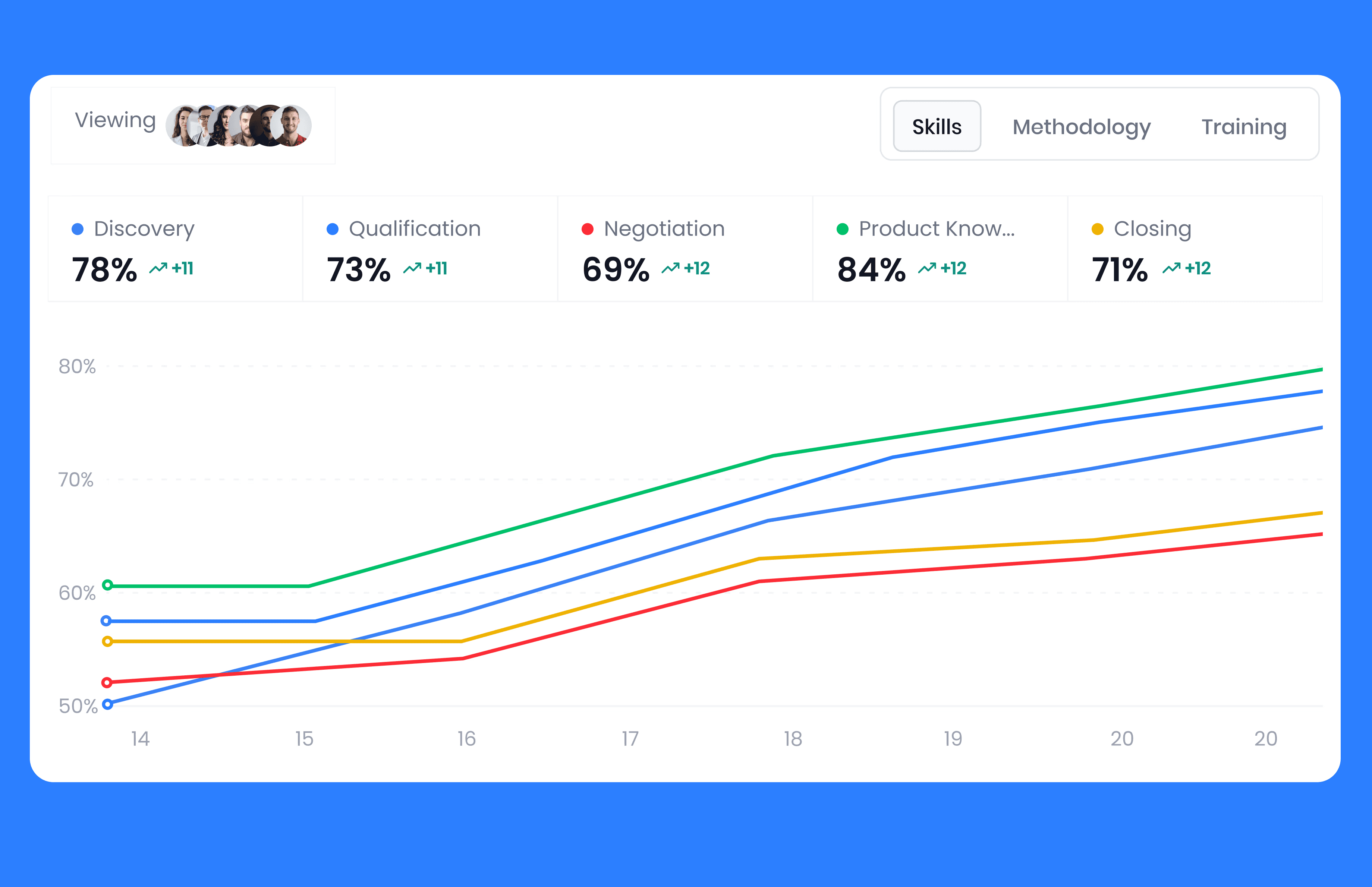
Teams can turn their sales calls, playbooks, product knowledge, messaging, and methodology into personalized training for every rep.
Help Your Team Get Better Before the Next Dial
You can:
Build courses from your sales context
Practice cold calls with realistic AI roleplays
Create assessments and microlearning
Analyze rep performance by skill
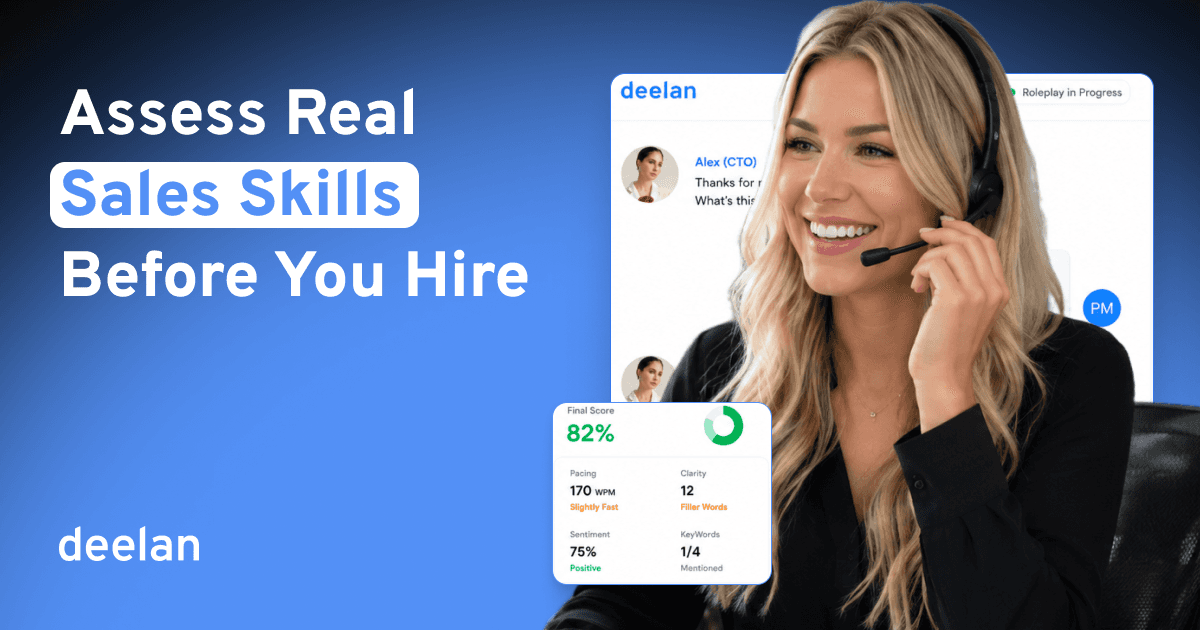
Give personalized AI feedback
Identify individual skill gaps
Recommend the next training
Track improvement across the team