Most sales demos do not fail because the product is weak.
They fail because the rep turns the call into a product tour, moves too fast, shows too much, misses the buyer’s real goal, or practices only when a real prospect is watching.
A good demo helps the buyer see a clear before and after. It connects their pain to a better way of working. It gives them enough confidence to move forward.
Improve Your Demo Skills for Free
Before we get into the mistakes, Deelan Academy has three free resources you can use with your team:
How to Give a Demo That Wins, a free course on structuring demos around buyer pain, value framing, pacing, and handling interruptions.
Demo Skills: Put Them to the Test, a free assessment to check what reps understand, where they struggle, and what they need to practice next.
Demo Under Pressure: Roleplay, a free roleplay with skeptical AI buyer who interrupts, asks hard questions, and challenges your value framing.

Quick table: common demo mistakes and what to do instead
Mistake | Better approach |
|---|---|
Starting with company history | Start with the buyer’s problem |
Showing every feature | Show the few features tied to their goal |
Talking more than listening | Ask questions throughout |
Using generic examples | Use examples from their industry |
Saving questions until the end | Make the demo interactive |
Not practicing before calls | Use roleplay and training before live meetings |
Not understanding the prospect’s goal | Confirm success criteria before demoing |
Not having a demo path | Build a simple flow before the call |
Showing value too late | Show a relevant win in the first 5 minutes |
Not using use cases | Demo real workflows, not screens |
Using technical language | Translate features into business outcomes |
Not anticipating objections | |
Having no backup scenario | Prepare a second path |
Not recording demos | Use recordings to improve coaching |
Giving a tour instead of a story | Create a before and after |
Weak transitions | Practice how you move between points |
Not closing on business value | End with impact, not features |
1. Starting with company history
A lot of reps open with “Let me tell you who we are.” The buyer is usually waiting to hear why the meeting matters to them.
A stronger opening is simple: repeat the problem they shared in discovery, confirm the agenda, and show that the demo will focus on their situation.
Example:
For an insurance company, do not begin with your founding story. Start with: “You mentioned agents spend too much time searching across systems before advising customers. I’ll focus today on how teams reduce that manual work.”
2. Showing every feature
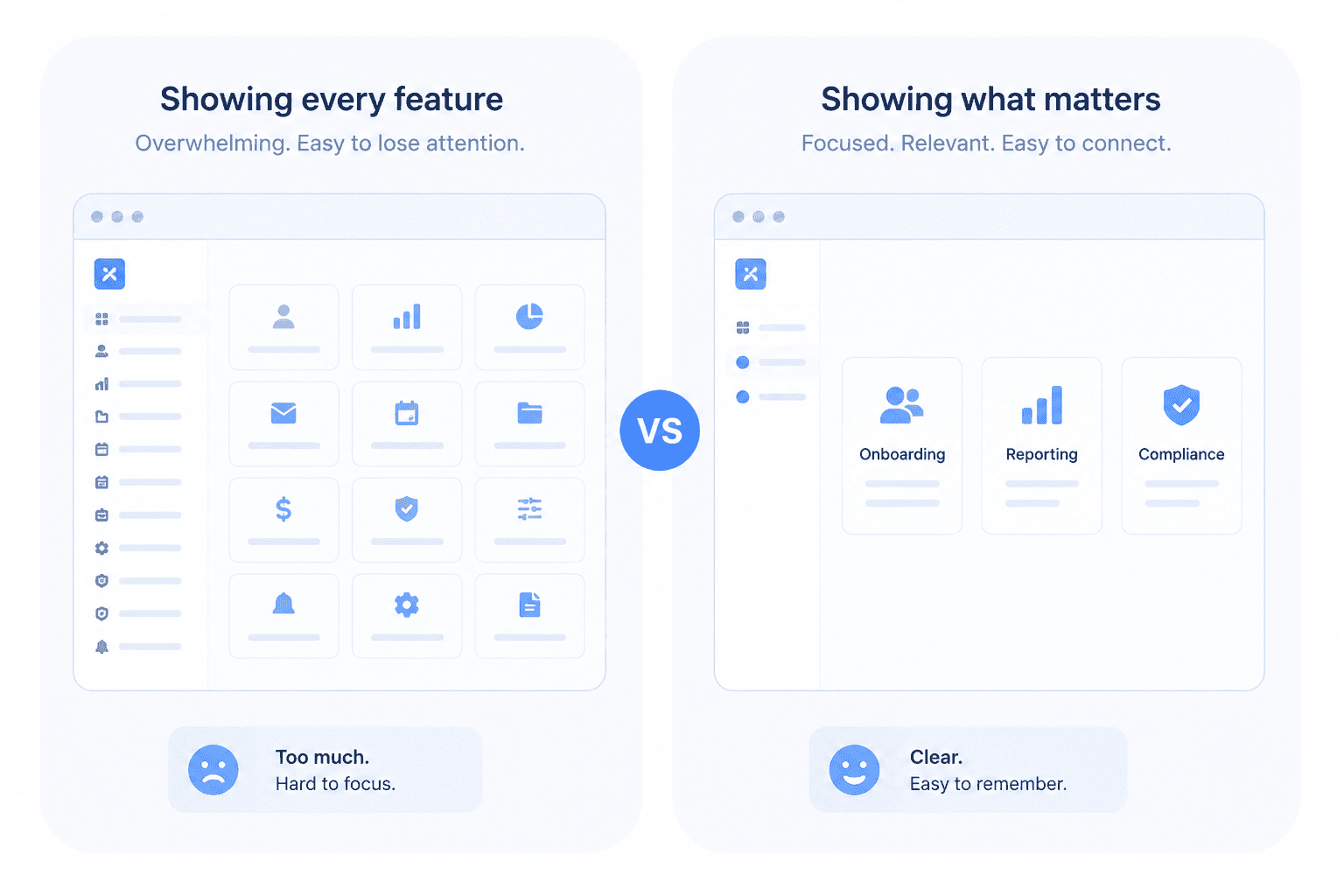
Showing everything feels safe. It is also one of the fastest ways to lose attention.
A demo is not a full product walkthrough. It should focus on the few features that matter for the buyer’s problem, role, and decision process.
Example:
For a SaaS HR platform, the VP of People may care about onboarding consistency and reporting. They probably do not need a detailed tour of every admin setting.
3. Talking more than listening
Many reps treat the demo like a presentation. The buyer becomes passive, then quiet, then hard to read.
Ask small questions as you go. Not forced questions every two minutes, but useful ones.
Try:
“How would this work with your current process?”
“Is this close to what your team needs?”
“Would your managers use this view, or would they need something simpler?”
A demo should feel like a working session.
4. Using generic examples
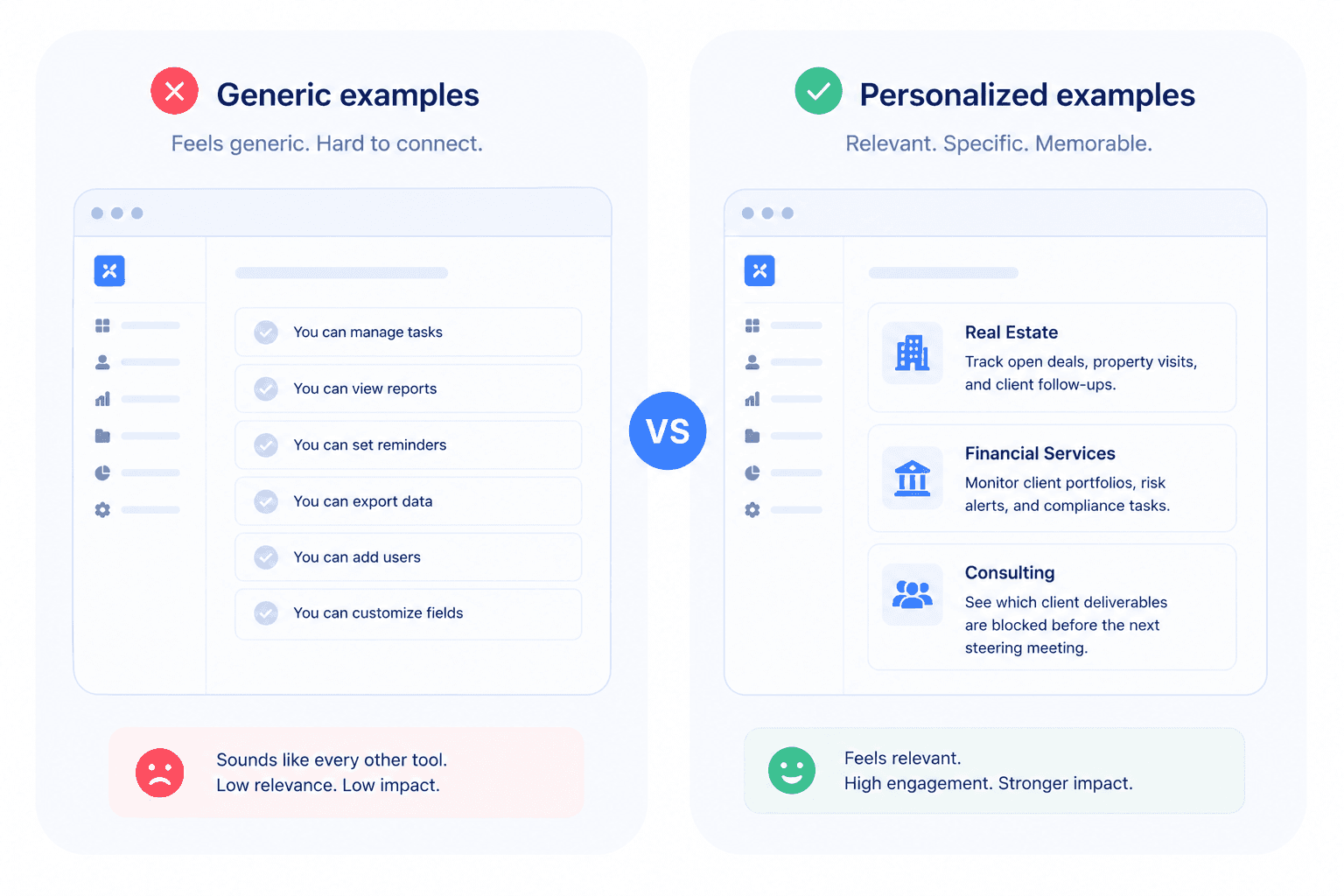
Generic demos make good products look average.
If the buyer is in real estate, show a real estate workflow. If they are in financial services, talk about risk, compliance, client follow-up, or advisory processes. If they are in consulting, show how teams standardize client delivery.
The product may be the same. The story should not be.
Example:
Instead of saying, “You can track tasks here,” say, “A consulting team could use this to see which client deliverables are blocked before the weekly steering meeting.”
5. Saving questions until the end
When reps say, “I’ll take questions at the end,” they often miss what the buyer is thinking in real time.
Questions are not interruptions. They are signals.
A buyer who asks, “Can it handle multiple regions?” may be revealing a serious implementation concern. Do not brush past it. Ask one more question.
“What makes regional setup important for your team?”
That answer may change the rest of the demo.
6. Not practicing before calls
Too many reps practice on live prospects.
That is risky. Real calls are where reps should perform, not where they should first discover that their explanation is too long, their transitions are weak, or their objection handling falls apart.
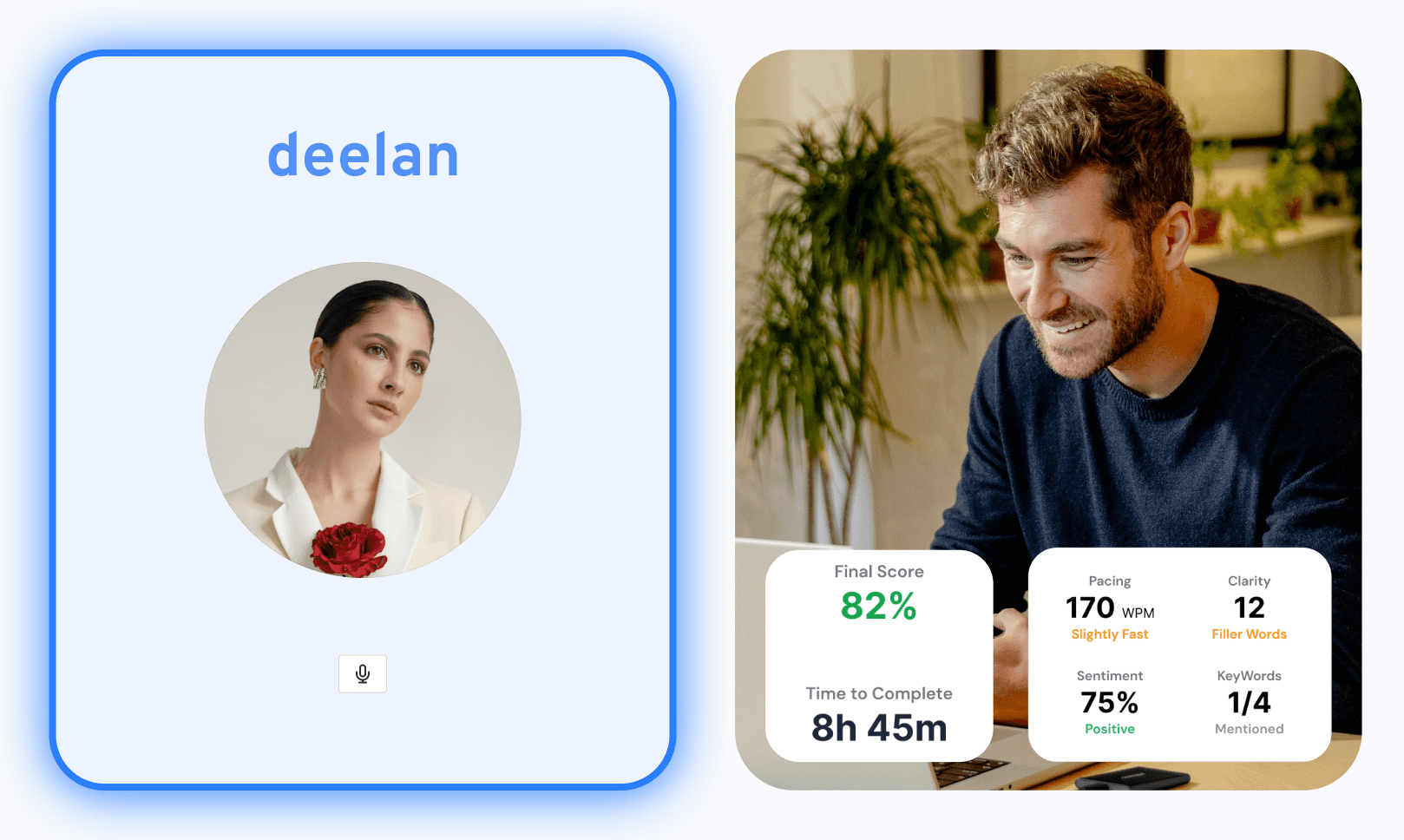
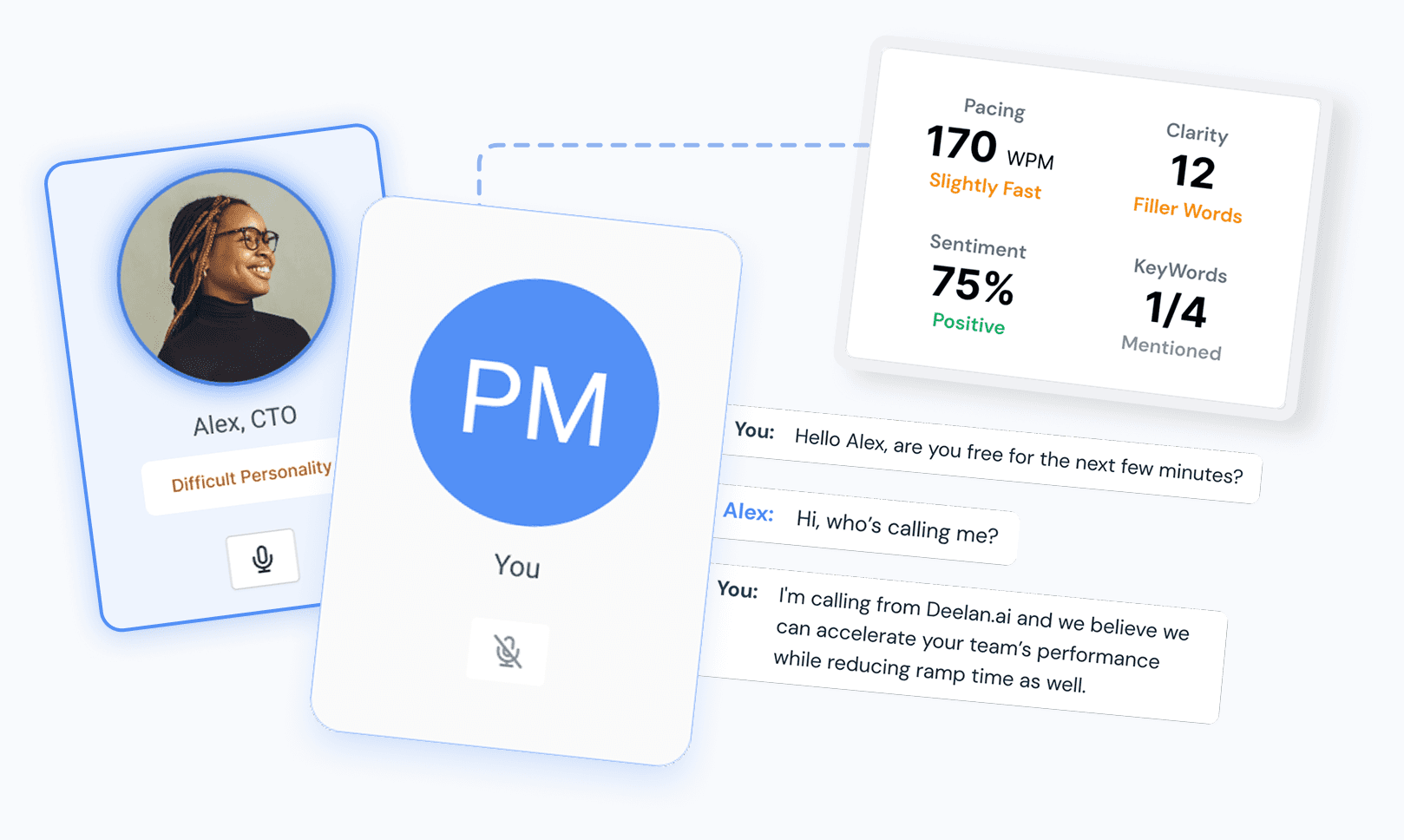
Teams can use Deelan AI roleplays to practice demo scenarios before the call. Reps can face realistic buyer personas, hear objections, practice technical questions, and get feedback on talk-to-listen ratio, confidence, tone, question depth, and objection handling.
7. Not understanding the prospect’s goal
A demo without a goal becomes a tour.
Before the call, know what the buyer needs to believe by the end of the session. The goal could be:
“They need to see that onboarding can be standardized across regions.”
“They need to trust that their managers can use this without extra admin work.”
“They need to understand how this reduces manual follow-up.”
If you do not know the goal, ask before you start.
Example:
“For today’s demo, would it be most useful to focus on manager visibility, rep training, or reporting?”
8. Not having a demo path
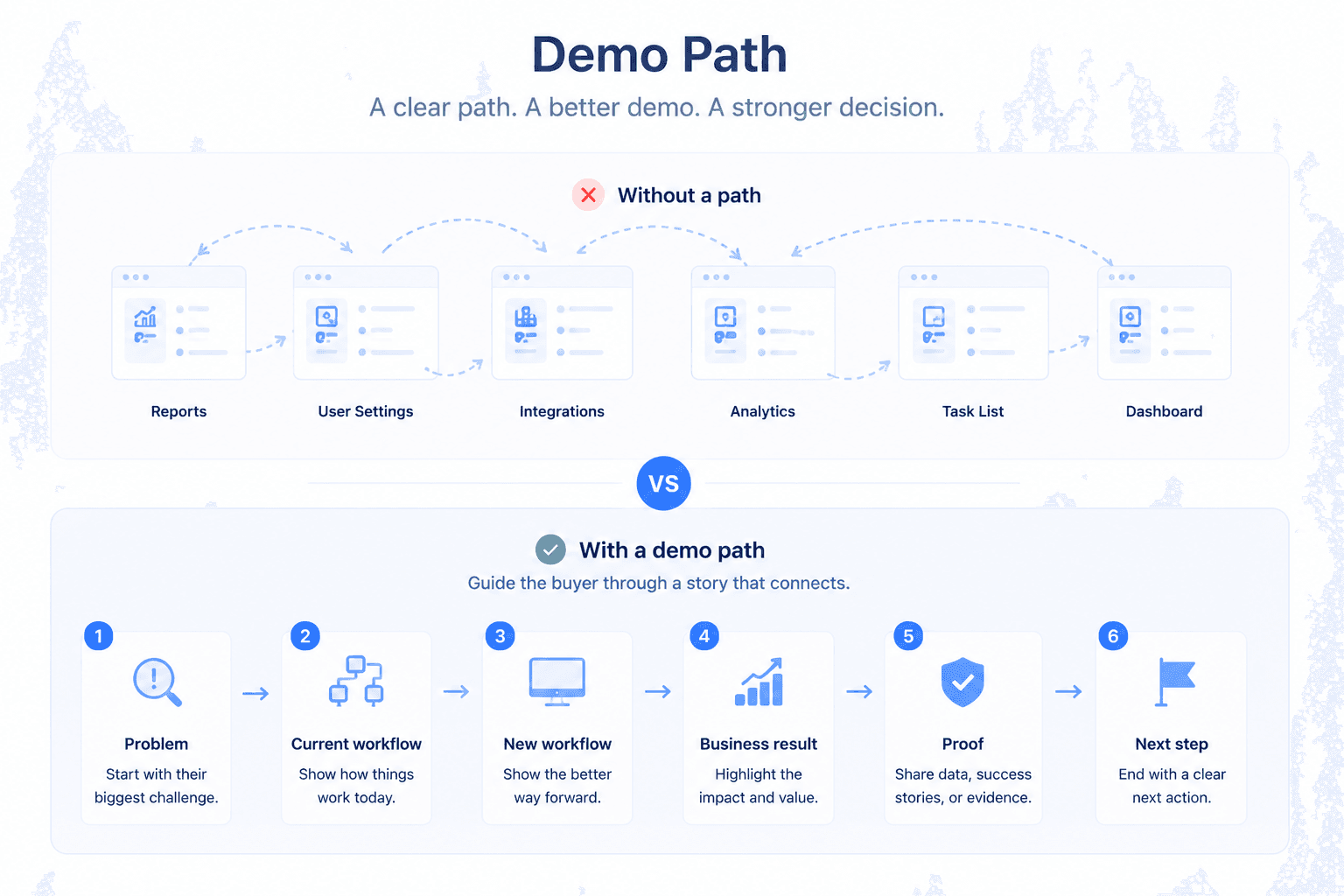
A demo path is the route you want the buyer to follow.
Without it, reps jump from screen to screen. The buyer has to do the work of connecting the dots.
A simple demo path could look like this:
Problem
Current workflow
New workflow
Business result
Proof
Next step
9. Showing value too late
Some reps spend 15 minutes setting the scene before they show anything useful.
The first 5 minutes matter. Use them well.
Start with a relevant pain, show one clear moment of value, then go deeper. Buyers need early proof that the call is worth their attention.
Example:
For a sales leader, show how they can spot which reps are not ready for live calls. Then explain how the training path works.
10. Running demos that are too long
Long demos are often a sign of weak prioritization.
A 45-minute demo can work if every section matters. A 20-minute demo can feel endless if it is full of irrelevant screens.
Cut anything that does not support the buyer’s goal.
A useful rule: if you cannot explain why a section helps the buyer make a decision, remove it.
11. Not using use cases
Features describe what the product does. Use cases show how it fits into work.
A buyer rarely thinks, “I need a dashboard.” They think, “I need to know which reps are ready before they speak to customers.”
Build your demo around real situations.
Examples:
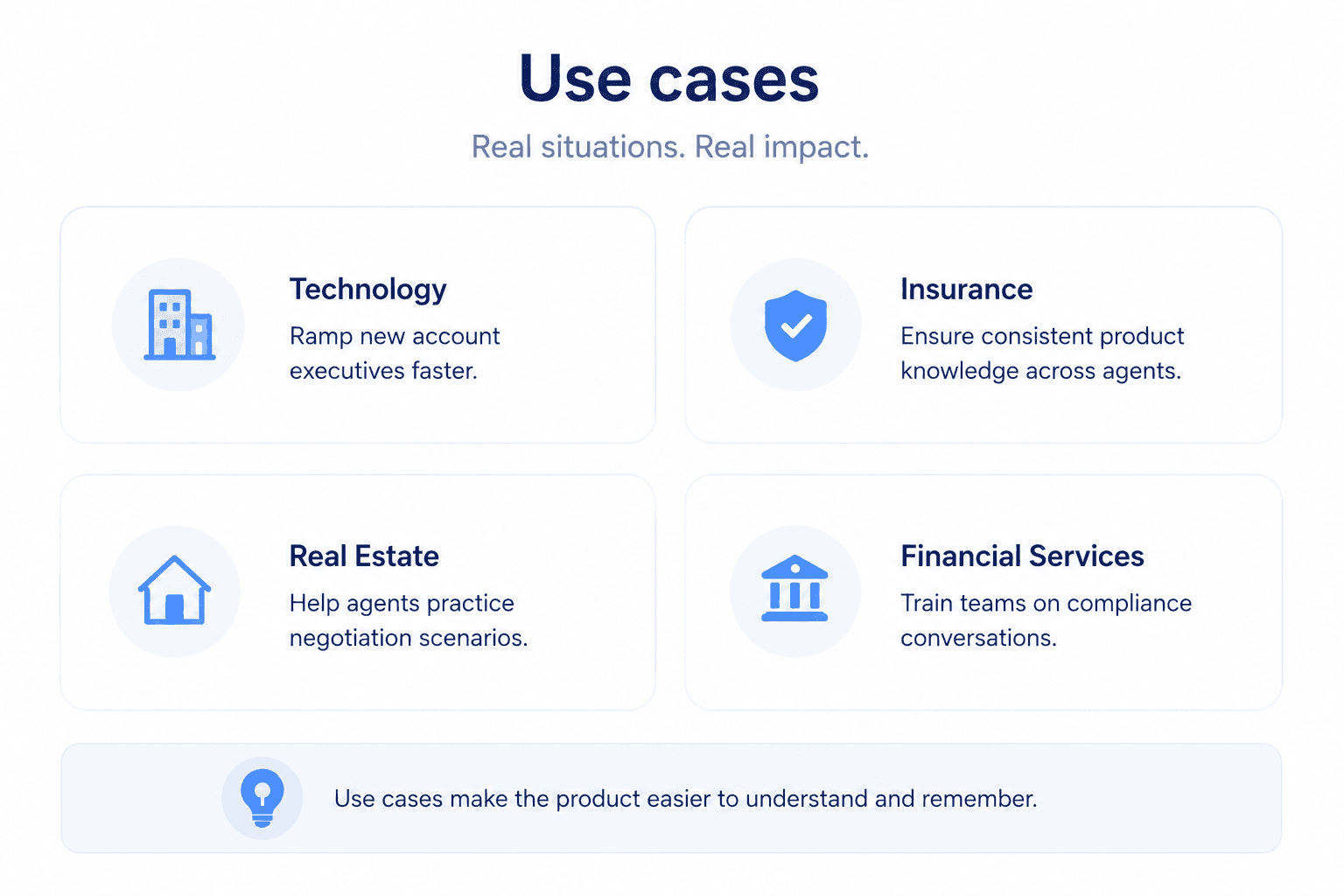
A technology company may need to ramp new account executives faster.
An insurance team may need consistent product knowledge across agents.
A real estate team may need agents to practice negotiation scenarios.
A financial services team may need training around compliance conversations.
Use cases make the product easier to remember.
12. Using too much technical language
Technical language can make a rep sound smart and still confuse the buyer.
If the buyer is technical, go deep. If not, translate.
Instead of:
“Our platform generates adaptive learning paths from uploaded source materials.”
Say:
“You upload your playbooks, call recordings, and product docs. The system turns them into training that adjusts to each rep’s gaps.”
The second version is easier to understand and easier to buy.
13. Not making the demo interactive
A silent buyer is not always an interested buyer.
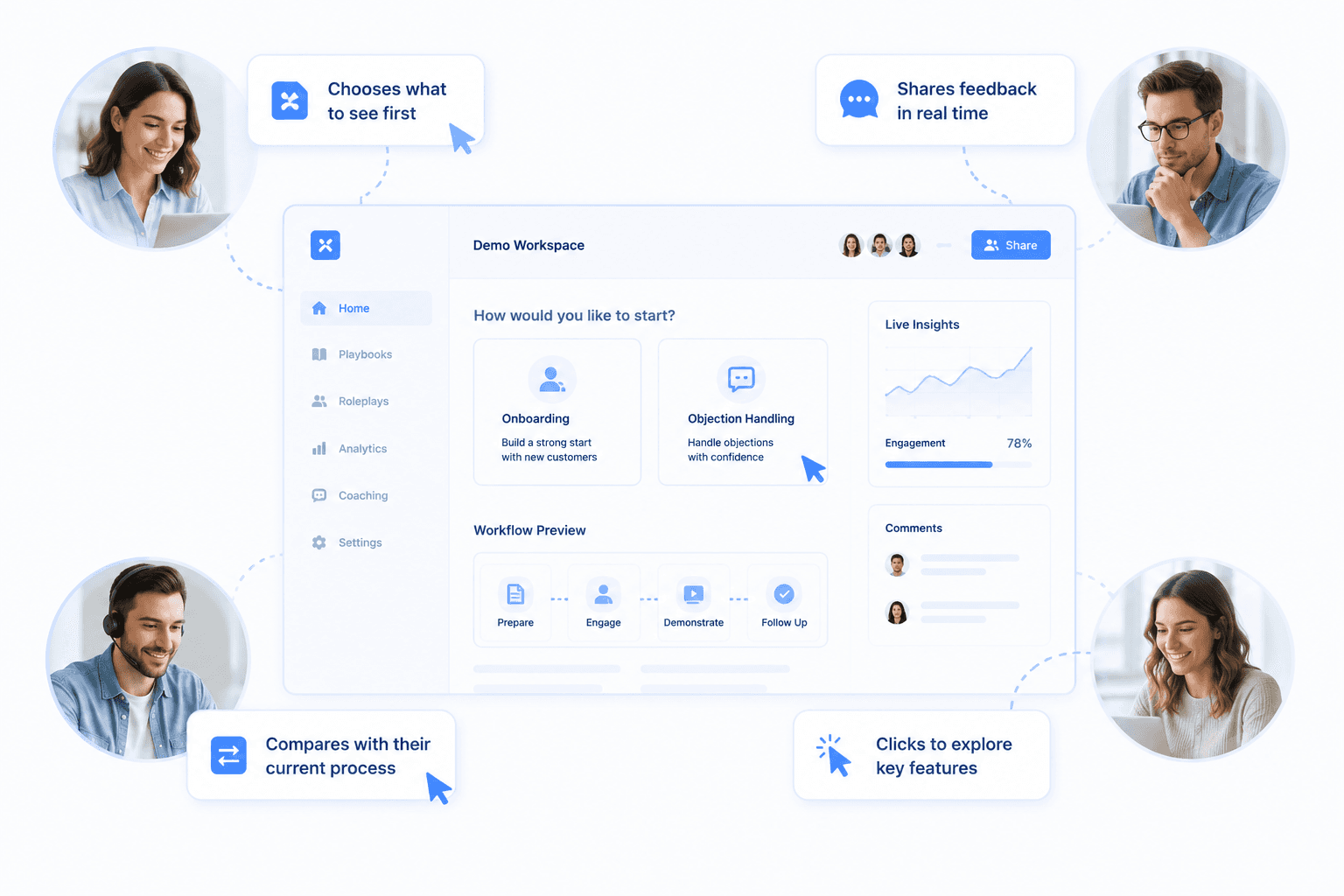
Give them small moments to participate. Ask them to choose which workflow to see first. Invite them to compare the product to their current process. Let them react before you move on.
Example:
“We can look at onboarding first or objection handling first. Which is closer to your current priority?”
This keeps the demo relevant and gives you better information.
14. Not anticipating objections
Objections are part of demos. Reps should not be surprised by them.
Common demo objections include:
“We already have a tool for this.”
“Our team will not adopt it.”
“This seems like extra work.”
“How long does setup take?”
“How is this different from an LMS?”
“What happens if our content changes?”
With Deelan roleplays, teams can practice these moments before the real call. The AI buyer can push back, ask follow-up questions, challenge pricing, or act like a skeptical technical buyer. Reps get to build composure before revenue is at risk.
15. Not having backup scenarios
Software breaks. Internet connections fail. Sample data looks strange. A feature may not behave the way you expected.
Good reps prepare a backup path.
That could mean having screenshots ready, a second demo environment, a simplified workflow, or a short story that still explains the value if the live product misbehaves.
The buyer will forgive a small issue. They will not forgive chaos.
16. Not recording demos
If demos are not recorded or reviewed, coaching becomes vague.
A manager may say, “Be more consultative,” but the rep needs to know where they rushed, where they missed a question, and where they failed to connect the feature to business value.
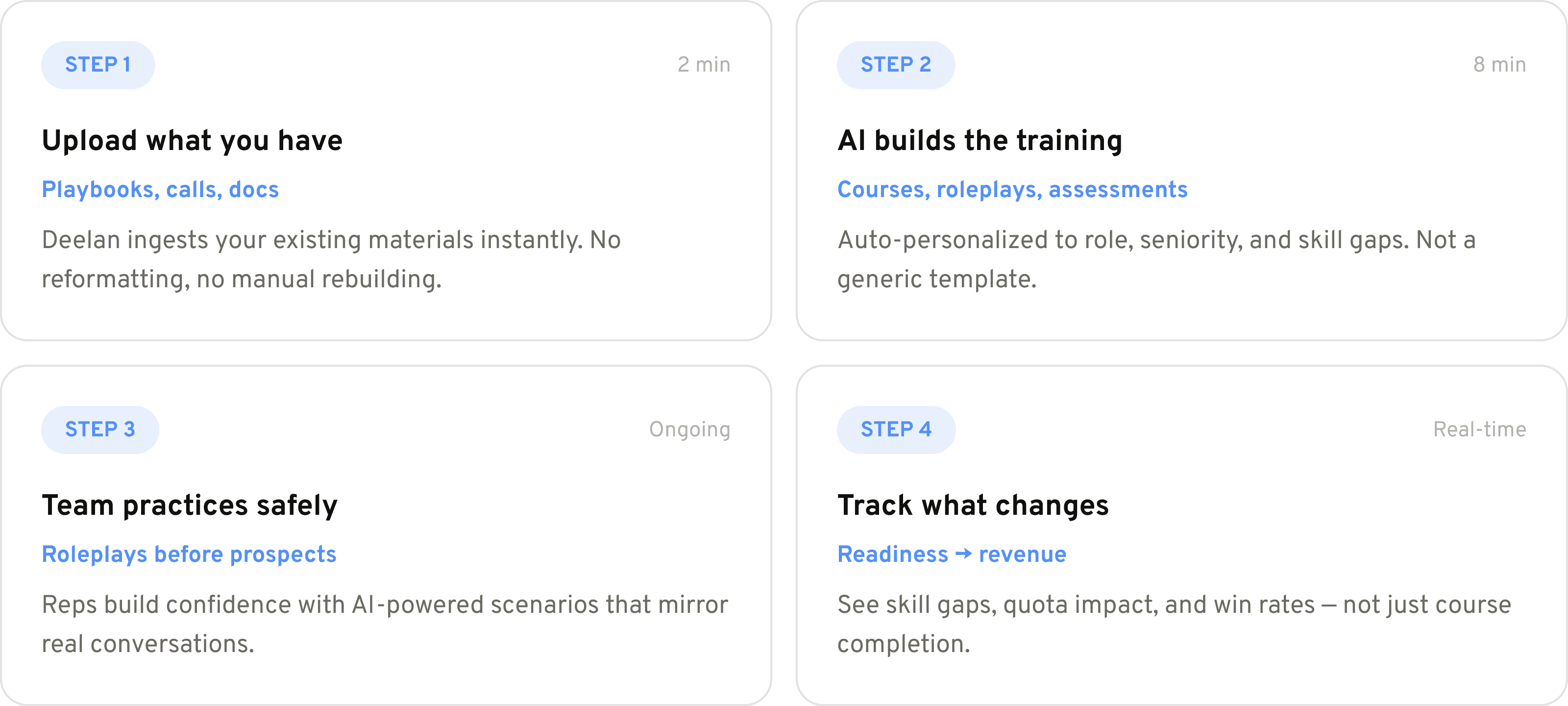
Demo recordings can become training material. With Deelan, teams can turn playbooks, call recordings, product docs, and scripts into structured training, roleplays, assessments, and courses. That means real sales moments can be used to identify skill gaps and build better practice.
This is how demo improvement becomes a system instead of random feedback.
17. Giving a tour instead of telling a story
The best demos have movement.
The buyer starts in their current world: messy process, slow onboarding, inconsistent performance, too much manual coaching, unclear readiness.
Then they see a better version: clearer workflows, faster ramp time, stronger conversations, better visibility, fewer repeated manager explanations.
Bonus tip: practice transitions
The rep finishes one feature, pauses, then says, “Okay, next I’ll show you…”
That sounds small, but weak transitions make the demo feel disconnected.
Use transitions that remind the buyer why the next section matters.
Example:
“Now that we’ve seen how training gets created, let’s look at how a manager knows who is actually ready for customer conversations.”
Bonus tip: slow down
Reps often rush when they know the product well.
The buyer is seeing it for the first time. Give them time to process. Pause after important screens. Let them react. Do not fill every silence.
A slower demo often feels more confident.
End with business value
End by connecting the demo back to the buyer’s goal.
For example:
“Based on what you shared, the main value is that your managers can stop repeating the same coaching, reps can practice before live calls, and leadership can see who is ready before pipeline is at risk.”
Then agree on the next step.
Better demos are not built during the demo.
They come from better preparation, better practice, better feedback, and a clearer story.
If your team wants to improve demo performance, you can start with Deelan Academy’s free course, How to Give a Demo That Wins, or use the free Demo Skills Assessment to see where reps are strong and where they need work.
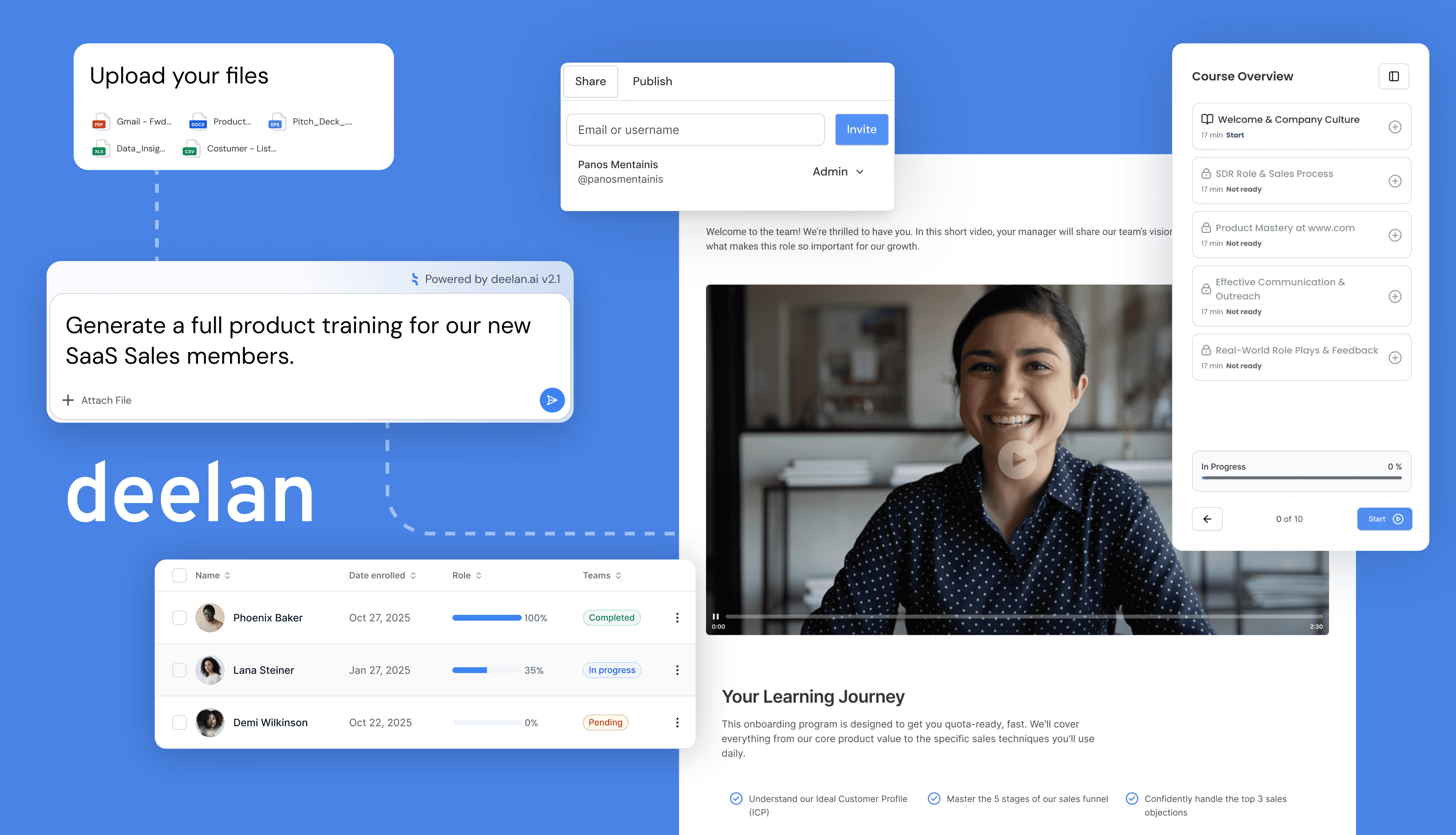
For teams that want to build structured sales training, AI roleplays, assessments, courses, and demo practice programs from their own playbooks and recordings, Deelan AI helps revenue teams create training in minutes.