
Scaling a high-performing revenue organization is hard. Doing it with a distributed team is even harder. If you are a sales leader, founder, or enablement manager relying on static slide decks and passive webinars, you already know that traditional onboarding is failing your team.
To build a resilient, quota-crushing remote team, you need innovative virtual sales training ideas that go beyond the traditional LMS. You need methods that prioritize active participation, real-world simulation, and adaptive learning.
In this guide, we will break down exactly why traditional methods fail, share 11 actionable ideas to transform your enablement strategy, and show you how AI is changing the landscape of revenue training.
Why Remote Sales Teams Need Better Training
Transitioning from an in-office bullpen to a remote environment fundamentally changed how reps learn. Without the ability to simply swivel a chair and ask a senior Account Executive for advice, remote sales teams face unique hurdles:
Lack of Real Coaching: Managers are stretched too thin. Without in-person shadowing, coaching often devolves into merely reviewing metrics rather than improving actual call execution.
Inconsistent Messaging: When reps are siloed at home, product messaging and objection handling quickly drift, leading to disjointed buyer experiences.
Poor Onboarding: Handing a new hire a massive wiki of reading material leads to slow ramp times and low retention of crucial information.
Zoom Fatigue: Forcing reps to sit through hours of passive video lectures drains energy and results in zero practical skill development.
Difficulty Scaling Training: As your product evolves or you enter new markets, updating traditional virtual sales training courses takes weeks, leaving your team operating on outdated information.
To fix this, revenue teams must adopt dynamic, interactive, and adaptive training frameworks.
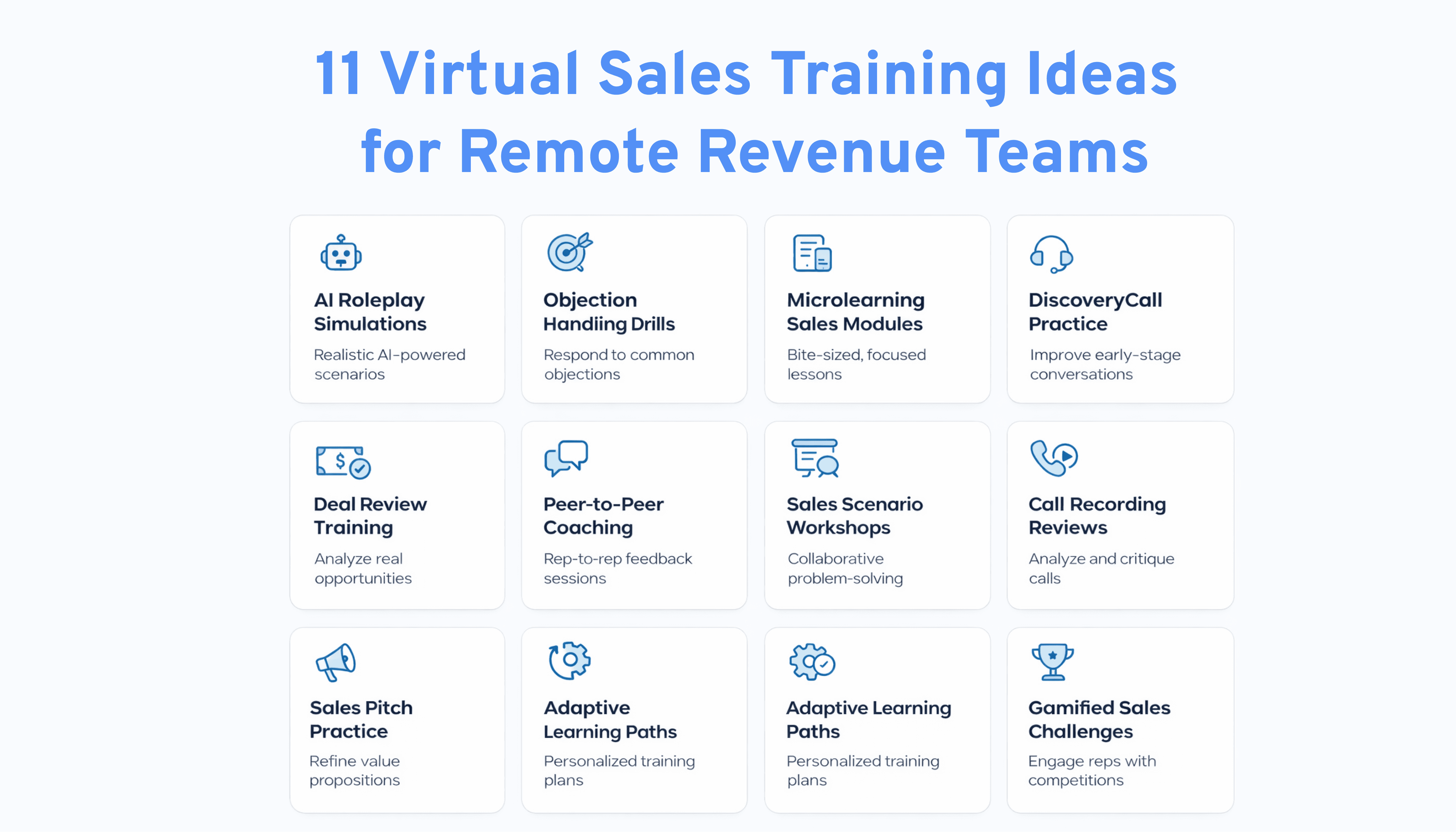
11 Virtual Sales Training Ideas That Actually Improve Sales Performance
Here are 11 highly effective, actionable training methods you can implement for your remote teams.
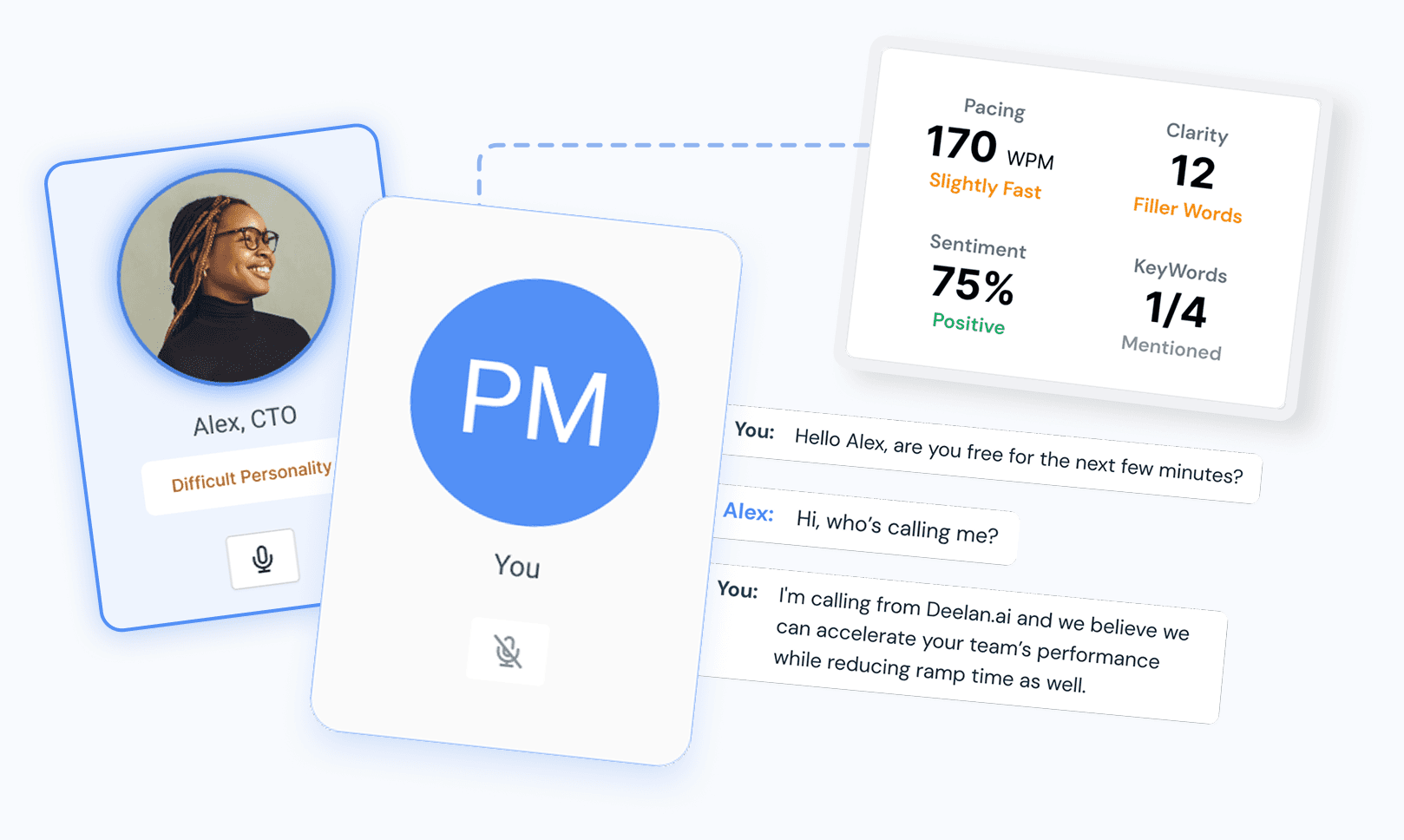
1. AI Roleplay Simulations
Description: Using artificial intelligence to simulate realistic buyer conversations, allowing reps to practice pitching and objection handling in a safe, risk-free environment.
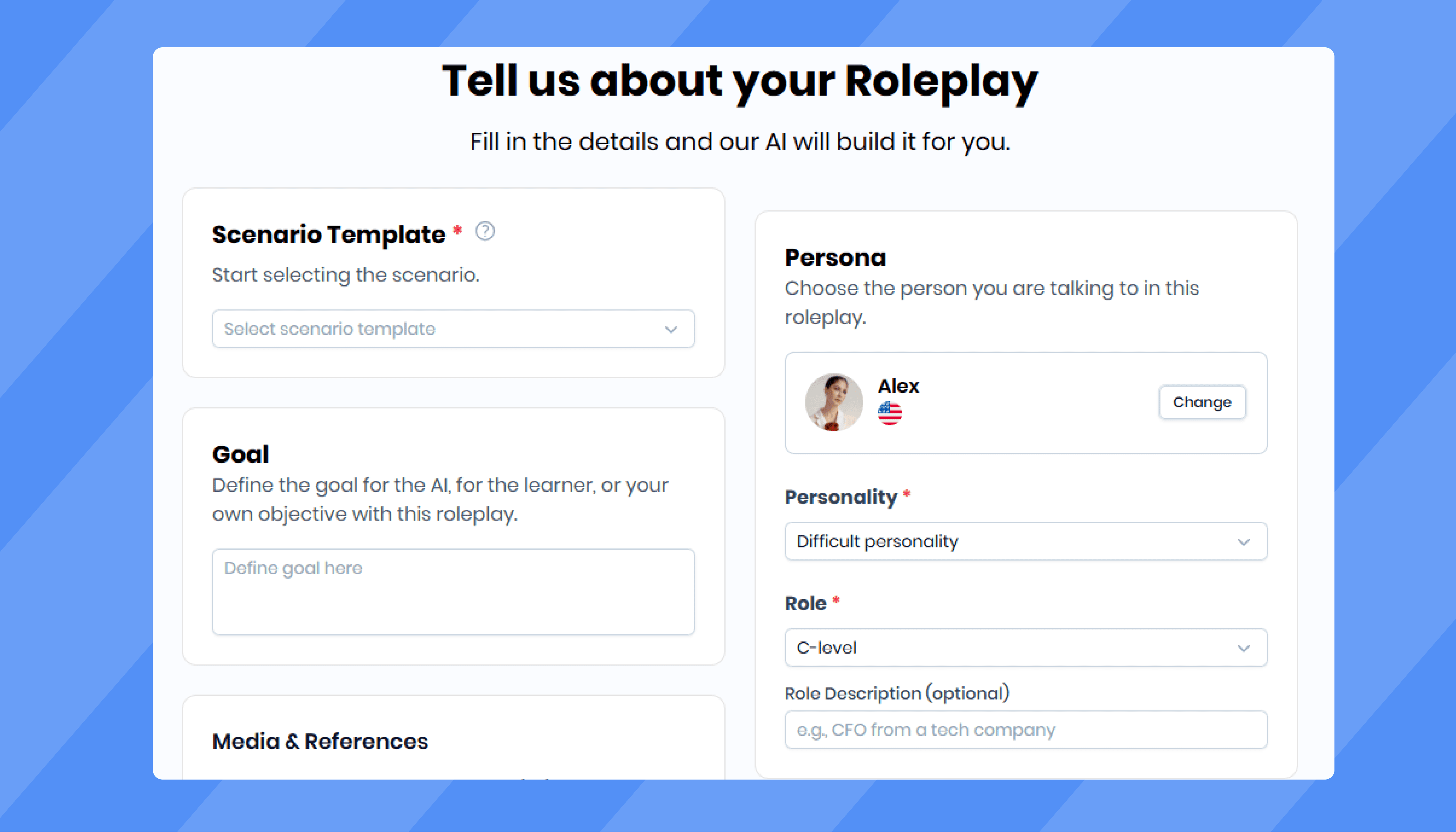
How to run it: Instead of forcing managers to spend hours playing the "buyer," deploy an AI coaching platform like Deelan. The AI acts as the prospect, reacting in real-time to the rep's tone, questions, and value propositions.
Why it works: It provides instant, objective feedback without taking up a manager's calendar. Reps can practice a scenario 10 times before ever speaking to a real prospect.
Example: Practicing a complex pricing negotiation with a CFO persona.
Best format: AI Simulation / Roleplay.
2. Objection Handling Drills
Description: Rapid-fire sessions dedicated solely to navigating the most common and difficult buyer objections.
How to run it: Compile a list of the top 5 objections your team faces (e.g., "We don't have budget," "We use a competitor"). Pair reps up on a video call, or use an automated tool, to rapid-fire these objections. The rep has 15 seconds to respond effectively using company frameworks.
Why it works: Builds muscle memory so reps don't freeze when a prospect pushes back on a live call.
Example: A "Beat the Clock" drill where an SDR must pivot from "Call me in 6 months" to a booked meeting.
Best format: Microlearning / Peer Roleplay.
3. Microlearning Sales Modules
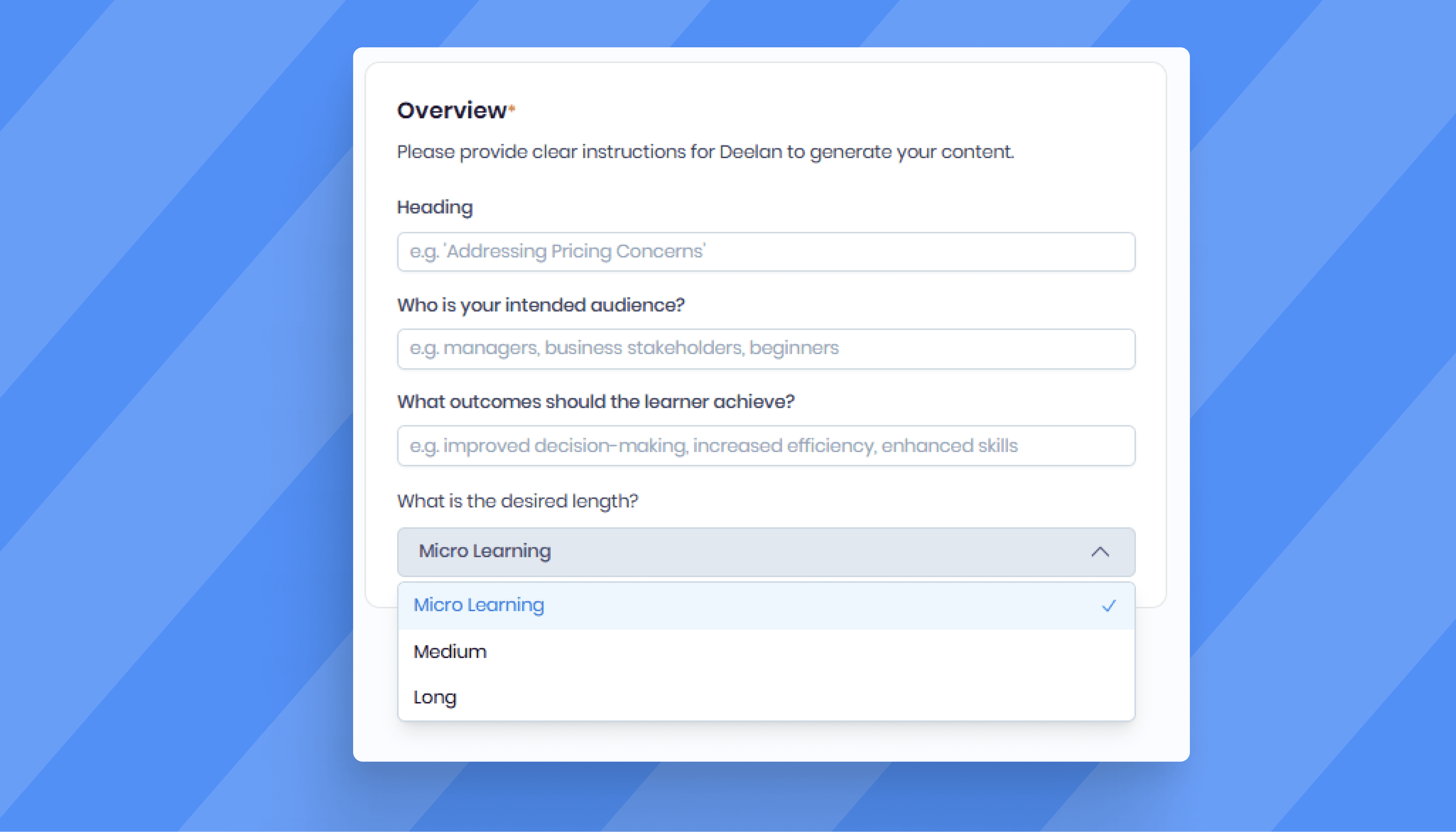
Description: Breaking down complex sales methodologies into bite-sized, 3-to-5-minute learning moments.
How to run it: Instead of a massive certification course, deliver short video or text modules directly in the rep’s workflow (like Slack or a dedicated enablement app) focusing on one hyper-specific skill per day.
Why it works: Remote reps suffer from cognitive overload. Microlearning aligns with how adults naturally consume information, drastically improving knowledge retention.
Example: A 3-minute interactive quiz on a newly released product feature right before a new campaign launches.
Best format: Microlearning / Assessment.
4. Discovery Call Practice Sessions
Description: Training dedicated exclusively to the art of asking high-impact, open-ended questions to uncover true buyer pain points.
How to run it: Have reps listen to a 5-minute snippet of a highly successful discovery call. Then, pause the recording and ask the trainee, "What question would you ask next?" Compare their answer to what the top-performing rep actually said.
Why it works: Moves reps away from "interrogation-style" discovery and teaches them how to naturally guide a conversation.
Example: Practicing the transition from technical pain points to business/financial impact.
Best format: Call Recording Review / Workshop.
5. Deal Review Training
Description: A collaborative teardown of an active, stalled, or lost deal to identify strategic blind spots.
How to run it: A rep presents a current deal to the broader team, covering the prospect's pain, the stakeholders involved, and the current roadblock. The team crowdsources the next best action.
Why it works: It turns isolated remote sellers into a collective intelligence, allowing junior reps to learn strategy from senior AEs.
Example: Dissecting why an enterprise deal went dark after the technical validation stage.
Best format: Live Team Workshop.
6. Peer-to-Peer Coaching
Description: Pairing reps together to review each other's work, share tactics, and provide feedback.
How to run it: Implement a "Buddy System" where a top-performing AE is paired with a ramping SDR. They meet for 30 minutes weekly to review one call and one cold email sequence.
Why it works: It scales coaching without overburdening management and builds camaraderie in a remote setting.
Example: An SDR sharing their screen to show an AE how they personalize LinkedIn outreach.
Best format: 1-on-1 Zoom Session.
7. Sales Scenario Workshops
Description: A live, highly interactive virtual sales training workshop where teams break down specific, complex selling scenarios.
How to run it: Present a fictional (but realistic) prospect scenario. Break the remote team into digital breakout rooms and give them 15 minutes to build a customized pitch or strategy. Bring everyone back to present their approaches.
Why it works: It forces critical thinking and active participation, combating the passive nature of typical webinars.
Example: Strategizing a multi-threaded account approach for a Fortune 500 target.
Best format: Virtual Sales Training Workshop.
8. Call Recording Reviews
Description: Asynchronous or synchronous breakdown of actual recorded sales calls to identify areas of excellence and areas for improvement.
How to run it: Use conversational intelligence tools to clip 2-minute segments of calls. Managers annotate the call with specific feedback on pace, tone, and question quality.
Why it works: Grounded in reality. Reps learn faster when they hear their own voice and see real prospect reactions.
Example: Reviewing a call where a rep successfully bypassed a gatekeeper.
Best format: Asynchronous Coaching / Microlearning.
9. Sales Pitch Practice Sessions
Description: Focused training on delivering the company value proposition clearly, concisely, and persuasively.
How to run it: Have reps record a 2-minute async video of their standard elevator pitch. Have managers or AI analyze the pitch for filler words, clarity, and adherence to messaging guidelines.
Why it works: Ensures absolute consistency in how your product is positioned across the entire remote team.
Example: Certifying all AEs on the new pitch deck before a major product launch.
Best format: Video Assessment / Roleplay.
10. Adaptive Learning Paths
Description: Curriculums that automatically adjust based on a rep's role, seniority, quota performance, and identified skill gaps.
How to run it: Move away from generic LMS platforms. Use an AI-driven platform like Deelan. If an AE is struggling with close rates but excels at discovery, Deelan automatically routes them to negotiation and closing modules, skipping what they already know.
Why it works: It completely eliminates wasted time. High-performers aren't bored, and struggling reps get the exact help they need.
Example: A customized 30-day bootcamp specifically for AEs who missed quota last quarter due to low win rates.
Best format: Automated Learning Program.
11. Gamified Sales Training Challenges
Description: Introducing leaderboards, points, and friendly competition into the training process.
How to run it: Create a weekly challenge.
Why it works: Sales professionals are inherently competitive. Gamification drives massive adoption and engagement in training programs.
Example: A "Pitch Perfect" tournament
Best format: Gamified Workshop / Challenge.
Deelan – The AI Training Platform Built for Revenue Teams
While having great virtual sales training ideas is the first step, executing them at scale requires the right infrastructure. Traditional learning management systems (LMS) simply slow revenue teams down. They require multiple tools, take weeks to build single courses, and measure completion rather than quota attainment.
Deelan is the AI training platform built specifically for revenue teams. We provide adaptive training that ramps reps faster, improves win rates, and scales coaching across your entire organization.
Revenue teams leveraging Deelan's platform see measurable, bottom-line results:
55% faster ramp time for SDRs & AEs.
15–25% higher win rates through better call execution.
80% faster training creation for Enablement and RevOps.
Higher pipeline quality driven by standardized, elite messaging.
How Deelan Works: From Playbooks to Performance
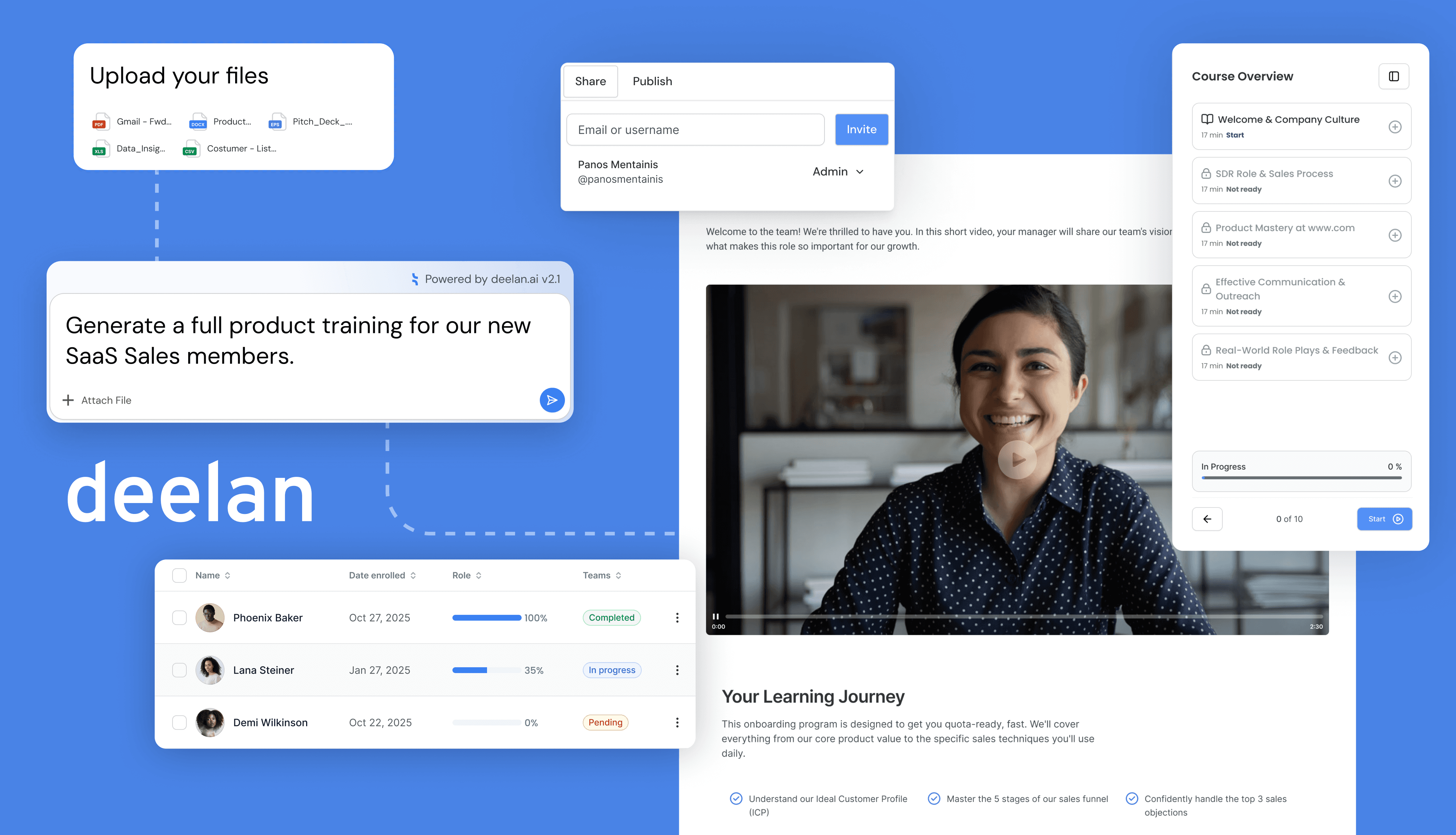
Upload Your Knowledge: Simply upload your existing scripts, call recordings, messages, and product PDFs. Deelan converts this raw data into structured training instantly.
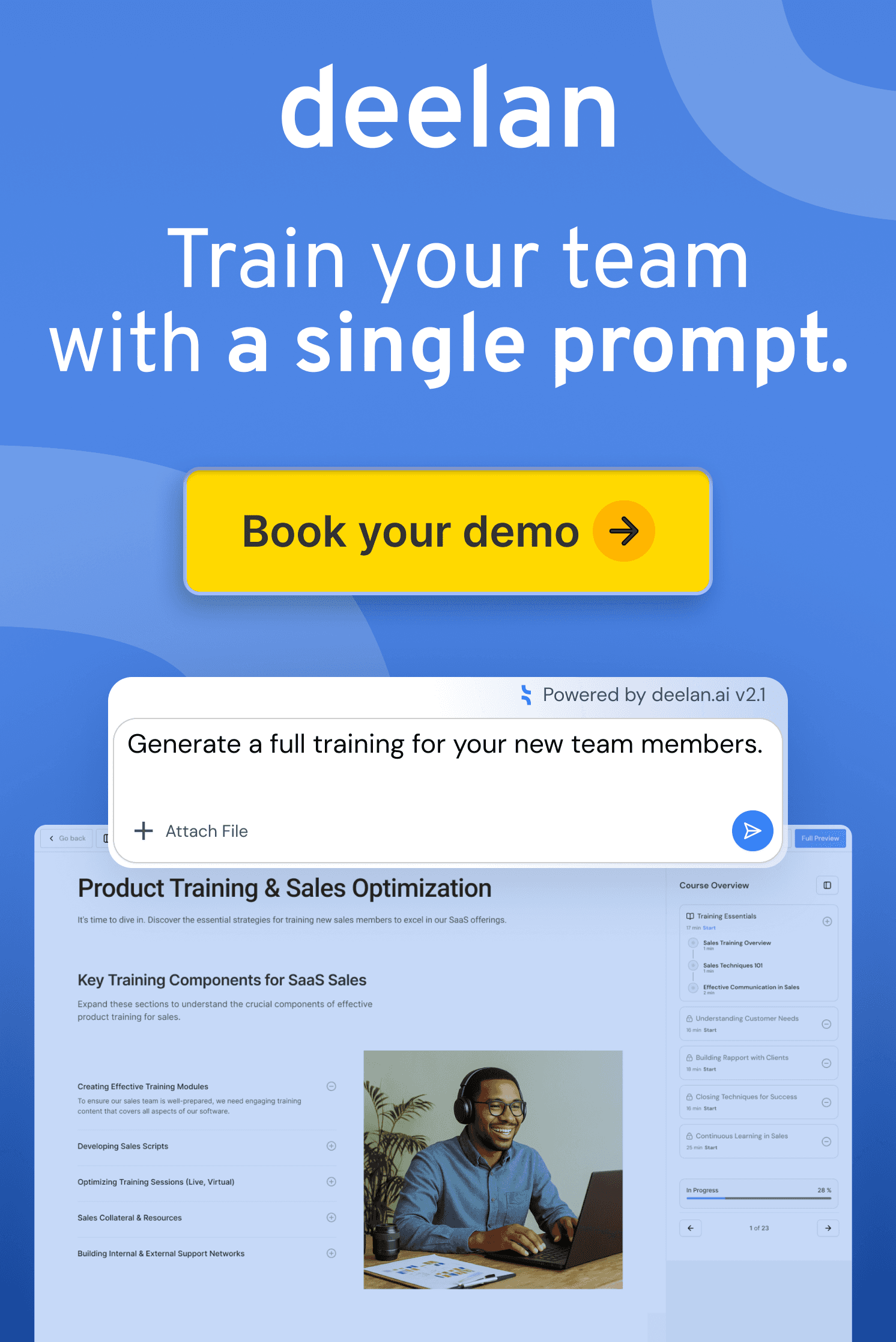
AI-Generated Training: Chat with our AI or use proven templates. Deelan generates publish-ready training courses in minutes, eliminating the massive bottleneck of content creation.
Adaptive Learning Paths: Deelan automatically adjusts the training based on role (SDR, AE, CSM), seniority, and real-time skill gaps. No more one-size-fits-all training.
AI Coaching & Real-Time Analytics: Our AI Coach continuously works with your reps, while managers get real-time analytics tracking skill mastery and KPI achievement.
Features for your Remote Sales Team Training
Deelan replaces your clunky tech stack with native formats designed to drive performance:
Courses: Adaptive paths focusing only on the skills each rep actually needs.
Role Plays: Real-world AI sales simulations that improve confidence and win rates before a rep ever goes live on a real call.
Workshops: Tools to turn live strategy into action, reinforced by follow-up practice.
Knowledge Base: A single, searchable source of truth built from your company data.
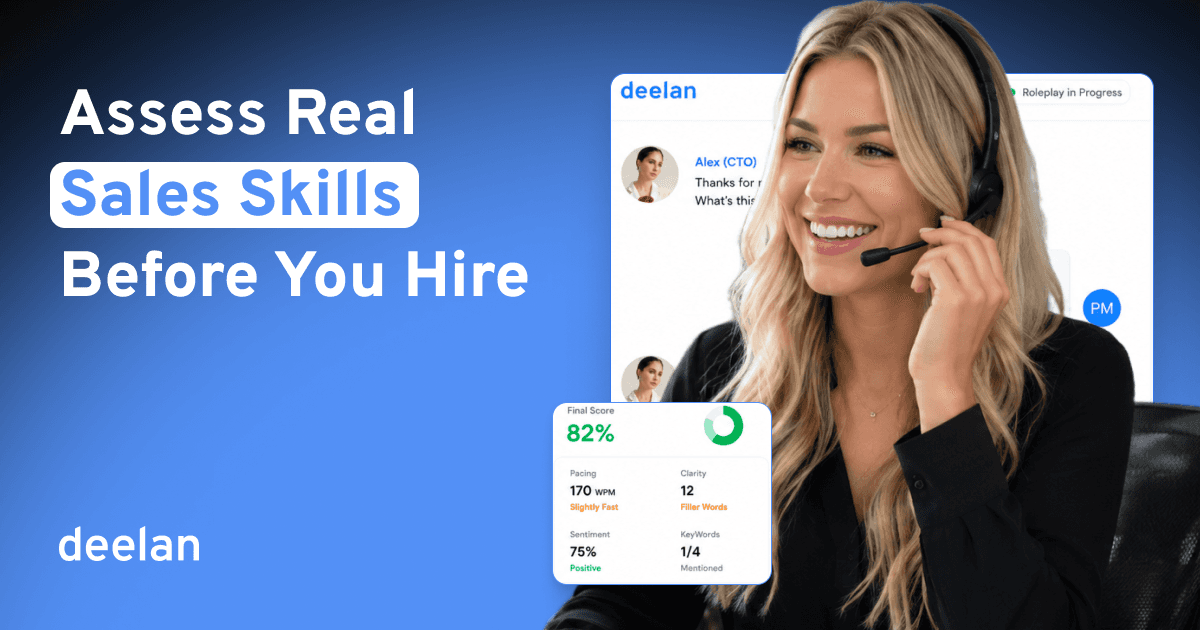
Assessments: Dynamic exams and exercises that reveal actual skill gaps, not just course completion checkmarks.
Programs: Structured paths that combine courses, role plays, and assessments into one continuous journey from onboarding to peak performance.
Deelan for Every Revenue Role
Deelan isn't just a generic course builder; it is a unified platform designed to lift every pillar of your revenue organization:
SDRs & BDRs: Practice objection handling with AI roleplays to book more meetings and refine outbound messaging.
Account Executives: Strengthen discovery skills, build better technical validation habits, and execute flawless demos.
Customer Success Teams: Train on complex renewal negotiations, upsell framing, and driving better customer outcomes.
Sales Managers: Scale your coaching efforts effortlessly and eliminate repetitive feedback loops. Let the AI handle the basics so you can focus on complex deal strategy.
RevOps & Enablement: Build, deploy, and update remote sales training materials instantly with optimized workflows, directly tying enablement efforts to revenue impact.
The Benefits of Modern Virtual Sales Training
Faster Onboarding: Adaptive paths ensure reps learn exactly what they need, cutting time-to-productivity in half.
Better Skill Retention: Microlearning and interactive roleplays replace passive listening, ensuring skills stick.
Scalable Coaching: AI platforms allow you to train 10 or 1,000 reps simultaneously with the same level of personalized feedback.
Consistent Messaging: A centralized, AI-generated knowledge base guarantees every rep speaks with one unified voice.
Measurable Performance Improvements: You stop tracking who watched a video and start tracking who mastered a skill and how it impacted their win rate.
Ready to Train a High-Performing Revenue Team?
If you are still searching for virtual sales training ideas to wake up an unengaged remote team, it is time to upgrade your tech stack. Stop letting outdated training slow your revenue growth.
Deelan helps revenue teams ramp reps faster, improve win rates, and scale coaching across the entire organization. Book a Free Demo