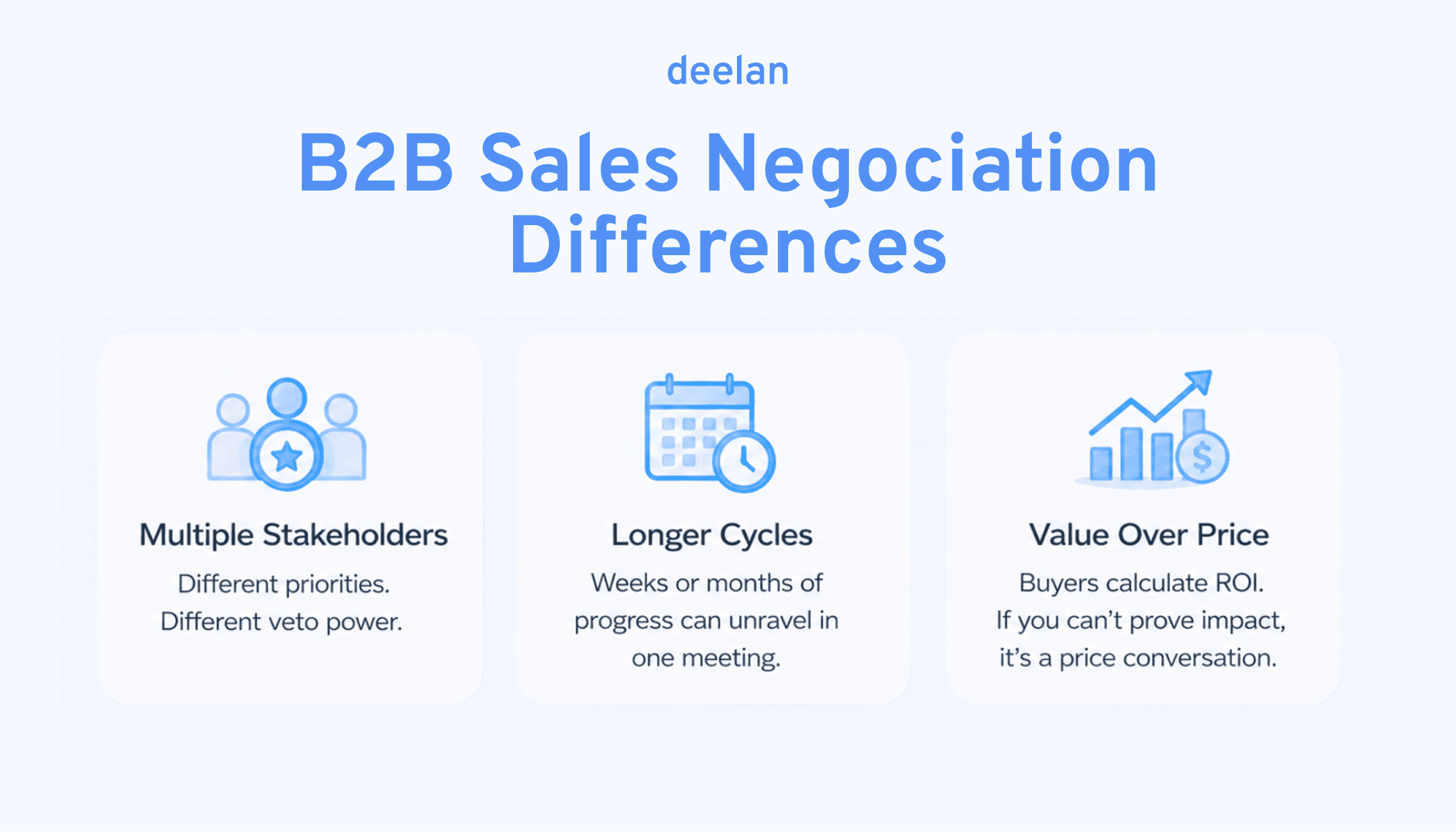
Most B2B deals are not lost on price. They are lost in the conversation before the discount is even on the table. A rep who does not know how to frame value, read the room, or hold a position will concede way too early and wonder why the margin disappears.
Key Takeaways
Most B2B deals are lost before pricing discussions even begin
Strong negotiators prepare frameworks before the call, not during it
Buyers negotiate on business impact, not product features
Structured concessions protect margin and improve deal outcomes
The best reps practice difficult negotiation scenarios on deelan before facing real buyers
This guide covers what actually works in B2B sales negotiation: the preparation frameworks, the tactics during the call, and how to build the muscle before you are sitting across from a real buyer.
Before the Negotiation
Focus Area | What To Do |
|---|---|
Define Objectives | Set target, acceptable range, and walk-away point |
Prepare BATNA | Know your alternative and estimate theirs |
Quantify Value | Prepare ROI, proof points, and business impact |
Research Stakeholders | Understand decision-makers and priorities |
Build Competitive Positioning | Know differentiators vs competitors |
Know Your Objectives Before You Start
Set a clear target, a realistic outcome, and a walk-away point before you enter any discussion. Without these, you will anchor to the buyer's numbers instead of your own.
Zone | What It Means |
|---|---|
Target point | The outcome you are aiming for |
Acceptable range | What you can live with |
Walk-away point | Below this, you leave the table |
Top-performing reps define all three in advance. Not in the car on the way to the meeting.
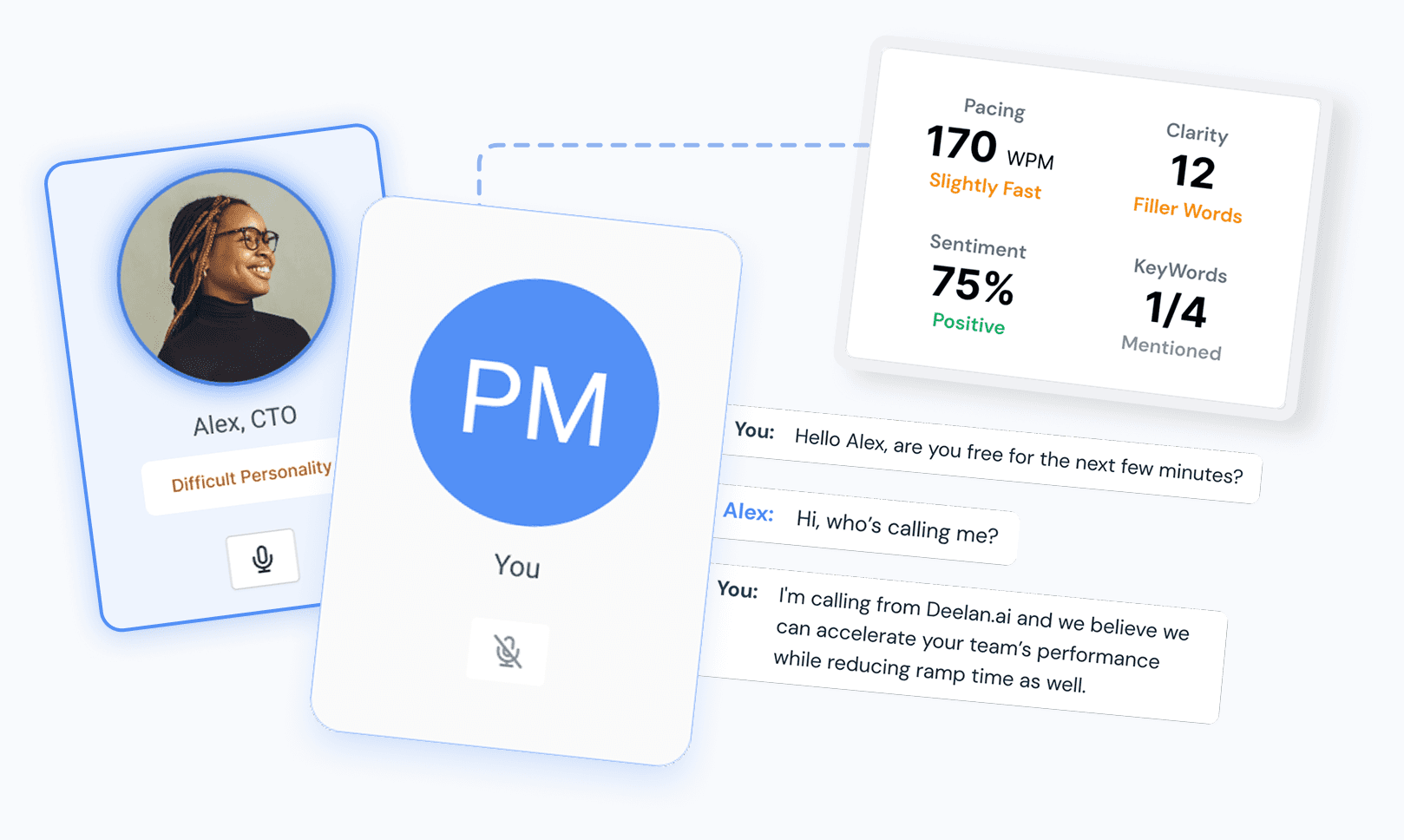
Several B2B sales teams are now using Deelan to practice negotiations before they happen in live deals.
Teams can simulate procurement pushback, price objections, renewals, and difficult buyer conversations through AI-powered roleplays built around their real sales scenarios. Instead of learning negotiation by losing margin in production calls, reps can train in a realistic environment first.
Know Your BATNA (And Theirs)
BATNA stands for Best Alternative to a Negotiated Agreement. It is the most important number in any negotiation, and most reps do not prepare it.
Your BATNA is what you do if this deal falls through. Their BATNA is what they do if you walk away.
When you know both, you stop overestimating how much power the buyer actually has. Research consistently shows that sales reps underestimate their own leverage, particularly with buyers who seem confident or senior.
Assessing the balance of power before walking in: score yourself and the buyer on factors like importance of the deal, competitive alternatives, and relationship history. Be objective. The result often surprises reps in the right direction.
Know Your Value, Not Just Your Features
B2B companies, especially in tech, tend to negotiate from a features-first (or services) position. That is a weak position. Buyers negotiate on outcomes.
Before any negotiation, prepare:
The specific business problems your product solves for this account
Quantified proof points: cost savings, time reduction, revenue uplift
Competitive differentiators that are validated, not just internally believed
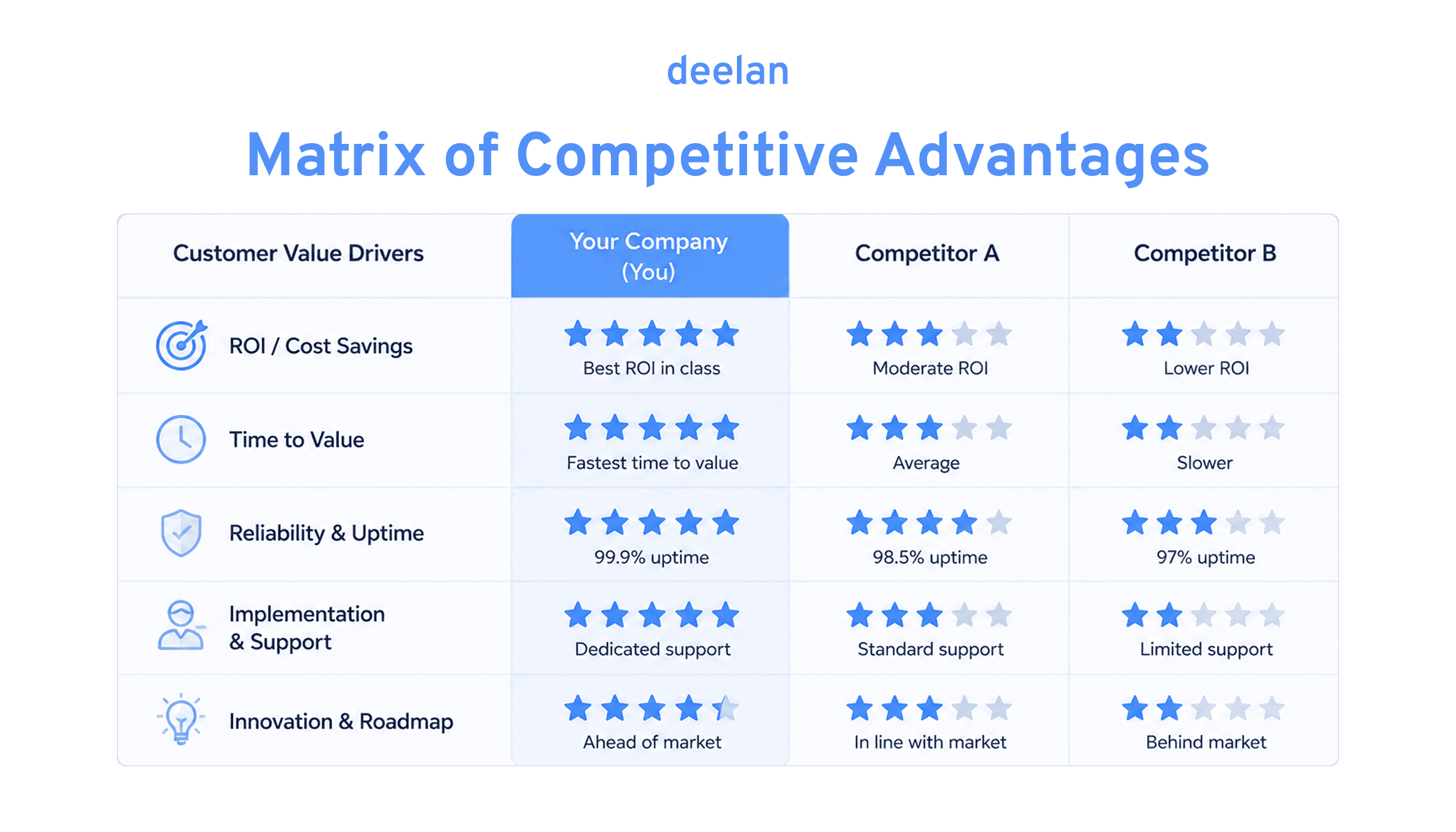
A MOCA (Matrix of Competitive Advantages) is a practical tool here: map your value drivers against what customers have confirmed matters to them, and show where you outperform alternatives. When a buyer pushes back on price, you can redirect to a specific validated differentiator instead of getting defensive.
During the Negotiation: Tactics
Tactic | Best Practice |
|---|---|
Anchor First | Set the first strong number confidently |
Use Silence | Pause after offers instead of over-talking |
Handle Objections Strategically | Ask questions before reacting |
Manage Concessions | Trade low-cost items first |
Present Multiple Offers | Give options instead of one proposal |
Focus on Outcomes | Redirect price pressure toward value |
Anchor First, and Anchor Ambitiously
The first number in a negotiation anchors everything that follows. Research is consistent on this: whoever sets the anchor shapes the range of outcomes, even when the other party consciously tries to ignore it.
Set your anchor during the pitch, before the negotiation phase begins. Make it ambitious but not offensive. If the buyer anchors first with a number that does not work for you, do not panic and adjust immediately. Return to your BATNA, give yourself a moment, and counter with your own position.
Use Silence Deliberately
The instinct to fill silence is one of the most expensive habits in sales. After making an offer, stop. Let the other side process and respond.
Gong Labs data on top-performing reps shows they talk less than their counterparts, not more. The talk-to-listen ratio of the best closers skews toward listening. Filling silence with a spontaneous discount is one of the most common ways reps undercut themselves.
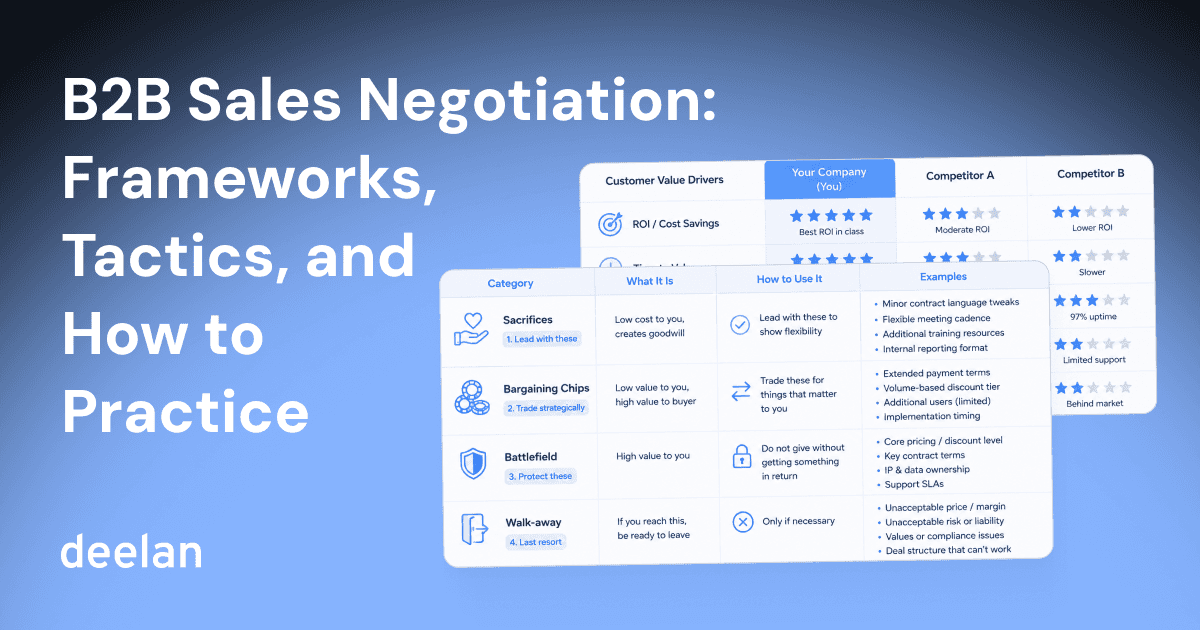
The Concession Matrix
Not all concessions cost you equally. The mistake is treating them as if they do.
Before any negotiation, map your concessions into four categories:
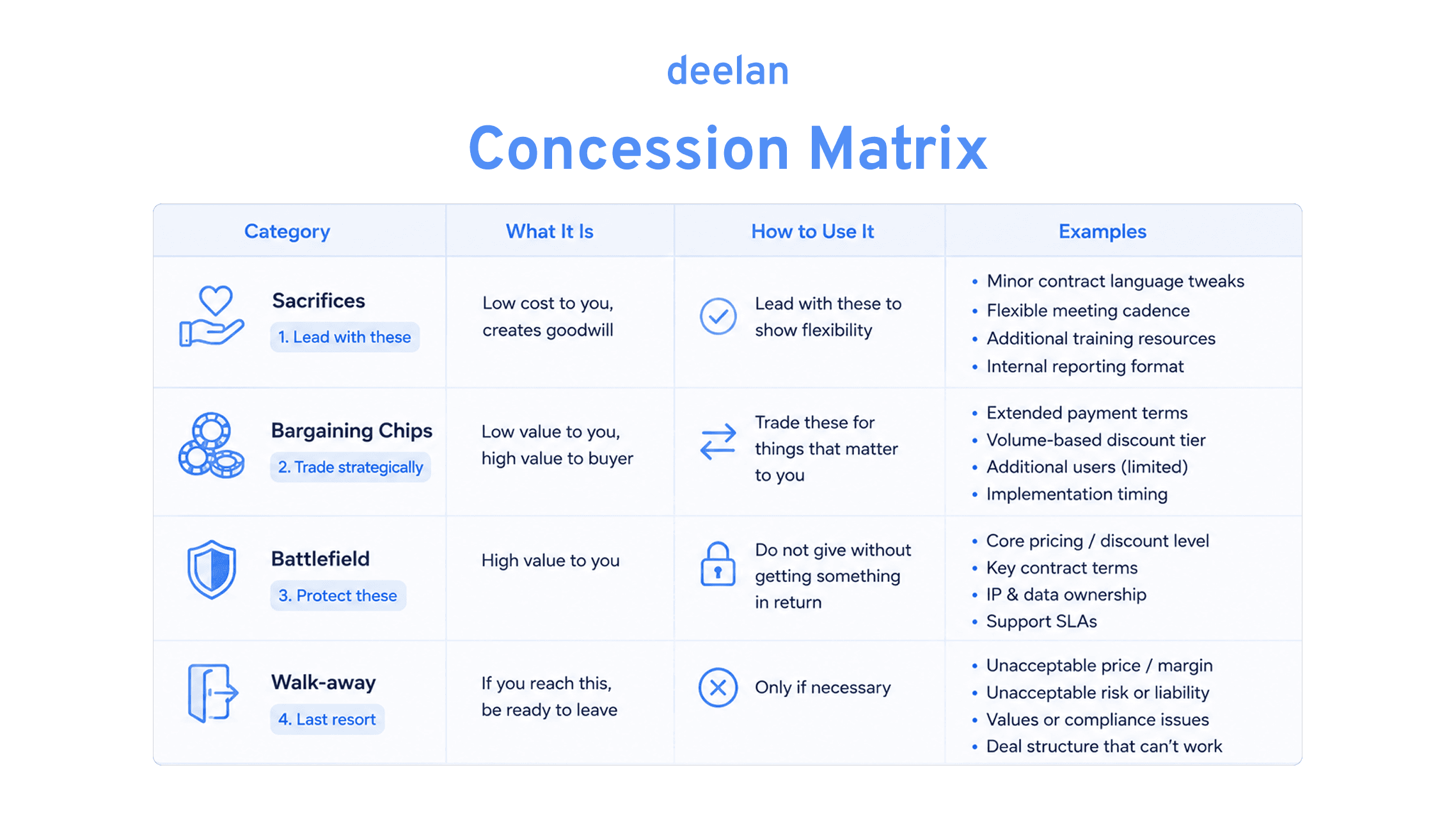
Category | What It Is | How to Use It |
|---|---|---|
Sacrifices | Low cost to you, creates goodwill | Lead with these to show flexibility |
Bargaining chips | Low value to you, high value to buyer | Trade these for things that matter to you |
Battlefield | High value to you | Do not give without getting something in return |
Walk-away | If you reach this, be ready to leave | Only if necessary |
Moving through these in the right order is what separates structured negotiators from those who just react. Align on this sequence with your manager or team before you go in.
Handling Objections
Sixty percent of customers say no four times before saying yes. Most reps stop at one or two. Objections are not dead ends; they are requests for more information.
When a buyer pushes back:
Do not immediately reduce price or over-explain
Ask a clarifying question to find the root of the objection
Redirect with a specific proof point or alternative
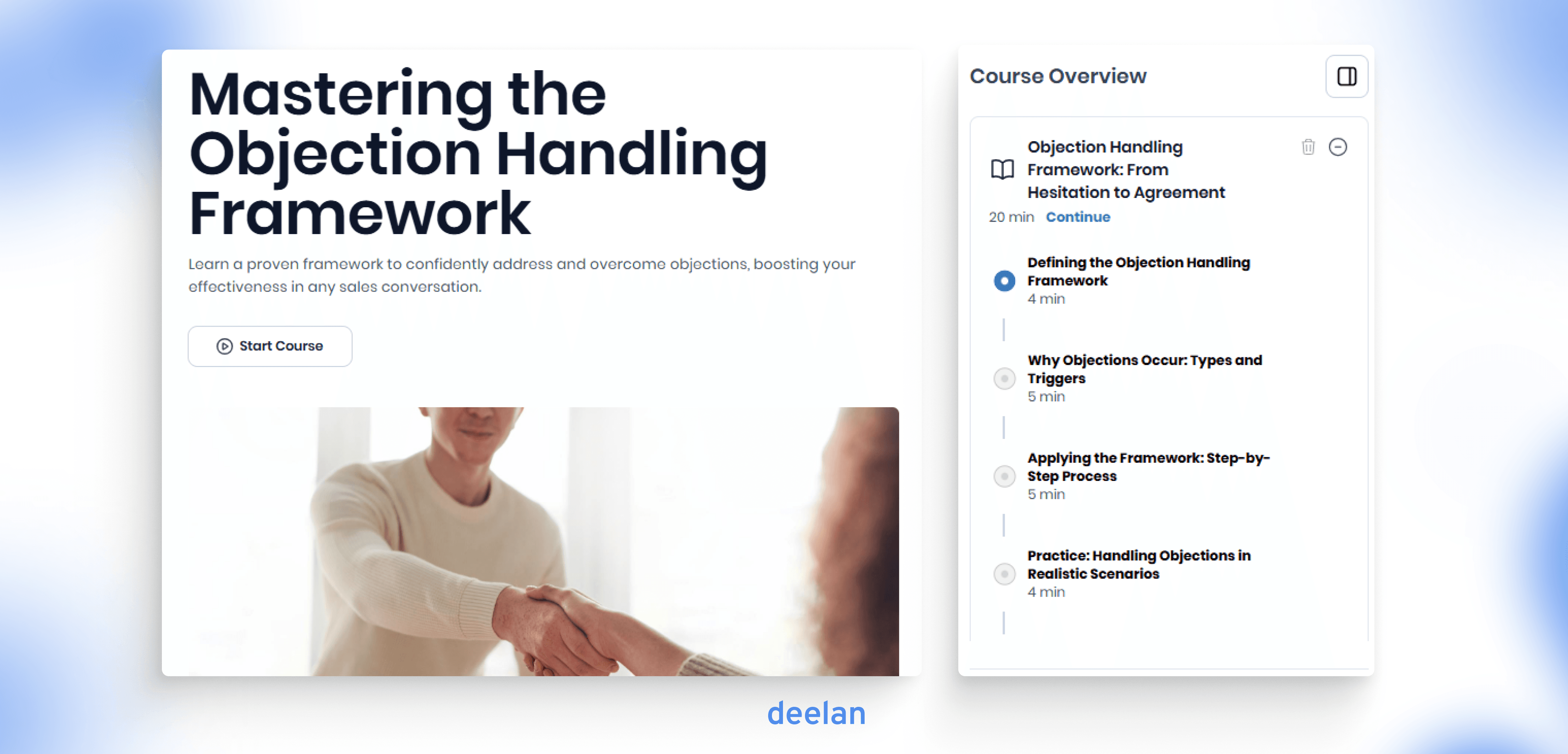
Battle cards (structured objection/response pairs) are effective here. Having a written response to "your competitor is 40% cheaper" that focuses on value, not defensiveness, keeps reps out of reactive discounting.
Present Multiple Offers at Once
Instead of presenting one proposal and waiting for a yes or no, bring three options into the same conversation. If all three are rejected, ask the buyer which one came closest and build from there.
This approach, sometimes called MESOs (Multiple Equivalent Offers Simultaneously), reduces impasses and signals to the buyer that you are committed to finding a workable structure. It also shows which aspects of the deal they actually care about.
After the Negotiation
The best teams do two more things.
Action | Why It Matters |
|---|---|
Stay Involved | Relationships continue after signing |
Track Deal Changes | Manage scope, stakeholders, and expectations |
Debrief the Deal | Analyze wins, losses, and objections |
Document Learnings | Build repeatable negotiation knowledge |
Practice Continuously | Improve through structured simulations and feedback |
Track and manage. Deals evolve after signing. Clients request scope changes, delivery timelines shift, and new stakeholders appear. The rep who stays engaged through execution builds the relationship capital for renewals and expansion. Negotiations do not end at signature.
Document and debrief. After every significant deal, write down what worked and what did not. A simple win/loss analysis over time reveals patterns that no amount of coaching replaces: which objections come up most, where deals slip, what arguments land.
The Problem With Only Learning by Doing
There is a real cost to practicing negotiation on live prospects. A rep who has never handled a skeptical CFO, a hard price anchor, or an abrupt "we're going with your competitor" response will often freeze, discount too quickly, or default to over-explaining.
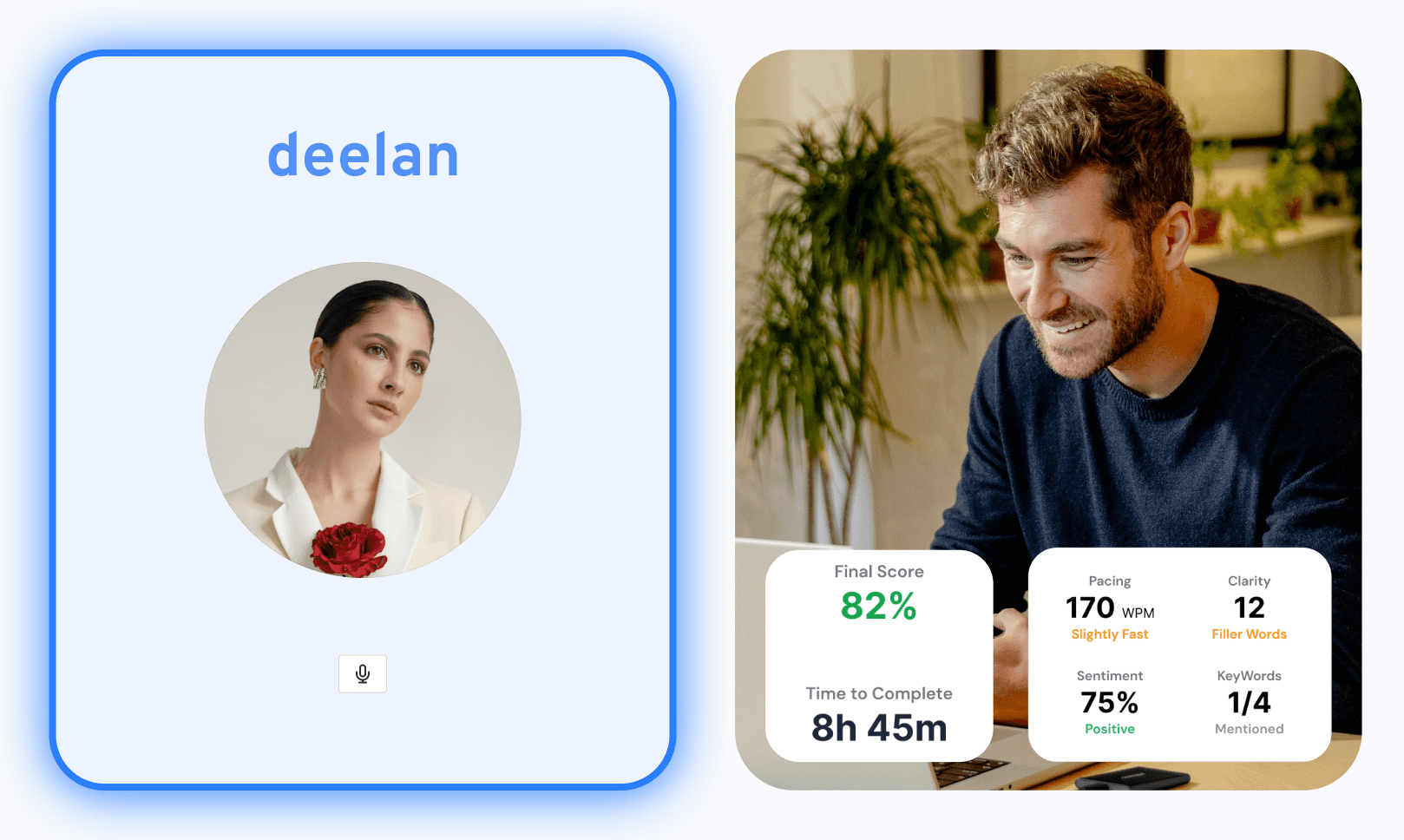
Several B2B sales teams are now using Deelan to build AI-powered roleplay simulations for their reps. You can configure a persona for exactly the scenario you want to practice:
a procurement lead who pushes back hard on price,
a time-pressed senior buyer in a discovery call,
a customer threatening churn at renewal.
The AI responds in context, raises objections, interrupts where a real buyer would, and pushes back on weak argumentation.
Some teams are using it specifically for:
Cold call openers where the first 30 seconds determine whether the prospect stays on
Price objection handling without reflexively discounting
Technical demos with buyers who want to get into the product weeds
Renewal and upsell conversations with accounts considering alternatives
You can input your actual deal details, prospect profile, and objections into the scenario. The roleplay is built around your specific situation, not a generic sales training template.
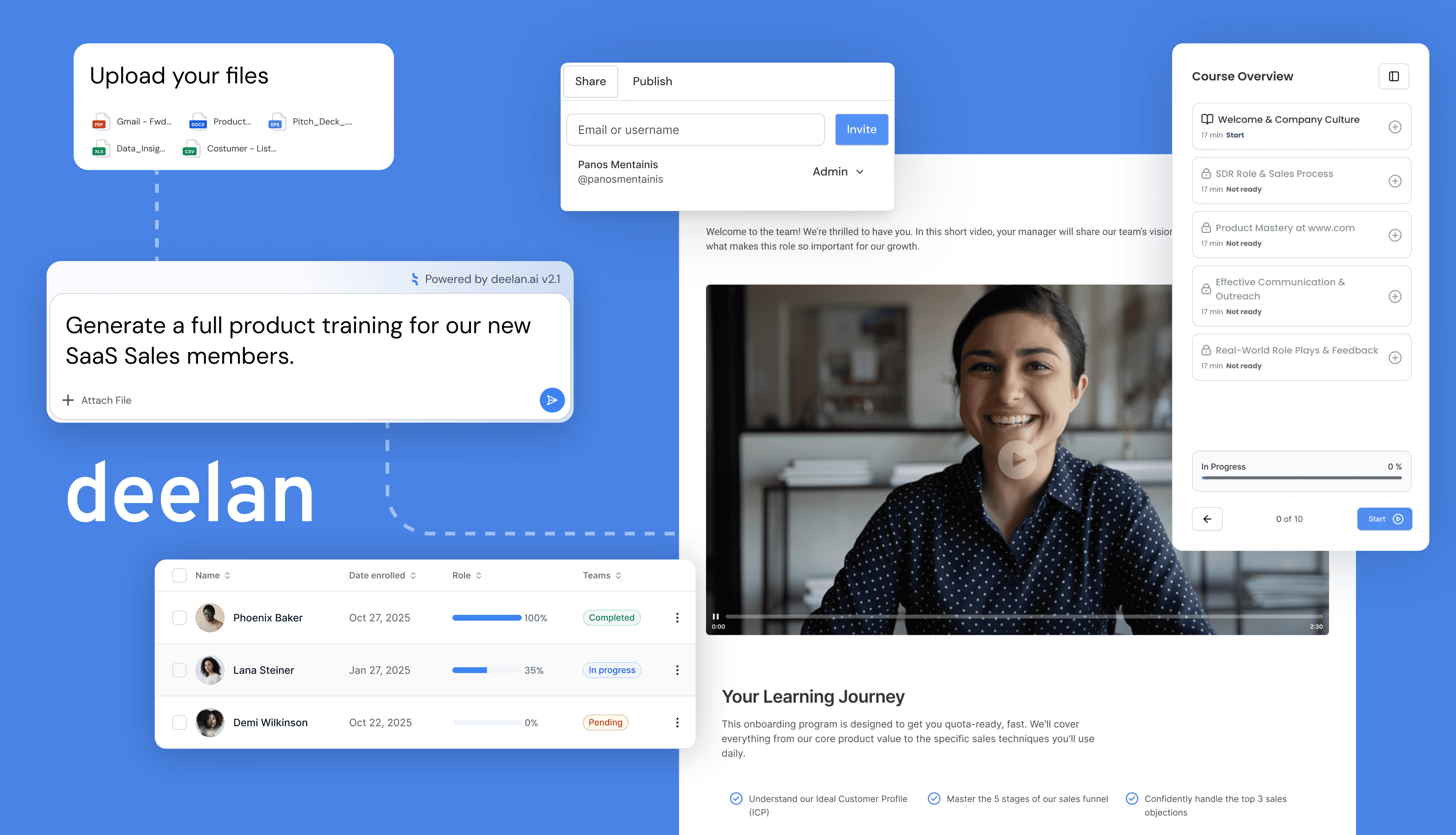
For enablement and sales managers, the training can be built from existing playbooks, call recordings, or product docs. A new scenario can go from prompt to deployable in minutes. No instructional designers, no weeks of content creation.
Try it yourself: Build your first negotiation roleplay on Deelan or book a free demo to see how other B2B teams are using it.
A Quick-Reference Framework
The pre-negotiation checklist:
Target point, acceptable range, and walk-away are defined
BATNA is prepared for both sides
Key value proof points are ready, with data
Concession categories are mapped and sequenced
Common objections have prepared responses
The in-negotiation principles:
Anchor first, anchor high but credibly
Listen more than you talk, especially after a key offer
Use silence as a tactic, not a problem to solve
Trade concessions, never give them
Bring multiple offer structures to avoid impasses
Post-negotiation habits:
Stay engaged through implementation
Document what worked and what did not
Run a win/loss analysis after significant deals
B2B negotiation is a skill. Like any skill, it does not improve through osmosis or good intentions. It improves through deliberate practice, structured feedback, and repetition against increasingly difficult scenarios.
The reps who consistently close better deals are not necessarily the most charismatic or the most experienced. They are the ones who walked into those conversations having already done the hard work, at the preparation stage and at the practice stage.
Start practicing with Deelan before your next call.