
Selling SaaS has become harder to fake.
Buyers can research products, competitors, pricing, reviews and alternatives before they ever speak with a sales rep. When they finally join a call, they usually know the category quite well.
So reps have to understand the product, ask good discovery questions, build a business case, handle technical and pricing objections, work with several stakeholders and move the opportunity forward. A good pitch alone does not cover much of that.
The goal of sales coaching is to help reps get better at the conversations and decisions that move deals forward.

How should Sales Coaching look like for Saas?
SaaS sales coaching is ongoing work with reps to improve how they sell. That can happen through call reviews, deal reviews, roleplays, one-to-ones, feedback, assessments and practice.
Salesforce's 2026 sales research found that 75% of sales reps say they are more likely to hit their targets when they have a coach or mentor.
The problem is often finding enough time to do it well.
For a manager with eight or ten reps, there simply is not enough time to listen to every call and personally coach every skill gap.
Coach the Rep and Coach the Deal
During a pipeline review, the manager might help with the current deals. Maybe they need access to the economic buyer. Maybe there is no urgency. Maybe the next step was never properly agreed.
But if the same thing keeps happening across deals, the rep probably has a skill gap.
Perhaps their discovery stays too close to product requirements. Perhaps they do not establish impact or urgency before showing the product.
Now there is something to coach.
What Should You Coach SaaS Sales Reps On?
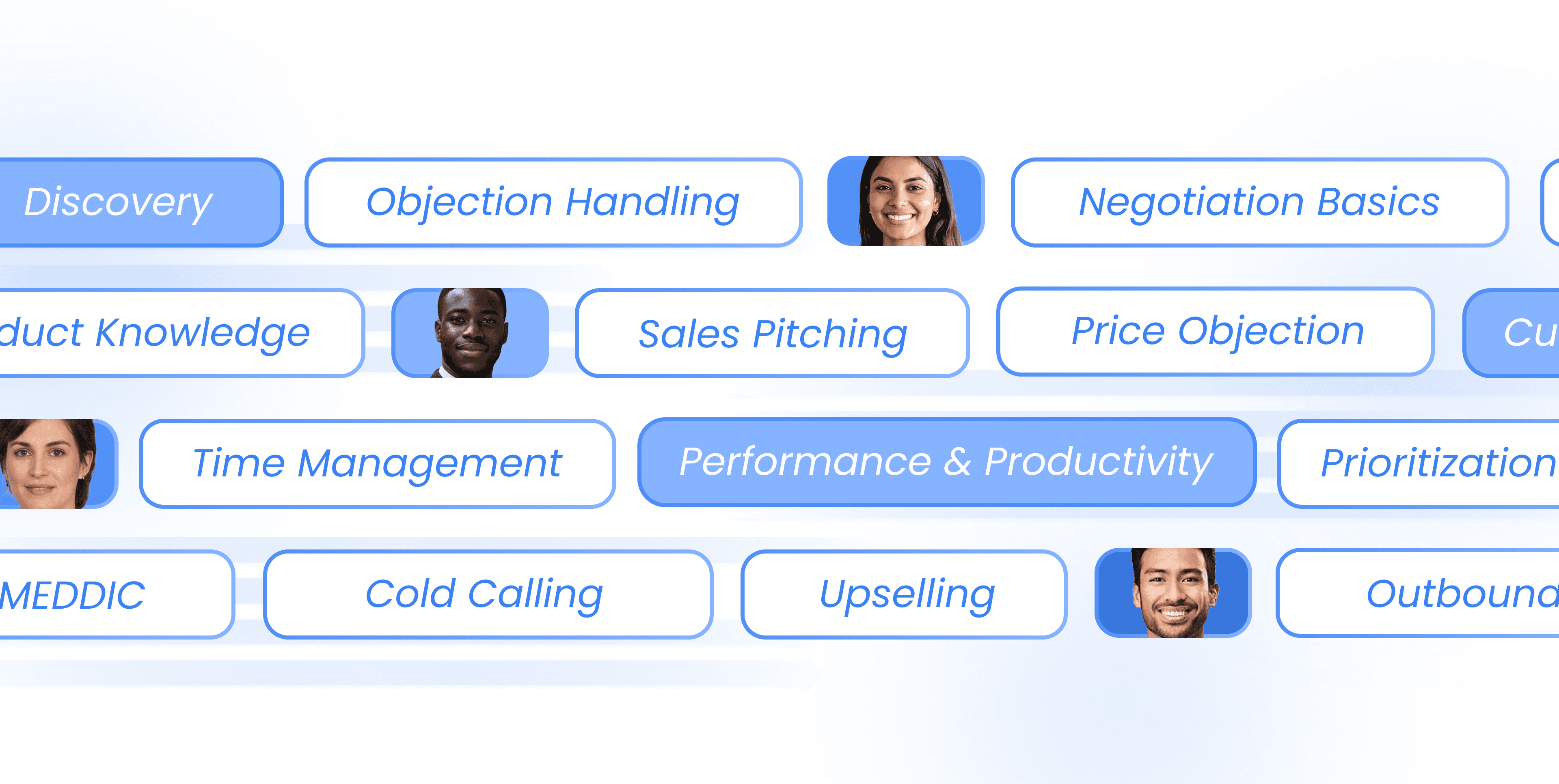
For SaaS teams, a few areas are important:
Coaching area | What to look for |
|---|---|
Discovery | Does the rep uncover pain, impact, urgency and priorities? |
Does the rep connect the product to what the buyer said? | |
Can they handle price, competitors, integrations and ROI? | |
Are product value and differentiation explained clearly? | |
Are MEDDICC, SPIN, Challenger or internal frameworks actually used? | |
Multi-threading | Is the rep building relationships beyond one contact? |
Next steps | Does the call finish with a clear action, owner and timing? |
Call recordings are especially useful here because they remove some of the guesswork.
Use Sales Calls as Coaching Data
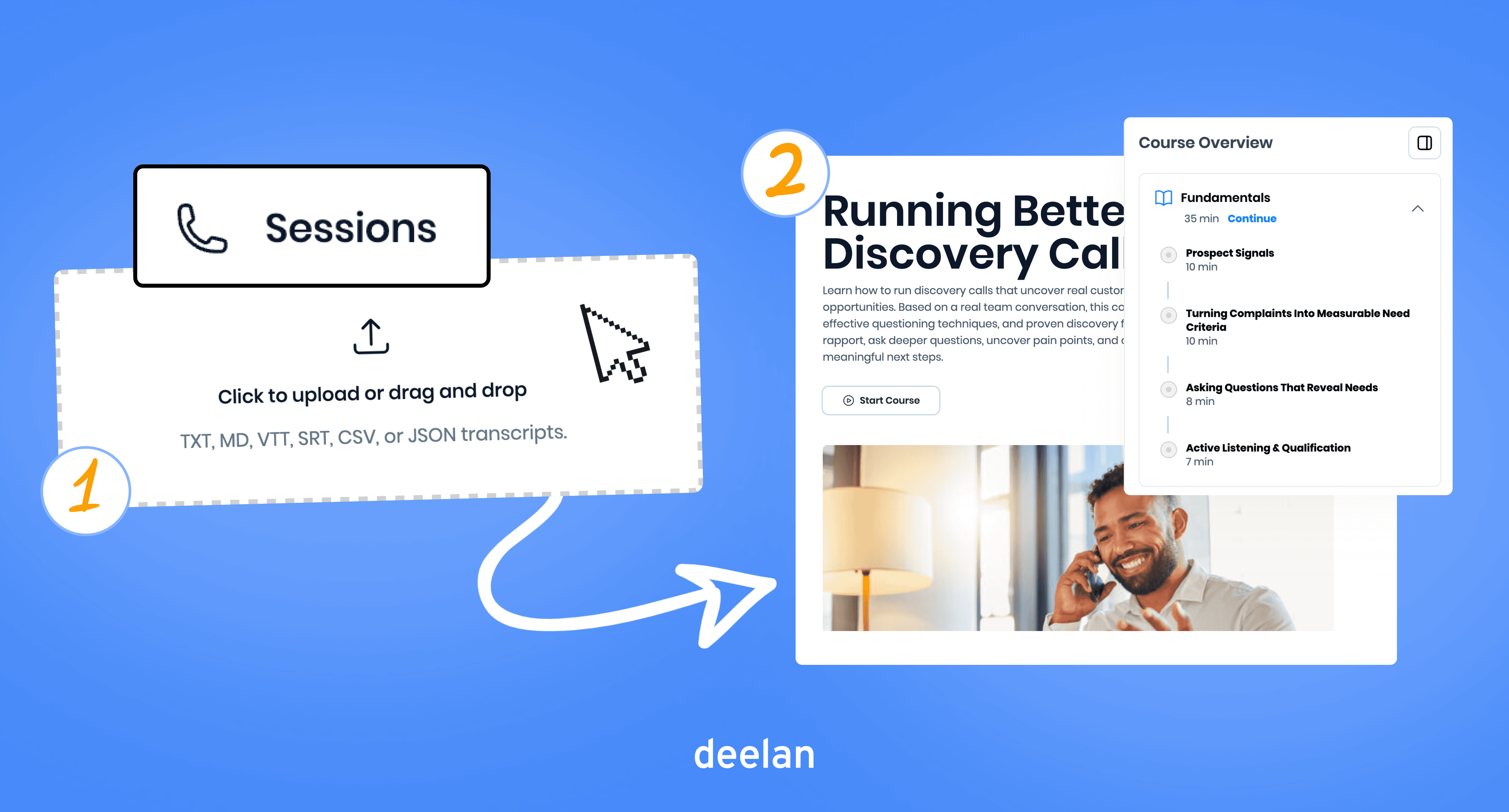
A SaaS sales leader can use call recordings to see whether reps ask meaningful follow-ups, explain pricing consistently, talk too much, skip important parts of the methodology or struggle with the same objections.
Take talk-to-listen ratio. A rep talking 70% of the time might be a problem during discovery. During a technical demo, it could be perfectly reasonable.
Practice Before the Next Customer Call
Reps also need a place to try the feedback before talking to another prospect.
Reading a battlecard again probably will not change much.
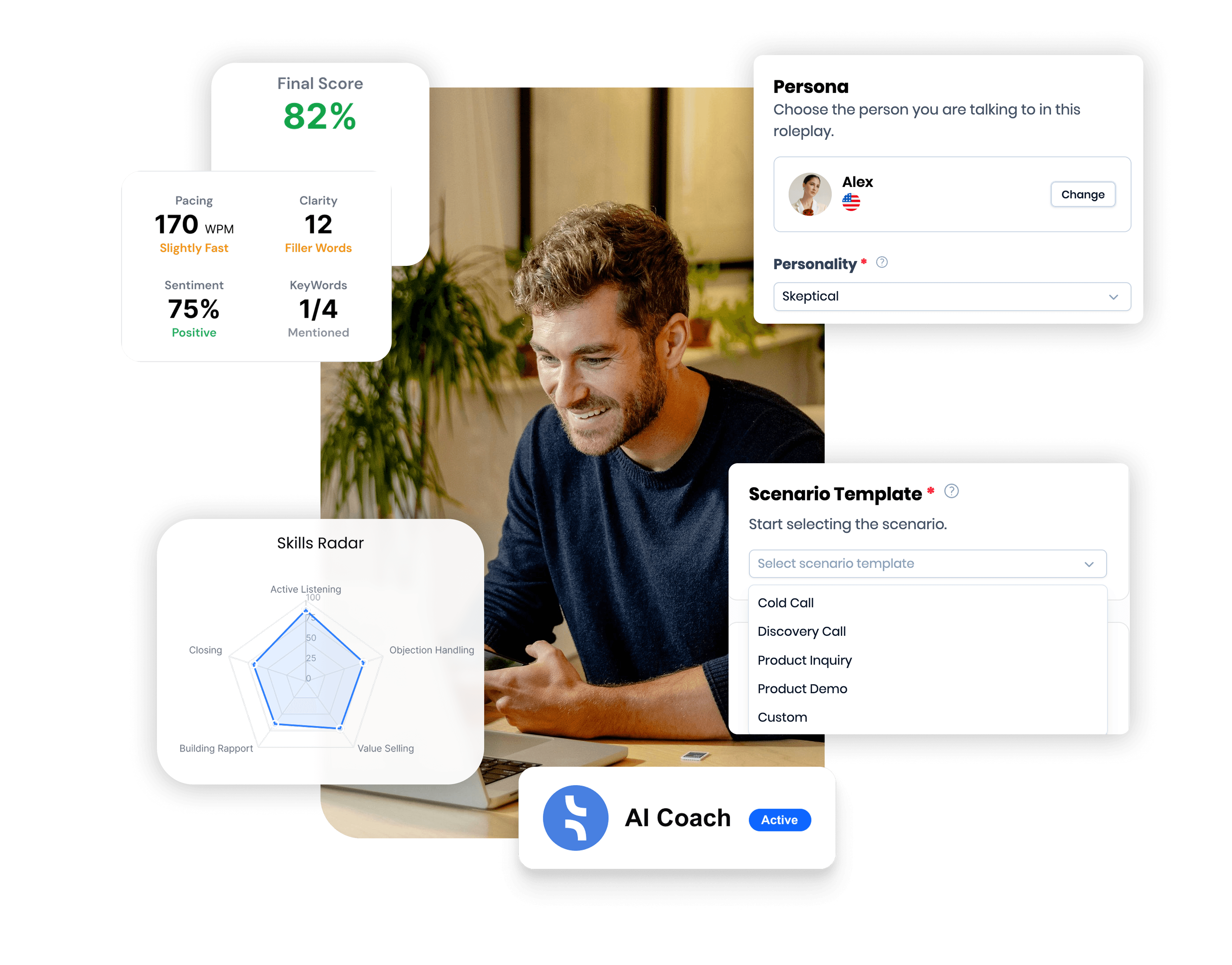
The rep can instead practice the objection several times, try different responses and get feedback before the next live call.
For SaaS teams, useful roleplays can cover discovery, demos, pricing objections, competitor conversations, security concerns, negotiation, renewals and expansion.
The scenario should come from situations reps really face. A generic buyer persona asking generic questions gets old quickly.
Use AI for More Efficient and Scalable Coaching
Salesforce reports that 36% of sales teams using AI agents already use them for coaching, including roleplays and feedback.
AI works well for repetitive coaching work.
A rep can practice an objection three times without asking their manager to play the buyer three times. They can get feedback immediately after a roleplay. They can ask why they received a low discovery score and try the conversation again.
AI can handle more of the repetition, practice and first layer of feedback.
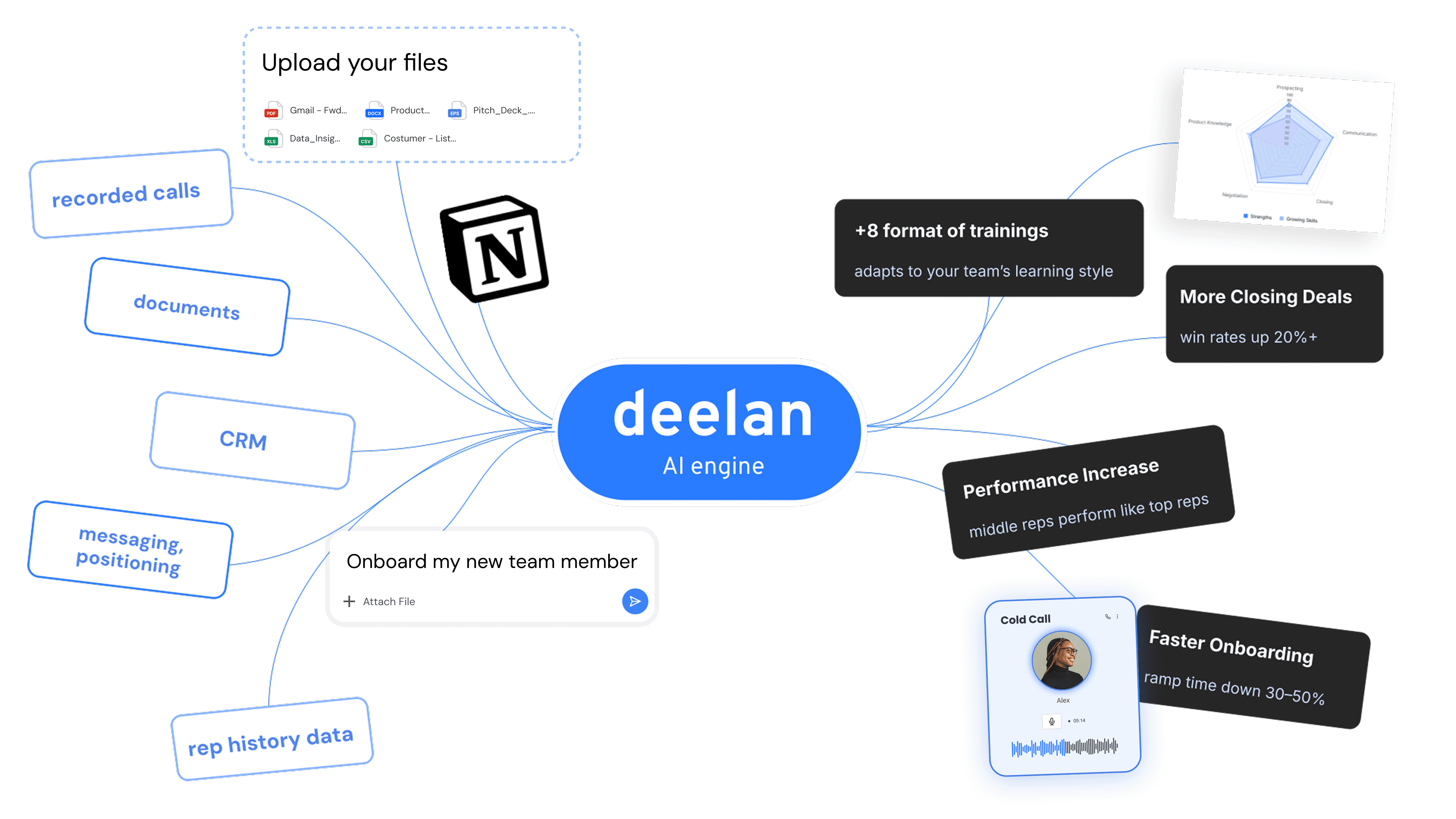
deelan - AI Sales Coaching and Training Platform
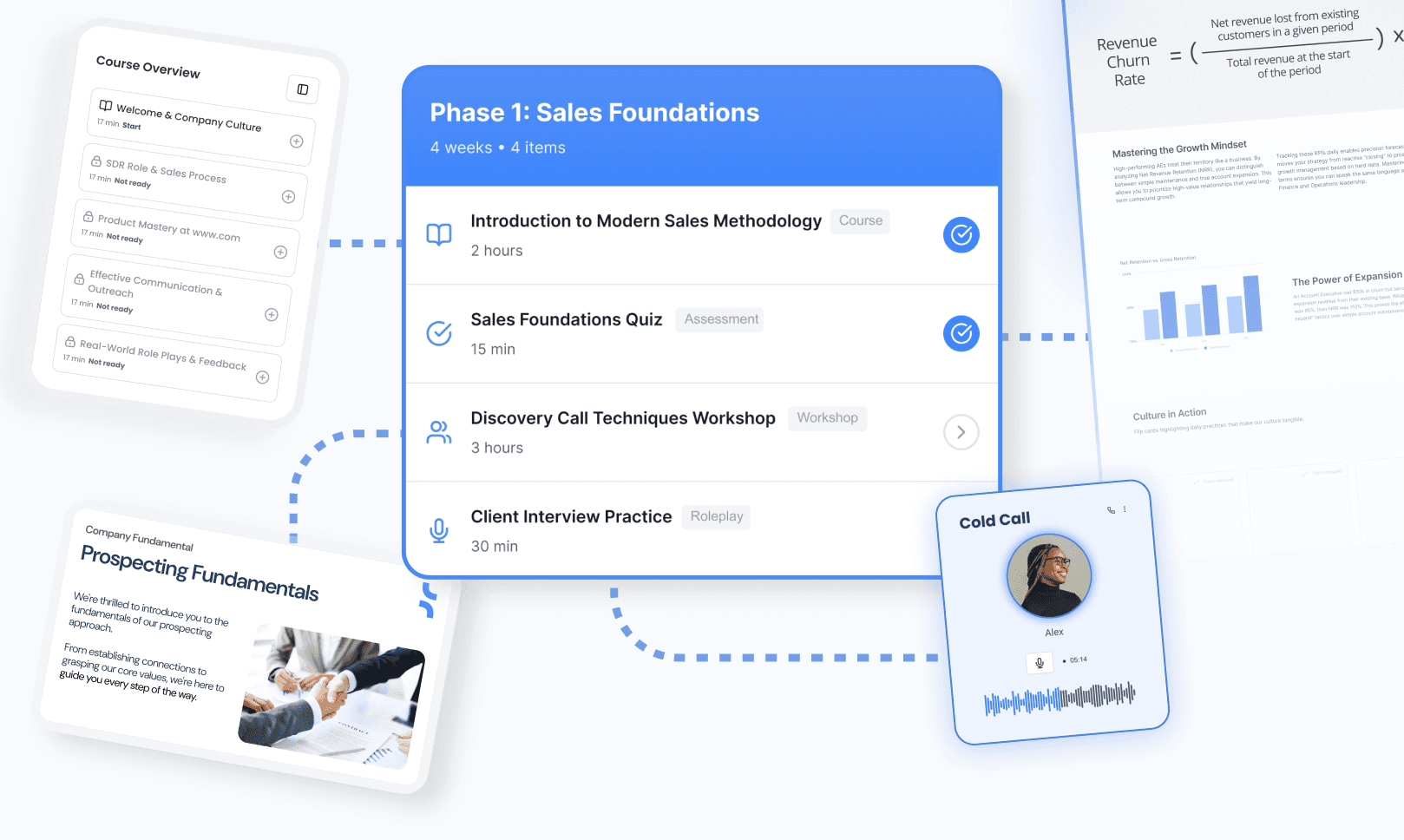
deelan combines AI sales coaching and sales training in the same workflow.
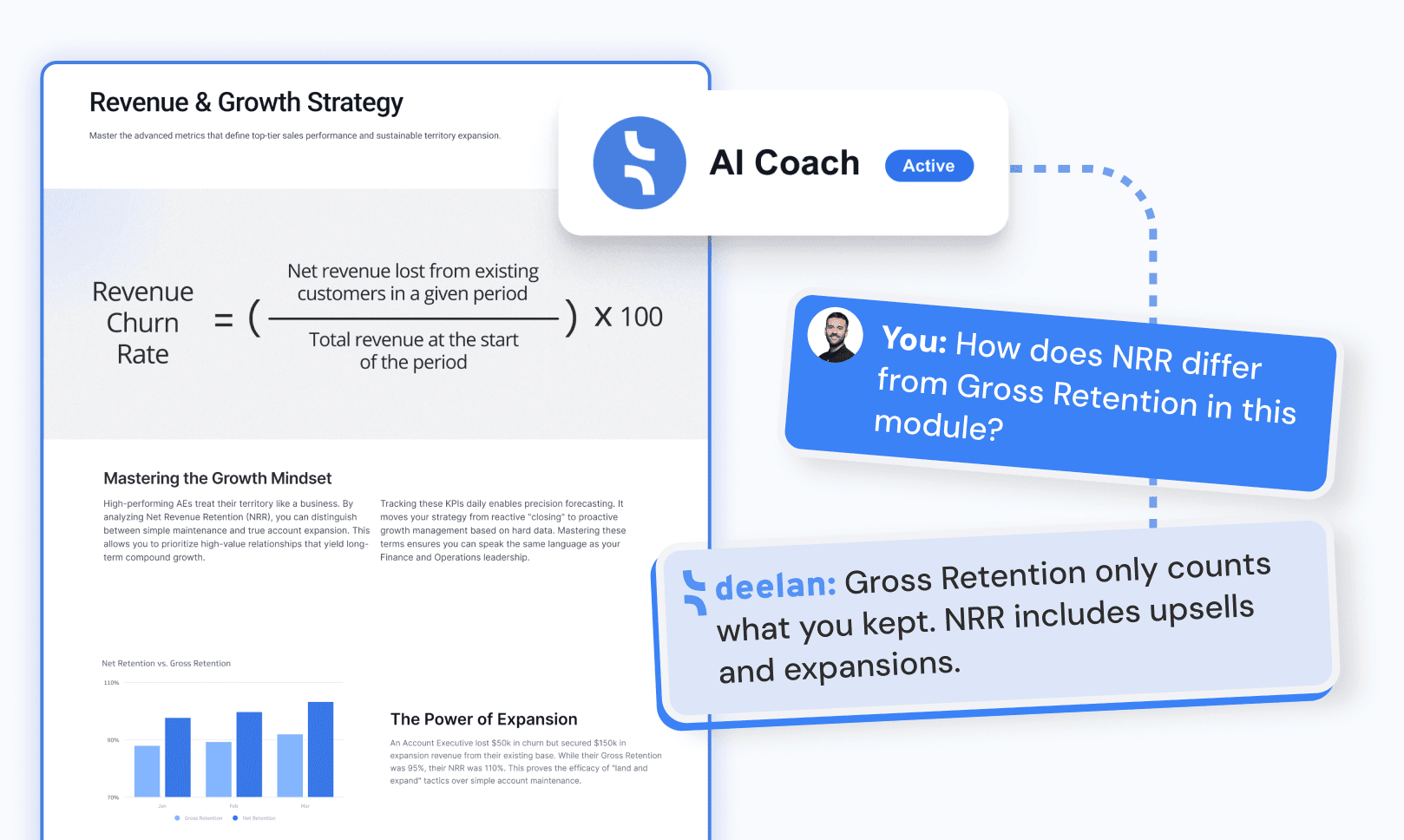
Team can bring in its existing playbooks, sales materials, product documentation and call recordings, then use them to build courses, roleplays, assessments, workshops and training programs.
Reps can practice sales conversations through voice-based AI roleplays.
After a session, Deelan gives them a coaching report covering what went well and what needs work.
They can then continue the conversation with the AI Coach, for example by asking why their discovery score was low or how they could have answered a specific objection better.
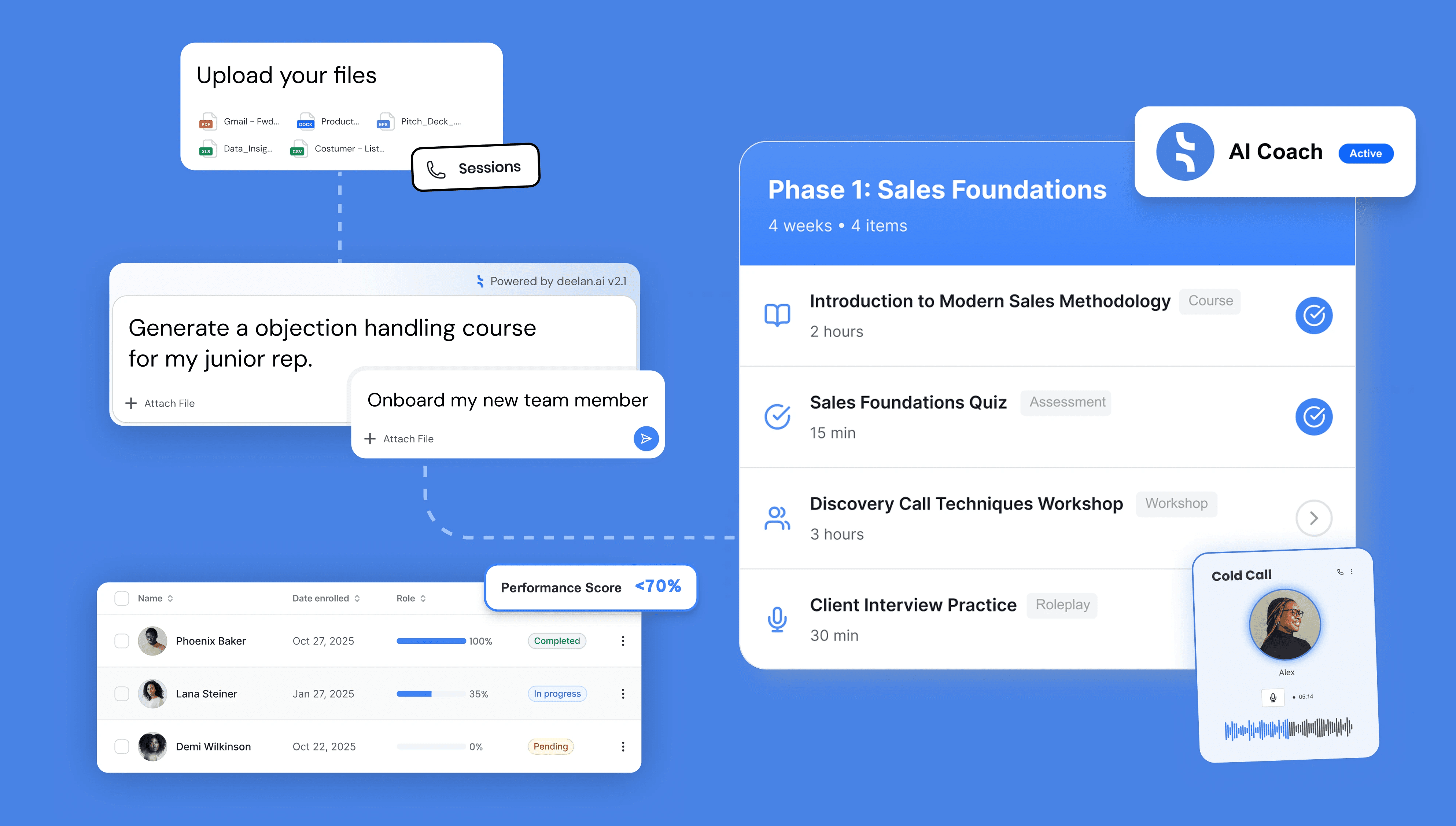
Deelan can use performance and skill gaps to recommend the next training for that rep.
Learn → Practice → Get feedback → Find the gap → Train the gap → Practice again
Deelan also gives managers visibility across the team, so they can see where coaching is needed instead of manually reviewing every practice session.