It's the night before the biggest deal of the quarter. Your rep has reviewed the deck, sent the follow-up emails, and confirmed the meeting. But one question still echoes in the back of every sales leader's mind: Are they actually ready?
Not "did they complete the onboarding course" ready. Not "they've been in seat for 90 days" ready. Really ready — to handle objections under pressure, tailor messaging to the exact buying committee in the room, articulate ROI to a skeptical CFO, and close with confidence.
In 2026, that gap between appearing ramped and truly being sales-ready has never been wider. Buyers are more informed, buying committees are larger, deal cycles are longer, and AI is reshaping every touchpoint of the sales process. The organizations that win are the ones who take sales readiness seriously — not as a one-time training event, but as a continuous, data-driven system.
What Is Sales Readiness?
Sales readiness is ongoing state of preparedness that ensures every rep on your revenue team can engage confidently and effectively with prospects at every stage of the buyer's journey — from initial outreach to closing the deal.
While sales training creates a foundation of knowledge, sales readiness ensures reps can apply that knowledge in real-world, unpredictable selling scenarios. It covers onboarding, continuous skill development, coaching, performance assessments, and real-time access to the right resources.
A sales-ready rep can demonstrate, on demand, that they can run a structured discovery call, build a CFO-ready business case, navigate a multi-stakeholder buying committee, and manage deals through the pipeline without needing a manager to rescue them at every turn.
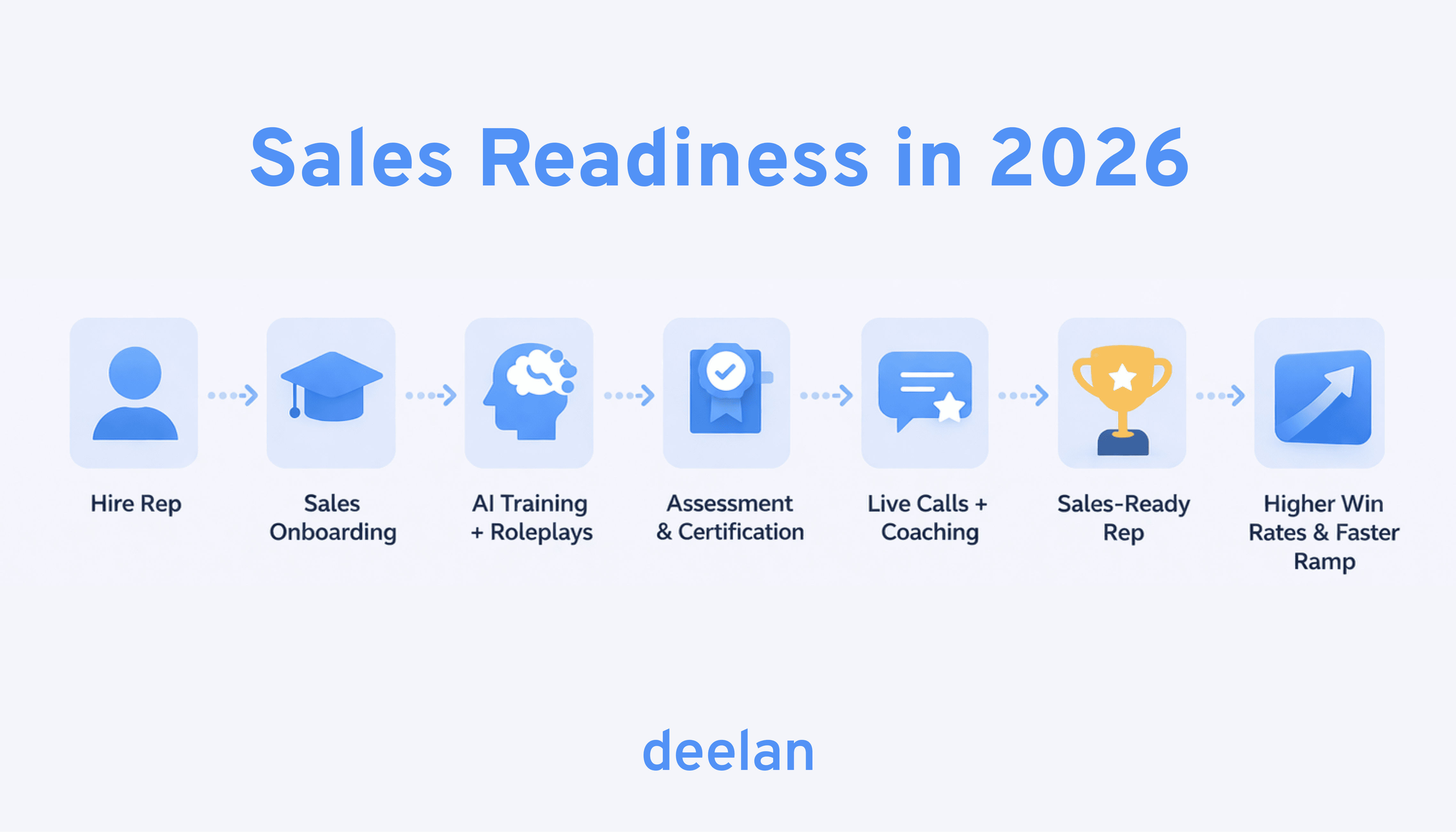
Sales Readiness vs. Sales Enablement: What's the Difference
These two terms are often used interchangeably, but they serve distinct - and complementary - functions. Understanding the difference is essential to building a system that actually improves performance.
Sales enablement is the infrastructure layer. It equips your team with the right tools, playbooks, CRM systems, content libraries, and processes. It lays the operational foundation for selling — ensuring reps have access to what they need, when they need it.
Sales readiness is the execution layer. It ensures individual reps can actually use those tools and resources effectively in live selling scenarios. It emphasizes skill development, real-time coaching, behavioral reinforcement, and performance certification.
Sales Readiness | Sales Enablement | |
|---|---|---|
Main Goal | Prepare reps to apply tools in real-world scenarios | Equip teams with tools, content & aligned processes |
Core Focus | Skill execution, confidence, behavioral change | Foundation, infrastructure, and workflow alignment |
Key Activities | Simulations, coaching, role-plays, certifications | CRM setup, content libraries, data dashboards |
Key Outcomes | Higher win rates, faster deal closures, rep performance | Efficient workflows, cross-team alignment, faster onboarding |
The most effective sales organizations invest in both — using enablement to build the platform, and readiness to launch their reps from it.
The 5 Core Pillars of Sales Readiness
Building a high-performing sales readiness program requires a structured framework. Here are the five pillars every revenue organization needs in place.
🎓
Structured Onboarding & Ongoing Training
Equip new hires with deep product knowledge, your brand story, and sales workflows from day one — then reinforce continuously. Strong onboarding delivers 62% faster time to productivity.
🎯
Skill Development & Assessments
Monitor rep performance through certifications, simulations, and regular assessments. Identify skill gaps before they become deal risks.
⚡
Real-Time Access to Sales Resources
Equip your team with updated sales collateral, buyer insights, and competitive intelligence to enable informed and timely conversations with prospects.
🔁
Continuous Coaching & Feedback Loops
Support reps with structured coaching programs and real-time feedback to refine sales techniques and drive behavioral improvement over time.
📡
Market Adaptability
Ensure teams can pivot fast in response to shifting buyer behaviors, new competitors, industry trends, or product changes. In 2026, static readiness is no readiness at all.
Best Practices of Sales Readiness in 2026
Create a Structured Sales Onboarding Program
One of the biggest sales readiness mistakes companies make is turning onboarding into an information dump.
New reps spend their first week in back-to-back meetings, drowning in product slides, company documents, and internal processes.
Instead of overwhelming reps, break onboarding into stages.
Week one should focus on the foundations: product knowledge, customer pain points, positioning, and the sales process.
Week two should move into roleplays, discovery practice, objection handling, and real examples of successful calls.
After that, reps should begin practicing live conversations in a safe environment before speaking with customers.
The goal is to create sales-ready reps faster.
Start Measuring Readiness
A rep can finish every training module and still fail in a real sales conversation.
That is why the best sales readiness programs use certifications and assessments.
Before a rep moves to the next stage, they should prove they can:
Run a discovery call
Handle common objections
Deliver a product demo
Explain ROI
Use the CRM and sales process correctly
Think of it like a driving test. You do not get your license because you watched a video about driving. You get it because you prove you can drive.
Use Sales Roleplays Before Reps Go Live
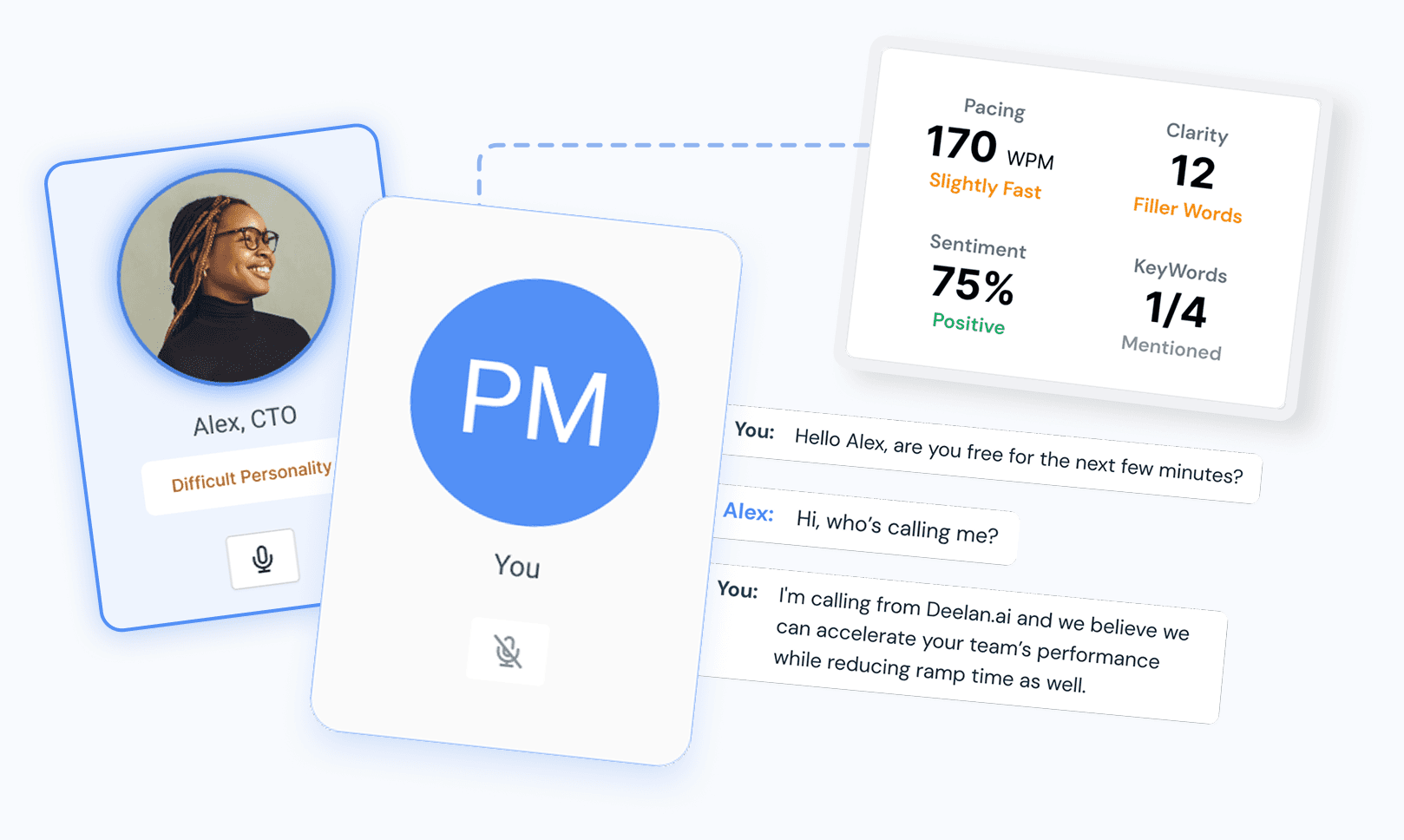
Before a rep gets on a call with a prospect, they should practice internally through sales roleplays and simulations.
The best roleplays are not generic.
They are built around real situations:
A skeptical CFO asking about ROI
A prospect saying your competitor is cheaper
A buyer who has already tried a DIY solution
A multi-stakeholder meeting where each person has different priorities
Sales roleplays help reps build confidence, improve messaging, and make mistakes before the stakes are real.
3. Build Adaptive Learning Paths for Every Role
SDRs, AEs, and Customer Success teams have fundamentally different skill requirements. Your training program should reflect that. Generic, one-size-fits-all content might tick a compliance box, but it won't move the needle on win rates or ramp times. Build role-specific learning paths that adapt based on individual performance data — accelerating where reps are strong, reinforcing where they're weak.
4. Use AI-Powered Role Plays Before Going Live
One of the most costly mistakes in sales is using real prospects as a practice ground. Reps who haven't internalized their messaging, practiced objection handling, or rehearsed their demo flows shouldn't be in front of your best opportunities. AI-powered role-play tools allow reps to practice pitches, refine their tone, handle objections, and get instant feedback — all before a single live conversation. This is no longer a nice-to-have; it's a standard practice for high-performing revenue teams in 2026.
5. Implement Continuous Learning
Research consistently shows that learners forget roughly 80–90% of training content within the first week. A single onboarding session, however thorough, cannot create lasting behavioral change. The organizations that consistently outperform their peers are twice as likely to provide ongoing, continuous training compared to low-performing ones. Build a system of reinforcement: spaced repetition, micro-learning modules, weekly skill drills, and peer-to-peer knowledge sharing that keeps readiness high long after onboarding ends.
6. Enable Data-Driven Coaching
Sales managers can't coach effectively on gut instinct alone. In 2026, the best coaching is driven by data — performance analytics that reveal where skill gaps exist, which reps need targeted support, and which training investments are actually moving the needle on quota attainment. Build assessments and analytics into your readiness program so every coaching conversation is grounded in evidence, not assumption.
7. Align Sales and Marketing Around Consistent Messaging
Sales readiness isn't just about individual rep skills — it's about organizational consistency. When every rep delivers a different value proposition, buyers lose confidence. Ensure your readiness program includes messaging certification so that every rep, regardless of region or seniority, communicates your brand, competitive differentiators, and product value with precision and consistency.
The Best Practice Most Revenue Teams Miss:
Use a Sales Readiness Platform
If your sales readiness process lives across six different tools, it is probably broken.
Many companies still manage sales training with:
Google Docs
Loom videos
Notion pages
Slack messages
Manual coaching sessions
The best practice is to use a dedicated sales readiness platform.
A modern sales readiness platform should combine:
Training content
Assessments and certifications
Coaching and feedback
Analytics tied to rep performance
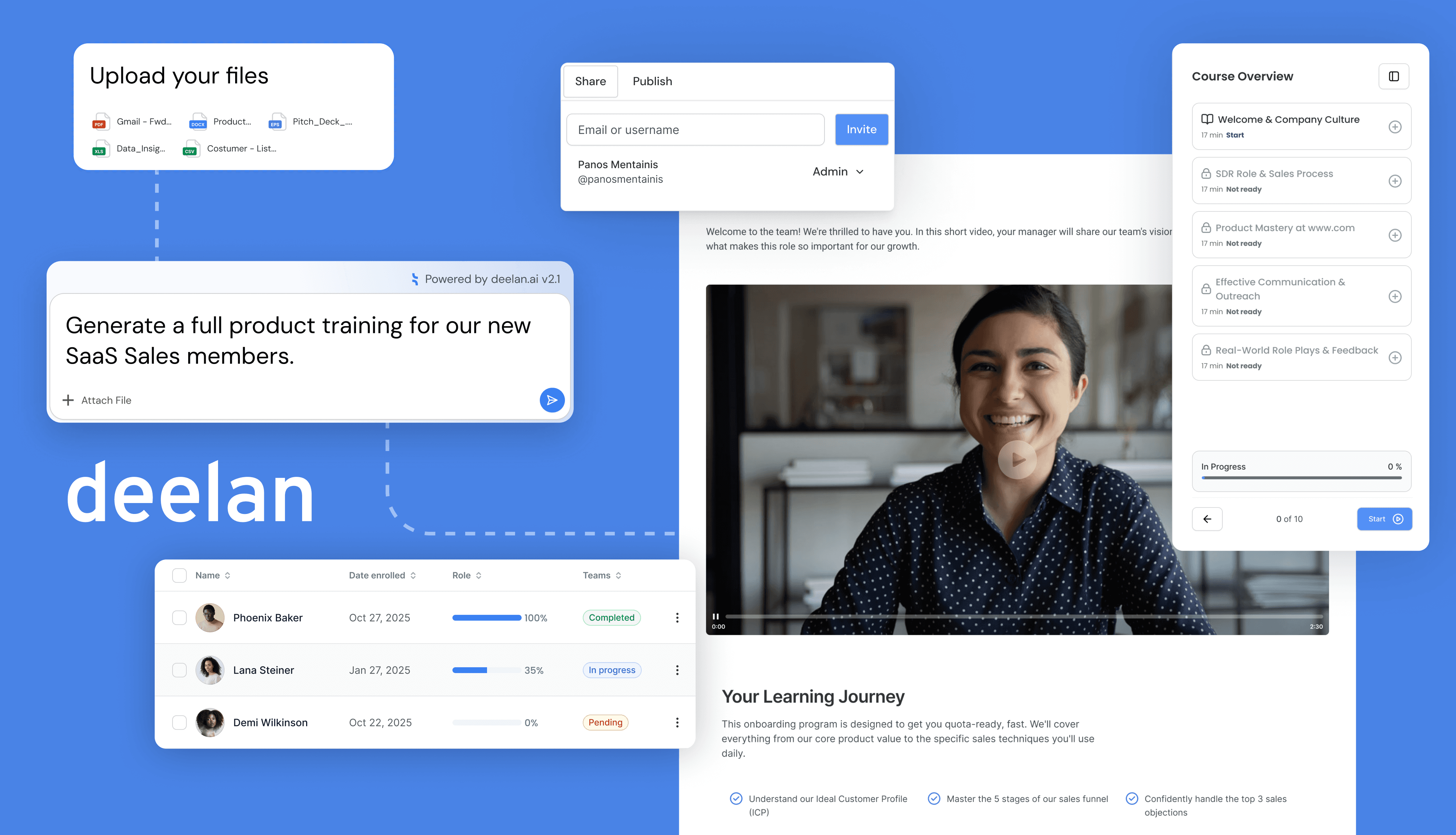
Deelan is an AI training platform built specifically for training high-performing revenue teams.
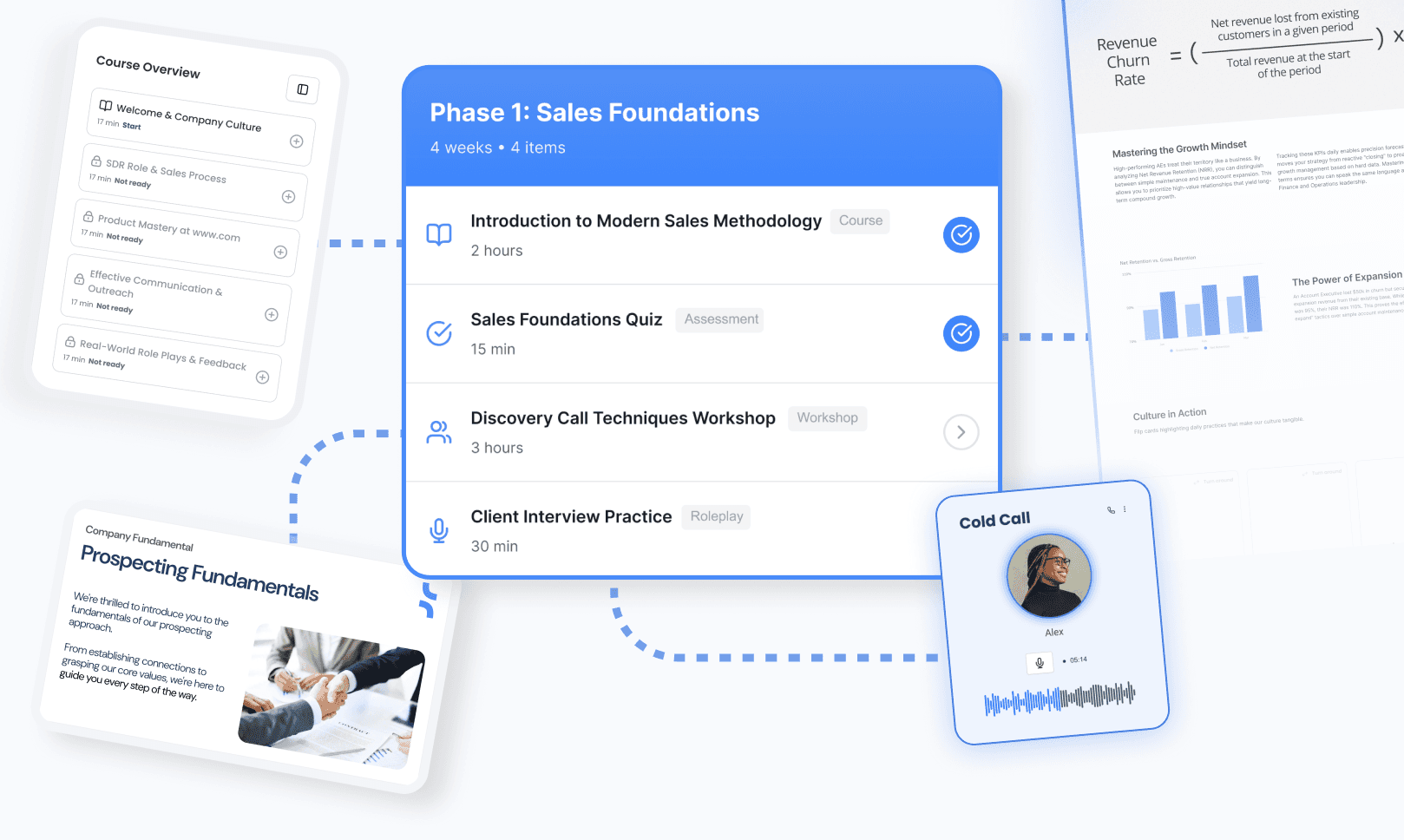
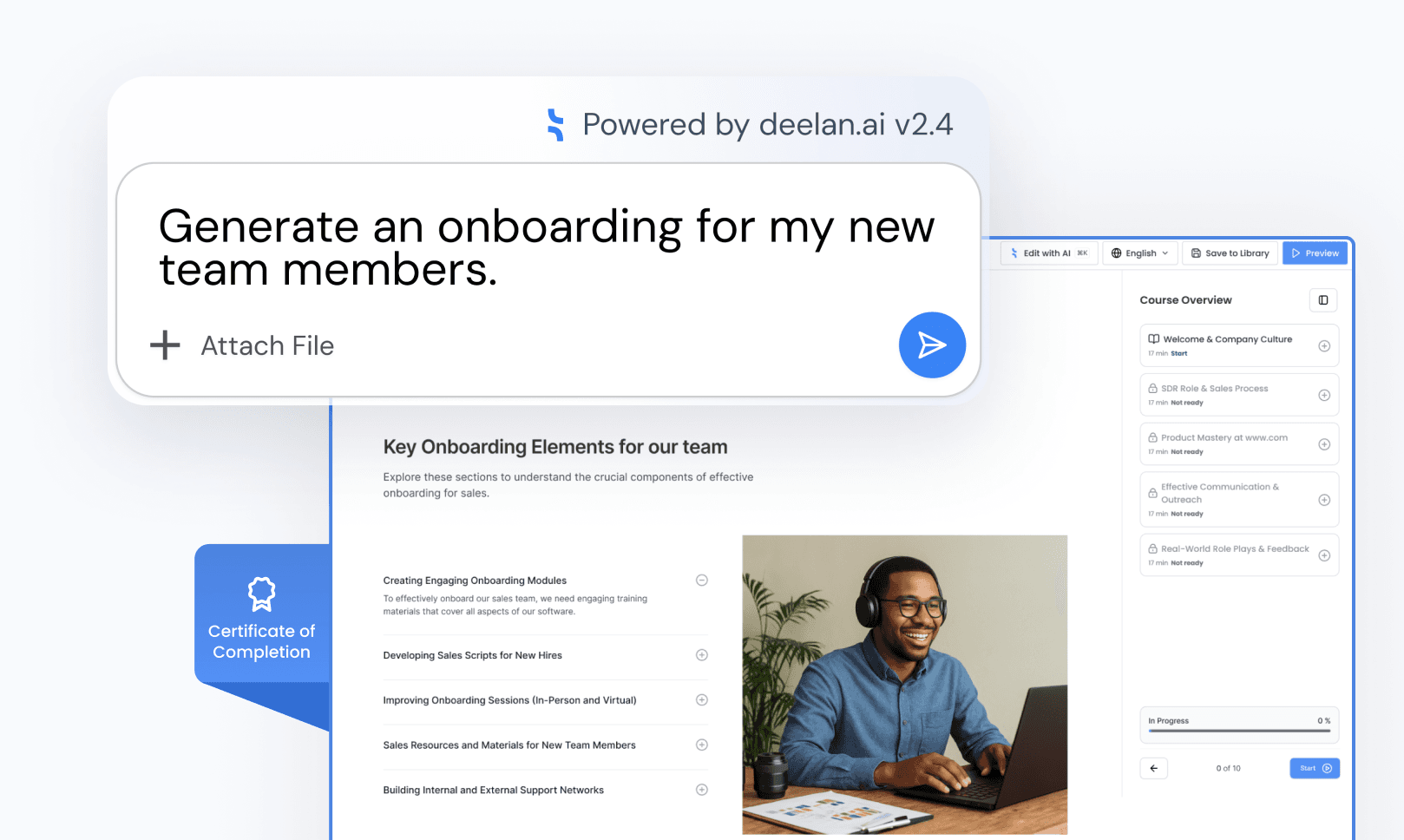
Instead of spending weeks creating onboarding and sales training materials manually, Deelan helps teams generate structured training in minutes.
Reps can upload:
Product documents
Call recordings
Sales scripts
CRM notes
Existing playbooks
Then Deelan automatically turns that content into:
Interactive training
Quizzes and assessments
Workshops
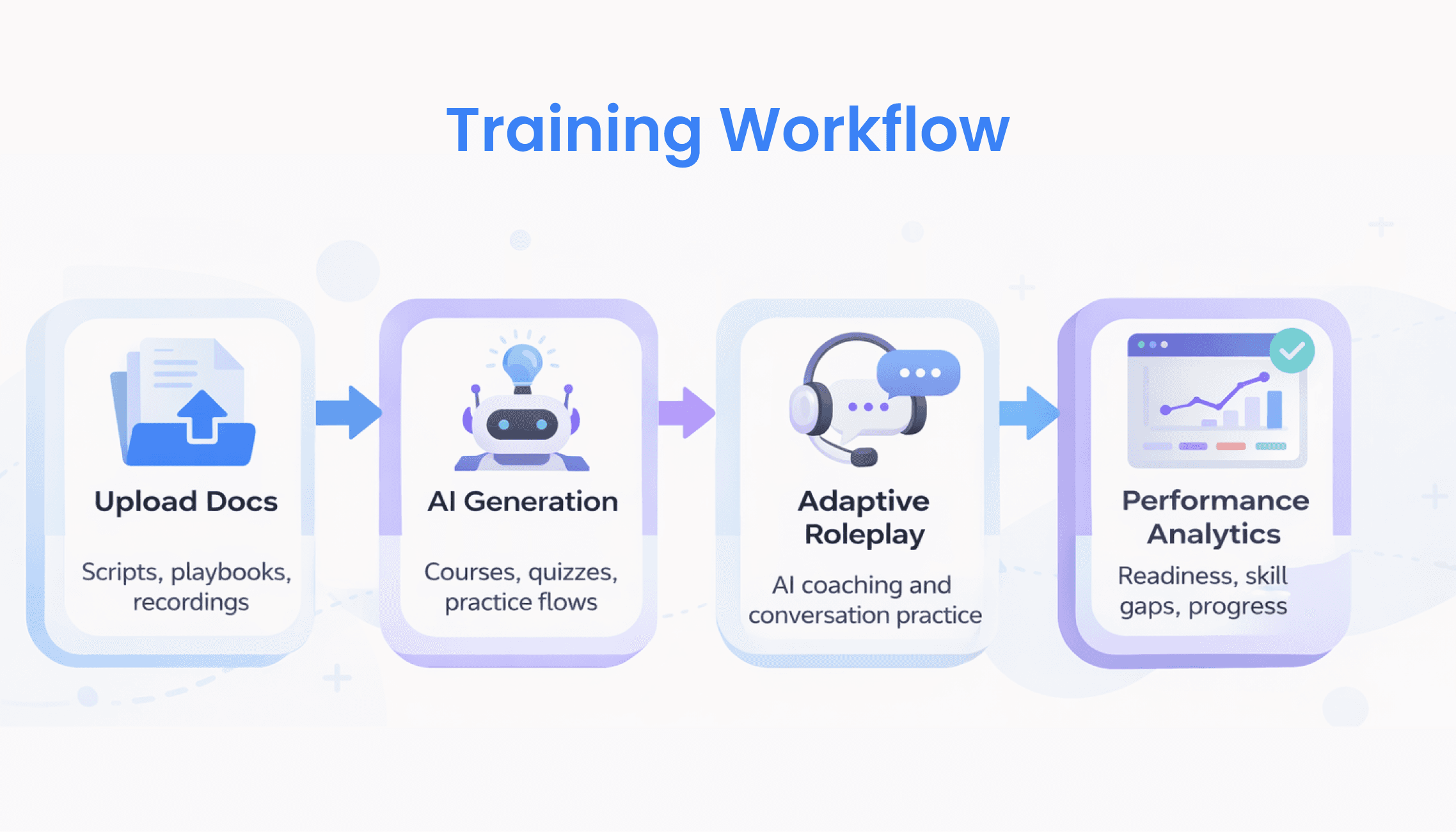
An SDR gets different sales readiness training than an Account Executive. A struggling rep gets more support in the areas where they have skill gaps. Top performers can move faster.
If you want to compare different options, we also recommend reading our blog: Best Sales Readiness Platforms in 2026.
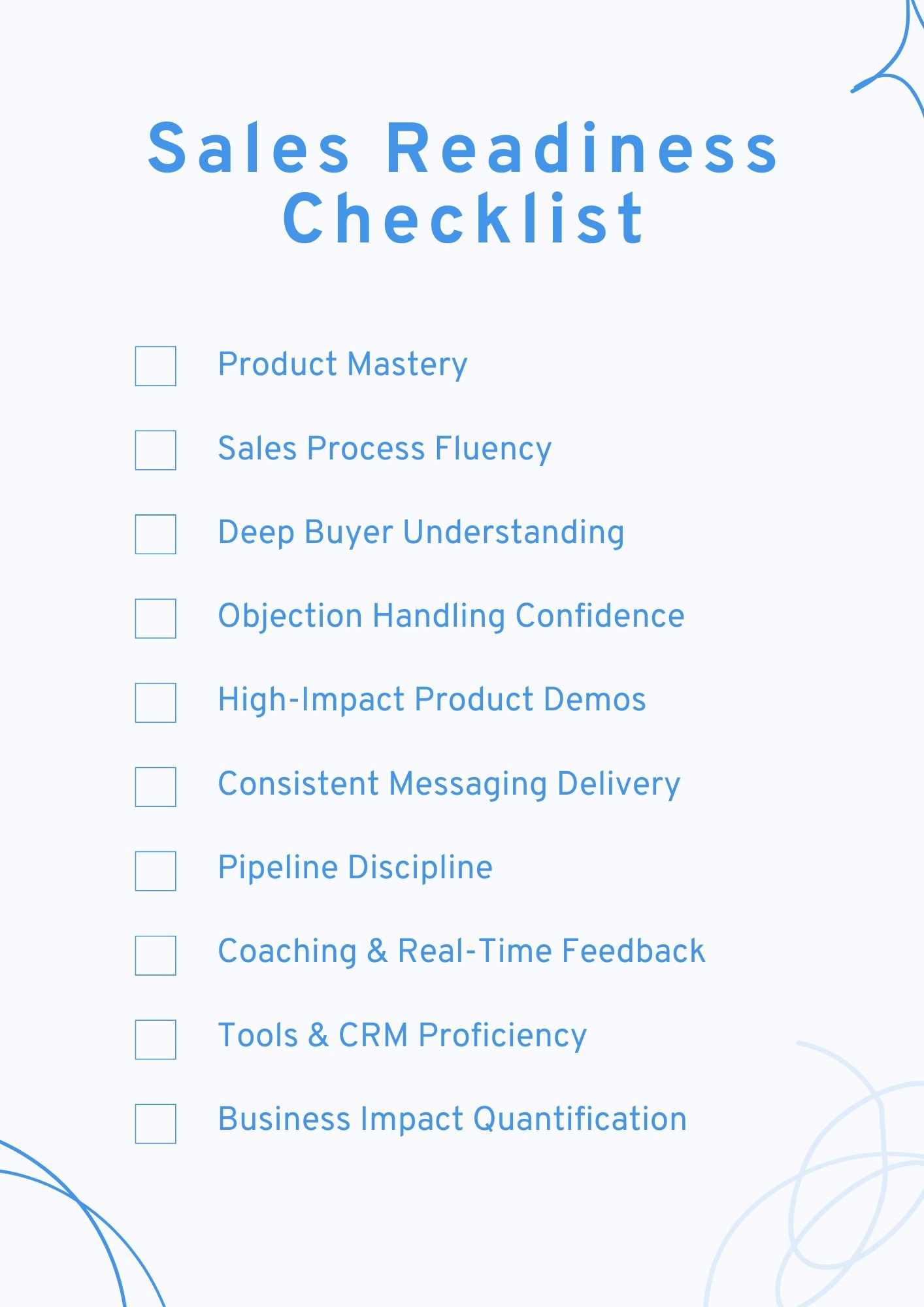
The Sales Readiness Checklist for 2026
Use this checklist to assess and build out your sales readiness program. A rep is only truly sales-ready when they can demonstrate proficiency across all of these areas.
Sales Readiness Checklist - is your team ready?
Product Mastery - Reps understand features, unique selling points, real-world use cases, and how the product solves specific customer pain points.
Sales Process Fluency - Every rep knows your sales process with clarity — from lead qualification to pipeline stages to closing techniques — and can execute it consistently.
Deep Buyer Understanding - Reps can identify target personas, anticipate motivations and challenges, and tailor conversations to resonate with each buyer type.
Objection Handling Confidence - Reps can handle common and difficult objections with data-backed, value-driven responses — rehearsed through structured role-play, not improvised on live calls.
High-Impact Product Demos - Reps deliver compelling demos — in-person or virtual — that highlight value and address specific buyer pain points, not just feature lists.
Consistent Messaging Delivery - Every rep communicates your brand, value proposition, and competitive differentiators with unified, confident, certified messaging.
Pipeline Discipline - Reps regularly review and update their pipeline, actively generate new leads, and know when to advance or disqualify deals to maintain pipeline quality.
Coaching & Real-Time Feedback - Structured coaching, call shadowing, and regular call reviews are in place to continually sharpen skills throughout the rep's tenure — not just in the first 90 days.
Tools & CRM Proficiency - Reps confidently use your CRM, sales enablement tools, email automation, and analytics dashboards to stay productive and informed throughout every deal stage.
Business Impact Quantification - Reps can build a CFO-ready business case that quantifies ROI, articulates cost of inaction, and connects your solution to the buyer's board-level objectives.
Types of Sales Readiness Your Program Should Cover
Not all readiness looks the same. A comprehensive program addresses four distinct types, each serving a different need in your revenue organization.
Foundational Readiness is where every rep starts — the onboarding phase that establishes baseline product knowledge, company values, sales process fluency, and role expectations. The goal is to reduce ramp time and get reps producing pipeline quickly.
Continuous Readiness ensures experienced reps stay sharp as markets evolve, new competitors emerge, and buyer behaviors shift. This is the ongoing training, coaching, and reinforcement loop that keeps performance consistently high long after onboarding.
Transformational Readiness prepares your team for major organizational changes — new product launches, market expansions, shifts in go-to-market strategy. It's change management built into the readiness program.
Reactive Readiness addresses urgent gaps exposed by performance data, call recordings, or lost deal analysis. When something breaks, reactive readiness provides the targeted support to fix it fast — focused coaching, updated playbooks, or targeted skill drills.
Ready to Build a Sales-Ready Revenue Team?
See how Deelan's AI training platform helps revenue teams ramp reps faster, improve win rates, and scale coaching — without adding headcount or complexity.
Book a Free Demo.