Sales managers have always been stretched thin: between pipeline reviews, forecast calls, 1:1s, and fire-fighting individual deals, actual coaching gets squeezed into the margins.
Most managers know which reps need help. What they lack is the time to act on it consistently.
In the era of rise of AI sales tools, managers got sharper data and opportunities to coach faster.
This article covers how sales managers are using AI tools today to coach more effectively, spot skill gaps before they cost deals, and build teams that improve faster.
Conversational Intelligence Tools
Conversation intelligence is one of the highest-leverage tools available to sales managers right now. It records, transcribes, and analyzes sales calls, then surfaces specific behavioral patterns: how much the rep talked versus listened, whether they asked discovery questions, whether they addressed objections or skipped past them.
A manager might notice that one rep consistently loses momentum right after pricing comes up, while another tends to skip qualification entirely when prospects seem enthusiastic. Both patterns are invisible in a CRM. Both show up clearly in conversation intelligence data.
Pre-Call AI: Helping Reps Show Up Prepared
One underused application of AI in sales is what happens before the call. Pre-call AI tools analyze available data on a prospect — company activity, deal history, content engagement, prior call notes — and give the rep a briefing that would otherwise take 20 to 30 minutes to compile manually.
For new reps especially, this matters. A lot of early-career mistakes in sales aren't about skill, they're about preparation. Reps go into calls without understanding the buyer's situation, talk past the problem the prospect actually has, and lose credibility in the first few minutes.
The rep arrives knowing what the buyer has already reviewed, what questions came up in the last meeting, and what objections are likely based on similar deals.
AI Roleplay and Sales Training That Adapts
Reps go through onboarding, learn the talk tracks, and then spend the next two years in the field slowly drifting from what actually works. Reinforcement training happens once a quarter, if the calendar cooperates.
AI roleplay changes how reps practice. Instead of role-playing with a manager once a month, reps can work through scenarios on their own, against an AI that responds like a real buyer. The AI can be configured to push back on pricing, ask hard technical questions, go quiet when something lands wrong, or escalate objections based on rep behavior.
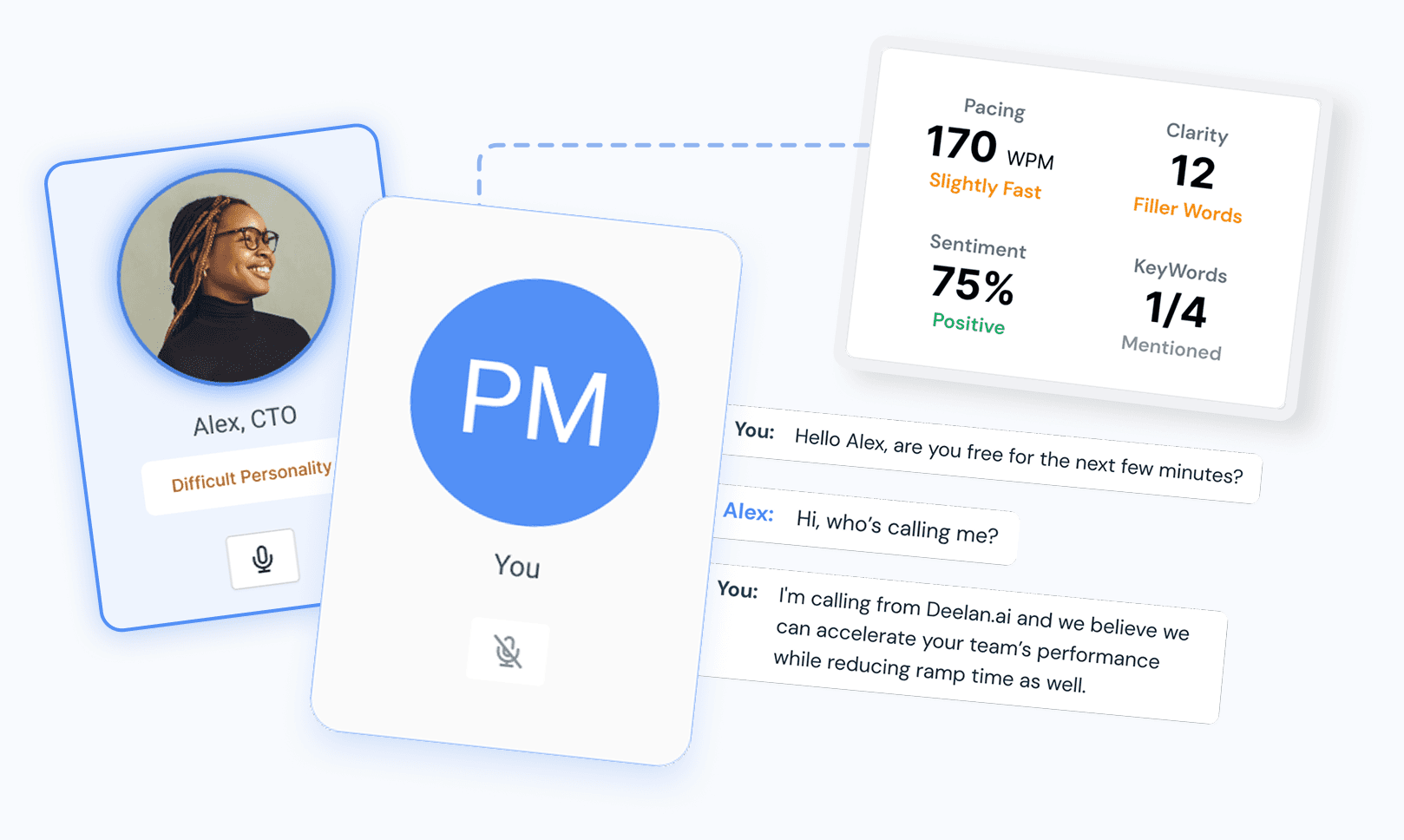
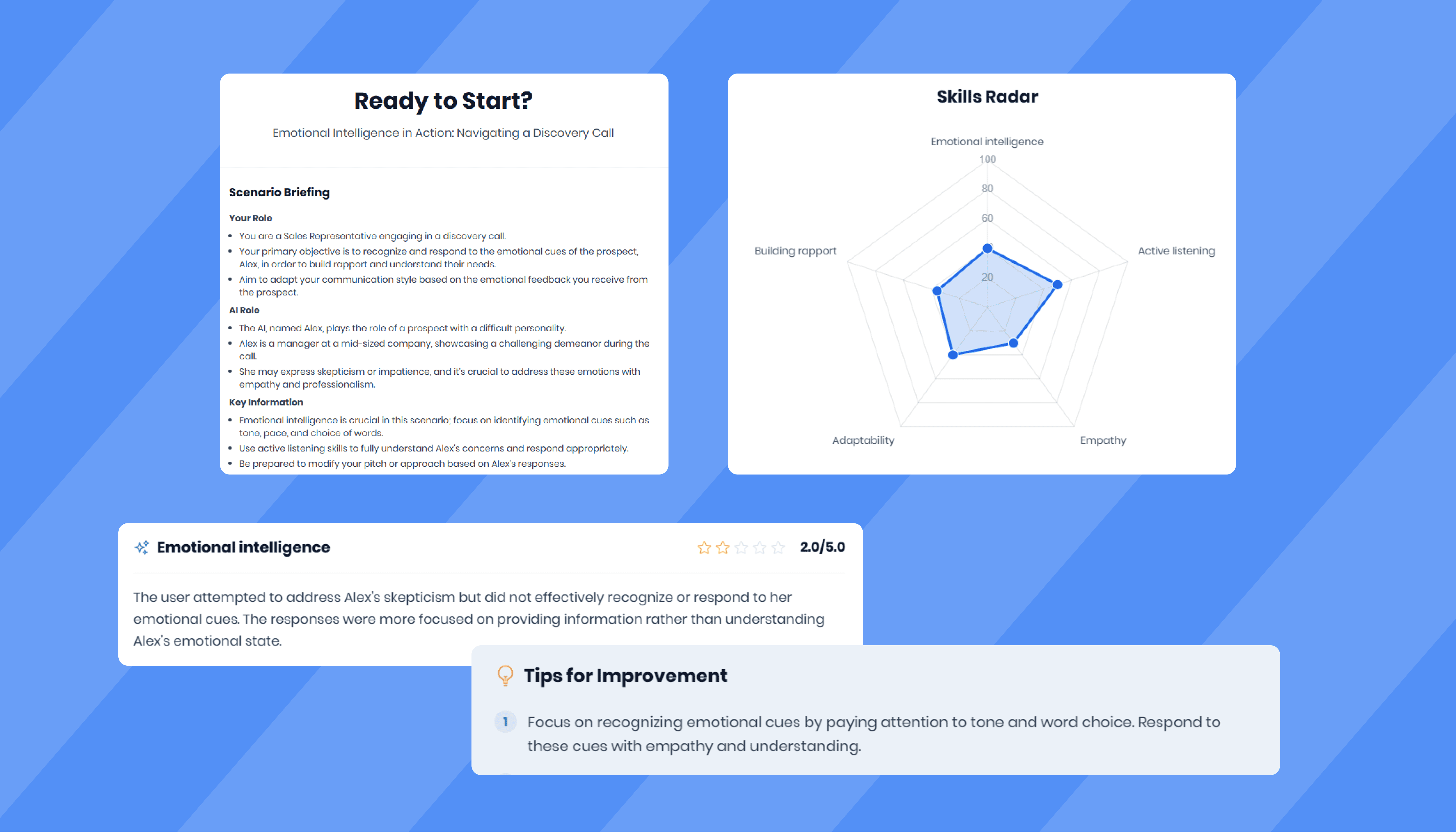
What makes this more useful than a static training module is the feedback. AI-powered roleplay tools score the rep's response in real time, flag missed opportunities, and suggest alternative approaches. The rep doesn't have to wait for a manager's calendar to open up to get useful input.
Deelan includes AI roleplay capabilities that let reps practice by persona, deal stage, and objection type. Managers can assign specific scenarios tied to observed weaknesses, then see completion data and scoring without having to sit in on every session.
Identifying Skill Gaps with Data
Most managers have a rough sense of which reps struggle with certain parts of the sales cycle. Fewer have data to back it up.
AI coaching tools build skill profiles over time. They track how reps perform across different stages, which content they use and when, how their conversation patterns correlate with deal outcomes, and where the gap is widest between top performers and the rest of the team.
This matters for a few reasons. First, it makes coaching conversations more objective. Instead of a rep feeling singled out, the data becomes the basis for the discussion. Second, it helps managers prioritize. When you can see that three reps all struggle with the same stage of the funnel, you can address it at the team level rather than one 1:1 at a time.
With Deelan, managers get visibility into skill gap dashboards that show individual and team-level patterns, tied to actual outcomes. The coaching becomes more targeted because the problem is identified more precisely.
Adaptive Training: Coaching That Responds to What's Actually Happening
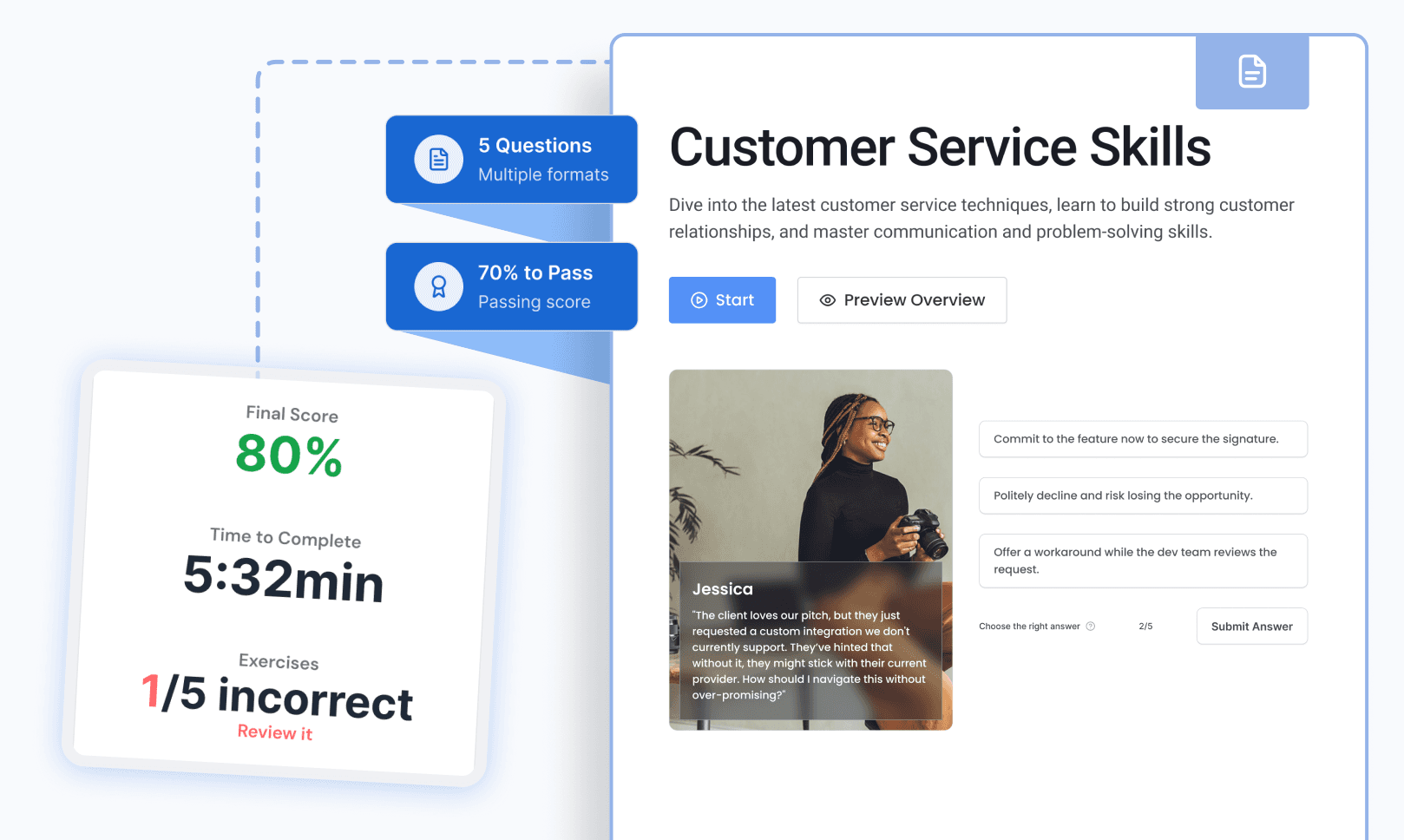
Adaptive training uses performance data to serve each rep relevant content at the moment they need it. A rep who just had a difficult pricing conversation gets a micro-lesson on value framing. The training meets the rep where they are, rather than waiting for a scheduled session.
Reps are more likely to absorb training that's immediately relevant to something they're working on. Managers can set the parameters and watch completion rates and performance data together.
How to Start Without Overhauling Everything
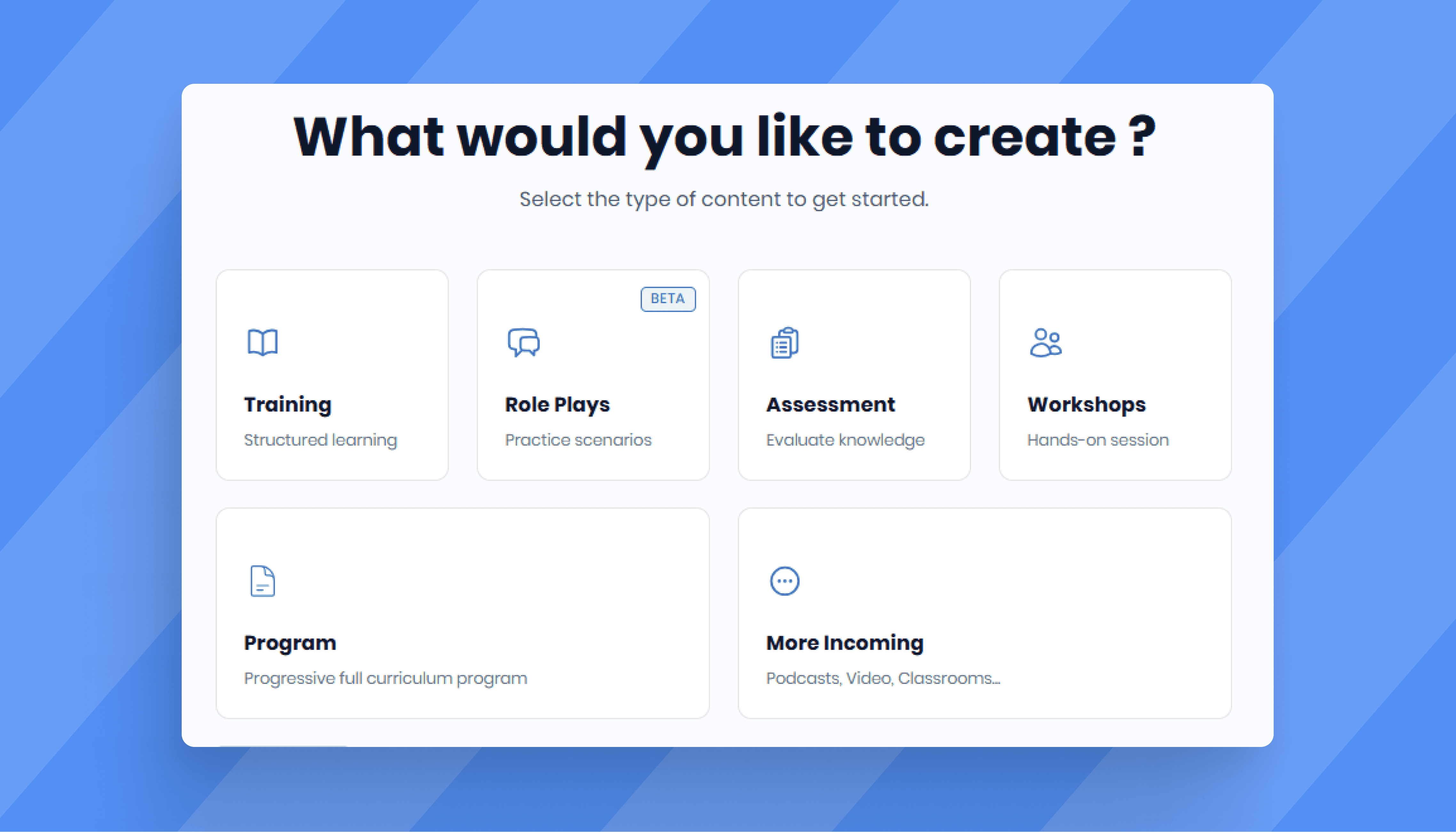
Adopting AI for sales management doesn't require replacing the entire tech stack at once. Most teams start with one or two applications and expand from there.
A practical entry point is conversational intelligence. It integrates with existing call infrastructure, gives managers immediate visibility into rep behavior, and creates a foundation for more targeted coaching without requiring reps to change how they sell.
From there, adding AI roleplay and adaptive training builds on the same data model. Reps practice against scenarios informed by real patterns from real calls. Skill gap analysis becomes continuous rather than periodic.
The teams that get the most value from AI coaching tools are the ones that treat them as a management system, not a software feature. The tools surface information. What managers do with it determines the outcome.
Ready to See What This Looks Like in Practice?
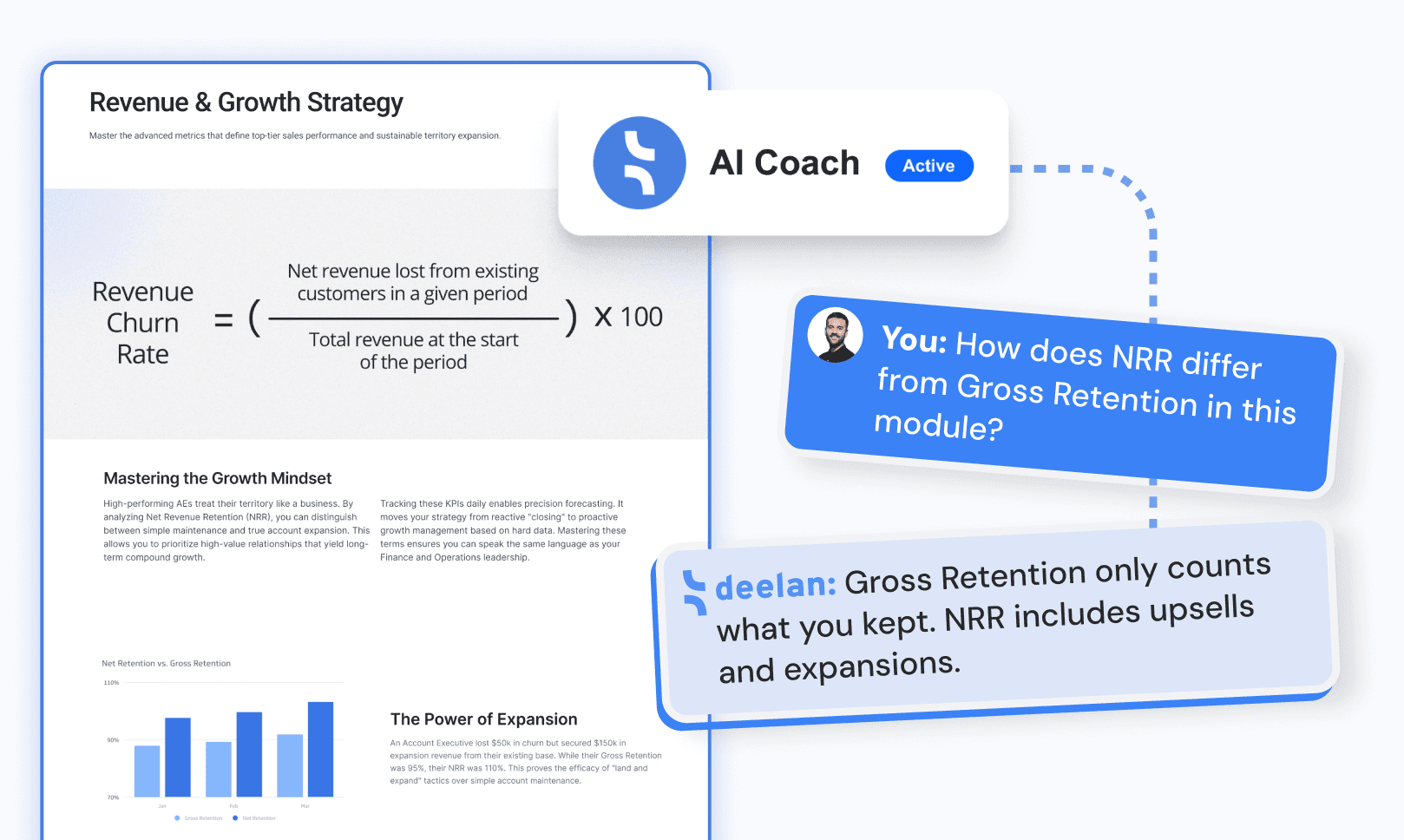
Book a demo with Deelan to see how sales managers are using AI to coach faster, develop reps more precisely, and build teams that compound their performance over time.